Every importer of bags from China faces the same question at the end of production: which transport mode should carry the order? The answer is rarely the one that minimises the freight invoice, because the cheapest mode is often the one that costs the most in total.
The three options behave differently on every dimension that matters. Air freight is fast and expensive, sea freight is slow and cheap, and rail sits between them on both counts but only serves certain destinations. Choosing between them is a calculation about value, timing and risk rather than a simple price comparison.
For PU leather bags the calculation has a particular shape. The products are bulky relative to their value, which penalises air freight heavily, and they are durable enough to travel by sea without much risk. That combination pushes most bulk orders towards sea freight, but it does not remove the cases where air or rail is the right call.
Timing is usually the deciding factor rather than cost. An order that arrives one week after the selling season has begun is worth less than an order that arrives on time at a higher freight cost, because the season is when the demand exists. Freight decisions should be made against the selling calendar, not against the freight budget in isolation.
This guide compares the three modes on cost structure, transit time, capacity, reliability and risk; explains when each one is the right choice for bag orders; sets out how to combine modes across a single order; and describes how to make the decision repeatable rather than reactive.
How the Three Modes Differ
The three modes are not interchangeable versions of the same service. They differ in what they carry, how they are priced, and what constraints apply.
Sea freight
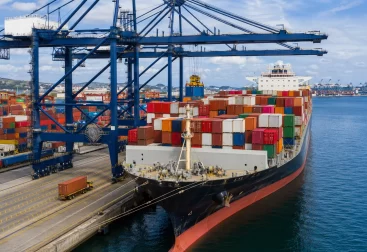
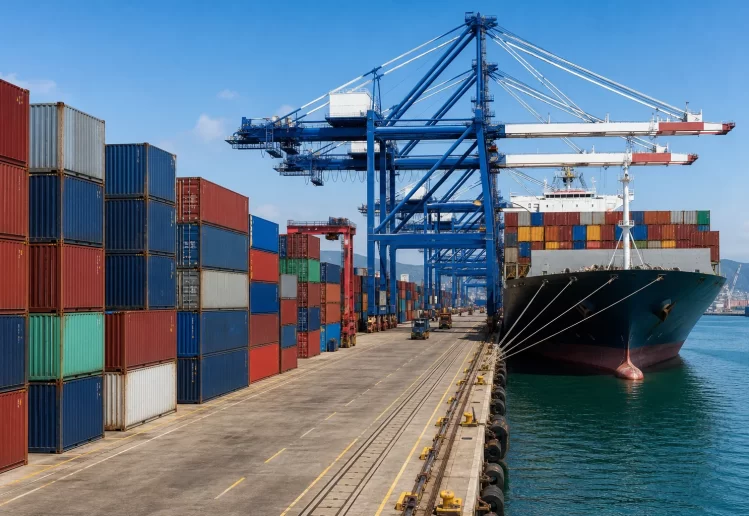
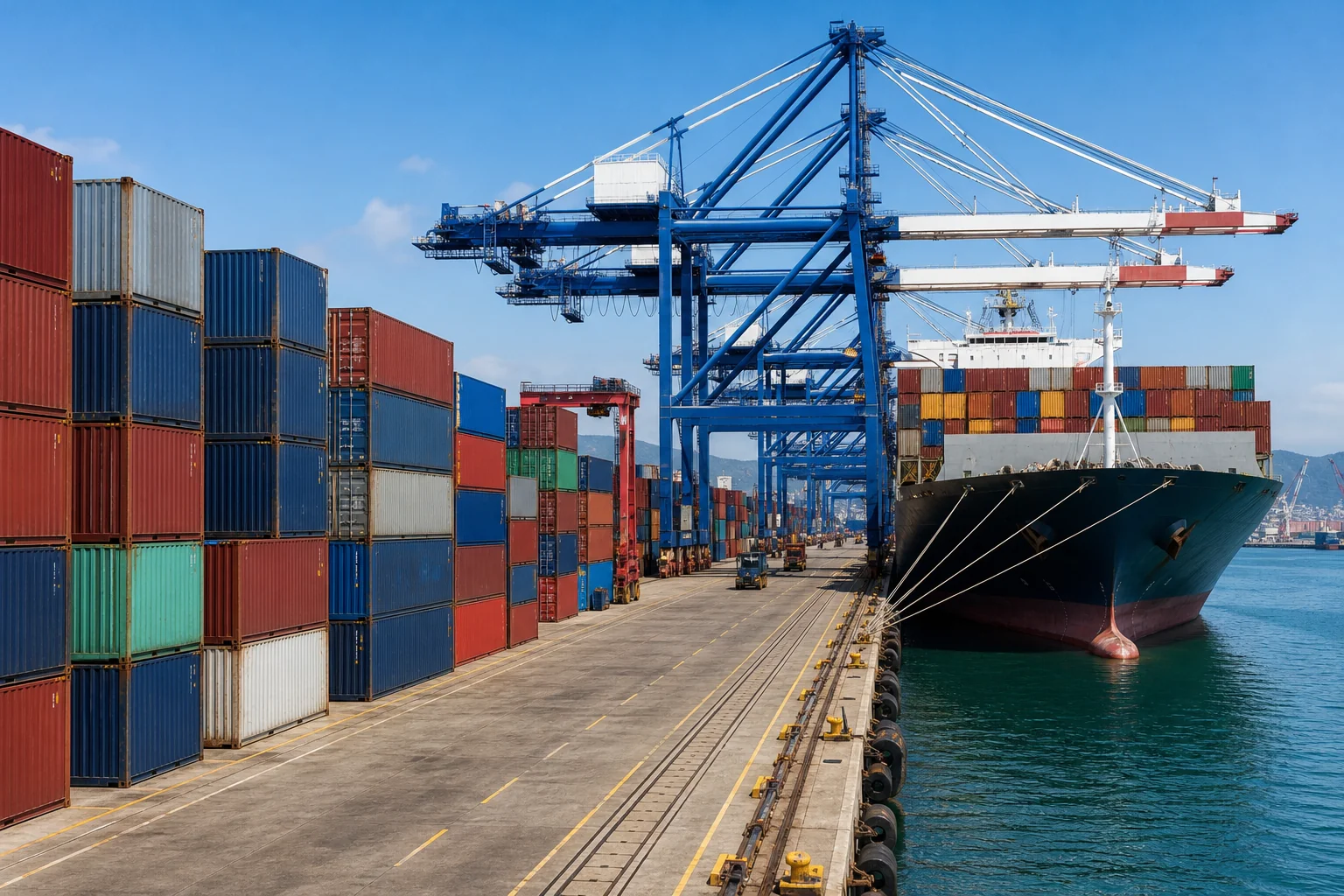
Sea freight moves the overwhelming majority of bag imports. It is priced per container or per cubic metre, carries no practical weight limit for bags, and accepts almost any packing configuration including floor-loaded cargo.
Its disadvantage is time. A sailing from southern China to Europe or North America typically takes several weeks, and the total door-to-door time includes booking, loading, sailing, discharge and clearance. The mode is efficient in every dimension except speed.
Air freight
Air freight is priced by chargeable weight, which for bags is almost always volumetric rather than actual. Because bags are bulky, the volumetric weight is high relative to the goods value, and the cost per unit is correspondingly high.
Its advantage is speed. An air shipment can be in the destination country within days rather than weeks, which makes it useful for urgent replenishment, for samples, and for orders that have missed their window. It also carries less risk of moisture damage because the journey is short.
Rail freight
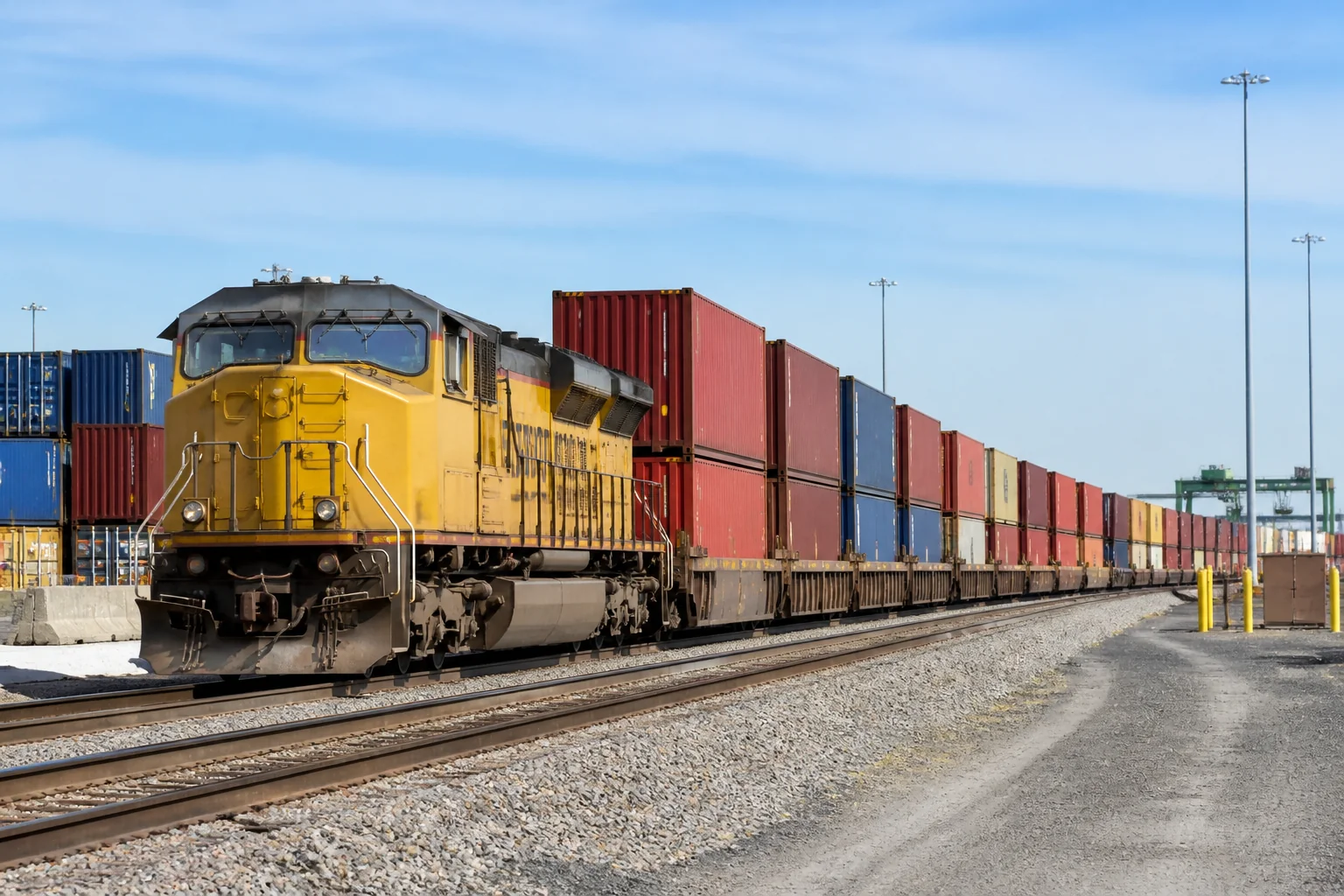
Rail freight is available on routes where a land connection exists, most commonly between China and Europe. It offers a middle position: faster than sea, cheaper than air, with a transit time that sits between the two.
Its limitations are geographic and operational. Rail is not an option for destinations without a rail route from China, and services can be affected by border procedures along the corridor. Capacity is also more constrained than ocean freight.
| Dimension | Sea | Air | Rail |
|---|---|---|---|
| Relative cost | Lowest | Highest | Between the two |
| Transit time | Weeks | Days | Two to four weeks |
| Pricing basis | Container or cubic metre | Chargeable weight | Container or cubic metre |
| Suitability for bulky goods | Good | Poor | Good |
| Capacity | Very high | Limited per flight | Moderate |
| Destination coverage | Global via ports | Global via airports | Rail-connected routes only |
| Weather exposure | Higher | Lower | Moderate |
| Typical use for bags | Bulk orders | Samples and urgent top-ups | European orders needing speed |
What all three have in common
All three modes require the same shipment preparation: correct marking, a packing list that matches the physical cargo, and documentation that satisfies both export and import requirements. A transport mode changes how the goods travel, not the paperwork that accompanies them.
All three are also affected by the same origin and destination handling steps. Loading at the factory, terminal handling and clearance appear in every mode, and these fixed costs are proportionally larger on smaller shipments regardless of how the goods move.
What Each Mode Costs and Why
Comparing modes by a single rate per kilogram or per container misses most of the cost. The structure of each mode determines where the money goes and which levers actually reduce it.
The cost structure of sea freight
Sea freight costs divide into origin charges, ocean freight, destination charges and inland delivery. Only the ocean freight component responds strongly to volume; the others are largely fixed per shipment and become small per unit only at full container loads.
This structure rewards consolidation. Combining several orders or several styles into one container reduces every per-shipment charge at once, which is why the effective sea freight cost per bag can differ enormously between importers shipping similar volumes.
The cost structure of air freight
Air freight costs are dominated by the chargeable weight, which is the greater of the actual weight and the volumetric weight calculated from the dimensions of the packed cargo. For bags, volumetric weight is almost always the governing figure.
This means the packing decisions that affect sea freight also affect air freight, but more sharply. Reducing the packed volume of a bag reduces its chargeable weight directly, and the saving is proportional rather than marginal.
| Cost element | Sea | Air | Rail |
|---|---|---|---|
| Main transport charge | Per container or cubic metre | Per chargeable kilogram | Per container or cubic metre |
| Origin handling | Per shipment | Per shipment, higher security | Per shipment |
| Terminal or airport charges | Moderate | High | Moderate |
| Documentation | Standard | Standard plus security filings | Standard plus transit documents |
| Destination handling | Moderate | High | Moderate |
| Inland delivery | From port | From airport, often closer | From rail terminal |
| Responsiveness to packing density | Strong | Very strong | Strong |
Why air freight is rarely economic for bulk bags
The arithmetic is simple. A bag that occupies a large volume and carries a modest value produces a freight cost that is a large share of the goods value when moved by air, and a small share when moved by sea. The ratio is what decides.
Where the ratio is unfavourable, the importer is effectively paying to move air. That is acceptable for samples and for a small urgent quantity but destroys the margin on a bulk order.
The rail cost position
Rail is typically priced above sea and below air, and it behaves more like sea freight in its cost structure because it is priced by container or volume rather than weight. Its appeal is the transit time saving relative to sea, for a cost that remains well below air.
The comparison is only meaningful on routes where rail actually runs. Where no service exists, the mode is not a candidate at any price, and the choice collapses to sea or air.
Where freight sits in the landed cost
Freight is one component of landed cost and, importantly, forms part of the customs value on which duty is calculated. A more expensive mode therefore raises the duty base as well as the transport bill.
This is a further argument against air freight for bulk orders and a reason to evaluate mode changes on the full landed cost rather than on the freight quote alone. The difference between modes is amplified by the duty effect.
Transit Time and Reliability
Transit time is quoted in several different ways, and comparing them without a common definition produces the wrong choice. Reliability matters as much as the average, because a variable arrival damages a seasonal order.
Quoted transit versus door-to-door time
A carrier’s quoted transit time usually covers the main leg only, from port to port or airport to airport. The door-to-door time adds booking, inland transport at origin, export clearance, terminal handling, import clearance and final delivery.
The difference is substantial, often adding one to two weeks to the total. Planning against the port-to-port figure is how orders arrive late despite the transit time being met as quoted.
Variability by mode
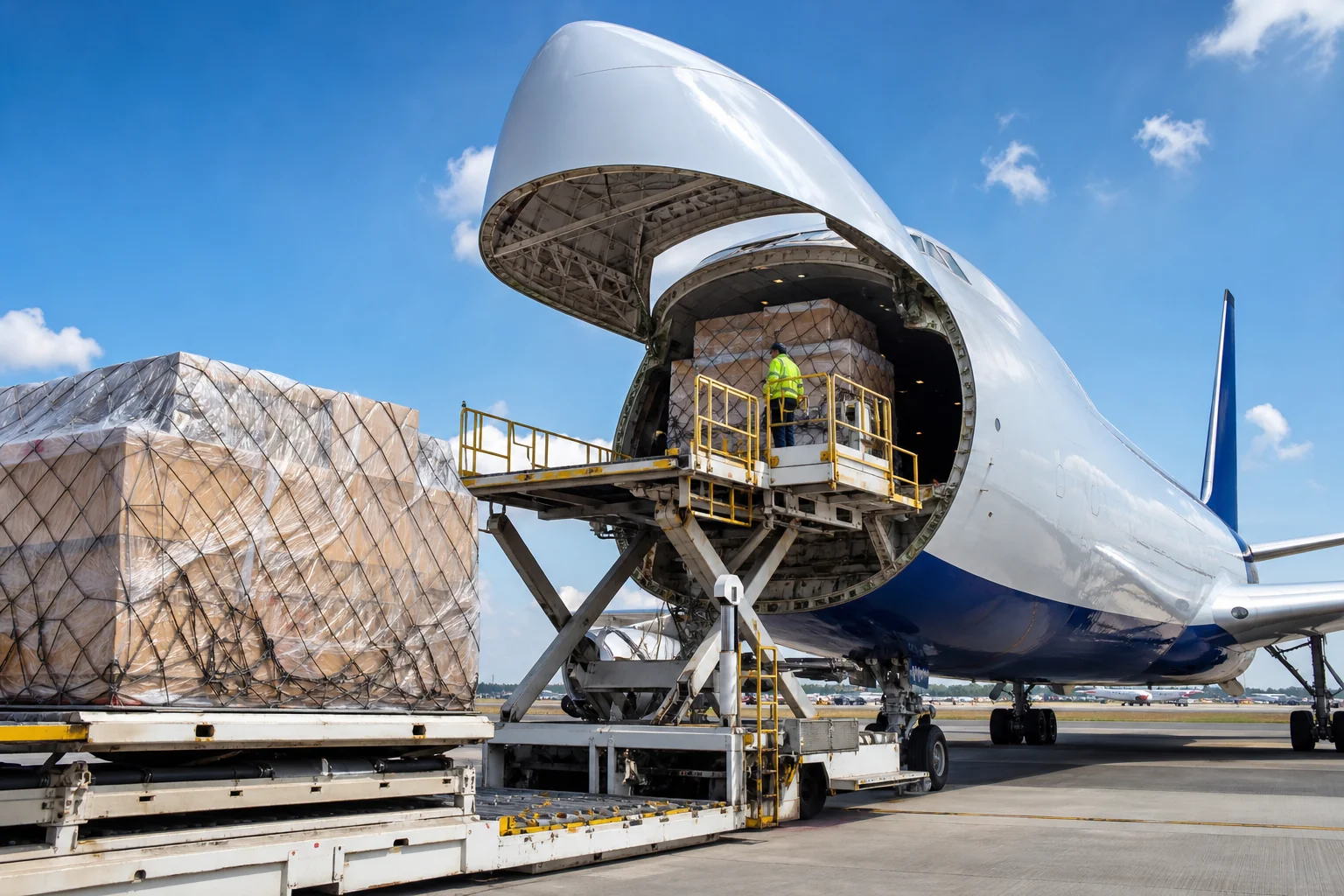
Air freight is the most predictable, because the number of handling steps is small and flights depart frequently. Sea freight is the least predictable, because schedules can slip and port congestion can add days at either end.
Rail sits between the two in predictability, with variability concentrated at border crossings. Where the corridor is congested or procedures change, delays can be significant.
The congestion factor
Port congestion is the largest source of variability in sea freight. When vessels wait to berth, containers are discharged late, and the delay propagates through clearance and delivery.
Congestion is not evenly distributed and is not permanent. A port that is congested this quarter may be clear next quarter, which is why routing decisions deserve periodic review rather than being fixed once.
| Mode | Main leg | Door-to-door additions | Typical variability |
|---|---|---|---|
| Air | Days | Several days for handling and clearance | Low |
| Sea | Weeks | One to two weeks | High |
| Rail | Two to four weeks | Several days to a week | Moderate |
| Sea plus expedited clearance | As sea | Reduced by preparation | Slightly reduced |
| Sea with inland rail | As sea plus inland | Adds inland leg | Moderate |
Seasonal pressure on capacity
Capacity tightens predictably before major selling seasons and around the Chinese New Year period. Rates rise, space is booked out earlier, and shipments booked late are rolled to the next sailing.
Booking early is the practical response. The cost of booking a sailing that is later cancelled or amended is far lower than the cost of being unable to book because the vessel is full.
When reliability matters more than speed
For an order with a fixed launch date, predictability is worth more than either speed or cost. A sea shipment that reliably arrives within a known window may be a better choice than a rail shipment with a faster average but a wider range.
Where the arrival window is tight and the consequence of a miss is severe, the right answer is often a smaller air shipment of the hero styles, with the balance following by sea. That combination protects the launch without paying air freight on the whole order.
Choosing a Mode for a Bag Order
With the differences established, the choice comes down to a small set of questions about the order itself.
Start with the selling calendar
The first question is when the goods need to be available to sell, not when they need to arrive at the warehouse. Working backwards from the shelf date through the inland leg, clearance and the main transit gives the latest acceptable departure.
Where sea freight can meet that date, it is almost always the right choice for bulk bag orders. Where it cannot, the comparison becomes rail against air for the portion that must move faster.
Judge air freight against the margin it protects
Air freight is justified when it protects selling days that are worth more than the additional cost. That is a comparison between the extra freight and the margin on the sales the air shipment enables.
For a small quantity of a proven line at the start of a season, the calculation frequently favours air. For a bulk order of a full range, it rarely does.
| Situation | Preferred mode | Reason |
|---|---|---|
| Bulk order with a planned season | Sea | Lowest cost and volume is not urgent |
| Samples and pre-production approvals | Air | Speed matters more than cost at low volume |
| Urgent replenishment of a proven line | Air | Protects sales on a known product |
| European order needing speed at moderate cost | Rail | Faster than sea, cheaper than air |
| First order in a new category | Sea, small quantity | Cost control while demand is unproven |
| Order that missed its production slot | Air for part, sea for balance | Protects the launch without full air cost |
| Heavy or oversized item | Sea | Air and rail charge strongly on volume |
| Destination with no rail route | Sea or air | Rail not available |
Consider the destination’s geography
Some destinations are better served by one mode for reasons of distance and infrastructure. A destination far from any port but close to a major airport can make air freight relatively more attractive than it first appears.
The cost of the inland leg belongs in the comparison. A mode that is cheaper on the main leg but requires a long inland journey may not be cheaper overall.
Account for the duty effect
Because freight forms part of the customs value, a more expensive mode also increases duty. The mode comparison should be run on the landed cost rather than on the freight rate, particularly where duty rates are significant.
This effect usually reinforces the conclusion rather than overturning it, but it is worth quantifying. On a large order the duty difference between modes is not trivial.
Match the mode to the order’s risk profile
New products carry demand risk, and a slow mode reduces the cost of being wrong. A first order in an unproven category is better shipped by sea, because the money saved on freight offsets part of the cost of slow sell-through.
Proven products carry timing risk instead, and a fast mode protects the revenue. The same importer can rationally use different modes on different orders in the same season.
Splitting and Combining Shipments
Mode choice is not always a single decision for a single order. Splitting an order across modes is often the most economical way to meet a launch date.
The classic split
The most common arrangement is to send a small quantity of the fastest-selling or hero styles by air and the balance by sea. The air portion covers the first weeks of the season while the sea portion is still in transit.
The split quantity should be calculated rather than guessed. The air portion needs to be enough to cover demand until the sea shipment clears and reaches the warehouse, and no more, because every additional air unit costs the premium.
Choosing what goes in the fast shipment
The fast portion should carry the styles expected to sell first and the sizes and colours most likely to run short. Sending a broad assortment by air wastes the premium on slow-moving items.
Where the retailer has previous season data, the split can follow actual sell-through. Where there is no data, the fast portion should be concentrated on the most versatile styles.
Combining to build a full container
On the sea portion, combining several orders or styles into one container reduces the per-shipment charges substantially. This is the largest available saving in most import programmes.
Combining is easiest where the range shares materials, because production completes on a similar schedule. Staggered production makes consolidation harder and sometimes forces a choice between waiting and paying for a partial load.
| Approach | Effect on cost | Effect on availability |
|---|---|---|
| All air | Highest freight cost | Fastest full availability |
| All sea | Lowest freight cost | Latest availability |
| Split air and sea | Moderate premium | Early partial availability |
| Sea with consolidation | Lowest cost per unit | Requires production alignment |
| Rail for one destination, sea for another | Balanced | Varies by destination |
| Sea plus expedited clearance | Small premium | Faster release at destination |
Consolidating across suppliers
Where an order includes goods from more than one supplier, consolidating at a warehouse near the port before loading can reduce total freight. The goods travel as one shipment rather than several.
Consolidation adds a handling step and a small risk of mixing, and it requires the goods to be at the consolidation point at the same time. The saving is real where the shipment would otherwise move as partial loads.
When splitting costs more than it saves
Every split creates two shipments, two sets of documentation and two clearances. Where the quantities are small, those fixed costs can exceed the benefit of the earlier availability.
The test is whether the margin on the accelerated sales exceeds the total premium of the fast shipment, including its fixed charges. Where it does not, a single sea shipment is the better answer.
Risk, Insurance and Damage
Each mode exposes the cargo to a different set of risks, and insurance and packing should reflect the exposure rather than the value of the goods alone.
Transit risk by mode
Sea freight exposes cargo to a long journey, temperature and humidity swings, and a larger number of handling steps. Air freight shortens the journey but adds pressure changes and tighter weight handling. Rail combines a moderate duration with border handling.
For PU leather bags, the dominant risk across modes is moisture rather than physical impact. The packing measures that control humidity are therefore more important than reinforcement against crushing.
Insurance and Incoterms
The trade term determines who arranges and pays for insurance during each leg. On CIF terms the seller insures to the destination port; on FOB and ex works, the buyer arranges cover from the point of transfer.
Where the buyer arranges insurance, the cover should start when risk transfers and match the actual route. A policy written for sea transport does not automatically cover an air shipment on the same order.
| Risk | Highest exposure | Mitigation |
|---|---|---|
| Moisture and condensation | Sea, long routes | Dry packing, desiccants, container liner |
| Physical impact | All modes at transfer points | Carton strength and correct marking |
| Handling damage | Air and rail, more transfers | Inner protection and edge boards |
| Delay past selling window | Sea, congestion periods | Buffer, split shipments, early booking |
| Loss or pilferage | Any mode with loose cartons | Strapping, sealing, insurance |
| Documentation error | Any mode | Pre-clearance document check |
Packing that suits the mode
A packing suite optimised for sea freight is generally suitable for rail, because both involve containerised journeys of comparable length. Air freight permits lighter packing because the journey is short, but the freight charge on volumetric weight usually makes the lighter packing a false economy.
The practical approach is to keep a single packing specification that works for containerised movement and accept that it is slightly over-specified for air. Deviating per mode adds a variable that is hard to control.
Claims and evidence
Where damage occurs, the claim depends on evidence collected at the right moment. Photographs at the factory before loading, at arrival before opening, and during unpacking establish the sequence and identify where the damage occurred.
This is the practical reason for recording the pre-shipment checks. Without them, a claim becomes a dispute about when the damage happened rather than a review of facts.
Making the Decision Repeatably
Mode selection should be a routine calculation rather than a fresh argument each time. A simple framework removes the debate and improves the decisions.
Build a mode comparison sheet
The sheet should hold, for each candidate mode, the door-to-door transit time, the total freight and handling cost, the duty effect and the resulting landed cost per unit. Filling it once per order takes minutes.
With the sheet in place, the question becomes whether the transit time meets the required date and which compliant option has the lowest landed cost. That is a decision that can be made on evidence.
Set the decision rule in advance
A useful rule is to ship by sea whenever sea freight meets the required arrival date, and to consider air or rail only when it does not. The rule prevents the freight budget from being spent on speed that the order does not actually need.
A second rule covers the split: air only the quantity needed to cover demand until the sea shipment arrives. This bounds the premium and makes it predictable.
| Decision step | Input | Output |
|---|---|---|
| Establish the required arrival date | Selling calendar | Latest acceptable delivery |
| Establish door-to-door time per mode | Carrier quotes plus handling | Latest acceptable departure per mode |
| Check production completion date | Factory schedule | Feasible modes |
| Compare landed cost for feasible modes | Freight, duty, inland | Cost ranking |
| Decide on a split if needed | Cover requirement | Fast quantity and slow quantity |
| Book early | Capacity outlook | Confirmed space |
Review after each shipment
Actual transit times and costs should be recorded against the estimates. The first shipment in any lane is a calibration exercise, and the recorded data makes the next decision more accurate.
Reviewing also surfaces structural issues. A lane that consistently runs slower than quoted, or a port that consistently adds cost, is worth reconsidering rather than absorbing each time.
Keep the decision close to the calendar
The mode decision belongs with the buying calendar, not with the freight desk alone. Where the people choosing the mode do not know the shelf date, the choice is made on cost alone, which is how orders arrive late at a lower freight rate.
Choose the mode that meets the selling date at the lowest landed cost. Everything else is a preference, and preferences are expensive when the season is short.
FAQ
Should bag orders ship by air or sea?
Most bulk bag orders ship by sea, because the products are bulky relative to their value and air freight is charged on volumetric weight. Air freight is justified for samples, urgent replenishment of a proven line, and small quantities needed to protect a launch date. The comparison should be made on total landed cost, not on the freight quote alone.
When is rail freight a good option from China?
Rail makes sense for destinations connected by a rail corridor, most commonly in Europe, where it is faster than sea and considerably cheaper than air. It is not available for destinations without a rail route, and services can be affected by border procedures along the corridor.
How long does sea freight from China take door to door?
The main leg takes weeks, and the door-to-door time adds one to two weeks for booking, inland transport, terminal handling, clearance and final delivery. Planning against the port-to-port transit figure rather than the door-to-door time is a common reason orders arrive late.
Why is air freight so expensive for bags?
Because air freight is charged on the greater of actual and volumetric weight, and bags are bulky, so volumetric weight governs. A bag that occupies a large volume and carries a modest value produces a freight cost that is a large share of the goods value when flown, and a small share when shipped.
Can I split an order between air and sea?
Yes, and it is often the best answer when a launch date is tight. Send a small quantity of the fastest-selling styles by air to cover demand for the first weeks, and the balance by sea. Calculate the air quantity from the cover requirement rather than estimating it, because every extra air unit costs the premium.
Does the shipping mode affect import duty?
Indirectly, yes. Freight forms part of the customs value on which duty is calculated, so a more expensive mode raises the duty base as well as the transport cost. This is a further reason to compare modes on landed cost rather than on the freight invoice.
Which mode is most reliable?
Air freight is the most predictable because handling steps are few and flights are frequent. Sea freight is the least predictable, with variability concentrated in port congestion and schedule slippage. Rail sits between the two, with variability usually at border crossings.
How do I reduce sea freight cost per bag?
Consolidate shipments into full containers, improve packing density so more units fit per container, and reduce the number of separate clearances. The per-shipment charges are the ones that do not scale with volume, so consolidating several orders or styles into one shipment is usually the largest single saving.
What packing works for all three modes?
A specification designed for containerised movement works well for both sea and rail, because both involve journeys of comparable length in a container. It is slightly over-specified for air freight, but keeping one specification avoids adding a variable that is difficult to control.
When should I book freight space?
Earlier than most importers expect. Capacity tightens predictably before major selling seasons and around Chinese New Year, when rates rise and space is booked out. The cost of booking a sailing that is later amended is far lower than the cost of being unable to book because the vessel is full.
Who arranges insurance when shipping by sea?
It depends on the trade term. On CIF terms the seller insures to the destination port; on FOB and ex works the buyer arranges cover from the point at which risk transfers. Where the buyer arranges cover, the policy must match the actual route and mode, since a sea policy does not automatically cover an air shipment.
How do I decide the mode on a repeatable basis?
Use a comparison sheet holding door-to-door transit time, total freight and handling cost, the duty effect and the landed cost per unit for each candidate mode. Then apply a rule: ship by sea whenever sea meets the required arrival date, and consider air or rail only when it does not. Record actual times and costs after each shipment to improve the next decision.
Planning freight for your next bag order from China?
We manufacture PU leather bags in Guangzhou and quote on FOB or CIF with carton dimensions, units per container and realistic production lead times, so your sea, rail and air comparisons are built on firm figures. Send your destination and target arrival date to info@gionar.com, or review our custom bag manufacturing capabilities.