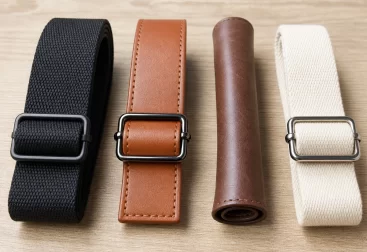
Why Do Adhesives and Bonding Decide How Long a Bag Really Lasts?
A bag is mostly held together by thread, and almost nobody examines the seams. But a large part of what makes a bag feel solid has nothing to do with thread at all. Interlinings, foams, linings, reinforcements and edge treatments are bonded, and the quality of those bonds decides how the bag behaves after a year of use.
Bonding failures are quiet in the sample room and loud in the market. A delaminated panel, a lining that sags away from the body, a foam that separates at a fold or a reinforcement that detaches inside a handle all trace back to an adhesive choice or a process condition that was never specified. None of them are visible on an approved swatch.
The commercial problem is that bonding is the least discussed part of a bag specification. Buyers specify material, colour, hardware, lining fabric and stitch density, and leave the adhesive to the factory. That is a reasonable position only if the factory’s adhesive choice is documented, tested and repeatable. In practice it rarely is.
This article explains what bonding does in a bag, where adhesive is actually used, how the main adhesive families differ, why some material combinations refuse to bond at all, how heat and humidity age a bond, what to test before production, where failures appear in the field, and how to write adhesive and process requirements into a specification. The intent is to make bonding a controlled decision rather than an invisible one.
- What Bonding Does in a Bag
- Where Adhesive Is Used
- Adhesive Families and Behaviour
- Surface Energy and Refusals to Bond
- Bond Strength vs Peel Strength
- Heat, Humidity and Ageing
- Bonding Linings, Foam and Interlining
- Bonding at Reinforcement Points
- Testing Bonds Before Production
- Where Bond Failures Appear
- Cost, Lead Time and Substitution Risk
- Specifying Adhesive at Sampling
- FAQ
What Bonding Does in a Bag
Bonding performs four jobs in a bag, and each one is invisible when it works. Together they decide whether the bag keeps its shape, whether it feels substantial, and whether it survives repeated flexing without internal separation.
It builds the body
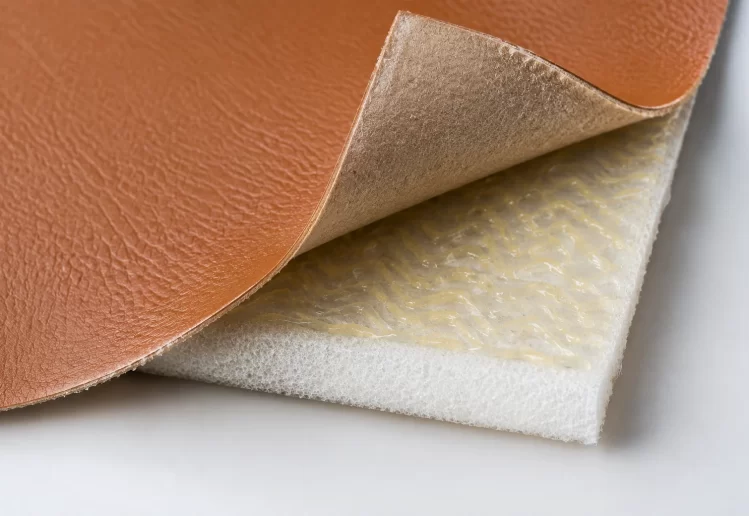
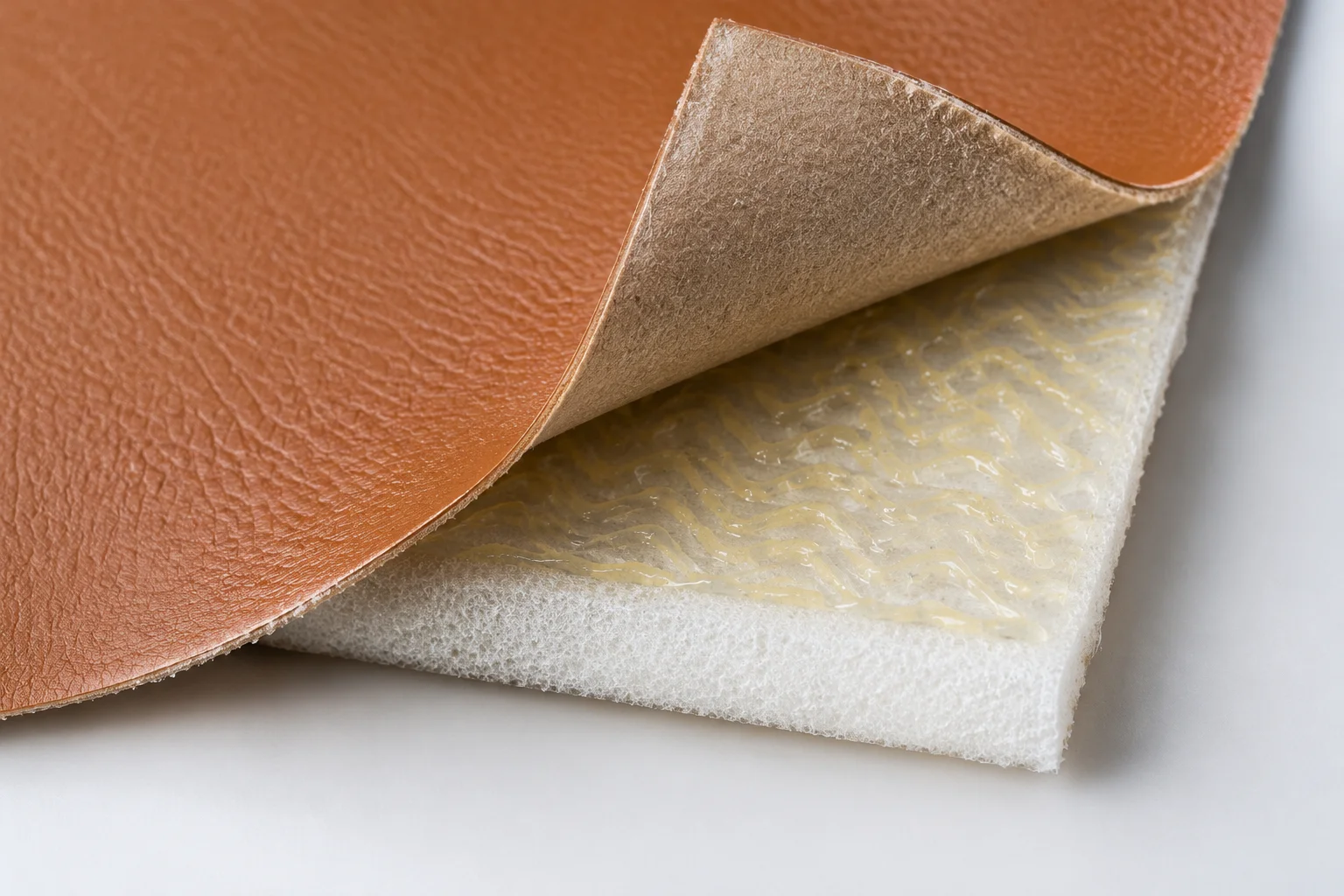
Very few bags use a single layer of material. A typical panel is a face material bonded to an interlining or foam, which gives the bag its body and prevents it from collapsing.
That bond carries the panel’s stiffness. If it weakens, the panel softens locally and the bag loses shape in exactly the area that flexes most.
It holds the lining in place
Linings are bonded or stitched to the shell. Where bonding carries the load, a failed bond allows the lining to sag and gather inside the bag, which is visible every time it is opened.
This is one of the most common cosmetic complaints and one of the least often traced to adhesive.
It reinforces load points
Reinforcement patches behind handle anchors and strap attachments are usually bonded before stitching. The bond holds the patch in position and spreads load across the panel.
A patch that shifts during stitching produces a weak anchor, and the weakness appears later as a pulled handle rather than as a visible defect.
It controls how the bag sounds and feels
A well-bonded panel feels dense and quiet in the hand. A panel with partial adhesion sounds hollow and feels slack, and buyers read that difference instantly even without knowing its cause.
Handle feel is therefore a bonding signal. It is worth handling the sample as a finished object rather than judging the face material alone.
It finishes edges and folds
Edge folding and turned seams rely on adhesive to hold the fold while it is stitched. Inconsistent adhesive here produces wavy edges and uneven topstitching.
The result looks like a sewing problem and is actually a bonding problem, which is why it is so often misdiagnosed.
Where Adhesive Is Used
Adhesive appears at more points in a bag than most buyers expect. Mapping them makes the specification conversation concrete.
Panel lamination
Face material to interlining or foam is the largest adhesive area in most bags. It is also the bond most likely to be tested, because a failure is immediately visible as a soft or separated panel.
Lining attachment
Linings may be bonded at the top edge, at the base, or across the whole panel depending on construction. Full-surface bonding gives a cleaner interior but demands a more reliable adhesive.
Reinforcement and stiffeners
Base stiffeners, side panels and handle patches are bonded in place before assembly. These are small areas with high consequence, because they sit at load points.
Edge treatment and folding
Edge folding, seam turning and pocket construction use adhesive to hold geometry during stitching. This is the area where adhesive choice most directly affects appearance.
| Bonding point | What it holds | Failure symptom | Consequence |
|---|---|---|---|
| Panel lamination | Face to interlining or foam | Soft or bubbling panel | Lost shape, visible defect |
| Lining attachment | Lining to shell | Sagging or gathered lining | Interior looks unfinished |
| Base stiffener | Board or sheet to base | Base collapses or creases | Structural weakness |
| Handle patch | Reinforcement to shell | Anchor pulls out | Bag unusable |
| Edge fold | Turned edge geometry | Wavy or uneven edge | Cosmetic rejection |
| Pocket construction | Pocket layers | Pocket edge separates | Functional failure |
Why the map matters
Different bonding points need different adhesives. A laminating adhesive optimised for full-surface bonding is not necessarily right for a folded edge, and a stiffener adhesive has different requirements again.
Factories often standardise on one or two adhesives for convenience. That is efficient, and it is also the reason certain bonding points fail while others hold.
Adhesive Families and Behaviour
Three adhesive families cover most bag production, and each behaves differently under heat, moisture and time.
Solvent-based adhesives
Solvent-based systems give strong initial bonds and tolerate a wide range of surfaces. They are the traditional choice for demanding laminations.
Their constraints are environmental and process-related: ventilation, drying time and consistent application matter, and poor drying leaves residual solvent that weakens the bond over time.
Water-based adhesives
Water-based systems are the common choice for general lamination and lining work. They are safer to handle and more widely accepted in regulated markets.
The trade is moisture sensitivity during curing. In humid conditions a water-based bond may not reach full strength before the panel is handled, which creates a latent weakness.
Why factories standardise on one system
Running several adhesives means separate storage, trained operators and separate quality checks. Most factories reduce to one or two families for control and cost reasons.
That is defensible operationally and risky commercially, because the bonding points in a bag do not share one ideal adhesive. The buyer has to know which compromise was made.
Hot-melt and reactive systems
Hot-melt adhesives set quickly and suit high-throughput lines. Reactive systems, including polyurethane types, form strong bonds and resist moisture well.
Both demand process discipline. Hot-melt needs consistent temperature, and reactive systems need correct mixing and pot life. Deviations produce bonds that look sound and fail later.
| Property | Solvent-based | Water-based | Hot-melt | Reactive |
|---|---|---|---|---|
| Initial bond | Strong | Moderate | Fast | Strong |
| Humidity tolerance | Good | Lower during cure | Good | High after cure |
| Heat resistance | Moderate to high | Moderate | Lower | High |
| Process discipline | Drying critical | Cure time critical | Temperature critical | Mixing critical |
| Typical use | Demanding lamination | Lining, general panels | Fast assembly | High-stress bonds |
| Relative cost | Higher | Moderate | Lower | Highest |
An adhesive is only as good as the process that applies it. The same product can produce a ten-year bond or a six-month failure.
Surface Energy and Refusals to Bond
Some materials simply do not accept adhesive, and no amount of pressure or cure time will fix it. The cause is surface energy.
Why low-energy surfaces fail
Adhesive bonds by wetting the surface. A low-energy surface, such as an untreated polyolefin or a heavily plasticised coating, resists wetting, so the adhesive sits on top rather than gripping.
The bond may hold initially and separate later under load, which makes it the most deceptive failure mode in bonding.
Plasticiser migration
Soft PU coatings contain plasticisers that migrate to the surface over time. A migrating layer acts as a release agent between coating and adhesive, and the bond weakens progressively.
This is why some bonded panels hold for a year and then separate, with no change in handling or environment to explain it.
Contamination and release agents
Mould release agents, dust and oil from handling all reduce bond strength. Where a factory does not clean panels before bonding, adhesion varies from batch to batch for reasons nobody can identify later.
Cleaning discipline is unglamorous and is one of the clearest differences between a controlled process and an uncontrolled one.
| Surface condition | Effect on bonding | Practical response |
|---|---|---|
| Low surface energy | Poor wetting, weak bond | Surface treatment or different adhesive |
| Plasticiser migration | Progressive separation | Barrier coating or mechanical attachment |
| Release agent residue | Local unbonded zones | Clean before bonding |
| Dust or oil | Inconsistent adhesion | Handling discipline, covered storage |
| High moisture content | Foaming, weak cure | Dry material before bonding |
When stitching should carry the load
Where a surface cannot be bonded reliably, the construction should not depend on adhesive. Stitched or mechanically fixed attachment removes the risk.
This is a design decision, and it is far cheaper at sampling stage than after a season of separation complaints.
Bond Strength vs Peel Strength
Bond strength and peel strength are often treated as the same number. They answer different questions, and a bond can be strong in one and weak in the other.
Shear holds panels flat
Shear strength resists forces that try to slide the layers across each other. On a laminated panel, shear is what keeps the face and interlining moving as one unit.
Most lamination adhesives are strong in shear, which is why a panel can feel solid while its edge is already lifting.
Peel pulls edges apart
Peel strength resists forces that lift one layer away from the other, concentrated at an edge or a fold. It is the failure mode that produces visible delamination.
A bond with high shear and low peel passes a feel test and fails in the field, because the field applies peel at edges, corners and folds.
Adhesive thickness changes the failure mode
A very thin bond line maximises contact but leaves little material to absorb movement. A thick line absorbs movement but concentrates stress at its edges through cleavage.
Controlled thickness is a process parameter, not a purchasing one, which is why the same adhesive gives different results on two production lines.
Why edges fail first
At an edge the adhesive has no material beyond it to share the load, so the entire force acts on a narrow line. Any weakness is amplified.
Edge sealing, folded seams and bound edges all convert a peel load into something the construction can carry. They are cheap and they address the dominant failure mode.
| Load type | Where it acts | Failure it produces | Design response |
|---|---|---|---|
| Shear | Panel surface | Panel softens or shifts | Full-surface lamination |
| Peel | Edges, folds, corners | Visible delamination | Folded or bound edges |
| T-peel | Open edge under load | Lining or foam separates | Stitch or seal the edge |
| Cleavage | Thick bond lines | Splits from one point | Controlled adhesive thickness |
| Fatigue | Repeated flex areas | Progressive separation | Flexible adhesive, flex testing |
What to measure
A peel test at a defined width and angle gives a usable number. A shear test confirms the panel behaves as a unit. Both are quick and both catch the failure modes that matter.
Testing only one of them leaves half the risk unexamined, which is the usual state of an unspecced material.
Heat, Humidity and Ageing
Bonds change after they are made. The changes are predictable, and they explain most late failures.
Heat softens and creeps
Many adhesives soften as temperature rises. A bond that is strong at room temperature can creep under load in a hot warehouse or a car boot.
Creep shows as a panel that gradually shifts, or a lining that sags without any obvious damage. The bond has not failed outright; it has moved.
Humidity attacks the interface
Moisture migrates along edges and through porous substrates. At the interface it can displace adhesive or weaken it chemically, particularly in water-based systems that were not fully cured.
This is why a bag can be sound in a dry market and fail in a humid one, using the same production batch.
Sea freight as an ageing test
A container crossing climate zones exposes a bag to sustained heat and humidity that no showroom reproduces. Many bonding failures are effectively created in transit and discovered on opening.
Dry packing, desiccants and a fully cured bond address most of it. Packing damp goods into a sealed carton is the most common avoidable cause.
Plasticiser migration over time
As noted earlier, plasticisers move toward the surface of soft coatings. Over months the migrating layer reduces adhesion, and the bond weakens without any external damage.
Barrier coatings or mechanical attachment are the defences. Neither is common, because neither is visible in the sample.
| Ageing factor | Mechanism | Visible result | Control |
|---|---|---|---|
| Heat | Softening, creep | Shifted panels, sagging lining | Heat-resistant adhesive, storage guidance |
| Humidity | Interface weakening | Edge lifting, bubbles | Full cure, sealed edges |
| Plasticiser migration | Release layer forms | Late separation | Barrier coat or stitching |
| Flex fatigue | Repeated strain at folds | Cracking along creases | Flexible adhesive, flex test |
| Load over time | Sustained peel at edges | Progressive lifting | Edge treatment, reinforcement |
Accelerated ageing as a planning tool
Accelerated heat and humidity exposure compresses months into days. It does not predict a specific service life, but it reliably separates materials that will fail from those that will hold.
For a market with a hot, humid climate, this test is more informative than any room-temperature result.
Bonding Linings, Foam and Interlining
Each internal layer has its own bonding requirement, and treating them as one operation is a common source of failure.
Foam needs a flexible bond
Foam compresses and recovers constantly. An adhesive that is too rigid restricts that movement and eventually cracks at the interface.
A flexible adhesive allows the foam to work, at some cost in initial bond strength. The trade is correct for any panel that flexes.
Interlining needs full coverage
Interlining provides body, and body depends on continuous attachment. Partial adhesive coverage allows the interlining to shift, and the panel develops soft spots.
Spray application can look adequate and leave gaps. Roller or sheet adhesive gives more predictable coverage.
When to bond and when to stitch
Full-surface bonding gives the cleanest interior and the greatest reliance on adhesive quality. Stitching at key seams gives redundancy at the cost of visible lines inside the bag.
For bags sold with the interior on show, bonding is worth the risk only where the adhesive and the batch test are both specified.
Lining needs the right slip
Linings are usually lighter and more slippery than the shell. An adhesive that grips a foam may not hold a smooth lining, and the lining sags where the bond is weakest.
Stitching at key seams reduces reliance on the bond and keeps the lining positioned even if adhesion varies.
| Layer | Bonding challenge | Adhesive behaviour needed | Backup measure |
|---|---|---|---|
| Foam | Constant compression | Flexible, fatigue resistant | Stitch at edges |
| Interlining | Needs continuous coverage | Even application, good wetting | Full-surface bonding |
| Lining fabric | Slippery, light | High grab on low-energy surface | Top-edge stitching |
| Base board | Rigid against flexible shell | Rigid bond, no creep | Pocket or stitched pocket |
| Non-woven padding | Loose fibre structure | Penetration without strike-through | Encapsulation by stitching |
Why layered constructions fail at the weakest interface
A multi-layer panel has several bonds, and the panel fails at whichever is weakest. Improving one bond without examining the others moves the failure rather than removing it.
Reviewing the panel as a stack, with a requirement for each interface, is the only way to avoid relocating the problem.
Bonding at Reinforcement Points
Reinforcement is where bonding has the highest consequence and the least visibility.
Handle and strap anchors
Patches behind anchors spread load across the panel. If the patch is bonded inconsistently it can shift during stitching, leaving the anchor attached to a smaller area than intended.
The defect is invisible when new and appears as a pulled handle after use, which is why it is one of the most expensive failure modes in the category.
Base and corner reinforcement
Base stiffeners and corner patches are bonded before assembly. A stiffener that separates allows the base to collapse, and the bag loses its ability to stand.
Rigid bonds suit rigid stiffeners, but they must resist creep at warm temperatures or the stiffener will migrate.
Trolley straps and hardware plates
Hardware plates bonded behind the shell distribute point loads. Where the bond is weak, the load returns to the stitch holes and the material tears instead.
| Reinforcement | Load | Bond requirement | If the bond fails |
|---|---|---|---|
| Handle patch | Repeated lift | High shear, no creep | Anchor pulls out |
| Strap anchor | Sustained tension | High peel resistance | Strap separates |
| Base stiffener | Compression, abrasion | Rigid, heat resistant | Base collapses |
| Corner patch | Impact, abrasion | Flexible, tough | Corner wears through |
| Hardware plate | Point load | High shear locally | Material tears at holes |
The argument for stitching the reinforcement
Where a reinforcement can also be stitched, it should be. Stitching converts a bond-dependent load path into a mechanical one.
The extra operation is small. The reduction in field failures is not.
Testing Bonds Before Production
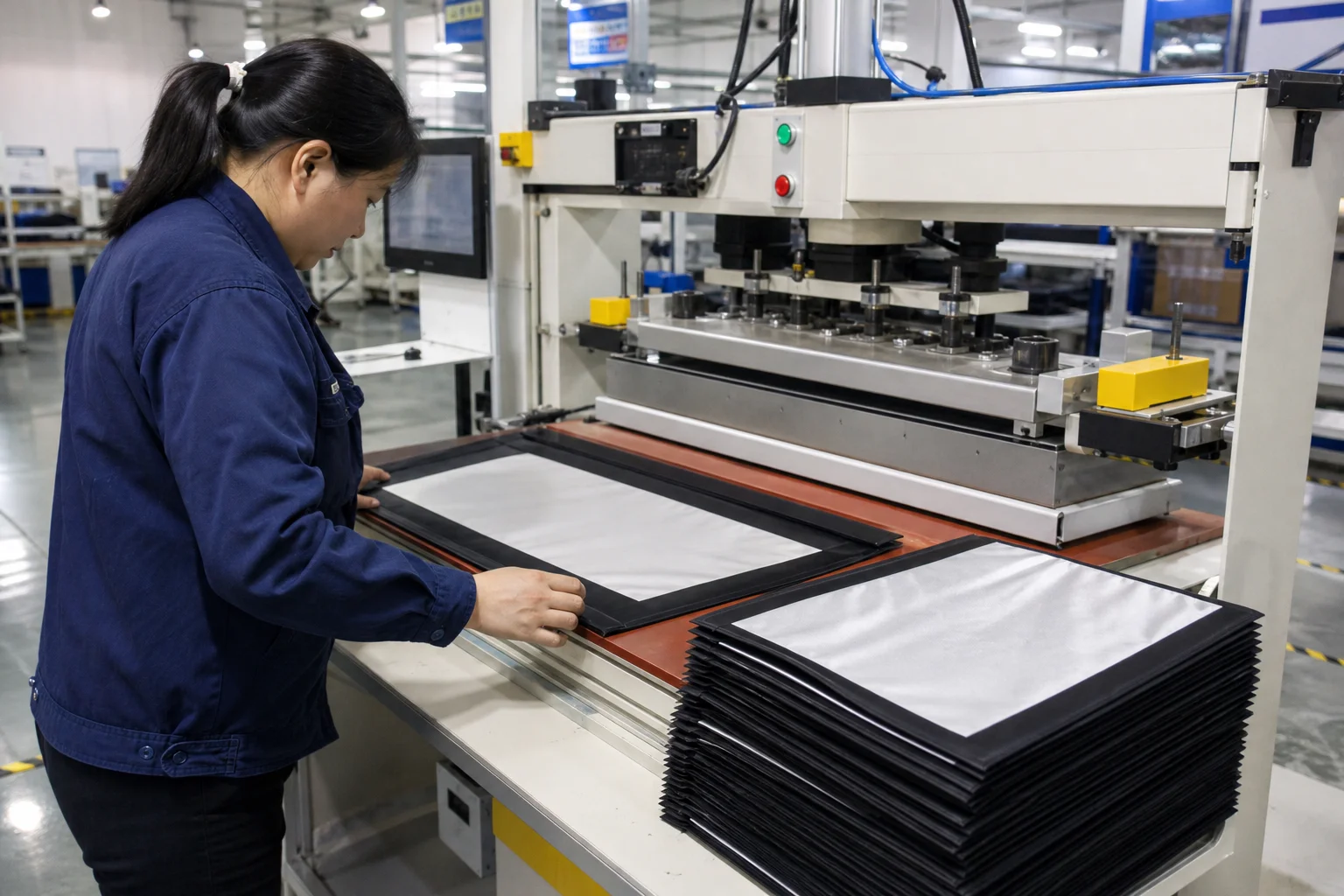
Bonding is testable, and the tests are neither slow nor expensive. The obstacle is that they are rarely specified.
Peel test as the baseline
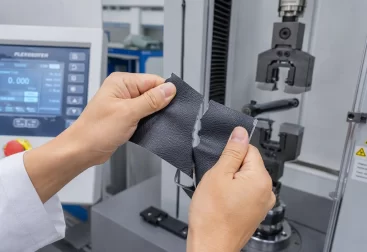
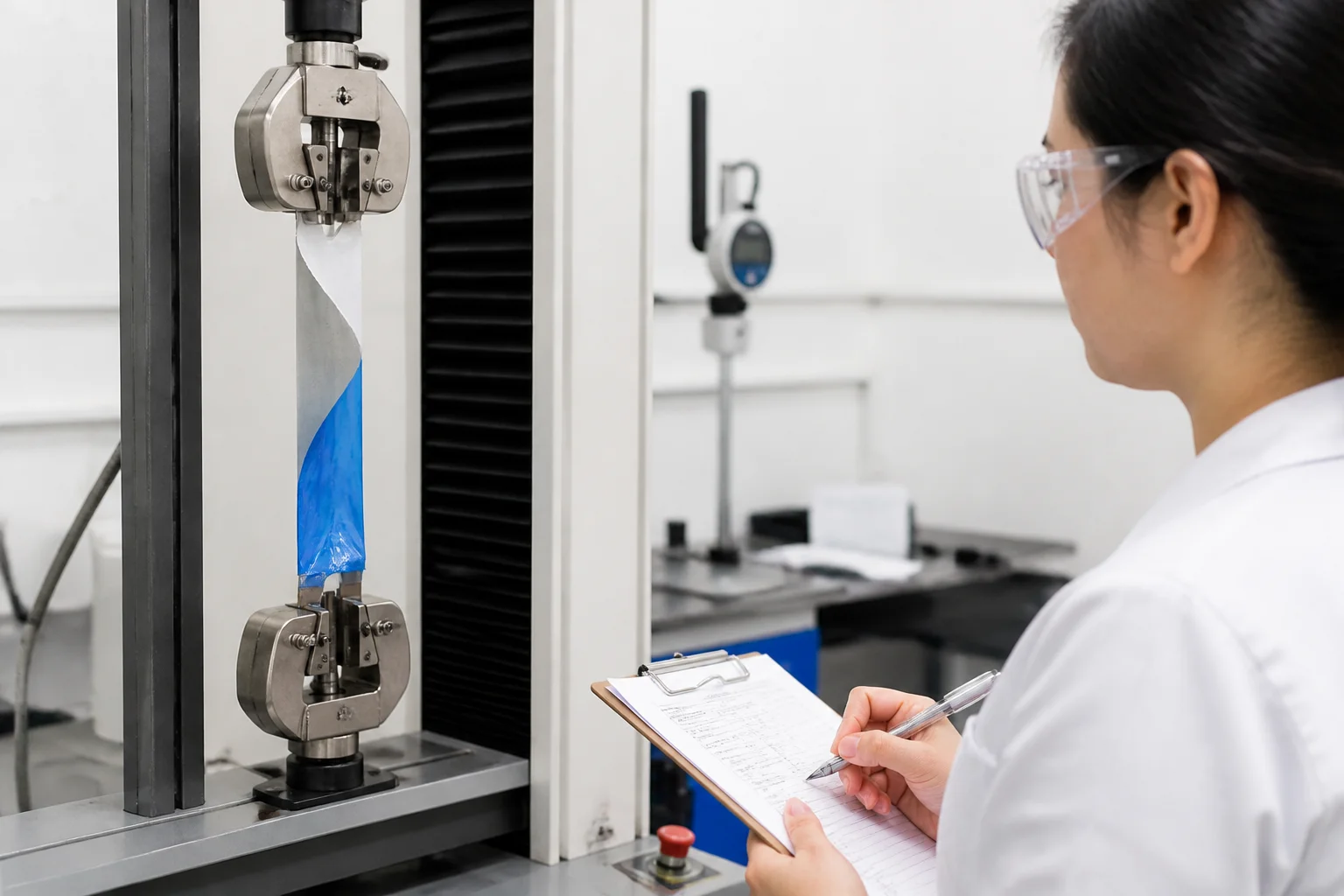
A peel test on a defined strip at a defined angle and speed gives a comparable number. It is the single most useful check on a laminated panel.
Running it on a production panel rather than a laboratory swatch is important, because application method affects the result as much as the adhesive does.
Flex and fold testing
Repeated flexing at a fold reveals whether the bond survives movement. Sample panels can be folded and unfolded a set number of times and then inspected at the crease.
This is the test that catches rigid adhesives on flexible constructions, which is a frequent mismatch.
Heat and humidity exposure
A short accelerated exposure in warm, humid conditions separates robust bonds from marginal ones. Panels are inspected for edge lifting, bubbling and softening.
For tropical and coastal markets this should be a standard requirement, not an optional extra.
| Test | What it reveals | When to require | Failure signal |
|---|---|---|---|
| Peel at defined angle | Edge and interface strength | Every laminated panel | Low or variable values |
| Shear test | Panel acts as one unit | Structured bags | Layer movement under load |
| Flex fatigue | Bond survives movement | Soft and folding styles | Cracking at the crease |
| Heat exposure | Creep resistance | Any hot-climate market | Shifted or softened panel |
| Humidity exposure | Cure quality | Humid markets, sea freight | Edge lifting, bubbles |
| Spot check on production | Process consistency | Every batch | Batch-to-batch variation |
Why production spot checks matter more than sample tests
A sample approved in a controlled setting says little about a full production run. Adhesive batches, ambient humidity and operator technique all vary.
A simple peel spot check on each batch catches variation before the goods ship, and it costs minutes rather than seasons.
Where Bond Failures Appear
Field failures cluster into recognisable patterns, and each maps to a specific bonding decision.
Edge lifting
The face material lifts from the interlining along an edge or a seam. The cause is usually weak peel strength combined with an unsealed edge.
It appears first at the highest-flex edge, typically the top opening or a curved seam.
Bubbling and blistering
Trapped moisture or solvent creates blisters between layers. The cause is incomplete drying or bonding damp material.
Blisters often appear weeks after production, once the panel has been in a warm environment.
Sagging linings
The lining separates and gathers inside the bag. The cause is a bond that cannot hold a slippery, light fabric, or partial coverage that left unbonded zones.
Soft panels and hollow feel
A panel that has partially debonded feels soft in one area and firm in another. Customers describe it as the bag losing its shape, and the cause is localised separation rather than material failure.
Pressing the panel across its surface during inspection finds these zones before shipment, which is a faster check than any laboratory test.
Pulled handles and straps
The anchor separates because the reinforcement shifted or the bond at the patch failed. The load then returns to a small number of stitch holes and the material tears.
| Field symptom | Likely bonding cause | Where it shows first | Prevention |
|---|---|---|---|
| Edge lifting | Low peel strength, open edge | Top opening, curved seams | Sealed or folded edges |
| Bubbling | Moisture or solvent trapped | Large flat panels | Full dry, dry material |
| Sagging lining | Wrong adhesive for slippery fabric | Interior base and sides | Stitch top edge, better grab |
| Pulled handle | Reinforcement shifted or debonded | Anchor stitch line | Stitch the patch, spot check |
| Collapsed base | Stiffener creep or separation | Base centre | Heat-resistant bond, pocket |
| Wavy edge | Inconsistent adhesive at fold | Turned edges | Controlled application |
Reading the pattern
Failures concentrated at edges point to peel strength. Failures spread across flat panels point to cure and trapped volatiles. Failures at anchors point to reinforcement bonding.
That distribution is more useful than any single complaint, because it identifies the one process change that would prevent most of them.
Cost, Lead Time and Substitution Risk
Adhesive is a small line in a bag’s cost breakdown and a large lever on its reliability. Understanding the economics explains why substitution happens so often.
Adhesive cost per bag
Adhesive typically represents a modest share of material cost, far below the face material, hardware or lining. Upgrading to a better system is rarely what makes a bag expensive.
This makes adhesive one of the least efficient places to save money and one of the easiest places to accidentally create a failure.
Process cost is the larger variable
The real cost sits in the process: drying time, press capacity, curing space and operator attention. A slower adhesive reduces throughput, which is a bigger number than the adhesive itself.
When a factory looks for savings, it usually looks here rather than at the adhesive price. Shorter open times and faster lines are the visible result.
Why substitution happens quietly
Substitution is often invisible because the finished panel looks identical. A different adhesive batch, a faster-curing grade or a change of supplier produces no visible difference until the bag is in use.
Without a named adhesive family and a batch test, the buyer has no way to detect the change, which is why the specification matters more than the sample.
Lead time effects
Reactive systems need cure time, and water-based systems need drying. Compressing those windows to hit a delivery date is a common source of marginal bonds.
A realistic lead time protects the bond. An aggressive one trades durability for schedule, usually without anyone stating the trade explicitly.
| Factor | Cost impact | Quality impact | Buyer control |
|---|---|---|---|
| Adhesive grade | Small | High | Name the family in the spec |
| Process time | Larger | High | Agree realistic lead times |
| Cure and drying | Moderate | Critical | Require full cure before packing |
| Substitution | Saving | Hidden risk | Batch peel test |
| Reinforcement stitching | Small | High | Specify stitched patches |
Where the money is actually lost
A bonding failure costs far more than any saving on adhesive: returns, replacements, freight and the reputational cost of a product that separates.
Against that, the cost of a tested, specified bond is negligible. The economics favour specification clearly, which is why the omission is usually one of attention rather than of budget.
Adhesive is a small cost line and a large reliability lever. The saving is never worth the failure it buys.
Specifying Adhesive at Sampling
Bonding becomes controllable once it is written down. A short specification is enough to make it repeatable.
Name the adhesive family
State whether the bond is solvent-based, water-based, hot-melt or reactive. The family determines behaviour under heat and humidity, and it is the first thing a substitute would change.
Where the factory proposes an alternative, the substitution should be tested rather than accepted on assurance.
State application and coverage
Coverage should be defined as full-surface or partial, with the method named. Spray, roller and sheet application give different consistency, and the difference is invisible on a finished panel.
Define the acceptance test
Specify which test will be used to accept each batch, at what value, and on what sample size. A number makes the requirement enforceable.
Add the environment clause
For hot or humid destinations, add the ageing exposure requirement. It is the clause most often omitted and most often the cause of seasonal failure.
| Specification item | What to write | Why it matters |
|---|---|---|
| Adhesive family | Solvent, water, hot-melt or reactive | Determines ageing behaviour |
| Coverage | Full or partial, with method | Prevents soft spots |
| Application conditions | Temperature, humidity, open time | Process consistency |
| Acceptance test | Test type and minimum value | Makes it enforceable |
| Ageing exposure | Heat and humidity cycle | Matches destination climate |
| Reinforcement method | Bonded, stitched or both | Protects load points |
The short version
Adhesives and bonding decide a large share of a bag’s real service life, and they do it invisibly. Panels keep their shape, linings stay in place and reinforcements hold because a bond was made correctly and stayed correct.
Buyers who name the adhesive family, require a peel test, add a climate clause and stitch the reinforcements get a bag that fails predictably rather than surprisingly. That is a modest amount of specification for a large amount of risk removed.
FAQ
Why does bonding matter more than stitching in a bag?
Stitching joins panels, but bonding builds the panel itself. Lamination, linings, stiffeners and reinforcements depend on adhesive, and their failure is invisible until the bag is in use.
Which adhesive is best for PU leather bags?
It depends on the bonding point. Water-based systems suit general lamination and linings, hot-melt suits fast assembly, and reactive systems suit high-stress bonds. The family should match the load and the climate.
Why do bonded panels separate at the edges first?
At an edge the entire load acts on a narrow line with no surrounding material to share it. Peel strength is therefore tested hardest there, which is why folded, bound or sealed edges are so important.
Why does a bond fail months after production?
Usually plasticiser migration, incomplete cure or gradual peel under sustained load. The bond was marginal when made and weakened over time rather than failing outright.
Can you bond PU leather to foam reliably?
Yes, with a flexible adhesive that allows the foam to compress. A rigid adhesive restricts movement and cracks at the interface, so the choice matters more than the bond strength alone.
What test should I require for laminated panels?
A peel test at a defined width and angle is the baseline. Add a shear test for structured styles and a flex test where the panel will fold repeatedly.
Does humidity affect adhesive performance?
Considerably. Moisture weakens the interface and prevents full cure in water-based systems. For humid markets an ageing exposure test belongs in the specification.
Why do linings sag inside bags?
Lining fabric is light and slippery, so it needs an adhesive with good grab. Partial coverage leaves unbonded zones, and the lining settles into them over time.
Should reinforcements be bonded or stitched?
Both, where possible. The bond holds the patch in position and spreads load, while stitching converts the load path into a mechanical one that does not depend on adhesion.
What causes bubbles under a laminated panel?
Trapped moisture or solvent. Bonding damp material or insufficient drying leaves volatiles that expand later in a warm environment and form blisters.
Is a stronger adhesive always better?
No. A very rigid bond on a flexible construction fails sooner than a moderate flexible one, because the panel needs to move. Strength must match the mechanical behaviour of the stack.
How should adhesive be written into a specification?
Name the family, state coverage and application conditions, define an acceptance test with a minimum value, and add the heat and humidity exposure clause for the destination market.
Building a bag range and want the bonding specified rather than assumed?
Send your construction and destination market to info@gionar.com and we will advise on adhesive family, reinforcement method and the tests to require before production.