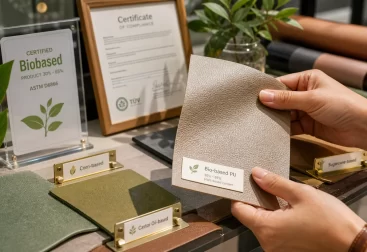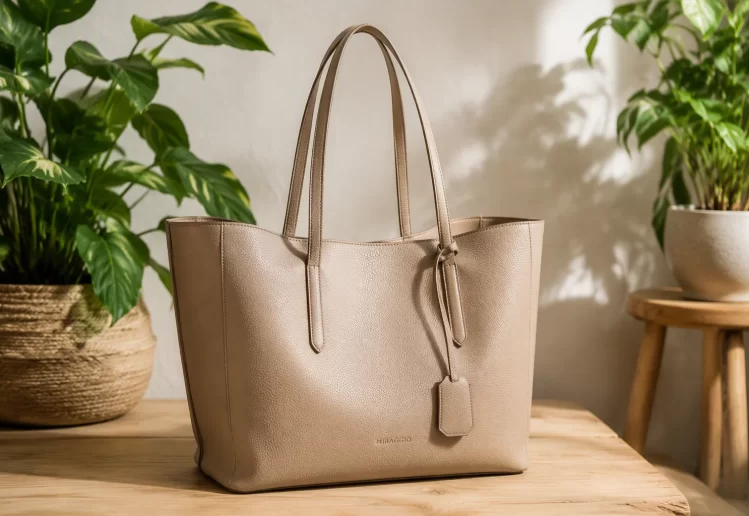
“Vegan leather” has become one of the most requested materials in the bag industry — and one of the most misunderstood. Retailers ask for it, brands market it, and customers increasingly search for it. But behind the label sits a family of very different materials: polyurethane (PU) leather, microfiber leather, PVC leather, and a growing range of plant-based alternatives made from cactus, apple waste, pineapple leaves, mushrooms and recycled fibers. They share one trait — no animal hide — yet they differ wildly in cost, durability, environmental impact and manufacturing behavior.
This guide explains what vegan leather actually is, how PU leather — the most widely used vegan option — fits the sustainability trend, and what a bag manufacturer considers when a buyer asks for “vegan” or “sustainable” materials. Written from the factory floor rather than the marketing department, it gives you the terminology, the trade-offs and the questions to ask, so your vegan bag line is honest, durable and profitable — not just labeled.
What Is Vegan Leather?
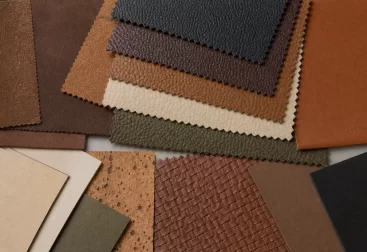
Vegan leather is any material that mimics the look or function of leather without using animal hides. The definition is functional, not chemical: it covers everything from petroleum-based synthetics to agricultural waste products. In practice, the term is used for three broad families.
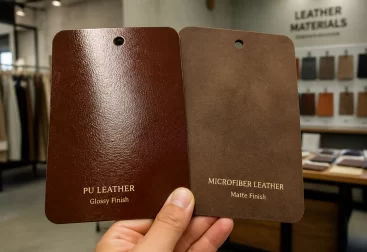
Synthetic leathers — PU leather and microfiber leather — are coated or impregnated fabrics that have dominated the market for decades. They are consistent, scalable, affordable and endlessly customizable, which is why the vast majority of “vegan leather” bags sold today are PU-based.
PVC leather, the older synthetic cousin of PU, is still used in budget goods but has fallen out of favor with sustainability-minded brands because of its chlorine chemistry and plasticizer content.
Plant-based and bio-based materials — often called “vegan leather alternatives” — combine natural fibers with a binder to create a leather-like sheet. Examples include cactus leather (ground nopal cactus with polyurethane binder), apple leather (apple pomace), mushroom leather (mycelium) and Piñatex (pineapple leaf fiber). These materials bring a compelling story, but they are newer, more expensive, and often less durable than well-made synthetics.
For a bag manufacturer, the label “vegan leather” is only the starting point. The real work begins when you specify which family, which grade, and which performance standard the material must meet — the same discipline you would apply to any other material decision.
The Main Types of Vegan Leather
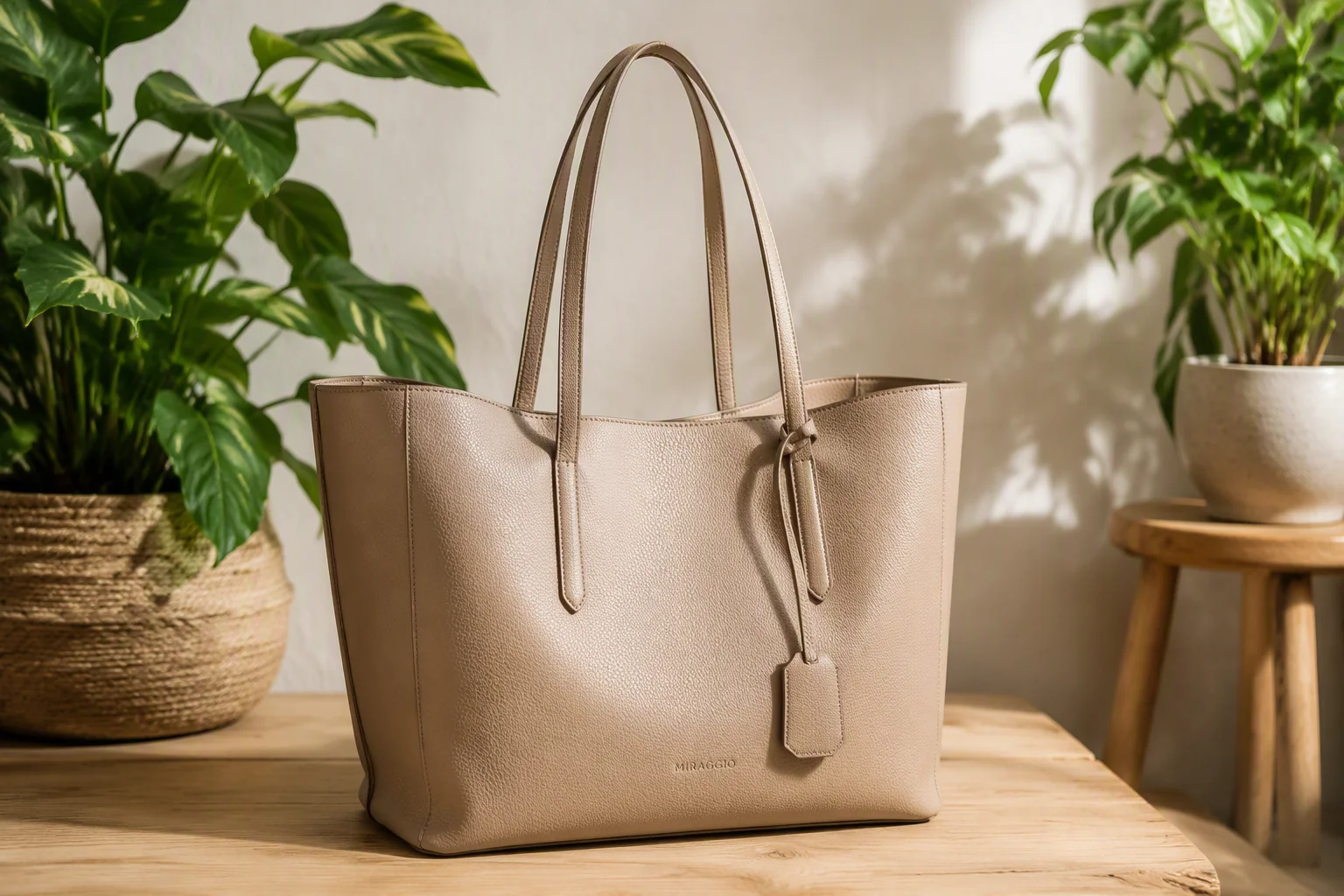
Choosing between vegan materials means comparing their real-world behavior. The table below summarizes the main options from a manufacturer’s point of view — cost, durability, sourcing and production behavior.
| Type | Base | Durability | Relative cost | Production behavior | Typical use |
|---|---|---|---|---|---|
| PU leather | Coated fabric (polyester/knit) | Good; grade-dependent | Low–moderate | Fast, flexible, wide color range | Fashion bags, accessories |
| Microfiber leather | PU-impregnated microfiber non-woven | Excellent | Moderate–high | Longer lead time, higher MOQ | Premium bags, backpacks, footwear |
| PVC leather | Coated fabric (PVC resin) | Moderate; stiff, cracks with age | Low | Fast; gloss finishes | Budget goods, luggage |
| Plant-based (cactus, apple, mushroom, pineapple) | Natural fiber + binder | Variable; often lower than synthetics | High | Limited supply, longer sourcing | Premium “story” products, small runs |
| Recycled / bio-based PU | Recycled or bio-derived polyurethane | Similar to standard PU | Moderate–high | Similar to PU; supplier dependent | Sustainability-positioned lines |
Notice what the table does not show: an absolute winner. Each material wins in a specific context. A fast-fashion tote at a $19 price point cannot carry premium plant-based material and survive. A signature backpack marketed for daily commuting cannot be built on the cheapest PVC. The honest starting point is your product brief — market, price, use — not the label you want to print on the tag.
How PU Leather Fits the Sustainable Trend
PU leather is the material the sustainability conversation most often skips — yet it is where most vegan bags are actually made. Understanding how PU relates to sustainability is essential for any brand positioning itself as vegan or eco-conscious.
The case for PU leather
Well-made PU leather avoids the animal welfare and land-use impacts of leather production, and it does not require the tanning chemistry associated with conventional leather processing. Compared with PVC, PU is free of chlorine and its plasticizers raise fewer disposal concerns. Modern mills increasingly offer water-based PU formulations, which replace solvent-based processes and reduce VOC emissions during production.
Durability is sustainability
The strongest environmental argument for quality PU is simple: it lasts. A bag that serves a customer for five years replaces several cheaper bags that fail in eighteen months. In lifecycle terms, material durability often outweighs the differences between material chemistries. This is why manufacturers push buyers toward adequate grades and thicknesses rather than the cheapest option — not to sell more material, but because returns and replacements are the real environmental cost.
Recycled and bio-based PU
The newest chapter in the PU story is feedstock. Recycled PU incorporates post-industrial or post-consumer polyurethane and fabric waste, while bio-based PU replaces part of the petroleum-derived raw material with plant-derived feedstock. Both are commercially available, and both change the sourcing conversation without changing the manufacturing process your factory already knows. If your brand wants a verifiable sustainability claim, recycled or bio-based PU is often a more practical upgrade than a switch to plant-based sheet materials.
The Rise of Vegan Leather in the Bag Market
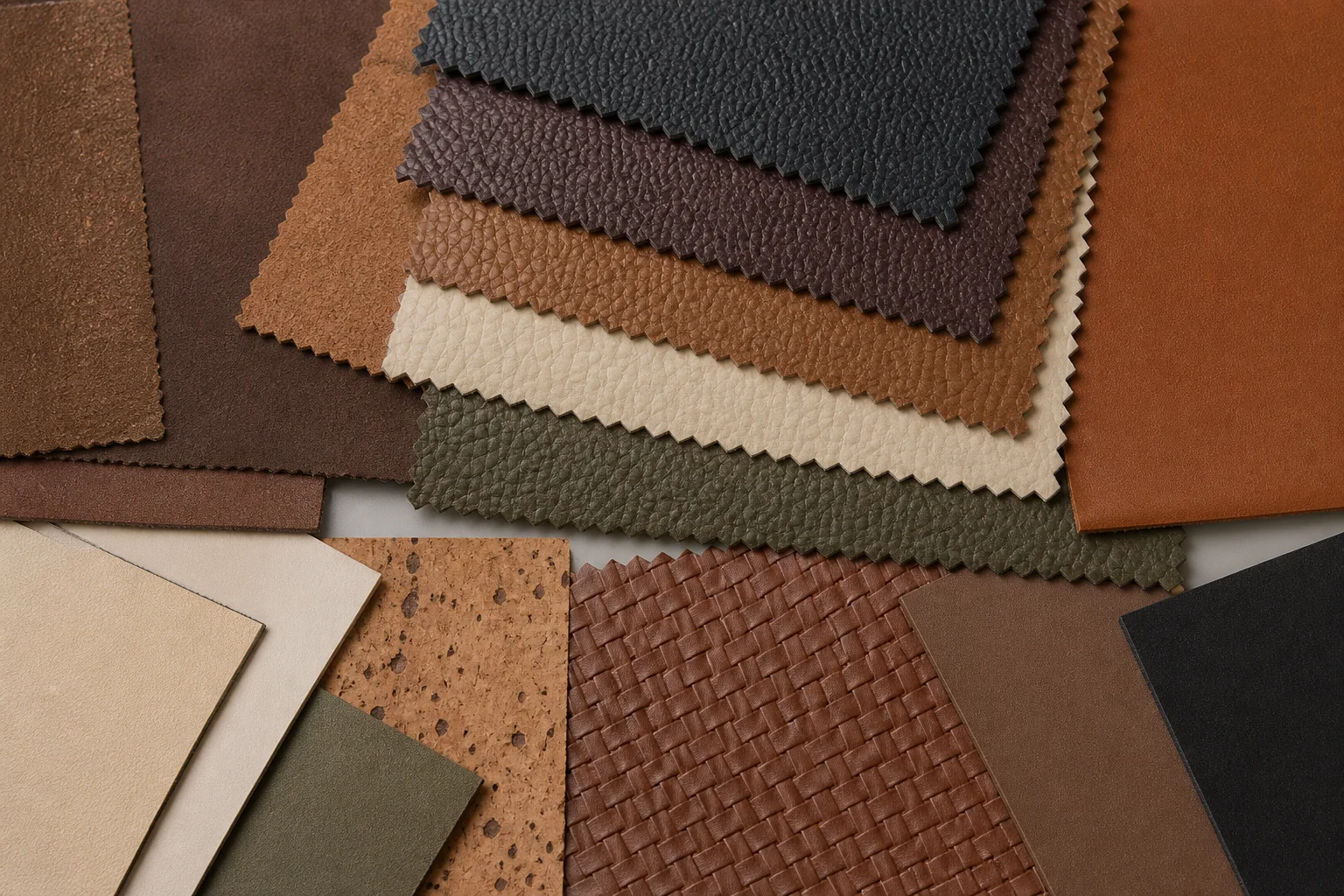
The demand for vegan leather did not arrive with a single customer group or a single campaign — it accumulated across several converging forces. Animal-welfare awareness pushed a generation of consumers toward animal-free products. Retail buyers began asking brands for vegan lines to cover shelves and respond to search trends. And the fashion industry, facing scrutiny over leather supply chains, welcomed materials that are easier to trace, certify and control than animal hides.
For bag brands, the practical result is a market that now expects vegan options across every price tier — from fast-fashion totes at mass-market prices to premium “vegan luxury” collections. This is a manufacturing opportunity as much as a marketing one. Vegan materials are consistent, scalable and compatible with existing production lines, which means a factory can move a brand from sampling to bulk production without new equipment or new skills. The same cannot always be said for plant-based sheet materials, whose supply is thinner and whose production behavior is less standardized.
Three trends shape how manufacturers see the vegan category today. First, the label has normalized: customers no longer treat vegan leather as exotic, so your line must compete on design, durability and price like any other. Second, the quality bar is rising — early low-grade vegan goods trained customers to expect cracking and peeling, and today’s buyers reward brands that prove durability with tests and warranties. Third, verification is becoming table stakes: retailers increasingly request certificates, material declarations and factory audits before listing a “vegan” or “sustainable” claim. A brand that enters the category with vague language and unverifiable claims will be at a growing disadvantage.
The manufacturing implication is straightforward: vegan is no longer a niche request to accommodate, but a core product line to build with the same rigor as leather goods. That means locking material families, grades and test standards in the specification phase — not improvising them after the first return wave.
Vegan Leather vs Genuine Leather: A Balanced Comparison
Positioning a vegan line often means explaining how it compares with genuine leather — to retailers, to customers and to your own team. A balanced comparison keeps the conversation credible.
| Factor | Quality PU / microfiber (vegan) | Genuine leather |
|---|---|---|
| Animal welfare | No hides involved | By-product of meat industry |
| Consistency | Very consistent color, grain, thickness | Natural variation in grain and marks |
| Durability | Good to excellent by grade | High with care; ages and patinas |
| Water behavior | Surface sheds water | Absorbs; needs conditioning |
| Cost | Lower to comparable | Higher, especially full-grain |
| Care | Simple wipe-clean | Conditioning, avoid soaking |
| Environmental story | No land/water for animals; synthetic feedstock | Land use, tanning chemistry, by-product debate |
Two points matter for buyers. First, “genuine leather” is itself a spectrum — from full-grain to bonded leather — so comparisons should always be grade-to-grade, not label-to-label. Second, customers who value the aging character of natural leather will not be satisfied by synthetic substitutes, no matter how good; positioning your vegan line at customers who value animal-free, low-maintenance, consistent products is both honest and commercially sound.
Environmental Considerations and Certifications
If you plan to make environmental claims about vegan materials, verifiability is everything. A claim without evidence is a liability — regulators, retailers and informed customers increasingly check.
What to look for in material suppliers
- REACH compliance (EU) — restricts hazardous substances, including heavy metals and certain plasticizers.
- OEKO-TEX Standard 100 — product safety testing for harmful substances in textiles and synthetics.
- ISO 14001 — environmental management systems at the manufacturing site.
- Carbon and water disclosures — increasingly available from major mills; ask for the numbers behind a “greener” claim.
- Recycled content certificates — e.g., GRS (Global Recycled Standard) if you claim recycled PU content.
The honest framing
A useful mental model for customers: vegan leather avoids the animal-hide supply chain; quality synthetic construction avoids the short-lifecycle waste problem; recycled or bio-based feedstocks reduce the fossil input. Each claim should be traceable to a specific material choice, not to the word “sustainable” printed on a hang tag. A factory that can show you the certificates behind its materials is a partner you can build claims on.
Manufacturing Vegan Leather Bags: What Buyers Should Know
Vegan leather changes nothing about bag construction discipline — and changes everything about material specification. Here is what to brief your factory when your line is vegan.
Specify the material family first
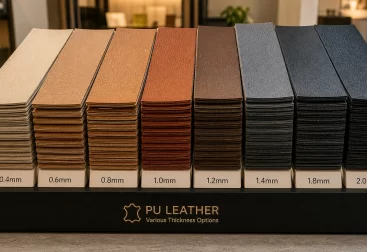
“Vegan leather” is not a specification. Your brief should name the family (PU, microfiber, plant-based), the grade, and the thickness. If you are sourcing plant-based sheet material, confirm lead times and minimums early — supply is thinner and lead times longer than for standard PU.
Match the construction to the material
Plant-based materials often behave differently at the stitching stage — some are stiffer, some tear more easily along cut edges, and all need edge treatment suited to their fiber content. Prototyping is not optional when a material is new to your line. Sew a full sample bag, stress the seams, and test how the material creases at corners before committing to bulk.
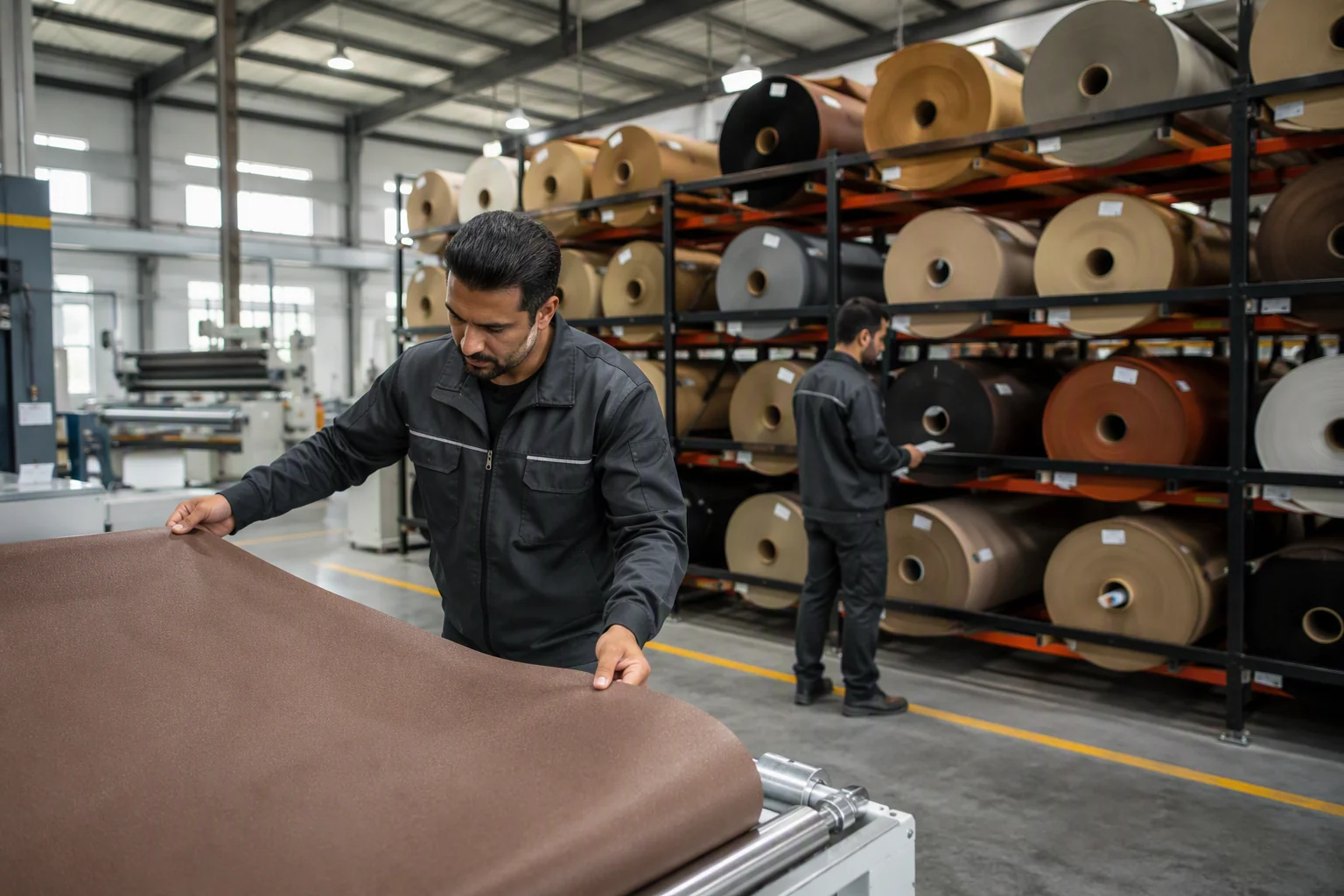
Quality control on vegan materials
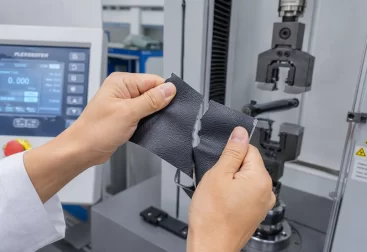
The same tests apply as for any synthetic: abrasion (Martindale), tear strength, color fastness, cold crack and peel strength. For plant-based materials, add moisture sensitivity and edge-fray checks. Insist on test reports from the material supplier and batch certificates with every shipment — a “natural” material that fails in the field damages the brand faster than an honest synthetic ever will.
Sourcing Vegan Materials: Practical Steps for Brands
Sourcing vegan materials well is a sequence of small disciplines, not a single decision. The steps below mirror what a professional manufacturer does for its own orders and can guide you whether you buy material yourself or through a factory.
Step 1 — Write the specification, not the label
Turn “vegan leather” into a written spec: material family (PU, microfiber, plant-based, recycled), thickness range, color reference, required test standards and acceptable tolerances. A written spec is the difference between a consistent line and a line that drifts between batches and suppliers.
Step 2 — Qualify the supplier with evidence
Ask for physical swatches, test reports (abrasion, tear, color fastness, cold crack), and certificates (REACH, OEKO-TEX, GRS where relevant). Verify that the certificates correspond to the actual material you are buying, not to a similar product in the supplier’s catalog. Visit or audit the mill if the order is large enough to justify it — or rely on a factory that has already done the audit.
Step 3 — Sample before committing
Build a full prototype bag with the shortlisted material. Check how it sews, how it creases at corners, how edges behave, and how hardware and lining interact with it. For plant-based materials, sample twice — the first run reveals handling quirks that change production parameters.
Step 4 — Lock lead times and minimums
Plant-based materials and special recycled grades carry longer lead times and higher practical minimums than standard PU. Confirm these before you commit to a launch date, and plan reorders far enough ahead that a supply delay does not stall your line.
Step 5 — Verify in production and across batches
Inspect incoming material against the sealed reference, run inline checks during production, and require batch certificates with each shipment. The most common sourcing failure is not a bad first batch — it is batch-to-batch drift that goes unnoticed until the goods are on the shelf.
Following these steps is faster than it sounds, and it converts the biggest risk in the vegan category — unverifiable claims and inconsistent quality — into manageable, checkable procedures.
How to Talk About “Vegan” and “Sustainable” Honestly
Greenwashing is the fastest way to lose credibility with the exact customers who buy vegan products. Three rules keep your claims safe and your marketing effective.
Rule 1 — Claim what you can prove
If you say “sustainable,” be ready to answer: which part is sustainable — the feedstock, the process, the lifespan, or the disposal? A precise claim (“made with recycled-content PU, verified under GRS”) is stronger and safer than a vague one (“eco-friendly”).
Rule 2 — Distinguish vegan from sustainable
Vegan means animal-free. Sustainable is a broader, harder claim. A PU bag can be vegan without being especially green; a plant-based bag can be biodegradable in theory yet short-lived in practice. Sell both attributes accurately, and your line will not be exposed when a regulator or a journalist asks the follow-up question.
Rule 3 — Let the material do the talking
Customers increasingly understand that “vegan leather” covers a spectrum. Publishing your material specifications — the family, the grade, the tests it passed — converts a marketing label into a trust signal. Transparency about what your vegan material is (and is not) is the strongest differentiator available to a smaller brand competing with louder marketing.
FAQ
What is vegan leather made of?
Most vegan leather is synthetic — typically polyurethane (PU) coated fabric or microfiber leather — while newer options use plant fibers such as cactus, apple, pineapple leaf or mushroom mycelium combined with a binder.
Is vegan leather better for the environment than real leather?
It depends on the comparison. Vegan synthetics avoid animal-hide supply chains and tanning chemistry, but their petroleum-derived feedstock and disposal profile matter. The highest-impact decision is usually durability: a bag that lasts years beats any material that fails quickly.
Is PU leather considered vegan?
Yes. PU leather contains no animal products, which makes it the most common vegan leather used in bags today.
How durable is vegan leather?
Quality PU and microfiber leather are durable in normal use — microfiber especially so. Plant-based materials vary widely and are often less abrasion-resistant, so match the material to the product’s expected service life.
Does vegan leather crack or peel?
Low-grade synthetic coatings can crack and peel over time, which is why grade and test standards matter. Quality materials with proper care resist this for years.
Can vegan leather bags be customized with logos and hardware?
Yes — PU and microfiber leather emboss, deboss, print and stitch like conventional materials, and hardware options are identical. Plant-based materials can also be customized, but confirm embossing behavior in sampling.
What certifications should I ask for?
For substance safety: REACH and OEKO-TEX Standard 100. For recycled content claims: GRS or equivalent. For production environment: ISO 14001. Ask suppliers for the actual certificates, not just the logos.
Is vegan leather waterproof?
Most synthetic vegan leathers shed water at the surface and can be wiped clean, but they are not fully waterproof at seams, cut edges and zipper openings. Plant-based materials vary; check moisture sensitivity in sampling if rain exposure is likely.
How should I care for vegan leather bags?
Wipe with a soft, damp cloth and mild soap as needed; avoid prolonged direct sun and heat, which can accelerate coating wear. Store the bag away from extreme temperatures and sharp objects. Quality vegan leather needs far less maintenance than genuine leather — no conditioning required.
Can vegan leather bags be repaired?
Surface scuffs on quality PU can often be minimized with proper care, but deep cuts and coating damage are harder to repair than genuine leather. This is why grade selection and edge treatment matter — prevention beats repair in the vegan category.
Is plant-based leather biodegradable?
Not necessarily. Many plant-based leathers combine natural fibers with synthetic binders that do not biodegrade. If biodegradability matters to your claim, verify the specific material’s composition and disposal profile with the supplier before printing anything.
Common Mistakes When Launching a Vegan Bag Line
Most problems in vegan bag lines are not caused by the materials — they are caused by how the line is planned. The mistakes below appear again and again in buyer-factory conversations, and each one is avoidable.
- Choosing by label instead of specification. Buying “vegan leather” without fixing the family, grade and thickness invites inconsistency. The label describes the category; the specification controls the product.
- Ignoring grade differences. Two materials can both be called PU and differ threefold in durability. Test the actual grade you intend to sell, and record it in the order contract.
- Skipping the prototype. Every material behaves differently at seams, corners and hardware points. A two-week sampling stage is cheaper than a whole-batch quality problem discovered at final inspection.
- Making claims without evidence. “Sustainable,” “eco-friendly” and even “biodegradable” mean nothing without certificates and material declarations. Vague claims are a compliance risk and a trust risk.
- Underestimating lead times and minimums. Plant-based and recycled materials move slower and in larger practical batches than standard PU. Launch dates set without these constraints slip — or force rushed, higher-cost sourcing.
- Failing to lock batch consistency. Material that matches in the swatch book but drifts between production batches becomes a shelf-level inconsistency customers notice immediately. Sealed references and batch certificates close this gap.
Read the list as a checklist before you brief a factory. A vegan line that fixes these six points is not more complicated than a conventional line — it is simply specified, tested and verified, which is what separates professional products from label-driven ones.
Next Steps for Your Vegan Bag Line
A vegan bag line is a normal bag line done carefully: right material family, right grade, right tests, honest claims. The work is specification and verification — not marketing slogans. If you are planning vegan handbags, backpacks or totes and want a manufacturer who will walk you through PU, microfiber and plant-based options with real samples and real test reports, that conversation starts with a brief.
Contact info@gionar.com for a free material consultation and quotation. Explore our custom bag manufacturing services and custom backpack manufacturing to see how we build bags around honest material choices.