Which Thread Should You Choose for Bag Manufacturing, and Why?
Thread is the smallest visible component in a bag and the one most likely to be chosen by habit. A factory usually has two or three threads in stock, and the specification conversation rarely goes further than a colour match. That is a missed opportunity, because thread decides a large part of how a seam behaves under load.
A seam is a system. The thread, the stitch type, the needle, the material and the machine tension all act together, and the weakest element sets the result. Choosing thread without reference to the other four produces seams that pass inspection and fail in use.
The commercial argument is straightforward. Thread is a low-cost component, and upgrading it is inexpensive relative to the bag. Yet a thread that is too weak, too stiff or too abrasion-prone produces seam failures that read as poor manufacturing regardless of the cause.
This article covers what thread does in a bag, how polyester, nylon and cotton differ, how sizes and ticket numbers work, why seam efficiency matters more than thread strength, how stitch type and needle choice interact with thread, what ageing does to a seam, how tension settings cause invisible weakness, and how to write thread requirements into a specification. The aim is to make thread a deliberate decision with a defensible cost.
- What Thread Does in a Bag
- Polyester, Nylon and Cotton
- Thread Size and Ticket Numbering
- Seam Efficiency Beats Thread Strength
- Stitch Type and Thread Together
- Needle Choice and Material Damage
- Colour, Dye Fastness and Matching
- Abrasion, UV and Ageing
- Tension and Invisible Weakness
- Thread Cost and Purchasing Discipline
- Thread Mistakes at Sample Stage
- Testing Thread and Seams
- Specifying Thread at Sampling
- FAQ
What Thread Does in a Bag
Thread holds panels together, but it also controls how a seam behaves when the bag is loaded. Four functions matter, and each one is affected by the thread choice.
It transfers load between panels
A seam converts a pull on one panel into distributed force across many stitches. The thread must carry that force without stretching permanently or cutting into the material.
Where thread is too extensible, the seam elongates and the load concentrates on fewer stitches, which accelerates failure at the seam end.
It defines the seam’s appearance
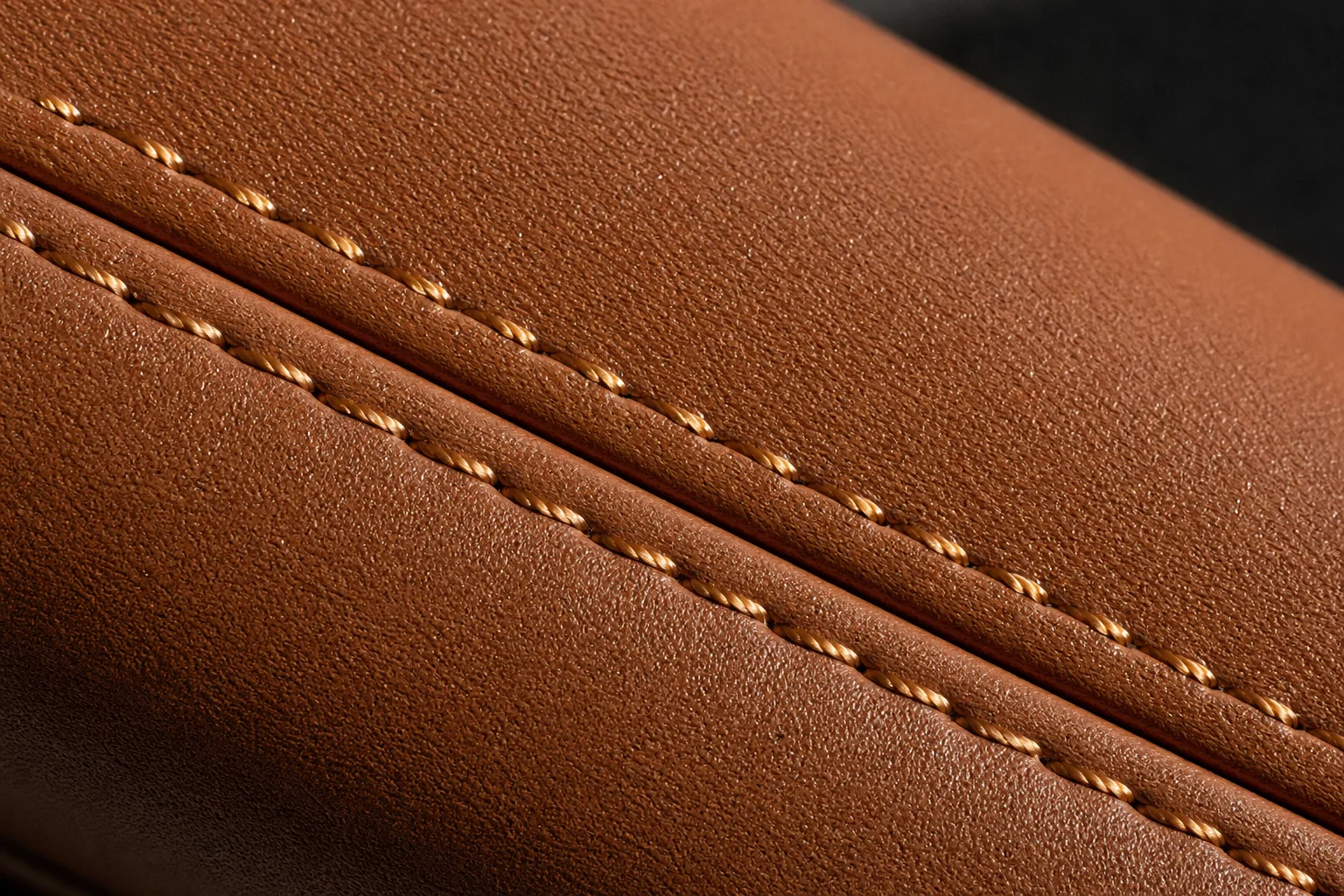
Thread thickness, sheen and lay determine whether a stitch line looks refined or coarse. On a premium bag the stitch line is one of the first things a buyer inspects.
This is why thread choice is partly an aesthetic decision, not purely a technical one.
It resists abrasion at exposed edges
Stitching near a bag’s base, corners and edges is exposed to abrasion. The thread sits proud of the material and takes the wear first.
A thread with poor abrasion resistance fuzzes and breaks at exactly the points where the seam matters most.
It sets the visual rhythm of the bag
Stitch spacing and thread thickness create the line pattern a buyer reads across a panel. Consistent rhythm reads as control; variable spacing reads as carelessness even when the seam is strong.
That rhythm is decided by thread size and machine settings together, which is why a thread change alters appearance as well as performance.
It accommodates material movement
PU leather and coated fabrics flex, and the seam must flex with them. A thread with some elasticity distributes strain; an inextensible thread concentrates it at needle holes.
This balance between strength and extension is the central trade in thread selection.
Polyester, Nylon and Cotton
Three fibre types cover almost all bag production, and each has a clear best use.
Bonded polyester
Polyester is the default for bags. It has good strength, low moisture absorbency, good UV resistance and predictable behaviour in dyeing.
Bonded polyester, where the filaments are fused into a single strand, resists fraying and abrasion better than twisted alternatives and is the usual choice for load-bearing seams.
Nylon
Nylon is stronger and more elastic than polyester at the same size. That elasticity suits seams that must absorb shock, such as strap attachments.
Its weakness is UV degradation and moisture regain, which makes it less suitable for outdoor or long-life applications unless specifically stabilised.
Blended and coated threads
Blends aim to combine elasticity with UV stability, and coated threads add a lubricant to reduce friction and heat at the needle.
Both are useful in specific cases, but they complicate verification. Where a thread is not a standard construction, the supplier’s specification should be tested rather than assumed.
Cotton
Cotton has a soft hand and dyes easily, which suits decorative topstitching and heritage styling. It is also the weakest of the three in abrasion and moisture resistance.
Cotton in a load-bearing seam on a bag that sees daily use is a durability decision being made for aesthetic reasons, which should be stated rather than assumed.
| Property | Bonded polyester | Nylon | Cotton |
|---|---|---|---|
| Tensile strength | High | Highest | Moderate |
| Elongation | Low to moderate | High | Moderate |
| Abrasion resistance | High | High | Low |
| UV resistance | Good | Poor without stabiliser | Moderate |
| Moisture regain | Low | Moderate | High |
| Typical use | Main seams | Shock-load seams | Decorative topstitch |
The fibre decides how a seam ages. The size decides how much it can carry. Both have to be specified, and neither is visible on a finished bag.
Thread Size and Ticket Numbering
Thread size is where specification conversations most often break down, because three numbering systems are in use and they do not agree.
Ticket number
Ticket number describes the relationship between thread size and length. A higher ticket number means a finer thread, which is the reverse of most people’s intuition.
This inversion causes real errors, because a buyer asking for a larger number expecting a heavier thread receives a lighter one.
Tex and denier
Tex measures weight per fixed length, so a higher tex is a heavier thread. Denier measures weight per fixed length in a finer unit.
Both are linear and predictable, which makes them preferable for specification. Ticket numbers vary slightly between suppliers, while tex does not.
Why suppliers quote different numbers for the same thread
Conversion between ticket, tex and denier is approximate at the edges, and some suppliers round in their own favour. Two quotations for what appears to be the same thread can differ by a measurable amount.
Requesting the tex value in writing removes the ambiguity before an order is placed, rather than after the first seam is sewn.
Matching size to the seam
Heavier thread suits load-bearing seams and coarse materials. Lighter thread suits fine topstitching and thin materials where a heavy thread would perforate the surface.
The correct size is the one that fills the needle hole without crowding it. Too heavy and the seam puckers; too light and the thread cuts the material.
| Application | Typical ticket | Typical tex | Why |
|---|---|---|---|
| Fine topstitch | High ticket (fine) | Low tex | Clean line on thin material |
| General seaming | Mid ticket | Mid tex | Balance of strength and appearance |
| Load-bearing seams | Low ticket (coarse) | High tex | Higher tensile capacity |
| Strap and handle | Lowest ticket | Highest tex | Shock and sustained load |
| Decorative contrast | Mid to low ticket | Mid to high tex | Visible stitch definition |
How to avoid the numbering trap
Specify tex and state the ticket number only as a reference. Where a supplier quotes ticket alone, ask for the tex equivalent before approval.
This single practice removes most thread-related disputes, because both sides are working from the same physical number.
Seam Efficiency Beats Thread Strength
A seam rarely fails because the thread is weak. It fails because the seam is inefficient, and efficiency is decided by geometry rather than by thread alone.
What seam efficiency means
Seam efficiency compares the strength of a seamed joint to the strength of the material it joins. A seam that reaches sixty per cent of material strength is normal; a good construction reaches higher.
If the seam is the weak point, upgrading thread alone will not fix it, because the material fails before the thread does.
Stitch density and material loss
Every needle hole removes material. Dense stitching on a coated fabric creates a perforated line that tears along the stitch row under load.
Moderate density with a suitable thread outperforms dense stitching with a heavy thread, particularly on PU leather.
The stitch line as a perforation
Every stitch creates a hole, and a row of holes across a coated material forms a line of reduced strength. Under tension the panel tears along that line rather than at the seam itself.
This is why seam failures on PU leather so often show torn material rather than broken thread, and why thread upgrades fail to fix them.
Reinforcement instead of heavier thread
Where a seam needs more strength, adding a reinforcement layer or a second row of stitching usually achieves more than increasing thread size.
Reinforcement spreads load across material that remains intact, which is more effective than loading a perforated line harder.
| Approach | Effect on seam strength | Effect on material | When to use |
|---|---|---|---|
| Heavier thread | Moderate gain | Larger holes | Coarse materials |
| Higher stitch density | Small gain, tear risk | More perforation | Not on coated fabric |
| Reinforcement layer | Large gain | Protects material | Load points |
| Second stitch row | Moderate gain | Distributes load | Straps and handles |
| Better seam type | Large gain | Depends on design | Structural seams |
Where efficiency is decided
Efficiency is set at sampling, when seam type, stitch density and reinforcement are chosen. Thread is one input among several and cannot compensate for the others.
Buyers who treat thread as the strength lever usually discover the real constraint only after a field failure.
Stitch Type and Thread Together
Stitch type decides how thread is loaded, and pairing the wrong stitch with a thread produces failure regardless of quality.
Lockstitch and its limits
Lockstitch is the standard for bags. Two threads interlock inside the material, and the seam fails if either breaks.
Its limitation is extensibility. A lockstitch has little stretch, so on highly elastic materials it can break when the seam is stretched, which is why some constructions use a different stitch at stress points.
Chainstitch and stretch
Chainstitch uses a single thread looping through itself, giving more extension. It suits seams that must stretch, but it unravels from a broken end, which is a risk on exposed seams.
Bartack and reinforcement stitching
Bartacks at strap ends and pocket corners concentrate many stitches in a small area. They need a thread that resists abrasion and does not fray under repeated load.
A bartack with a soft cotton thread will fuzz and weaken quickly, even where the same thread is adequate for a straight seam.
| Stitch type | Thread requirement | Behaviour under load | Best use |
|---|---|---|---|
| Lockstitch | Balanced, moderate elongation | Strong, low stretch | General seaming |
| Chainstitch | Higher elongation | Stretches, unravels if cut | Elastic seams |
| Bartack | High abrasion resistance | Concentrated load | Strap ends, corners |
| Double-needle | Consistent diameter | Even load distribution | Topstitch, panels |
| Overlock | Fine, high extensibility | Edge control | Lining edges |
Matching thread to stitch geometry
A stitch that bends thread sharply at each loop needs a more flexible thread than one that lays it relatively straight.
This is why the same thread can perform well in a lockstitch and poorly in a bartack, and why stitch type belongs in the same conversation as fibre.
Needle Choice and Material Damage
The needle is often overlooked, yet it decides whether the thread protects the material or damages it.
Needle size relative to thread
The needle must create a hole large enough for the thread without crowding it. Too small and the thread abrades against the needle eye; too large and the hole is visibly oversized.
On coated materials an oversized hole is permanent. The material does not close around the stitch, and moisture and abrasion enter through the gap.
Needle point for coated fabric
A cutting or wedge point suits dense coated material, while a round point suits woven fabric. Using the wrong point tears the coating rather than parting it.
Torn coating shows as a ragged stitch line and becomes a crack initiation point under flexing.
Heat and needle wear
High-speed sewing generates heat at the needle. On coated material, heat can soften the coating and cause the thread to bond to it, producing irregular stitches.
A worn needle increases friction and heat, so needle replacement intervals belong in the process specification.
| Needle issue | Symptom | Cause | Fix |
|---|---|---|---|
| Too small for thread | Thread fraying, breaks | Eye abrasion | Larger needle |
| Too large | Visible holes | Oversized perforation | Match to thread |
| Wrong point type | Torn coating | Cutting instead of parting | Correct point for material |
| Worn needle | Irregular stitches | Heat and friction | Scheduled replacement |
| Heat build-up | Sticking, skipping | Speed too high | Reduce speed |
Why needle discipline is a quality signal
A factory that tracks needle changes is a factory that understands seam quality. The habit costs little and shows in stitch consistency.
It is also one of the easiest things to verify during an inspection, which makes it a useful question to ask.
Colour, Dye Fastness and Matching
Thread colour is a visual decision with a durability dimension, because dye performance varies between fibres and shades.
Tonal and contrast choices
Tonal thread hides irregular stitching and suits production where stitch consistency varies. Contrast thread advertises precision and exposes every deviation.
Choosing contrast thread on a new construction is a quality commitment, not only a design preference.
Dye fastness and shade variation
Dark shades and saturated colours are more prone to crocking and fading. Thread that fades differently from the material produces visible mismatch after use.
Where the material is a deep colour, thread fastness should be tested alongside it rather than assumed from a swatch card.
Batch matching
Thread is dyed in batches, and consecutive batches can differ slightly. On a large order, a mid-production thread batch change can produce a visible seam in the finished goods.
Holding one dye lot for the whole order avoids it. It is a simple purchasing discipline that prevents an awkward conversation.
| Colour factor | Risk | Control |
|---|---|---|
| Deep shades | Crocking, fading | Fastness test on both |
| Contrast stitching | Exposes irregularity | Higher process discipline |
| Batch variation | Visible difference mid-order | Single dye lot |
| Metallic or coated thread | Abrasion loss | Limit to decorative use |
| White and pale shades | Soiling visibility | Stain resistance check |
Matching thread to material in practice
The most reliable method is to stitch a sample on the actual material and inspect it under daylight. Swatch cards mislead because they sit against a different background.
That sample also reveals stitch appearance, which is the other half of the decision.
Abrasion, UV and Ageing
Thread ages in ways that are invisible until a seam fails. Three mechanisms dominate.
Abrasion at exposed points
Stitch lines at bases, corners and edges contact surfaces constantly. Thread with poor abrasion resistance fuzzes, thins and breaks at the highest-wear point.
Bonded filament thread resists this far better than spun thread, which is the main reason it dominates bag production.
UV degradation
Sunlight degrades nylon faster than polyester. On bags displayed in windows or used outdoors, the difference becomes visible within a season.
Where a bag will be exposed, polyester is the safer default regardless of the small strength advantage nylon offers.
Repeated washing and cleaning
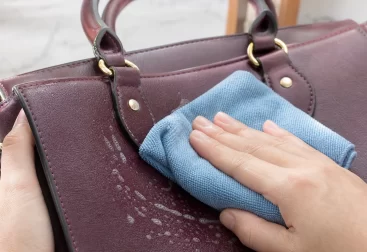
Where a bag is cleaned regularly, thread is exposed to detergents and mechanical action. Spun threads fuzz faster than bonded filament under that treatment.
If a care instruction promises repeated cleaning, the thread should survive it. That is a specification question, not a marketing one.
Moisture and rot
Cotton holds moisture and can support mildew in humid storage. On bags shipped by sea and stored in damp conditions, cotton thread is a liability.
Synthetic thread does not rot, which is why it is standard for export production even where cotton would look better.
| Ageing factor | Polyester | Nylon | Cotton |
|---|---|---|---|
| Abrasion | Good | Good | Poor |
| UV exposure | Good | Poor | Moderate |
| Humidity and mildew | Resistant | Resistant | Susceptible |
| Long-term colour | Stable | Moderate | Fades |
| Best climate fit | General and humid | Dry, sheltered | Decorative only |
Designing for the destination climate
A bag sold in a humid coastal market faces different thread stresses from one sold in a dry inland market. The fibre choice should reflect that rather than defaulting to a single house standard.
Specifying per destination is a small complication that removes a predictable failure mode.
Tension and Invisible Weakness
Machine tension is where good thread becomes bad seams, and the failure is almost always invisible from outside.
Too tight
Excessive tension stretches the thread during stitching. The seam looks correct and sits under permanent strain, so it breaks earlier than its rated strength suggests.
On coated material, tight tension also pulls the stitch into the surface, creating a channel that collects abrasion.
Too loose
Loose tension leaves loops that can be caught and pulled. The seam looks slightly raised and fails by snagging rather than by load.
Balance between needle and bobbin
Correct balance places the thread interlock inside the material, hidden from both faces. An unbalanced seam shows thread on one surface and weakens at the point where it emerges.
Inspecting a seam by opening it is the only reliable check. A flat exterior inspection misses the interlock position entirely.
| Tension fault | Exterior appearance | Hidden weakness | Field result |
|---|---|---|---|
| Too tight | Clean, slightly sunken | Pre-strained thread | Early break under load |
| Too loose | Slightly raised loops | Snag points | Seam pulls open |
| Unbalanced | Thread on one face | Weak interlock position | Abrasion and pull-out |
| Inconsistent | Variable stitch lay | Mixed strength | Failure at weakest zone |
| Bobbin variation | Sudden change mid-seam | Local weakness | Break at the change point |
Why tension belongs in the specification
Tension is a process setting, not a material property, but it determines whether the specified thread performs as intended.
Requiring a seam cross-section check at the start of production is a practical way to confirm the setting before volume is sewn.
Thread Cost and Purchasing Discipline
Thread is a minor cost line and a major determinant of perceived quality, which makes it a poor place to economise.
Cost per bag
Thread consumption per bag is measured in metres, and the cost is small relative to material and hardware. Moving from a standard to a bonded filament thread changes the bag cost marginally.
Against that, a seam failure costs returns, replacements and reputation. The arithmetic favours the better thread almost every time.
Consumption and waste
Actual consumption depends on stitch density, seam length and machine setup. Factories estimate from experience, and large discrepancies usually indicate a process change rather than a costing error.
Waste from thread breaks and rework is often larger than the cost difference between thread grades.
Approved supplier discipline
Thread substitution is common because thread is generic and interchangeable in appearance. A different supplier can mean a different tex for the same ticket number.
Naming an approved supplier or requiring a tex value removes most of the risk, and costs nothing at the purchasing stage.
| Factor | Cost impact | Quality impact | Buyer action |
|---|---|---|---|
| Fibre type | Small | Large | Specify polyester or nylon |
| Bonded vs spun | Small | Moderate to large | Require bonded for seams |
| Size accuracy | None | Large | Specify tex, not ticket |
| Dye lot control | Small | Moderate | Single lot per order |
| Substitution | Saving | Hidden risk | Approved supplier list |
Why thread is the wrong place to save
A seam is the most inspected part of a bag. When it fails, the customer does not attribute it to thread; they attribute it to the maker.
That asymmetry between cost and consequence is the whole argument for specifying thread properly.
Thread Mistakes at Sample Stage
Most thread problems are introduced before production starts. Six appear repeatedly, and each is cheap to correct at sampling.
Approving a colour match without a stitch sample
A thread card approved against a material swatch can look correct and read differently once stitched, because the thread sits at an angle and catches light differently.
Approving a stitched sample on the actual material removes the gap between intention and result.
Ignoring the tex value
Samples are often approved against a physical spool rather than a number. When that spool runs out, the replacement may be nominally equivalent and physically different.
Recording the tex on the approval sheet makes the sample reproducible.
Choosing contrast stitching on a new construction
Contrast thread exposes every deviation in spacing and tension. On a first production run, with operators still learning the material, that exposure is amplified.
Starting with tonal thread and moving to contrast after the process stabilises is a lower-risk sequence.
Specifying thread without specifying the needle
A thread that performs well through one needle size can fray or pucker through another. Needle size and point type belong with the thread requirement.
Leaving tension to the line
If tension is not set and checked at the start of production, each operator will settle on a different setting, and seam strength will vary across the order.
Testing only on a flat panel
Seams on curves, corners and bartacks behave differently from a straight run on a flat panel. Testing only the easiest geometry leaves the hardest unexamined.
| Mistake | What it costs | When it surfaces | Cheap fix |
|---|---|---|---|
| Colour approved on a card | Rework or rejection | After first production | Stitch on real material |
| No tex recorded | Silent substitution | Next order | Write tex on approval |
| Contrast on a new build | Visible irregularity | First shipment | Start tonal |
| Needle unspecified | Fraying, puckering | During sewing | Name needle size and point |
| Tension unset | Variable seam strength | In the field | Cross-section check |
| Flat panel only | Corner failures | After use | Test curves and bartacks |
Why sampling is the right moment
At sampling, changes cost a conversation. After production they cost rework, freight and reputation.
The six items above take under an hour to settle, which is a small investment against the failure modes they remove.
Testing Thread and Seams
Thread and seam performance can be tested quickly, and the tests are within reach of any production facility.
Tensile testing
A tensile test on a thread sample confirms it matches the specified strength. It also detects a substituted or under-specified thread before it reaches the line.
Comparing the result to the supplier’s declared value is enough; absolute precision is not required.
Seam strength and elongation
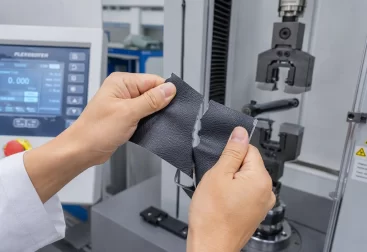
Pulling a seamed sample until it fails shows whether the seam or the material gives way. That distinction tells you where to invest.
If the material fails first, the seam is adequate and heavier thread will not help.
Abrasion and flex tests
Rubbing a seam against an abrasive surface simulates corner and base wear. Repeated flexing simulates the movement at a bag’s opening or a folded edge.
Both reveal thread behaviour that a static strength test misses entirely.
| Test | What it shows | When to run | Failure signal |
|---|---|---|---|
| Thread tensile | Matches specification | Each thread lot | Below declared value |
| Seam strength | Seam or material fails first | New construction | Seam breaks before material |
| Seam elongation | Stretch behaviour | Load-bearing seams | Excessive stretch |
| Abrasion | Wear at exposed points | Base and corner seams | Fraying, thinning |
| Flex fatigue | Movement tolerance | Folding styles | Break at the crease |
| Colour fastness | Shade stability | Deep shades | Crocking, fading |
Reading a seam failure correctly
A clean break in the thread suggests tension or strength. A torn material along the stitch line suggests perforation damage. Fraying before breaking suggests abrasion.
Each points to a different fix, and none of them is solved by simply buying heavier thread.
Specifying Thread at Sampling
Thread requirements fit into a short specification, and writing them down prevents most substitution problems.
Name fibre and construction
State polyester, nylon or cotton, and say whether the thread is bonded filament or spun. Construction affects abrasion and fraying more than fibre alone.
State tex, not ticket
Tex is unambiguous across suppliers. Citing ticket as a reference is acceptable, but tex should be the governing number.
Define seam requirements
Stitch type, density and reinforcement belong alongside thread. Together they set seam efficiency, which is what actually determines durability.
Require the tests
Thread tensile on each lot and seam strength on each new construction are sufficient for most programs. Both are quick and both catch the failures that matter.
| Specification item | What to write | Why it matters |
|---|---|---|
| Fibre | Polyester, nylon or cotton | Ageing behaviour |
| Construction | Bonded filament or spun | Abrasion and fraying |
| Size | Tex value | Cross-supplier consistency |
| Colour | Shade reference and lot control | Visual consistency |
| Seam | Stitch type and density | Seam efficiency |
| Acceptance tests | Tensile and seam strength | Enforceability |
Thread is a fraction of the bag’s cost and a large share of how the bag is judged. Specify it like a component, not a consumable.
The short version
For most bag programs, bonded polyester in a tex matched to the seam is the right default. Nylon earns its place where a seam must absorb shock, and cotton belongs where appearance outweighs durability.
What separates a durable bag from a fragile one is rarely the fibre alone. It is the combination of the right thread, the right needle, a balanced tension and a seam that is stronger than the material around it.
FAQ
Which thread is best for PU leather bags?
Bonded polyester is the usual choice. It resists abrasion and UV, does not rot in humid storage, and holds its colour. Nylon suits shock-load seams, and cotton is best limited to decorative stitching.
What does the ticket number on thread mean?
Ticket number relates size to length, and a higher ticket means a finer thread. Because it inverts the usual intuition, tex is a safer number to specify across suppliers.
Is heavier thread always stronger for a seam?
No. Heavier thread makes larger needle holes, and on coated material the perforated line can tear before the thread breaks. Seam efficiency and reinforcement matter more than size alone.
Why does thread break at the same point every time?
Usually a needle that is too small for the thread, a worn needle, or a tension setting that pre-strains the thread. The break location often points to the cause.
Does thread colour affect durability?
Not directly, but dye fastness varies by shade. Deep and saturated colours are more prone to crocking and fading, so fastness should be tested on the actual thread and material pair.
How do I stop thread batch variation showing in a large order?
Hold one dye lot for the whole order. Consecutive thread batches can differ slightly, and a mid-production change becomes visible across a finished run.
Why choose nylon instead of polyester?
Nylon is stronger and more elastic, which suits seams that absorb shock such as strap attachments. Its weakness is UV degradation, so it is a poorer choice for sun-exposed bags.
What needle should be used on coated fabric?
A point suited to dense coated material, sized to the thread so the hole is filled without crowding. The wrong point tears the coating and creates a crack initiation point.
How much does thread cost per bag?
A small fraction of material and hardware cost. Because a seam failure is attributed to the maker rather than the thread, economising here trades a tiny saving for a large risk.
What causes puckering along a stitch line?
Thread too heavy for the material, tension too tight, or too high a stitch density. All three pull material into the seam rather than laying thread across it.
Should cotton thread ever be used on a bag?
For decorative topstitching and heritage styling where appearance leads. It is the weakest of the three fibres in abrasion and moisture resistance, so it should not carry load-bearing seams.
How should thread be written into a specification?
Name the fibre and construction, specify tex rather than ticket, state stitch type and density, and require a tensile test per lot plus a seam strength test per new construction.
Specifying a bag range and want the thread and seam settled before production?
Send your construction, seam plan and destination market to info@gionar.com and we will advise on fibre, tex, needle and the seam tests to require.