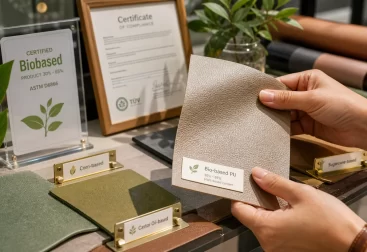
PU leather is the most widely used material in fashion bags, backpacks and accessories — and also the most variable. Two rolls can carry the same label and differ dramatically in coating thickness, adhesion, abrasion resistance and color fastness. When you are about to commit a five-figure order to bulk production, “it looks fine in the swatch” is not a quality strategy. The difference between a smooth launch and a costly return wave is decided by what you test before the order ships.
This guide lays out a practical, factory-floor testing plan for PU leather — the checks a professional buyer runs on material, samples and finished goods, in the order that makes sense. Each test is explained in plain terms: what it measures, how it is done, what numbers to expect, and what to do with the results. Written from a manufacturer’s perspective, it is designed to be used — print the checklists, brief your factory with them, and keep the test reports with your order files.
Why Testing Matters Before Bulk
PU leather is a coated product: a polyurethane layer on a fabric base. Every performance property — durability, feel, resistance to cracking, even color — is the product of that coating, its thickness, its adhesion and the base fabric beneath it. Suppliers control these variables within production tolerances, but tolerances are exactly that: ranges. A mill can ship material that meets its own internal standard and still differ visibly from the sample you approved, especially for custom colors and finishes.
Testing before bulk serves three purposes. First, it verifies that the material you are about to buy matches the specification you agreed — not the sample you liked, but the numbers you wrote down. Second, it establishes a documented baseline: if the first production batch is good, that test report becomes the reference every later batch must match. Third, it protects your brand economics. A defective coating that begins peeling after six months produces returns, chargebacks and reviews that cost far more than the test itself — and the test typically costs a few dollars per sample, run by the mill, a lab or even your own team.
The rule that governs everything below is simple: test against a written specification, keep the evidence, and apply the same standard to every batch. A buyer who can show a supplier a test report from the previous batch has negotiating power; a buyer who says “the last one was fine” has none.
The Core Tests Every Buyer Should Know
Not every test is needed for every order. The table below maps the standard PU leather tests to what they measure and when they matter most. Use it to build a test matrix for your product category.
| Test | What it measures | Typical method | When it matters most |
|---|---|---|---|
| Thickness | Total material thickness (mm) | Dial gauge / micrometer, multiple points | Every order; affects structure, hardware, stitching |
| Weight (grams/m²) | Material density | Weigh cut sample of known area | Cost control and consistency across batches |
| Abrasion (Martindale) | Resistance to surface wear | Martindale or Taber tester, cycles to failure | Backpacks, daily-use bags, anything against clothing |
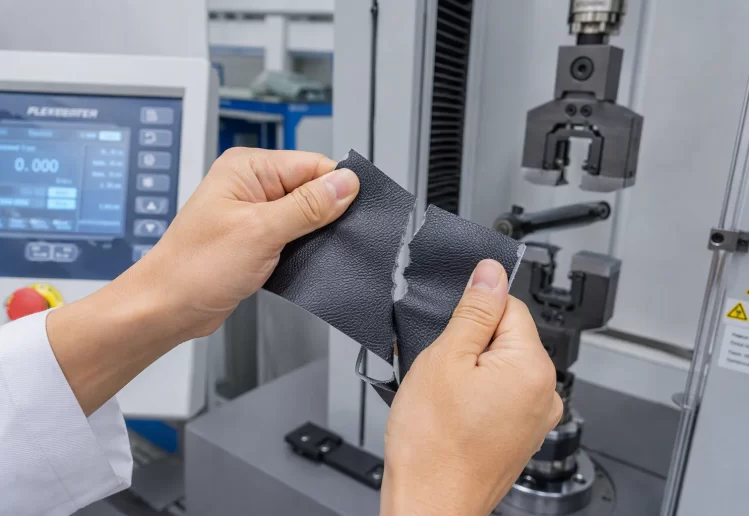
| Tear strength | Resistance to tearing from cuts | Tongue tear test (ASTM D2261 or ISO 13937) | Loaded products: totes, backpacks, handles |
| Peel / adhesion strength | How firmly coating bonds to base | 180° peel test, N/50mm | Predicts peeling and delamination — always run |
| Cold crack | Flexing resistance at low temperature | Flex at −10°C / −20°C, inspect for cracks | Winter markets, cold-chain retail, northern regions |
| Color fastness to rubbing | Dye transfer under friction | Crockmeter, dry and wet | Light colors, denim-contact products, all fashion |
| Color fastness to light | Fading under UV exposure | Xenon arc / blue wool scale | Display-heavy retail, strong-sun markets |
| Bending / flex resistance | Cracking under repeated flexing | Flexometer, thousands of cycles | High-flex areas: corners, flaps, handles |
| Substance safety (REACH / OEKO-TEX) | Restricted substances, phthalates, heavy metals | Lab analysis against standard limits | EU markets, children’s products, retail compliance |
Two tests are non-negotiable for every PU leather order: peel strength and color fastness to rubbing. These two predict the two most common field failures — coating peeling and color transfer — and both are cheap to run. Everything else is selected by product category and market.
Thickness and Weight: The First Checks
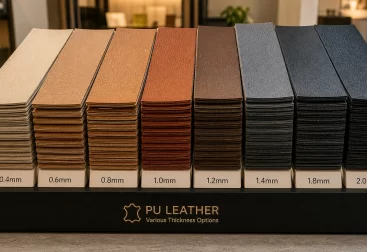
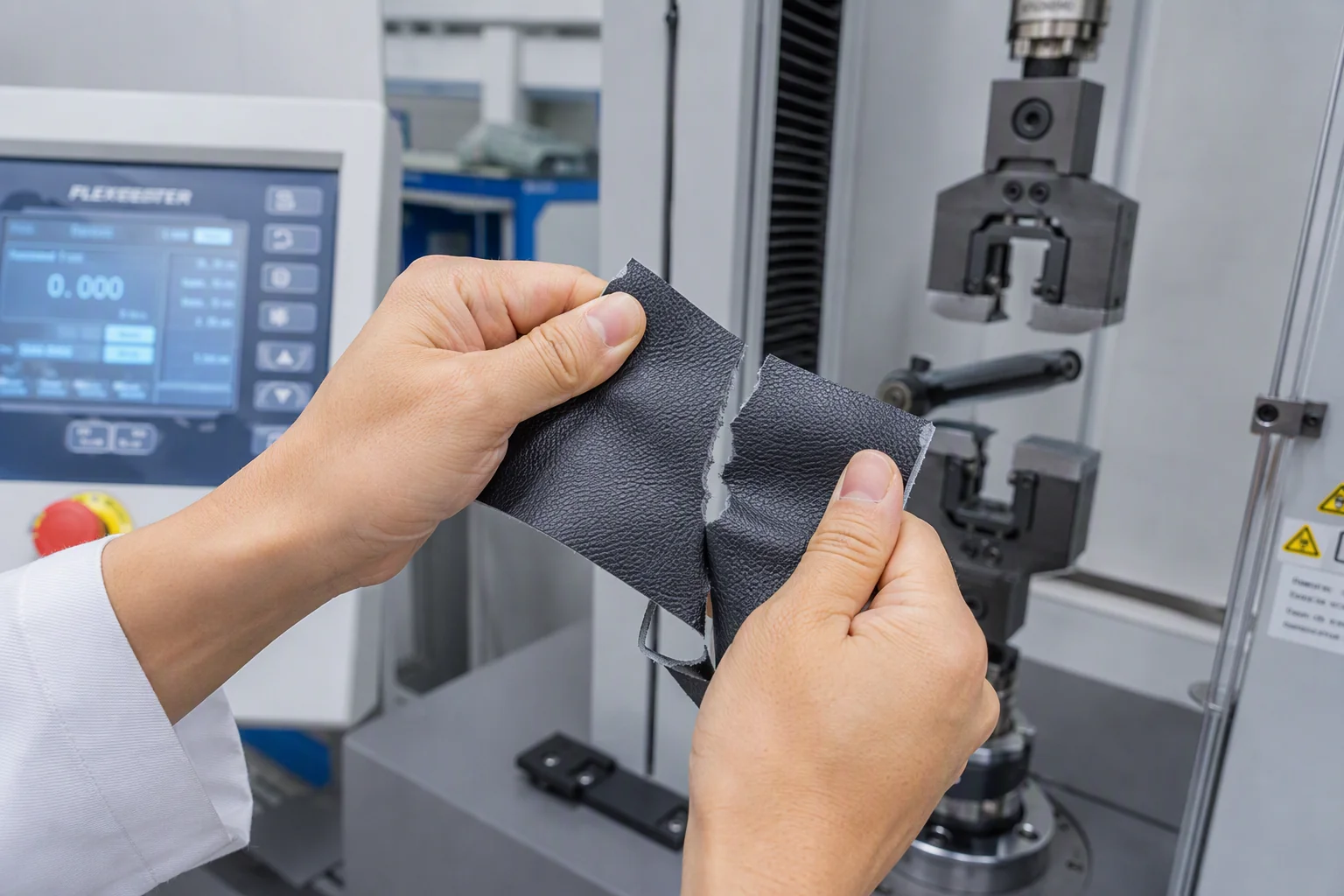
Thickness is the first number a factory quotes and the first thing a buyer should verify. PU leather is typically specified at 0.6–1.2 mm for bags, with the specification covering the total material — coating plus base. A roll that claims 1.0 mm but measures 0.85 mm across the width is not a minor variance; it will produce bags with weaker structure, different drape and hardware that seats incorrectly.
Measuring is straightforward: a dial gauge or digital micrometer, at least five points across the width — edges, center and mid-points — on the first and last meters of a roll. Tolerances of ±0.05 mm are common for quality material; anything drifting beyond ±0.1 mm should trigger a discussion with the supplier before cutting begins.
Weight, expressed in grams per square meter, is the quiet companion to thickness. Two materials of equal thickness can differ in weight when base fabric density or coating formulation varies — and weight differences show up directly in your material cost and in the perceived quality of the finished bag. Weigh a precisely cut sample (e.g., 10×10 cm) on a laboratory scale and convert to g/m². Record thickness and weight together; they are the two fastest consistency checks you can run on incoming material, and they require no lab at all.
Abrasion, Tear and Flexing Tests
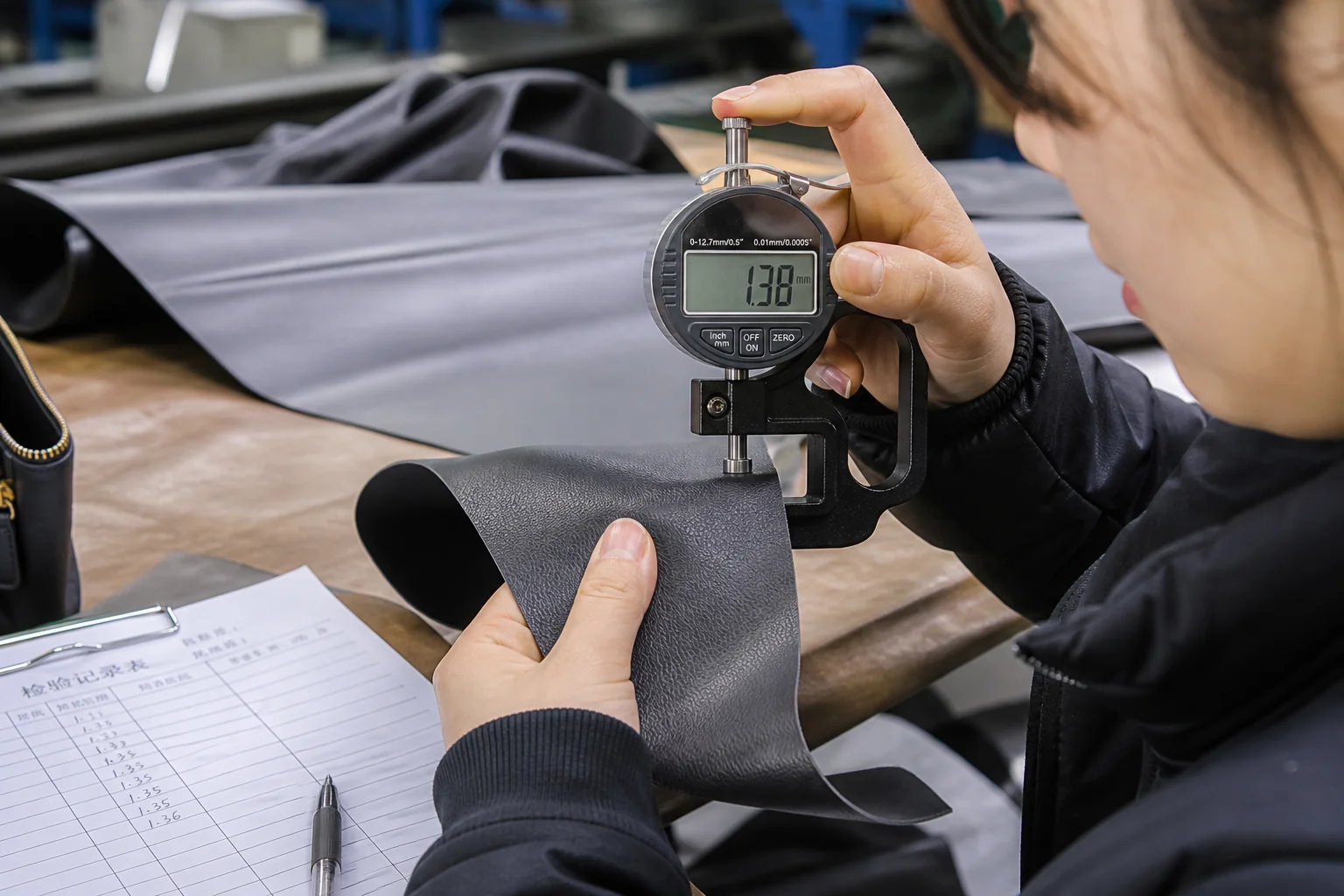
These three tests define how a bag survives real life: rubbing against clothing and tables, being loaded and pulled, and being folded, opened and closed thousands of times.
Abrasion resistance (Martindale)
The Martindale test rubs a circular sample of material against a standard abrasive under controlled pressure until visible wear appears, measured in cycles. Quality PU leather commonly achieves 30,000–100,000+ cycles; cheap coating may fail below 10,000. The right target depends on your product: a fashion handbag carried occasionally tolerates a lower threshold than a school backpack that rubs against denim and desks daily. Specify a minimum cycle count in your order — it is the single most cited number in material disputes.
Tear strength
Tear strength measures the force required to propagate a cut — the failure mode at handles, strap attachments and seam stress points. The tongue tear test (ASTM D2261 or ISO 13937) clamps a notched sample and pulls until it tears. For loaded products like totes and backpacks, tear strength matters more than tensile strength, because bags usually fail from an initiated cut rather than from stretching. If your design concentrates load at thin points, specify a minimum tear force and verify it on the actual material grade you selected.
Flexing and cold crack
Repeated flexing is what kills synthetic coatings. The flexometer test folds a sample thousands of times and checks for surface cracking; the cold crack test does the same at reduced temperature. A coating that flexes perfectly at 23°C can crack after a single fold at −15°C. If your bags ship to cold climates or spend winters in unheated warehouses and delivery trucks, the cold crack test is not optional. Specify the temperature (commonly −10°C or −20°C) and the required result, and confirm it on material from the actual production batch — samples prepared in the lab are sometimes better than production rolls.
Color Fastness and Appearance Checks
Color problems are the most common source of customer complaints after peeling — and they are entirely preventable.
Color fastness to rubbing
The crockmeter test rubs a dry and a wet white cloth against the material and grades the transferred color on a grey scale (1–5, with 5 being no transfer). Light colors, saturated reds and dark shades are the usual offenders. Transfer onto clothing — especially light-colored clothing — produces immediate returns and negative reviews. Specify a minimum grade (typically 4 dry, 3–4 wet for fashion goods) and test at every color confirmation.
Color fastness to light
Prolonged display under store lighting or sunlight fades material, with reds and dark tones fading fastest. The xenon-arc test exposes samples to controlled light and compares them to blue wool standards. If your product sits in window displays or ships to high-UV markets, require a lightfastness grade and verify it before the bulk run — fading is invisible at the swatch stage and expensive at the shelf.
Visual appearance checks
Beyond lab tests, a disciplined visual check catches what instruments miss: surface consistency across the roll, grain depth and clarity of embossing, gloss uniformity, and absence of scratches, bubbles, pinholes or blush marks. Compare incoming material against the sealed reference sample under consistent light, at the start, middle and end of each roll. This check takes minutes per roll and prevents the most common quality surprise — a batch that “doesn’t look like the sample.”
Environmental and Safety Tests
Substance safety is a compliance gate as much as a quality gate. Retailers in the EU and increasingly in North America require materials to meet restricted substance limits, and the requirement extends down the supply chain to you as the buyer.
- REACH (EU) restricts thousands of substances including heavy metals, phthalates and specific flame retardants. PU leather compliance is standard from reputable mills, but “compliant” should mean a test report, not an assurance.
- OEKO-TEX Standard 100 certifies product safety for textiles and synthetics across classes — the certification most retailers recognize. Ask for the certificate matching your product class.
- Phthalate content matters specifically for soft PVC and flexible coatings; if your material is PVC or a plasticized blend, verify phthalates separately.
- Formaldehyde and VOC emissions matter for indoor use and for retail environments sensitive to odor; request emission data if your market demands it.
Ask for the certificates with each shipment, not just once at qualification. Mills update formulations, and a certificate from last year does not automatically cover this year’s batch.
How to Test in Practice: Swatch to Bulk
A testing plan is only useful if it fits a real order timeline. Here is how the checks above map onto the four stages of a typical order.
Stage 1 — Material qualification (before quotation)
When the supplier submits swatches: verify thickness and weight, run a quick rub test by hand, and request the mill’s test reports for abrasion, peel and color fastness. This stage filters out obviously unsuitable materials before you invest in sampling.
Stage 2 — Prototype and sample approval
Build the sample bag in the selected material. Stress the seams, fold the corners, load the handles. Confirm the material’s behavior in your construction, not just as a sheet. Approve the sample with the written specification attached — the sample is the visual reference, the spec is the legal reference.
Stage 3 — Incoming material inspection (before cutting)
When the bulk material arrives: measure thickness and weight at multiple points, run the visual appearance check, and verify color against the approved standard. Hold any roll that fails before it reaches the cutting table — material is cheaper to reject than a sewn bag.
Stage 4 — Inline and final inspection (during and after production)
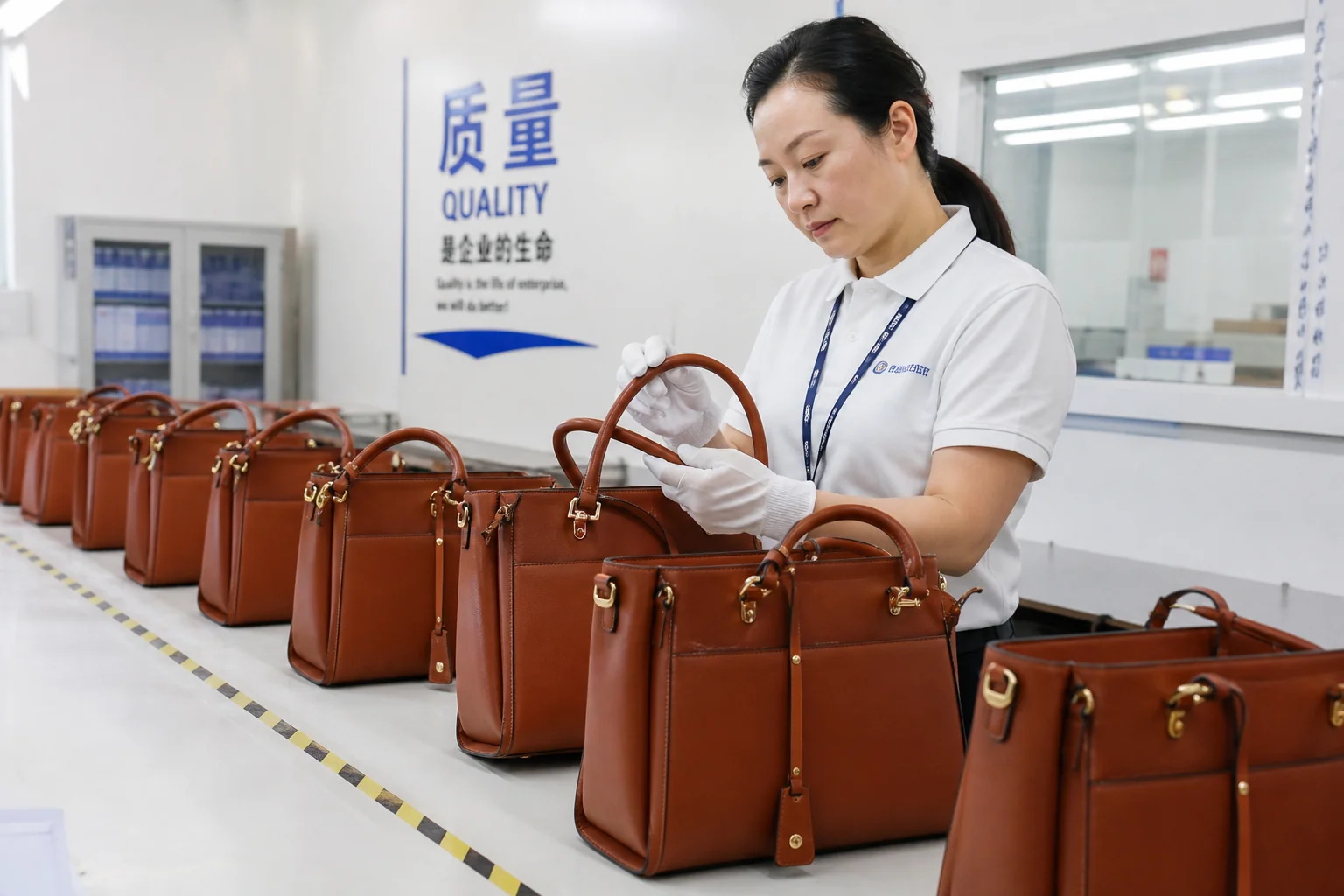
Inspect at the start of production (first pieces), mid-production and before packing. Check stitching, hardware seating, edge treatment and dimensions against the sample. Final inspection should cover the agreed AQL (acceptance quality limit) sampling plan — typically AQL 2.5 for major defects, 4.0 for minor — with records kept per order.
Understanding Test Reports
A test report is only as useful as your ability to read it. Three habits prevent most misreadings.
First, check the sample identity. The report must state the material grade, color, thickness and batch date it tested — a report without these is a report about someone else’s material. Second, check the method. Abrasion results from a Martindale tester and a Taber tester are not interchangeable; tear results depend on the standard used. Always compare like with like, and specify the method in your order so future reports are comparable. Third, check the date and the issuing lab. A report from a mill’s own lab is useful for screening; an independent third-party report carries weight in disputes and is worth the small premium for large orders.
Keep every report with the order file, and keep a sealed physical reference sample from each approved batch. In the event of a claim — from a customer, a retailer or your own QC — the combination of the test report, the reference sample and the batch records is what turns an argument into a resolution.
What Testing Really Costs
The most common reason buyers skip tests is the belief that testing is expensive. In practice, the numbers are small compared with the risks they cover.
- In-house checks (thickness, weight, visual, hand rub): cost of a dial gauge and a lab scale — effectively free per order, and they catch the majority of consistency problems.
- Mill test reports (abrasion, peel, tear, color fastness): usually provided at no charge by reputable suppliers for active orders; the cost is hidden in the material price. Ask for them — silence on the question is a signal.
- Independent third-party tests (full physical suite on one material): typically tens of dollars per material per test group at standard labs, rising for substance analysis (REACH screens). For a five-figure order, this is a rounding error — and it is the report that holds weight in a dispute.
- Prototype and inspection costs (samples, inline QC, final AQL inspection): normal production costs already included in most factory quotations; the incremental cost of doing them properly is minimal.
Compare that with the cost of a failed batch: rejected goods, rushed re-production, air freight to recover a launch date, refunds, and reviews that follow the brand for years. The arithmetic is unambiguous — testing is the cheapest insurance in the sourcing process, and the only one that produces a document you can act on.
FAQ
Which tests are mandatory for every PU leather order?
Peel (adhesion) strength and color fastness to rubbing are the non-negotiables — they predict the two most common failures: coating peeling and color transfer. Thickness verification is effectively mandatory too, since it underpins structure and hardware fit.
Can I test PU leather quality myself without a lab?
Yes, for the basics: measure thickness with a dial gauge, weigh a cut sample for g/m², rub the surface with a white cloth for color transfer, and fold the material repeatedly to observe creasing and cracking. These quick checks catch most problems; formal abrasion, tear and substance tests need a lab.
What Martindale rating should I require for a backpack?
For daily-use backpacks, specify at least 30,000 cycles; premium lines often require 50,000+ and microfiber-based materials routinely exceed 100,000. Confirm the threshold with your factory based on your market and price point.
Why does material from the same supplier vary between batches?
PU production runs within tolerances, and feedstock, coating formulation or process settings can shift between runs. That is why the sealed reference sample, the written specification and batch certificates are essential — they turn drift from an argument into a measurable difference.
Is a mill’s own test report trustworthy?
Use it for screening, not as the final word. For large or compliance-sensitive orders, request an independent third-party report and check that the sample identity, test methods and dates match your order.
What is AQL and why does it matter?
AQL (Acceptance Quality Limit) is the sampling standard for final inspection — it defines how many defective pieces per hundred are acceptable in a lot (commonly AQL 2.5 major / 4.0 minor for bags). Agree the AQL in your contract so inspection results are interpreted the same way by both sides.
Should I test the sample or the bulk material?
Both — but the critical test is on bulk material. Samples are often prepared with extra care; production rolls reveal the true consistency of the supplier’s process. Always verify thickness, appearance and color on incoming bulk material before cutting.
Next Steps: Build Testing Into Your Order
A quality problem found at final inspection is expensive; found at the customer’s home, it is damaging. The difference is a testing plan agreed before production — and a factory that runs it without argument. When you brief your manufacturer, bring the checklist: specification, tests, tolerances, AQL and batch certificates. A supplier that welcomes the discipline is protecting your product; one that resists it is asking you to carry the risk.
Planning a PU leather bag order and want the material tested properly before you commit? Contact info@gionar.com for a free material testing consultation and quotation. See our custom bag manufacturing services and wholesale backpack manufacturing to understand how we build quality checks into every order.