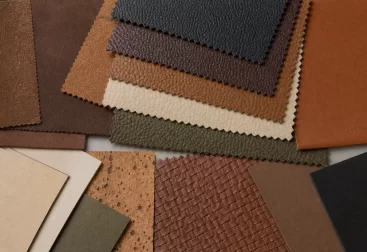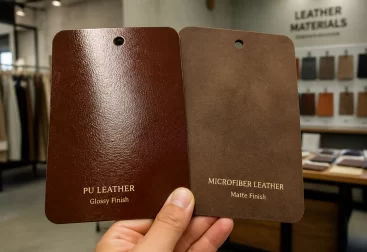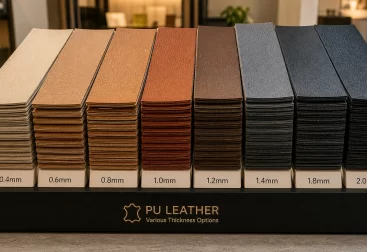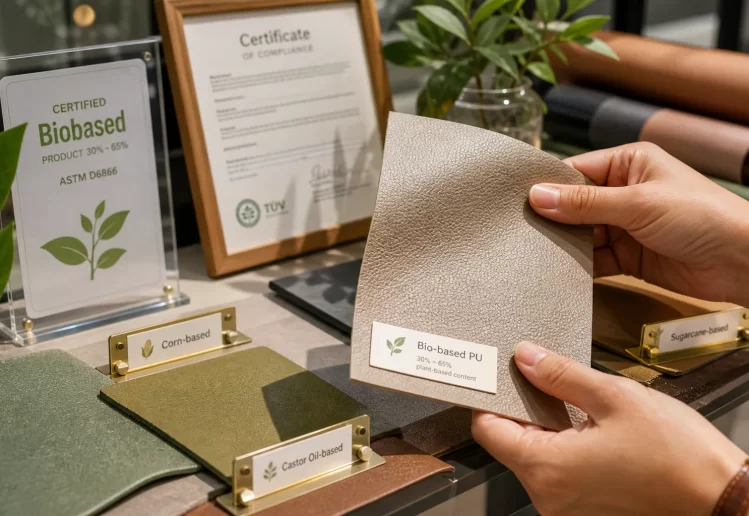
“Eco-friendly PU leather” is one of the fastest-growing categories in the bag industry — and one of the least standardized. Two materials can carry the same green positioning and differ completely in feedstock, process and environmental impact. Some are built from recycled fibers and recovered polyurethane; others replace part of their petroleum feedstock with plant-based material; a few are little more than standard PU with a green label and a higher price. For a brand that wants to make an honest sustainability claim, the challenge is separating the real improvements from the marketing.
This guide decodes the two terms buyers meet most often — “recycled” and “bio-based” — and explains what they mean on a factory floor. You will learn how these materials are actually made, how they compare on performance, cost and certification, and how to verify a supplier’s claims before you print them on a hang tag. The goal is simple: if you are going to tell customers your bags are greener, you should know exactly what that claim is made of.
What “Eco-Friendly PU Leather” Actually Means
PU leather is a coated product: a polyurethane layer on a fabric base. “Eco-friendly” versions of PU leather improve one or more parts of that system — the base, the coating, or the process that puts them together. Understanding which part is improved tells you which claim is real.
Three distinct improvements dominate the market. The first is recycled content: the base fabric, the polyurethane, or both are made partly or wholly from recovered material. The second is bio-based feedstock: a portion of the petroleum-derived chemicals in the polyurethane is replaced with plant-derived equivalents. The third is process improvement: water-based coating lines that reduce solvent emissions, energy-efficient production, or improved waste recovery in the factory. These are different things, they have different costs, and they should never be lumped into one “eco” label.
The discipline for buyers is to separate the material claim from the process claim. “Made with 30 percent recycled content” is a material claim you can verify with certificates and input records. “Produced in a certified green facility” is a process claim you verify with an environmental certification. A supplier who cannot tell you which part of the product is eco-friendly, and how it is verified, has not actually changed the product — they have changed the label.
Recycled PU Leather: What It Is and What It Isn’t
Recycled PU leather reuses material that would otherwise be discarded. In practice, the recycling appears in two places: the base fabric and the polyurethane itself.
Recycled base fabric
PET bottles and post-industrial polyester waste are cleaned, melted and re-spun into polyester yarn, which is woven or knitted into the base fabric of the material. This is the most common and most verifiable form of recycled content in PU leather, because the feedstock is standard, the supply chain is mature, and certifications such as GRS (Global Recycled Standard) track it with chain-of-custody documentation.
Recycled polyurethane
Polyurethane itself can be recycled mechanically or chemically. Mechanical recycling grinds post-industrial PU scrap back into material for re-coating; chemical recycling breaks the polymer into feedstocks that are rebuilt into new PU. Chemical routes are cleaner but rarer and more expensive. When a supplier says “recycled PU leather,” ask which part is recycled — the fabric, the coating, or both — because the environmental and cost profiles differ significantly.
What recycled PU leather is not
Recycled content does not make a material biodegradable, and it does not mean the product is free of environmental impact — recycling still consumes energy and water, and a recycled-coated material can still be short-lived if the grade is low. The honest framing is that recycled PU leather reduces virgin feedstock demand and landfill waste; durability still depends on grade and construction, exactly as with virgin material.
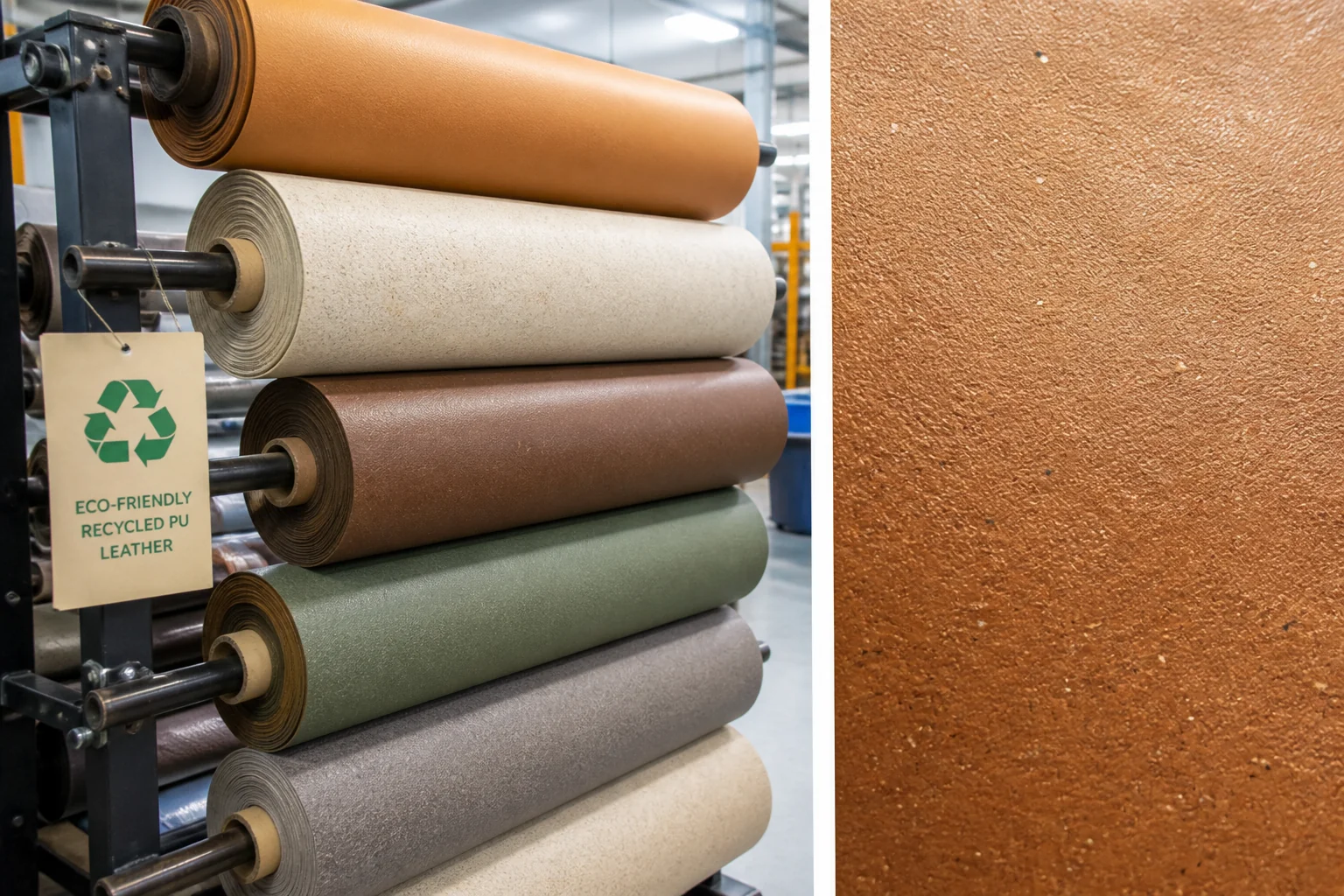
Bio-Based PU Leather: Feedstock, Not Magic
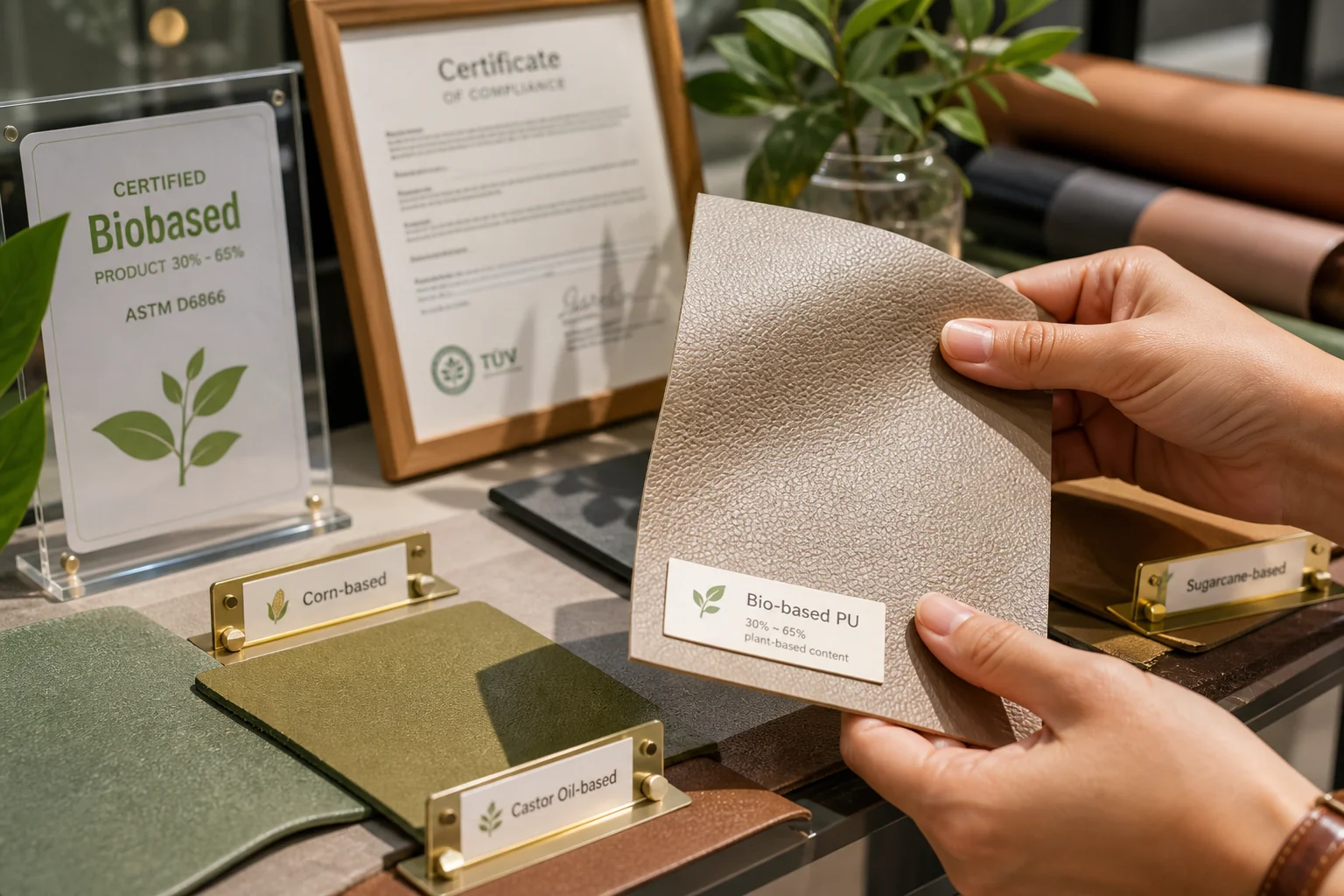
Bio-based PU leather replaces part of the fossil feedstock in the polyurethane with plant-derived material. The chemistry is straightforward: polyurethane is built from two main ingredients — isocyanates and polyols. Polyols are the part where bio-based feedstocks arrive, typically derived from corn, castor bean, sugar cane or other renewable sources. A material described as bio-based PU usually means that a percentage of its polyol content comes from these plant sources.
Three things are worth knowing before a buyer treats “bio-based” as a synonym for “green.” First, the percentage matters enormously: a material with 10 percent bio-based content and one with 60 percent share the same label category but not the same environmental profile. Always ask for the bio-content percentage and verify it against the supplier’s documentation. Second, bio-based content changes the feedstock, not the product’s end-of-life behavior — a bio-based PU bag is still a synthetic product that will not biodegrade in a landfill, and claiming otherwise is greenwashing. Third, the environmental benefit is a calculation, not a given: growing the feedstock, processing it and shipping it all carry impacts, and the net benefit depends on the specific supply chain and the comparison baseline.
For a manufacturer, bio-based PU behaves like standard PU on the production floor — the coating applies, cures, embosses and performs with the same process settings. That production compatibility is a genuine advantage: you can switch a line to bio-based PU without re-engineering construction or retraining operators, which makes the sustainability upgrade comparatively painless.
Comparing Eco Options: A Practical Table
Choosing between eco-friendly PU variants is a trade-off across the same dimensions as any material decision: performance, cost, availability and — new to the equation — verifiability of the claim. The table below lays out the main options.
| Option | What changes | Performance vs standard PU | Cost impact | Verification path |
|---|---|---|---|---|
| Recycled-content PU (fabric) | Base fabric from recycled polyester/PET | Comparable, grade-dependent | Moderate premium | GRS certificate, recycled-content % |
| Recycled-content PU (coating) | Polyurethane partly from recovered PU | Comparable to standard | Varies by route (chemical > mechanical) | Input records, supplier declaration |
| Bio-based PU | Polyols from plant feedstock | Comparable; same process settings | Premium, depends on bio % | Bio-content % documentation |
| Water-based PU process | Solvent-free coating process | Comparable or better (lower VOC) | Small premium | Process certificates, VOC test data |
| Microfiber (long-life) PU | Fiber-network construction | Higher durability → fewer replacements | Higher material cost | Abrasion/tear test reports |
Notice the last row: the most defensible sustainability strategy may not carry an eco label at all. A microfiber-based material that lasts twice as long avoids the production and disposal footprint of two shorter-lived bags — durability is an environmental attribute even when it is marketed as performance. The best sourcing decision often combines improvements: recycled or bio-based content for the claim, and adequate grade for the service life.
Durability, Cost and Certifications
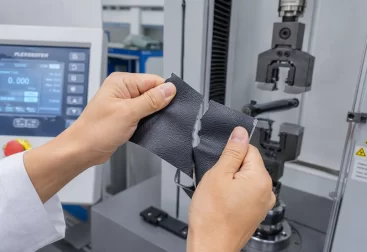
Eco-friendly PU leather has to survive the same durability standards as any material — a green bag that fails in months is green only in color. Grade selection, thickness and construction discipline apply exactly as with standard PU, and the tests are identical: abrasion, peel, tear, color fastness and cold crack. The certification layer is what is new.
Certifications that matter for eco claims
- GRS (Global Recycled Standard): verifies recycled content with chain-of-custody tracking, from feedstock to finished material. The certificate states the recycled percentage — the single most useful document for a recycled-content claim.
- REACH and OEKO-TEX Standard 100: substance safety. Eco positioning does not exempt a material from restricted-substance compliance; verify both.
- ISO 14001: environmental management at the production site. A process claim (“produced in a certified facility”) needs this type of evidence.
- Bio-content verification: bio-based content is documented through supplier input declarations or third-party testing (for example ASTM D6866 for biobased carbon). Ask for the actual figure.
Cost expectations follow the pattern of any new material: recycled-content and bio-based PUs typically carry a moderate to significant premium over standard PU, with the premium scaling with the claimed content percentage. Budget for it in the product margin, and be prepared to explain the premium to retailers — the ones who accept it are the ones who can verify the claim themselves. A verifiable claim is worth the premium; an unverifiable one is a cost with no return.
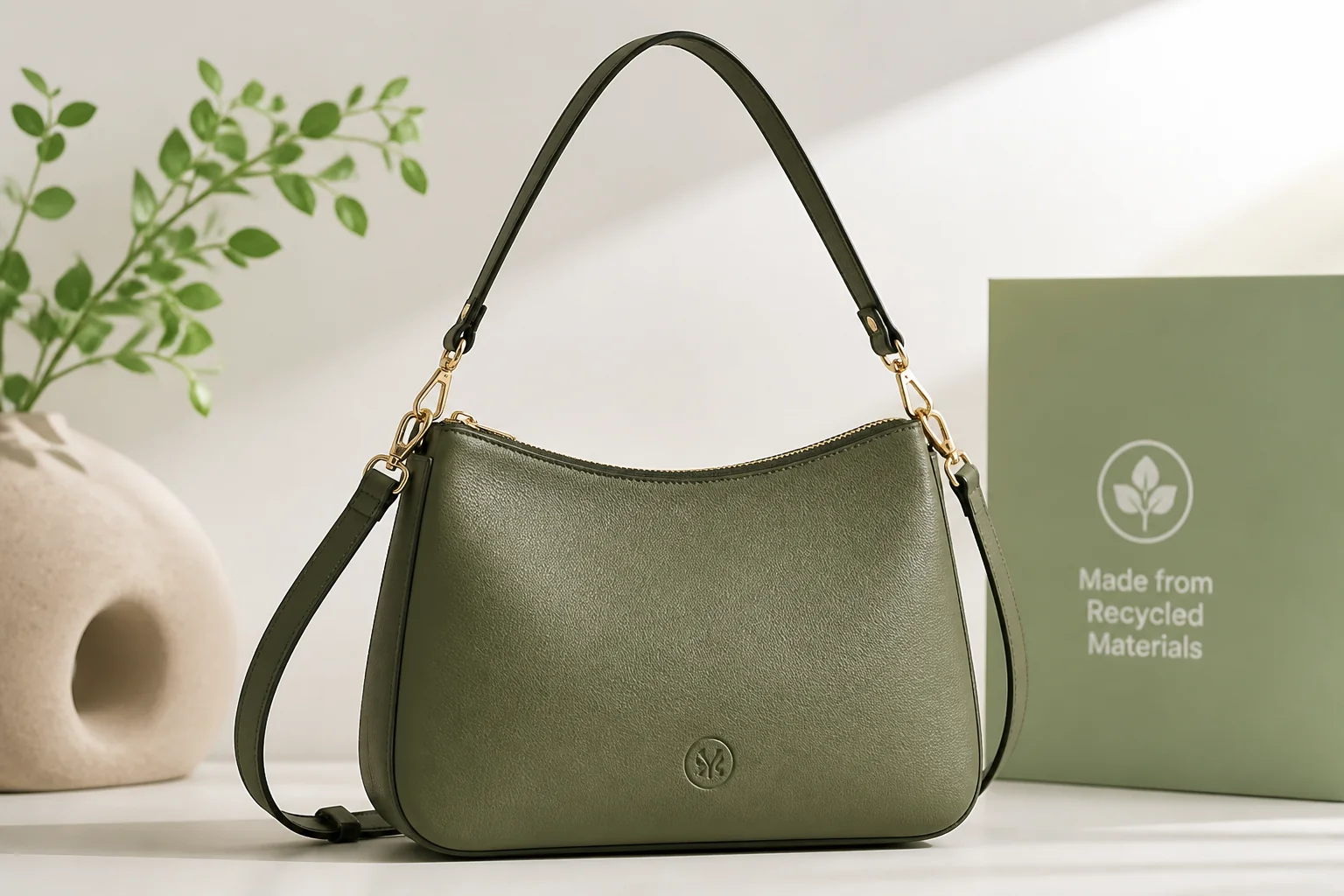
How to Source Eco-Friendly PU Leather for Your Line
Adding an eco-friendly material to your line is a sourcing project with three extra steps compared with a standard material — and none of them are optional if you plan to make public claims.
Step 1 — Define the claim you want to make
Decide what you will say to customers before you source: recycled content, bio-based content, or certified process. Write the exact wording (“made with 30% GRS-certified recycled content”) and keep the evidence file next to it. This prevents the most common failure — a vague claim that cannot be defended.
Step 2 — Verify the material’s documents
Request the GRS certificate (with your material’s chain-of-custody), bio-content documentation, REACH and OEKO-TEX reports, and any process certificates. Check that the documents name your supplier and your material, and check the dates. Certificates from other suppliers or expired certificates are red flags.
Step 3 — Test and sample like any material
Run the standard physical tests on the actual grade you will use, build a prototype, and confirm the eco material performs in your construction. A sustainability claim built on a material that fails testing is worse than no claim at all.
Step 4 — Lock the specification and reorder discipline
Specify the recycled or bio content percentage in the order, require the certificate with each shipment, and hold the sealed reference sample. Eco content can drift between batches just like thickness or color — verify every time, not only at qualification.
Step 5 — Price it honestly
Build the premium into the product price and communicate the verifiable reason for it. Customers who pay for sustainability pay for proof; a transparent cost breakdown converts the premium from a burden into a trust signal.
Lifecycle Thinking: From Feedstock to Landfill
The most honest way to evaluate an eco-friendly material is a lifecycle view: what happens at each stage — feedstock, production, use, disposal — and how the material compares with its alternatives at every step. This discipline prevents the classic error of optimizing one stage while ignoring the others.
At the feedstock stage, recycled content reduces virgin resource demand and diverts waste, while bio-based content replaces fossil feedstock with renewable material. At production, water-based processes cut solvent emissions and energy-efficient facilities reduce carbon intensity — both verifiable through process certificates. At the use stage, the dominant variable is durability: a bag that serves for five years avoids the manufacturing footprint of three shorter-lived replacements, which is why grade selection is an environmental decision as much as a commercial one. At disposal, synthetic materials do not biodegrade in practical timeframes; the realistic end-of-life options are recycling, incineration with energy recovery, or landfill. A claim that a synthetic bag is “biodegradable” is rarely true and always needs specific evidence.
Putting the stages together, the highest-impact choices are usually not the flashiest: adequate grade for long service life, verifiable recycled or bio content where the claim matters, and a production partner with a certified environmental process. A lifecycle view also protects your brand from the most damaging error in sustainable marketing — optimizing one visible stage while a bigger impact goes unaddressed, which is precisely what scrutiny exposes.
Market Trends: Where Eco PU Leather Is Headed
Three forces are reshaping the eco-PU market, and each affects how brands should source today. The first is regulation. The EU’s Green Claims Directive and similar initiatives are moving toward requiring environmental claims to be substantiated with evidence — vague “eco-friendly” labeling is becoming a legal risk rather than a marketing choice. Sourcing with verifiable documentation is no longer best practice; it is increasingly the only practice that survives compliance review.
The second force is verification-driven demand. Retailers and consumers are learning to ask for certificates, and the GRS chain-of-custody model is spreading beyond recycled content into bio-content and carbon accounting. Materials with clean documentation command premium placement on shelves; materials with vague claims are being delisted or challenged. The market is effectively rewarding transparency and punishing ambiguity.
The third force is supply chain maturity. Recycled polyester feedstock is abundant and certified supply is scaling; bio-based polyols are moving from novelty to mainstream as capacity grows; and water-based coating lines are becoming the standard in new factory investment. What was a premium niche five years ago is becoming a normal option — with normal volumes, normal lead times and normal quality discipline. For a brand, the practical implication is to start building the documentation habit now: every eco material you source today should arrive with the certificate file attached, because tomorrow’s compliance and shelf placement will depend on it.
Common Greenwashing Traps to Avoid
Greenwashing is a compliance and reputation risk, and the traps are specific enough to name. The first is the vague claim — “eco-friendly,” “sustainable,” “green” — with no percentage, no certificate and no defined meaning. The second is the irrelevant claim, which highlights a minor true attribute (for example, “water-based process”) while the material is built from high-impact virgin feedstock. The third is the hidden trade-off, where an improvement in one stage (recycled content) is presented as a full lifecycle win while durability or disposal impact is ignored.
The fourth trap is the unverifiable number — a stated recycled percentage with no GRS certificate behind it, or a bio-content figure no document supports. The fifth is expired or mismatched documentation, where a certificate names a different supplier, material or date than the product actually in hand. Each trap is checkable: demand the specific document, read the percentage, check the names and dates, and compare the claim against the lifecycle. A supplier who answers every question with a document is building your evidence file; one who answers with adjectives is building your liability.
Adopting this discipline protects more than compliance. In a market where green claims are under scrutiny, the brand that can show the certificate, the percentage and the test report is the brand customers and retailers trust — and trust is the entire point of the exercise.
FAQ
Is recycled PU leather the same as biodegradable PU leather?
No. Recycled content means the material is made from recovered feedstock; biodegradability is a separate property that standard and recycled PU leathers do not have. Check the specific material’s disposal profile before making any biodegradability claim.
What percentage of recycled content should I look for?
It depends on your claim and budget. Content from 20 to 100 percent is available; the certificate states the verified percentage. Choose the figure you can verify and afford, and build it into the marketing language precisely.
Does bio-based PU leather perform differently in production?
For most products, no — bio-based PU applies, cures and embosses with the same process settings as standard PU. That compatibility is one of its main advantages for manufacturers.
How do I verify a supplier’s “eco-friendly” claim?
Ask for documents: GRS certificate for recycled content, bio-content documentation for bio-based, REACH/OEKO-TEX for substance safety, and process certificates for facility claims. Verify the documents name your supplier and your material, and check expiry dates.
Is eco-friendly PU leather more expensive?
Usually yes — recycled-content and bio-based materials carry a premium that scales with the claimed content percentage. The premium is justified when the claim is verifiable and valuable to your customers.
Can I mix eco-friendly materials with standard PU in one line?
Yes, and many brands do — eco materials for the hero products and standard grades for high-volume basics. Just make sure the claim is made only on the products that actually carry the eco material, and that the specification and certificates follow each variant.
Does eco-friendly PU leather last as long as standard PU?
When the grade and construction match, yes. Recycled and bio-based content does not inherently reduce durability; the grade tier and test performance are what determine service life, exactly as with standard PU.
Where can I see the environmental certificates for a material before buying?
Ask the supplier for the certificate file before sampling: GRS certificate and chain-of-custody for recycled content, bio-content documentation for bio-based, and REACH/OEKO-TEX reports for substance safety. Review them before you commit to the material, not after.
Next Steps: Make the Claim You Can Prove
Eco-friendly PU leather is a real and growing category, but its value depends entirely on verification. Define the claim, source the documents, test the material, and lock the specification — the process is no more complicated than sourcing any quality material, with one extra discipline: every environmental statement needs an evidence file behind it.
Planning a sustainable bag line and want guidance on recycled or bio-based PU sourcing — including certification requirements? Contact info@gionar.com for a free material consultation and quotation. See our custom bag manufacturing services and wholesale backpack manufacturing to explore how we build verified materials into your products.