How Do You Verify a Bag Factory Before Placing a First Order?
Verification is not a courtesy visit. It is the process of replacing claims with evidence before money and material are committed to a factory you have never worked with.
A first order carries the largest ratio of risk to value in any sourcing relationship. The factory has no track record with you, your specification has never been tested in their hands, and the relationship has no history to fall back on when something goes wrong. Everything you will rely on for the next three months is established in the two or three weeks before the order is placed.
What verification actually answers
Four questions, in order: can this factory physically make this bag, will it make it the same way every time, who actually produces it, and what happens when something deviates. Each question has evidence attached, and evidence is what distinguishes a verification from a conversation.
Why documents alone are not enough
Certificates can be borrowed, photographs can belong to another factory, and capacity statements are routinely optimistic. Documents set the baseline and narrow the field; the walkthrough, the sample and the trial order are what convert a baseline into confidence.
The cost of skipping it
Buyers who skip verification usually discover the gap at final inspection, when the goods are made and the ship date is fixed. At that point the leverage has gone, the remedy is a discount or a rework argument, and the schedule consequence is already unavoidable.
- Desk Verification: Licences and Paperwork
- Verifying Real Capacity, Not Claimed Capacity
- Detecting Subcontracting and Home Work
- Verifying Material Sourcing and Stock
- Assessing Technical Capability
- Assessing the Quality System
- The Sample as Evidence
- Remote Verification by Video Walkthrough
- The On-Site Visit: What to Look At
- Labour Conditions and Compliance Signals
- Financial and Commercial Checks
- Reference Customers and Track Record
- Red Flags That End the Process
- The Trial Order as a Controlled Test
- Scoring and Deciding
- What to Fix Before Ordering
- A Realistic Verification Timeline
- The Verification File
- Re-Verifying After the First Order
- What to Watch in the First Thirty Days
- Verifying a Factory for a Private Label Programme
- FAQ

Desk Verification: Licences and Paperwork
The minimum document set
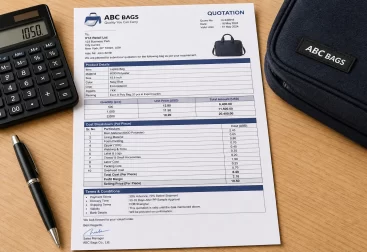
Business licence, export registration, tax registration, and any product or system certificates the factory claims. Each document is checked for the legal entity name, the address and the validity date, and every mismatch against the trading name is explained before proceeding.
Matching the entity that invoices
The company that signs the contract, the company that appears on the invoice and the company that holds the export licence should be the same legal entity. Where a trading company sits in the middle, that structure is acceptable but must be disclosed, because it changes who is accountable for quality.
Certificates and their scope
A quality certificate covers a defined scope at a defined site. An ISO 9001 certificate issued to a sister factory, or covering only a different product line, does not verify the line that will make your bags, and the scope page is where that becomes visible.
Verifying that the documents are current
Check the issue and expiry dates rather than the file name, and confirm the licence number against the issuing registry where one is public. Expired certificates circulate constantly because they were once valid and nobody updated the folder.
Verifying Real Capacity, Not Claimed Capacity
Counting machines and people
Capacity is a physical quantity: the number of lockstitch and post-bed machines, the number of operators per line, and the working hours per day. A factory claiming eight thousand bags a month should be able to show the arithmetic on the floor rather than in a brochure.
What else is on the floor
The same walkthrough reveals what other orders are running. A factory with three large programmes already on the lines has no spare capacity regardless of what the quotation says, and the honest answer about your start date depends on that observation.
Peak season reality
Ask what the floor looks like in the four weeks before a major holiday. Capacity agreed in a quiet month is not capacity in a peak month, and the difference is the single most common cause of a first order arriving late.
The arithmetic to ask for
Ask for units per operator per day, operators per line and lines assigned to your order. Three numbers multiply into a monthly capacity figure that can be compared against the order volume, and a factory that cannot produce them is quoting rather than planning.
| Claim | Evidence to request | What it reveals |
|---|---|---|
| Monthly output | Line count, operators, hours | Arithmetic vs brochure |
| Own production | Walkthrough of all stages | Subcontracting gaps |
| Material stock | Roll count and lot labels | Real sourcing depth |
| In-house QC | Inspection station and records | System vs final check only |
| Export experience | Shipping documents, past 12 months | Destination familiarity |
| Machine park | Serial plates, working demos | Age and actual capability |
Detecting Subcontracting and Home Work
Look for missing stages
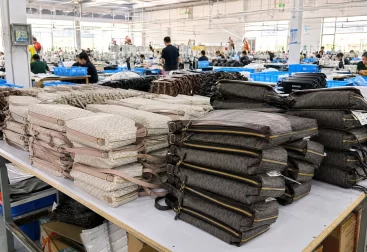
A bag factory that claims full production should show cutting, sewing, edge finishing, hardware setting, cleaning and packing under one roof. When a stage is absent, it is being done elsewhere, and the elsewhere is where quality control usually stops.
Signs on the floor
Unmarked cartons arriving mid-week, bundles tied in domestic-market wrapping, work in progress counted in household quantities, and finished goods leaving in small lots are all consistent with subcontracted assembly. None is disqualifying alone; all are worth asking about.
Why it matters for a first order
Subcontracting changes who you are relying on. Your audit covered one building, your specification was discussed with one team, and the actual construction happens in a workshop that has never seen the sealed sample. The disclosure is less important than the control that follows it.
Verifying Material Sourcing and Stock
Where the coated fabric comes from
Ask for the supplier name, the material code and the last delivery note. A factory that buys from a named mill on regular terms can hold a shade band; one that buys opportunistically from whatever is available cannot, and the resulting variation will appear across your order.
Stock depth against the order
The quantity of material on hand relative to the order size indicates whether production can start immediately or depends on an incoming shipment. Both are workable, but only one has a known start date.
Hardware and the long-lead trap
Locks, magnetic snaps, zip chains and custom-embossed hardware often carry the longest lead time in a bag programme. A factory that has not yet confirmed hardware availability has not really quoted a delivery date, only a hope.
Assessing Technical Capability
Pattern making in-house or outsourced
In-house pattern making shortens every future revision and usually indicates a factory that understands construction rather than only assembly. Where patterns are outsourced, ask who owns them and how a revision is handled mid-order.
Dies, templates and fixtures
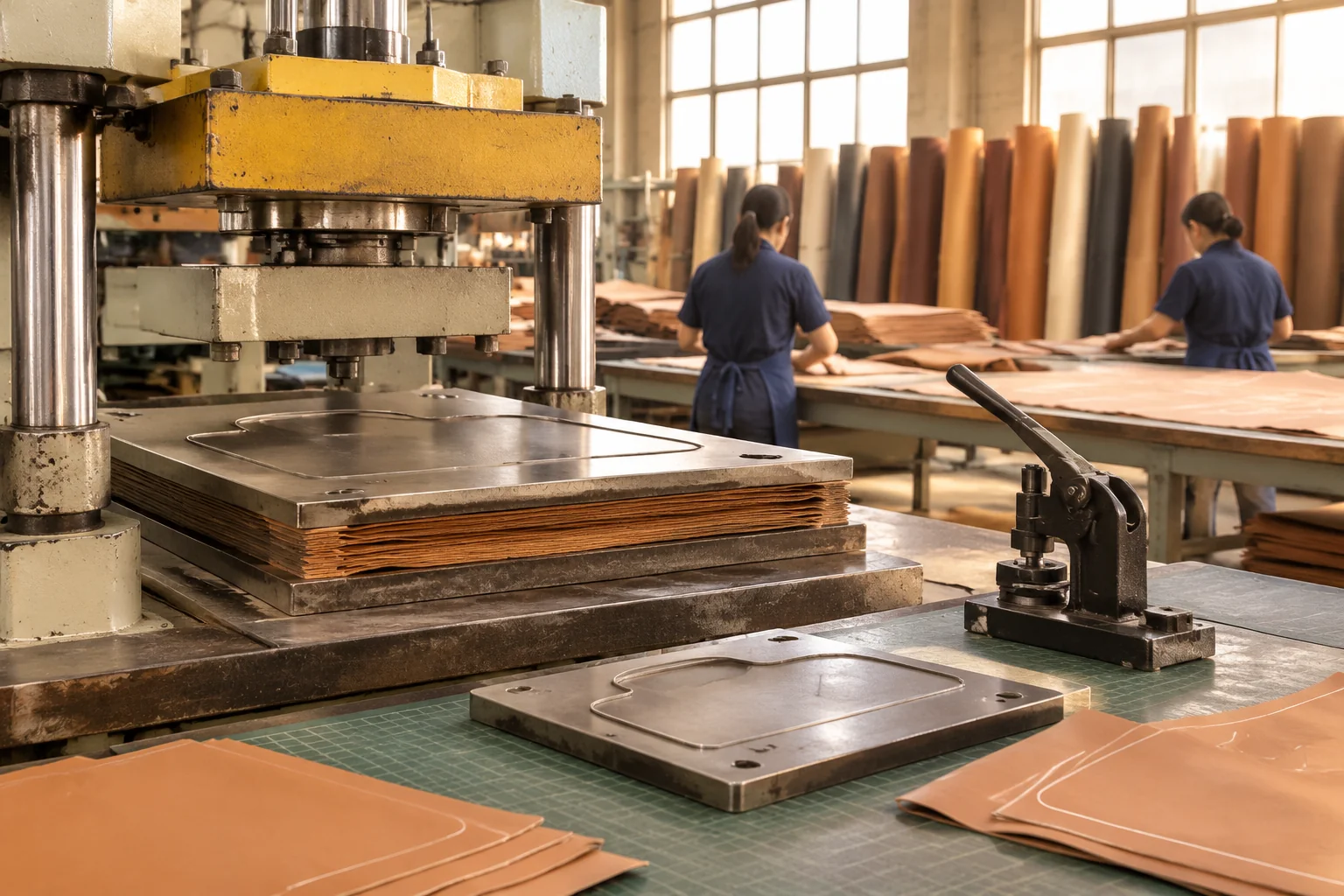
Steel cutting dies, acrylic templates and jigs for hardware placement are the difference between a consistent bag and one that varies by operator. Their presence, condition and storage tell you how seriously repeatability is treated.
Machine park matched to the construction
Post-bed machines for curved seams, walking-foot machines for coated fabric, bar-tacking machines at stress points and a heat press for edge finishing. A factory without the right machine for a specific operation will substitute a technique, and the substitution is where quality drifts.
Assessing the Quality System
Who inspects, and when
Ask to see inspection records for the current week, not a certificate. A factory that inspects at cutting, in-process and final has paperwork in three places; a factory that checks only at the end has one table and a rework pile beside it.
Records that can be read
Inspection sheets with actual measurements, defect counts and the inspector’s signature, dated and linked to a lot. Records that list only pass or fail, with no numbers, cannot support a corrective action because they contain no information about what varied.
The measurement equipment
Steel tapes, calipers, a thread tension gauge and a colour light box. Equipment that is present, calibrated and used is more persuasive than equipment that is present and dusty, and the difference is visible in a single glance.
Verification is complete when you can describe the factory’s process back to them, and they confirm your description rather than correct it.
The Sample as Evidence
Order the sample, do not accept a gift
A paid sample follows a commercial process: specification, quotation, material confirmation, production and delivery date. A free sample arrives without any of that, which is precisely why it tells you so little about how the factory behaves under an order.
Read the sample for process discipline
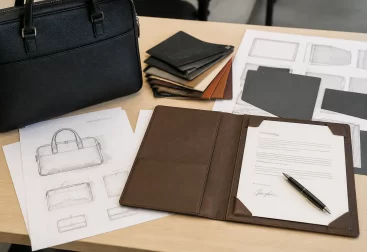
Inspect stitch density consistency, edge paint cleanliness, lining alignment, hardware setting marks and whether the pattern matches the drawing. Errors on a sample are not careless accidents; they are the factory’s normal output shown to you early.
Time the sample
Note how long the sample takes and how many revisions are needed. A factory that needs four rounds to produce a simple tote will need more when a full order and a ship date are attached, and that information is free at this stage.
Cut the sample open
Where a sample can be sacrificed, open one seam and inspect the interlining, the seam allowance and the reinforcement. Internal construction is where cost is removed quietly, and it is the one area a finished bag cannot show you.
Remote Verification by Video Walkthrough
Scripted, not improvised
A live video call with a fixed route — gate, cutting, sewing lines, finishing, hardware, packing, warehouse — and a request to show machine nameplates and lot labels as the camera passes. Improvised tours end in the showroom, which is the one place that proves nothing.
Questions to ask while walking
Ask the production manager to point at the line that would run your order and to name the supervisor. A specific answer, with a name and a line number, is a different quality of response from a general assurance that capacity is available.
What video cannot verify
Hand feel, colour under a standard light, the smell of a coated fabric and the true condition of machinery. Video narrows the shortlist cheaply and reliably; it does not replace the physical sample or, for a significant first order, a visit.
The On-Site Visit: What to Look At
Arrive unannounced, or nearly so
Where practical, shorten the notice period. Factories prepare for announced visits, and a prepared floor is a demonstration rather than an observation. Even one day of notice changes what you will see.
Read the floor rather than the presentation
Floor cleanliness, work-in-progress organisation, the distance between the sewing line and the rework bench, and whether the rework pile is growing. A large rework area beside final inspection describes a process that is not in control.
Talk to the quality manager alone
Ten minutes without the sales manager present changes what you learn about reject rates, common defects and what the factory actually struggles with. The conversation is usually the most informative part of the visit.
Labour Conditions and Compliance Signals
What is observable in an hour
Age of workers, presence of identity cards at workstations, access to drinking water, ventilation, and whether personal protective equipment is used rather than displayed. These are visible indicators, not a social audit, but they correlate with how a factory treats specifications.
Working hours and shift patterns
Ask about normal hours, overtime and rest days. Factories that routinely run extreme overtime produce defects at a higher rate, and the schedule they quote is built on that overtime continuing.
Documents worth requesting
Any social compliance audit report the factory already holds, its corrective action plan if one exists, and the buyer code of conduct it has signed previously. A factory that has been audited before usually has a system for it, which shortens your own process.
Financial and Commercial Checks
Who you are actually paying
Confirm the bank account name against the contracting entity, and treat any request to pay a third party as a stop signal requiring written explanation. Payment diversion is one of the most common failures in first orders, and it almost always begins with a small, reasonable-sounding request.
Payment terms as a risk signal
A factory that demands full prepayment on a first order has no working capital buffer and no confidence in its own delivery. A deposit with balance against a copy of the bill of lading is the standard structure; anything materially different is a negotiation about risk, not about trust.
Currency, invoicing and title
The invoicing currency, the Incoterm and the point at which title passes should be explicit in the contract. Ambiguity here produces disputes that have nothing to do with bags and everything to do with who bears a loss in transit.
Insurance and liability limits
Ask what the factory’s product liability cover is and whether it extends to your destination market. For coated fabrics and children’s-adjacent products, an uninsured liability sits with the importer of record regardless of who caused the defect.
Reference Customers and Track Record
Ask for references in your segment
A reference from a domestic wholesale customer says little about export packaging and documentation. Ask for two buyers who ordered a comparable construction to a comparable market within the last eighteen months, and ask permission to contact them.
Questions that produce useful answers
How many orders, how the last problem was handled, whether the delivery date held, and whether the buyer reordered. The reorder question is the only one that matters in the end, because a second order is the market’s own verdict.
Export documentation history
Bills of lading, certificates of origin and past test reports show destination experience in a way that conversation cannot. A factory that has shipped to your market regularly already knows the labelling and documentation conventions you will otherwise have to teach.
Red Flags That End the Process
Refusal of access
Any refusal to show a production stage, a machine nameplate or an inspection record ends the evaluation. There is no legitimate reason to hide a sewing line from a buyer who is about to place an order.
Identity mismatches
Different company names on the licence, the invoice, the bank account and the certificate are an invitation to a dispute about who is responsible. One explanation is enough; two or three inconsistencies are a pattern.
Pressure and urgency
Discounts that expire today, capacity that disappears tomorrow and prices that require an immediate deposit are sales tactics, not commercial facts. Urgency is used precisely because verification takes time.
Answers that never contain a number
Where every question about output, reject rate or lead time returns an adjective rather than a figure, the factory either does not measure or does not want to share. Both are reasons to stop, and the second is worse than the first.
| Red flag | Why it matters | Action |
|---|---|---|
| No access to a production stage | Hides subcontracting | End evaluation |
| Third-party bank account | Payment diversion risk | Require written explanation |
| Certificate owned by a sister plant | Scope does not cover your line | Request site-specific scope |
| Sample made in a different building | Production capability unproven | Insist on line-made sample |
| No inspection records | No process control | Downgrade to trial order only |
| Full prepayment demanded | Working capital weakness | Negotiate or decline |
The Trial Order as a Controlled Test
Size it to test, not to save
A trial order should be large enough to exercise the real production flow — cutting, line sewing, finishing, packing — and small enough that a failure is affordable. A few hundred units across two or three styles usually achieves both.
Keep the specification identical
The trial must use the same materials, the same construction and the same packaging as the intended bulk order. A simplified trial proves that the factory can make something, not that it can make your bag.
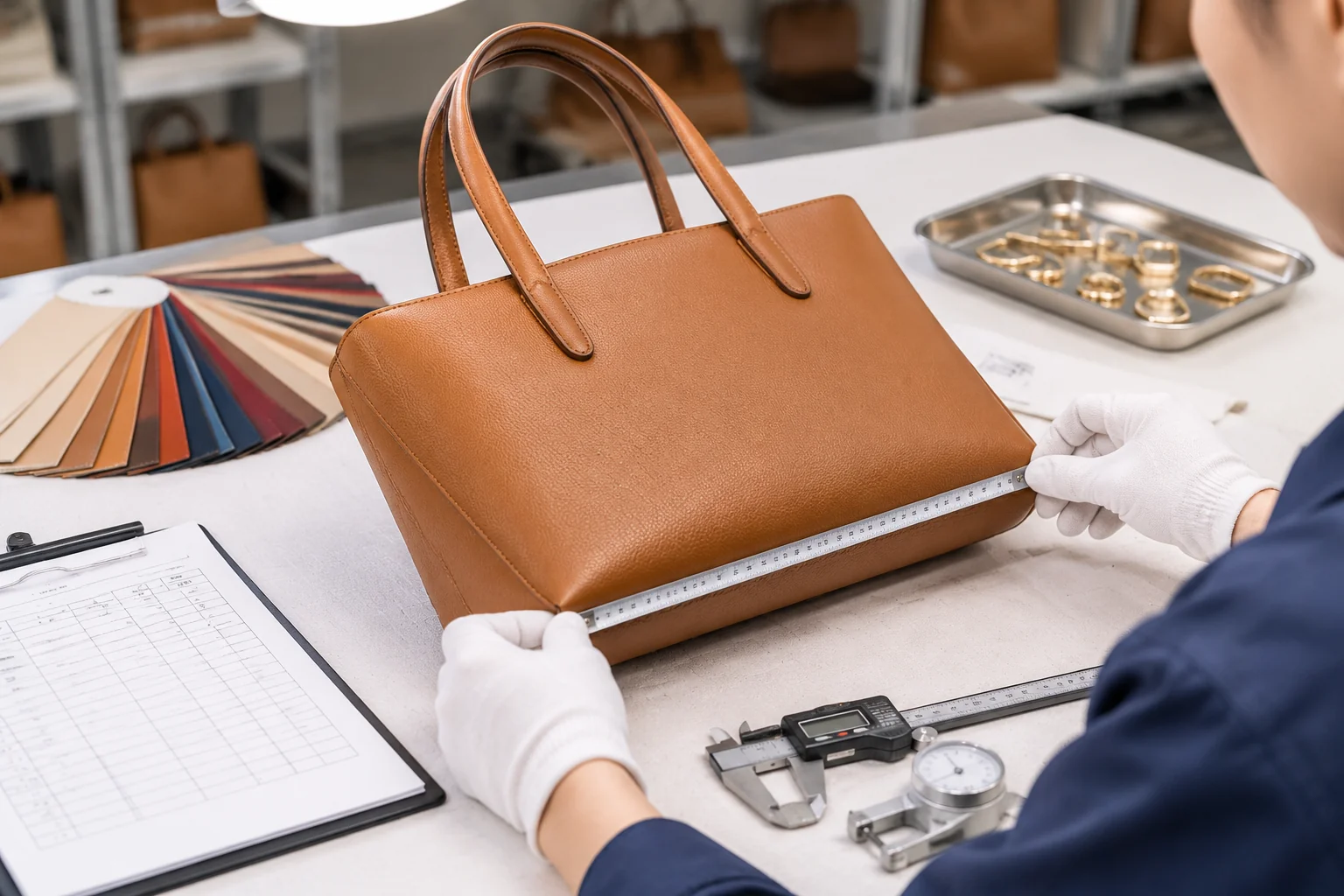
Inspect it as if it were bulk
Run the agreed sampling plan, record the defects, and require a corrective action for anything above the agreed level. The trial is where you find out whether the corrective action process works, while the volume is still small enough to absorb the lesson.
Measure the non-quality outputs too
Documentation accuracy, packing conformity, response time to questions and honesty about a delay. These behaviours repeat at scale, and a trial order is the cheapest place to observe them.
Scoring and Deciding
Six weighted criteria
Score capability, process control, material sourcing, capacity realism, commercial transparency and communication. Weight process control and capacity realism highest, because those two produce late shipments and rejected lots, which cost more than a slightly higher unit price.
Score against your order, not in absolute terms
A mid-sized factory with tight process control is a better partner for a three-thousand-piece order than a large factory where your line will be the smallest job on the floor. The relevant question is never which factory is best, but which is best for this order at this volume.
What a low score on one criterion means
A weak material sourcing score with strong process control can be mitigated by nominating the material supplier. A weak process control score cannot be mitigated by anything you can do from the buyer’s side, which is why it should be close to a gate rather than a weighted item.
Score before the visit ends
Complete the scoring the same day, while the detail is still specific. A score written a week later is reconstructed from impressions, and impressions drift toward whichever person spoke most convincingly rather than toward the evidence collected.
| Criterion | Weight | Minimum to proceed |
|---|---|---|
| Capability for the construction | 20% | Sample passed |
| Process control and inspection | 25% | Records exist and are numeric |
| Material sourcing depth | 15% | Named supplier and lot control |
| Capacity realism | 20% | Line assigned, output arithmetic shown |
| Commercial transparency | 10% | Entity and bank match |
| Communication | 10% | Questions answered with specifics |
What to Fix Before Ordering
The specification annex
Attach the tech pack, the tolerance table, the sealed sample reference and the inspection standard as annexes to the purchase order. A specification that lives only in email is not part of the contract, and a dispute about it becomes a discussion about intent.
Acceptance and remedy clauses
State the sampling plan, the acceptable quality level and the remedy for a failed lot: sorting, rework, rejection and who bears the cost of re-inspection. The remedy is what converts an inspection standard into leverage.
Delivery, delay and force majeure
Define the delivery date, the tolerance in days, the notification obligation when a delay becomes likely, and the consequence. A factory that must notify you on day three of a slippage behaves differently from one that informs you at the port.
Change control
One named person per side authorised to approve changes, in writing, with a version increment. This single clause prevents the most common failure in first orders, where a message from a merchandiser quietly alters a material.
The inspection cost clause
State who pays for a re-inspection after a failed lot. Left unstated, the cost lands on the buyer by default, which quietly removes the incentive for the factory to pass first time.
A Realistic Verification Timeline
Two to three weeks, honestly planned
Desk verification takes two days, the sample one to two weeks including shipping, the video walkthrough one hour plus scheduling, and the decision a day. An on-site visit adds a week if travel and notice are included.
What compresses it safely
Requesting documents and the sample on the same day, and running the video walkthrough while the sample is in transit. What does not compress safely is the trial order, which needs its full production window to be meaningful.
What should never be compressed
The sample review, the entity and bank verification and the inspection of the first article. Each of these is a gate, and a gate passed by assumption is not a gate at all.
The Verification File
What to keep, and for how long
Licence copies, the sample evaluation notes, the walkthrough record, the inspection records reviewed, the reference conversations and the scoring sheet. Kept together, they explain in two years why this factory was chosen, which matters when the relationship is questioned internally.
Why it protects the buyer
Where a first order fails and the question becomes whether due diligence was performed, the file is the answer. It also shortens the next verification, because the baseline for the following order is already documented.
What belongs in the purchase order file instead
Verification is a decision record; the purchase order file holds the specification, the annexes, the inspection reports and the shipping documents. Mixing the two makes both harder to retrieve, and the audit trail for each serves a different purpose.
Re-Verifying After the First Order
What to re-check every six months
Line assignment, material supplier, hardware supplier and the inspection records for recent lots. Factories change quietly, and a supplier switch or a new subcontractor is exactly the kind of change that alters output without altering the price.
Triggers for an immediate re-verification
A sudden quality drop, a change of ownership, a move to a new building, an unusually attractive price, or a delivery date that arrives earlier than expected. Each is a signal that something in the process has changed without being announced.
Turning verification into a scorecard
Track defect rate, on-time delivery, corrective action closure and documentation accuracy per order. After three orders the scorecard replaces the audit as the working tool, and the audit becomes an annual confirmation rather than a discovery exercise.
What to Watch in the First Thirty Days
Material arrival against the promise
The first physical commitment a factory makes is material arriving. If that date slips without notification, the delivery date is already at risk, and the conversation is far cheaper in week two than in week ten.
The first article, before volume
Approve the first article in writing before the line runs at full speed. A first article that is approved informally to protect the schedule converts the sealed sample into a suggestion, and every later deviation is measured against the wrong bag.
Early warning behaviour
Watch how the factory reports the first problem, however small. A supplier that flags a deviation early is worth more than one with a better price, because early warning is the only mechanism that turns a defect into a decision rather than a claim.
Verifying a Factory for a Private Label Programme
Additional evidence for branded production
A private label programme adds requirements that a generic verification does not cover: logo embossing plates, printed lining, branded hardware and label artwork. Ask to see the tooling for each, because a factory that has never made a branded plate will underestimate both the lead time and the cost.
Who owns the tooling
Embossing plates, cutting dies and printing screens should be paid for explicitly and owned by the brand, with a written statement of where they are stored. Tooling that is implicitly owned by the factory becomes a reason to stay with that factory, whatever the quality.
Brand protection and exclusivity
Ask whether the factory produces a competing brand and whether it will accept an exclusivity clause for your construction. The answer is often no, but the response tells you how the factory thinks about conflict, and it is far cheaper to learn now than after a design has been copied.
FAQ
How long does it take to verify a bag factory properly?
Two to three weeks for desk verification, a paid sample, a scripted video walkthrough and a decision. An on-site visit adds about a week once travel and notice are included. The trial order that follows needs its own full production window, which cannot be compressed without removing its value.
Can a video call replace an on-site visit?
It replaces the first filter and does it well, provided the route is fixed and machine nameplates and lot labels are shown on camera. It cannot verify hand feel, colour under a standard light, smell of a coated fabric or the real condition of machinery. For a significant first order, a physical visit is still the reliable method.
What documents should I request first?
Business licence, export registration, tax registration and any certificate the factory cites. Check the legal entity name, address and validity date against the trading name, and confirm that the company invoicing you is the same entity that holds the export licence.
How do I confirm capacity is real?
Count machines and operators, ask for daily output per line and working hours, and do the arithmetic yourself. Then look at what else is running on the floor. A factory with three large programmes already in progress has no spare capacity, whatever the quotation states.
How can I tell whether a factory subcontracts?
Look for missing production stages, unmarked cartons arriving mid-week, bundles wrapped in domestic packaging and finished goods leaving in small lots. Any one is worth a question; a missing stage is close to conclusive, because a full-production factory performs every step under its own roof.
Should I pay for a sample?
Yes. A paid sample follows a commercial process with a specification, a quotation and a delivery date, which is exactly the behaviour you want to observe. A free sample arrives without any of that and tells you almost nothing about how the factory performs under an order.
What should I look for in the sample beyond appearance?
Stitch density consistency, edge paint cleanliness, lining alignment, hardware setting marks and conformity to the drawing. Then count how many revisions were needed and how long each took. A factory that needs four rounds for a simple tote will need more once volume and a ship date are attached.
Which quality records should I ask to see?
Inspection sheets for the current week, showing actual measurements, defect counts, inspector signature and lot reference. Records that only state pass or fail cannot support a corrective action, because they contain no information about what varied or by how much.
Is ISO 9001 certification enough?
No. Certification covers a defined scope at a defined site, and a certificate issued to a sister plant or a different product line does not verify the line that will make your bags. Read the scope page, then verify the system on the floor with the records from this week.
What payment structure is normal for a first order?
A deposit with the balance against a copy of the bill of lading is the standard structure. Full prepayment on a first order signals weak working capital and low confidence in delivery. Any request to pay a third party requires a written explanation before anything is transferred.
How large should a trial order be?
Large enough to exercise the real production flow across cutting, sewing, finishing and packing, and small enough that a failure is affordable. A few hundred units across two or three styles usually achieves both, provided the trial uses exactly the materials and construction of the intended bulk order.
What are the clearest red flags?
Refusal to show a production stage or an inspection record, mismatched company names across licence, invoice and bank account, certificates that belong to another site, samples made in a different building from the one that will produce, and artificial urgency around a deposit.
What should be in the contract before the first order?
The tech pack, tolerance table, sealed sample reference and inspection standard as annexes, plus the sampling plan, the remedy for a failed lot, the delivery date with a notification obligation for delay, and one named person per side authorised to approve changes in writing.
How often should a verified factory be re-checked?
Every six months for line assignment, material and hardware suppliers and recent inspection records. Immediate re-verification is warranted by a sudden quality drop, a change of ownership, a move to a new building, an unusually attractive price or a delivery that arrives earlier than promised.
What if the factory passes verification but fails the trial order?
That outcome is the purpose of the trial. Require a written corrective action with containment, root cause, correction and verification on the next lot, and decide on the bulk order only after the verification passes. A factory that handles a failed trial properly is often a better partner than one that has never been tested.
Need a factory that can pass verification, not just survive it?
Send your target construction, order volume and destination market to info@gionar.com. We open our production floor, our inspection records and our material sources to your audit, and we run a paid trial before a first bulk order so the decision rests on evidence.