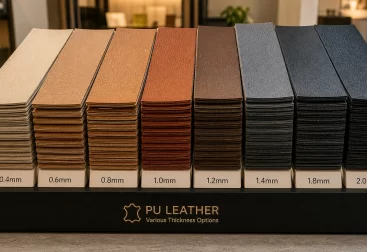
Minimum Order Quantity — MOQ — is the first number a bag factory gives you, and the one most buyers misunderstand. It looks simple: the smallest number of pieces a factory will produce for you. But the number alone tells you almost nothing useful, because the real MOQ of your project is a moving target shaped by the order type, the materials, the complexity, the factory’s load, and — most importantly — by how you ask. The same factory that quotes 1,000 pieces to one buyer will quote 300 to another, and the difference is not favoritism: it is the shape of the request.
This guide unpacks MOQ completely, from the factory’s perspective: why the number exists and what it actually covers, typical MOQs across order types and bag categories, the factors that push the number up or down, how MOQ interacts with unit price, the practical strategies that lower a factory’s MOQ without asking for the impossible, and what to put in your first inquiry so the number you get back is the number you can work with. Written for B2B buyers — brands, wholesalers, retailers and importers — it turns MOQ from a wall into a negotiation, and from a negotiation into a plan.
What MOQ Is — and Why Factories Have It
MOQ is the smallest order quantity a factory will accept, expressed in pieces (or occasionally in value, as a minimum order value). It is the factory’s way of saying: below this number, the order does not cover the fixed costs of producing it, and I will lose money or compromise quality to take it. Understanding that sentence is the whole game — the MOQ is not an arbitrary wall; it is an arithmetic statement about the factory’s costs.
Every order carries fixed costs that do not shrink with quantity: pattern making, sample rounds, material ordering and setup, cutting templates, production-line preparation, quality-control setup, packaging design. A factory that produces 200 pieces pays the same setup as one producing 2,000 — the setup is spread over fewer pieces, so the per-piece cost climbs as quantity falls. The MOQ is the quantity at which the factory’s per-piece economics still work at the quality level it is willing to stand behind. Quote below it, and the factory either declines, raises the unit price to cover the fixed costs, or — the dangerous case — accepts and quietly cuts corners to make the numbers work.
Three clarifications make the concept usable. First, MOQ is not a single number: factories typically quote different MOQs for different order types — a standard ODM style, a customized color, a full OEM development — and the MOQ for a reorder of an approved style is usually lower than for the first order. Second, MOQ is not fixed forever: it responds to material availability, factory load and negotiation — which is why the strategies in this guide work. Third, MOQ and unit price are two ends of the same lever: every factory can produce below its stated MOQ — at a price, or with a discount when you exceed it. The buyer’s skill is understanding the relationship and choosing the quantity that optimizes the total cost, not chasing either number alone.
Typical MOQs by Order Type
MOQs vary systematically by how much of the project is new. The table below is the realistic reference range from bag factories — the low end for standard styles, the high end for full custom development.
| Order type | Typical MOQ | Why |
|---|---|---|
| ODM catalog style (stock) | 100–300 pcs per style | Proven pattern, standard materials, minimal setup |
| ODM with color/logo customization | 300–500 pcs per style | Color matching and branding add setup cost |
| OEM with standard materials | 500–1,000 pcs per style | New pattern, sampling rounds, production planning |
| OEM with custom materials | 1,000–2,000 pcs per style | Material sourcing, mill lead times, minimums |
| OEM with custom hardware tooling | 1,500–3,000 pcs | Tooling amortization requires volume |
| Reorder of approved style | 100–300 pcs | No development; line setup only |
Read the ranges with two eyes. The first eye: your realistic order size should meet the factory’s MOQ for the order type you need — a first-time brand wanting 200 custom pieces should look for a factory with a lower OEM MOQ, not a large-scale one. The second eye: the range itself is negotiable — every number in the table has been moved by buyers using the strategies in this guide. The MOQ you are quoted is the factory’s starting position, not its final one, and the difference between them is the quality of your inquiry.
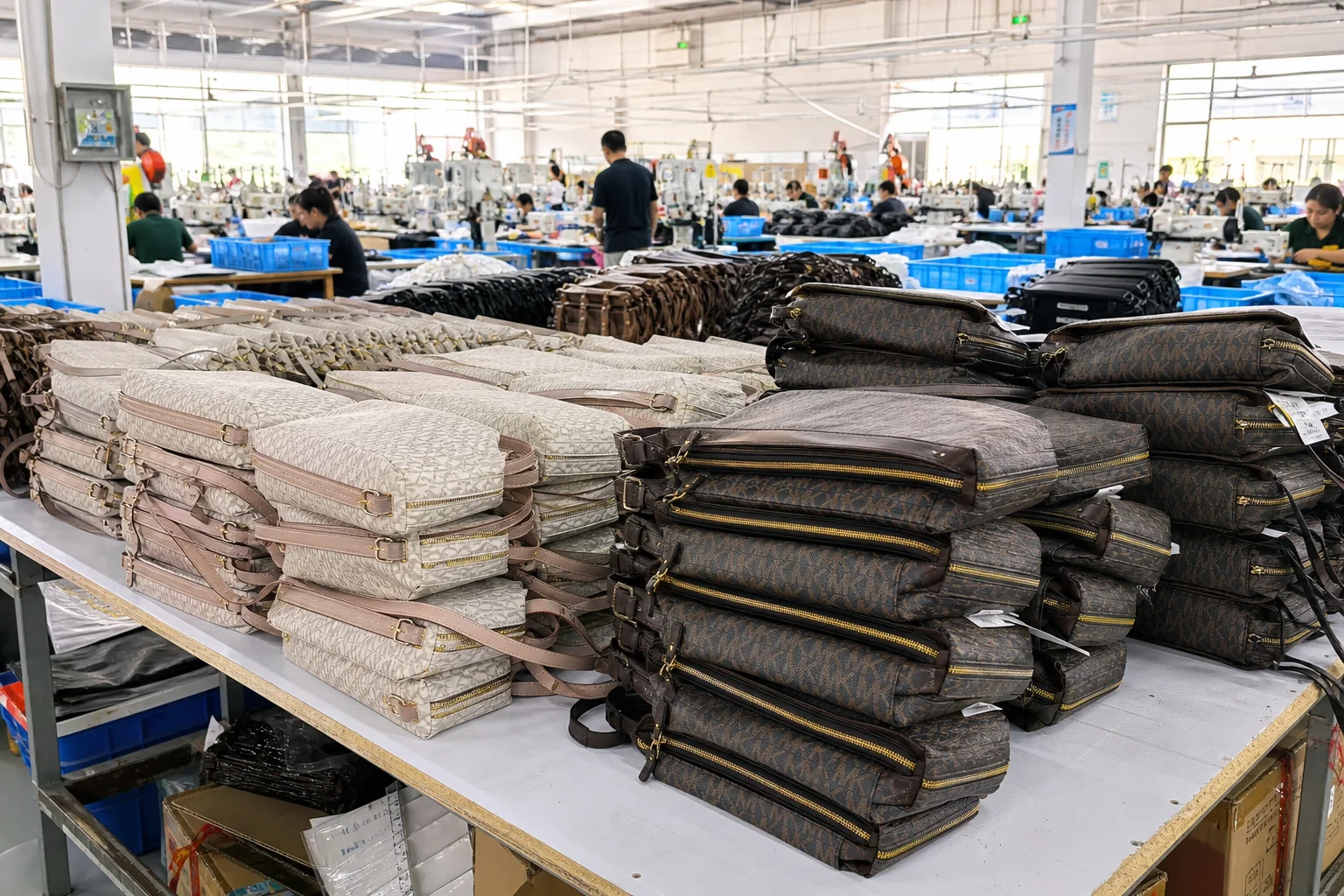
What Determines a Factory’s MOQ
Behind every MOQ number sit the factory’s costs, and naming them turns the negotiation from “can you go lower?” into “here is what I can change to make lower possible.” The main drivers, in rough order of weight:
| Driver | How it pushes MOQ | Buyer lever |
|---|---|---|
| Material minimums | Material suppliers have their own minimums; factory passes them on | Use standard materials with low supplier minimums |
| Pattern and sample setup | New patterns and sampling rounds are fixed costs per order | Develop once, reorder more — or start from ODM styles |
| Line setup and labor | Production line setup costs are spread over quantity | Consolidate styles into one production run |
| Cutting efficiency | Small quantities waste material in cutting layouts | Design for material-efficient cutting (fewer pieces, standard widths) |
| Factory load and strategy | Busy factories raise MOQs to filter small orders | Book capacity early, build a relationship |
| Packaging and labeling | Custom packaging has its own minimums and setup | Start with standard packaging, add custom later |
| Quality system | Inspection and QC setup are per-order fixed costs | Accept standard AQL, batch inspections |
The pattern to notice: most MOQ drivers are fixed costs, and most fixed costs are driven by how new the order is. The factory’s MOQ for a new development is high because the development itself is expensive; its MOQ for a reorder is low because everything is already set up. The buyer who reduces newness — by starting from ODM styles, using standard materials and consolidating styles — reduces the fixed costs, and the factory can lower the MOQ in response. The factory is not being flexible out of kindness; the buyer has genuinely changed the arithmetic.
How MOQ Affects Your Unit Price
MOQ and unit price are the two halves of one equation, and the professional buyer optimizes the total, not either number in isolation. The relationship follows a curve: as quantity rises, the fixed costs spread thinner and the unit price falls — steeply at first, then gently as fixed costs become a small share of the total.
The practical reading of the curve: the biggest price drops are between the MOQ and roughly two to three times the MOQ. Ordering 200 pieces at an MOQ of 100 might cut the unit price noticeably; ordering 1,000 against an MOQ of 500 buys little additional discount because the fixed costs are already amortized and the variable costs dominate. The efficient order size is therefore not the largest you can afford — it is the quantity at the “knee” of the curve, where further quantity buys almost no further discount, and your capital is better spent on the next style or the next market.
Two numbers to always request from the factory: the price at the MOQ, and the price at two to three times the MOQ. The pair reveals the curve — a factory whose price barely moves is variable-cost-dominated (efficient), while one whose price drops sharply is fixed-cost-heavy (and negotiating a higher quantity pays). Also ask whether the price breaks at standard quantities (500, 1,000, 2,000), because factories quote in steps, not curves — and the step boundaries are where the negotiation actually happens.
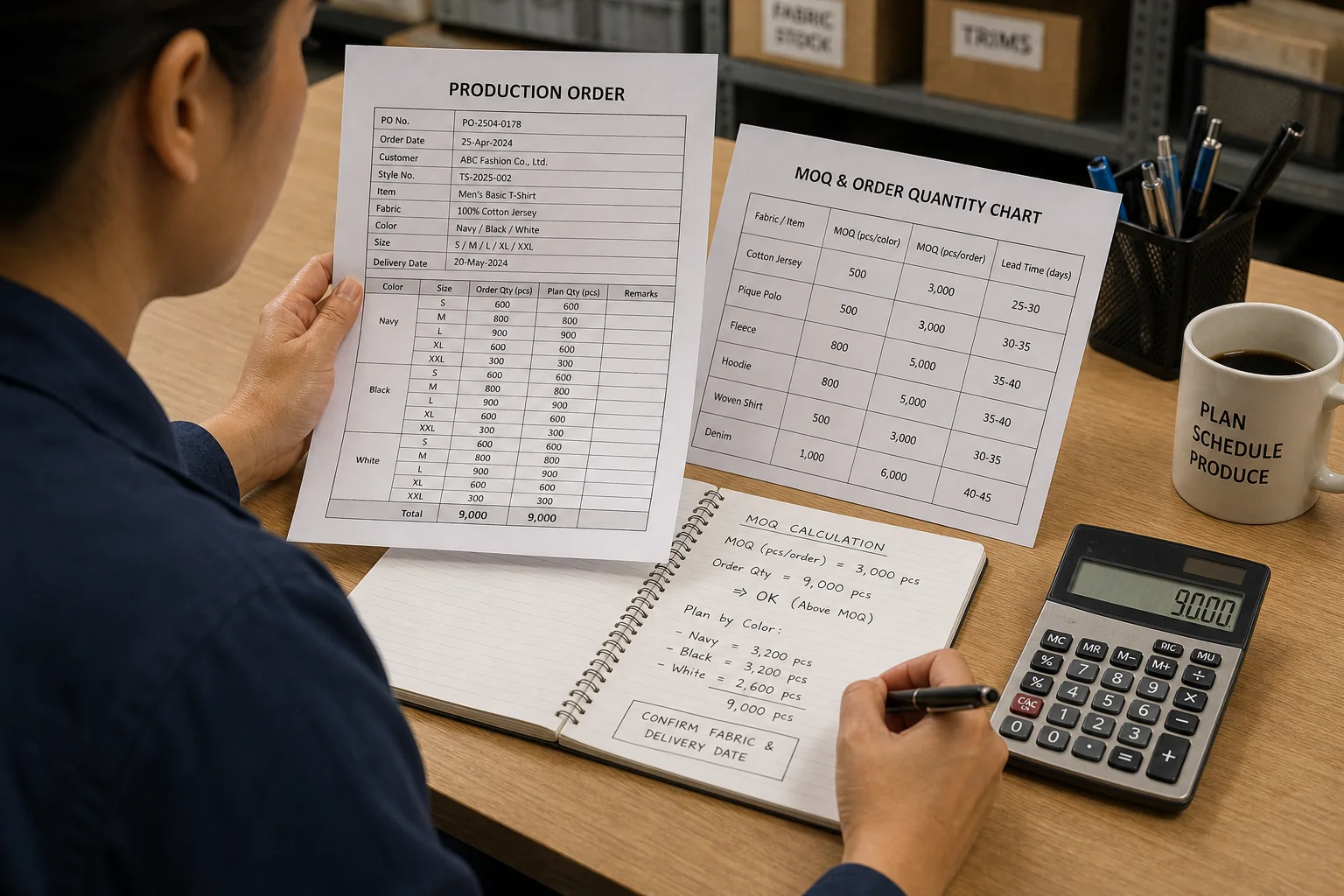
Proven Strategies to Lower the MOQ
Buyers lower MOQs every day, and the strategies are not secrets — they are trades: the buyer gives the factory something that reduces its risk or cost, and the factory returns a lower minimum. The proven ones, roughly in order of how much they move the number:
- Start from an existing style. The single biggest lever: an ODM catalog style has all setup costs already paid. Customize the color and logo, and the MOQ drops to the customization’s minimum rather than the development’s.
- Use standard materials. Material minimums are the hidden MOQ behind the MOQ. Standard stock materials in the factory’s library carry no supplier minimum; a custom color forces a mill minimum that becomes your MOQ.
- Consolidate styles into one run. Three styles of 200 pieces each share one line setup if produced together — the factory sees one production event, not three, and quotes the MOQ accordingly.
- Offer a higher unit price. The honest trade: “I can’t meet 1,000, but I’ll pay 15% more for 300.” The factory’s fixed costs are covered by the premium, and both sides win.
- Accept standard packaging. Custom packaging carries its own minimums. Standard polybag and carton packaging keeps the MOQ at the product’s minimum, with custom packaging added once volume grows.
- Split by component. Ask what the MOQ is per component — the main material, the lining, the hardware. Often only one component drives the number, and switching it (or its color) lowers the total.
- Build a relationship and a pipeline. Factories quote their best terms to buyers with a visible future — a confirmed reorder plan, a committed schedule. Show the pipeline, and the MOQ conversation changes.
- Pay a development fee. Some factories lower the MOQ in exchange for a one-time development or tooling fee that covers their setup. For a brand with a hard quantity constraint, this can be the cleanest deal.
The discipline of lowering MOQs: ask for one lever at a time, in writing, and verify the effect on the unit price at the same time — because a lower MOQ with a proportionally higher price can be worse than a higher MOQ with a better price. The MOQ is one variable in a total-cost equation, and the lever list is how you move it without breaking the equation.
What to Ask About MOQ in Your First Inquiry
The first inquiry sets the terms of the whole negotiation, and the MOQ number you receive is a direct function of the information you send. A vague inquiry — “I want custom bags, what’s your MOQ?” — produces the factory’s defensive default: the highest number, quoted for the most expensive interpretation of your request. A complete inquiry produces a number shaped to your actual project.
The professional first inquiry specifies: the order type (ODM style or OEM development), the style or a reference photo, the material preferences (or “factory’s standard materials”), the target quantity and whether it is a trial or the first of a series, the customization scope (colors, logo, packaging), and the target price range if you have one. Each element lets the factory price and size the order accurately — and the MOQ that comes back is the MOQ of your real project, not of their defensive default.
Ask the MOQ questions explicitly, in writing, and all at once: the MOQ per style, the MOQ per color, whether the MOQ changes with quantity breaks (and where they are), whether the MOQ applies to first orders and reorders differently, and what happens below the MOQ (declined, or priced higher). The answers map the factory’s cost structure and reveal where the negotiation room is. And always ask the paired question: what is the unit price at the MOQ, and at the next quantity step? The MOQ without the price curve is half the information, and the buyer who asks for both gets the whole picture in one exchange.
MOQ by Bag Category
Different bag categories carry different MOQ norms, driven by construction complexity, material cost and production speed. Knowing your category’s norm keeps your expectations honest and your negotiation informed.
| Category | Typical OEM MOQ | Why |
|---|---|---|
| Simple totes / pouches | 300–500 pcs | Simple construction, fast lines, low setup |
| Handbags / shoulder bags | 500–800 pcs | More components, higher skill requirement |
| Backpacks | 500–1,000 pcs | Multi-panel construction, stress points, more labor |
| Laptop / work bags | 500–1,000 pcs | Structured construction, padding, hardware |
| Travel bags / luggage | 800–1,500 pcs | Frames, wheels, telescopic handles, complex assembly |
| Small leather goods | 300–500 pcs | Precision work, higher per-piece value |
The pattern: MOQ tracks complexity and labor intensity. A simple tote can start at a few hundred pieces because its line setup is trivial and its material cutting is efficient; a travel bag with a frame and wheels needs more volume because its assembly is complex and its components (wheels, handles, zippers) carry their own minimums. The practical consequence for a new brand: enter with the simpler categories at lower MOQs, build volume and relationship, then expand into the complex categories when your order size justifies them — the factory’s MOQ scales with your proven track record as much as with the product itself.
MOQ in Contracts and Reorders
The MOQ is a number in the negotiation — and then it becomes a clause in the contract, and the clause is where its meaning is fixed. Three aspects deserve explicit attention in the written terms.
First, scope: the contract should state whether the MOQ is per style, per colorway, or per order, and whether it applies to the first order, all orders, or reorders. The same number can mean very different commitments depending on the scope — an MOQ of 500 per colorway with four colorways is a 2,000-piece commitment, and the buyer who does not read the scope clause discovers it at invoicing.
Second, the reorder path: the most valuable clause in the contract is often the reorder MOQ — the quantity for reordering an approved style, which is typically a fraction of the first order’s MOQ. The buyer who negotiates the reorder MOQ at the first order (when the factory wants the business) secures the terms that govern the relationship’s future — the first order is a one-time event, but reorders are the relationship. Lock the reorder MOQ and its price step in writing while you have negotiating leverage.
Third, the price-quantity linkage: the contract should carry the quantity breaks — the prices at the MOQ and at each step — so that a future quantity change is priced by the existing table rather than renegotiated from scratch. And the contractual MOQ should match the quantity you actually intend to order: committing to an MOQ you cannot meet, to win a better price, converts the negotiation win into a contractual breach. The professional clause is the one both sides can keep.

Common MOQ Mistakes Buyers Make
MOQ conversations fail in recognizable patterns, and each failure is a small amount of money or time lost that the checklist prevents.
Mistake 1 — Treating the quoted MOQ as final. The quoted number is a starting position shaped by your inquiry’s vagueness. Buyers who accept it without the lever strategies above leave money and flexibility on the table — the same project, asked better, gets a lower number from the same factory.
Mistake 2 — Chasing the lowest MOQ from the wrong factory. A very low MOQ can signal a thin factory — one that accepts small orders because it has no better use of its capacity, or one that will struggle with quality and delivery at any scale. The MOQ should be evaluated together with the factory’s capability, not as a standalone virtue.
Mistake 3 — Ignoring the unit price at the MOQ. A low MOQ with a high unit price can cost more overall than a higher MOQ with a better price. The buyer who optimizes the MOQ alone, without the paired price, is optimizing half the equation.
Mistake 4 — Ordering below the MOQ “just this once.” Factories occasionally accept an under-MOQ order as a favor — and the favor is repaid in price, quality or future terms. The first order sets the relationship’s precedent; starting it with a favor you will need to return is a poor trade.
Mistake 5 — Not verifying what the MOQ covers. The MOQ may exclude colors, sizes or packaging, and the discovery comes at invoicing. The verification is one written question: what exactly does this quantity include?
Mistake 6 — Committing to an MOQ you cannot reorder. The first order at 1,000 pieces with a reorder MOQ of 1,000 means every order is a first-order-size commitment. The buyer who plans the relationship — not just the first order — negotiates the reorder path while the leverage lasts.
Each mistake is a negotiation or a contract issue, and each is prevented by the same habit: treating the MOQ as one variable in a total-cost and relationship equation, to be understood, traded and written down — never accepted as a wall.
MOQ, Inventory and Cash Flow: The Buyer’s Economics
The MOQ is not only a factory constraint — it is a cash-flow decision for the buyer, and the two sides meet at the quantity you choose. Every piece you order ties up working capital, warehouse space and forecast risk; the MOQ is the floor at which that commitment begins, and the decision above the floor is a financial one, not a sourcing one.
The total-cost view puts the MOQ in context. The landed cost of an order is the product of the unit price and the quantity, plus freight, duties, inspection and the cost of capital tied up in inventory. A larger order lowers the unit price — but it also raises the absolute cash commitment, lengthens the sell-through period, and increases the risk of holding stock that does not move. The buyer who orders three times the MOQ to capture a 10% price break has bought a 10% discount on the goods and a threefold increase in inventory risk; whether that trade is wise depends entirely on the forecast, the season and the capital position.
Three practices keep the economics honest. First, order to the forecast, not to the discount: the efficient quantity is the one that sells through within your target inventory-turn period, and the price break only matters if it does not force overstock. Second, use the MOQ as a mix tool: if the MOQ per style is 500 and your forecast is 300, consider two styles sharing the run (consolidation) or negotiating a mixed-color MOQ — the factory’s setup is amortized across the batch, and your inventory matches the demand per style. Third, plan the reorder cadence: with a confirmed reorder MOQ in the contract, the first order can be conservative (a proven quantity that sells), and growth comes from rapid reorders rather than a single large bet — the factory relationship rewards volume over time, and your cash flow rewards selling through.
The professional summary: the MOQ sets the minimum, the forecast sets the order, and the contract sets the path to reorder. Buyers who treat the MOQ as a financial variable — not just a factory number — turn the constraint into a working rhythm, and the rhythm is what makes small brands grow into large ones.
FAQ
What is a typical MOQ for custom bags?
Realistically: ODM catalog styles from 100–300 pieces, OEM with standard materials from 500–1,000, and OEM with custom materials from 1,000–2,000 per style. Reorders of approved styles typically drop to 100–300 pieces. Every number is negotiable with the right inquiry.
Can I order below the factory’s MOQ?
Often yes, at a price — factories may accept under-MOQ orders with a higher unit price to cover their fixed costs, or decline if the gap is too large. Ask the paired question: what is the price at a lower quantity? Sometimes the trade is worth it; sometimes a higher MOQ at a better price is cheaper overall.
Why do custom materials raise the MOQ?
Because material suppliers have their own minimums — a custom color or special material forces a mill minimum that becomes the factory’s floor, and the factory cannot produce fewer pieces than its material order requires. Standard materials carry no such constraint.
How can I lower the MOQ for my first order?
The proven levers: start from an existing ODM style, use standard materials, consolidate styles into one run, accept standard packaging, offer a higher unit price, or pay a development fee. The most effective single move is starting from an existing style instead of a full development.
Is a lower MOQ always better?
No — the MOQ must be evaluated with the unit price, the factory’s capability and your reorder plan. A very low MOQ can signal a thin factory, and a low MOQ with a high price can cost more overall than a higher MOQ with a better price.
Do MOQs apply to reorders?
Reorders of approved styles usually carry a lower MOQ than first orders — typically 100–300 pieces — because the development and setup costs are already paid. Negotiate the reorder MOQ and its price in writing at the first order, while you have leverage.
Is the MOQ per style or per order?
It depends on the factory’s terms — the MOQ may apply per style, per colorway, or per order. The distinction matters enormously: an MOQ of 500 per colorway with four colors is a 2,000-piece commitment. Confirm the scope in writing before you commit.
What should I include in my inquiry to get the best MOQ?
Specify the order type, the style or reference, material preferences, your target quantity and whether it is a trial or a series, customization scope, and target price. A complete inquiry lets the factory price your real project instead of its defensive default — and that is the MOQ you want.
Can I mix styles and colors to reach the MOQ?
Often yes — many factories count a mixed batch of styles or colorways against one MOQ when they share a production run, since the line setup is amortized across the batch. Ask whether the MOQ is per style or per mixed order, and confirm how colors are counted in the terms.
Next Steps: Turn the MOQ into a Plan
The MOQ is not a wall — it is a number with a cost structure behind it, and the buyer who understands the structure can move the number. Start from existing styles, use standard materials, ask the paired price question, negotiate the reorder path in writing, and evaluate every MOQ against the total cost and the factory’s capability. The brands that grow fastest are not the ones with the biggest orders — they are the ones that turned the MOQ conversation into a plan they could actually execute.
Planning a custom bag order and want to know the real MOQ for your project — not the defensive default? Contact info@gionar.com with your style, materials and target quantity, and we will quote the MOQ and the price curve together. Explore our custom bag manufacturing services and custom backpack manufacturing to see how flexible, honest MOQs work in practice.