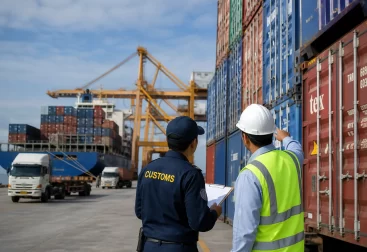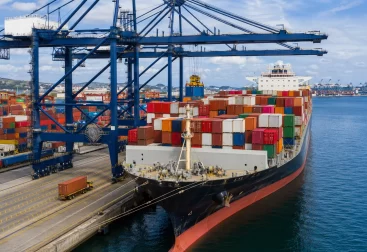
Importing bags from China involves two separate obligations that are often confused. One is the commercial arrangement with the supplier: an order, a price, a delivery term. The other is the regulatory arrangement with customs: a set of documents that establish what the goods are, what they are worth and where they came from.
An order can be produced, packed and loaded perfectly and still be held at the destination because one document is missing, inconsistent or wrongly completed. Documentation problems are among the most common causes of avoidable delays, and they usually surface at the worst possible moment, after the goods have already sailed.
The core document set for a bag shipment is small and stable. A commercial invoice, a packing list, a transport document and a certificate of origin cover most shipments, with additional documents depending on the destination, the trade term and the nature of the goods.
What causes trouble is not the existence of the documents but their consistency. Customs authorities compare them against each other, and a discrepancy between the invoice and the packing list, or between the invoice and the bill of lading, is treated as a signal to examine the shipment more closely.
This guide sets out which documents a bag importer needs and when; explains what each document must contain to be accepted; describes the additional certificates that apply to certain destinations and materials; shows how to keep the document set internally consistent; and describes the pre-shipment check that catches errors before the container leaves.
The Core Document Set
Most bag shipments move on a small set of documents. Understanding what each one does makes it obvious why a missing document stops a shipment rather than merely slowing it.
The commercial invoice
The commercial invoice states what was sold, to whom, for how much and on what terms. It is the document customs uses to establish the customs value on which duty is calculated, which makes it the single most important document in the set.
For bags, the invoice must describe the goods in enough detail for classification. A line that reads “bags” invites questions, while a line that states the outer material, the type of bag and the intended use supports a classification decision.

The packing list
The packing list itemises the physical shipment: how many cartons, what is in each, the weight and dimensions, and the marking on each carton. Customs and the carrier both use it, and it must agree with what is physically loaded.
The packing list is also what makes an inspection manageable. Where the list identifies each carton by number and content, an examination can be targeted. Where it does not, the whole shipment may be unpacked.
The transport document
The transport document is the bill of lading for sea freight, the airway bill for air freight, or the rail consignment note. It is issued by the carrier or forwarder and serves as the contract of carriage, a receipt for the goods, and in some cases a document of title.
Because the transport document is issued by a third party, the importer usually cannot alter it. This is why discrepancies between it and the invoice are particularly damaging: correcting them requires the carrier’s cooperation rather than the importer’s own action.
The certificate of origin
The certificate of origin states where the goods were produced. Where a preferential trade agreement applies, the certificate is what allows a reduced or zero duty rate; without it, the standard rate applies.
For bags, origin is generally determined by where the goods were manufactured rather than where the materials were produced. A bag made in China from imported fabric is normally of Chinese origin, and the certificate must reflect that.
| Document | Issued by | Purpose | Consequence if missing |
|---|---|---|---|
| Commercial invoice | Seller | Establishes value and sale terms | Duty cannot be assessed; clearance stops |
| Packing list | Seller | Describes physical cargo | Inspection delayed; count cannot be verified |
| Bill of lading or airway bill | Carrier or forwarder | Contract of carriage and release | Cargo cannot be released |
| Certificate of origin | Chamber or authority | Establishes origin and preference | Preferential rate lost; standard duty applies |
| Customs declaration | Importer or broker | Formal entry for duty and release | No import process exists |
| Insurance certificate | Insurer | Evidence of cover | Required on certain terms and for claims |
What the core set does not cover
The core set establishes a normal commercial shipment. It does not address destination-specific requirements, restricted materials, or reduced-duty schemes that need supporting evidence. Those are handled by the additional documents described later.
The core set also assumes the goods are what they appear to be. Where a shipment contains a restricted material, or where the declared value looks inconsistent with the goods, the core set is the trigger for further inquiry rather than the answer to it.
Who issues each document
Most of the set is issued by the seller, but two documents come from outside the transaction. The transport document comes from the carrier and the origin certificate from an authority.
Getting the Commercial Invoice Right
The commercial invoice receives more customs attention than any other document because it determines the duty payable. Errors here are both the most common and the most expensive.
Description of goods
The description must be specific enough to support the classification claimed. For PU leather bags, a workable description states the outer surface material, the type of bag and its intended use, and where relevant the lining material.
Descriptions should be consistent across every line. Where a shipment contains several bag types, each line should carry its own description, quantity, unit price and total, rather than a single aggregate line.
Value and terms
The invoice must state the trade term, because the term determines which costs are included in the invoice value and which are invoiced separately. An FOB invoice and a CIF invoice for the same goods carry different values.
Freight and insurance are added to the customs value where they are not already included. This means the mode of transport affects the duty base, and a quotation used for costing purposes must be understood in the same terms as the invoice.
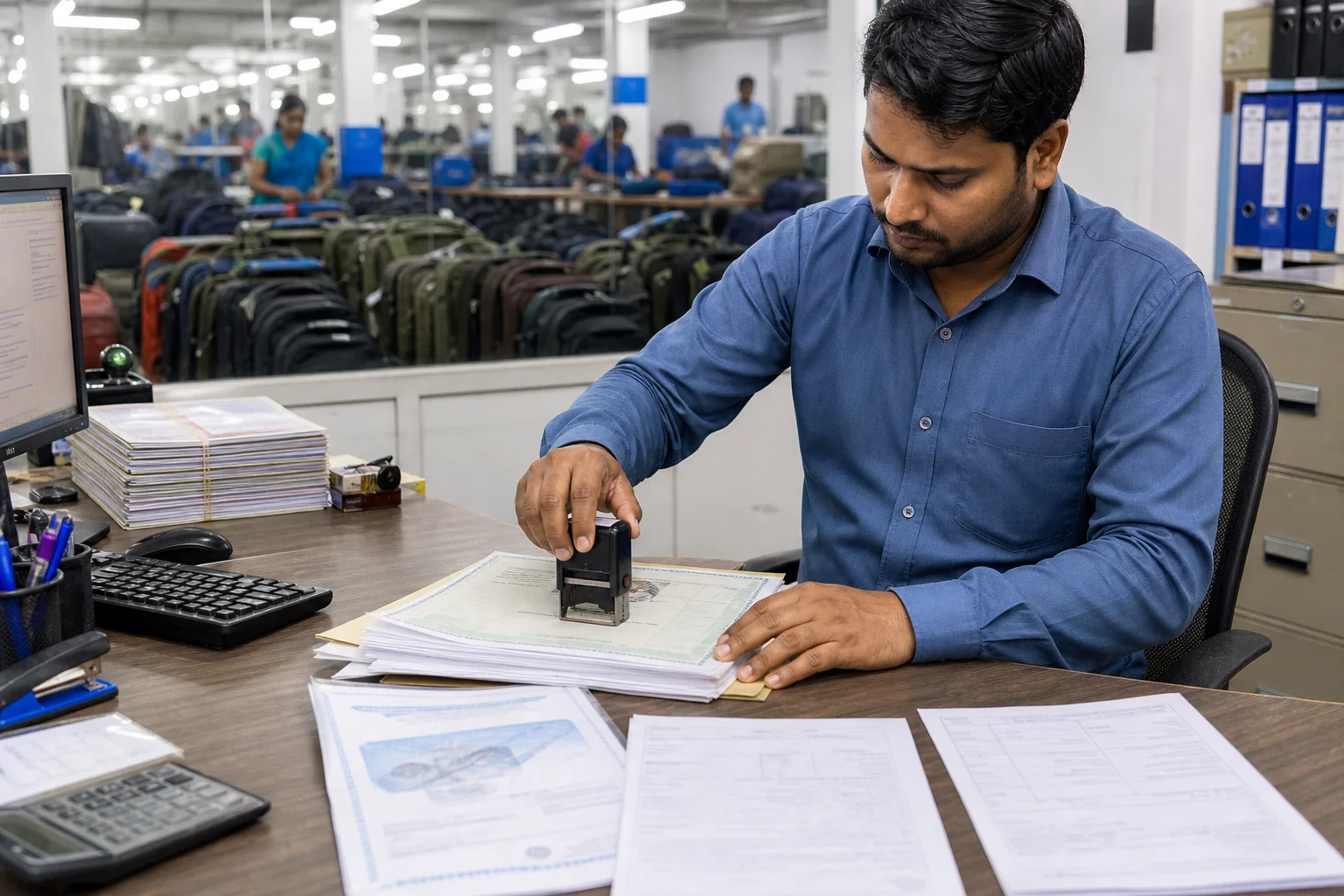
Currency and exchange
The invoice states the currency of the transaction, and customs converts it using a published rate for the period. Where the rate applied differs from the commercial rate the importer expected, the duty differs too.
Invoices in a stable, widely traded currency reduce conversion ambiguity. Where the supplier invoices in a less common currency, it is worth confirming how the rate is applied before the shipment rather than after.
| Invoice element | Why it matters | Common error |
|---|---|---|
| Goods description | Supports the classification claimed | Generic description such as “bags” |
| Trade term | Determines what the value includes | Term stated but costs invoiced inconsistently |
| Unit price and quantity | Drives the customs value | Rounding that does not reconcile to the total |
| Currency | Conversion to local value | Currency omitted or ambiguous |
| Buyer and seller identity | Establishes the transaction parties | Consignee differs from the buyer without explanation |
| Country of origin | Supports the duty rate claimed | Origin left blank or inconsistent with the certificate |
| Invoice number and date | Links the shipment to the entry | Number differing between documents |
Under-valuation and its consequences
Declaring a value below the transaction value to reduce duty is treated as a serious matter rather than a technical error. The consequences extend beyond the duty itself to penalties and, in some jurisdictions, to the importer’s standing with the authority.
There is also a practical commercial argument for accurate valuation. Where a shipment is undervalued, insurance cover is usually based on the declared value, so a loss is compensated at the wrong figure.
Sampling and non-commercial shipments
Samples and gifts still require documentation. A shipment declared as a sample with no commercial value needs a stated value for customs purposes, and the treatment of low-value shipments varies by destination.
Sample shipments are frequently the ones with the weakest documentation, because they are treated as informal. That informality is what causes them to be held while a formal commercial shipment clears normally.
Why rounding matters
Unit prices multiplied by quantities must reconcile to the invoice total. Where rounding is applied, it should be applied once at the total rather than line by line.
Transport and Origin Documents
The transport document and the certificate of origin are the two documents most often treated as formalities. Both carry more weight than their appearance suggests.
The bill of lading
The bill of lading is issued by the carrier and records the goods received, the ports of loading and discharge, the consignee and the freight terms. It is the document that must be surrendered to take delivery of the cargo in most sea shipments.
Because it is issued by a third party rather than the seller, it cannot be corrected by the importer acting alone. This is why the details supplied for the bill of lading should be checked against the invoice before the document is issued rather than after.
Airway bills and rail consignment notes
The airway bill serves the same function for air freight but is not a document of title, so the consignee can usually take delivery without surrendering it. The rail consignment note performs an equivalent role for rail movements.
The practical difference matters for payment security. Where the seller wants to retain control until payment, a negotiable bill of lading supports that; an airway bill generally does not.
Certificates of origin and preference
A general certificate of origin states the origin of the goods without claiming preferential treatment. A preferential certificate, issued under a specific trade agreement, is what reduces or eliminates duty.
The two are not interchangeable. Presenting a preferential certificate that does not meet the agreement’s rules of origin can result in the preference being denied, and in some cases in additional scrutiny of subsequent shipments.
| Document | Type | Effect on duty | Notes for bags |
|---|---|---|---|
| General certificate of origin | Standard | None by itself | Confirms origin; supports classification queries |
| Preferential certificate | Agreement-based | Reduced or zero rate | Requires rules of origin to be met |
| Supplier declaration | Supporting | Supports origin claim | Useful where materials are sourced elsewhere |
| Bill of lading | Transport | None | Must match invoice and packing list |
| Airway bill | Transport | None | Not a document of title |
| Rail consignment note | Transport | None | Required for rail movements |
Origin and the materials question
Bags are assembled products, and their materials may come from several countries. Origin rules generally look at where the last substantial transformation occurred rather than where the inputs originated.
For a bag cut, assembled and finished in one country, origin is normally that country. Where significant processing is split across borders, the position becomes less obvious and the origin rules of the importing country govern.
Freight terms on the transport document
The transport document states whether freight is prepaid or collect, which must agree with the trade term on the invoice. A mismatch between the two is a common cause of questions and of delay at release.
Where a forwarder issues a house bill rather than a carrier bill, the importer should understand which document governs release and confirm that the release process works with their payment arrangement.
When a house bill is used
A forwarder issuing a house bill consolidates several shipments under one carrier document. The house bill then governs the relationship with the forwarder rather than with the carrier.
Additional Certificates and Declarations
Beyond the core set, several documents apply depending on destination, material and trade scheme. These are the ones most often overlooked, because they are not part of the standard template.
Declarations for restricted or regulated materials
Some destinations require declarations covering chemical content, restricted substances or material composition. Bags with coated surfaces, dyed textiles, metal hardware or adhesives can all fall within the scope of such requirements.
The obligation normally sits with the importer, but the information must come from the manufacturer. This is a case where the specification and the material data should be collected during development rather than at the point of shipment.
Wood packaging and treatment
Where pallets or crates are used, the wood must usually be treated and marked according to the international standard for wood packaging. Untreated wood packaging can cause a shipment to be refused entry or treated at the importer’s cost.
This is straightforward to control and frequently forgotten on smaller shipments where a pallet is added at the last moment. The requirement should be written into the packing specification.
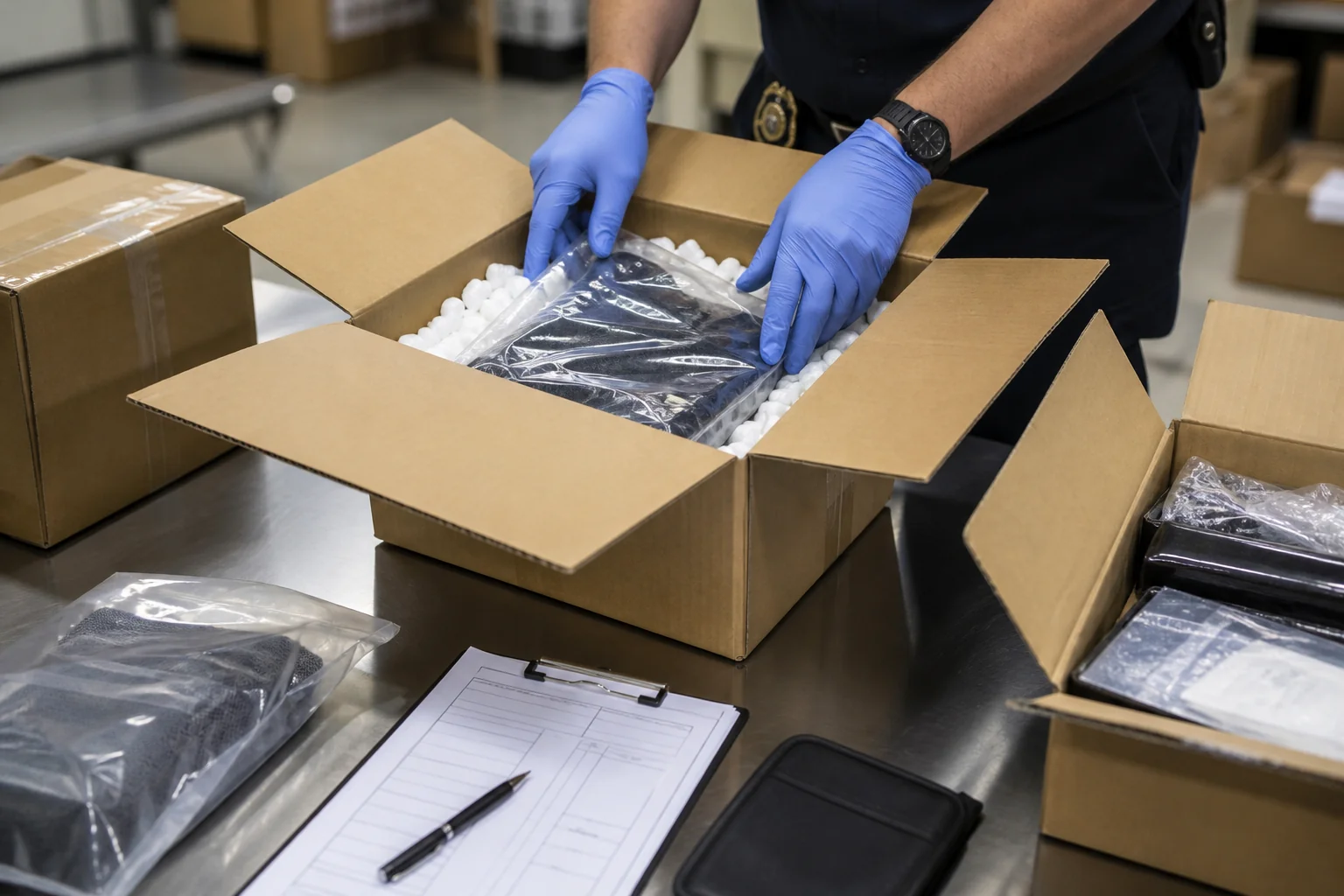
Certificates required for particular schemes or destinations
Certain import programmes and destinations require supporting certificates for preferential treatment, for quota purposes or for conformity assessment. These vary by destination and change from time to time.
The practical rule is to confirm the destination’s requirements for the specific product before the order is placed, not before the shipment. Requirements confirmed at the point of shipment are frequently impossible to satisfy in time.
| Additional document | Trigger | Who provides it | Lead time impact |
|---|---|---|---|
| Chemical or material declaration | Destination regulation on substances | Manufacturer, submitted by importer | Depends on testing availability |
| Wood packaging treatment mark | Any wooden pallet or crate | Packaging supplier | Same day if planned |
| Preferential origin certificate | Claiming reduced duty | Issuing authority | Several days |
| Conformity certificate | Destination product rules | Testing body | Weeks if testing required |
| Inspection certificate | Buyer or destination requirement | Third-party inspector | Days, scheduled in advance |
| Insurance certificate | Trade term or buyer requirement | Insurer | Days |
Labelling and marking requirements
Some destinations require specific information on the product or its packaging, including country of origin, material content or care instructions. These are not customs documents in the narrow sense but they are checked at the border.
Where labelling is required and absent, the remedy is usually at the destination rather than at origin, which makes it expensive. Confirming the requirement before production is considerably cheaper than correcting it afterwards.
Keeping certificates valid
Certificates carry validity periods and can expire between production and shipment, particularly where an order is produced early and shipped late. An expired certificate is treated as no certificate.
Validity should be checked against the expected shipment date rather than the order date. Where the gap is long, it may be better to obtain the certificate later in the process.
How far ahead to apply
Certificates requiring testing or third-party inspection need the longest lead time. Where a destination requires one, the application should start before production finishes rather than after.
Keeping the Documents Consistent
Consistency is the property customs checks and the property importers most often fail to verify. The individual documents may each be correct and still fail as a set.
The fields that must match
A small number of fields must agree across every document: the consignee, the number of cartons, the gross weight, the description of goods and the marks on the packaging. These are the fields an officer compares first.
Where one of these differs, the question raised is not merely technical. A mismatch suggests that the documents do not describe the same shipment, which is exactly the situation an examination is designed to resolve.
The invoice and packing list pair
The invoice states quantities by product; the packing list states quantities by carton. The two must reconcile: the total units on the packing list should equal the total units on the invoice for each line.
Where a shipment is split across containers, the packing list should identify which cartons are in which container. Without this, the reconciliation cannot be performed at the destination.
The invoice and transport document pair
The transport document records the cargo as received by the carrier, including the number of packages and the marks. These must match the invoice and packing list, because the carrier’s record is independent evidence.
This is the pair that is hardest to correct, since the transport document is issued by a third party. Errors discovered before the document is issued are simple to fix; errors discovered after require an amendment that may itself cause delay.
| Field | Invoice | Packing list | Transport document |
|---|---|---|---|
| Consignee name and address | Required | Often shown | Required |
| Number of cartons or packages | May be implied | Required | Required |
| Gross and net weight | Often required | Required | Required |
| Marks and numbers | May be shown | Required | Required |
| Goods description | Detailed | Per carton | General |
| Country of origin | Required | Often shown | May be shown |
Descriptions and translations
Descriptions should use the language of the destination where required, or a standard commercial language accepted by the authority. Mixing terms across documents creates avoidable ambiguity.
Where a description must be translated, the translation should be done once and reused across every document rather than produced separately for each. Independent translations are a common source of inconsistency.
Revisions and version control
Where a document is corrected, the correction should be applied consistently to the whole set and the final versions kept together. A corrected invoice with an uncorrected packing list reproduces the original discrepancy.
The practical discipline is to keep a single folder for the shipment containing only the final versions of each document, and to confirm the set against the cargo before loading rather than after.
Keeping one canonical description
A single description should be agreed at the start and reused unchanged across every document. Rewriting the description for each document is how inconsistencies are introduced.
Who Prepares What and When
Documentation is a sequence, not a task. Knowing which document depends on which other document makes the sequence manageable and the deadlines realistic.
Before production
The specification and the destination requirements should be confirmed before production begins. This is the stage at which labelling requirements, material restrictions and certificate needs are identified.
Confirming at this stage is what makes the later steps uneventful. Requirements discovered after production frequently cannot be met without changing the goods or delaying the shipment.
At the point of shipment
The invoice and packing list are prepared by the seller and issued with the shipment. The transport document is issued by the carrier or forwarder once the cargo is received and loaded.
This is the point at which the document set first exists as a set and can be checked against the cargo. It is the last practical moment to correct an error without cost.
After departure and before arrival
Certificates of origin and any required declarations are usually obtained in this window, ideally before the vessel arrives rather than after. Pre-clearance reduces the time the cargo sits in the terminal.
Where duty is payable, the entry is prepared by the importer or their broker. Preparing the entry in advance of arrival means the only remaining step at discharge is release.
| Stage | Document prepared | Prepared by | Risk if late |
|---|---|---|---|
| Before production | Requirement assessment | Importer with supplier input | Goods cannot meet requirements |
| Before production | Packing specification | Importer and supplier | Labelling or marking non-compliance |
| At shipment | Commercial invoice | Seller | Clearance cannot begin |
| At shipment | Packing list | Seller | Inspection becomes broad |
| At loading | Bill of lading or airway bill | Carrier or forwarder | Amendment delays release |
| After departure | Certificate of origin | Issuing authority | Preference lost |
| Before arrival | Customs entry | Importer or broker | Cargo waits at destination |
Working with a customs broker
A broker handles the entry and the interaction with the authority, but the broker works from the documents supplied. A broker cannot correct an inconsistent invoice, only report it.
Supplying the broker with the complete set early is what allows them to identify problems while there is still time to act. Where the set arrives at the last moment, the broker’s only option is to file what they receive.
The Pre-Shipment Document Check
The check is quick and it removes a category of risk entirely. It should be performed before the container is sealed, not after departure.
The check list
Confirm that every required document exists, that the mandatory fields are completed, and that the fields which must match across documents do match. Then confirm the documents against the physical cargo.
The physical check matters because documents can be internally consistent and still wrong. Counting the cartons and comparing against the packing list takes minutes and catches the errors that documents alone cannot.
What to do when a discrepancy is found
Correct the document before the shipment moves wherever possible. Where the discrepancy is in the invoice or packing list, the seller can reissue; where it is in the transport document, the carrier must amend.
Where correction is not possible before departure, notify the broker immediately and in writing. A discrepancy disclosed in advance is a problem to be managed; the same discrepancy discovered at destination looks like something else entirely.
| Check | Method | Catches |
|---|---|---|
| All required documents present | Against the destination checklist | Missing certificates |
| Consignee consistent | Compare across all documents | Wrong or variant entity name |
| Carton count consistent | Compare and count physically | Short or over shipment |
| Weights consistent | Compare and verify on the scale | Clerical errors |
| Description consistent | Compare word for word | Classification mismatch |
| Marks match cartons | Inspect a sample of cartons | Wrong marking, wrong carton |
| Certificates in date | Check validity against sailing date | Expired certificates |
| Values reconcile | Sum the lines and compare | Arithmetic and rounding errors |
Retaining the record
The final document set should be retained for the period required by the destination’s rules, together with the pre-shipment record. Where a valuation or origin question arises later, the retained set is the evidence.
Documents are cheaper to fix at the factory than at the port. Every check that takes minutes before loading saves days after arrival.
FAQ
What documents do I need to import bags from China?
The core set is a commercial invoice, a packing list, a transport document such as a bill of lading or airway bill, and a certificate of origin. A customs entry is then filed by the importer or their broker. Additional certificates may be required depending on the destination, the materials used and whether preferential duty is claimed.
Does the commercial invoice determine how much duty I pay?
Yes, it is the primary document for establishing customs value, which is the base on which duty is calculated. This is why the description must be specific enough to support the classification claimed and why the value must reflect the actual transaction rather than a reduced figure.
What is the difference between a certificate of origin and a preferential certificate?
A general certificate of origin states where the goods were made without claiming any special treatment. A preferential certificate is issued under a specific trade agreement and is what reduces or removes duty, provided the agreement’s rules of origin are met. The two are not interchangeable.
Do samples need customs documents?
Yes. Sample shipments still need an invoice and packing list, and a value must be stated for customs purposes even where no payment is involved. Low-value and sample shipments are frequently held because their documentation is treated as informal.
What happens if the documents do not match each other?
A mismatch is treated as a signal that the documents may not describe the same shipment, which invites closer examination. The fields that must agree are the consignee, the carton count, the weights, the description and the marks. Discrepancies involving the transport document are the hardest to correct because a third party issued it.
Are wooden pallets a customs issue?
Yes. Wood packaging normally must be treated and marked to the international standard for wood packaging material. Untreated or unmarked wood packaging can cause a shipment to be refused entry or treated at the importer’s cost, and it is often overlooked on smaller shipments.
Who prepares the bill of lading?
The carrier or freight forwarder issues it once the cargo is received. Because it is issued by a third party, the importer cannot correct it alone, so the details supplied for the bill should be checked against the invoice before it is issued rather than afterwards.
Can a certificate of origin expire before the goods ship?
Yes, certificates carry validity periods and can expire between production and shipment, particularly on orders produced early and shipped late. An expired certificate is treated as no certificate, so validity should be checked against the expected sailing date.
What should a goods description on a bag invoice say?
It should state the outer surface material, the type of bag and the intended use, with the lining material where relevant. A description that reads simply “bags” invites questions and may not support the classification being claimed.
Is freight included in the customs value?
In most destinations freight and insurance are added to the customs value where they are not already included in the invoice figure. This means the shipping mode affects the duty base as well as the transport cost, so quotations should be compared on a consistent trade term.
When should I start preparing import documents?
Destination requirements should be confirmed before production begins, because labelling rules, material restrictions and certificate needs are cheapest to satisfy at that stage. The invoice and packing list are issued at shipment, and certificates and the customs entry should be prepared before the vessel arrives rather than after.
What is the most common documentation mistake importers make?
Inconsistency between documents rather than a missing document. The consignee, carton count, weights and description must match across the invoice, packing list and transport document, and a mismatch in any of these is what triggers examination. A physical count of cartons before loading catches most of them.
Need import-ready documentation with your bag order?
We manufacture PU leather bags in Guangzhou and issue a commercial invoice, packing list and full carton marking data with every shipment, with material and composition information available on request for destination declarations. Send your destination and product details to info@gionar.com, or review our custom bag manufacturing capabilities.