How Should Bag Importers Document and Claim for Damaged Cargo?
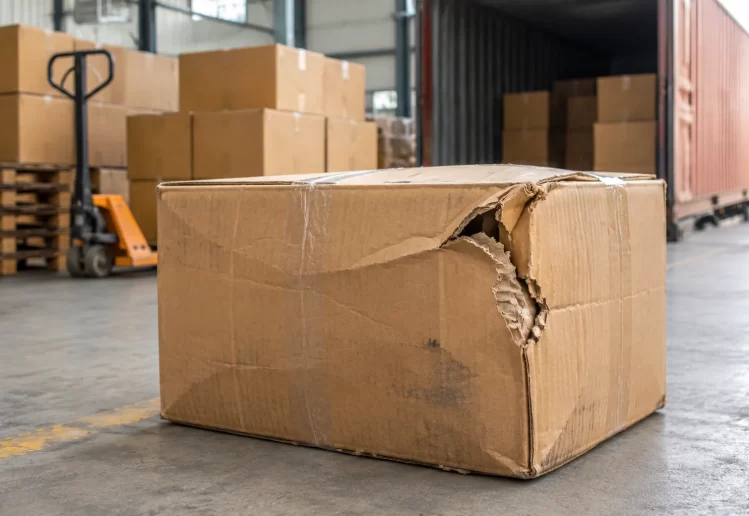
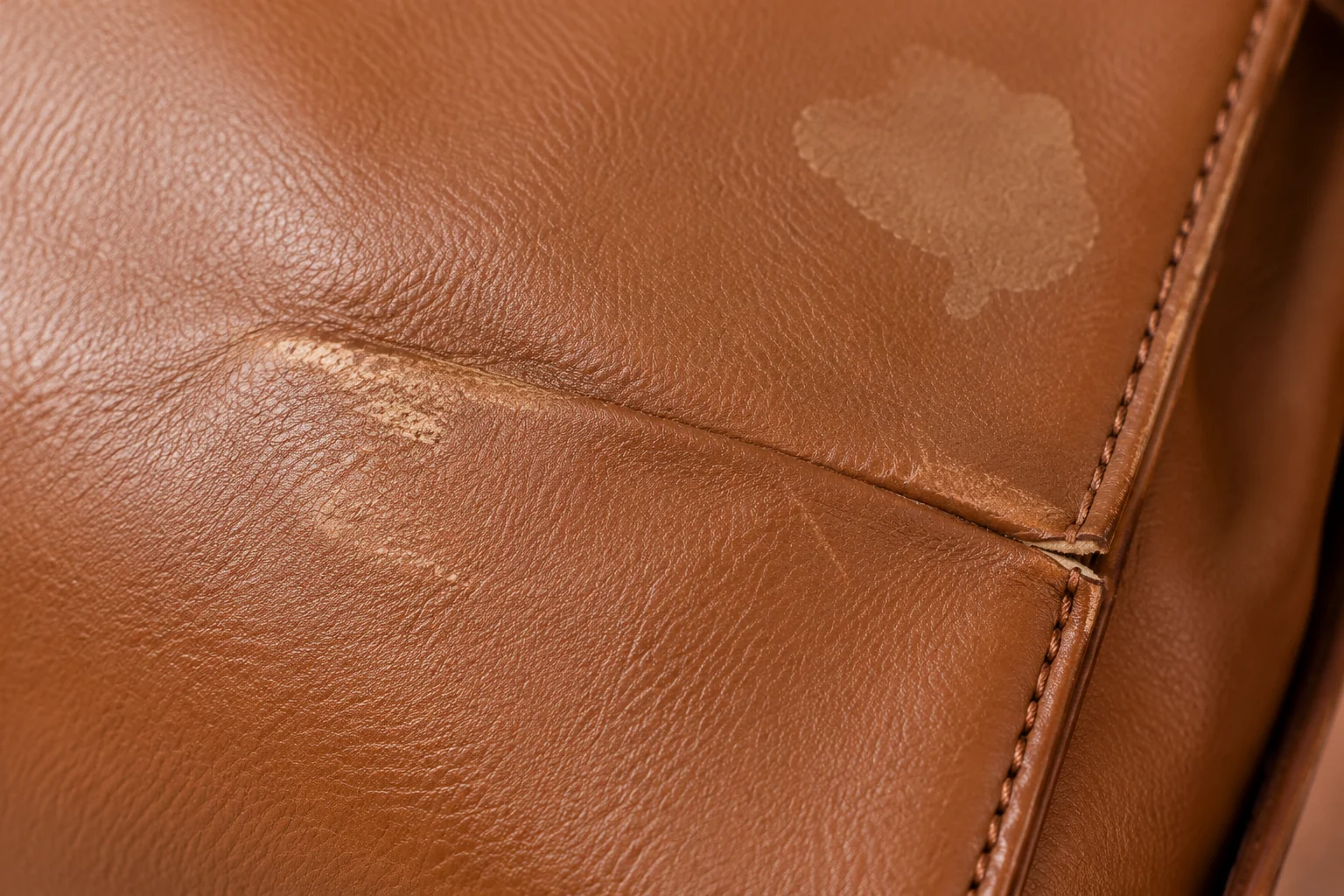
A forty-foot container of PU leather handbags arrives at your warehouse, and the door end tells the story before anyone opens a carton: two pallets have shifted, four cartons are crushed along one corner, and one has a tide mark running halfway up the side. Inside, twelve bags in the bottom layer carry scuffed panels, and three have a crease where a strap buckle pressed into the leather under load.
The damage itself is rarely what decides a cargo claim. What decides it is the state of the evidence file that exists at that moment: whether anyone wrote a reservation on the delivery receipt, whether the photographs show the container seal before it was cut, whether the carton count on the tally sheet matches the packing list, and whether written notice reached the carrier inside the window the applicable regime allows.
For a bag importer, this matters more than for a buyer of steel or machinery. PU leather handbags are soft goods with a cosmetic surface, a low unit value and a high labour content, so damage is often partial, arguable and hard to price.
A crushed carton may leave ninety bags sellable at full price, eight sellable only at a discount and two fit for nothing. That distribution is exactly what a claim adjuster will interrogate, and exactly what a properly built file answers without argument.
What this guide covers
Twenty working sections, in the order a claim unfolds: risk transfer, delivery condition records, photographic evidence, the claim file, loss quantification, carrier limits, insurance, notice wording, surveyors, escalation, fault triage, and the damage register that turns repeat losses into a packaging change.
Why bags lose claims that other products win
Three structural reasons. Damage is often cosmetic and disputed as to severity, so the argument moves to how much value was lost — and value needs a pricing method. Cartons of soft goods crush and recover, so door condition does not correlate neatly with the loss inside. And most importers buy FOB or EXW, so the carrier contract, the insurance contract and the named consignee sit with different parties.
Ten bags in a hundred arrive scuffed, and the difference between a recovered claim and a write-off is usually a folder, not a lawyer.
The three deadlines that cannot be moved
Written notice of loss runs on a short clock: three days from delivery under the Hague-Visby regime for sea carriage, seven days for apparent damage under the CMR Convention for European road haulage, and fourteen days for air cargo under the Montreal Convention. The right to sue runs longer but still finite — one year for sea, two years for air and road — and both clocks start from delivery, not from the day you finish inspecting.
- Why Most Damage Claims Fail Early
- What Counts as Damage on a Bag Shipment
- Who Owns the Risk, and When
- The Delivery Condition Record
- A Photographic Protocol That Survives Scrutiny
- The Claim File: Documents That Carry Weight
- Quantifying a Partial Loss
- Carrier Liability Limits and Real Payouts
- Cargo Insurance: The Parallel Track
- Writing the Notice of Claim
- Appointing a Surveyor
- The Escalation Ladder
- Factory Fault or Transit Fault
- Claims Against Forwarders and NVOCCs
- Mitigation, Salvage and Disposal
- Building a Damage Register and KPI Set
- When to Absorb a Loss
- Packaging Specifications That Cut Claims
- Ten Mistakes That Weaken a Claim
- FAQ
Why Most Damage Claims Fail Early
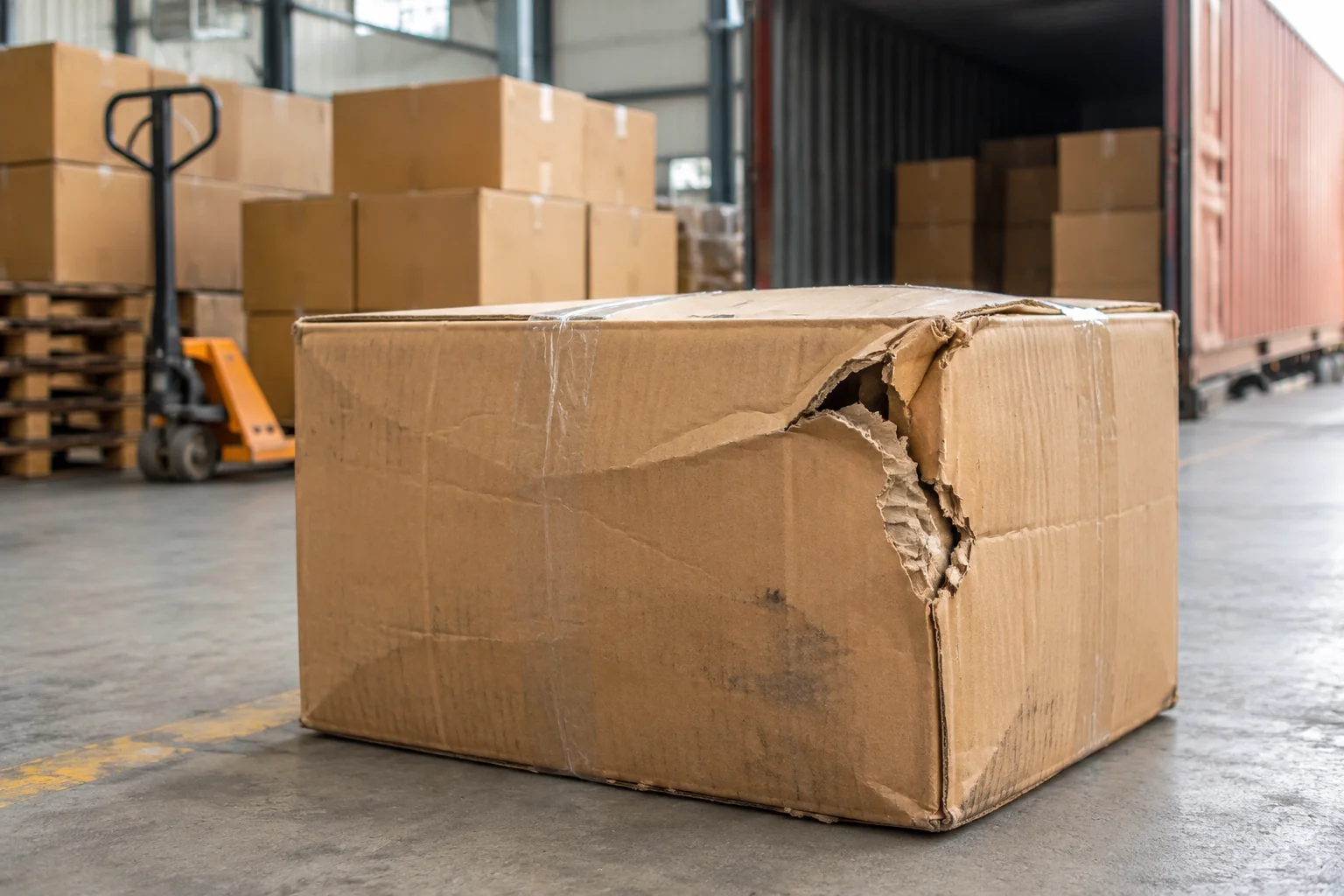
Claim files fail in a predictable sequence, and almost never because the loss was invented. They fail because the first two hours after the container doors opened were spent moving stock instead of recording condition, and every later argument inherits that gap.
The default assumption runs against the importer
A clean bill of lading and an unqualified delivery receipt are treated as evidence that the goods were received in apparent good order. Once that document is signed, the burden shifts: you must now prove the damage existed before or during carriage, not after you took control. Photographs taken the next morning prove very little on their own.
Damage that recovers is the hardest to argue
Compressed cartons spring back and creases in PU relax overnight. By the time a surveyor sees the pallet on day three, the carton looks tired and the bag looks acceptable at arm’s length — which is why condition must be recorded at unloading, not after handling.
The claim is priced before it is argued
Adjusters assess quantum first because it is objective, and a claim whose numbers cannot be reconstructed looks inflated regardless of the damage. A demand for a round percentage of invoice value with no build-up invites a counter-offer at a fraction of it. A line-by-line file with per-SKU affected units, discount assumptions and salvage value is far harder to reduce.
Sea carriage, terminal handling, inland trucking and warehouse transfer each sit under a different contract. Until those links are separated, a claim addressed to the wrong party burns the notice window without touching the loss.
What Counts as Damage on a Bag Shipment
Before evidence, agree on vocabulary. Carriers, insurers and surveyors price damage differently by category, and an importer who describes a permanent crease as “crushed cargo” will be offered the treatment for packaging loss rather than for product loss.
Four categories worth separating in the file
Packaging damage with no product effect, packaging damage with product effect, direct product damage from impact or compression, and contamination damage from water, oil or odour. Each carries a different burden and a different repair or recovery path, and mixing them in one claim lets the adjuster apply the cheapest treatment to the whole lot.
Cosmetic damage is a value question, not a fact question
On PU leather the surface is the product. A scuff on a matte panel may vanish after conditioning; the same scuff on metallic gloss is permanent. Express severity against your retail standard: grade A at full price, grade B at a defined discount, grade C unsellable.
Concealed damage and the hidden defect
Some damage only appears when a bag is unzipped in the shop: a cracked lining, a bent zip pull, a stress mark at a strap anchor. Concealed damage needs delivery-level carton evidence plus a documented inspection date. Open the first ten bags from every compressed carton on the day of receipt.
| Damage type | Typical example | How adjusters usually treat it |
|---|---|---|
| Packaging only | Carton corner crushed, bags unaffected | Repacking cost, rarely more |
| Packaging with product effect | Compression crease on top-layer panels | Percentage depreciation on affected units |
| Direct impact damage | Torn panel, broken hardware, split seam | Replacement value less salvage, or repair cost |
| Water or oil contamination | Tide mark, odour absorption, staining | Often total loss for affected units |
| Concealed / functional | Zip failure, lining tear found in store | Accepted only with dated inspection evidence |
Who Owns the Risk, and When
The single most common structural error in bag import claims is filing against the carrier when the risk still sat with the seller, or against the seller when risk had already passed at the port of loading. Incoterms settle that question in one line, and the line should be read before the shipment, not after.
Where risk transfers under the terms you actually bought
Under EXW, risk passes at the factory door, which leaves an importer exposed across the entire inland and ocean leg with no seller involvement. Under FOB, risk passes when goods are on board the vessel, so the pre-loading window stays with the seller. Under CIF and CIP, the seller arranges carriage and insurance but risk still passes at shipment, which means you claim on a policy taken out by someone else.
DAP and DDP shift the claim burden to the seller
Where goods arrive damaged under DAP or DDP, the loss is the seller’s problem until delivery at the named place, and your leverage is commercial rather than legal: withhold acceptance, document condition, and require replacement or credit. Keep the carrier claim out of it and keep the seller’s liability separate in writing.
Why the consignee named on the B/L matters
The right to sue generally sits with the holder of the bill of lading or the party to whom delivery was made. If the B/L names your forwarder’s entity, you may hold the goods without holding the cause of action. Ask for a copy before the vessel sails.
| Term | Risk passes | Who files the cargo claim |
|---|---|---|
| EXW | Factory premises | Buyer, from collection onwards |
| FCA | Handover to first carrier | Buyer |
| FOB | On board at origin port | Buyer for ocean leg |
| CIF / CIP | On board at origin port | Buyer, under seller-arranged cover |
| DAP / DDP | Named destination place | Seller, until delivery is accepted |
The Delivery Condition Record
This is the hour that decides everything after it. The goal is not to inspect the goods; it is to fix the condition of the cargo as received in a form a third party will accept six weeks later.
Before the seal is cut
Photograph the container number, the seal number and the seal in place, then the doors as found. Note the container’s own condition: dents, repaired panels, fresh welding, roof staining. That evidence disappears the moment the box is returned.
During unloading, in sequence
Record the stow as found before removing anything: bracing, collapsed dunnage, load shift. Then unload carton by carton against the packing list, photographing each damaged carton with its mark visible and segregating it from sound stock. A tally sheet by mark beats a paragraph of description.
Signing the delivery receipt with a reservation
Never sign clean when the cartons are crushed. Write a specific reservation in your own words on the carrier’s document — “4 cartons crushed, 12 bags damaged, contents not yet inspected, claim reserved” — and photograph the annotated receipt. A general “subject to inspection” note is weaker than a quantified one, and signing clean in exchange for a promise to “sort it out later” is the most expensive courtesy in importing.
A reservation written at the gate costs two minutes. Reconstructing that condition three days later costs the claim.
A Photographic Protocol That Survives Scrutiny
Photographs are the cheapest evidence and the most frequently wasted. Adjusters reject images that cannot be located in space and time, and a folder of forty close-ups without a single wide shot is treated as unverifiable.
The six-shot minimum per damaged carton
One wide shot of the pallet in situ, one of the carton with shipping mark and count visible, one of the damaged face square on, one close-up with a tape measure or coin for scale, one of the contents as opened, and one of the affected units laid out with the count visible. Six images per carton, named consistently, and nobody has to guess what they are looking at.
Metadata and naming
Keep the original files with EXIF timestamps; do not send only WhatsApp-compressed copies. Name files by container, carton and mark, for example PUF-2411-C04-M17-damage-01.jpg. Where a phone renames files, export from the original folder rather than from a messaging app.
Video and the walk-through
One continuous two-minute video from container doors to opened carton is hard to stage and easy to follow. Narrate the container number, date and count. Keep the raw file; a trimmed clip invites questions.
| Shot | What it proves | Common mistake |
|---|---|---|
| Container and seal | Custody and unbroken transit | Seal cut before filming |
| Stow as found | Load shift, bracing failure | Pallets moved first |
| Shipping mark and count | Which carton, how many | Marks unreadable |
| Damage square on, with scale | Severity and dimension | Angled, no reference object |
| Contents as opened | Damage existed inside sealed carton | Goods already sorted |
| Affected units laid out | Unit count for valuation | Count not visible in frame |
The Claim File: Documents That Carry Weight
A carrier claim is an administrative process, and the administrator works from documents. The file should be assembled in a fixed order so that a handler who sees it for the first time can follow the loss from invoice to damaged units without a phone call.
The core set
Commercial invoice, packing list with carton marks and per-carton quantities, bill of lading or air waybill, delivery receipt with your reservation, tally sheet, survey report if any, photographs, repair or replacement quotation, and the claim calculation. Add the container interchange record where inland transport is involved.
Evidence that is often missing
Three items are routinely absent and each one weakens the file: the pre-shipment inspection report showing that the goods left the factory sound, the load plan or stuffing photographs showing how the cartons were braced, and the purchase order specification that fixes the packaging standard the seller agreed to. Without the third, you cannot show that the cartons were under-specified.
Keep the chain of custody clean
Do not destroy retaining samples or sell damaged units before the adjuster has valued them, and do not hand originals to the forwarder. Scan everything and record who holds each original.
| Document | Purpose in the claim | Where it comes from |
|---|---|---|
| Commercial invoice | Establishes value | Supplier |
| Packing list with marks | Links cartons to units | Supplier |
| Bill of lading / AWB | Contract of carriage, liability basis | Carrier / forwarder |
| Delivery receipt with reservation | Condition at handover | You, at the gate |
| Tally sheet | Count of affected cartons | You, during unloading |
| Pre-shipment inspection report | Goods sound before loading | Supplier / third party |
| Survey report | Independent assessment of cause and extent | Appointed surveyor |
| Repair or replacement quote | Measures the remedy | Factory or repairer |
| Claim calculation | Converts damage into money | You |
Quantifying a Partial Loss
Total loss is arithmetic. Partial loss on soft goods is a valuation exercise, and it is where most of the money in a bag claim actually sits. Build it in three layers: affected units, value per unit, and recovery.
Layer one: affected units by grade
Grade every affected unit against your own retail standard and count. Twelve bags at a 30% markdown and two at total loss is a very different claim from fourteen at total loss, and the count must be reproducible by someone else opening the same cartons.
Layer two: the right value base
Insurers generally measure indemnity as the value of the goods at destination, not the invoice value at origin: cost plus freight plus duty plus your landed handling. Carriers operate on a different base, capped by package limitation, so the same loss produces two different numbers depending on the track you pursue.
Layer three: recovery
Damaged stock rarely has zero value. Recovery through jobbers or secondary channels is deducted, and a documented salvage route with a realistic estimate is more credible than claiming nothing is sellable.
| Component | Example: 200-bag order, 26 affected | Amount (USD) |
|---|---|---|
| Landed cost per bag | FOB 9.40 + freight 1.10 + duty 1.35 + handling 0.25 | 12.10 |
| Grade B units, 18 at 35% markdown | 18 x 12.10 x 0.35 | 76.23 |
| Grade C units, 8 at full loss | 8 x 12.10 | 96.80 |
| Repacking and re-labelling | 26 units, documented labour | 34.00 |
| Salvage recovery | 8 units sold to jobber, deducted | -22.00 |
| Gross claim | Sum of the above | 185.03 |
The point of this table is not the total. It is that every line can be checked against a document you already hold, which is what separates a claim from an assertion.
Carrier Liability Limits and Real Payouts
Carriers are not liable for the value of your goods; they are liable up to a limit set by an international regime, and on low-value soft goods that limit is frequently the binding constraint.
Package limitation in practice
Under the Hague-Visby Rules the limit is 666.67 units of account (SDR) per package or 2 SDR per kilogram, whichever is higher. The Hamburg Rules raise it to 835 SDR per package or 2.5 SDR per kilogram. US COGSA applies a flat $500 per package unless the value is declared on the bill of lading. Air cargo under the Montreal Convention is limited per kilogram — approximately 1,288 SDR per kilogram at the 2019 revision, subject to periodic review.
The package definition trap
For containerised cargo, a “package” is usually the carton, not the container. Bags are light, so the weight-based limit is small, and the package count is what carries the claim. If a carton holds 20 bags at $9.40, its cargo value is $188 and the package limit at 666.67 SDR translates to far more than that, so limitation may not bind at all. On heavier or higher-value goods, it usually does.
Declared value and ad valorem freight
Declaring value on the bill of lading and paying ad valorem freight lifts the limit. It is worth pricing on high-value ranges and on cartons that carry expensive hardware.
| Regime | Limit basis | Notice window | Time bar |
|---|---|---|---|
| Hague-Visby (sea) | 666.67 SDR per package or 2 SDR/kg | 3 days from delivery | 1 year |
| Hamburg Rules (sea) | 835 SDR per package or 2.5 SDR/kg | Written notice on delivery | 2 years |
| US COGSA (sea, US trade) | USD 500 per package | 3 days from delivery | 1 year |
| Montreal Convention (air) | Per kilogram, revised periodically | 14 days from delivery | 2 years |
| CMR (road, Europe) | Per kilogram of gross weight | 7 days for apparent damage | 1 year |
Cargo Insurance: The Parallel Track
Carrier liability is narrow and capped; cargo insurance is broad and priced against the invoice. The two run at the same time and should not be confused, because the documents, the deadlines and the valuation differ.
All-risks cover and what it excludes
Institute Cargo Clauses (A) cover all risks of loss or damage except specific exclusions: insufficient packing, inherent vice, delay, ordinary leakage, and the insolvency of the carrier. Insufficient packing is the exclusion most often raised against bag importers, which is another reason the packaging specification belongs in the file.
Warehouse to warehouse
Cover normally attaches at the seller’s warehouse and continues until delivery at your premises, subject to a defined time limit if the journey is interrupted. Note the attached and terminating dates: a container stuck at a terminal for three weeks is exactly when the cover boundary matters.
Subrogation and why it matters to you
Once your insurer pays, it steps into your shoes and pursues the carrier. That is the argument for insuring every shipment: payment arrives on a commercial timeline and the capped recovery problem becomes the insurer’s.
Writing the Notice of Claim
Notice is not the claim; it is the act that preserves the right to make one. It should be short, dated, delivered by a method you can prove, and sent to every party whose clock is running.
The five elements that must be in it
Identification of the shipment (B/L or AWB number, container number, invoice), the date and condition of delivery, a factual description of the damage with carton and unit counts, a reservation of rights for full loss not yet quantified, and a request for written acknowledgement. Nothing more is needed, and adding argument at this stage usually helps the other side prepare a position.
Send it to everyone, separately
Carrier, freight forwarder, NVOCC and insurer each need their own notice, in their own name, because their liability runs on different contracts. A single email addressed to the forwarder with “please pass on” is routinely the reason a carrier time bar expires unnoticed.
Prove delivery of the notice
Email with a read receipt, portal submission with a reference number, or courier with a signature. Screenshot the acknowledgement. In a dispute eighteen months later, the difference between “we wrote to them” and “here is their reference number and their reply” is the difference between a claim and a complaint.
Appointing a Surveyor
A third-party survey costs money and buys two things: an independent statement of cause and extent, and a document the other side cannot dismiss as self-serving. On a shipment of any value, it is usually cheaper than the discount its absence invites.
When it is worth it
When the loss is disputed as to cause, when the value is significant relative to the survey fee, when contamination is involved, or when the carrier’s own surveyor has already produced a report you disagree with. For a small loss with clear impact damage, photographs and a quote are enough.
Timing and scope
Appoint within days, before damaged goods are moved, sorted or sold, and brief the surveyor to answer three questions: what happened, when it most likely happened, and what the affected units are worth now. Ask for joint attendance with the carrier’s surveyor where possible; a joint report ends most arguments about extent.
Cost and who pays
Fees vary by port and scope, and a de-vanning survey with unit-level grading costs more than a warehouse attendance. Survey fees are usually recoverable inside a successful insurance claim, but fund them up front.

The Escalation Ladder
Most claims are settled at the first or second rung, so the sequence matters more than the rhetoric. Each rung has a different audience and a different lever, and skipping rungs usually costs time rather than gaining it.
Rung one: the carrier’s claims desk
Submit the file with the claim calculation and a specific figure. Ask for a settlement decision within a stated period, typically fourteen to thirty days. Keep correspondence factual and reference the file page by page; handlers settle clear files because clear files are cheap to approve.
Rung two: the forwarder and the insurer
If the carrier’s response is a limitation offer or a denial, run the insurance track in parallel rather than sequentially. On a covered loss, the insurer pays and pursues recovery, which converts a twelve-month argument into a thirty-day payment.
Rung three: formal dispute
Mediation, arbitration under the carrier’s terms, or litigation in the competent jurisdiction. Gaps that were cosmetic at rung one become fatal here, so decide early whether the amount justifies the cost.
| Rung | Who acts | Typical lever | Realistic timeline |
|---|---|---|---|
| 1 | Carrier claims desk | Complete file, specific quantum | 2-6 weeks |
| 2 | Insurer / forwarder | Policy cover, subrogation | 2-8 weeks |
| 3 | Mediation or arbitration | Contract terms, survey report | 2-6 months |
| 4 | Litigation | Regime, limitation, time bar | 6-18 months |
Factory Fault or Transit Fault
Half the disputes that reach a surveyor turn out not to be transit damage at all. Adhesives that failed in a warm container, lining that shrank, hardware that pulled through a panel under its own weight — these are manufacturing questions wearing a logistics costume.
Triage questions that separate the two
Is the damage concentrated in cartons that show impact, or spread evenly across the shipment? Does the failure repeat on the same SKU? Is the damage at a seam, a bond line or a hardware anchor rather than on a surface? Repeat failures across sound cartons point to process, not to handling.
Why it matters commercially
A carrier claim on a genuine manufacturing defect will be rejected, and the notice window will have been spent. Meanwhile the correct route — supplier credit, replacement, or a corrective action request — has no deadline but has a relationship cost that grows with delay. Diagnose first, then address the claim to the right party.
What to ask the factory for
Batch records for the affected material, the adhesive lot and its open time, the inspection record for the run, and the packaging specification actually used. A factory that keeps these answers in a day. For how production evidence is normally assembled, see our custom bag manufacturing portfolio.
Claims Against Forwarders and NVOCCs
Forwarders occupy an awkward position: they arrange carriage, they often issue their own house bill, and their liability depends on whether they acted as agent or as principal on the leg where the damage happened.
House bills and standard trading conditions
When a forwarder issues a house bill of lading, they are usually contracting as carrier for that leg and their own limits apply. Their standard trading conditions frequently cap liability far below cargo value, and those conditions are the first document to read when a claim looks large.
Errors in arrangement versus physical damage
Wrong routing, missed cut-offs, failure to declare value, unseaworthy container supplied — these are service failures with their own liability rules, and they should be argued on the contract rather than on the damage regime. Keep the two lines separate in correspondence so the forwarder cannot merge them.
Mitigation, Salvage and Disposal
Every cargo policy and most carriage regimes impose a duty to mitigate. That duty is also your best protection against a reduced settlement, because an adjuster who sees unmitigated loss will assume the loss was avoidable.
Mitigation in practice
Re-inspect and grade promptly, repair what is repairable, repack what is sound, and move compromised stock out of a damp environment. Document each step with dates. A bag dried, cleaned and re-boxed on day two is a smaller loss than the same bag left in a wet carton for a week.
Salvage with a paper trail
Sell damaged stock through a documented channel at a documented price, with the invoice in the file and the deduction shown in the calculation. Do not give damaged goods to staff as a favour before the claim closes; an undocumented disposal is the fastest way to convert a valid claim into a suspicion.
Write-off discipline
Where goods are genuinely unsellable, record the destruction or recycling with a certificate and photographs. Adjusters accept a written-off lot with evidence and challenge a missing one, and the same record feeds the quality discussion with the factory.
Building a Damage Register and KPI Set
Individual claims are incidents; a register turns them into a management signal. The value is not in the paperwork but in the pattern: which supplier, which carton spec, which consolidation point, which season keeps producing loss.
The fields worth capturing
Shipment reference, supplier, SKU, cartons received, cartons damaged, units affected by grade, damage category, suspected cause, claim amount, recovered amount, days to settle, and the packaging specification in use. Ten fields, filled at the time, produce a defensible annual picture.
Three ratios that change decisions
Damage rate by supplier (affected units divided by units received), recovery ratio (settled amount divided by claimed amount), and cost of claims per thousand dollars of landed value. The first drives sourcing conversations, the second tells you whether your files are worth building, and the third sizes the packaging budget.
Feeding it back
Review the register quarterly with your forwarder and your main factory. A cluster traced to one carton specification is a cheap fix; a cluster traced to one consolidation warehouse is a change of partner. Without the register, both look like bad luck.
| KPI | Formula | Use |
|---|---|---|
| Damage rate | Affected units / units received | Supplier and packaging comparison |
| Shipment incident rate | Shipments with damage / total shipments | Forwarder performance review |
| Recovery ratio | Settled / claimed | Quality of evidence files |
| Claim cost intensity | Net claim cost / USD 1,000 landed value | Budgeting and insurance limits |
| Days to settle | Notice date to payment date | Process speed, cash impact |
When to Absorb a Loss
Not every loss deserves a claim. Below a certain value, the administrative cost, the survey fee and the relationship capital exceed the recovery, and a professional importer decides this deliberately rather than emotionally.
The arithmetic of a small claim
Staff hours to assemble the file, the survey fee if appointed, the follow-up time across weeks, and the effect on future rate negotiations. A $180 loss that consumes twelve hours and a survey fee is a loss twice over. A $1,800 loss with the same effort is worth pursuing hard.
What to do instead
Log it in the register, tell the supplier or forwarder in writing that it is being absorbed but recorded, and use it as evidence in the next packaging or rate discussion. Absorbing a loss silently teaches nobody anything; absorbing it on the record builds a case.
| Situation | Better route | Reason |
|---|---|---|
| Trivial loss, one-off | Absorb, log, mention in writing | Cost exceeds recovery |
| Repeat loss, same SKU | Factory corrective action request | Root cause is process |
| Repeat loss, same carton spec | Change packaging specification | Cheapest permanent fix |
| Single large impact loss | Claim carrier and insurer in parallel | Value justifies the process |
| Contamination across a lot | Survey first, then full claim | Cause must be established |
Packaging Specifications That Cut Claims
The cheapest claim is the one that never happens, and most bag damage is a packaging decision made months earlier by someone optimizing carton cost per unit.
Carton grade and compression strength
Specify a board grade and a compression value in the purchase order rather than accepting “export carton”. Bags are light, so a carton can be stacked four high in a container and still carry substantial top load; a board chosen for cost alone will fail in the middle layers of a humid container.
Inner protection that matches the product
Individually polybagged bags with a stiffener at the panel, edge protectors on structured shapes, and hardware wrapped separately so buckles cannot press into leather. For high-gloss or metallic finishes, add a tissue wrap: surface marking is the most common cosmetic claim on those ranges.
Loading and moisture control
Specify the load plan, require photographs of the stuffed container, and add desiccant where the route crosses humid zones. A container that sweats marks the outer cartons first and the top-layer bags second, and the moisture source is then arguable.
| Specification | What it prevents | Rough cost impact |
|---|---|---|
| Defined board grade and compression | Carton collapse, compression creases | Low, per carton |
| Panel stiffener | Folding and edge creasing | Low, per unit |
| Hardware wrap | Pressure marks and scratches | Very low |
| Tissue wrap on gloss finishes | Surface scuffing | Low |
| Desiccant and moisture barrier | Damp, odour, mould risk | Low to moderate |
| Load plan plus stuffing photos | Load shift and bracing failure | None, process only |
Ten Mistakes That Weaken a Claim
These recur across almost every file that underperforms, and each is preventable in the first day.
Documentation errors
Signing a clean delivery receipt; cutting the seal before filming; photographing damage without a wide shot or a scale; sending compressed images instead of originals; and claiming a single lump sum with no build-up. Each one gives the handler a reason to discount rather than to pay.
Process errors
Sending notice to the forwarder only; missing the three-day or seven-day window; moving or selling damaged stock before inspection; and mixing packaging loss with product loss in one figure. These are the errors that lose claims with merit.
Commercial errors
Treating a manufacturing defect as transit damage, and treating a habitual loss as bad luck instead of changing the packaging specification. Both spend effort on the wrong party.
A claim is won in the first day and settled in the following month. Work in that order.
FAQ
How long do I have to notify a carrier of damaged bags?
Under the Hague-Visby regime, three days from delivery for apparent damage; seven days for road carriage in Europe under CMR; fourteen days for air cargo under the Montreal Convention. Send written notice on the day of unloading, and do not wait for a full assessment before doing so.
What should I write on the delivery receipt?
A specific, quantified reservation in your own words: the number of cartons visibly crushed, an estimate of affected units, a statement that contents are not yet inspected, and an express reservation of the right to claim. Photograph the annotated document before the driver leaves.
Is a clean bill of lading a problem for my claim?
Not fatal, but it shifts the burden. A clean B/L shows the carrier received the cargo in apparent good order, so you must then prove damage occurred during carriage rather than afterwards. Container condition, stow photographs and an early survey are what carry that burden.
Can I claim the full value of the bags from the shipping line?
Usually not. Carrier liability is capped by package or weight limitation unless you declared a higher value on the bill of lading and paid ad valorem freight. On light, low-value cartons the cap may exceed the cargo value; on high-value ranges it will not, which is why cargo insurance exists.
What is the difference between a carrier claim and an insurance claim?
A carrier claim is a legal claim under the contract of carriage, capped and time-barred, argued on liability. An insurance claim is a contract of indemnity, broader in cover and valued at destination. Run both: the insurer pays on a commercial timeline and recovers from the carrier afterwards.
Do I need a surveyor for every damaged shipment?
No. Appoint one when cause is disputed, when contamination is involved, when the value is significant relative to the fee, or when you disagree with the carrier’s survey. For clear impact damage on a modest shipment, photographs, a tally sheet and a repair quote are often sufficient.
How do I value a bag that is damaged but still sellable?
Grade it against your own retail standard and apply a documented markdown: grade A at full price, grade B at a stated discount, grade C at total loss. Deduct any salvage recovery. The method matters more than the percentage, because it must be reproducible by the adjuster.
What if only the cartons are damaged and the bags are fine?
Claim the repacking cost, replacement cartons and labour as a separate line, and say so plainly. Splitting packaging loss from product loss makes the product element more credible, and it flags a carton specification that may need upgrading.
Who is liable when the damage comes from bad adhesive or a failed bond?
The factory, not the carrier. Bond and adhesive failures spread across sound cartons rather than clustering where impact occurred, and they repeat on the same SKU. Address them through supplier credit or replacement, supported by batch records and an inspection report.
Can I claim against my freight forwarder instead of the carrier?
Sometimes. It depends on whether the forwarder contracted as principal on that leg and on their standard trading conditions, which frequently cap liability below cargo value. Read the house bill and the trading conditions before deciding which route to fund.
What happens if I sell the damaged bags before the claim closes?
You can and generally should mitigate, but document it: grade, channel, price and invoice. Selling without a record lets the adjuster assume a higher recovery than actually occurred, and giving stock away before settlement can void the claim outright.
What single change reduces damage claims the most?
A written packaging specification in the purchase order, with a board grade, inner protection and a load plan, plus photographs of the stuffed container. It converts an argument about blame into a comparison against a documented standard.
Buying PU leather bags and want packaging that survives the container?
Send your range, target quantities and destination market to info@gionar.com. We will return a quotation that specifies board grade, inner protection, carton compression and the load plan, so a damage claim never has to start with an argument about packaging.