The Retail Climate Behind 2026 Bag Buying
Wholesale buying is driven by retail reality, not by fashion pages. The retailers who order your bags are responding to their own sell-through data, their customers’ budgets and the lessons of the last few volatile years. Understanding that climate explains most of what they buy in 2026.
Value and premium are moving apart
Shoppers in 2026 are polarizing: they trade up for pieces that justify a premium and trade down for everyday utility. The mid-range squeeze is real, and it shows up in wholesale orders — retailers want either a compelling value story or a clearly premium one.
For bag brands, the practical read is to pick a lane. A line that tries to sit in the middle ends up competing on price without the volume economics of a value line, or promising quality without the design depth of a premium line.
Stock discipline replaces volume thinking
Retailers carry less stock and reorder more often than they did five years ago. Deep orders that tied up cash for a whole season now look risky; the buyers who survived the inventory crisis of recent years plan closer to demand.
The result is a wholesale market that rewards fast reorders over giant first orders. Factories and brands that can turn a reorder in weeks, not months, capture business that slower chains simply lose.
What the climate means for your range
Build a range that works in this climate: fewer styles, deeper sell-through per style, and a clear story for each tier. Retailers buy lines they can explain to their customers in one sentence.
Retailers no longer buy a season; they buy a story they can sell, at a price their customer accepts, with a lead time they can trust.
Materials That Are Moving Orders
Material choice is the first decision a wholesale buyer makes after style, because it sets the price, the feel and the story. Three material directions are shaping 2026 orders across bag categories.
Sustainable synthetics have matured
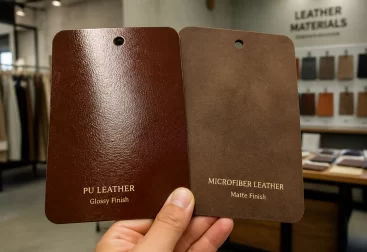
Buyers no longer treat sustainability as a niche label; they treat it as a baseline expectation in many markets. Recycled-content PU and bio-based synthetics have moved from marketing claims to real product lines with documented inputs.
The shift matters for manufacturers too. Consistent recycled PU supply, traceable sources and honest certifications are becoming purchasing criteria — and the factories that document them win the orders that others cannot quote.
Texture and hand-feel are back in focus
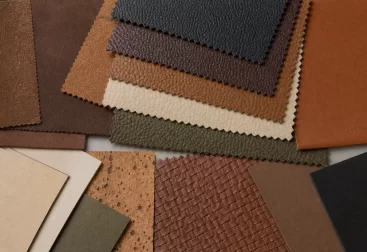
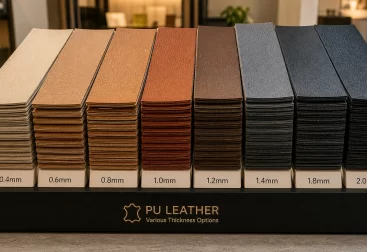
After years of flat, shiny surfaces, the market is asking for texture: pebbled grains, soft-touch coatings, woven finishes and subtle embossing. Texture adds perceived value at a modest material cost, which makes it attractive to both buyers and margins.
Hand-feel sells in person, and wholesale still sells largely through samples. A material that feels premium in the hand closes orders that spec sheets cannot, which is why sample quality remains the quiet hero of the wholesale trade.
Material directions at a glance
| Direction | Why buyers want it | Typical use |
|---|---|---|
| Recycled PU | Documented sustainability story | Everyday totes, backpacks |
| Soft-touch coatings | Premium feel, strong first impression | Handbags, work bags |
| Pebbled / textured grains | Durability perception, less upkeep | Travel, crossbody styles |
| Woven and matte finishes | Distinctive look, less mass-market | Statement and seasonal lines |
None of these directions replaces the workhorse materials; they layer onto them. The winning ranges combine a proven base with one or two textured or sustainable accents that give buyers a reason to choose the line.

Colors Retailers Are Stocking
Color is the fastest way a line dates itself — or keeps itself current. Wholesale buyers are conservative by necessity: they stock colors with proven sell-through and use accents to test the new. The 2026 palette reflects that balance.
The anchoring neutrals
Earth-toned neutrals are anchoring wholesale ranges: warm browns, greige, olive and deep taupe carry the volume. They read premium, pair with any wardrobe and age gracefully on the shelf — exactly what a cautious buyer wants from core stock.
Black and true tan remain the evergreen base for most categories. The change is in the supporting cast: cooler grays are giving ground to warmer, greener neutrals across mainstream ranges.
The accent directions
Accents come and go faster than anchors, and 2026 accents lean muted rather than loud: dusty terracotta, sage, butter yellow and soft burgundy. These colors generate the “new” feeling buyers need without the risk of a full seasonal switch.
Structure your color offering around the anchors — typically 60-70% of the line — and spend the remaining 30-40% on accents that rotate each season. That ratio protects sell-through while keeping the line fresh.
A practical color architecture
| Role | Example colors | Share of line | Purpose |
|---|---|---|---|
| Anchor | Black, warm brown, greige, tan | 60-70% | Core volume, safe reorders |
| Seasonal | Sage, terracotta, butter | 20-25% | Newness, window displays |
| Statement | Burgundy, olive, deep teal | 10-15% | Brand story, premium tiers |
Offer each style in one anchor plus one accent as the default wholesale configuration. Buyers can extend with a second accent, but the default keeps their ordering simple and your production efficient.
Categories Winning the Wholesale Reorder
Some bag categories are earning repeat wholesale orders in 2026 while others struggle. The pattern follows how people actually live: hybrid work, frequent short travel and daily urban carry shape the demand.
Category performance at a glance
| Category | Demand trend | What buyers want |
|---|---|---|
| Everyday totes | Steady, high volume | Laptop-friendly, light, structured |
| Laptop / work bags | Growing | Professional look, padded compartments |
| Crossbody bags | Strong | Compact, hands-free, secure closures |
| Travel bags | Recovering | Carry-on fit, organization, durable base |
| Mini / fashion bags | Selective | Statement value, high perceived quality |
The table reflects the broad shape of the market; regional differences are real. What matters for your line is reading your own sell-through data against this backdrop rather than chasing headlines.
Why everyday carry wins
Hybrid work made the laptop a daily companion, and the bag that carries it comfortably sells year-round. Retailers report steadier reorders for functional everyday styles than for seasonal fashion pieces.
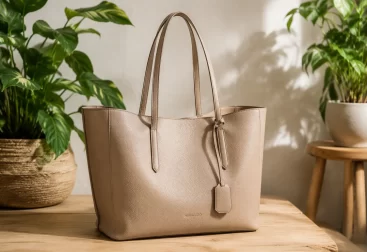
The winning everyday styles share three traits: a padded laptop sleeve, organized interior pockets and a material that survives daily use without showing it. Those traits sell at the counter, not just in the catalog.
Travel and work as the growth edge
Short-trip travel is driving demand for carry-on-friendly bags: weekender duffels that fit overhead bins and organized travel backpacks with dedicated tech and laundry compartments.
For work bags, the professional handbag that fits a laptop is pulling orders from both the corporate and the commuter segments. A line that covers everyday, work and short travel with shared design language builds the reorder base.
Pricing Architecture in 2026
Retail price bands are tightening around what shoppers accept, and wholesale ranges that respect those bands sell through faster. The architecture below is a planning frame, not a fixed rule — every market varies.
The price bands that move
Mainstream wholesale demand clusters in accessible bands: everyday bags that retail under a modest ceiling, and premium work pieces at the top of the range. The gap between them is where mid-tier brands fight for attention.
Wholesale buyers carry the math in their heads: they need their margin, the retailer needs theirs, and the end customer must still say yes. A line whose retail price sits awkwardly inside a band needs repositioning before it needs more marketing.
Retailer margin math in practice
A typical independent retailer aims for a 50-55% margin on bags. If your wholesale price is set so the retailer must charge more than the market accepts, the style will not reorder — regardless of how good it looks.
Design the price architecture before the collection: decide the retail bands, work backward to wholesale, and then engineer the product to that cost. Products engineered to a price sell through; products priced after the fact discount away.
How Wholesale Buying Behavior Is Changing
Beyond the products, the way buyers purchase has shifted. Three behavioral changes are redefining what a good wholesale partner looks like — for retailers and for the manufacturers behind the brands.
Data-driven reorders replace gut buying
Retailers now reorder from sell-through reports, not hunches. Styles that hit their velocity targets get deeper reorders; styles that stall get marked down and dropped. The buyer’s loyalty belongs to the data, and your product must earn its place in it.
Share your own production data openly: lead times, capacity windows and reorder minimums. Buyers who can plan against reliable numbers trust your brand with bigger commitments.
Smaller, faster orders across the board
The era of the giant seasonal order is fading in favor of smaller orders placed more frequently. Retailers test with initial orders, read the sell-through, then reorder the winners — sometimes three or four times a season.
This model only works if the supply chain is fast and flexible. A manufacturer that can produce a 300-piece reorder within three to four weeks of confirmation becomes the partner that wins the repeat business.
Private label keeps growing
Retailers and distributors are building their own bag brands at a steady pace. Private label lets them control margin and differentiation, and it turns manufacturing partners into strategic allies rather than one-off suppliers.
For a bag brand, private label partnerships are not competition to fear — they are channel diversity. A factory that handles both branded and private label production offers its wholesale clients flexibility that a factory doing only one cannot match.
What These Trends Mean for Your Brand
Trends are only useful when they translate into decisions. The practical translation for a wholesale bag brand comes down to positioning, range structure and the manufacturing partnership underneath it all.
Position clearly, chase nothing
Choose the lane — value with volume economics or premium with design depth — and build every style in the range to confirm it. Buyers recognize consistent positioning and reward it with trust and reorders.
Resist the urge to chase every trend that appears. A range that tries to be everything reads as nothing, and the retailer has no story to sell. Two or three deliberate directions beat eight borrowed ones.
Build the range architecture early
Lock the anchor colors, the category mix and the price bands before production begins. The architecture disciplines every later decision, from material selection to the number of colorways per style.
Design the range for the reorder economics: styles that share materials and construction can be reordered faster and cheaper, and shared components keep your inventory flexible when the data shifts.
Partner with an agile manufacturer
Every trend in this article — faster reorders, sustainable materials, textured finishes, private label — depends on the factory underneath. The manufacturing partner’s agility becomes your brand’s competitive edge in the wholesale market.
That is the standard our factory builds to: reliable lead times, documented materials, flexible order sizes and consistent quality across reorders. Wholesale brands that build on that foundation can react to trends without breaking their supply chain.

Applying Trends Without Overreacting
The discipline of trend application is knowing what to adopt and what to watch. Most of the money lost on trends comes from reacting too early or too completely, not from ignoring them.
Adopt what your sell-through data supports, test what your buyers ask for, and watch what neighboring categories do. A new accent color, one textured material or a single new category is a test; a full relaunch is a bet.
Set the testing rule in advance: every experimental style gets one production run, one season and one measured review. Winners earn a place in the core range; losers exit without debate and without draining the line’s focus.
The brands that apply trends well treat them as inputs to a system — range architecture, pricing bands, manufacturing partnerships — rather than as weather they must chase. Systems absorb trends; collections are broken by them.
Reading Wholesale Market Data Like a Buyer
Trends are easier to see in data than in opinions. The buyers who order correctly are the ones who read the signals that arrive before a trend becomes obvious — sell-through reports, search behavior and category velocity.
The sell-through signal
Your own sell-through data is the most honest trend source you have. When a style’s velocity rises across unrelated retailers, demand is real; when one retailer pushes a style hard while others ignore it, that is one buyer’s taste, not a market trend.
Compare velocity by region and channel. A style selling in coastal cities but not inland is a regional pattern worth a targeted push, not a global relaunch. Reading the pattern correctly prevents both over-reaction and missed reorders.
The search and social signal
Buyers watch what shoppers search for long before they order it. Rising searches for a material, a silhouette or a color name appear in retail data months ahead of the shelf. Social platforms show the same signal in an earlier, noisier form.
The discipline is confirmation, not prediction. Use early signals to prepare — order materials, reserve capacity, develop samples — and commit to production only when sell-through or order data confirms the direction.
The timing of decisions
Trend-driven buying rewards those who prepare early and commit late. Preparation costs little: samples, material options and capacity reservations. Commitment costs real money, so it should wait for confirmation.
That preparation-commitment split is exactly what an agile factory enables. When the confirmation arrives, the brand that has already reserved capacity and sampled materials ships in weeks; the one that starts from zero ships next season.
Trend Signals from Trade Shows and Directories
Trade shows remain the fastest way to see what the wholesale market is actually buying. A day walking the aisles — watching which booths draw crowds and which lines buyers open their order books for — beats many hours of market reports.
What to watch on the show floor
Watch three things: which material stories dominate the leading booths, which colors appear across unrelated exhibitors, and which categories earn the deepest conversations. Repetition across brands is the signal; a single striking display is a distraction.
Talk to the buyers, not just the exhibitors. Ask what they are reordering and what they wish they had ordered. Buyers share their sell-through experience candidly at shows, and that field intelligence is the freshest trend data available.
Directories as a confirmation layer
Wholesale directories and marketplaces add a slower but quantitative signal. Category growth rates, average order sizes and the appearance of new suppliers in a segment all indicate where capacity and demand are moving.
Use directories to confirm what the show floor suggested. When the qualitative signal from shows and the quantitative signal from directories agree, the trend is real enough to plan against.
Turning signals into a watchlist
Keep a written watchlist of candidate trends with the evidence behind each one: the source, the date and the strength of the signal. Review it monthly and promote items to the plan only when the evidence accumulates.
The watchlist discipline prevents two failure modes: chasing a single strong impression and ignoring a quiet trend until it is crowded. Both are expensive in different ways, and both are avoidable with a simple log.
Building the Seasonal Wholesale Calendar
Trends arrive on a calendar, and the wholesale calendar runs months ahead of the consumer season. Spring goods order in January, fall lines in June and holiday stock by September — the buyer who plans against those windows captures the demand.
The production windows that matter
Work backward from each retail season to your production windows. A spring launch needs samples confirmed in the previous fall, materials ordered early in the winter and production finished before the spring buying shows.
Most wholesale brands run two to three seasonal windows plus continuous reorder capacity for proven styles. The reorder line is what captures trend upside — a style that surprises can be reordered only if capacity exists.
Protecting the reorder buffer
Reserve a share of your production capacity for reorders rather than committing everything to seasonal launches. When a style accelerates, the buffer lets you ship the second order while competitors quote a new season’s lead time.
Communicate the buffer to your wholesale partners. Retailers who know you can reorder within weeks buy with more confidence and deeper initial orders — the buffer pays for itself through the trust it creates.
The annual planning rhythm
Hold one annual planning session and two seasonal reviews. The annual session sets the range architecture, the material palette and the calendar; the seasonal reviews adjust colors, categories and quantities against the latest sell-through data.
Write the plan down and share it with your factory early. A manufacturer that sees your calendar can reserve materials, schedule capacity and flag conflicts months before they become crises.
Regional Differences in Wholesale Demand
Wholesale trends are global in name and local in practice. The same material or category story lands differently across markets, and the brands that read the regional variation capture demand their competitors leave on the table.
Europe: documentation leads the order
European buyers ask the hardest questions about materials and compliance. Recycled content, chemical restrictions and traceability documentation are part of the purchasing decision, and suppliers without the paperwork lose orders regardless of price.
Prepare the documentation before the meeting: material certifications, test reports and source statements in the buyer’s language. In the European wholesale market, the folder of documents is a selling tool as real as the sample.
North America: velocity and storytelling
North American buyers move faster and sell harder on story. Sustainability claims sell when they are simple to repeat, functional features sell when they are demonstrable, and the range that tells one clear story outperforms the comprehensive one.
Keep the lineup focused and the reorder capability visible. North American retailers reward brands they can reorder from quickly — the velocity culture rewards the supply chain as much as the product.
Asia-Pacific and emerging markets
Fast-growing markets combine price sensitivity with rising taste for recognizable quality. Value lines with solid construction travel well; premium segments grow in the big cities as disposable income rises.
Regional seasons differ from the Western calendar — lunar new year, local festivals and climate drive their own buying windows. A manufacturer that understands these calendars helps its wholesale partners plan correctly in each market.
Digital Tools for Trend-Driven Wholesale
The mechanics of wholesale have gone digital, and the brands that use the tools well see trends faster and serve buyers better. The tools are not replacements for relationships; they are the infrastructure relationships run on.
Ordering and reorder platforms
Wholesale platforms and B2B ordering systems let retailers browse, order and reorder online. A clean digital catalog with accurate stock and lead time information reduces friction and captures reorders that would otherwise wait for a call.
Keep the digital catalog current: updated photography, correct specifications and honest lead times. A retailer burned by a stale catalog learns not to trust the digital channel, and the channel quietly dies.
Data dashboards for your partners
Share a simple sell-through dashboard with your distributors: orders, reorders, stock aging and velocity per style. The transparency builds trust and lets both sides plan against the same numbers.
The dashboard also protects you from surprises. When a distributor’s stock ages while its reorders continue, the data flags the problem early — before the warehouse becomes the real owner of your inventory.
FAQ
Which bag categories are growing for wholesale in 2026?
Everyday totes with laptop sleeves, professional work bags, crossbody styles and carry-on-friendly travel bags are earning the steadiest reorders. The common thread is function-led design that fits hybrid work and short travel routines.
Are sustainable materials required for wholesale orders now?
Not universally, but documented sustainability is increasingly a purchasing criterion, especially in European markets and for larger retailers. Recycled-content PU and traceable sourcing give your line a story that buyers can present with confidence.
How should I divide my color offering?
A practical ratio is 60-70% anchoring neutrals such as black, warm brown and greige, with 20-25% seasonal accents and 10-15% statement colors. Anchors protect sell-through; accents create the newness buyers need each season.
Do wholesale buyers still place large seasonal orders?
Fewer do. The dominant pattern is smaller initial orders followed by faster reorders based on sell-through data. This rewards manufacturers who can turn a reorder within three to four weeks of confirmation.
How do I choose between a value and a premium position?
Assess your cost structure, design capability and target retailers. Value lines win on volume economics and efficient manufacturing; premium lines win on materials, detail and design depth. A clear lane beats a muddled middle.
Should I chase every new trend I read about?
No. Test one trend at a time with a limited production run and a measured season, then decide from the sell-through data. Two or three deliberate directions outperform a range that tries to follow everything.
How does private label affect established bag brands?
It adds channel diversity rather than direct competition for most brands. Retailers building private label lines still need manufacturing partners, and a factory that serves both branded and private label clients offers flexibility that benefits everyone.
What makes a manufacturer agile enough for trend-driven buying?
Reliable lead times, flexible order sizes, shared components across styles and consistent quality on reorders. Ask your factory about its reorder turnaround and its willingness to run smaller batches before you commit.
How do wholesale trends differ between regions?
Europe leads on documented sustainability and compliance, North America on velocity and clear storytelling, and fast-growing markets on value with solid quality. Regional calendars and festivals also shift the buying windows, so plan collections and production market by market.
What digital tools support trend-driven wholesale?
Wholesale platforms and B2B ordering systems handle discovery and reorders, while a shared sell-through dashboard keeps distributors and brands planning against the same numbers. Keep catalogs current and dashboards transparent — the tools work through trust.
Next Steps: Turn Trends into a Wholesale Plan
Trends are information, not instructions. The brands that win in 2026 wholesale are the ones that translate the climate into a positioned range, a disciplined color architecture and a manufacturing partnership that can move when the data moves.
Start with your sell-through data, pick one or two directions from this guide, and test them in a single season. Measure, learn and repeat — the market rewards the brands that treat trends as a system input rather than a reason to panic.
Trends change, but the fundamentals do not: a clear position, a disciplined range and a manufacturer that delivers on time every time. Build those three and the market’s next shift becomes an opportunity rather than a threat.
Planning your 2026 wholesale range? Talk to our factory team at info@gionar.com about materials, lead times and reorder flexibility.
Related reading: our custom bag manufacturing portfolio shows how consistent production supports trend-driven wholesale lines.