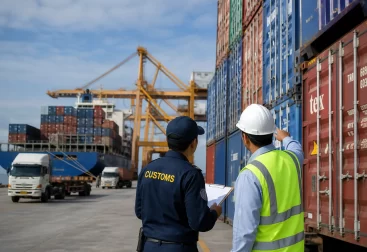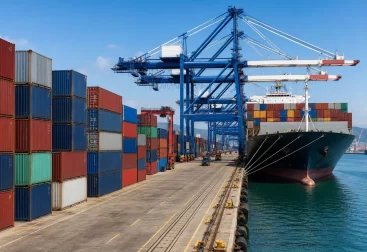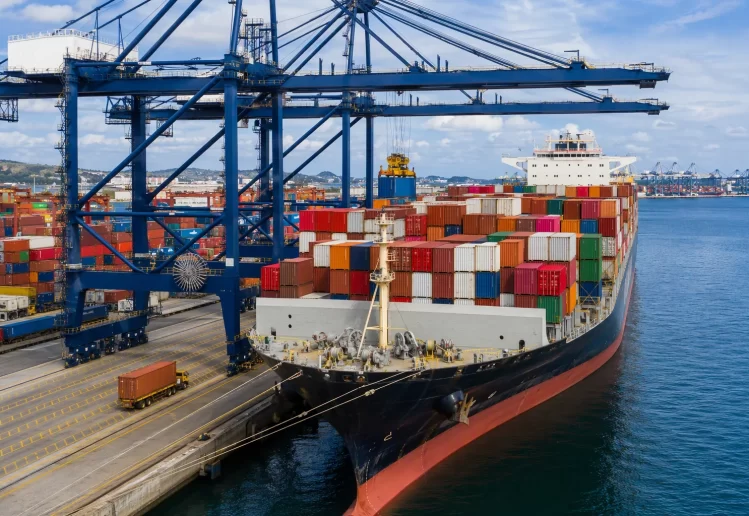
Importers usually negotiate the bag price carefully and then discover that the figure they agreed is only part of what the goods cost. Duty, freight, insurance, port charges, clearance fees, inland delivery and the cost of holding stock all sit on top, and together they often add a quarter or more to the price paid at the factory.
The share of the total that these costs represent depends on the route and the destination, but the pattern is consistent. Freight is usually the largest single addition, duty is the most variable between products and countries, and the small administrative charges are the most frequently forgotten.
For PU leather bags specifically, duty treatment depends on the classification of the product and on the trade agreements that apply at the destination. Two bags that look almost identical can attract different rates if one is classified as a handbag and the other as a travel or sports bag, or if one uses a coated textile outer surface and the other a textile fabric outer surface.
This is why comparing suppliers on factory price alone produces the wrong decision so often. A supplier quoting a slightly higher price but packing more efficiently, or shipping from a port with better routing, can deliver a lower landed cost than a cheaper competitor with bulky packaging.
This guide breaks down every component that sits between the factory price and the cost of goods in your warehouse, explains how duty classification affects PU leather bags, shows how to build a landed cost calculation you can use on every quotation, and sets out the practical levers that reduce the total without changing the product.
What Landed Cost Actually Includes
Landed cost is the total cost of getting goods into your warehouse, ready to sell. It includes everything from the factory gate to the point the first unit can be picked, and each component behaves differently.
The factory price and the terms attached to it
The quotation from the factory comes with a trade term, and that term determines which costs are already included. An ex-works price covers only the goods at the factory; an FOB price includes inland transport in China and export clearance; a CIF price adds freight and insurance to the destination port.
Comparing quotations given on different terms is meaningless until they are converted to a common basis. The cheapest-looking figure is frequently the one that excludes the most.
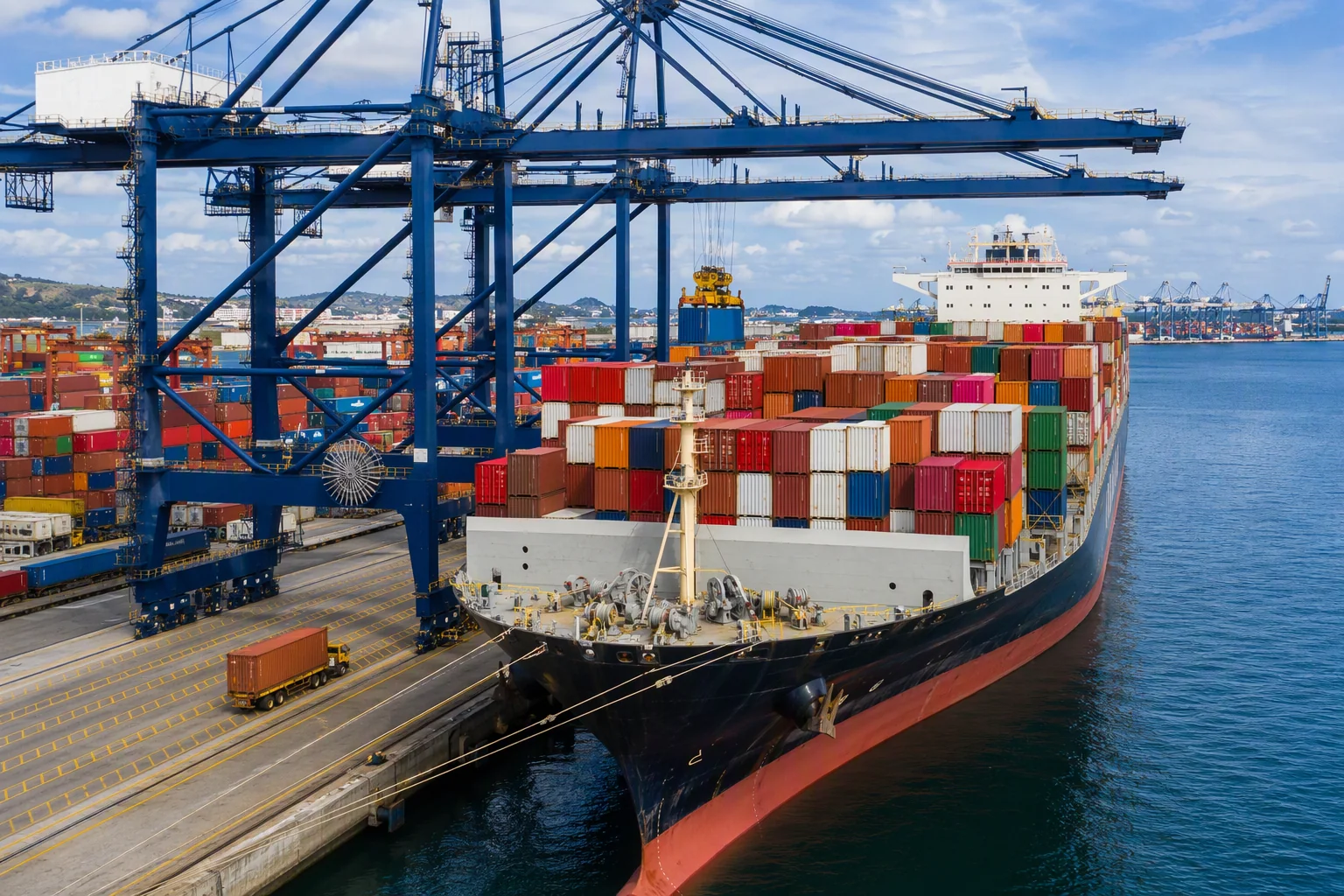
Freight, insurance and port handling
Ocean freight is charged mostly by volume for bags, because they are light relative to the space they occupy. Insurance is a small percentage of value, and port handling appears on both sides of the voyage as terminal and documentation charges.
All three scale with the shipment rather than the unit, so their effect per bag falls as volume rises. This is the main reason the landed cost per unit differs between a full container and a part load.
Duty, taxes and clearance
Import duty is calculated on the customs value of the goods, which is normally the price paid plus freight and insurance to the point of import. Value-added tax or sales tax is then applied on the duty-inclusive value.
Clearance adds broker fees, and in some destinations additional levies or inspection charges. These are the components that vary most between countries and are the ones most worth verifying before an order is placed.
Inland delivery and holding costs
After clearance the goods still have to reach the warehouse or shop, which is a further charge that varies with distance and load. Thereafter storage, insurance and the cost of capital tied up in the stock belong to the landed cost of the unit that is eventually sold.
| Component | Charged on | Behaviour with volume |
|---|---|---|
| Factory price | Per unit | Falls with quantity breaks |
| Inland transport in China | Per shipment | Fixed per shipment |
| Export clearance | Per shipment | Fixed per shipment |
| Ocean freight | Volume and weight | Falls per unit with consolidation |
| Insurance | Percentage of value | Proportional |
| Import duty | Customs value | Proportional |
| Import VAT or sales tax | Duty-inclusive value | Proportional, often recoverable |
| Clearance and broker fees | Per shipment | Fixed per shipment |
| Inland delivery | Distance and load | Falls per unit with full loads |
| Storage and capital | Time held | Rises with quantity held |
Why the total is larger than buyers expect
Each component is individually modest, and that is exactly why the total surprises people. Freight appears reasonable, duty appears reasonable, and nobody adds them together until the goods are already committed.
Building the full calculation before placing an order is the only reliable defence. It also reveals which components are worth attacking and which are effectively immovable.
How Duty Is Calculated on PU Leather Bags
Duty looks like a simple percentage and behaves like a more complicated calculation. Three inputs determine the result.
The customs value
Duty is not charged on the factory price alone. In most jurisdictions the customs value is the transaction value plus the cost of transport and insurance up to the place of import, which raises the base above the invoice figure.
Where the parties are related, or where the declared value appears low relative to comparable goods, customs authorities may question the valuation. Accurate, supportable documentation is the practical protection.
The duty rate and how it is reached
The rate comes from the product’s classification in the destination tariff schedule, and the classification is based on the material and construction of the outer surface, not on how the product is marketed.
For bags this makes the outer material decisive. A PU leather bag whose outer surface is a coated textile is classified differently from one whose outer surface is textile fabric, even where both look similar to a customer.
| Input | What it means | Who controls it |
|---|---|---|
| Customs value | Goods value plus freight and insurance to import | Partly the importer, through terms and documentation |
| Tariff classification | Product category in the destination schedule | Determined by the product’s material and construction |
| Duty rate | Percentage applied to the customs value | Set by the destination country |
| Preferential treatment | Reduced or zero rate under a trade agreement | Requires correct origin documentation |
| Import VAT or sales tax | Tax applied on the duty-inclusive value | Set by the destination country |
Preferential rates and origin
Where a trade agreement exists between the manufacturing country and the destination, a reduced or zero duty rate may apply. The reduction is not automatic: it requires a valid certificate of origin and compliance with the agreement’s rules.
Origin rules are specific about how much of the product must originate in the partner country. Where a bag is assembled in one country from material produced in another, the applicable origin is a question of fact rather than preference.
Taxes applied after duty
Import VAT or sales tax is usually calculated on the value including duty, which means duty increases the tax base as well as the cost. Where the importer is registered and can recover the tax, this is a cash-flow item rather than a cost.
Recoverability matters to the comparison. Two importers facing identical duty may have very different effective costs depending on whether they can reclaim the tax on the import.
Why Classification Changes the Numbers
Classification is the point where two visually similar products can attract different treatment. For bags, the material of the outer surface and the intended use are the deciding factors.
Outer surface material decides the heading
Tariff schedules for bags are structured primarily by the material of the outer surface. A bag with an outer surface of coated textile material, which is how PU leather is generally treated, falls into a different heading from one with an outer surface of uncoated textile fabric.
Where the same factory makes both, the classifications differ even though the construction methods are similar. The distinction is about the surface, not about the internal structure or the handle material.
Intended use separates handbags from travel goods
Within the same surface material, schedules commonly separate handbags from travel bags, sports bags and other containers. The separation follows the nature of the product, which is assessed from its size, shape and design rather than from the label applied to it.
This matters where a range includes sizes that sit between categories. A large tote used as a travel bag may be assessed differently from the same construction sold as a handbag, and the design details that establish intended use are worth understanding before the order is placed.

Getting the classification right
The classification should be settled before the order ships rather than discovered at clearance. A written classification opinion, obtained in advance, is inexpensive relative to the consequences of a dispute.
Where the product is genuinely borderline between two headings, the safest approach is to document the reasoning and the product’s characteristics in detail. Customs authorities respond better to a supported decision than to an unexplained declaration.
| Factor | Effect on classification |
|---|---|
| Outer surface is coated textile | Different heading from uncoated textile fabric |
| Outer surface is plastic sheeting | Separate heading again |
| Handbag versus travel bag | Different subheadings by intended use |
| Size and shape | Evidence of intended use |
| Presentation and marketing | Usually not decisive on its own |
| Accessories supplied with the bag | Can affect the classification of the set |
Why misclassification is expensive
An incorrect classification can result in an assessment for underpaid duty, penalties and storage charges while the goods wait. It can also block a shipment entirely if the discrepancy is treated as a compliance issue.
The cost is not only financial. Goods held at the port during a dispute miss their selling season, which for a seasonal range is often a larger loss than the duty itself.
Recording the decision
Keeping a note of the classification, the reasoning and the authority relied on makes future shipments faster and protects against inconsistency between orders. If a later declaration is questioned, the earlier record is the strongest support.
Consistency across shipments also reduces the risk of an examination triggered by an unexplained change. Where the classification genuinely changes because the product has changed, documenting the change in advance prevents it looking like an error.
Freight and the Volume Problem
Freight is usually the largest addition to the factory price, and for bags it is driven by space rather than weight. This makes packaging efficiency a financial decision, not a housekeeping one.
Why bags are charged by volume
PU leather bags are light relative to the space they occupy once packed, so carriers charge on volumetric weight for most shipments. The formula compares the actual weight with the volume, and the higher of the two is used.
This means a lighter bag that packs bulkily can cost more to ship than a heavier one that packs tightly. Design decisions about flattening, nesting and carton size therefore have a direct effect on freight.
The effect of carton size and packing
Carton dimensions determine how many bags fit in a container, and that determines the freight cost per bag. A modest reduction in carton height, achieved by flattening the bag or compressing the packaging, can increase the units per container substantially.
The saving compounds with duty, because freight forms part of the customs value on which duty is calculated. A reduction in freight lowers the duty base as well as the transport cost.
| Packing approach | Effect on freight | Trade-off |
|---|---|---|
| Bags filled to hold shape | Higher volume per unit | Better presentation on arrival |
| Bags flattened | Lower volume per unit | Potential creasing |
| Nested or stacked packing | Lower volume per unit | Requires careful protection |
| Oversized cartons with void space | Higher cost, no benefit | None |
| Carton sized to the container plan | Best container utilisation | Less flexibility per shipment |
| Individual retail boxes | Much higher volume | Required for some channels |
Full container versus part load
A full container spreads fixed charges over the maximum volume, so the cost per bag is lowest. Part loads share a container and carry a disproportionate share of handling and documentation charges per unit.
Consolidating several orders or several styles into one shipment is therefore a direct saving. Where a range is built on shared materials, the styles are also easier to ship together, which links the design decision to the freight result.
Air freight as an exception
Air freight is justified for samples, for urgent replenishment of a proven line, and occasionally for high-value small items. For bulk PU leather bags it is rarely economic, because the products are bulky and low in value per unit of volume.
Where air freight is used to rescue a late order, the cost should be attributed to the planning failure rather than treated as a normal part of the landed cost. Continuing to absorb that cost is a sign the order timing needs revisiting.
When freight terms shift the comparison
A quotation given as CIF includes freight and insurance to the destination port, while an FOB quotation does not. The CIF price will always look higher, and it may still represent better value where the supplier’s freight rate is below what the buyer can obtain.
The comparison should be made on total delivered cost under each term rather than on the quoted figure. Suppliers with high shipping volumes often negotiate freight rates a smaller importer cannot match, which is a genuine advantage in their quotation.
Port, Clearance and Inland Charges
The small charges attract the least attention and cause the most disputes, because they are invoiced by several parties and are difficult to predict in advance.
Charges at origin
Origin charges include terminal handling, documentation, and where applicable the cost of moving the container from the factory to the port. An FOB quotation usually includes these, which is why it is a more comparable basis than ex works.
Where the factory quotes ex works, the buyer must arrange and pay for all origin handling. The buyer should obtain these figures before comparing the ex-works price with an FOB price from another supplier.
Charges at destination
At destination the container attracts terminal handling, documentation, and sometimes a range of additional charges with names that vary by port. These are charged per container and do not fall with partial loads, which penalises small shipments.
Where the destination applies a demurrage or detention charge for containers held beyond a free period, a slow clearance generates cost by the day. Planning clearance before the vessel arrives is the practical prevention.
| Charge | Typical basis | Reduction lever |
|---|---|---|
| Export terminal handling | Per container | Included in FOB terms |
| Export documentation | Per shipment | Consolidate shipments |
| Ocean freight | Volume or weight | Pack more efficiently |
| Import terminal handling | Per container | Full loads |
| Customs broker fee | Per entry | Fewer, larger entries |
| Inspection or examination | Per occurrence | Accurate documentation |
| Demurrage or detention | Per day | Fast clearance |
| Inland delivery | Distance and load | Full loads, close warehouse |
Broker and clearance fees
A customs broker charges per entry, so the number of shipments drives the fee more than the value. Several small shipments cost more to clear than one larger one, which is a further argument for consolidation.
Broker quality also affects cost indirectly. A broker who prepares entries correctly and in advance avoids examinations and delays, and those avoided costs are larger than the difference in fee between brokers.
Inland delivery and final leg
The final leg from port to warehouse is priced by distance and load. A warehouse close to the port of entry is cheaper to supply, which is one reason importers cluster near major ports.
Where the goods go to several destinations, the total inland cost is usually lower when the consolidation happens at the port and the goods move as full loads, rather than when each shipment is delivered separately.
Building a Landed Cost Calculation
A landed cost calculation is a simple sheet that converts all of the above into a single per-unit figure. Once built, it makes supplier comparisons straightforward and prevents routine omissions.
The order of the calculation
Start with the factory price per unit and add, in order: origin handling not already included in the terms, freight, insurance, duty, and any destination charges that were not included. Divide the per-shipment charges by the quantity to obtain the per-unit contribution.
Then add the tax treatment, inland delivery and, where relevant, an allowance for storage and capital. The result is the landed cost per unit on which the retail or wholesale decision should be based.
Worked example
The example below uses round figures for illustration. The proportions are more useful than the absolute values, because the proportions are what a buyer negotiates against.
| Line | Basis | Illustrative amount per unit |
|---|---|---|
| Factory price | Per unit, FOB | Base figure |
| Ocean freight | Container cost divided by units | Adds a modest percentage |
| Insurance | Small percentage of value | Adds a fraction of a percent |
| Import duty | Percentage of customs value | Variable by classification |
| Import tax | Percentage of duty-inclusive value | Often recoverable |
| Clearance and port charges | Per shipment divided by units | Small at full container |
| Inland delivery | Per load divided by units | Small at full loads |
| Storage and capital | Time held and interest | Depends on sell-through |
Applying it to supplier comparison
Where two suppliers quote the same product, the calculation should be run for each using the actual terms, packing specification and routing. The supplier with the lower factory price is not always the supplier with the lower landed cost.
The comparison also exposes where a supplier’s advantage lies. A supplier whose freight is lower because of better packing is offering a real benefit, and that benefit should be preserved in negotiation rather than traded away for a nominal price reduction.
Keeping the calculation honest
The calculation is only as good as its inputs, and the inputs that are estimated rather than quoted are the ones that cause surprises. Charges from the destination broker and the inland carrier are worth obtaining as quotations rather than estimates.
Where a figure must be estimated, it should be labelled as such in the sheet so that the estimate can be replaced with actual data after the first shipment. The first shipment is the cheapest opportunity to calibrate the model.
Practical Ways to Reduce Landed Cost
Few of the levers involve asking the factory for a lower price. Most involve changing how the shipment is configured.
Improve packing density
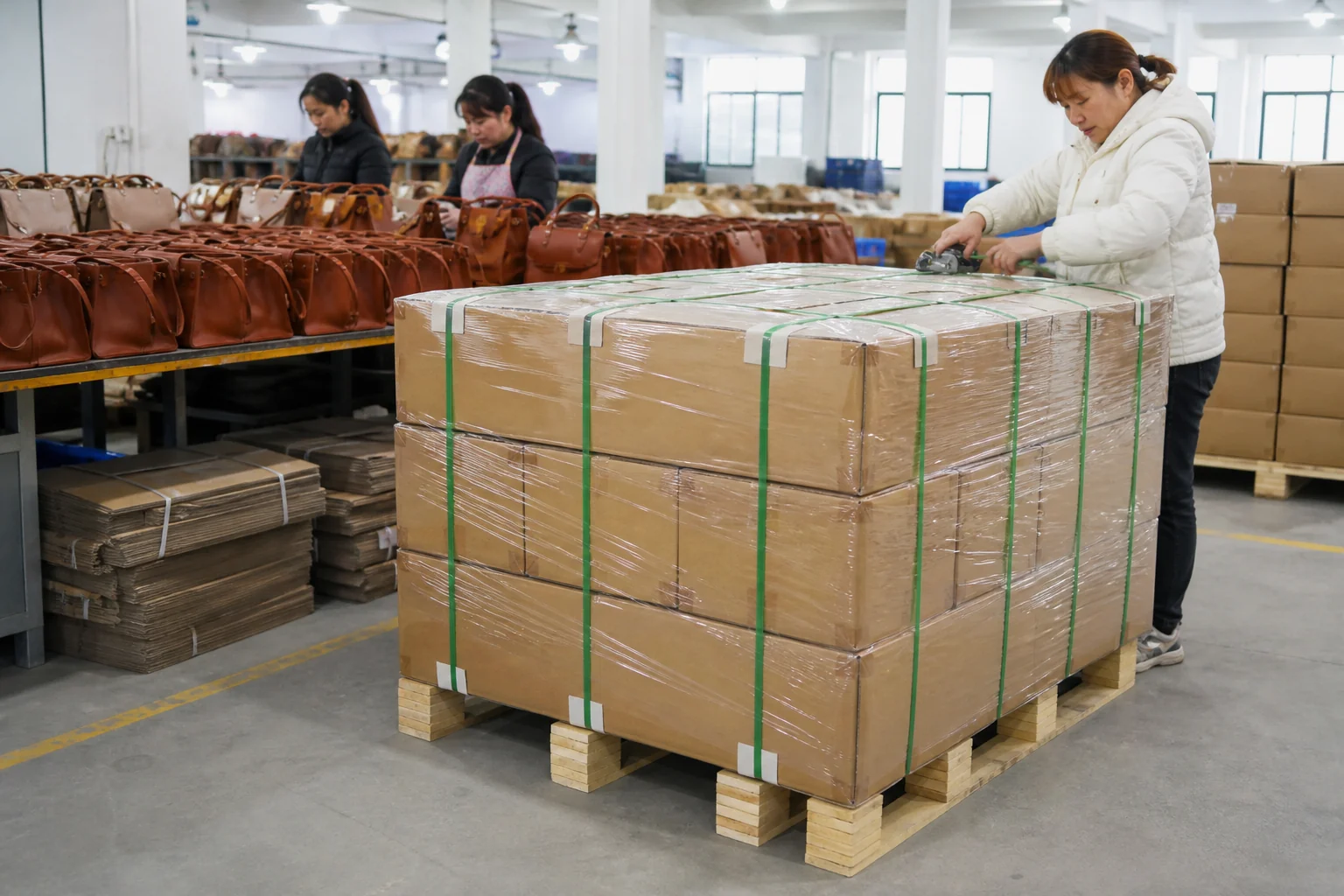
Packing density reduces freight, and because freight forms part of the customs value, it also reduces duty. A design that packs flatter or nests more effectively delivers the saving on both lines at once.
The practical conversation with the factory is about units per carton and cartons per container. Both are measurable, and both can be improved without changing the product the customer receives.
Consolidate shipments
Combining styles and orders into fewer, fuller shipments reduces the per-shipment charges that do not scale: clearance, documentation, terminal handling and inland delivery. This is usually the single largest administrative saving available.
Consolidation is easiest where the range shares materials, because the styles are produced on the same schedule. That design decision therefore has a logistics payoff as well as a pricing one.
Verify the classification and origin treatment
Confirming the correct classification prevents overpayment where a lower rate is available and prevents assessments where the declared rate was too low. In many markets the duty difference between headings for bags is significant.
Where a trade agreement applies, ensuring the origin documentation is valid and matches the rules can reduce or eliminate duty. Treating the certificate as a formality to complete at the last moment is a common reason preferential rates are refused.
| Lever | What it reduces | Effort |
|---|---|---|
| Better packing density | Freight and duty base | Moderate, involves design |
| Consolidating shipments | Per-shipment charges | Low, planning only |
| Verifying classification | Overpayment or assessment | Low to moderate |
| Using preferential origin | Duty | Documentation discipline |
| Full container loads | Freight per unit | Volume dependent |
| Faster clearance | Demurrage and detention | Preparation |
| Sourcing nearer or better routed | Freight and transit | Strategic |
Choose terms deliberately
Where the supplier secures better freight rates than the buyer can, taking the CIF quotation captures that advantage. Where the buyer has a strong freight relationship, buying FOB and arranging transport may be cheaper.
The decision should be made per shipment on the numbers, not by habit. The same importer can benefit from different terms on different routes.
Revisit the routing
Port choice affects both transit time and cost, and a slightly longer inland route may be cheaper overall where the port is less congested or the sailing schedule is better. Routing deserves the same review as pricing.
Congestion is worth watching because it affects cost by creating detention charges and by delaying goods past their selling window. A cheaper port that delays delivery is not cheaper in practice.
Planning Purchases Around Landed Cost
Once the calculation exists, it changes how purchasing decisions are made. The changes are mostly about what gets measured and when.
Negotiate against the total, not the unit price
A supplier who reduces packing volume or consolidates shipments may deliver more saving than one who cuts the unit price. Framing the discussion around landed cost opens options that a price-only negotiation closes off.
It also directs attention to the components that are actually large. Freight and duty together usually exceed the value of a small price concession, which is worth remembering when negotiation time is limited.
Set the target price from the landed figure
The price the business needs to hit should be expressed as a landed cost, not a factory price. Working backwards from the required margin produces a clear brief for the supplier rather than an arbitrary request.
Where the landed cost cannot reach the target at the current specification and route, the honest options are to change the specification, change the route, or change the price at which the product is sold. Knowing which is required early prevents a late scramble.
| Decision | Express as | Benefit |
|---|---|---|
| Supplier comparison | Landed cost per unit | Like-for-like evaluation |
| Negotiation target | Landed cost ceiling | Clear brief for the supplier |
| Pricing decision | Landed cost plus required margin | Margin protected |
| Range planning | Landed cost by style | Identifies unviable styles early |
| Budget forecast | Total landed spend | Realistic cash requirement |
| Performance review | Actual versus estimated landed | Calibrates future estimates |
Recheck assumptions each season
Freight rates, duty rates and port charges change. A landed cost model built eighteen months ago may be materially wrong today, particularly if freight markets have moved.
Rebuilding the estimate before each major order keeps the model usable. Where a rate has changed substantially, the impact on the retail price decision should be assessed rather than absorbed silently.
Track actual against estimated
The figures that come back after each shipment are the calibration data for the next estimate. Recording them turns the model from a rough sketch into a reliable planning tool.
Most importers find that a small number of lines account for the errors, usually destination charges and inland delivery. Correcting those two lines generally brings the estimate within a useful tolerance.
Negotiate the bag. Manage the shipment. The landed cost is decided as much by how you ship as by what you pay.
FAQ
What is included in the landed cost of imported bags?
Everything between the factory gate and your warehouse: the factory price, origin handling, ocean freight, insurance, import duty, import tax, clearance and broker fees, terminal handling, inland delivery, and an allowance for storage and capital tied up in the stock. Freight is usually the largest addition and duty the most variable.
How much do duties and freight typically add to the factory price?
The combined addition varies widely with destination, classification and packing efficiency, but a quarter or more on top of the factory price is common for imported bags. Because freight also forms part of the customs value, a reduction in freight lowers the duty base as well as the transport cost.
Is duty calculated on the factory price?
Not on the factory price alone. In most jurisdictions the customs value is the price paid plus the cost of transport and insurance to the place of import. Duty is then applied to that value, and import VAT or sales tax is usually applied to the duty-inclusive amount.
How are PU leather bags classified for duty?
Primarily by the material of the outer surface. A PU leather bag is generally treated as having an outer surface of coated textile material, which falls into a different heading from an uncoated textile fabric surface. Within the same surface material, handbags and travel or sports bags are separated by intended use.
Why do two similar bags attract different duty rates?
Because classification follows the material of the outer surface and the intended use of the product, not how it is marketed. Two bags that look alike to a customer can sit in different headings if one has a coated outer surface and the other a textile one, or if one is designed and sized as a travel bag.
Can a trade agreement reduce the duty on bags?
Where an agreement exists between the manufacturing country and the destination, a reduced or zero rate may apply, but it is not automatic. It requires a valid certificate of origin and compliance with the agreement’s origin rules. Treating the certificate as a last-minute formality is a common reason preferential rates are refused.
Why is freight so significant for bags?
Because bags are light relative to the space they occupy once packed, so carriers charge on volumetric weight. The freight cost per bag is therefore driven by carton size and packing density more than by weight, which makes packing a financial decision rather than a housekeeping one.
How can I reduce the freight cost per bag?
Improve packing density: flatten or nest bags where the product allows, size cartons to the container plan, and avoid oversized cartons with void space. Because freight forms part of the customs value, the saving also reduces the duty paid on the shipment.
Is air freight ever worth it for bags?
Rarely for bulk orders, because the products are bulky and low in value per unit of volume. Air freight is justified for samples, urgent replenishment of a proven line, and occasionally small high-value items. Where it is used to rescue a late order, the cost belongs to the planning failure rather than the standard landed cost.
Should I buy on FOB or CIF terms?
It depends on who secures the better freight rate. A supplier shipping large volumes often negotiates rates below what a smaller importer can obtain, in which case CIF may be cheaper overall despite the higher quoted figure. Compare total delivered cost under each term rather than the headline price.
Why do several small shipments cost more than one large one?
Because clearance, documentation, terminal handling and inland delivery are charged per shipment and do not fall proportionally with size. Consolidating styles and orders into fewer, fuller shipments reduces these charges per bag and is usually the largest administrative saving available.
How should I compare two suppliers properly?
Run the landed cost calculation for each, using their actual trade terms, packing specification and routing. Include freight, insurance, duty, clearance, inland delivery and holding cost. The supplier with the lower factory price is not always the one with the lower landed cost, and the comparison shows where each supplier’s real advantage lies.
Planning the landed cost of your next PU leather bag order?
We manufacture PU leather bags in Guangzhou on OEM, ODM and wholesale programmes, and we will quote on FOB or CIF and confirm carton dimensions and units per container so your landed cost calculation is built on real figures. Send your target destination and specification to info@gionar.com, or review our custom bag manufacturing capabilities.