The choice between private label and wholesale stock is usually presented as a question of ambition. Private label is treated as the serious option, wholesale stock as the safe one. That framing leads new retailers into expensive mistakes, because the two routes solve different problems and neither is inherently better.
The practical answer is that most retailers should start with stock and move to private label once they know what sells. Stock gets product on the shelf quickly, requires less capital per style and carries no design risk. Private label builds margin and brand equity, but it requires a specification, a supplier relationship and a volume commitment before a single unit has been sold.
There is no single moment when the switch becomes correct. The signal is specific: when a retailer can name the exact product they want to sell, has evidence of demand for it, and is buying close to the volumes a private label order requires, the extra margin is available for the taking.
Understanding the cost structure makes the decision clearer. Stock carries a higher unit price but almost no up-front cost. Private label carries a lower unit price but adds sampling, tooling, labels, packaging and the cost of committing capital to a design that may not sell.
This guide compares the two routes on cost, risk, speed and control, explains the volume thresholds at which each makes sense, sets out a staged path from one to the other, and covers the mistakes that make private label programmes fail for buyers who moved too early.
- What Actually Differs Between the Two Routes
- Comparing the Costs Honestly
- When Wholesale Stock Is the Right Choice
- When Private Label Becomes Worth It
- The Volume Thresholds That Decide It
- A Staged Path From Stock to Private Label
- Mistakes That Sink Early Private Label Programmes
- Running Both at the Same Time
- FAQ
What Actually Differs Between the Two Routes
The two routes differ in more ways than branding. Understanding the full set of differences prevents choosing on the most visible one.
Who decides the specification
With wholesale stock, the factory or the wholesaler has already decided the specification: the dimensions, the material, the construction, the colours and the hardware. The retailer selects from what exists.
With private label, the retailer decides the specification and the factory builds to it. That control is the main benefit and also the main burden, because every decision that is wrong becomes the retailer’s own.
Where the brand sits
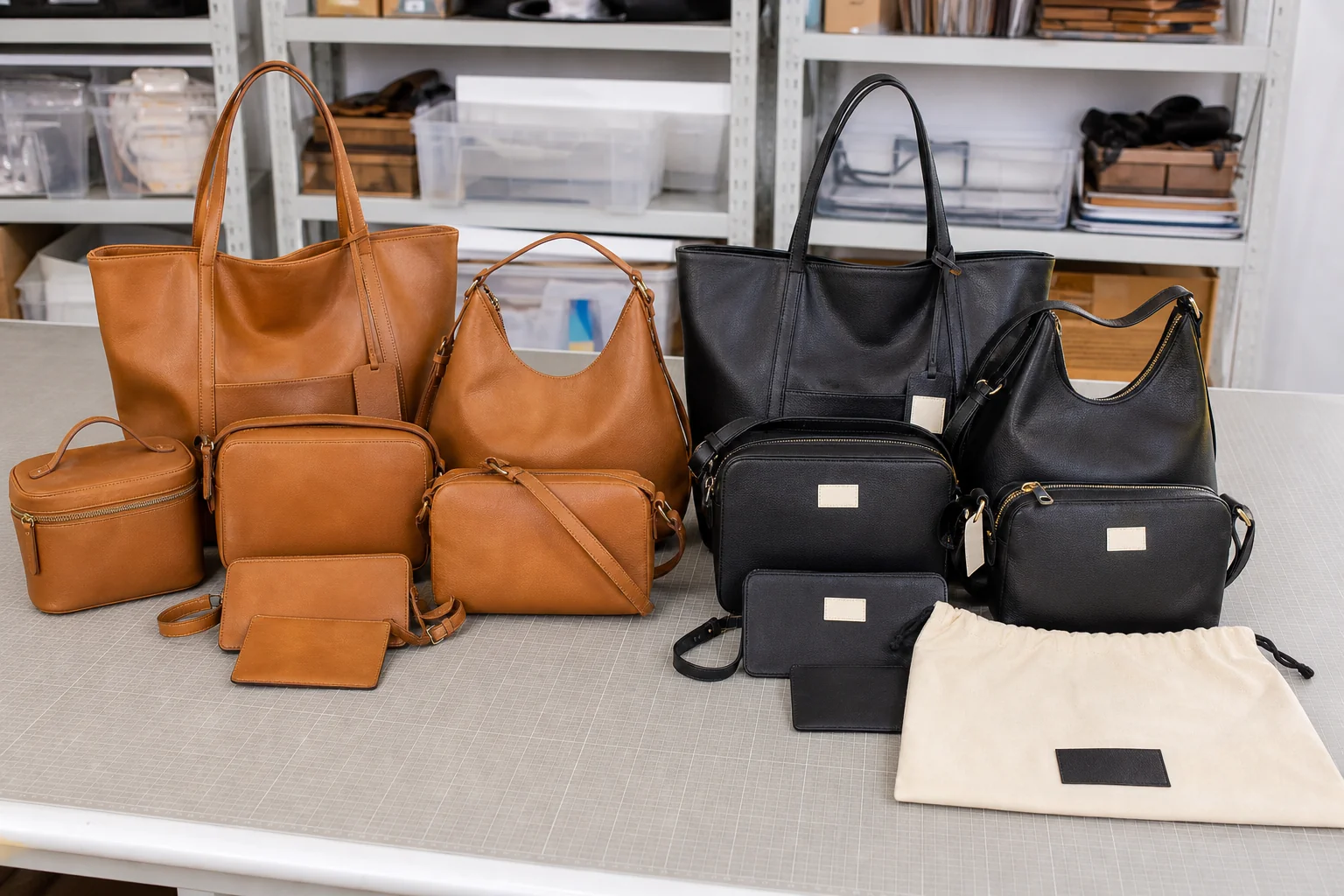
Stock is bought unbranded or with the factory’s own mark, and the retailer’s identity is added through their own labels, packaging or presentation. The product is not exclusive to them.
Private label is produced for the retailer, so their label is applied at the factory and the design can be exclusive. This is what makes the product defensible and what allows brand equity to accumulate.
Minimum quantities and commitment
Stock can often be bought in relatively small quantities, sometimes by the carton, and reordered as needed. Private label almost always carries a minimum order quantity per style, per colour and often per size.
That minimum is the real barrier. A private label programme is not one decision but a series of them multiplied by the number of styles and colours in the range.
| Dimension | Wholesale stock | Private label |
|---|---|---|
| Who sets the specification | The supplier | The retailer |
| Branding | Added after purchase | Applied in production |
| Exclusivity | None, others can buy the same | Available by agreement |
| Minimum order | Low, often by carton | Per style, colour and size |
| Unit price | Higher | Lower at volume |
| Up-front cost | Almost none | Sampling, labels, tooling |
| Lead time | Days to a few weeks | Weeks to months |
| Design risk | Carried by the supplier | Carried by the retailer |
Speed to market
Stock can usually be shipped within days, which matters enormously for a retailer testing a category or reacting to a season already under way. Private label requires sampling and approval before production, so the first order takes weeks or months.
Speed is not a minor advantage. Getting a product to market early in a season often matters more to the selling result than a few points of margin.
Risk allocation
With stock, the risk of a design that does not sell is shared with everyone else buying that product. With private label, the design risk is entirely the retailer’s own, and it is realised before any customer sees the product.
This is the reason the cautious route is not the unambitious one. Choosing stock is a decision about who carries the risk, and early on, the supplier is better placed to carry it.
Comparing the Costs Honestly
The comparison that matters is total cost to the point of sale, not unit price at the factory. Several costs sit on the private label side that the unit price does not show.
The up-front costs of a private label programme
Private label adds sampling, pattern development, label production, artwork and often packaging design. Where custom hardware is used, a mould may be required. Each of these is incurred before any revenue.
These costs are real but they are one-time. Spread across a successful repeat programme they become small; spread across a first order that sells poorly they can dominate the margin entirely.
The hidden cost of minimum quantities
The minimum order quantity converts a flexible buying decision into a fixed commitment. Where a style underperforms, the retailer owns the full quantity rather than the quantity they would have chosen.
The cost of that overhang is the capital tied up plus any markdown required to clear it. For a first private label order, this is the largest single risk and the one most often underestimated.
| Cost | Wholesale stock | Private label |
|---|---|---|
| Product cost per unit | Higher | Lower at volume |
| Sampling and development | None | Incurred per new design |
| Labels and packaging | Added by the retailer | Produced at the factory |
| Tooling or moulds | None | Where custom hardware is used |
| Commitment risk | Low | Full minimum quantity |
| Lead time cost | Minimal | Weeks of delayed revenue |
| Branding value | Limited | Accumulates with each order |
Comparing on contribution, not price
The meaningful comparison is contribution per unit sold after all the route-specific costs are allocated. A private label bag may cost less at the factory and still contribute less in the first order once sampling and the cost of unsold stock are counted.
On the second and third orders, the same bag contributes more, because the development costs are behind it and the quantities are better matched to demand. That progression is the real argument for private label.
Where the margin actually comes from
Private label margin comes from two sources: a lower factory price because the buyer is committing to volume, and the ability to sell at a price the product supports rather than the price the market has already set for a stock item.
The second source is often larger. A branded, exclusive product can hold a higher retail price than an identical unbranded one, because the customer is not comparing it with the same item sold elsewhere.
Stock buys speed and low risk. Private label buys margin and exclusivity. The question is which one the business can afford to buy today.
When Wholesale Stock Is the Right Choice
Stock is the correct route in more situations than most ambitious plans admit. The conditions below are the common ones.
Testing an unfamiliar category
Where the retailer has not sold this type of bag before, stock is the only way to learn at a reasonable cost. The demand signal from a stock order is as informative as from a private label order and costs a fraction as much.
A stock test also reveals which specification customers actually respond to: the size that sells, the colour that moves, the price point that holds. That knowledge is what makes a subsequent private label programme accurate.
Limited capital or limited storage
Stock requires less capital per style and less storage, because quantities can be smaller and reorders frequent. For a retailer without a warehouse or with tight cash flow, this is decisive.
Where storage is genuinely constrained, the argument is even stronger. Private label minimum quantities have to be held somewhere, and holding them in a spare room rather than a racking system creates damage and organisation problems.
Needing product now
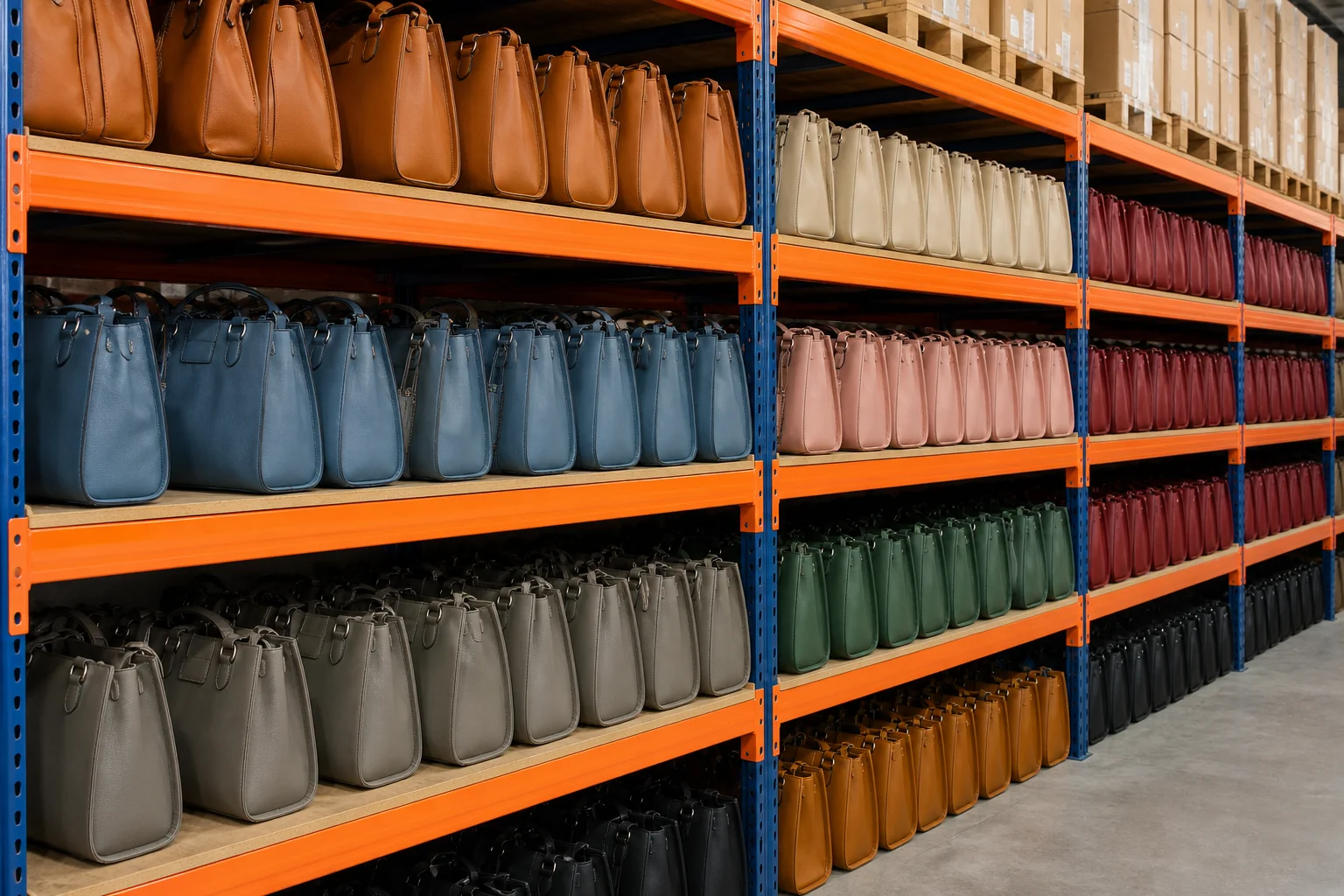
Where a season is already under way, a stock order can be in hand in days. A private label order started at that point arrives after the selling window has closed.
Seasonal timing alone decides this route for many retailers. Arriving late with the perfect product is worse than arriving on time with a good stock item.
| Situation | Better route | Reason |
|---|---|---|
| New category, no sales history | Stock | Cheap learning, low commitment |
| Very limited capital | Stock | Lower cost per style |
| No storage capacity | Stock | No minimum quantity overhang |
| Season already started | Stock | Speed to market |
| Testing a new price point | Stock | No development cost at risk |
| Proven product, repeat demand | Private label | Margin and exclusivity |
Uncertain demand for a specific design
Where the retailer likes a design but has no evidence customers will, stock transfers that risk to the supplier. If it does not sell, the loss is a stock position rather than a committed production run.
This is not timidity. It is the correct allocation of risk to the party with more information and more ability to absorb it.
When Private Label Becomes Worth It
Private label becomes the better route under a specific set of conditions. They usually arrive together rather than one at a time.
A product the retailer can specify precisely
Precision means the retailer can describe the bag well enough that a factory can build it without guessing: dimensions, material, hardware, lining, pockets, construction and finishing. Where that description does not exist, sampling will be a process of discovery rather than refinement.
This precision usually comes from having sold stock. A retailer who has sold fifty shoulder bags knows the shoulder drop that customers complain about, which is exactly the kind of detail that makes a private label programme succeed.
Evidence of repeat demand
Private label is justified when the retailer is confident the product will sell more than once. A single burst of demand after launch is not evidence; repeat sales at a steady rate are.
The clearest signal is a stock item the retailer has reordered repeatedly. At that point the demand is proven, and the only remaining question is whether private label improves the economics.
A price point that supports the investment
Private label development costs have to be recovered from margin. Where the retail price is low, the absolute margin per unit is small and the number of units needed to recover development is large.
A higher price point recovers development faster and allows more room for a better specification. This is why private label works more easily in the mid and upper part of the market than at the entry level.
| Condition | Why it matters |
|---|---|
| Precise specification | Sampling refines rather than discovers |
| Proven repeat demand | Justifies the commitment |
| Supportive price point | Recovers development cost |
| Volume near the minimum | Reaches sensible unit pricing |
| Supplier relationship established | Reduces execution risk |
| Storage and cash available | Absorbs the minimum quantity |
An established supplier relationship
Private label executes far better with a supplier who has already delivered. The factory knows the buyer’s expectations, the buyer knows the factory’s reliability, and communication habits are already formed.
Starting private label with an untested supplier adds execution risk on top of design risk. Where a stock relationship exists, use it as the route into a first private label order.
The Volume Thresholds That Decide It
The decision often reduces to volume, because the economics of private label depend on spreading fixed costs across enough units.
Recovering development cost
Sampling, patterns and labels typically form a fixed sum per design. Dividing it across the order quantity produces the development cost per unit, which is the figure to compare against the price advantage of private label.
If the factory price advantage is a given amount per bag, the break-even quantity is the development cost divided by that advantage. Below it, private label costs more in total; above it, it costs less.
The effect of colour and size variations
Each colour and size can carry its own minimum, and each adds a material position. A range quoted as four styles can become twelve or more minimum obligations once colours are counted.
This is why new private label programmes should be narrow. Fewer styles in fewer colours allows quantities to concentrate and thresholds to be crossed, rather than being spread thinly across many variants.
| Order shape | Effect on development cost per unit | Effect on risk |
|---|---|---|
| One style, one colour, high volume | Low | Concentrated on one design |
| One style, four colours, split volume | Higher | Spread but each position thin |
| Four styles, one colour each | Higher | Spread across designs |
| Four styles, four colours each | Highest | Serious overhang risk |
Where the crossover usually sits
For a straightforward PU leather bag with standard hardware, the crossover is commonly in the low hundreds of units per design, provided the factory price advantage is meaningful. Where custom tooling is involved, it moves higher.
Where the retailer’s expected annual volume sits below the crossover, the disciplined answer is to keep buying stock and revisit the decision when volume grows.
Comparing against the alternative use of capital
Even above the crossover, the capital committed to a private label order has an alternative use. If the same money could fund marketing that produces more profit, the lower unit price is not automatically the better decision.
The comparison should be between the profit from the private label route and the profit from whatever else the capital could do. That comparison is specific to the business, not to the product.
A Staged Path From Stock to Private Label
The transition does not have to be a single leap. A staged path moves the retailer from stock to private label while keeping risk proportionate at each stage.
Stage one: buy stock and observe
The first stage is to buy stock across a narrow range and record what sells. The useful records are per style, per colour and per price point, not just total revenue.
At the end of a season, the retailer should be able to name the best-selling specification precisely. That description becomes the specification for the first private label order.
Stage two: brand the stock
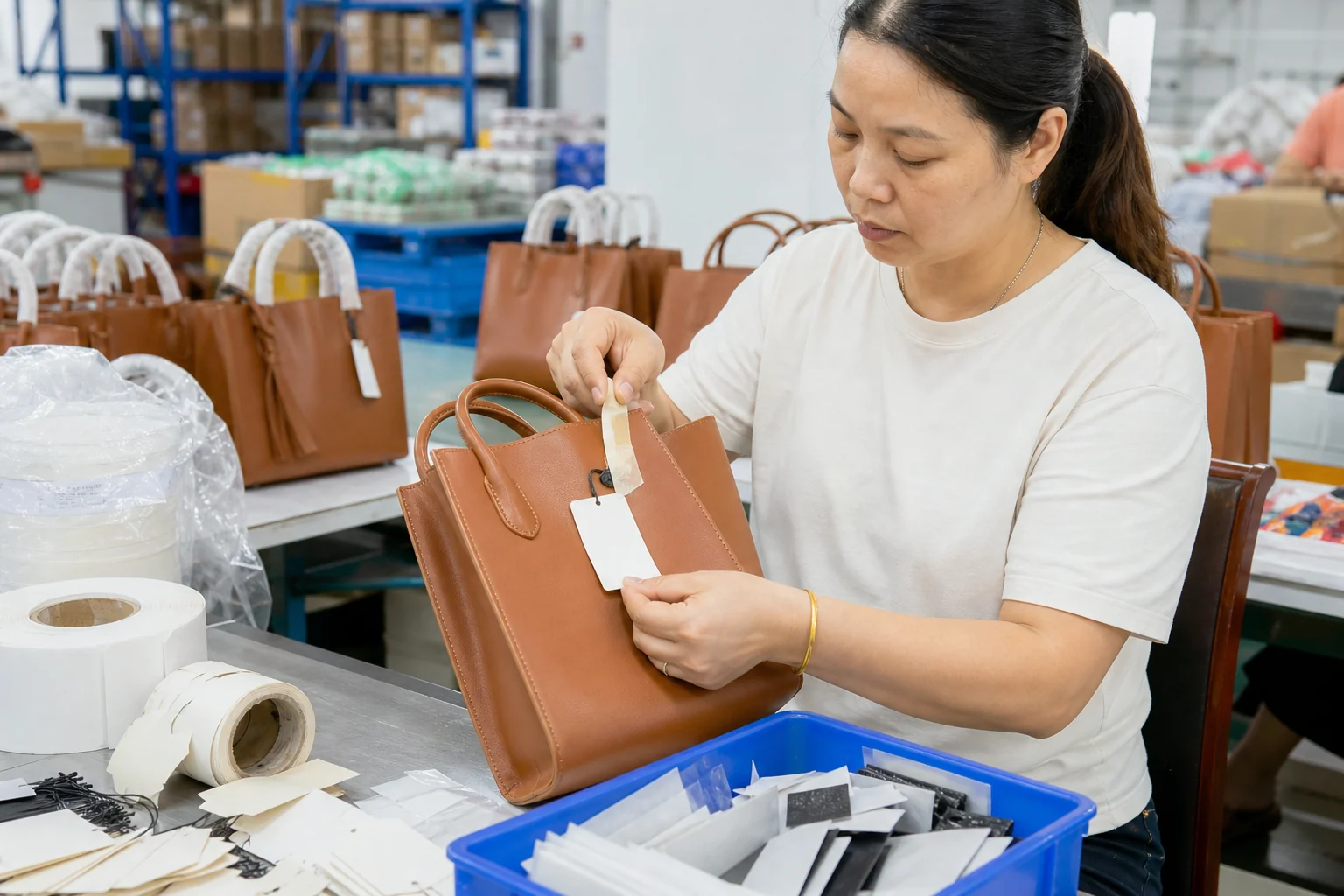
Before commissioning production, the retailer can add their own identity to stock items: labels, dust bags, packaging and presentation. This tests whether branding changes what customers will pay.
The result is informative. If branded stock commands a higher price, private label is likely to be worth it; if it does not, the margin argument weakens and the case rests on unit cost alone.
Stage three: a narrow first private label order
The first private label order should take the best-selling stock specification and reproduce it with the retailer’s own materials and labels, at the minimum quantity, in one or two colours.
This is a modest step: a proven specification, a known price point, and a quantity the retailer was close to buying anyway. The aim is to prove the process rather than to launch a full range.
| Stage | What is committed | What is learned |
|---|---|---|
| One: stock | Small, flexible quantities | Which specification sells |
| Two: branded stock | Labels and packaging | Whether branding supports a higher price |
| Three: narrow private label | One design at the minimum | Whether the factory executes to standard |
| Four: deepening | Repeat orders on the proven design | Whether the economics hold at scale |
| Five: broadening | Additional styles on a shared platform | Whether the range can grow without new risk |
Stage four: deepen before broadening
Once a private label design is proven, the next order should repeat it at higher volume rather than adding new designs. Deeper volume improves the unit price and reduces the development cost per unit.
Broadening before deepening spreads the same development cost across more designs and multiplies the minimum quantity commitment, which is the pattern that makes early programmes fail.
Stage five: broaden on a shared platform
When the range does expand, it should expand on shared materials and hardware so that minimum quantities are pooled rather than duplicated. New styles then arrive with much of the development already done.
By this point the retailer has sales data, a working supplier relationship and a proven specification. Private label is now a routine process rather than a gamble.
Mistakes That Sink Early Private Label Programmes
Most early private label failures come from a small number of avoidable errors. Each has a specific prevention.
Designing a range instead of a product
The most common mistake is launching six or eight styles at once, each with its own sampling and minimum. Development costs multiply, and no single style gets enough depth to sell well.
The prevention is to launch one product properly. A single well-chosen design with real depth teaches more and risks less than a broad debut range.
Specifying by appearance rather than construction
A specification that describes how a bag should look but not how it should be built leaves the factory to interpret the structure. The result is a sample that photographs correctly and performs poorly.
Construction details — interlining, reinforcement points, stitch type, edge finishing and hardware fixing method — are what determine whether the bag holds up. They belong in the specification from the first order.
| Mistake | Consequence | Prevention |
|---|---|---|
| Launching a full range at once | Development cost multiplied, thin depth | Launch one design properly |
| Appearance-only specification | Weak construction, early failures | Specify construction and materials |
| Choosing on unit price alone | Higher development or overhang cost | Compare total cost per unit sold |
| No written feedback process | Extra sample rounds, delays | Numeric comments, one decision-maker |
| Ignoring the minimum quantity risk | Unsold stock and markdowns | Split the first order across deliveries |
| Skipping the labelling brief | Wrong labels, rework or delay | Confirm label artwork and placement early |
Comparing on unit price alone
A private label quotation looks attractive against a stock price, and the comparison usually stops there. Development, labels, packaging and the cost of unsold minimum quantity are not in the unit price.
Comparing total cost per unit sold, including the expected cost of overhang, produces a different and more useful answer. On a first order it is often closer than expected; on a repeat order the advantage becomes clear.
Forgetting the labelling and packaging brief
Labels, tags and packaging are part of the private label specification and are frequently left until late. Artwork that arrives after production has started causes rework or a delayed shipment.
Confirming label size, material, placement and artwork alongside the sample approval removes the risk entirely, at almost no cost.
Moving without a fallback
Retailers sometimes commit the entire buying budget to a first private label order, leaving nothing to fill the shelf if it slips or underperforms. A delayed first order with no stock alternative is a serious position.
Keeping a portion of the range in stock while the first private label order runs is a practical hedge. It preserves selling continuity while the new programme proves itself.
Running Both at the Same Time
The two routes are not mutually exclusive. Many established retailers run both deliberately, using each for the job it does best.
Private label for the core, stock for the edges
Private label serves the proven core of the range, where demand is known and margin matters most. Stock fills the edges: seasonal items, experimental designs and gaps discovered mid-season.
This combination keeps the brand coherent where it counts and keeps the range responsive where it does not. It also avoids committing development cost to products that are unlikely to repeat.
Use stock to test, private label to scale
A stock purchase answers whether a design works. A private label order then scales what has been proven. Used in sequence, the two routes form a low-risk development pipeline.
The sequence also improves the private label brief, because the specification is written from observed customer behaviour rather than from the retailer’s own preferences.
| Purpose | Preferred route | Why |
|---|---|---|
| Core range, proven demand | Private label | Margin and exclusivity |
| Seasonal or trend items | Stock | Speed, no commitment |
| Testing a new category | Stock | Cheap learning |
| Scaling a proven design | Private label | Better unit price |
| Filling mid-season gaps | Stock | Immediate availability |
| Building brand equity | Private label | Exclusivity and control |
Keep the specification platform consistent
Where both routes run together, keeping the private label programme on a shared material and hardware platform preserves the advantages of each and keeps the range visually coherent.
Stock items can sit alongside on their own materials, but the core private label styles should share a platform so that each new addition costs less than the last.
Start with stock to learn, brand it to test, then commit to private label where the demand is proven. Ambition is not the deciding factor; evidence is.
FAQ
Should a new retailer choose private label or wholesale stock?
Most new retailers should start with wholesale stock and move to private label once they know what sells. Stock gets product to market quickly with low capital and no design risk. Private label builds margin and brand equity but requires a specification, a supplier relationship and a volume commitment made before any sales data exists.
What is the main difference between private label and wholesale stock?
Who sets the specification. With stock, the supplier decides dimensions, materials and construction and the retailer selects from what exists. With private label, the retailer specifies the product and the factory builds to it, which gives control, exclusivity and a lower unit price at volume but places all design risk on the retailer.
When does private label become cheaper than buying stock?
When the volume is large enough that the factory price advantage covers the development costs. The break-even quantity is the total development cost divided by the per-unit price advantage. For a straightforward PU leather bag with standard hardware it commonly sits in the low hundreds of units per design, and higher where custom tooling is required.
How much does a first private label order usually cost?
Beyond the goods, expect sampling, pattern development, labels, artwork and possibly packaging design, plus a mould charge if custom hardware is used. Because each colour and size can carry its own minimum, the total commitment grows quickly with the number of variants. A narrow first order in one or two colours keeps it manageable.
Can I add my own brand to wholesale stock instead?
Yes, and it is a useful intermediate step. Adding labels, dust bags and packaging to stock items tests whether branding supports a higher price before any production is commissioned. If branded stock sells at a higher price, private label is likely to be worth it; if not, the case rests on unit cost alone.
What is the biggest mistake in a first private label programme?
Launching a full range instead of one product. Six or eight styles each need sampling and carry their own minimum quantity, so development costs multiply and no style gets enough depth to sell well. Launching one proven design properly teaches more and risks less than a broad debut range.
How do I know my demand is proven enough for private label?
Repeat sales at a steady rate are the clearest signal, especially where a stock item has been reordered several times. A single burst of demand after a launch is not proof. If the retailer can name the exact specification customers keep buying, demand is proven well enough to commission production.
Should I spread a first private label order across several colours?
Generally no. Each colour creates a separate minimum and a separate material position, which reduces the effective volume per position and raises development cost per unit. One or two colours at higher volume keeps quantities concentrated and lets the order cross sensible pricing thresholds.
Is the unit price advantage worth losing flexibility for?
It depends on how confident the demand forecast is. The minimum quantity converts a flexible decision into a fixed commitment, so the real comparison is between the price advantage and the expected cost of unsold stock. Where demand is uncertain, the overhang cost can exceed the saving.
Can I run private label and stock at the same time?
Yes, and many established retailers do. Private label serves the proven core of the range where margin matters most, while stock fills seasonal items, experimental designs and mid-season gaps. The two routes used together form a low-risk pipeline from testing to scaling.
Why does a private label order need a construction specification?
Because a specification describing only appearance leaves the factory to interpret the structure. Interlining, reinforcement points, stitch type, edge finishing and hardware fixing determine whether the bag holds up in use. These details belong in the brief from the first order, not added after the first failure.
What should I keep buying as stock even after moving to private label?
Seasonal and trend-led items, anything being tested in a new category, and anything needed quickly to fill a gap mid-season. These are cases where speed and low commitment matter more than margin, and committing development cost to them is rarely justified.
Deciding between private label and wholesale stock for your range?
We manufacture PU leather bags in Guangzhou on OEM, ODM and wholesale programmes, and we will quote both routes on the same specification so the comparison is like for like. Send your range and target volume to info@gionar.com, or review our custom bag manufacturing capabilities.