Quantity breaks are the backbone of wholesale bag pricing, and they are also the most frequently misread part of a quotation. Buyers see a table with a handful of volume bands and treat it as a simple discount ladder, on the assumption that ordering more always lowers the unit price by a predictable amount. The reality is more structured, and understanding that structure is worth real money.
The short answer is that a quantity break is not a discount. It is the point at which a specific cost inside the factory stops behaving the way it did in the previous band. Some costs fall steeply when volume rises because they are fixed and can be spread over more units. Others barely move at all, because they are driven by material consumption or machine time that scales linearly with output.
This distinction explains the pattern most buyers notice but rarely interpret correctly. Early breaks produce large price steps; later breaks produce small ones; and beyond a certain point, additional volume yields almost nothing. That is not the supplier withholding a discount. It is the arithmetic of fixed and variable costs meeting their limits.
It also explains why two factories can quote the same product quite differently. A factory with a larger cutting table, a better material yield, or lower overheads reaches its efficient volume sooner, so its price curve flattens earlier. A factory with more manual operations may keep finding savings further up the volume range.
This guide explains what quantity breaks actually represent, how break points are chosen, which costs fall and which do not, how to read a wholesale price list without being misled by the headline unit price, and how to negotiate around break points rather than against them. It is written for buyers, distributors and brand owners sourcing PU leather bags.
- What a Quantity Break Actually Represents
- Why Unit Prices Fall as Volume Rises
- How Break Points Are Chosen
- What Each Tier Includes and Excludes
- The Costs That Do Not Scale Down
- Reading a Wholesale Price List Correctly
- Negotiating Around Break Points
- Total Cost Beyond the Unit Price
- Planning Orders Around Break Points
- FAQ
What a Quantity Break Actually Represents
A quantity break is a price band, not a discount rate. Each band reflects the cost structure that applies within that volume range, and the step between bands reflects a cost that has changed category.
Fixed costs versus variable costs
Every bag price contains fixed and variable components. Fixed components include sampling, tooling, pattern development, machine set-up and the administrative work of running an order. Variable components include material, hardware, labour and packaging, which rise roughly in proportion to output.
When volume increases within a band, the fixed components spread over more units and the average price falls. When volume crosses into a new band, a further fixed cost is either absorbed or disappears, producing a step change rather than a gradual decline.
Why breaks appear as steps
Breaks are steps because the underlying costs are not continuous. A cutting die is bought once or not at all. A sample is made two or three times or not at all. A mould is opened for a hardware piece above a certain volume, and below that volume the piece is bought from stock at a higher unit cost.
These are discrete decisions, and each corresponds to a band boundary. Reading the price table as a continuous curve obscures this, and it is why buyers who ask for “halfway between the two tiers” often receive an answer that feels arbitrary. It is not arbitrary; it is the fixed cost refusing to divide.
What the supplier’s tier list does not tell you
A tier list states prices, not the cost model behind them. Two factories may show identical bands with completely different internal logic, which means the same negotiation tactic will not work equally against both.
Finding out which costs sit behind each boundary is the highest-value question a buyer can ask. A supplier who can explain the boundary is usually also a supplier who can move it.
| Cost element | Behaviour as volume rises | Effect on price |
|---|---|---|
| Sampling and pattern development | Fixed, disappears after the first order | Large step down |
| Tooling and moulds | Fixed, steps at a threshold volume | Sharp step down |
| Machine set-up time | Fixed per production run | Moderate step down |
| Material consumption | Variable, near linear | Little effect |
| Hardware and fittings | Variable, with purchase thresholds | Occasional step down |
| Labour | Variable, improves with learning | Small gradual reduction |
| Packaging and cartons | Variable, with purchase thresholds | Small step down |
The difference between a break and a discount
A discount is a commercial decision applied to a price that already exists. A break reflects a change in the cost structure. This matters because discounts can be negotiated away or withdrawn, while a cost-based break reflects something real.
It also means that asking for a discount inside a band is a different request from asking to move a boundary. The first is a margin conversation; the second is an operational one, and it is often easier to win because it can be solved by changing how the order is run.
Why Unit Prices Fall as Volume Rises
The fall in unit price is real, but it comes from several distinct mechanisms that operate at different volumes. Separating them explains why the curve bends where it does.
Spreading fixed costs
The simplest mechanism is absorption. A development cost of a given size divided by a larger number of units produces a smaller per-unit figure. This is arithmetic, not concession, and it is the main reason the first break in a price list is usually the largest.
The effect diminishes quickly. Once a fixed cost is spread across a few thousand units, spreading it across a few thousand more changes very little. This is why buyers expecting the same percentage improvement at every tier are consistently disappointed.
Material purchasing advantages
Larger orders allow the factory to buy material in fuller rolls or at a better price tier, and to reduce waste by planning cuts more efficiently. Both reduce the material cost per bag, which is usually the largest single component.
This advantage is not unlimited. Material price steps occur at the supplier’s own purchase thresholds, so the saving arrives in jumps rather than continuously, and it depends on whether the full quantity can be bought in one lot.
Labour learning and line efficiency
Longer runs reduce the time lost to changeovers, allow operators to work more consistently, and reduce the proportion of supervisory and inspection time per unit. These improvements appear gradually rather than as a step.
Learning effects are real but small in a mature product. Their main value is that they make a long run more predictable, which reduces the risk allowance a factory builds into its quotation.
| Mechanism | Where it operates | Shape of saving |
|---|---|---|
| Fixed cost absorption | At the first break | Large, one-off step |
| Material price tiers | At supplier purchase thresholds | Occasional moderate step |
| Material yield improvement | Continuous with volume | Gradual |
| Changeover reduction | Longer runs | Moderate step per run |
| Labour learning | Continuous | Small gradual |
| Risk allowance reduction | After proven repeat orders | Gradual, relationship driven |
Why the curve flattens
At high volumes the remaining cost is dominated by material, which scales linearly and cannot be compressed by scale alone. Once fixed costs are negligible per unit, additional volume has almost nothing left to spread.
The flattening point differs by product. A simple tote with little hardware flattens early, because most of its cost is material. A structured bag with moulded hardware, multiple panels and complex assembly keeps finding efficiencies longer, because more of its cost is in process.
How Break Points Are Chosen
Break points are not arbitrary numbers. They are chosen where a real cost changes, and understanding the logic lets a buyer predict where a factory can and cannot be flexible.
Break points follow production realities
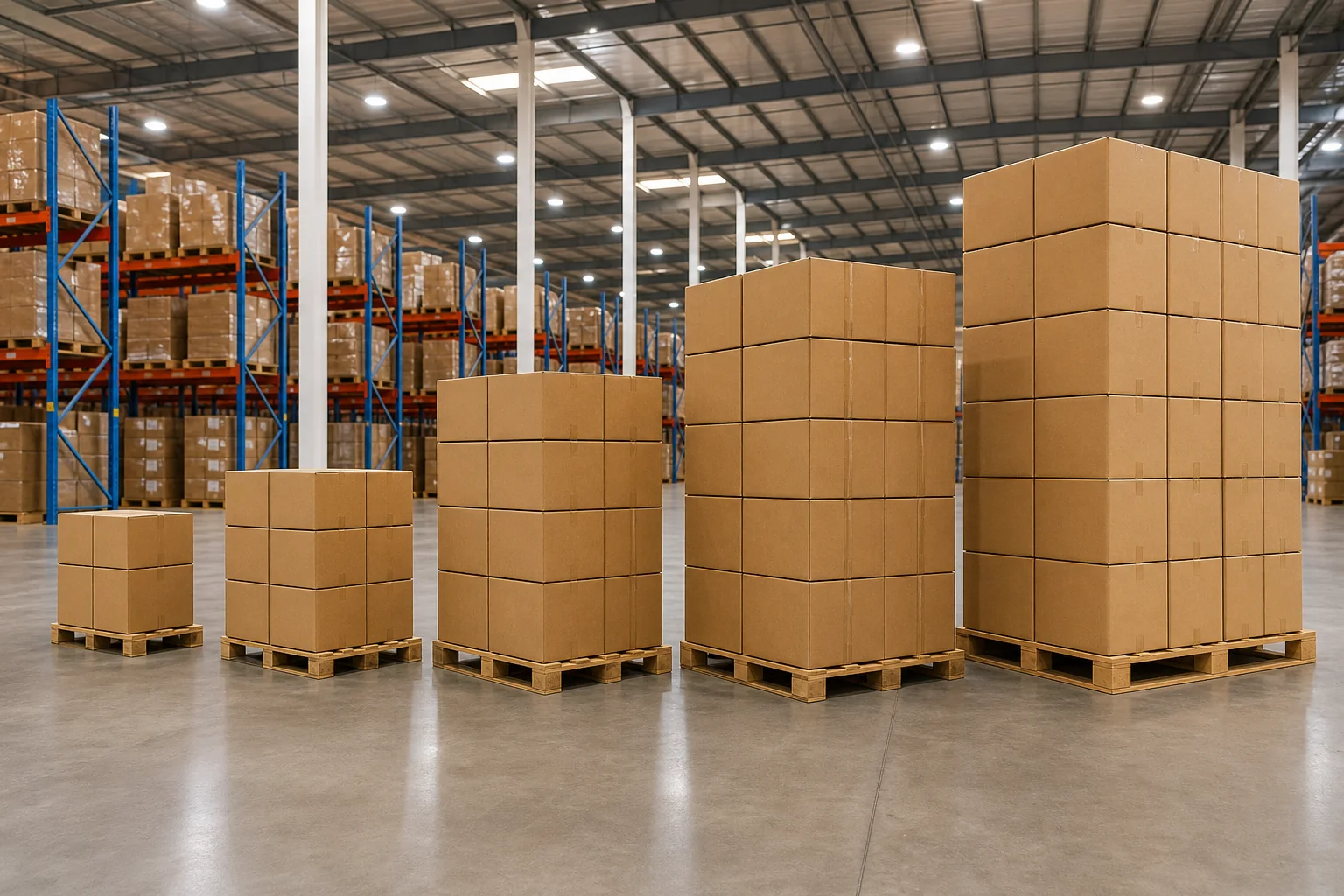
A common break sits at the point where a production run becomes a full day, a full line, or a full cutting table. Below that level the run is inefficient and the factory either absorbs the loss or prices it in.
Another common break sits at a material purchase threshold, such as the quantity at which coated fabric can be bought in a full roll or a full pallet. Crossing it reduces material cost in a single step.
Break points follow tooling and component economics
Where a custom component such as a logo plate or a moulded buckle is involved, a break often sits at the volume where opening a mould becomes cheaper than buying finished parts. Below the threshold the part is bought; above it, a mould is justified.
Knowing this allows a buyer to test the boundary directly. Asking at what volume a mould would be opened reveals the threshold, and reveals whether the quoted break sits on it or merely near it.
Break points and MOQ
The minimum order quantity usually sits at or just below the first break. This is not a coincidence: the MOQ is the volume at which the factory can cover its set-up costs, and the first break is the volume at which that covering begins to produce a reasonable unit price.
| Break sits at | Because | Buyer lever |
|---|---|---|
| One full cutting table | Cutting efficiency | Adjust panel nesting |
| One full production day | Changeover cost amortised | Align delivery schedule |
| Full material roll or pallet | Material purchase tier | Share material across styles |
| Mould justification volume | Custom component economics | Commit multi-season volume |
| Container fill | Freight efficiency | Combine styles in one shipment |
| MOQ floor | Set-up cost recovery | Accept stock colours or sizes |
Asking the right question about a boundary
The useful question is not whether a boundary can be moved, but what cost sits behind it. A boundary backed by a material purchase threshold can sometimes be shifted by combining materials across styles. One backed by a cutting table constraint usually cannot move without changing the product.
This is why the same request succeeds with one factory and fails with another. The boundary is a fact about operations, and operations differ between suppliers even when their price lists look identical.
Why published bands are often rounded
Quoted break points tend to be round numbers because they are easier to communicate and to administer, not because the underlying thresholds are round. A true threshold of 2,340 units may be published as 2,500 for simplicity.
The gap between the published break and the real threshold is where negotiation is possible. If actual material economics change at 2,340 units, a buyer ordering 2,400 has a defensible argument that the higher price band should apply, because the cost basis for it has already been reached.
What Each Tier Includes and Excludes
Comparing two price lists by their headline figures is the most common wholesale mistake. The numbers are only comparable if the same scope sits behind them, and scope differences are deliberately easy to overlook.
Development costs and where they land
Some quotations absorb sampling and pattern development into the unit price; others charge them separately. A quotation that looks cheaper per unit may simply be charging development outside the price, and at low volumes that difference can exceed the apparent saving.
Ask explicitly whether sampling, pattern development, grading and any tooling are inside or outside the quoted figure, and whether they recur on repeat orders. Development charged once is a fixed cost; development charged per order is effectively a variable one.
Packaging and presentation
Packaging scope varies widely. A quotation may include a plain polybag or a printed box, a hangtag or none, a barcode label or nothing at all. Each addition changes the unit cost and may also cross a purchase threshold of its own.
Because packaging is a common area for later surprises, the specification should be written into the quotation rather than assumed. If the tier price assumes a plain bag and the retail requirement is a printed box, the comparison with another quotation is meaningless.
| Item | Often included | Often excluded |
|---|---|---|
| Sampling | One round for repeat clients | First-order development |
| Tooling and moulds | Above a stated volume | Below the threshold |
| Packaging | Polybag and export carton | Printed box, hangtag, labels |
| Testing | Basic in-house checks | Third-party or certified testing |
| Inspection | Factory final inspection | Buyer or agent inspection visits |
| Freight | Ex works or FOB port | Destination charges and duty |
Freight terms change the comparison
A quotation given on an ex-works basis and one given landed cannot be compared by unit price alone. Freight, insurance, duty and inland delivery can move the effective cost by a meaningful margin, and the cheapest-looking unit price is frequently the one excluding the most.
Converting every quotation to a common landed basis is the only reliable comparison. This takes a little work, but it prevents selecting a supplier on a figure that was never comparable in the first place.
The Costs That Do Not Scale Down
Buyers who understand which costs resist scale negotiate more effectively, because they stop asking for reductions that the cost base cannot support.
Material is the floor
Material consumption scales almost linearly and usually represents the largest share of the unit cost. No amount of volume changes how much coated fabric a bag requires, and the price of that fabric is set by the market rather than by the order size.
This is why the flattest part of any bag price curve sits at high volume. Once fixed costs are negligible, the price is essentially material plus a margin, and there is nothing left to spread.

Labour content and process complexity
Labour scales with the number of operations, and operations are set by the design. A bag with twelve sewing steps will not become a five-step bag because the order is large.
Volume does improve labour efficiency modestly through familiarity and reduced changeover time, but it cannot remove operations. The design decides the floor, which is why cost reduction at high volume usually means changing the design rather than pushing the price.
Compliance and testing
Testing and certification costs are largely volume-independent. A laboratory test on a material or a finished product costs the same whether the order is five hundred units or five thousand.
This creates a threshold effect of its own. On a small order, a single test can add a noticeable amount per unit; on a large order it becomes negligible. Buyers who need certified materials should expect testing to be a larger proportion of cost at low volume than the tier table implies.
| Cost | Scales with volume? | Reducible by negotiation? |
|---|---|---|
| Material consumption | Yes, near linear | Only via specification |
| Hardware units | Yes, near linear | Only via specification |
| Labour operations | Partly | Only via design |
| Testing and certification | No | Sharing certificates, not price |
| Freight | No, driven by volume and weight | Consolidation |
| Margin | No | Yes, but bounded |
Why the last break is usually small
By the time a quotation reaches its highest band, most of the reducible cost has already been reduced. What remains is material, labour operations and a margin, none of which respond much to further volume.
Recognising this prevents a common error: holding an order at an inconvenient volume in the hope of reaching a final break, when the saving at stake is smaller than the cost of the extra stock and the delay.
Reading a Wholesale Price List Correctly
A price list is a document designed to sell, and it can be read in ways that mislead. A few habits of reading remove most of the ambiguity.
Start with the scope, not the price
Read the included and excluded items before looking at any figure. The scope paragraph determines what the numbers mean, and a scope difference can outweigh a price difference entirely.
Where a quotation does not state its scope, treat that as a gap rather than an assumption. Asking for the scope in writing is a reasonable first request and usually reveals information the supplier would rather not volunteer.
Look at the shape of the curve
Plot the unit price against volume rather than reading the tiers in isolation. The shape shows where the real reductions are and where they stop, which is more useful than any single figure.
A curve with a large first step and a flat tail tells a buyer that the first break is the one worth reaching and the rest are marginal. A curve with evenly spaced steps suggests a supplier quoting by convention rather than by cost, which is worth probing.
| Reading habit | What it reveals |
|---|---|
| Check scope first | Whether prices are comparable at all |
| Plot the curve | Where the real savings sit |
| Note the MOQ position | How much room exists below the first break |
| Check for separate charges | Development, tooling, testing, freight |
| Confirm validity period | Whether the price is still current |
| Ask what drives each break | Which boundaries are movable |
Watch the validity period
Wholesale prices are typically quoted for a limited period, because material costs move. A quotation without a stated validity period should be treated as requiring confirmation before it is relied on.
For orders placed well ahead, the treatment of material price movement should be agreed explicitly. A fixed price protects the buyer but costs the supplier something, and that cost is usually visible as a slightly higher figure.
Negotiating Around Break Points
Negotiation is more productive when it targets the cost behind a boundary rather than the boundary’s price. The following approaches tend to work because they offer the factory a genuine operational benefit.
Combine styles to reach a break
Where a break is driven by material or cutting efficiency, combining volumes from two styles that share the same material can cross it. The factory gains a larger consolidated run; the buyer gains the higher band.
This works particularly well for ranges built on a shared colour and material platform. It is one of the strongest arguments for designing a range around common components rather than treating each style independently.
Commit across seasons
A commitment covering several deliveries or seasons can justify a break that a single order cannot, because it allows the factory to buy material and plan capacity with confidence. The saving to the factory is real, so the argument is not purely commercial.
The commitment should be specific about volume and timing to be credible. A vague indication of future business rarely moves a price, and rightly so.
Trade specification rather than price
When a boundary cannot move, something else can. Accepting a stock colour instead of a custom one, relaxing a packaging requirement, or allowing a longer production window all reduce cost in ways the factory can pass on.
This often delivers more than a price argument, because it changes the actual cost rather than dividing the margin. It also preserves the relationship, which matters more for the second order than the first.
| Approach | Why it works | Buyer cost |
|---|---|---|
| Combine styles on shared material | Larger consolidated run | Range planning discipline |
| Commit multi-season volume | Planning certainty | Forecast accuracy |
| Accept stock colour or hardware | Removes a set-up cost | Less differentiation |
| Simplify packaging | Lower material and labour | Retail presentation |
| Extend the production window | Better capacity scheduling | Less flexibility on timing |
| Pay a deposit earlier | Better cash flow for the factory | Working capital |
Test the boundary with a specific request
A request framed around the real threshold is far more likely to succeed than a general request for a discount. Asking whether the higher band applies at 2,400 units because the material threshold is 2,340 invites an operational answer rather than a refusal.
This works because it demonstrates that the buyer understands the cost structure. Suppliers respond differently when the conversation is about facts they can verify.
Total Cost Beyond the Unit Price
Unit price is the most visible number and rarely the most important. Several other costs move with order size, and some of them move in the opposite direction to the unit price.
Inventory carrying cost
Ordering up to reach a break means holding more stock. Storage, insurance, tied-up capital and the risk of obsolete colours all rise with quantity, and on slower-moving styles these can exceed the saving from the smaller unit price.
The break-even is worth calculating explicitly. If a break saves a small amount per unit but requires holding six months of additional stock, the saving may be imaginary once carrying cost is included.
Cash flow and payment terms
Larger orders require larger deposits and larger final payments, and they convert working capital into inventory earlier. For a growing business, cash flow is often the binding constraint rather than unit cost.
Where a factory offers a better price for a larger order but requires a heavier upfront payment, the effective cost of that price reduction is the financing cost of the extra cash. It is rarely zero.
| Cost beyond unit price | Direction as volume rises |
|---|---|
| Inventory carrying cost | Rises |
| Tied-up working capital | Rises |
| Obsolescence risk | Rises |
| Freight per unit | Usually falls |
| Inspection cost per unit | Usually falls |
| Administrative cost per unit | Falls |
Quality risk at both extremes
Very small orders can suffer from poor material lot consistency, while very large orders increase the exposure if something goes wrong, because more units are affected by a single error.
Neither is a reason to avoid a volume. Both are reasons to link volume decisions to inspection and to the controls that catch problems before shipment.
Comparing landed cost properly
The final comparison should use landed cost per unit: the unit price plus freight, insurance, duty, inland delivery and inspection, plus an allowance for carrying cost. Only then are two quotations genuinely comparable.
A quantity break lowers the unit price. Whether it lowers your cost depends on what you do with the units.
Planning Orders Around Break Points
The last step is turning the understanding into an order plan. A few practical rules cover most situations.
Reach the first break, treat the rest as marginal
The first break usually carries the largest saving because it absorbs development and set-up costs. Aiming for it is almost always worthwhile; aiming for the last break rarely is.
Beyond the first or second break, the decision should be driven by demand forecasts rather than by price. Ordering extra units to obtain a small price reduction is a stock decision wearing a purchasing costume.
Align orders with the breaks that matter
Where several styles share a material, planning them together so that combined volume crosses a material threshold delivers a saving without increasing total inventory. This is a planning decision made months before the order is placed.
The discipline it requires — a shared material and colour platform across a range — is the same discipline that makes colour consistency easier. The two benefits reinforce each other.
| Planning decision | Effect on price | Effect on risk |
|---|---|---|
| Reach the first break | Largest saving | Low, if demand supports it |
| Combine styles on shared material | Crosses thresholds | Low |
| Commit across seasons | Enables a better band | Forecast exposure |
| Order to the last break | Small saving | High inventory exposure |
| Order below MOQ | Highest unit price | Low, but poor economics |
Keep a record of what drives each break
Recording which cost sits behind each boundary makes future negotiations faster and prevents repeated explanations. It also reveals when a boundary should have moved but did not.
Over a few orders this record becomes a useful benchmark, showing whether the factory’s pricing is following its own cost structure or drifting with the market.
FAQ
What is a quantity break in wholesale bag pricing?
A quantity break is a price band in which a different unit price applies, reflecting the cost structure at that volume rather than a simple discount. Each step between bands corresponds to a real fixed cost being absorbed or a purchase threshold being crossed, which is why breaks appear as steps rather than as a smooth curve.
Why is the first price break the biggest?
Because it absorbs the fixed costs of the first order: sampling, pattern development, tooling and machine set-up. Spreading those over a larger number of units produces the largest single reduction. Later breaks have less fixed cost left to spread, so the savings shrink quickly.
Why does the price stop falling at high volumes?
Because the remaining cost is dominated by material, which scales almost linearly with output and cannot be compressed by volume. Once fixed costs are negligible per unit, there is nothing left to spread, so the unit price flattens and additional volume yields almost no saving.
Can I ask for a price between two tiers?
Yes, and it is often productive if the request is framed around the real threshold. If a material purchase tier begins at 2,340 units, a buyer ordering 2,400 has a defensible argument that the higher band should apply. A general request for a mid-tier price without that reasoning is usually refused.
How do I compare two wholesale quotations properly?
Convert both to landed cost per unit: unit price plus freight, insurance, duty, inland delivery and inspection, plus an allowance for carrying cost. Also confirm scope first, since a quotation excluding development, tooling or packaging is not comparable with one that includes them, whatever the headline figure says.
Is it worth ordering extra units to reach a better tier?
Only when demand supports the extra units. Beyond the first or second break, the saving per unit is small, while storage, insurance, tied-up capital and obsolescence risk all rise with quantity. Calculate the break-even explicitly rather than assuming the lower unit price is automatically the better deal.
How can I reach a break without increasing inventory?
Combine volumes from several styles that share the same material and colour, so the consolidated order crosses a purchase threshold without any single style carrying extra stock. This requires a shared platform across the range, planned well before the order is placed. It also improves colour consistency.
What should I trade instead of asking for a discount?
Specification changes that genuinely reduce cost: a stock colour rather than a custom one, simpler packaging, fewer hardware variants, or a longer production window that lets the factory schedule capacity better. These change the actual cost rather than dividing the margin, so they are easier for a factory to accept.
Do quantity breaks apply to tooling and moulds?
They often define when tooling becomes worthwhile. Below a threshold volume, a custom logo plate or moulded buckle is bought as a finished part at a higher unit cost. Above it, opening a mould is cheaper, which creates a sharp break. Asking at what volume the factory would open a mould reveals the true threshold.
Why is my supplier’s MOQ set where it is?
The minimum order quantity usually sits at or just below the first break, because it is the volume at which the factory can cover its set-up costs and begin producing a reasonable unit price. It is an operational figure, not a negotiating position, which is why it rarely moves much on price alone.
Do prices stay fixed after they are quoted?
Usually only for a limited validity period, because material costs move. Confirm the validity period in writing, and for orders placed well ahead agree explicitly how material price movement will be handled. A fixed price protects the buyer but costs the supplier something, which shows up as a slightly higher figure.
What happens if I order below the minimum?
The unit price rises sharply because fixed costs are spread over too few units, and some suppliers decline the order entirely. Where a small trial is needed, the practical route is to accept stock materials and simpler packaging to reduce the set-up burden, or to buy a sample rather than a small production run.
Sourcing PU leather bags at wholesale volume?
We manufacture PU leather bags in Guangzhou on OEM, ODM and wholesale programmes, and we will show you exactly which cost sits behind each break in your quotation. Send your target volume and specification to info@gionar.com, or review our custom bag manufacturing capabilities.