What Does Quiet Luxury Mean for PU Leather Bag Manufacturers?
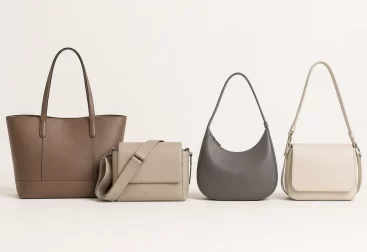
Quiet luxury reached bags later than it reached clothing, and it arrived in a form that factories had to interpret rather than copy. The look is easy to describe and hard to produce: no visible branding, restrained colour, matte surfaces, and a quality level that has to be evident in the hand because it is not being announced by a logo.
For a PU leather bag manufacturer this changes the cost structure rather than the design language. When a bag cannot signal value through a logo, plaque or bold hardware, the value has to be carried by the material, the edges, the stitching, the lining and the consistency of the whole. Those are manufacturing variables, and they are the ones that decide whether a quiet bag reads as considered or as cheap.
This article is written for buyers and sourcing teams who are being asked to develop quiet luxury styles on PU leather and need to know what that request actually implies in production. It covers what the term means commercially, which specifications carry the look, where PU leather limits the effect, what it costs to close the gap, and how to brief a factory so the result matches the intent rather than the drawing.
- What Quiet Luxury Actually Means
- The Specifications That Carry the Look
- Where PU Leather Helps and Hurts
- What It Costs to Close the Gap
- Briefing a Factory Properly
- Quality Control for a Restrained Product
- Development Sequence and Timeline
- Where the Approach Breaks Down
- Using Quiet Luxury Commercially
- FAQ
| Dimension | Loud luxury | Quiet luxury | Manufacturing consequence |
|---|---|---|---|
| Branding | Logo, plaque, monogram | None or debossed only | No hardware to hide defects behind |
| Colour | Contrast and brights | Muted and tonal | Shade consistency becomes critical |
| Surface | High gloss, embossed | Matte, soft-touch | Finish quality visible at close range |
| Hardware | Large, decorative | Small, functional | Tolerance and plating quality matter more |
| Edges | Folded or covered | Painted or burnished | Edge work becomes a cost centre |
| Stitching | Decorative contrast | Tonal and precise | Stitch density and alignment inspected |
What Quiet Luxury Actually Means
The term is used loosely in marketing and precisely almost nowhere. For production purposes it is best understood as a set of constraints on how value is expressed, because those constraints determine what a factory must control.
Value expressed through material and execution
Quiet luxury removes the signals a customer normally uses to judge a bag quickly: the logo, the shine, the heavy hardware. What remains is the material in the hand, the neatness of the edges, the evenness of the stitching and the precision of the proportions.
This is a harder brief than a logo-led design, because a defect that would be unnoticed beside a large plaque becomes the most visible feature of a plain bag. The manufacturing tolerance effectively tightens across the whole product rather than concentrating on a few decorative elements.
Tonal rather than contrasting
Quiet ranges are usually tonal: the outer, the lining, the thread and the edge paint sit close together in colour and value. This reduces visual noise and produces the restrained appearance the look depends on.
In production, tonal schemes are less forgiving. A contrast scheme hides a slightly mismatched thread or lining; a tonal scheme makes every shade difference visible, so the material and trim approvals have to be tighter.
Restraint in hardware and trim
Hardware in a quiet bag is small, functional and finished to a high standard. There are no oversized rings or decorative plates to draw the eye, which means the few pieces that do exist are examined closely.
Plating quality, edge radius and the fit of the piece against the material all become visible. A cheap zip pull is obvious on a plain bag in a way it is not on a busy one.
Longevity as part of the proposition
Quiet luxury is usually sold with an implicit promise of durability and timelessness rather than novelty. That promise has production implications: the bag should not fail at the points that fail first, such as handle attachments, zip ends and edge paint.
| Quiet luxury claim | Production requirement | Typical failure point |
|---|---|---|
| Understated quality | Consistent material across panels | Shade variation between cut panels |
| Timeless design | Proportions held to drawing | Pattern grading drift |
| No branding | Clean surfaces without patch marks | Adhesive residue or stitch holes |
| Refined hardware | Tight plating and fit tolerance | Plating wear at contact points |
| Neat edges | Controlled edge paint process | Cracking or uneven coverage |
| Durability | Reinforced stress points | Handle and zip-end failure |
Quiet luxury is not a design style that a factory can apply. It is a tolerance specification, and it is met or missed at the level of individual operations.
The Specifications That Carry the Look
Four specifications do most of the work in a quiet bag: the surface finish, the edge treatment, the stitching and the hardware. A buyer who controls these four controls the impression the product makes.
Surface finish
The finish is the first thing the eye registers in the absence of a logo. Matte and soft-touch surfaces read as restrained and expensive; high gloss reads as louder and, on coated fabric, often as less expensive than intended.
For PU leather the finish is chosen at the coating stage, so it must be specified before the material is booked. It should also be verified on the actual substrate, because the same finish description on different base fabrics can produce visibly different results.
Edge treatment
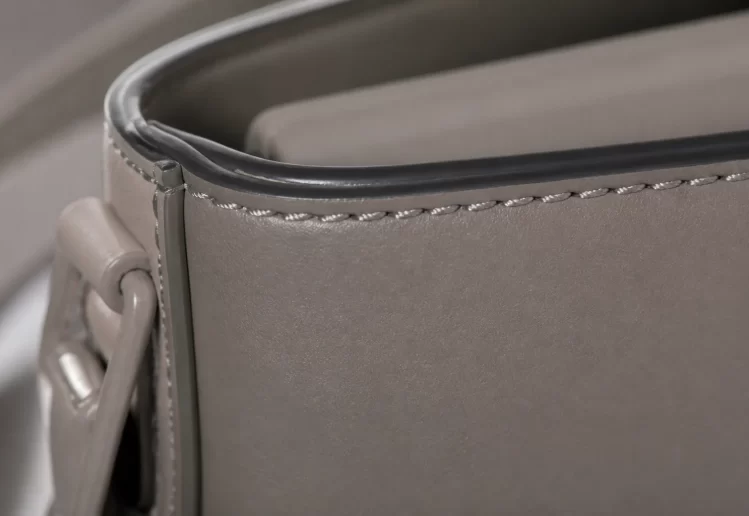
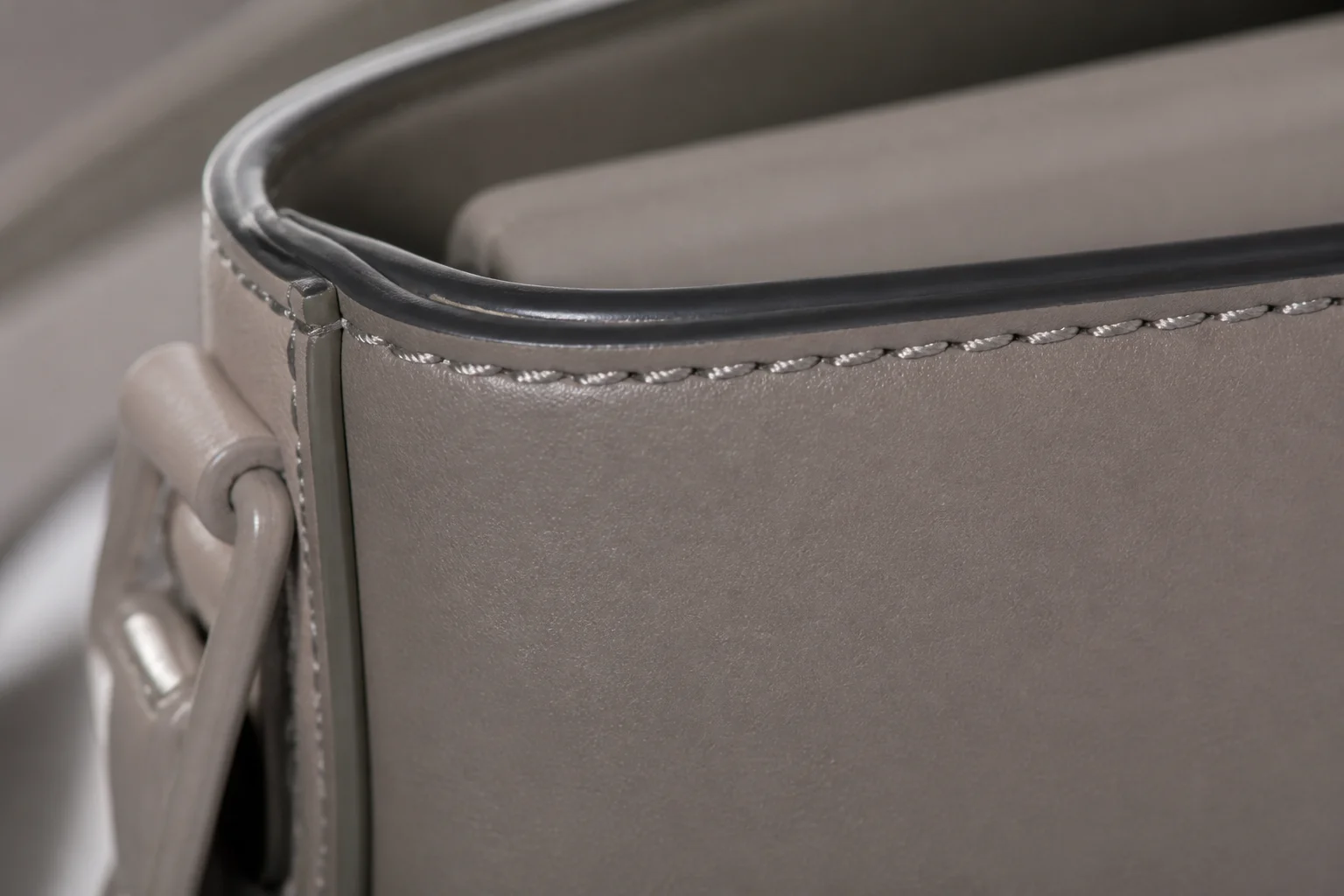
Edges carry a disproportionate share of the visual judgement on a quiet bag. Painted edges must be smooth, evenly coated and free of cracking at the fold; a single ragged edge undermines every other specification.
Painted edges are also the most common source of durability complaints, because paint that is applied too thinly or without adequate preparation cracks at flex points. Two coats with proper drying between them cost more than one heavy coat and last substantially longer.
Stitching
Tonal stitching means the thread is judged on its execution rather than its colour. Stitch density, alignment to the edge, back-stitch neatness and the absence of skipped stitches all become visible quality signals.
A higher stitch density per inch improves the appearance but increases sewing time and thread consumption, and can weaken the material if the perforations are too close together. The specification should set a density band rather than a single target.
| Specification | Quiet luxury standard | Economy standard | Cost effect |
|---|---|---|---|
| Surface finish | Matte or soft-touch, verified on substrate | Standard semi-gloss | Material premium |
| Edge paint | Two coats, sanded between | Single coat | Labour and drying time |
| Stitch density | Higher band, tonal thread | Standard density | Sewing time, thread use |
| Stitch alignment | Consistent distance from edge | Visual tolerance | Operator skill, jigs |
| Hardware | Small, tight tolerance, quality plating | Standard stock parts | Component cost |
| Lining | Tonal, cut and joined neatly | Contrast, minimal finishing | Material and labour |
Hardware and the small details
Because there is little hardware, each piece is examined. Zip tape colour, pull shape, the finish on a magnetic closure and the way a D-ring sits against the material all contribute to the impression.
Proportions and pattern accuracy
A plain bag is judged partly on line. If the gusset is slightly narrow or the flap slightly short, there is nothing to distract from it. Pattern accuracy and grading discipline therefore belong on the quiet luxury specification list.
Where PU Leather Helps and Hurts
PU leather is a coated fabric, and that fact determines both what it can do well and where it needs help to reach a quiet luxury standard.
What PU leather does well
Coated fabric gives excellent colour consistency within a lot, uniform surface appearance and a wide choice of finishes including matte and soft-touch. It also holds an embossed grain precisely and resists the variation found in natural hides.
For a quiet range produced at volume, this consistency is a genuine advantage. The look depends on uniformity, and uniformity is what coating does best.
Where it falls short
The limitation is in the hand and the edges. Coated fabric has a characteristic feel that experienced buyers recognise, and its cut edges cannot be burnished the way leather edges can, so they depend on paint or folding.
It also creases differently. Where natural leather develops a patina and soft folds, coated fabric can show sharp creases and, in poor quality material, delamination or cracking at repeated flex points.
| Attribute | PU leather | Natural leather | Implication for quiet ranges |
|---|---|---|---|
| Colour consistency | High within a lot | Variable by hide | Advantage for PU at volume |
| Hand and drape | Recognisably synthetic | Soft, developing | Main gap to manage |
| Edge finishing | Paint or fold required | Can be burnished | PU needs a strong edge process |
| Creasing | Sharp folds possible | Soft patina | Design to avoid sharp flex |
| Abrasion | Good to very good | Good | Comparable when specified well |
| Water resistance | Generally good | Requires treatment | Advantage for PU |
| Weight | Can be lighter | Generally heavier | Useful for large shapes |
Choosing the right grade
Not all PU leather is suitable for a quiet range. The base fabric, the coating thickness, the surface treatment and the flexibility all affect how the material reads and how it wears, and the cheapest grades will not support the look at any level of factory skill.
The specification should name the base fabric, the coating type, the finish and the flex performance expected, rather than only a colour and a grain. Without those details the factory will quote to the cheapest material that matches the appearance.
Designing around the material’s limits
The most effective response to the hand and creasing limitations is design. Fewer sharp folds, softer construction, generous curves and edge treatments that avoid tight radii all reduce the points where coated fabric looks least like leather.
A quiet luxury bag in PU leather is achievable. It requires selecting a grade that supports the look and designing so the material is not asked to behave like something it is not.
What It Costs to Close the Gap
Quiet luxury does not have to be expensive, but the money moves. It comes out of branding and decoration and goes into material grade, edge work, sewing time and inspection.
The cost is redistributed, not necessarily added
A loud bag spends on plaques, decorative hardware, printed linings and multiple trim colours. A quiet bag spends little on those and more on the outer material grade, edge finishing, thread, tonal lining and inspection time.
Whether the total rises depends on how far the specification is pushed. A restrained, well-made bag in a good PU grade can be produced at a similar cost to a busier design; a bag that attempts to match leather-level finishing on a coated fabric will cost clearly more.
Where the money actually goes
The largest increases are usually in edge treatment, sewing time and inspection. Edge paint applied in two coats with sanding between them is a manual, time-consuming operation, and it is the single most reliable improvement available.
| Cost area | Change versus a loud design | Reason |
|---|---|---|
| Material grade | Higher | Better base fabric and finish |
| Branding hardware | Much lower | No plaque or logo plate |
| Decorative hardware | Lower | Fewer pieces, but better quality |
| Edge finishing | Clearly higher | Two coats, sanding, drying |
| Sewing time | Higher | Density, alignment, tonal thread |
| Lining | Neutral to higher | Tonal and neatly joined |
| Inspection | Higher | Tighter acceptance criteria |
| Packaging | Higher | Dust bag and protected presentation |
The cheapest meaningful upgrade
If only one thing can be improved, it should be the edges. Edge quality is visible at a glance, it is the most common failure point in use, and it responds directly to process discipline rather than to material cost.
The second most effective upgrade is the material grade, because it improves the hand, the drape and the crease behaviour at the same time. Together these two changes account for most of the difference between a bag that reads as quiet luxury and one that merely lacks a logo.
Where not to spend
Money spent on elaborate interior organisation, multiple pockets and complex internal structure is largely invisible in a quiet bag and does not improve the impression. It also adds weight and failure points.
Similarly, oversized packaging and heavy presentation boxes add cost without contributing to the product’s perceived quality once it is in use. A well-made dust bag and clean wrapping are sufficient.
The quiet luxury premium is bought with process, not with decoration. Two extra minutes of edge work will do more for the product than any additional hardware.
Briefing a Factory Properly
Most quiet luxury projects that disappoint do so at the briefing stage, not in production. The factory produces what was specified, and the specification did not describe the look.
Write the finish, not the adjective
Terms like premium, luxury and high quality carry no production meaning. The brief should state the finish type, the gloss level, the grain depth, the base fabric and the flex requirement, using the factory’s own material references where possible.
Where an adjective is unavoidable, attach a physical reference: an approved dip, a previous bag, or a competitor sample with the specific attribute identified. A reference is enforceable; an adjective is not.
Specify the edge process explicitly
The brief should state the number of coats, whether sanding between coats is required, the drying time allowed and the acceptance criteria for cracking at flex points. Left unspecified, the factory will apply the process it uses for its standard work.
| Brief element | Weak version | Enforceable version |
|---|---|---|
| Finish | Premium matte look | Matte, gloss level 2-3, grain reference attached |
| Material | Good quality PU | Base fabric, coating type, flex cycles specified |
| Edges | Neat edges | Two coats, sanded between, no cracking at 180-degree fold |
| Stitching | Fine stitching | Density band, tonal thread reference, edge distance |
| Hardware | Quality hardware | Plating specification, part numbers, salt spray hours |
| Inspection | Good quality | AQL level, defect classification, critical defect list |
Set the acceptance criteria before the first sample
Defects should be defined before sampling, not discovered at inspection. A written list of critical, major and minor defects, with photographs of acceptable and unacceptable examples, removes most of the argument later.
Inspect at the right stage
For quiet ranges, inspection at final packing is too late. Edge quality, stitch alignment and shade consistency should be checked during production, when correction is still possible.
Quality Control for a Restrained Product
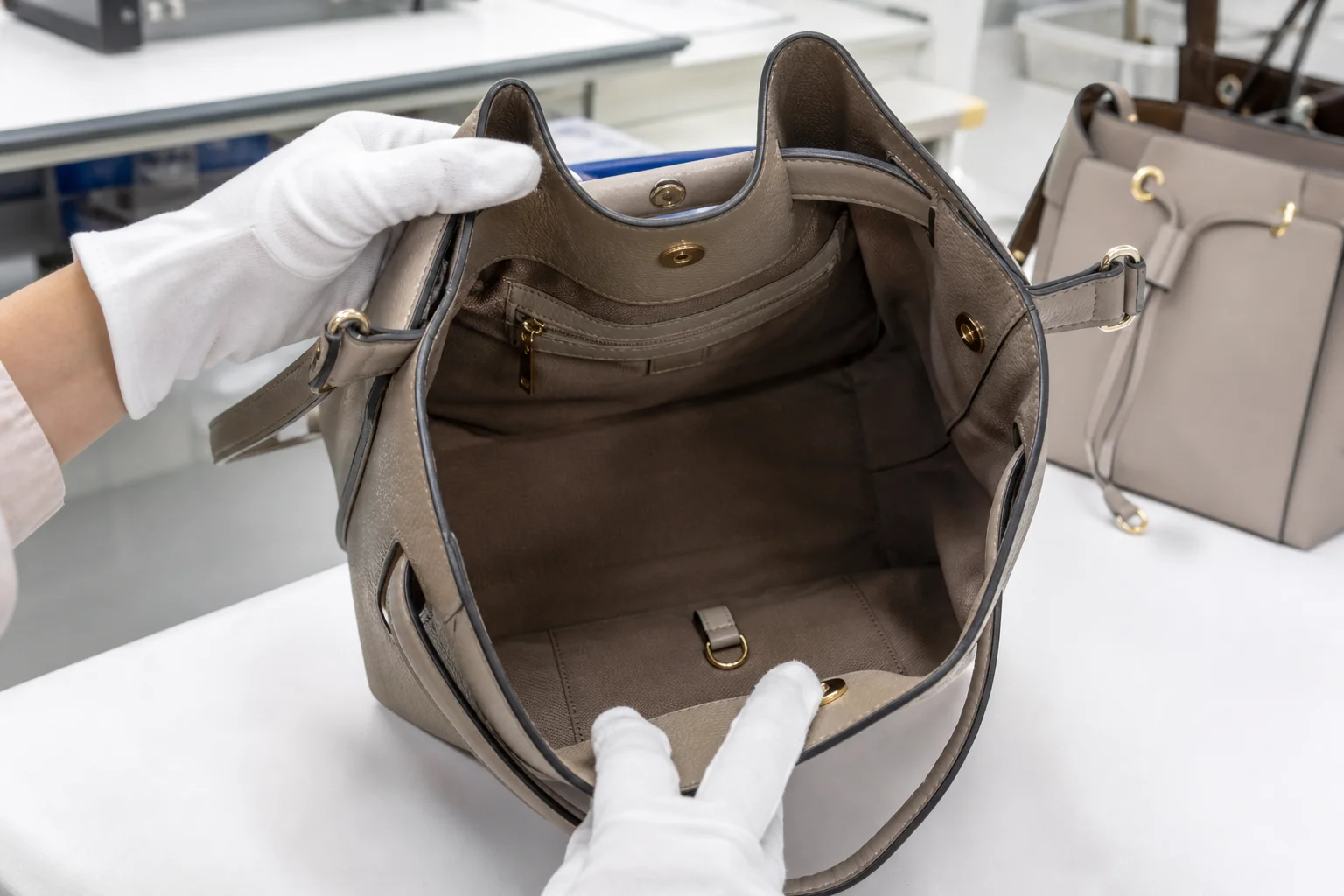
Inspection for a quiet bag follows the same principles as any other programme but with a tighter view of what counts as a defect. The features that would be decorative on a loud bag are structural on a plain one, so acceptance criteria need to be adjusted rather than inherited.
Why standard inspection is not enough
A standard AQL inspection samples at final packing and judges against a general defect list. On a quiet bag the most damaging issues, such as uneven edge paint or slightly wandering stitch lines, often fall below the threshold of that list.
The criteria should be rewritten for the product. Edge paint coverage, stitch alignment to the edge, tonal shade consistency across panels and the cleanliness of unbranded surfaces should all be named explicitly as inspected characteristics.
Setting defect classes for a plain product
Critical defects in a quiet range typically include cracked edge paint, visible shade mismatch between panels and any surface mark left by removed branding. Each of these defeats the look rather than merely reducing its quality.
Major defects cover stitch wander, hardware plating marks and lining misalignment. Minor defects are the surface imperfections that would be acceptable on a busier product but are more visible here.
In-line checks that catch what final inspection cannot
Edge painting and sewing are the two operations where a problem becomes unfixable once the bag is assembled. Both should be checked during production, ideally at the end of the operation and before the next stage consumes the part.
A simple in-line check of one panel per bundle for edge coverage and stitch alignment catches process drift while correction is still cheap. At final inspection the same defect means reworking or rejecting a finished bag.
| Stage | What to check | Why it matters at this stage |
|---|---|---|
| Cutting | Shade consistency across panels | Mixed panels cannot be corrected later |
| Edge painting | Coverage, smoothness, drying | Cracking appears after assembly |
| Sewing | Stitch density, alignment | Unpicking damages the material |
| Assembly | Hardware fit and finish | Plating damage is visible |
| Final | Overall appearance, function | Last chance before packing |
Defining defects before production
The critical, major and minor classification should be agreed in writing before the first bulk order, with photographs of acceptable and unacceptable examples for each. This is what makes an inspection objective rather than a matter of opinion.
Recording what was accepted
Keeping approved reference samples of edge finish and stitch quality gives both parties a physical standard to compare against. Where disputes arise later, the retained reference settles them faster than any written description.
On a plain bag, every operation is a visible operation. Inspection has to be designed for that, not borrowed from a busier product.
Development Sequence and Timeline
A quiet range takes slightly longer to develop than a decorative one, because more of the effort sits in process trials rather than in design. The sequence below is typical for a PU leather programme of this type.
The sequence a quiet range follows
Material and finish selection comes first, because every subsequent decision depends on how the surface behaves. Edge trials follow, since the edge process must be proven on the actual material before patterns are finalised.
Only then does the prototype make sense. Building a prototype on an unproven edge process produces a sample that cannot be replicated in bulk, which is one of the most common reasons a quiet range loses its look between sample and production.
| Stage | Typical duration | Output |
|---|---|---|
| Material and finish approval | 2-3 weeks | Approved dip on production substrate |
| Edge process trial | 1-2 weeks | Proven process and acceptance criteria |
| Prototype | 2-3 weeks | Sample with production-feasible finishing |
| Fit and function review | 1 week | Corrections list |
| Pilot run | 1-2 weeks | Small batch proving consistency |
| Bulk production | 4-6 weeks | Delivery |
Where the calendar usually slips
The usual slippage is at the edge trial, because it is treated as part of sampling rather than as a separate process to be proven. When it fails, the whole schedule moves and the pressure to accept a compromise increases.
The second common slippage is material re-approval after a finish change. A late change of finish invalidates the earlier dip and restarts the approval, which is why the finish should be locked before anything else proceeds.
Pilot runs before bulk
A pilot run of a small quantity is the cheapest way to confirm that the specification survives normal production conditions. It exposes edge consistency, stitch alignment and shade variation in a way that a single sample cannot.
Where the pilot is skipped, the first bulk delivery effectively becomes the pilot, and any correction is applied to goods that have already consumed material and labour.
Aligning the calendar with the selling season
The sequence above should be placed backwards from the shelf date, with the pilot run finishing at least two weeks before bulk starts. Where that buffer is missing, a pilot correction becomes a delivery delay.
A quiet range is proven in the pilot, not in the sample. The sample shows what is possible; the pilot shows what is repeatable.
Where the Approach Breaks Down
Quiet luxury is not universally applicable, and applying it in the wrong context produces a product that is expensive to make and difficult to sell.
Retail environments that need visual signal
In a crowded shop floor or a marketplace listing grid, a restrained bag can be overlooked. Where the customer is choosing quickly from many similar options, a tonal product with no visible branding may lose to a louder one regardless of quality.
The look works best where the product can be handled, or where the brand already has enough recognition that restraint reads as confidence rather than as absence.
Price points where the expectation cannot be met
Below a certain price point, the material and process required for a convincing quiet bag are not affordable, and attempting the look produces a plain bag that reads as basic. In that range, a well-executed simpler design is a better commercial choice than a compromised imitation.
Categories where function dominates
For work bags, travel bags and children’s products, function, durability and visible features drive the purchase more than restraint. Quiet styling is a secondary consideration there, and over-applying it can remove the features customers are looking for.
| Situation | Quiet luxury fit | Better alternative |
|---|---|---|
| Premium retail with handling | Strong | Not applicable |
| Established brand, restrained range | Strong | Not applicable |
| Crowded marketplace listing | Weak | One clear visual signature |
| Entry price point | Weak | Simple, well-made, honest design |
| Functional work and travel | Partial | Restraint plus visible function |
| Gifting and promotional | Weak | Clear branding where appropriate |
The risk of looking unfinished
There is a narrow difference between a bag that is deliberately plain and one that looks incomplete. Without tonal stitching done well, clean edges and accurate proportions, restraint reads as a lack of finishing rather than as a choice.
Using Quiet Luxury Commercially
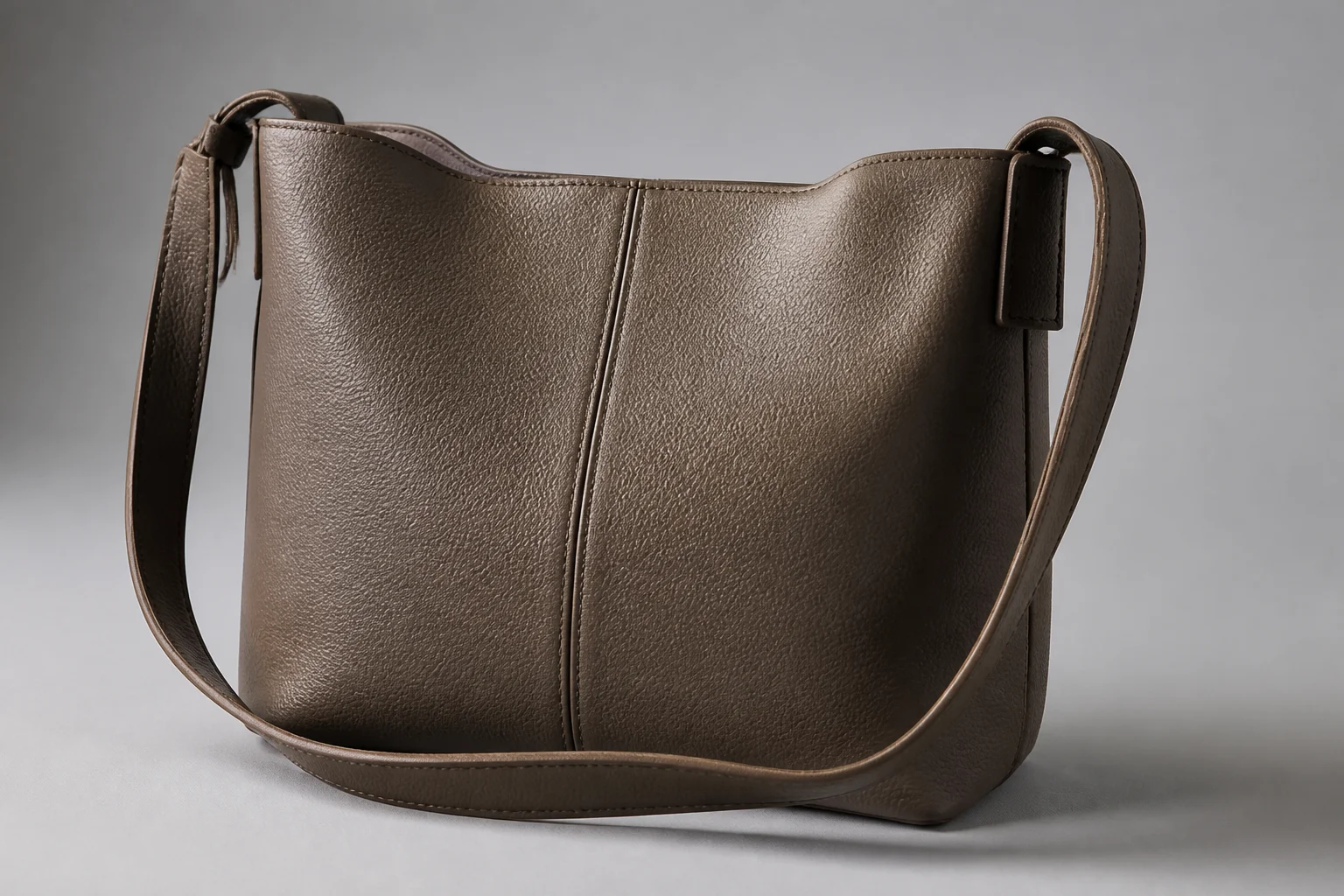
The commercial value of the approach lies in margin protection and longevity rather than in novelty, and it should be planned accordingly.
Price on execution, not on absence of features
A quiet bag can carry a higher price than a busier one at the same material cost, because the customer is paying for the quality of execution. That only holds if the execution is visibly better.
Where the price premium is claimed without the corresponding edge, stitch and material quality, the product is simply expensive and plain, and repeat purchase does not follow.
Extend the range slowly
Quiet ranges work well as small, coherent collections. Adding shapes gradually, within the same material and trim platform, preserves the consistency the look depends on and keeps material commitments low.
Support the claim with evidence
Where the product claims durability or material quality, the specification should be able to back it: flex test results, abrasion figures, hardware salt spray hours. These are the facts a buyer can use to justify the price to a retail partner.
| Commercial lever | How it works | What it depends on |
|---|---|---|
| Price premium | Execution justifies a higher price | Visible edge and stitch quality |
| Repeat purchase | Durability earns the second sale | Stress points reinforced |
| Range coherence | Few shapes, one platform | Material and trim consistency |
| Lower markdown | Timeless shades sell across seasons | Neutral, tonal palette |
| Retail confidence | Test data supports the claim | Documented test results |
| Brand credibility | Restraint reads as confidence | Existing brand recognition |
FAQ
What does quiet luxury mean for a bag manufacturer?
It means the value has to be carried by material, edges, stitching and consistency rather than by logos or decorative hardware. In practice it is a tighter tolerance specification applied across the whole product.
Can PU leather achieve a quiet luxury look?
Yes, where a suitable grade is chosen and the specification is disciplined. PU leather offers excellent colour consistency and finish options; the main gaps are the hand and the cut edges, both of which can be managed through grade selection and process.
Which specification matters most?
Edge treatment. It is visible at a glance, it is the most common durability failure, and it responds directly to process discipline rather than to material cost. Two coats with sanding between them is the single most effective upgrade.
Does quiet luxury cost more to produce?
Not necessarily. Money moves from branding hardware and decoration into material grade, edge work, sewing time and inspection. A restrained well-made bag can cost about the same as a busier design; matching leather-level finishing on coated fabric will cost more.
Why does tonal stitching matter so much?
Because tonal thread is judged on execution rather than colour. Stitch density, alignment to the edge and back-stitch neatness all become visible, so the sewing standard is exposed rather than disguised.
Is quiet luxury suitable for every market?
No. It works where the product can be handled or the brand is already recognised. In crowded listing grids or at entry price points, restraint can read as unremarkable or unfinished.
How should a buyer brief a factory for this look?
By specifying finish, material grade, edge process, stitch density, hardware specification and acceptance criteria in measurable terms, with physical references attached. Adjectives without references cannot be enforced.
What is the biggest risk in production?
That the bag looks unfinished rather than deliberately plain. Without clean edges, accurate proportions and even tonal stitching, the absence of branding reads as absence of quality.
How many shapes should a quiet range contain?
Start small and add gradually within the same material and trim platform. A compact coherent collection preserves the consistency the look depends on and keeps material commitments manageable.
Can a quiet bag still carry a brand?
Yes, through debossed marks, tonal woven labels, lining prints and hardware engraving. The mark should be discoverable rather than announced, which is consistent with the approach.
What tests support a quiet luxury claim?
Flex and crack resistance for the coating, abrasion figures for the surface, seam strength, hardware salt spray hours and handle attachment load tests. These are the figures a retail partner will ask for.
How does quiet luxury affect markdown risk?
It usually reduces it, because tonal neutral palettes remain sellable across seasons. The reduction depends on the palette being genuinely neutral rather than following a short-lived shade.
Developing a quiet luxury range in PU leather?
Send your specification to info@gionar.com and we will advise on material grade, edge process and the inspection criteria that hold the look in production.