Does the Backing Fabric Decide How Long PU Leather Bags Last?
The coated surface of a PU leather bag is the part everyone examines. The backing fabric underneath it is the part that decides whether the bag survives two seasons or six. That asymmetry explains most of the durability differences between bags that look identical on a shelf.
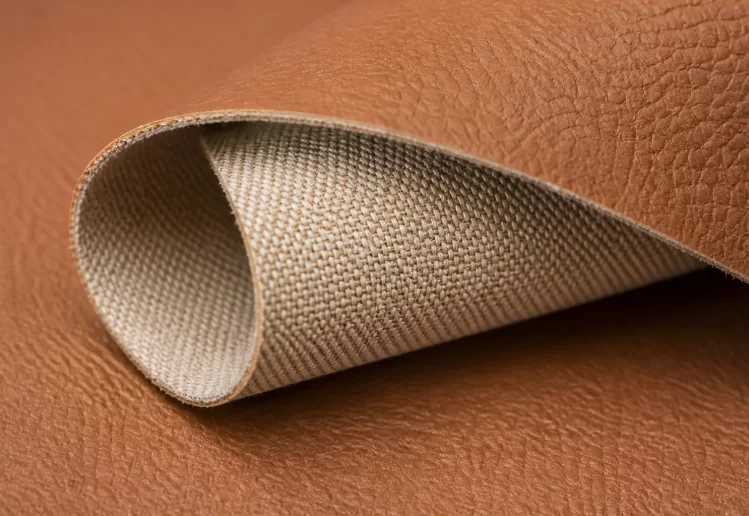
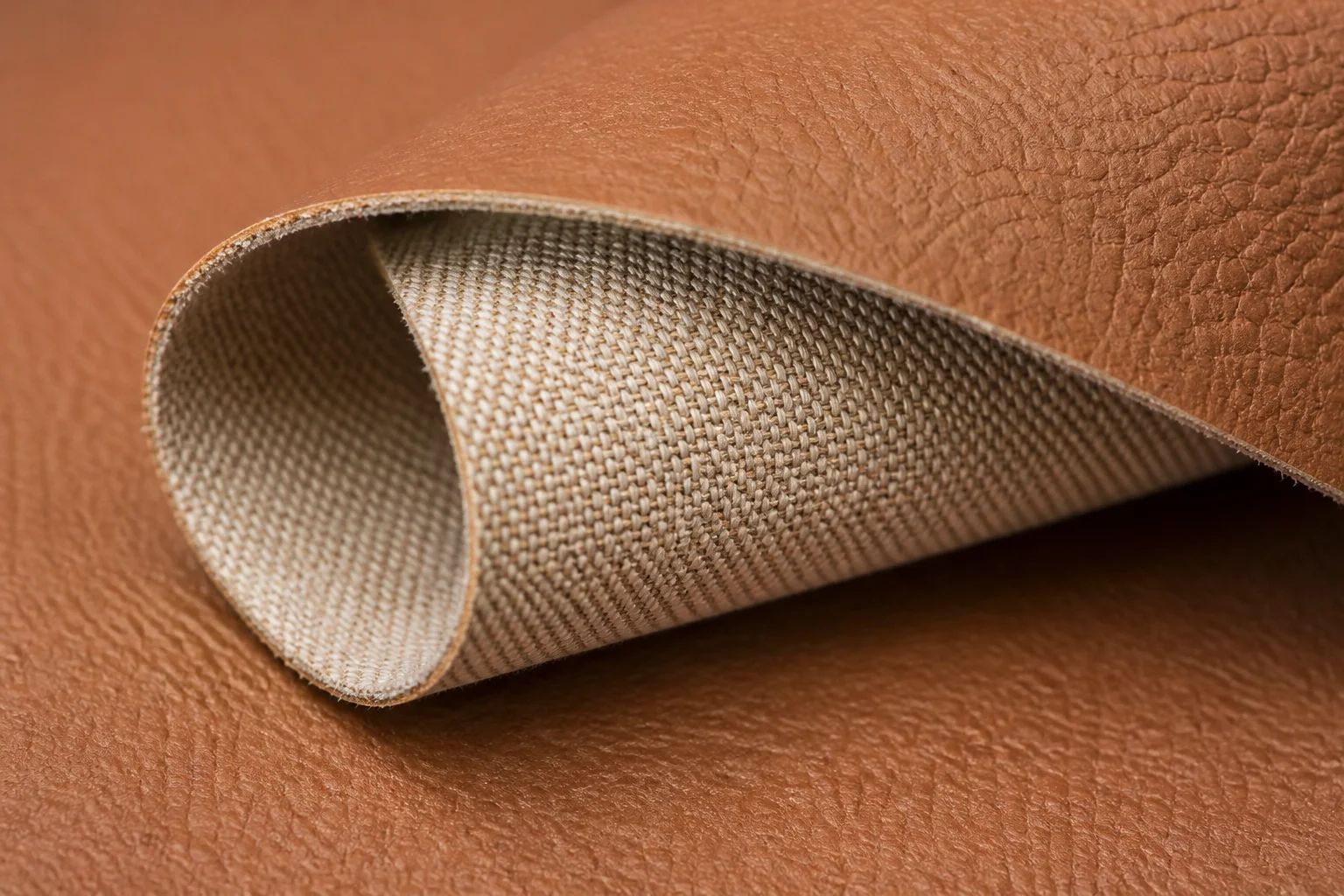
PU leather is a composite. A polyurethane coating provides the appearance and the surface performance, and a textile substrate provides the strength, the dimensional stability and the tear resistance. The coating alone is a thin film; without a backing it cannot hold a stitch or carry a load. The backing alone has no surface. Durability is a property of the bond between them and of the substrate’s own resistance to fatigue.
In sourcing practice the backing is usually the least specified element of the material. Buyers ask for a colour, a hand feel, a thickness and sometimes a martindale result. The substrate is frequently left to the supplier, who chooses on cost and availability. When a bag later splits at a seam, shines along a fold or delaminates at a corner, the cause usually traces back to that unexamined choice.
This article sets out what a backing fabric does, how the three common substrate types differ, where each one fails, how backing interacts with stitching, humidity and weight, what can be tested before an order is placed, and how a buyer should write a backing requirement into a specification. The focus is on decisions that can be made at sampling stage, when a change costs nothing.
- What the Backing Fabric Actually Does
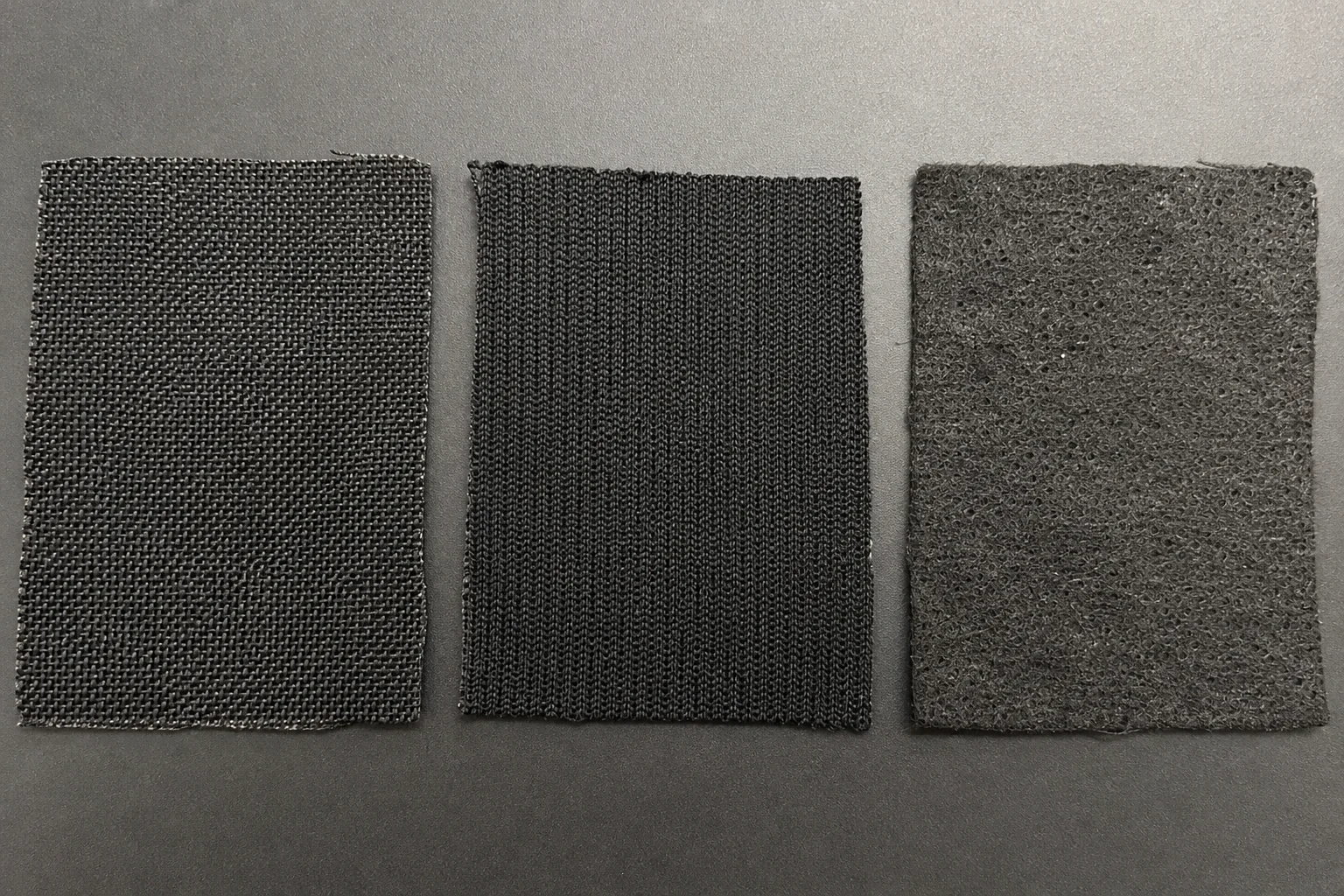
- The Three Backing Types in Use
- How Backing Determines Flex and Creasing
- Peel Strength and Delamination
- Moisture, Humidity and the Backing
- Backing, Stitching and Seam Strength
- Weight, Hand Feel and Cost
- How Construction Type Changes the Requirement
- Testing and Specifying at Order Stage
- Where Backing Failures Show Up
- FAQ
What the Backing Fabric Actually Does
The substrate carries four jobs at once, and each one is invisible until it fails. Understanding them separately makes it easier to see why a cheaper backing is not simply a lighter version of a better one.
It carries the load
Coating films have low tensile and tear strength relative to textiles. When a bag is lifted, the load travels through the substrate, not the surface. A strap anchor, a handle attachment and a base panel all depend on the backing to distribute force rather than concentrate it at the stitch line.
This is why two bags with the same coating can behave completely differently under load. The visible material is identical; the hidden one is not.
It holds the stitch
Stitches need fibre to grip. A coating alone will not retain a seam under tension, and a loosely bonded or very thin substrate allows stitches to pull through or the coating to tear along the needle line.
Seam performance is therefore a joint property of thread, stitch density and substrate. Changing the backing without changing the seam specification alters the outcome.
It stabilises dimension
Coated films expand and contract with temperature and humidity. The substrate restrains that movement. A stable woven backing keeps a bag panel flat; an unstable one allows the panel to grow, ripple or distort after cutting.
Dimensional instability appears as wavy seams and mismatched panels, which are usually blamed on the sewing floor when the cause is upstream in the material.
It controls how the surface reads
Substrate texture transfers through a thin coating. A coarse weave shows a pattern on the surface, while a fine substrate gives the smooth finish that reads as leather. This is why the same coating can look premium on one substrate and synthetic on another.
For buyers positioning a style at a higher price, substrate fineness is a visual decision as much as a functional one. It is visible in the showroom before any durability question arises.
It determines how the bag ages
Ageing in PU leather is mostly mechanical. Repeated flexing fatigues the bond between coating and backing, and the surface begins to crack along fold lines. A backing that flexes with the coating shares the strain; a stiff or weakly bonded one forces the coating to absorb it alone.
This single mechanism explains the common pattern of a bag that looks new for a year and then fails quickly along the same crease.
The Three Backing Types in Use
Almost all PU leather for bags uses one of three substrate families. They are not interchangeable, and the correct choice depends on the construction and the price position rather than on preference.
Woven backing
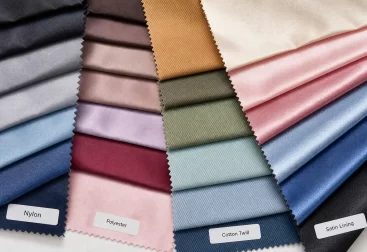
A woven substrate, usually a plain or twill polyester weave, offers the best balance of strength, dimensional stability and flex resistance. It is the default choice for structured bags, straps and any panel that carries load.
Its limitation is cost and slight surface show-through. On very soft constructions a visible weave pattern can telegraph through the coating, which is why some soft styles use a different substrate.
Knitted backing
A knitted substrate stretches more and drapes better. It suits soft, unstructured bags where flexibility matters more than rigidity, such as slouchy shoulder styles and lightweight totes.
The trade is dimensional stability and seam strength. Knitted backing recovers from stretch but can grow under sustained load, so it is a poor choice for handles and base panels.
Blended and coated substrates
Some suppliers offer blended substrates that combine a woven base with a non-woven surface layer, aiming to reduce cost while keeping stability. They can work well in mid-range styles, provided the specification names the construction rather than the trade name.
Trade names are the main risk here. Two materials sold under the same commercial label can differ in construction between batches, which is why the physical specification matters more than the name on the invoice.
Non-woven backing
Non-woven substrates are the lowest cost option and are common in promotional and entry-price bags. They are dimensionally stable and inexpensive, but they have limited tear strength and poor flex fatigue resistance.
They perform acceptably in low-load applications where the bag is not carried heavily, and poorly wherever repeated flexing or a concentrated load is involved.
| Property | Woven | Knitted | Non-woven |
|---|---|---|---|
| Tensile strength | High | Moderate | Low |
| Tear resistance | High | Moderate | Low |
| Dimensional stability | High | Low to moderate | Moderate |
| Flex fatigue resistance | High | High | Low |
| Drape and softness | Moderate | High | Low |
| Relative cost | Higher | Moderate | Lowest |
| Best use | Structure, straps, bases | Soft bodies | Low-load promotional |
The backing is chosen once, at sampling, and then decides the bag’s service life for every unit that follows.
How Backing Determines Flex and Creasing
Creasing is the most visible ageing effect in PU leather, and it is governed almost entirely by how the substrate behaves when the composite is folded repeatedly.
The two-layer strain problem
When a composite bends, the outer layer stretches and the inner layer compresses. If the two layers move together, the strain is shared. If they move differently, the interface absorbs it and the bond begins to fail.
A woven substrate with good recovery moves with the coating. A stiff substrate resists, concentrating strain in the coating at the fold line, which is where the first fine cracks appear.
Why creases become permanent
Every material takes a set when held in a folded position. PU composites take a set faster when the substrate has low elastic recovery, which is typical of non-woven and of tightly woven substrates with insufficient flexibility.
Permanent creasing is not only cosmetic. Once a fold line is established, repeated flexing concentrates at that line, and the coating fatigues there first.
Design choices that reduce the risk
Fold lines can be moved away from high-flex areas, and curved seams distribute strain better than sharp corners. Panel size also matters: a large unsupported panel flexes more than a small one divided by seams.
These are pattern decisions, and they are free at development stage. Made after tooling, they become expensive changes to a live style.
What to ask the supplier
The useful questions are about flex testing and about the substrate specification, not about appearance. A supplier who can name the substrate construction and its weight is working from a controlled material; one who cannot is supplying on appearance alone.
| Flex behaviour | Woven | Knitted | Non-woven |
|---|---|---|---|
| First fine cracks | Late | Late | Early |
| Crease recovery | Good | Good | Poor |
| Fold-line concentration | Low | Low | High |
| Surface after 2 seasons | Usually intact | Usually intact | Often cracked at folds |
Peel Strength and Delamination
Delamination is the failure most often reported as a manufacturing defect, and it is almost always a bonding or substrate issue rather than a coating issue.
How the bond is made
Most PU leather is produced by coating the substrate directly, or by laminating a finished film to it with adhesive. Direct coating gives a continuous interface; lamination depends on an adhesive layer and on the pressure and temperature of the nip.
Both routes can produce a durable bond. Both can also produce a weak one, and the difference is not visible on a swatch. It shows up in peel testing and eventually at the fold lines of a finished bag.
Where delamination starts
Failure typically begins at an edge, a stitch perforation or a fold. Edges expose the interface to handling; stitch holes create stress concentrations; folds concentrate peel force. From any of these points the separation propagates.
This is why delamination is often reported as a corner or edge problem rather than a general one. The bond may be adequate across the panel and insufficient at the boundary.
Adhesion and the coating type
Different coating chemistries bond differently to different substrates. A formulation that adheres well to woven polyester may bond poorly to a non-woven with a different binder. Substituting the substrate without re-verifying adhesion is a common cause of field failure.
The practical rule is that substrate changes require re-testing, even when the coating is unchanged and the appearance is identical.
| Failure point | What happens | Underlying cause | Prevention |
|---|---|---|---|
| Cut edge | Coating lifts from the substrate | Weak bond at boundary | Edge sealing or folded seam |
| Stitch line | Coating tears along needle holes | Perforation plus low tear strength | Higher substrate tear strength |
| Fold line | Surface separates along the crease | Peel force at the fold | Flexible substrate, flex testing |
| Strap anchor | Local separation under load | Concentrated stress | Backing patch and bar-tack |
| Base corner | Coating scuffs through | Abrasion plus weak bond | Reinforced base panel |
What a peel result tells you
A peel test measures the force required to separate the layers. The number matters less than its consistency: a material with a moderate but uniform result is more reliable than one with a high average and occasional weak zones.
Consistency is a production question. It depends on coating weight control, nip pressure and substrate uniformity, which is why the same specification from two suppliers can behave differently in the field.
Moisture, Humidity and the Backing
Textile substrates absorb and release moisture, and that behaviour has consequences for a bag that lives in a humid climate or a wet season.
Dimensional movement
Woven and knitted substrates can change dimension as humidity changes. Because the coating does not move with them, the composite can curl, ripple or develop a wavy seam.
This is a common complaint in tropical markets and in shipments that cross climate zones. The bag was flat when packed and distorted when unpacked.
Mildew at the interface
Moisture trapped between coating and substrate creates conditions for mildew, particularly in bags stored in humid warehouses or shipped in sealed cartons. The visible result is staining or odour that emerges after delivery.
Prevention is mostly about drying, storage and treatment rather than about the coating. A treated substrate and a dry packing environment do more than a surface additive.
Hydrolysis in warm climates
In hot and humid conditions the coating itself can degrade through hydrolysis, independent of the substrate. The backing does not cause it, but a stable substrate keeps the panel flat while the coating weakens, which makes the failure easier to detect before it becomes a return.
For tropical markets, hydrolysis resistance belongs in the material specification alongside the substrate requirement.
What buyers can control
Buyers can specify substrate treatment, require drying before packing, and control carton sealing and desiccant use. These are cheap measures with a large effect on arrival condition.
| Moisture risk | Where it appears | Practical control |
|---|---|---|
| Dimensional change | Wavy seams, curled panels | Stable substrate, conditioned cutting |
| Mildew | Staining, odour after shipping | Substrate treatment, dry packing |
| Adhesion loss | Edge lifting in humid storage | Dry storage, sealed cartons |
| Surface bloom | Haze on the coating | Ventilated storage before packing |
Backing, Stitching and Seam Strength
Seams are where the substrate is most directly tested, because every stitch perforates it and every load passes through the perforation pattern.
Stitch density and substrate
Fine substrates need higher stitch density to develop strength, but denser stitching also perforates more material and can weaken a thin substrate. The optimum depends on both variables together.
This is why a seam specification copied from one material to another often underperforms. The stitch count is right for the original substrate and wrong for the new one.
Reinforcement at load points
Handles, strap anchors and trolley straps concentrate load on small areas. A backing patch behind the anchor distributes force across a wider area and prevents the coating from tearing at the top of the stitch line.
The patch is invisible and cheap. Its absence is one of the most common causes of a handle pulling out of an otherwise sound bag.
Seam types that suit coated fabric
Bound and folded seams hide the cut edge and protect the interface. Plain seams leave the edge exposed, which is where delamination usually begins.
On higher-wear areas, a bound seam is worth the additional operation. On interior seams it rarely justifies the cost.
Weight, Hand Feel and Cost
Substrate weight drives most of the material’s physical behaviour, and it is the specification most often left unstated.
What substrate weight changes
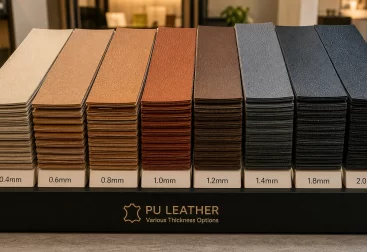
Heavier substrates give more strength, better tear resistance and a firmer hand. They also add weight to the finished bag and raise material cost per metre.
Lighter substrates reduce cost and weight but limit where the material can be used. They are usually acceptable for body panels and unsuitable for straps and bases.
Matching weight to position
A single fabric across a whole bag is convenient but rarely optimal. Using a heavier substrate for straps and base panels and a lighter one for the body is a standard way to control cost without weakening the load path.
This split is invisible to the customer and is one of the clearest markers of a manufacturer’s experience with a construction.
| Substrate weight | Strength | Hand | Cost | Best position |
|---|---|---|---|---|
| Light | Low | Soft | Lowest | Body panels, linings |
| Medium | Moderate | Balanced | Moderate | General body, pockets |
| Heavy | High | Firm | Higher | Straps, handles, bases |
| Very heavy | Very high | Stiff | Highest | Structural panels, frames |
Why hand feel is a buyer decision, not a factory one
Two substrates of equal strength can feel entirely different, and which one is correct depends on the market the bag is sold into. A firm hand reads as quality in some markets and as stiffness in others.
This is a decision the buyer has to make explicitly, because a factory optimising for cost will choose the cheaper substrate that meets the strength requirement and leave the hand feel to chance.
The cost trade in plain terms
Upgrading the substrate is usually a small share of the finished bag cost, because the material is one input among labour, hardware and packing. It is rarely the line where a meaningful saving can be made without consequence.
Saving on the backing is therefore a poor trade. The saving is modest and the failure is visible, which makes it one of the least efficient places to reduce cost.
Saving on the backing is a small saving with a large consequence. It is one of the least efficient places to cut cost in a bag.
How Construction Type Changes the Requirement
The right substrate is not a property of the material alone. It depends on what the bag is asked to do, and different constructions load the backing in different ways.
Structured totes and work bags
These carry weight continuously and hold a shape. They need a woven substrate with enough body to keep the panel flat and enough tear strength to hold handle anchors under a sustained load.
Weight distribution matters more than absolute strength here. A base panel that sags under load is a structural failure even when the material itself has not torn.
Soft shoulder bags and slouch styles
These depend on drape, which pushes toward a knitted substrate. The risk moves from strength to dimensional stability and to fold-line cracking where the bag collapses in storage.
The practical compromise is a knitted body with a woven reinforcement at the strap anchor, so the softness is preserved where it is wanted and the load path is protected where it is not.
Backpacks and multi-load styles
Backpacks concentrate load at the harness attachment points and the base. They need the highest tear strength in the range, and they benefit most from backing patches and bar-tacks at every anchor.
This is also where a light substrate fails fastest, because a loaded backpack flexes constantly against the wearer’s back.
Small leather goods and crossbody styles
Small items carry little load, so strength is rarely the constraint. The priorities shift to surface fineness, edge behaviour and resistance to scuffing at corners.
A finer substrate with good abrasion resistance serves these better than a heavy one, which would make a small item feel disproportionate.
| Construction | Dominant load | Preferred substrate | Key risk |
|---|---|---|---|
| Structured tote | Sustained weight | Woven, medium to heavy | Base sag, anchor tear |
| Work bag | Weight plus equipment | Woven, heavy | Anchor tear, corner wear |
| Soft shoulder bag | Flex and drape | Knitted with woven anchors | Fold cracking, distortion |
| Backpack | Concentrated harness load | Woven, heavy | Anchor pull-out |
| Travel bag | Weight plus abrasion | Woven, heavy | Base and corner wear |
| Crossbody and small goods | Low | Fine woven | Corner scuff, edge lift |
Where a single substrate can serve a range
A medium woven substrate can cover most of a range acceptably, which simplifies purchasing and keeps the material cost predictable. The exception is always the load points, where a local reinforcement costs little and prevents the most common failure.
This is usually the best balance for a first order: one material, plus targeted reinforcement where the pattern demands it.
Testing and Specifying at Order Stage
Most backing problems are detectable before an order is placed, at a cost far below the cost of a field failure.
Tests that answer the question
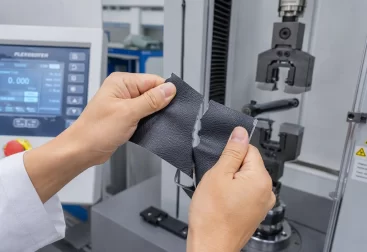
Peel strength addresses the bond. Tear strength addresses resistance to stitch pull-out. Flex fatigue addresses the fold behaviour that produces surface cracking. Abrasion addresses the base and corner wear.
These four cover most of the durability question. A supplier who can provide all four is working from a controlled process.
Write the substrate into the specification
The specification should state the substrate type, its construction and its weight, not only the coating colour and hand feel. Without that, the material is defined by appearance and the substrate floats with each production run.
Naming the substrate also fixes accountability. A failure can then be traced to a deviation rather than debated as a matter of opinion.
| Test | What it proves | When to require it |
|---|---|---|
| Peel strength | Bond between coating and substrate | Every new material and every substrate change |
| Tear strength | Resistance to stitch pull-out | Any style with load-bearing seams |
| Flex fatigue | Fold-line durability | Soft and frequently folded styles |
| Abrasion | Base and corner wear | Bags placed on the ground |
| Colour fastness to rubbing | Transfer risk | Dark colours and light linings |
| Hydrolysis resistance | Coating life in humid climates | Tropical and coastal markets |
What to record at approval
An approved material should be recorded with its substrate specification, its test results and a retained swatch. Approved samples without those records tend to drift, because the next batch is matched to appearance rather than to construction.
Where Backing Failures Show Up
Field failures follow a small number of patterns, and each pattern points back to a specific decision made at specification stage.
Handle and strap pull-out
The coating tears at the top of the stitch line and the anchor separates. The cause is usually a combination of thin substrate, missing backing patch and insufficient stitch pattern.
This is a load-path failure, not a material failure in isolation. It is avoided by reinforcing the anchor and specifying adequate tear strength.
Cracking along fold lines
Fine cracks appear along the crease where the bag has been folded repeatedly. The cause is a substrate that does not share strain with the coating, or a bond that has fatigued.
Soft styles sold flat-packed are at particular risk, because the fold is imposed in packing and repeated in use.
Edge and corner wear
The coating abrades through at the base corners and along cut edges. The cause is insufficient abrasion resistance plus an exposed interface at the edge.
Bound seams and reinforced base panels address most of it, and they are pattern decisions rather than material upgrades.
| Field symptom | Likely backing cause | Fix at specification stage |
|---|---|---|
| Handle pulls out | Low tear strength, no backing patch | Heavier substrate, reinforcement, bar-tack |
| Cracks along a crease | Poor flex fatigue or weak bond | Flexible substrate, flex test, avoid fold |
| Coating lifts at edge | Weak bond at boundary | Bound or folded seam |
| Wavy seams after shipping | Dimensional instability | Stable woven substrate, conditioned cutting |
| Mildew after storage | Moisture at the interface | Substrate treatment, dry packing |
| Base scuffs through | Low abrasion resistance | Reinforced base, heavier substrate |
What the pattern of failures tells a buyer
Failures that cluster at load points indicate a construction problem. Failures spread across the surface indicate a material problem. Failures concentrated along folds indicate a substrate or bond problem.
Reading the distribution is more useful than treating each complaint separately, because it points to the one decision that would have prevented most of them.
The short version
The backing fabric does decide how long a PU leather bag lasts, and it decides it before the first unit is cut. It is the cheapest element to specify properly and the most expensive one to discover late.
Buyers who name the substrate, require the four core tests and record what was approved get a material that behaves the same on the thousandth unit as on the first sample. That consistency, rather than any single property, is what durability actually means in production.
FAQ
Does the backing fabric really affect how long a PU leather bag lasts?
Yes, substantially. The backing carries load, holds stitches and governs flex behaviour. Most durability differences between visually identical bags trace back to the substrate and the bond rather than to the coating.
Which backing fabric is best for PU leather bags?
Woven polyester is the most reliable general choice for structured bags, straps and base panels. Knitted substrates suit soft bodies, and non-woven is limited to low-load promotional work.
How can I tell what backing a material has?
Look at the reverse side and ask the supplier for the construction and weight. A woven substrate shows a clear interlaced pattern, a knitted one shows loops, and a non-woven shows a random fibre mat.
Why does PU leather crack along fold lines?
Repeated flexing fatigues the bond between coating and substrate. A substrate that does not share strain concentrates it in the coating at the crease, where fine cracks develop first.
What causes delamination on a bag?
Usually a weak or inconsistent bond, often exposed at edges, stitch holes or folds. Substituting the substrate without re-verifying adhesion is a common cause.
Which test should I require before approving a material?
Peel strength for the bond and tear strength for stitch resistance are the minimum. Add flex fatigue for soft styles and abrasion for bags that rest on the ground.
Does substrate weight matter for the same coating?
Considerably. Heavier substrates give more strength and a firmer hand at higher cost and weight. Light substrates suit body panels but not straps or bases.
Should the same backing be used across an entire bag?
Not necessarily. Using a heavier substrate for straps and base panels with a lighter one for the body controls cost without weakening the load path.
How does humidity affect PU leather bags?
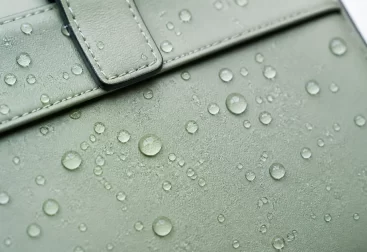
Textile substrates absorb moisture, which can cause dimensional change, edge lifting and mildew at the interface. Substrate treatment and dry packing are the practical controls.
Why do handles pull out of some bags?
Load concentrates at a small area. A thin substrate, a missing backing patch or an insufficient stitch pattern allows the coating to tear at the top of the stitch line.
Is a heavier backing always better?
No. Beyond the point the construction needs, extra weight adds cost and stiffness without benefit, and can make a soft style handle poorly.
How should the backing be written into a specification?
State the substrate type, its construction and its weight, together with the required test results. Appearance alone does not define the material and allows the substrate to change between runs.
Specifying PU leather for a bag programme and unsure which substrate to approve?
Send your construction and target market to info@gionar.com and we will recommend a substrate, the tests to require and the reinforcement points your pattern needs.