How Do Wholesale MOQs Change When You Add Custom Leather Colours?
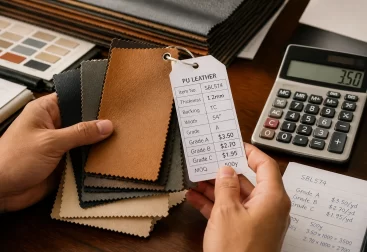
Adding a custom colour to a wholesale bag order looks like a design decision. Commercially it is a minimum order quantity decision, and it changes the arithmetic of the whole order.
Most buyers discover this late. They choose a style, agree a price at a stated MOQ, then ask for a specific colour and find that the minimum has doubled, the lead time has extended, and the price has moved. The colour was never free; it was simply not quoted at the same time as the style.
Why colour is a separate minimum
A style minimum is driven by pattern work, cutting setup and line time. A colour minimum is driven by coating or dyeing runs, material purchasing and, in some cases, a supplier’s own material minimum. These are different constraints that happen to be bundled together in a catalogue.
The two ways custom colour is produced
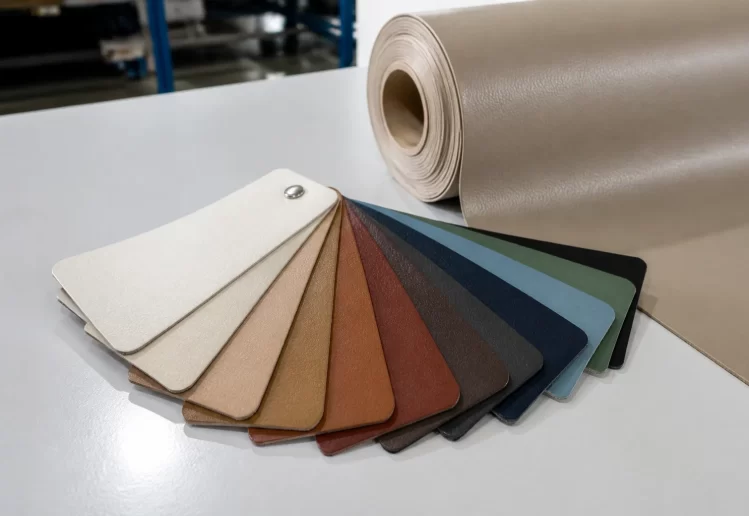
A colour can be made by coating or dyeing material specifically to a shade, which carries a batch minimum. Or it can be selected from a supplier’s existing colour range, which carries only the buyer’s own order minimum. These two routes have very different cost and quantity implications.
What this article covers
How colour minimums arise, how they interact with style minimums, what quantities custom colours actually require, how to reduce the burden without abandoning the colour, how to price the decision, and how to write colour requirements into an order so the minimum is agreed rather than discovered.
- Why Colour Carries Its Own Minimum
- Stock Shade Versus Custom Shade
- How the Minimums Combine
- Typical Quantity Tiers
- What Custom Colour Actually Costs
- Reducing the Colour Minimum
- Consolidating Across Styles
- Specifying the Colour Correctly
- Approval and Lab Dips
- Lead Time Effects
- The Risk of Leftover Material
- Small-Order Strategies
- Negotiating Colour Terms
- Reordering a Custom Colour
- Trialling a Colour Before Committing
- Calculating Whether It Is Worth It
- Writing Colour Into the Order
- Common Colour MOQ Mistakes
- FAQ
Why Colour Carries Its Own Minimum
Colour is produced in batches, and batches have economic sizes that have nothing to do with how many bags a buyer wants.
The coating run
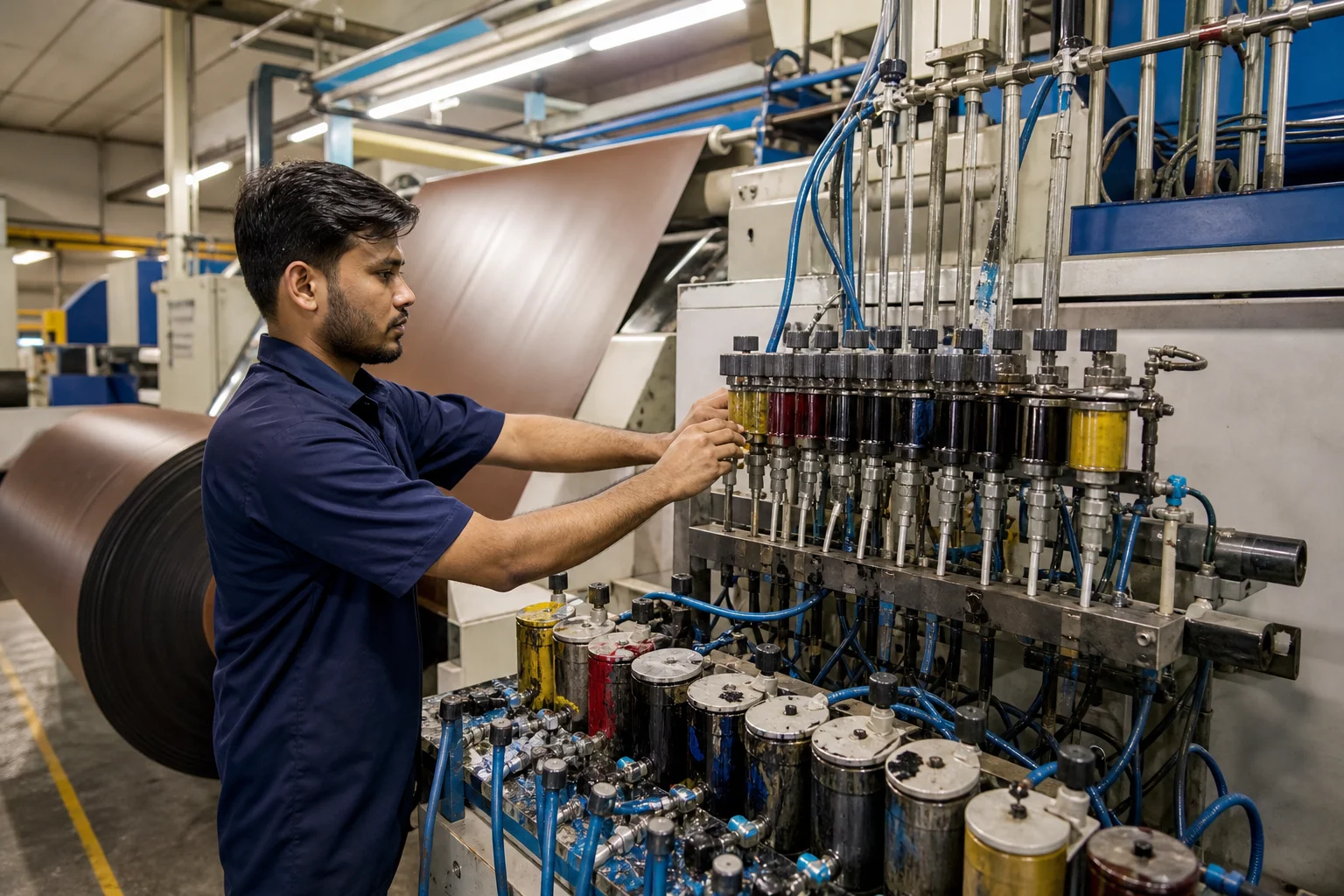
For PU leather, colour is applied in a coating process. A run requires the coating machine to be set up, the colour formulation prepared and mixed, and the line cleaned afterwards. The setup and cleaning cost is largely independent of the length of the run, so a short run carries the same overhead spread over fewer metres.
The dye lot
Where material is dyed rather than coated, a dye lot has a practical minimum below which the shade cannot be controlled reliably. Small lots also produce greater variation within the lot.
The supplier’s own minimum
A bag factory buys material from a coating or trading supplier who has their own minimum. If the factory must buy a full roll or a full batch to obtain a custom shade, the buyer’s minimum inherits that constraint.
Where the label goes
The colour minimum is usually stated per colour, not per style. One custom colour across three styles may share a single material minimum, which is why consolidation matters so much.
| Source of the minimum | Driven by | Buyer’s control |
|---|---|---|
| Coating run setup | Machine time, cleaning | Share it across styles |
| Dye lot size | Shade control | Accept a stock shade instead |
| Supplier material minimum | Upstream purchasing | Buy the residual material |
| Colour matching work | Lab time | Choose a colour close to stock |
| Quality approval runs | Samples and dips | Combine with bulk approval |
| Packaging and labelling | Per colour SKU | Standard labels |
Stock Shade Versus Custom Shade
The first decision is not which colour but which production route, because the route determines the minimum.
Stock shades
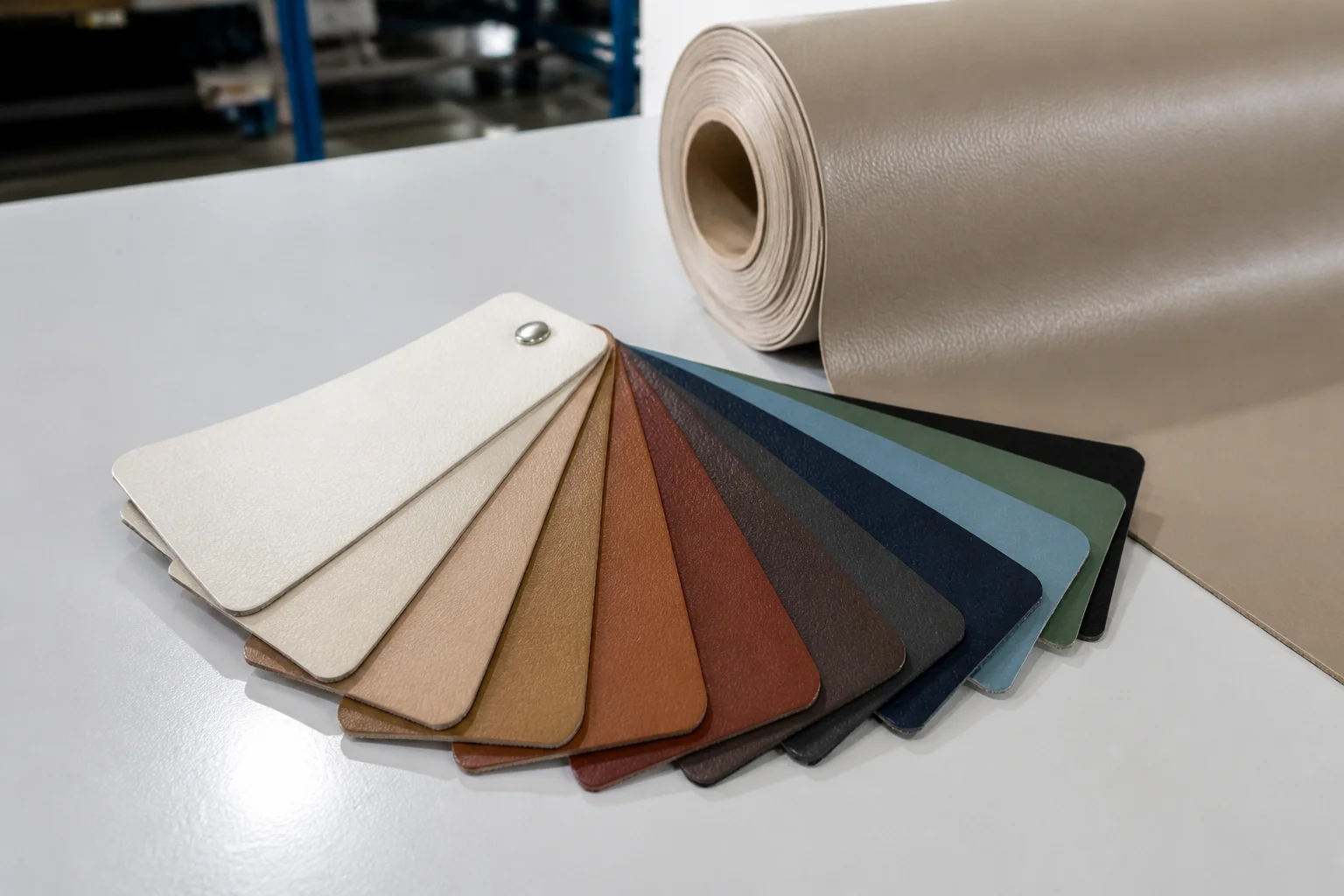
A stock shade is a colour the material supplier already produces. The buyer’s minimum is the bag factory’s own style minimum, because the factory simply buys from available stock.
Custom shades
A custom shade is produced to a specified reference. It carries a material batch minimum on top of the style minimum, and often a matching and approval cost.
The middle route
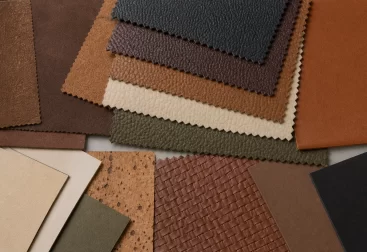
Many suppliers hold a broader range than their catalogue shows. Asking for the closest available shade to a target colour often avoids the custom minimum entirely while getting close to the design intent.
When custom is genuinely necessary
Brand colours, seasonal palettes that must match other products, and colours that differentiate a range. Outside those cases, a close stock shade is usually the better commercial choice.
| Route | Minimum driver | Lead time | Unit cost |
|---|---|---|---|
| Stock shade, factory range | Style minimum only | Shortest | Lowest |
| Stock shade, supplier range | Style minimum, material order | Short | Low |
| Closest match to target | Style minimum, approval time | Moderate | Low to moderate |
| Custom coating run | Material batch minimum | Long | Higher |
| Custom dye lot | Dye lot minimum | Longest | Highest |
| Custom plus finish change | Two production runs | Longest | Highest |
A custom colour is not a colour choice. It is a production commitment measured in metres of material.
The question to ask first
Ask what the closest available stock shade is before specifying a target. The answer often removes the entire minimum problem.
How the Minimums Combine
Buyers get caught because style minimum and colour minimum multiply rather than add.
The multiplication effect
If a style minimum is three hundred units and a colour requires a material batch covering six hundred units, then two colours in that style means twelve hundred units. The constraint is not the style, it is the colour count.
Per-colour material coverage
A material batch is measured in metres, not units. The number of bags a batch covers depends on bag size and consumption per bag. A small bag consumes less material, so one batch covers more units and the apparent minimum per colour looks lower.
Why large bags hit the minimum harder
A tote consuming more material per unit reaches the batch quantity with fewer bags. Buyers often find that their large styles are effectively the constraint while their small accessories are not.
The residual material problem
When a batch exceeds what the order needs, the balance is either paid for and stored, or written off. Either way it is a cost the buyer carries.
| Scenario | Style minimum | Colour constraint | Effective order |
|---|---|---|---|
| One stock colour | 300 units | None | 300 units |
| Two stock colours | 300 units | None | 600 units |
| One custom colour | 300 units | 600 units of material | 600 units |
| Two custom colours | 300 units | 600 units each | 1200 units |
| Custom, small bag | 300 units | 900 units of material | 600 to 900 units |
| Custom, large bag | 300 units | 450 units of material | 450 to 600 units |
Working the number backwards
Start from the material batch: ask how many metres the minimum is, and what consumption per bag the factory uses for the style. That gives the unit quantity the colour actually forces, which is the number to plan around.
Adding a second colour later
Adding a colour to a running order is cheaper than opening a new one, because setup and approval may already exist. Ask about the incremental cost of an additional colour within an existing run rather than treating it as a new minimum.
Typical Quantity Tiers
Colour minimums follow recognisable tiers, and knowing the tiers helps a buyer plan rather than negotiate blind.
The lowest tier: stock colours
No colour minimum beyond the style minimum. This is where small first orders usually sit, and it is the cheapest route.
The middle tier: limited custom
A factory runs a custom colour across several styles to aggregate volume, or adds it to an existing production batch. Quantities are moderate and lead times extend modestly.
The upper tier: dedicated custom
A dedicated material run for one colour. This carries the full batch minimum, matching cost and extended lead time, and is usually only economic for a range launch.
How tiers shift with material type
Coated materials often have lower practical minimums than dyed materials because the coating line can be run in shorter lengths. Textiles and genuine leather carry higher minimums because dye lots are less flexible.
| Tier | Indicative quantity signal | Approval work | Typical use |
|---|---|---|---|
| Stock colour | Style minimum only | None or swatch only | First orders, cores |
| Aggregated custom | Several styles combined | One lab dip | Range launch |
| Added to existing run | Incremental volume | Shared approval | Second colour |
| Dedicated custom | Full material batch | Dips plus bulk approval | Brand signature colour |
| Custom plus finish | Batch plus separate finish run | Two approvals | Premium tiers |
| Exclusive shade | Batch plus exclusivity terms | Full process | Differentiation |
Why published tiers vary so much
A factory quoting a high colour minimum may simply be reflecting its own supplier’s constraint. The same colour from a factory with different upstream relationships may carry a much lower minimum.
Asking the right question
Rather than asking for the colour minimum, ask what quantity makes the colour economic and what changes if the quantity is lower. The answer usually reveals a tier the buyer can reach.
What Custom Colour Actually Costs
The extra cost of a custom colour is not only the unit price uplift; it is a set of costs that appear at different points.
Matching and lab work
Preparing a colour match carries a one-off charge. It covers lab time and dip samples, and it is incurred whether or not the order proceeds.
The batch premium
Short runs carry a per-metre premium because setup is spread over fewer metres. This appears as a higher material cost and therefore a higher unit price.
Residual material
Material bought but not consumed is either stored or written off. If stored, it ties capital and may not match a future batch; if written off, it is a direct cost.
Approval cycles
Each dip round costs time and sometimes money. Two or three rounds are common before a shade is approved, and each round delays production.
| Cost element | When incurred | Recoverable |
|---|---|---|
| Colour matching | Before order confirmation | No, usually charged |
| Dip samples | During approval | No |
| Batch premium | At material purchase | Embedded in unit price |
| Minimum quantity overrun | At material purchase | Only if resold as product |
| Residual storage | After production | No |
| Extended lead time | Throughout | No, opportunity cost |
The cost per unit question
Divide the total colour cost by the units actually sold, not the units produced. Residual material that never becomes a bag still carries a cost, and it belongs to the units that did.
When the premium is justified
When the colour is a brand signature, drives a price tier, or differentiates the range in a way competitors cannot copy. When it is simply a preference, the premium rarely pays back.
Reducing the Colour Minimum
There are legitimate ways to obtain a custom colour without carrying a full batch.
Choose the closest stock shade
The simplest and most effective lever. A shade within a small visual step of the target is often acceptable on a bag, where lighting and context reduce the difference.
Adjust the finish instead of the colour
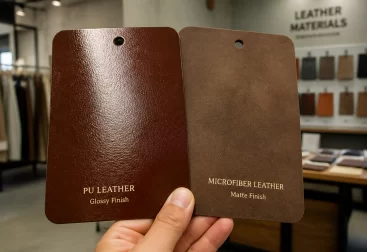
A matte, gloss or grain change can make a stock colour read as a different product. Finish variation is usually cheaper than colour development.
Aggregate across styles
One colour across three styles shares a single material batch. The colour minimum is met once and the material is consumed faster.
Use the colour as trim
A custom colour used for piping, binding or a panel is consumed in far smaller quantities than a full body. The minimum may then be reachable at a modest quantity.
| Lever | Effect on minimum | Compromise |
|---|---|---|
| Closest stock shade | Removes it | Slight shade difference |
| Finish variation | Removes it | Different surface, same colour |
| Aggregate across styles | Spreads it | Requires range planning |
| Trim application | Reduces it sharply | Less colour visible |
| Split with another buyer | Halves it | Coordination, shared risk |
| Buy residual stock | Converts it to inventory | Capital tied up |
Most colour problems are specification problems in disguise. Change what the colour has to do, and the minimum usually falls.
The two-colour compromise
Where budget cannot cover a custom colour, using one custom colour as an accent and a stock neutral as the body achieves differentiation at a fraction of the minimum.
Consolidating Across Styles
Consolidation is the most powerful lever available to a buyer with a multi-style range.
One colour, several styles
Specify the same material and shade across the range so that a single batch serves all styles. This is also the best way to achieve visual cohesion.
Sequencing production
Produce the styles using a shared colour in sequence so the material is consumed in one window and shade consistency is preserved.
The limits of consolidation
Consolidation fails when styles need different material thickness, finish or backing. The colour may match while the material cannot be shared.
Coordinating across suppliers
If a range is split between factories, a shared colour requires both to buy from the same material source and the same batch where possible. Otherwise the shades will diverge visibly.
| Consolidation approach | Benefit | Constraint |
|---|---|---|
| Same material, all styles | One batch, one minimum | Limits design variation |
| Same colour, two finishes | Visual variety, one shade | Two runs |
| Colour as trim only | Low consumption | Accent only |
| Single supplier, all styles | Batch control | Capacity dependency |
| Staged production | Shade consistency | Scheduling discipline |
| Shared batch with partner | Split minimum | Partner dependency |
Recording what was shared
Note which styles share a batch, with the batch reference. When a reorder is placed, the same grouping should be repeated to preserve consistency.
Planning the range around colour
Design the range so that the custom colour appears in more than one style by intention, not by accident. That single decision can halve the effective colour cost per style.
Specifying the Colour Correctly
A colour that cannot be specified reproducibly cannot be reordered, and an ambiguous specification is a common cause of minimum disputes.
Why a reference system is not enough
A colour reference defines a target on one substrate. Applied to coated material, the same reference may render differently because of surface, gloss and base colour.
Specify reference plus substrate
State the reference and the intended material, backing and finish. The combination is the specification; the reference alone is only a starting point.
Physical swatches over digital values
Screen colours vary and cannot be approved remotely. A physical swatch sent by post, or a retained approved dip, is the only reliable standard.
Lighting condition
State the light under which the shade will be judged. A colour that matches under one light may diverge under another, which becomes a dispute if the condition was never agreed.
| Specification element | Why it matters | Failure if omitted |
|---|---|---|
| Colour reference | Starting target | Each batch interpreted differently |
| Material and backing | Affects rendering | Shade shift on the actual substrate |
| Finish | Matte or gloss changes appearance | Approved sample differs from bulk |
| Physical standard | Reference for comparison | Argument over what was agreed |
| Lighting condition | Judgement basis | Disagreement in different light |
| Retained sample | Reorder reference | Batch drift on reorder |
The tolerance conversation
Agree what variation is acceptable before production. No colour is reproduced exactly; the question is how much difference is tolerable on a finished bag.
Recording the agreed standard
Attach the approved dip photograph and reference number to the order. That record is what an inspection or a reorder is measured against.
Approval and Lab Dips
Approval consumes time and sometimes money, and the process should be planned rather than discovered.
What a lab dip is
A small sample produced to show how the colour will look on the intended material. It is the basis for approving or adjusting before a batch is produced.
How many rounds to expect
One to three rounds is normal. Each round requires shipping time and a decision, so a two-week approval window is not unusual.
The cost of indecision
Delaying a decision on a dip delays the material order, which delays production. Approval windows should have deadlines attached on both sides.
Approving under the right light
Approve in the light where the product will be seen. A dip approved under office lighting may look different in daylight, which is exactly the condition customers will judge it in.
| Approval stage | Output | Typical duration |
|---|---|---|
| Reference submission | Target accepted by factory | One to three days |
| First dip | Physical sample | One to two weeks |
| Revision dip | Adjusted sample | One week each round |
| Approval | Signed standard | Buyer decision |
| Bulk production | Material batch | Per factory schedule |
| Bulk approval | First-off check | At production start |
Who signs off
Nominate one person to approve. Multiple approvers produce contradictory feedback and repeated dips, which is one of the hidden costs of a custom colour.
Lead Time Effects
Custom colour extends lead time at several points, and the total is usually longer than buyers expect.
Matching time
Before any material is ordered, the shade must be matched and approved. This sits entirely in front of the production schedule.
Material production time
Custom material must be produced, not picked from stock. That adds a production window before the bag factory can begin.
Buffer for shade adjustment
If the first bulk batch deviates from the approved dip, a re-run may be required. Building a buffer into the schedule protects the delivery date.
Compounding with seasonal timing
Custom colours ordered late in a season can arrive after the selling window. Lead time matters most when the season is fixed.
| Lead time element | Stock colour | Custom colour |
|---|---|---|
| Matching and dips | None | One to three weeks |
| Material availability | Immediate | Batch production lead |
| Bulk approval | Swatch check | First-off comparison |
| Rework buffer | Not required | Advised |
| Total added time | None | Three to six weeks |
| Risk of re-run | Low | Moderate |
Ordering ahead of the season
Custom colours should be approved well before the production slot, not during it. The approval is the critical path, so it should start earliest.
Communicating the schedule
Share the season deadline with the factory and ask what the latest approval date is that still meets it. That single question prevents most late-season problems.
The Risk of Leftover Material
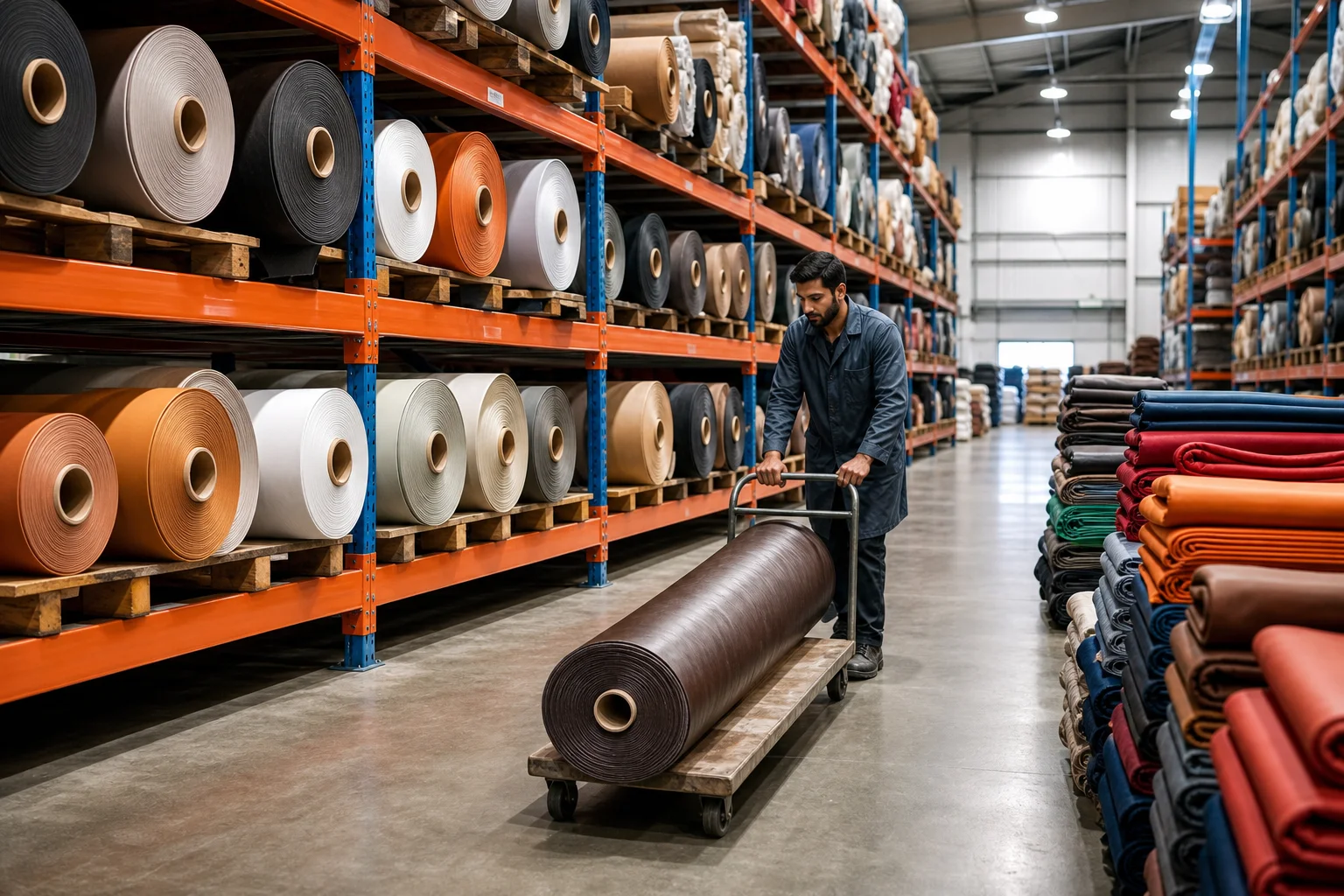
A colour minimum frequently exceeds what the order consumes, and the residual is the buyer’s problem.
Who owns the excess
Unless agreed otherwise, the buyer pays for the material required to meet the minimum. The factory may hold it, but ownership and cost usually sit with the buyer.
Storing the residual
Residual material can be held for a reorder, which is useful if the colour will be repeated. It must be stored correctly to avoid deterioration.
The colour drift on later use
Residual material used months later will still match the original batch, but a new production run will not. That creates a two-tier colour situation within one range.
Writing off versus carrying
Carrying residual has a storage cost and a risk of unusability. Writing it off is a clean loss. The decision should be made on the probability of a reorder.
| Residual option | Cost | Best when |
|---|---|---|
| Hold for reorder | Storage, capital tied | Repeat orders likely |
| Produce extra units | Labour, but material used | Demand reasonably certain |
| Use in another style | Design effort | Range has flexibility |
| Sell to another buyer | Time and margin | Colour is generic |
| Write off | Direct loss | One-off colour |
| Return to supplier | Rarely accepted | Supplier agreement exists |
Residual material is a decision made at order time, not discovered at delivery. Ask what the excess will be and who pays for it.
Asking about the excess upfront
Before confirming, ask how many metres the minimum is, how many the order consumes, and what happens to the difference. The answer should be in writing.
The extra-units alternative
Producing additional units to consume the residual converts a write-off into inventory. It only makes sense where demand for the colour is reasonably confident.
Small-Order Strategies
Small buyers can still obtain custom colour, but the approach has to differ from a large range launch.
Start with stock, prove demand
Launch in a stock colour close to the target, measure sell-through, then commit to a custom colour once volume justifies it. This sequences risk sensibly.
Custom as accent
Use the custom colour for a trim or panel so consumption is low and the minimum is reachable. The visual effect is often close to a full-body colour.
Share a batch
Where two buyers want the same shade, sharing a material batch halves the minimum. This requires coordination but is common between complementary businesses.
Time the order to a factory run
If a factory is already running a similar colour for another customer, adding to that run may be possible at a much lower quantity.
| Strategy | Quantity burden | Trade-off |
|---|---|---|
| Launch in stock shade | None | Colour is not exact |
| Custom accent only | Low | Limited colour area |
| Shared batch | Halved | Partner coordination |
| Add to existing run | Incremental | Timing dependency |
| Buy residual from another order | Low | Limited quantity and shade |
| Test with small accessories | Low | Not a full bag range |
The accessories route
Small items consume little material, so a custom colour can be introduced through pouches or small crossbodies before committing to a full-size style.
Accepting a staged launch
A range that launches in stock colours and adds a custom signature colour in the second season often performs better than one that spends the entire first budget on colour development.
Negotiating Colour Terms
Colour terms are negotiable, and the negotiation is usually about structure rather than price.
Ask for the constraint
Ask which specific minimum drives the colour: the material batch, the coating setup or the factory’s own order minimum. Each has a different lever.
Offer scheduling flexibility
A factory can often accommodate a smaller custom quantity if it can slot it into an existing run. Flexibility on timing is worth more than pressure on quantity.
Accept a standard finish
A custom colour on a standard finish avoids a second production step and usually reduces the minimum. Custom colour plus custom emboss is two minimums.
Commit to a repeat
A commitment to reorder the same colour within a stated period can justify a lower first quantity, because the factory knows the batch will be consumed.
| Negotiation lever | What you offer | What you gain |
|---|---|---|
| Scheduling flexibility | Accept a run slot | Lower quantity |
| Repeat commitment | Stated reorder | Reduced first minimum |
| Standard finish | No extra process | Lower cost and minimum |
| Aggregated styles | More units in one colour | Colour becomes viable |
| Residual purchase | Buy the balance | Run proceeds |
| Longer lead time | Plan ahead | Batched production |
What not to negotiate
Do not trade away approval steps or inspection to obtain a lower minimum. Those protections cost less than a wrong colour batch.
Reordering a Custom Colour
A custom colour creates an ongoing commitment, and the reorder is where most colour problems actually surface.
The batch reference
Record the material batch reference, the approved dip and the production date. A reorder without these is a new colour, not a repeat.
Reordering from residual stock
Residual material from the original batch matches by definition. It is the simplest way to extend a colour’s life without a new minimum.
Reordering a new batch
A new batch will be close but not identical. Match it against the retained approved sample, not against the previous batch, or drift will accumulate.
When the colour has been discontinued
Suppliers retire shades. Where a colour is core to the range, ask for notice if it is to be discontinued, and identify an approved alternative in advance.
| Reorder scenario | Colour risk | Action |
|---|---|---|
| Same batch, residual material | None | Reserve it at first order |
| New batch, same reference | Slight drift | Match against retained sample |
| Reference discontinued | Substitution needed | Pre-approve an alternative |
| Different factory | Significant | Send physical sample, not photo |
| Long gap between orders | Batch and trend drift | Re-approve before production |
| Colour used across styles | Split batches | Repeat original grouping |
Reserving before you need it
Ask at the first order whether residual material can be reserved for a defined period. It costs nothing to ask and prevents a reorder minimum later.
Reapproval discipline
Even a repeat colour should be approved at bulk stage. The cost of a reapproval is trivial against the cost of a batch in the wrong shade.
Trialling a Colour Before Committing
Where the colour decision is significant, a trial reduces the risk of a large wrong commitment.
Sample in the actual material
Approve a dip on the actual substrate, not on a paper or a different material. The same reference behaves differently on a coated surface.
Make one bag in the colour
A single finished bag shows how the colour behaves across panels, seams and hardware, which a flat swatch cannot. It is the cheapest way to see the colour in context.
Test in the selling environment
View the sample under the lighting of the store or the photography setup. Colour decisions made in a factory office frequently fail in retail light.
Small bulk trial
A small production run in the colour, sold as a limited item, measures real demand before the range commitment. It also reveals how the colour wears in use.
| Trial level | Cost | What it reveals |
|---|---|---|
| Swatch comparison | Very low | Approximate shade |
| Lab dip on material | Low | Colour on the substrate |
| Single sample bag | Moderate | Colour across the whole product |
| Small bulk run | Higher | Demand and wear |
| Full range launch | Highest | Commercial result |
| Retail lighting check | Negligible | Real-world appearance |
The sample bag as a sales tool
A sample in the proposed colour can be shown to wholesale customers before the order is placed. Their reaction is the cheapest demand signal available.
Calculating Whether It Is Worth It
The decision should be arithmetic, not preference.
Total colour cost
Add matching, dips, batch premium, residual material and extended lead time cost. That total is the real cost of the colour, not the unit price difference.
Cost per unit sold
Divide by expected units sold, not units produced. If residual material is carried, include its cost in the calculation.
Price uplift the colour supports
Estimate whether the colour allows a higher retail price or higher volume. A colour that supports no price or volume change is a cost with no return.
The break-even quantity
Work out how many units must sell for the colour premium to be recovered. If that number exceeds realistic demand, the colour is not viable at this stage.
| Calculation step | What to include |
|---|---|
| Matching and dips | One-off charges |
| Batch premium | Extra per metre over stock |
| Residual | Unused material cost |
| Lead time | Delay cost to launch |
| Total colour cost | Sum of the above |
| Cost per unit sold | Total divided by expected sales |
A custom colour is worth it when it changes either the price the bag commands or the number of bags sold. Otherwise it is a cost carried for preference.
The comparison to run
Compare the custom colour scenario against a stock shade scenario on total landed cost and expected revenue. The difference is the true price of the colour.
Writing Colour Into the Order
Colour terms belong in the order documentation, not in a message thread.
What the order should state
Colour reference, substrate, finish, approved dip date, tolerance, quantity per colour, colour minimum, residual ownership and reorder terms.
Quantity per colour
State the planned quantity for each colour separately. A total order quantity allows a factory to interpret the colour split loosely.
Residual clause
State who owns and pays for material bought to meet the colour minimum, and whether it is stored or delivered.
Reorder commitment
If a lower first minimum was granted against a repeat commitment, record the commitment and its timeframe. Unwritten commitments are not honoured.
| Clause | Content | Prevents |
|---|---|---|
| Colour specification | Reference, substrate, finish | Ambiguous shade |
| Approved standard | Dip reference and date | Dispute on approval |
| Quantity per colour | Explicit split | Unplanned colour mix |
| Colour minimum | Stated metres or units | Late quantity surprise |
| Residual ownership | Who pays, who stores | Unowned excess material |
| Reorder terms | Minimum and lead time | Replenishment failure |
Attaching the physical standard
Reference a sealed sample held by both parties with a date. That single artefact resolves most colour disagreements before they become disputes.
Keeping the record current
Update the record when a new batch is approved. An out-of-date standard is worse than none, because it creates false confidence.
Common Colour MOQ Mistakes
Most colour minimum problems trace back to a small set of avoidable errors.
Quoting colour after price
Agreeing a price at a style minimum and then adding a colour means the colour minimum was never priced in. Specify colour before requesting the quote.
Assuming colours add, not multiply
Each colour carries its own constraint, so colour count multiplies the order. Buyers who plan on the style minimum are consistently surprised.
Ignoring residual material
The excess from a batch is a real cost. Treating it as the factory’s problem leads to a charge later or to material that quietly disappears.
No retained sample
Without a physical standard, the reorder has no reference and the second batch drifts. This is the most common long-term cost of a custom colour.
| Mistake | Consequence | Correction |
|---|---|---|
| Colour quoted after price | Budget overrun | Specify colour first |
| Treating colour as additive | Order multiplies | Plan per colour |
| Ignoring residual | Hidden cost | Ask and agree ownership |
| No retained sample | Reorder drift | Seal and keep a sample |
| Multiple approvers | Repeated dips, delay | Nominate one approver |
| Custom colour plus custom finish | Two minimums | Standardise one variable |
Custom colour plus custom everything
Each customised element carries its own minimum and lead time. Customising colour, finish, hardware and packaging together multiplies both, which is why first ranges should customise one thing well.
FAQ
Does adding a custom colour increase the MOQ?
Often yes. A custom colour usually carries a material batch minimum, while a stock colour only carries the style minimum. The increase depends on the route: closest stock shade, custom coating run, or dedicated dye lot.
How much material does a custom colour minimum usually require?
It varies by material and supplier, and is best asked in metres rather than units. Ask how many metres the minimum is and what consumption per bag the factory uses for your style, then convert to units.
Can I get a custom colour on a small first order?
Usually through one of three routes: a closest stock shade, using the colour as trim or a panel where consumption is low, or adding to an existing production run. Full-body custom colour at small volume is rarely economic.
Who pays for leftover material from a colour minimum?
Normally the buyer, unless agreed otherwise. Agree in writing whether the residual is paid for, stored, delivered or written off before the order is confirmed.
How long does custom colour approval take?
Typically one to three weeks for dips, plus your decision time, plus material production. Total added lead time is commonly three to six weeks compared with a stock shade.
Can I use the same custom colour across several bag styles?
Yes, and this is the most effective way to make a colour minimum viable. One material batch across several styles shares the minimum and improves visual cohesion across the range.
What happens if the bulk colour differs from the approved dip?
The batch should be reworked or re-run against the approved standard. This is why a sealed retained sample and a defined tolerance matter, and why a schedule buffer is advisable.
Is a colour reference enough to specify a custom colour?
No. A reference alone does not define appearance on coated material. Specify the reference together with substrate, backing and finish, and approve a physical dip.
How do I reorder a custom colour reliably?
Record the material batch reference and keep a sealed approved sample. Match new batches against the sample rather than the previous batch, so drift does not accumulate.
Should the first range use custom colours at all?
Usually not for the whole range. A first range in stock neutrals with one custom accent tests demand without committing to multiple batch minimums. Custom colour is easier to justify once sell-through is known.
Can two buyers share a colour batch to reduce the minimum?
Yes, and it is common between complementary businesses. It halves the quantity burden but requires coordination on specification, timing and residual material ownership.
Does a custom finish change the minimum as well?
It can. Colour and finish are often separate production steps, so customising both may create two minimums and two approval cycles. Standardising one variable usually reduces the burden substantially.
Planning a custom colour for your bag range?
Send your target colour reference, material preference and planned quantity per style to info@gionar.com and we will confirm the closest stock shades, the custom colour minimums for your quantities, and the approval timeline against your launch date.