How Can Importers Avoid Demurrage on Bag Container Arrivals?
Demurrage is the charge a container accrues when it stays at the terminal beyond the free time allowed. For bag importers it is one of the most avoidable costs in the whole supply chain, and one of the most frequently paid anyway. The charge never appears in a supplier’s quotation, never appears in the freight rate, and only becomes visible when the invoice arrives after the goods are already sold.
What makes demurrage frustrating is that the cause is rarely a single failure. A missing certificate, a late document release, a customs query, a warehouse that cannot accept delivery on the booked day, or a trucker who arrives without the right release reference can each add days. Individually each looks minor. Cumulatively they produce invoices that in a bad month can exceed the profit on the shipment.
Why bags are exposed
Bags are a high-volume, moderate-value product. A forty-foot container may hold several thousand units, so the container is expensive to hold and the daily charge is large relative to the value per day of goods. The product also tends to ship in peak windows tied to retail seasons, which is exactly when terminals are congested and free time is hardest to secure.
The distinction that matters most
Demurrage applies to the container inside the terminal. Detention applies to the container once it has left the terminal and is not returned within the allowed period. The two are charged separately, by different clocks, and a shipment can incur both. Confusing them leads importers to solve the wrong problem.
Who actually controls the clock
The importer controls very little of the terminal clock directly. The carrier sets free time, the terminal sets appointment availability, customs sets release timing, and the consignee’s own warehouse sets whether the box can be received. Avoiding demurrage is therefore a coordination problem rather than a negotiation one.
What this article covers
The structure of demurrage and detention charges, how free time is calculated and where it is lost, the documents that must be ready before arrival, how to prepare the consignee side so the container can actually be received, what to do when a container is already at risk, how to dispute charges that are not the importer’s fault, and the contractual terms with suppliers and forwarders that shift or reduce the exposure.
- How Demurrage and Detention Charges Work
- Free Time and Where It Is Lost
- Documents Ready Before Arrival
- Customs Release Timing
- Preparing the Consignee Side
- Terminal Appointments and Trucking
- When a Container Is Already at Risk
- Disputing Charges That Are Not Yours
- Contract Terms That Shift Exposure
- Choosing Carriers and Forwarders
- Managing Peak Season Arrivals
- Inland Terminals and Rail Moves
- Measuring and Preventing Recurrence
- FAQ

How Demurrage and Detention Charges Work
The two charges run on separate clocks, and understanding each clock is the starting point for controlling either.
Demurrage defined
Demurrage accrues while the container remains inside the terminal beyond the free period. It begins when free time expires and continues daily until the container is picked up, with rates that typically escalate in tiers.
Detention defined
Detention accrues after the container leaves the terminal and is not returned to the carrier within the agreed period. It covers the carrier’s lost use of the equipment rather than terminal occupancy.
Why the tiers escalate
Escalating rates are designed to force movement. A container held for many days becomes progressively more expensive, which is why the difference between a two-day delay and a six-day delay is far larger than the arithmetic suggests.
How the charge appears on an invoice
Carriers usually bill demurrage and detention separately from freight, sometimes weeks after the container has moved. Because the invoice arrives late and from a party the importer did not contract with directly, it is often paid without examination rather than challenged on its merits.
| Charge | Where | Clock starts | Clock stops |
|---|---|---|---|
| Demurrage | Inside terminal | Free time expires | Container gate-out |
| Detention | Outside terminal | Container gate-out | Empty return |
| Storage | Terminal or warehouse | Free storage expires | Cargo collected |
| Quay rent | Port area | Per port tariff | Cargo removed |
| Late return fee | Depot | Agreed return date | Empty accepted |
| Re-export fee | Terminal | Special handling | Container shipped out |
Who bills whom
The carrier bills the party named on the bill of lading or the booking party, which in most import arrangements is the consignee or their forwarder. The importer of record frequently discovers the charge only when the forwarder passes it on.
Reading the tariff before booking
Free time and daily rates are stated in the carrier’s tariff and in the booking confirmation. Reviewing them at booking takes minutes and sets expectations for the whole shipment.
Free Time and Where It Is Lost
Free time looks generous on paper and is consumed surprisingly fast in practice, because several of the days are not available for the work they appear to allow.
Calendar days or working days
Some carriers count calendar days, including weekends and holidays; others count working days. A shipment arriving before a public holiday can lose two or three usable days immediately under a calendar-day calculation.
When free time starts
Free time typically starts at discharge, not at vessel arrival and not at document release. A container discharged on Friday with documents released on Tuesday has already spent two weekend days of its allowance.
The hidden consumption
Days are consumed by customs clearance, terminal appointment availability, trucking capacity and warehouse receiving hours. None of these are under the importer’s direct control, and any one of them can absorb the entire allowance.
| Consumption point | Typical delay | Controllable |
|---|---|---|
| Document release | 1 to 5 days | Partly |
| Customs clearance | Same day to 3 days | Partly |
| Terminal appointment | 1 to 4 days | No |
| Trucking availability | 1 to 3 days | Partly |
| Warehouse receiving window | 1 to 2 days | Yes |
| Payment of duties | Same day to 2 days | Yes |
Negotiating additional free time
Additional free time is often available at booking, particularly for regular volume or for accounts with negotiated service contracts. It is far easier to obtain before the booking than after the container has arrived.
The forwarder’s own free time
Where a forwarder books under their own contract, the free time granted to the importer may differ from what the carrier grants the forwarder. Confirm the number that applies to the consignee, in writing.
Weekends and public holidays
A container discharged on the eve of a public holiday can lose two or three usable days before anyone has had a chance to act. Checking the destination holiday calendar against the expected discharge date is a two-minute exercise that prevents a recurring loss.
Free time is granted at booking and consumed at discharge. Between those two moments the importer has the only real opportunity to prepare.
Documents Ready Before Arrival
Most demurrage begins as a document problem, and document problems are the most preventable category of all.
The core set
Bill of lading, commercial invoice, packing list, certificate of origin where applicable, and any product-specific certificate. Each must be consistent with the others; inconsistency triggers queries that stop the clock.
Original versus telex release
Where an original bill of lading is required, the physical document must reach the consignee before the container is released. Couriers take days, and a document in transit is a container accruing charges.
Consistency between documents
Quantities, weights, descriptions and values must agree across the invoice, packing list and bill of lading. A discrepancy that seems trivial to a supplier is a hold to a customs officer.
| Document | Common defect | Consequence |
|---|---|---|
| Bill of lading | Original not received | No release |
| Commercial invoice | Description too generic | Classification query |
| Packing list | Quantities differ from invoice | Examination |
| Certificate of origin | Missing or invalid | Preference refused |
| Product certificate | Wrong standard cited | Hold pending evidence |
| Payment evidence | Value mismatch | Valuation query |
Electronic release
Where the destination accepts electronic bills of lading and digital signatures, the document leg disappears from the critical path entirely. Confirm at booking whether the carrier supports it and whether the supplier can issue documents in the required format.
Pre-clearance
Where the destination allows documents to be lodged before arrival, doing so converts clearance from an arrival task into a completed step. This single practice removes several days of exposure.
Verifying before the vessel sails
Ask the supplier to send drafts of all documents before sailing. Correcting a draft costs an email; correcting after arrival costs days of free time and possibly a terminal charge.
Customs Release Timing
Customs release is the pivot point for most demurrage, because the terminal will not release a container without it.
What release requires
A lodged declaration, payment of duty and taxes where required, and resolution of any query or examination. Each element has its own lead time.
Queries and examinations
A classification query, a valuation query or a physical examination can each add days. Examinations are scheduled by the authority, and the importer’s ability to accelerate them is limited.
Paying duty early
Where duty can be paid before arrival, doing so removes a step from the critical path. Deferred payment accounts achieve the same effect for regular importers.
| Release step | Lead time | Can be done early |
|---|---|---|
| Declaration lodged | Hours | Yes, pre-arrival |
| Duty assessed | Hours to 1 day | Partly |
| Duty paid | Same day | Yes, with deferment |
| Query resolved | 1 to 5 days | No |
| Examination | 1 to 4 days | No |
| Release issued | Hours | No |
Choosing a broker who works ahead
A broker who lodges on arrival rather than before adds days by default. Ask directly whether pre-arrival lodgement is standard practice for them, and treat the answer as a selection criterion.
Keeping the classification file current
A documented classification reduces the chance of a query. Where the code has been inherited from a supplier without verification, a query is more likely and the delay is self-inflicted.
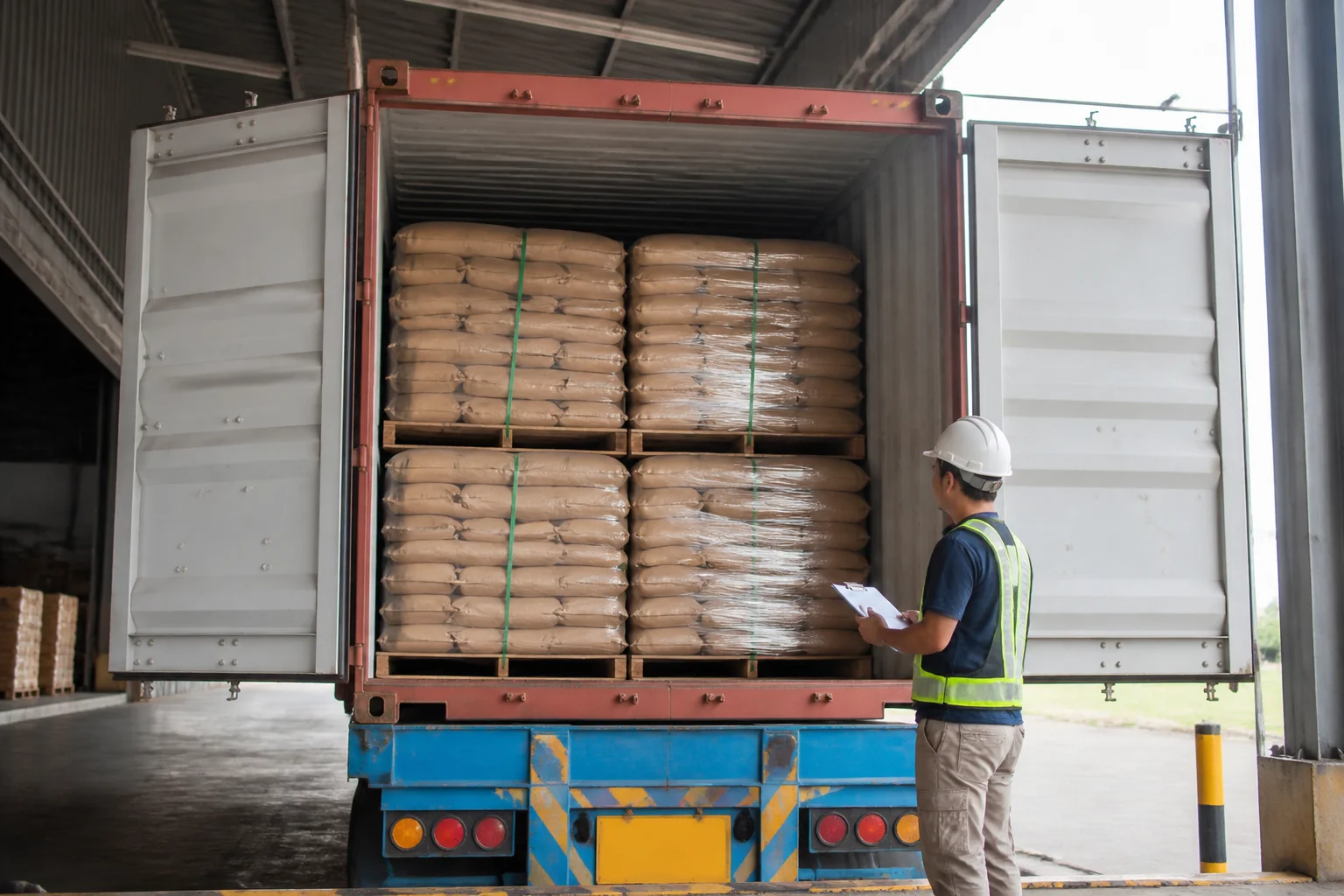
Preparing the Consignee Side
The most overlooked cause of demurrage is a container that is released and cannot be received.
Warehouse capacity
A warehouse already holding the previous shipment has nowhere to put another container. Capacity should be confirmed before the vessel sails, not when the carrier asks for a pickup appointment.
Receiving hours
A warehouse that accepts deliveries only in a short morning window cannot receive a container that arrives in the afternoon. This is a scheduling conflict that can be resolved in advance and is frequently resolved after the fact.
Labour and equipment
Unloading several thousand bags requires people and equipment. A consignee without a dock leveller or forklift may need to hire both, and hiring takes time.
| Readiness factor | Question to answer | When to confirm |
|---|---|---|
| Storage space | Where will the goods go | Before sailing |
| Receiving hours | Can we take a container that day | Before sailing |
| Unloading labour | Who unloads and when | One week before arrival |
| Equipment | Forklift available or hired | One week before arrival |
| Count and inspect | Who checks quantities | At unloading |
| Empty return plan | When the empty goes back | At gate-out |
The empty return plan
Detention begins when the container leaves the terminal. Knowing where the empty must be returned and when the depot accepts returns prevents the container from sitting on the consignee’s yard for days.
Designating one owner
Someone must own the arrival end to end: documents, customs, appointment, trucking, unloading and empty return. When responsibility is shared across purchasing, finance and warehouse, each assumes another is handling it.
Terminal Appointments and Trucking
In congested ports the appointment system is the binding constraint, and it operates independently of the importer’s readiness.
How appointments work
Terminals release pickup slots, often a few days ahead. Slots are limited, and popular windows fill quickly. A container that is ready but has no slot still accrues demurrage.
Booking the slot early
Where the terminal allows a slot to be booked once the container is discharged and release is expected, booking early protects the position. Waiting until release is issued often means waiting several more days.
Trucking capacity
Trucking is a separate constraint. Chassis availability, driver shortages and port congestion each affect whether a booked slot can actually be used.
| Constraint | Effect | Mitigation |
|---|---|---|
| Slot availability | No pickup date | Book as early as allowed |
| Chassis shortage | Truck cannot collect | Confirm chassis with trucker |
| Driver availability | Slot missed | Book trucker with the slot |
| Gate cut-off | Missed window | Arrive with buffer |
| Terminal closure | Lost day | Check holiday calendar |
| Weight limits | Load rejected | Verify axle limits |
Coordinating slot and truck
A slot without a truck and a truck without a slot both waste the other. Confirm them together, with the same party accountable for both.
The weekend problem
Containers that become available late in the week frequently cannot be collected until Monday. Where a Friday release is possible, arranging Saturday pickup is often cheaper than three days of demurrage.
When the terminal closes without notice
Unannounced closures for weather, industrial action or system failure strand containers that were due to be collected. Where the closure is documented by the terminal, the resulting days are generally disputable, which is another reason to keep dated records as events happen rather than reconstructing them afterwards.
A container released on Friday afternoon and collected on Monday has spent three days of free time doing nothing.
When a Container Is Already at Risk
Once free time is running out, the objective changes from prevention to damage limitation, and the options should be ranked by cost.
Prioritise the highest-tier container
Where several containers are at risk, attend to the one closest to a rate increase. Escalating tiers mean the marginal day on one container is far more expensive than the first day on another.
Partial pickup
Where the terminal allows it, removing part of the cargo does not stop demurrage on the container. What stops the clock is the container leaving, so partial pickup only helps where it enables a full gate-out sooner.
Direct delivery
Arranging for goods to go straight from the terminal to a customer or a third-party warehouse avoids the consignee’s own capacity constraint. It costs more per unit but less than escalating demurrage.
| Option | Cost profile | When appropriate |
|---|---|---|
| Extra truck shift | Moderate | Slot exists, truck does not |
| Weekend collection | Moderate to high | Friday release |
| Third-party warehouse | Moderate | Own capacity exhausted |
| Direct to customer | Higher per unit | Buyer can receive |
| Re-export or abandon | Very high | Only as last resort |
| Accept demurrage | Escalating | When no option is cheaper |
Communicating early
Informing the forwarder and carrier as soon as a delay is foreseeable sometimes produces flexibility that is unavailable later. Carriers are more willing to consider an extension before the charge accrues than after.
Documenting the cause
Record why the delay happened, with dates and correspondence. That record is what supports a dispute later and what identifies which process failed.
Disputing Charges That Are Not Yours
A proportion of demurrage invoices are not the importer’s liability, and a documented dispute recovers money that would otherwise be paid by default.
Terminal-caused delay
Where the terminal could not provide an appointment, or closed without notice, the delay is not attributable to the importer. Evidence of attempted bookings supports the claim.
Carrier-caused delay
Late vessel arrival, missed connections, or a container discharged without notification can shift liability. The discharge date and the notification date should both be established.
Documentation timing
Where documents were delayed by the supplier, the importer may still be liable to the carrier but can recover from the supplier if the contract provides for it.
| Cause | Liable party | Evidence needed |
|---|---|---|
| No terminal slot | Terminal | Booking attempts log |
| Late vessel | Carrier | Arrival versus schedule |
| Late document release | Supplier | Document dates |
| Customs examination | Importer | No recovery |
| Consignee not ready | Importer | No recovery |
| Trucker no-show | Trucker | Booking and complaint |
Filing within the window
Disputes must be filed within the period stated in the carrier’s tariff, often short. Waiting to gather perfect evidence can forfeit the right to dispute at all.
Keeping the evidence as it happens
Screenshots of appointment systems, timestamps of emails and copies of gate receipts are trivial to collect at the time and difficult to reconstruct later.
Recourse after payment
Paying an invoice does not always extinguish the right to dispute it, but it weakens the position and shortens the practical window. Where a charge is clearly not the importer’s liability, raising it before payment is both cheaper and faster than seeking a refund afterwards.
Contract Terms That Shift Exposure
Some of the exposure can be allocated before it arises, and the allocation belongs in writing.
With the supplier
Require documents before sailing, specify the document set, and state that the supplier bears any charge caused by their documentation errors. A supplier who knows the cost is real behaves differently.
With the forwarder
Clarify who books the slot, who arranges trucking, who monitors free time, and who is accountable for a missed appointment. A forwarder engaged only to clear customs will not manage the container clock.
Free time at booking
Additional free time should be requested in the booking, in writing, with the number confirmed. An assumption about free time is not a term.
| Term | Where | What it achieves |
|---|---|---|
| Document set and deadline | Supplier contract | Documents before sailing |
| Charge-back clause | Supplier contract | Supplier bears its own errors |
| Free time confirmed | Booking | Predictable allowance |
| Slot responsibility | Forwarder agreement | Clear accountability |
| Trucking responsibility | Forwarder agreement | No gap between parties |
| Dispute handling | Forwarder agreement | Charges challenged not passed on |
Avoiding the pass-through default
Where the forwarder agreement is silent, charges are simply passed to the importer. Silence is the most expensive clause in the contract.
Choosing Carriers and Forwarders
Some of the exposure is chosen at booking, and the selection criteria are more specific than rate per container.
Free time as a selection factor
Two carriers quoting similar rates can offer materially different free time. Comparing total cost including expected charges is more accurate than comparing ocean freight.
The forwarder’s operating practice
A forwarder who lodges declarations pre-arrival, monitors free time and books slots before release prevents most charges. One who works sequentially on arrival creates them.
Visibility and notification
Ask how the forwarder notifies of discharge, release and free time expiry. A forwarder who reports only when asked provides no warning when it matters.
| Criterion | What to ask | Why it matters |
|---|---|---|
| Free time granted | How many days, starting when | Sets the allowance |
| Pre-arrival lodgement | Is it standard practice | Removes days from critical path |
| Slot booking | Who books and when | Prevents appointment gaps |
| Trucking arrangement | Own fleet or brokered | Reliability at peak |
| Monitoring | Who tracks free time expiry | Early warning |
| Dispute practice | Do you challenge charges | Recovers unfair charges |
The cheap forwarder calculation
A lower handling fee is meaningless if the operating practice adds two days of demurrage per shipment. The relevant comparison is total cost per container over a year, not the fee per file.
Consolidating volume
Volume with one forwarder and one or two carriers buys negotiating room for free time and priority at peak. Spreading volume thinly across many providers buys nothing at the moment it is needed.
Managing Peak Season Arrivals
Peak season compresses free time availability on every dimension at once, and the preparation required is different from the rest of the year.
What changes at peak
Terminals run near capacity, appointments become scarce, trucking tightens and customs volumes rise. Free time that is adequate in March is insufficient in November.
Shipping earlier
The most effective peak measure is to move the shipment earlier rather than to manage the arrival better. A two-week earlier sailing removes most of the congestion exposure.
Building in buffer
Where an earlier sailing is impossible, plan for a longer arrival process and secure more free time at booking. Assuming standard performance at peak is the error.
| Peak measure | Effect | Lead time needed |
|---|---|---|
| Earlier sailing | Avoids congestion | Weeks |
| Extra free time | Absorbs delays | At booking |
| Pre-booked trucking | Secures capacity | Two weeks |
| Third-party overflow space | Removes receiving limit | One month |
| Pre-arrival clearance | Removes customs delay | Days |
| Weekend labour arranged | Enables weekend receipt | One week |
Pre-booking trucking
Trucking capacity at peak is contracted weeks ahead. Relying on spot capacity during the busiest weeks is how containers spend their free time waiting for a chassis.
Overflow space
Agreeing overflow storage in advance, even if unused, provides an option when the primary warehouse is full. Negotiating it after the container arrives is expensive.
Inland Terminals and Rail Moves
Inland moves add a second terminal and a second clock, which is where many importers are surprised by charges they did not anticipate.
The second free time
An inland terminal grants its own free time, separate from the seaport. A container that used its sea free time well can still accrue charges inland.
Rail schedules
Rail departures are scheduled and infrequent. A container that misses a departure waits for the next, and the wait is charged at the inland terminal.
Who owns the inland leg
Where the through bill of lading covers the inland move, the carrier controls it. Where it does not, the importer arranges it and owns the risk of a missed connection.
| Inland factor | Risk | Preparation |
|---|---|---|
| Second free time | Unexpected inland charge | Confirm both allowances |
| Rail departure | Missed connection | Buffer before cutoff |
| Inland terminal slots | Collection delay | Book on discharge notice |
| Weight restrictions | Load refused | Verify road limits |
| Documentation split | Release held inland | Confirm single release |
| Empty return location | Long empty run | Confirm depot in advance |
The empty return distance
An inland destination may be far from the nearest depot accepting that carrier’s empties. Detention can accrue during the empty run, which is a cost that appears only after the goods are safely delivered.

Measuring and Preventing Recurrence
Demurrage recurs because the cause is never identified. Measuring the components prevents the same charge from being paid repeatedly.
Recording the cause of each charge
Every invoice should be coded by cause: documents, customs, appointment, trucking, consignee capacity or empty return. The distribution shows where to intervene.
The cost per container
Express charges per container rather than in total. A total that looks tolerable may conceal one recurring cause responsible for most of it.
Tracking free time consumption
Record days used before release, before appointment and before collection. This separates document delay from operational delay, which require different fixes.
| Metric | What it reveals | Target direction |
|---|---|---|
| Charge per container | Overall exposure | Down |
| Cause distribution | Where to fix | Concentrated, not spread |
| Days to document release | Supplier performance | Down |
| Days to customs release | Broker performance | Down |
| Days to collection | Operational performance | Down |
| Dispute recovery rate | Whether charges are challenged | Up |
Reviewing quarterly
A quarterly review of the cause distribution is enough to identify a supplier whose documents are consistently late or a forwarder whose slot booking is consistently slow. Without the review, both persist.
Feeding it back into contracts
The measurement only pays if it changes terms. A supplier with a documented pattern of late documents is a candidate for a charge-back clause; a forwarder with a pattern of late booking is a candidate for replacement.
Demurrage is not a cost of importing. It is a cost of a specific process failing, and the process can be named.
FAQ
What is the difference between demurrage and detention?
Demurrage is charged while the loaded container remains inside the terminal beyond its free time. Detention is charged after the container leaves the terminal and is not returned empty within the allowed period. They run on separate clocks and can both apply to one shipment.
When does free time start and end?
Free time usually starts at discharge rather than at vessel arrival or document release, and it ends when the container passes out of the terminal gate. Whether days are counted as calendar days or working days depends on the carrier’s tariff, so the definition should be confirmed at booking.
Can I get more free time after the container has arrived?
It is difficult. Additional free time is normally negotiated at booking, particularly where there is regular volume or a service contract. After arrival the carrier has little commercial reason to extend it, which is why the request belongs in the booking confirmation.
Who is liable for demurrage when the terminal cannot offer an appointment?
The charge is generally not the importer’s liability where the terminal could not provide a slot, but it must be disputed with evidence. Logs of attempted bookings, screenshots of the appointment system and dated correspondence are what support the claim.
Does paying duty early reduce demurrage risk?
Yes, because customs release is a prerequisite for terminal release. Lodging the declaration before arrival and using a deferred duty account removes two steps from the critical path, which can save several days of free time on a single shipment.
What documents should be ready before the vessel arrives?
Bill of lading, commercial invoice, packing list, certificate of origin where a preference is claimed, and any product certificate required by the destination. All must agree with each other, and drafts should be reviewed before sailing rather than after arrival.
Is it cheaper to accept demurrage than to arrange weekend collection?
Usually not, because rates escalate in tiers. Three days of demurrage on a container near a rate increase often costs more than a Saturday truck shift. The comparison should be made explicitly rather than assumed.
How do partial pickups affect the clock?
Removing part of the cargo does not stop demurrage, because the container itself remains in the terminal. The clock stops when the container gates out, so a partial pickup only helps if it enables a full collection sooner.
Can I recover demurrage caused by a supplier’s late documents?
The carrier will normally charge the party named on the bill of lading regardless of cause. Recovery from the supplier depends on the contract, which is why a clause stating that documentation errors are charged back to the supplier is worth including before the first order.
Does detention apply if the empty container is returned late?
Yes, and it is a common and easily avoided charge. Detention runs from gate-out until the empty is accepted at the depot, so confirming the return location and the depot’s acceptance hours prevents the container from sitting on the consignee’s yard.
How does peak season change demurrage risk?
Every constraint tightens at once: fewer slots, scarcer trucking, higher customs volumes and slower terminal operations. The most effective measure is an earlier sailing, and the second is securing additional free time at booking rather than assuming standard performance.
Do inland terminals charge their own demurrage?
Often yes, on a separate clock from the seaport. A container that used its sea free time efficiently can still accrue charges inland, particularly where a rail departure is missed, so both allowances should be confirmed before booking the inland leg.
Want the documentation side handled before the container is discharged?
Send your destination port and order details to info@gionar.com and we will prepare the document set, packing list and material specifications for your bag shipment in draft before sailing, so clearance can be lodged on arrival rather than after it.