How Do Incoterms Change Risk When Importing PU Leather Bags?
An Incoterm does not change how much a shipment costs. It changes who pays for each part of the journey, and more importantly, at which exact point the risk of loss or damage passes from the seller to the buyer. For importers of PU leather bags, that single line determines who absorbs the loss when a carton is crushed, water-damaged or lost in transit.
Most import negotiations focus on the unit price and treat the term as a formality. The result is predictable: a buyer who selected a term for a favourable-looking price discovers, after a damage claim, that the risk had already transferred and there is no one to claim against. The cost of that discovery is usually far greater than any price difference between terms.
Cost and risk are separate lines
Every Incoterm defines two distinct things. The first is where costs divide: freight, insurance, loading, unloading, duty, and terminal handling. The second is where risk transfers. These two lines often fall at different places, and confusing them is the most common error in import contracts.
Why bag shipments are exposed
PU leather bags are a specific cargo problem. They are light for their volume, so they tend to be stacked high. The material is sensitive to moisture, heat and pressure. Finished bags hold shape, which means cartons are rarely filled to maximum density, leaving space for crushing. These characteristics make handling and storage conditions, not just transport mode, part of the risk picture.
What the terms actually control
An Incoterm controls export clearance, main carriage, import clearance, insurance obligation, and the transfer point. It does not control payment terms, title, or product quality. Those belong in other clauses, and assuming an Incoterm covers them is a second common mistake.
What this article covers
How the eleven terms divide cost and risk, where the transfer point sits for each, which terms suit bag importing and which create hidden exposure, how container and less-than-container shipments differ, how insurance interacts with the chosen term, what to write into the contract, and the specific failure modes seen in PU leather bag shipments.
- The Two Lines Every Term Defines
- The Eleven Terms and Where Risk Passes
- EXW: Maximum Buyer Exposure
- FCA: The Underused Middle Ground
- FOB and the Container Trap
- CFR and CIF: Cost Without Control
- DAP and DDP: Seller Takes the Risk
- Insurance and the Term You Chose
- Cargo Characteristics of PU Leather Bags
- Container Versus Less-Than-Container
- Claims When Damage Happens
- Duty, Tax and Who Pays
- Documentation That Matches the Term
- Choosing a Term for Your Situation
- Negotiating the Term With the Factory
- Writing the Term Into the Contract
- Common Incoterm Mistakes
- FAQ
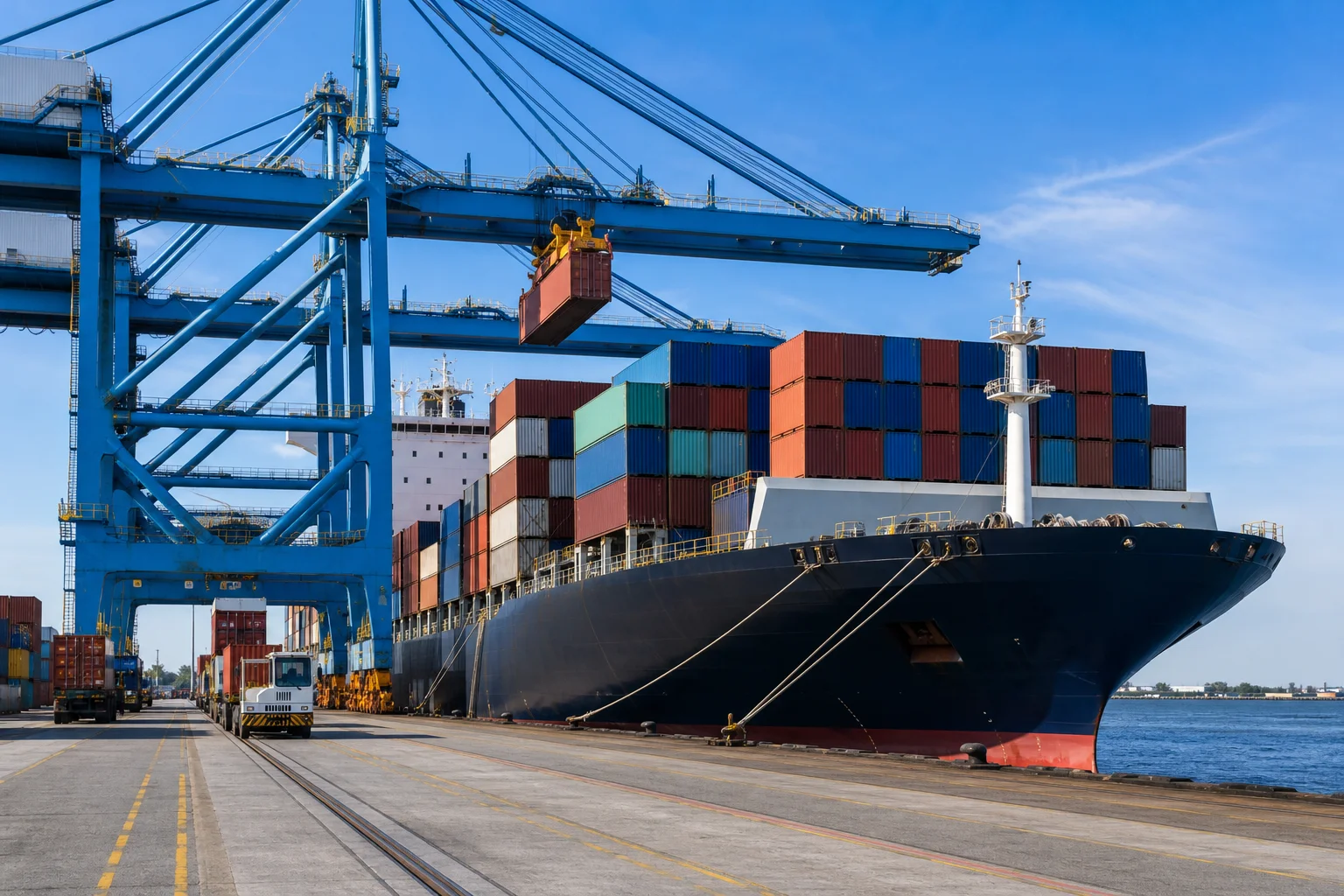
The Two Lines Every Term Defines
Understanding a term means answering two separate questions, and keeping the answers apart.
Where costs divide
The cost line determines who pays for export clearance, loading, main freight, insurance, unloading, import clearance, duty and final delivery. Each term assigns these differently, and the quoted price should reflect which ones are included.
Where risk divides
The risk line determines when the buyer becomes responsible for loss or damage. It may fall earlier or later than the cost line, and that gap is where uncovered exposure lives.
The gap that costs money
Consider a term where the seller pays freight to the destination but risk passes when goods are loaded at origin. If the vessel is lost, the buyer has paid a price that includes freight but has no goods. That gap is not a defect in the term; it is a defect in the buyer’s insurance decision.
Why the distinction matters for bags
PU leather is damaged by moisture and compression more often than by total loss. Partial damage claims require proof of when damage occurred, which means the risk transfer point determines who is even able to claim.
| Element | What the term fixes | What it does not fix |
|---|---|---|
| Cost allocation | Who pays each charge | Whether the price is fair |
| Risk transfer | When buyer bears loss | Whether insurance exists |
| Export clearance | Who handles it | Whether documents are correct |
| Import clearance | Who handles it | Duty rate applicable |
| Insurance | Who must arrange it | Whether cover is adequate |
| Delivery point | Where obligation ends | Who unloads in practice |
A term that looks cheaper may simply move cost into a part of the journey where you carry the risk without cover.
The named place
Every term requires a named place, and the place changes the meaning. FCA Shanghai airport is a different obligation from FCA the factory gate. Omitting the place makes the term ambiguous and, in a dispute, unenforceable as intended.
The Eleven Terms and Where Risk Passes
The 2020 revision of the Incoterms rules defines eleven terms across two groups: terms for any mode of transport, and terms for sea and inland waterway only.
The any-mode group
EXW, FCA, CPT, CIP, DAP and DPU apply to any transport mode, including containerised sea freight and air. For bag importers using containers or air, these are the technically correct terms.
The sea-freight group
FAS, FOB, CFR and CIF are intended for non-containerised sea freight. They are still widely used for containers, which is precisely where the practical problems arise.
Reading the table
The table below shows the risk transfer point for each term. This is the single most important column for insurance planning.
| Term | Mode | Risk passes | Freight paid by |
|---|---|---|---|
| EXW | Any | At seller’s premises, not loaded | Buyer |
| FCA | Any | On handover to carrier | Buyer |
| CPT | Any | On handover to first carrier | Seller |
| CIP | Any | On handover to first carrier | Seller |
| DAP | Any | At named destination, not unloaded | Seller |
| DPU | Any | At destination, unloaded | Seller |
| FAS | Sea | Alongside vessel | Buyer |
| FOB | Sea | On board vessel | Buyer |
| CFR | Sea | On board vessel | Seller |
| CIF | Sea | On board vessel | Seller |
| DDP | Any | At destination, duty paid | Seller |
The pattern worth noticing
Under C-terms, the seller pays freight but risk passes at origin. Under D-terms, the seller carries risk to destination. The letters matter less than this distinction, and importers who understand it avoid most disputes.
Two terms differ only in insurance
CPT and CIP differ mainly in the insurance obligation, as do CFR and CIF. Under CIP and CIF the seller must insure; under CPT and CFR they need not.
EXW: Maximum Buyer Exposure
EXW places the greatest burden on the buyer, and it is often offered because it is simplest for the seller.
What the buyer takes on
Under EXW the buyer handles export clearance in the seller’s country, loading at the seller’s premises, all carriage, import clearance and delivery. The seller’s only duty is to make goods available.
The export clearance problem
A buyer without a local entity may be unable to complete export clearance in the seller’s country. This is the practical reason EXW is often unsuitable for first-time importers, regardless of price.
Risk passing before loading
Risk passes when goods are made available, not when they are loaded onto the buyer’s vehicle. If goods are damaged during loading by the buyer’s carrier, the loss is the buyer’s.
When EXW makes sense
EXW suits buyers with a local agent, an existing freight forwarder with export capability, or consolidated shipments where a forwarder handles everything. It rarely suits a first order.
| Responsibility | EXW | FCA |
|---|---|---|
| Export clearance | Buyer | Seller |
| Loading at origin | Buyer | Seller or carrier |
| Risk transfer | At premises | On handover |
| Main carriage | Buyer | Buyer |
| Import clearance | Buyer | Buyer |
| Suitable for new importers | Rarely | Usually |
The pricing illusion
EXW prices look lowest because they exclude everything. Comparing an EXW quote with a CIF quote without adding the missing costs produces a decision based on an incomplete number.
FCA: The Underused Middle Ground
FCA is the term most often recommended for containerised shipments, and the one buyers most often overlook.
How it works
The seller clears goods for export and delivers them to a carrier nominated by the buyer at a named place. Risk passes at that handover. The buyer controls the main carriage.
Why it fits containers
Containers are usually handed to the carrier at a terminal or depot, not loaded onto a vessel individually. FCA matches that reality, whereas FOB assumes the seller places goods on board.
The forwarder nomination
Because the buyer nominates the carrier, the buyer controls routing, transit time and freight cost. That control is valuable when schedules matter.
Getting the named place right
FCA factory gate and FCA container terminal are materially different. At the factory the buyer arranges inland transport; at the terminal the seller does. The named place should be stated precisely.
| FCA named place | Who moves to terminal | Risk passes |
|---|---|---|
| Seller’s factory | Buyer | On loading at factory |
| Seller’s warehouse | Buyer | On loading at warehouse |
| Container terminal | Seller | On delivery to terminal |
| Freight forwarder depot | Seller | On delivery to depot |
| Airport | Seller | On delivery to airport |
| Unnamed place | Ambiguous | Disputable |
Why sellers resist it
Some factories prefer FOB because it matches their existing freight relationships. FCA may require them to change a routine, which is a commercial objection rather than a technical one.
FOB and the Container Trap
FOB is the most widely used term in Asian export trade and the most frequently misapplied to container shipments.
What FOB requires
The seller delivers goods on board the vessel nominated by the buyer and clears them for export. Risk passes once goods are on board.
The container problem
Under FOB, the seller is responsible until goods are on board. But in containerised trade, the seller usually hands a sealed container to the carrier at a terminal days before the vessel loads it. The period between handover and loading is not clearly covered, which is the gap that generated the FCA recommendation for containers.
Who actually pays terminal charges
Terminal handling at origin may be charged to either party depending on the freight agreement, not the term. Two FOB quotes can therefore differ by charges that appear to be identical.
When FOB remains appropriate
FOB works well for break-bulk and for shipments where the seller genuinely controls delivery to the vessel. For containers, it functions but with avoidable ambiguity.
| Aspect | FOB | FCA terminal |
|---|---|---|
| Risk transfer | On board vessel | On delivery to terminal |
| Gap for containers | Terminal to loading unclear | Covered |
| Export clearance | Seller | Seller |
| Main freight | Buyer | Buyer |
| Common usage | Very common | Less common |
| Container suitability | Ambiguous | Clear |
FOB was written for goods lifted onto a ship, not for a sealed box handed to a terminal three days earlier.
The insurance implication
If risk passes on board and damage occurs at the terminal before loading, the seller may be liable, but proving it requires records the seller may not keep. Practical resolution often depends on who insured the shipment.
CFR and CIF: Cost Without Control
These terms put the seller in charge of freight while leaving risk with the buyer from the point of loading.
The structure
Under CFR the seller pays freight to the named destination port. Under CIF the seller also arranges minimum insurance cover. In both cases risk passes when goods are on board at origin.
The mismatch to understand
The buyer has paid a price that includes freight, yet bears the risk during that freight. If the goods are lost, the buyer holds a contract for goods that no longer exist and must claim on insurance.
The minimum cover issue
CIF requires only minimum cover, typically Institute Cargo Clauses C, which excludes many partial losses. Buyers relying on the seller’s CIF insurance often discover that their specific damage is not covered.
Why sellers prefer CIF
CIF lets the seller present a complete delivered price that appears competitive, and it keeps freight margin with the seller’s forwarder. That is a commercial advantage for the seller, not necessarily for the buyer.
| Term | Freight | Insurance | Risk passes |
|---|---|---|---|
| CFR | Seller | Buyer arranges | On board |
| CIF | Seller | Seller, minimum cover | On board |
| CPT | Seller | Buyer arranges | On handover |
| CIP | Seller | Seller, wider cover | On handover |
| DAP | Seller | Seller’s commercial choice | At destination |
| DDP | Seller | Seller’s commercial choice | At destination, duty paid |
Comparing a CIF and FOB quote
A CIF quote includes freight and insurance that an FOB quote excludes. The comparison is only valid once the buyer adds the equivalent freight and insurance to the FOB figure.
When CIF is acceptable
CIF is workable when the buyer purchases additional insurance from the loading point, or when the shipment is small enough that the risk is tolerable.
DAP and DDP: Seller Takes the Risk
These terms shift risk to the seller until the goods reach the destination, which is attractive to buyers who want simplicity.
DAP: delivered, duty unpaid
The seller delivers to the named place and bears risk until then. The buyer handles import clearance and duty. This is often the cleanest division for a buyer with a reliable customs broker.
DDP: delivered, duty paid
The seller handles everything including duty. The buyer receives goods with no further obligation. Convenient, but with two problems for bag importers.
The first DDP problem
The seller must recover duty in the price, which means the buyer cannot see the duty component and cannot verify it. Overpayment is common and hard to detect.
The second DDP problem
The importer of record may become the seller or their agent. That can affect the buyer’s ability to claim, to hold an import history, and in some jurisdictions to comply with product regulations in their own name.
| Aspect | DAP | DDP |
|---|---|---|
| Import clearance | Buyer | Seller |
| Duty and tax | Buyer | Seller, embedded in price |
| Risk transfer | At named place | At named place |
| Duty visibility | Full | None |
| Importer of record | Buyer | Often seller |
| Typical use | Experienced importers | Small or first shipments |
DPU versus DAP
DPU requires the seller to unload at destination; DAP does not. For heavy cartons of bags, the unloading obligation is a real cost and a real injury risk, and should be explicit.
The unloading assumption
In practice, drivers rarely unload. If the term says DAP and the buyer assumed unloading was included, the disagreement happens at the loading dock with the truck waiting.
Insurance and the Term You Chose
Insurance must be arranged by whoever bears risk at each stage, and the term determines who that is.
Matching cover to the transfer point
If risk passes at origin, the buyer must insure from origin. Insuring only from the destination port leaves the main voyage uninsured, which is the most common and most expensive gap.
Cover levels
Institute Cargo Clauses A covers all risks unless excluded. Clauses B and C cover progressively fewer perils, and C excludes damage from handling and stacking, which are exactly the risks bag cartons face.
The specific risks for bags
Moisture damage, compression damage, and theft of high-value cartons are the practical exposures. Cover should be checked against these rather than assumed.
Insurable interest
A buyer cannot insure goods they do not yet own unless they have an insurable interest. This is why the transfer point and the policy period must align.
| Risk for bag cargo | Likely cause | Cover needed |
|---|---|---|
| Moisture damage | Condensation in container | Clauses A |
| Compression | Stacking, poor stowage | Clauses A |
| Carton crushing | Handling at terminal | Clauses A or B |
| Theft | Transit or storage | Clauses A |
| Water ingress | Container damage | Clauses A or B |
| Total loss | Vessel or container loss | All clauses |
The certificate trap
A seller-provided insurance certificate may name the seller as beneficiary. The buyer then holds a document that pays someone else, which is discovered only at claim time.
Cargo Characteristics of PU Leather Bags
Bag shipments have handling characteristics that interact directly with the term chosen.
Low density, high volume
Bags occupy more space per kilogram than most cargo, so shipments are volumetric. Cartons get stacked high, and the bottom layers carry load they were not designed for.
Moisture sensitivity
PU leather can develop surface changes and mould in humid conditions, particularly on long sea voyages crossing climate zones. Container condensation is the usual cause.
Shape retention and void space
Structured bags do not fill cartons completely. The remaining space allows movement and crushing under load, which is why carton specification matters as much as the term.
Surface vulnerability
Scuffs and pressure marks show clearly on coated surfaces, and these are the damage types most likely to be classified as handling damage and excluded under narrow cover.
| Characteristic | Risk created | Mitigation |
|---|---|---|
| Low density | High stacking, compression | Carton strength, stowage rules |
| Moisture sensitivity | Surface change, mould | Desiccant, container checks |
| Void space | Movement and crushing | Internal packing |
| Coated surface | Visible scuffs | Individual wrapping |
| High value density | Theft attraction | Sealed, counted cartons |
| Seasonal timing | Peak congestion delay | Earlier shipping window |
Where the term interacts
Under D-terms the seller bears these risks and has an incentive to pack well. Under EXW or FOB the risk moves early, and packing quality becomes the buyer’s problem to specify.
Container Versus Less-Than-Container
The shipping method changes which term is technically correct and which risks dominate.
Full container
A full container is sealed at the factory and opened at destination. Handling is limited, and the main risks are container condition, condensation and vessel events.
Less-than-container load
Goods are consolidated with other shippers, which means multiple handling events, mixed stowage and a higher chance of compression or contamination. Risk is materially higher.
The term implication
For less-than-container shipments the handover point matters more, because there are more points at which damage can occur before loading.
Groupage and deconsolidation
Under groupage, the buyer’s cargo is handled by a consolidator whose obligations are defined by their own terms, not by the Incoterm. That gap is worth understanding before a claim.
| Aspect | Full container | Less-than-container |
|---|---|---|
| Handling events | Few | Many |
| Damage risk | Moderate | Higher |
| Recommended term | FCA or DAP | FCA or CIP |
| Seal integrity | Maintained | Broken for consolidation |
| Transit time | Predictable | Variable |
| Claim complexity | Simpler | More parties involved |
Cost per unit versus risk per unit
Consolidation reduces freight cost per unit but raises the probability of a claim. For high-value bags in small volumes, the trade is often not worth it.
Claims When Damage Happens
The term determines who can claim, from whom, and with what evidence.
The first question after damage
Which party bore risk at the moment the damage occurred? Without that answer, a claim has no direction, and carriers routinely reject claims made by the wrong party.
Joint inspection
Damage found at destination should be recorded in a joint inspection with the carrier present. A survey report issued without the carrier’s participation is weak evidence.
Reservation of rights
Signing a delivery receipt without a reservation may extinguish the right to claim against the carrier in many jurisdictions. The reservation must be written at the time of receipt.
Time limits
Carrier and insurance claims carry short notice periods, sometimes as little as three days for visible damage. Missing the window is a common cause of unrecovered loss.
| Situation | Who claims | Against whom |
|---|---|---|
| Damage before loading, EXW | Buyer | Own insurer |
| Damage on board, FOB | Buyer | Insurer or carrier |
| Damage in transit, CIF | Buyer | Insurer under seller’s policy |
| Damage before destination, DAP | Seller | Seller’s insurer |
| Shortage at destination | Whoever bears risk | Carrier or insurer |
| Concealed damage | Receiver | Insurer, with survey |
Concealed damage
Bags are often unpacked weeks after arrival. Damage discovered then is hard to attribute, which is why unpacking promptly and photographing as opened matters.
The documentation set
A claim needs the commercial invoice, packing list, bill of lading, survey report, photographs and correspondence. Under a term where the seller holds these, the buyer may struggle to assemble them.
Duty, Tax and Who Pays
Duty is assigned by the term, and the assignment has consequences beyond cash.
Terms where the buyer pays duty
Under EXW, FCA, FOB, CFR, CIF, CPT, CIP and DAP the buyer is the importer of record and pays duty. The buyer also holds the import record.
Terms where the seller pays duty
Under DDP the seller pays. The buyer may not appear as importer at all, which can complicate later audits, claims or regulatory obligations.
Valuation and the invoice
Duty is assessed on the declared value, which should reflect the transaction. Under DDP the buyer cannot see the declared value and therefore cannot verify the duty embedded in the price.
Classification of bag products
Bag classification depends on material, construction and lining. A PU leather bag and a textile bag may fall under different codes with different rates, and the code should be confirmed rather than assumed.
| Item | Buyer pays | Seller pays |
|---|---|---|
| Export clearance | EXW only | All other terms |
| Main freight | EXW, FCA, FOB, FAS | C, D terms |
| Insurance | Most terms | CIF, CIP |
| Import clearance | All except DDP | DDP |
| Duty and tax | All except DDP | DDP |
| Final delivery | Up to DAP named place | D terms |
The DDP audit risk
If the seller under-declares value to reduce duty, the exposure can surface later against the importer of record. Where the buyer is not the importer, the risk is different but not eliminated.

Documentation That Matches the Term
Documents must be consistent with the term, because inconsistency is the most common reason a shipment stalls at customs.
The commercial invoice
The invoice should state the term and the named place exactly as agreed. A term on the contract and a different term on the invoice creates a discrepancy that can hold clearance.
The bill of lading
The bill of lading should reflect the freight arrangement consistent with the term. A freight-collect bill under a CIF sale, or the reverse, invites questions.
The packing list
Carton counts, dimensions and weights should match what was actually shipped. For volumetric bag cargo, dimensional accuracy affects both freight and claims.
Certificates and declarations
Depending on the market, additional documents may be required for coated materials. These are separate from the Incoterm but must be consistent with the declared goods.
| Document | Must state | Common error |
|---|---|---|
| Commercial invoice | Term and named place | Term omitted |
| Packing list | Cartons, dimensions, weights | Estimated dimensions |
| Bill of lading | Freight status | Mismatch with term |
| Insurance certificate | Insured party, cover level | Seller as beneficiary |
| Certificate of origin | Origin details | Inconsistent with invoice |
| Customs declaration | Value and classification | Wrong code for material |
A term that appears on the contract but not on the invoice is, in practice, not the agreed term.
The pre-shipment document check
Ask for draft documents before shipment and compare them against the contract. Correcting a draft is cheap; correcting a discrepancy at destination is not.
Choosing a Term for Your Situation
The right term depends on capability, volume and appetite for risk rather than on a general preference.
First import, small volume
DAP is often the most practical choice: the seller handles export and main carriage, while the buyer retains control of import clearance and duty visibility.
Regular container importer
FCA with the terminal named gives the buyer control of freight and a clear risk transfer point that matches container practice.
Buyer with a strong forwarder
EXW or FCA works well because the forwarder can handle origin logistics and export clearance efficiently.
Buyer without import capability
DDP removes the administrative burden, at the cost of duty transparency and control of the import record.
| Situation | Suggested term | Reason |
|---|---|---|
| First import, small | DAP | Simple, duty visible |
| Regular containers | FCA terminal | Clear transfer, freight control |
| Strong forwarder | EXW or FCA | Origin handled by expert |
| No import capability | DDP | Fully handled by seller |
| Urgent air shipment | FCA airport | Fast, controlled |
| Consolidated cargo | CIP | Wider cover for handling |
When the term should change
As volume grows and the buyer builds freight relationships, moving from DAP to FCA typically reduces cost. Reviewing the term annually is appropriate.
Negotiating the Term With the Factory
The term is negotiable, and factories often have a default that reflects their convenience rather than the buyer’s interest.
Ask what the quote includes
A price without a term is not a price. Ask explicitly which costs are included and where risk transfers, then compare quotes on a like-for-like basis.
Request the same term from every supplier
Comparing an EXW quote from one factory with a CIF quote from another produces a meaningless ranking. Standardise the term before comparing anything.
The named place conversation
Agree the exact named place in writing, including the terminal or warehouse. This single detail prevents most practical disputes.
Where factories push back
Resistance usually concerns freight relationships or export documentation routines, both of which are commercial rather than technical obstacles.
| Question to ask | What it reveals |
|---|---|
| Which term is this price based on | Comparability of quotes |
| What is the exact named place | Clarity of obligation |
| Who arranges export clearance | Capability and cost |
| Who insures, and at what cover | Gap in protection |
| Who pays terminal handling at origin | Hidden cost difference |
| Who is importer of record | Duty and compliance exposure |
Standardising across suppliers
Ask every supplier to quote FCA terminal and DAP your warehouse. Two numbers per supplier make the comparison meaningful and expose the true spread.
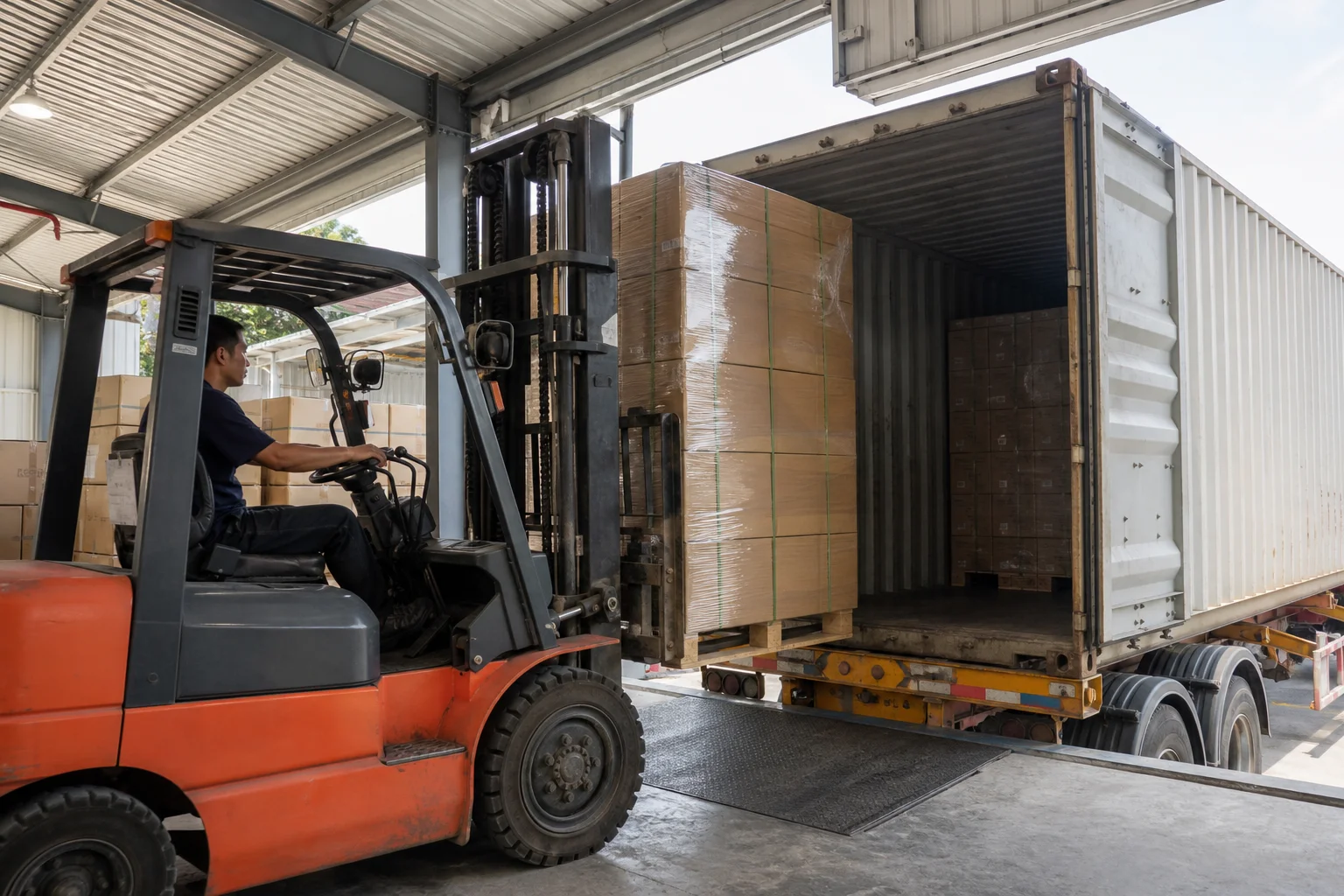
Writing the Term Into the Contract
The term should be stated precisely enough that no interpretation is required later.
The full statement
Write the term, the named place and the edition of the rules, for example FCA Ningbo container terminal, Incoterms 2020. Omitting the edition invites disputes about which version applies.
Separating risk from cost clauses
The Incoterm covers cost and risk transfer. Insurance level, inspection rights, title and payment terms should be written as separate clauses, since the term does not address them.
The insurance clause
State who insures, from which point, at what cover level, and in whose name. This is the clause that converts the term from a theoretical allocation into actual protection.
The packing clause
Because bag cargo is vulnerable to moisture and compression, specify carton strength, internal packing and desiccant use regardless of term. Under buyer-risk terms this becomes essential.
| Contract element | What to write |
|---|---|
| Term | Exact three-letter term |
| Named place | Terminal, warehouse or address |
| Edition | Incoterms 2020 |
| Insurance | Party, cover level, period, beneficiary |
| Packing | Carton and internal packing specification |
| Documents | List and timing of required documents |
Referencing the term in every document
The purchase order, invoice, packing list and bill of lading should all carry the same term and named place. Consistency is what makes the allocation enforceable.
Common Incoterm Mistakes
Most import disputes trace back to a small number of recurring errors.
Comparing quotes on different terms
This is the most expensive mistake because it leads to the wrong supplier selection before any shipment occurs. Standardise the term first.
Assuming the term includes insurance
Only CIF and CIP oblige the seller to insure. Under FOB and CFR, a buyer who assumed cover discovers the gap after a loss.
Omitting the named place
Without a named place, the obligation is undefined. In a dispute, the interpretation may not be the intended one.
Using FOB for containers
The term does not match container practice, leaving the terminal-to-loading period ambiguous. FCA is the correct alternative.
| Mistake | Consequence | Correction |
|---|---|---|
| Mixing terms in comparison | Wrong supplier chosen | Standardise before pricing |
| Assuming insurance included | Uninsured voyage | Confirm cover per term |
| No named place | Undefined obligation | State it exactly |
| FOB for containers | Ambiguous risk gap | Use FCA terminal |
| DDP without duty visibility | Overpayment, audit risk | Request duty breakdown |
| Assuming unloading included | Dispute at delivery | Use DPU if needed |
Assuming unloading is included
DAP does not require the seller to unload. Where unloading matters, DPU states it explicitly.
Treating the term as a payment term
The Incoterm does not set payment timing. Confusing the two leads to contracts that are silent on when money moves.
FAQ
Which Incoterm is best for importing PU leather bags?
For most container shipments, FCA with the container terminal named is the clearest choice because the risk transfer point matches container practice. For a first small import, DAP is often simpler because the seller arranges export and main carriage while the buyer keeps duty visibility.
Does CIF mean the seller is responsible until the goods arrive?
No. Under CIF the seller pays freight and arranges minimum insurance, but risk passes when the goods are loaded on board at origin. The buyer is exposed during the voyage and must claim on the insurance arranged.
Why is FOB problematic for container shipments?
FOB passes risk when goods are on board the vessel, but a sealed container is usually handed to the carrier at a terminal days earlier. The period between handover and loading is ambiguous, which is why FCA is recommended for containers.
What insurance cover should an importer arrange for bag cargo?
Institute Cargo Clauses A is appropriate because it covers handling and stacking damage that narrower clauses exclude. Cover should start from the point where risk transfers under the chosen term, and the buyer should be the beneficiary.
Is DDP cheaper for the buyer?
Not necessarily. The seller must recover duty and handling within the price, and the buyer cannot see the duty component to verify it. DDP also often makes the seller the importer of record, which can affect claims and compliance obligations.
Who pays terminal handling charges at origin?
It depends on the freight agreement rather than the term alone. Two quotes on the same term can differ because of terminal handling allocation, so ask explicitly which charges are included.
What happens if the named place is not specified?
The obligation becomes undefined and the risk transfer point is open to interpretation. In a dispute the outcome may not match either party’s assumption, which is why the named place should always appear in the contract and on the invoice.
How quickly must a damage claim be made?
Notice periods are short, sometimes three days for visible damage, and they vary by carrier and jurisdiction. The delivery receipt should carry a written reservation of rights, and a joint inspection should be requested immediately.
Can the Incoterm be changed after the order is placed?
It can be changed by agreement before shipment, but it must be reflected consistently in the contract, invoice and transport documents. A term that appears in one document and not another creates clearance problems.
Does the Incoterm affect product quality obligations?
No. Incoterms deal with delivery, cost and risk transfer, not with quality, warranty or specification. Quality obligations belong in separate contract clauses and should be written independently.
What is the difference between DAP and DPU?
Under DAP the seller delivers to the named place ready for unloading, but is not obliged to unload. Under DPU the seller must unload. For heavy cartons of bags, this difference affects cost and liability for handling injuries.
Should a buyer use the same term for every shipment?
Not necessarily. The appropriate term depends on volume, freight relationships and import capability, and it can reasonably change as those develop. What should stay constant is consistency between the term, the documents and the insurance.
Importing PU leather bags and unsure which term protects you?
Send your destination, shipment volume and preferred freight arrangement to info@gionar.com and we will confirm the applicable term, the exact handover point, packing specifications for moisture and compression, and the documents that will accompany your shipment.