Which Areas Should a Bag Factory Audit Cover Beyond Paperwork?
Documents describe what a factory intends to do. The floor shows what it actually does. An audit that stays in the meeting room collects assurances; an audit that walks the building collects evidence, and the difference becomes visible in the first order.
Most factory audits begin with a document review and then run out of time. Certificates are checked, a quality manual is skimmed, the inspection records are photographed, and the visit ends with a polite presentation of the sample room. Nothing in that sequence reveals whether the process holds under pressure.
What paperwork can and cannot prove
A certificate proves that a system was audited at some point at some site. It does not prove that the line assigned to your order measures anything, that the material on the shelf matches the specification, or that the rework bench is under control this week.
The principle behind every area below
Each area is examined for the same three things: is there a defined method, is there a record of it being followed, and is the record consistent with what you can see. Where all three align, the process is real. Where any one is missing, the process is a document.
How to use this list
The areas below are ordered in the sequence material follows through a bag factory. Walk them in that order and the audit tells a story, because each stage consumes the output of the previous one and any gap propagates forward.
- Incoming Material Inspection
- Warehouse and Stock Control
- Cutting Department
- Sewing Line Organisation
- Hardware Setting and Reinforcement
- Edge Finishing and Surface Work
- Final Inspection Area
- Measurement and Test Equipment
- Machine Maintenance and Tooling
- Sample and Pattern Room
- Operator Skill and Training
- Environment, Lighting and Housekeeping
- Traceability on the Floor
- Rework, Waste and Yield
- Product Security and Brand Protection
- Data Systems and Reporting
- Turning Observations Into a Score
- Sequencing the Audit Day
- Packing and Carton Control
- Auditing Across Seasons
- Auditing Subcontracted Stages
- Labour and Welfare Observations
- FAQ
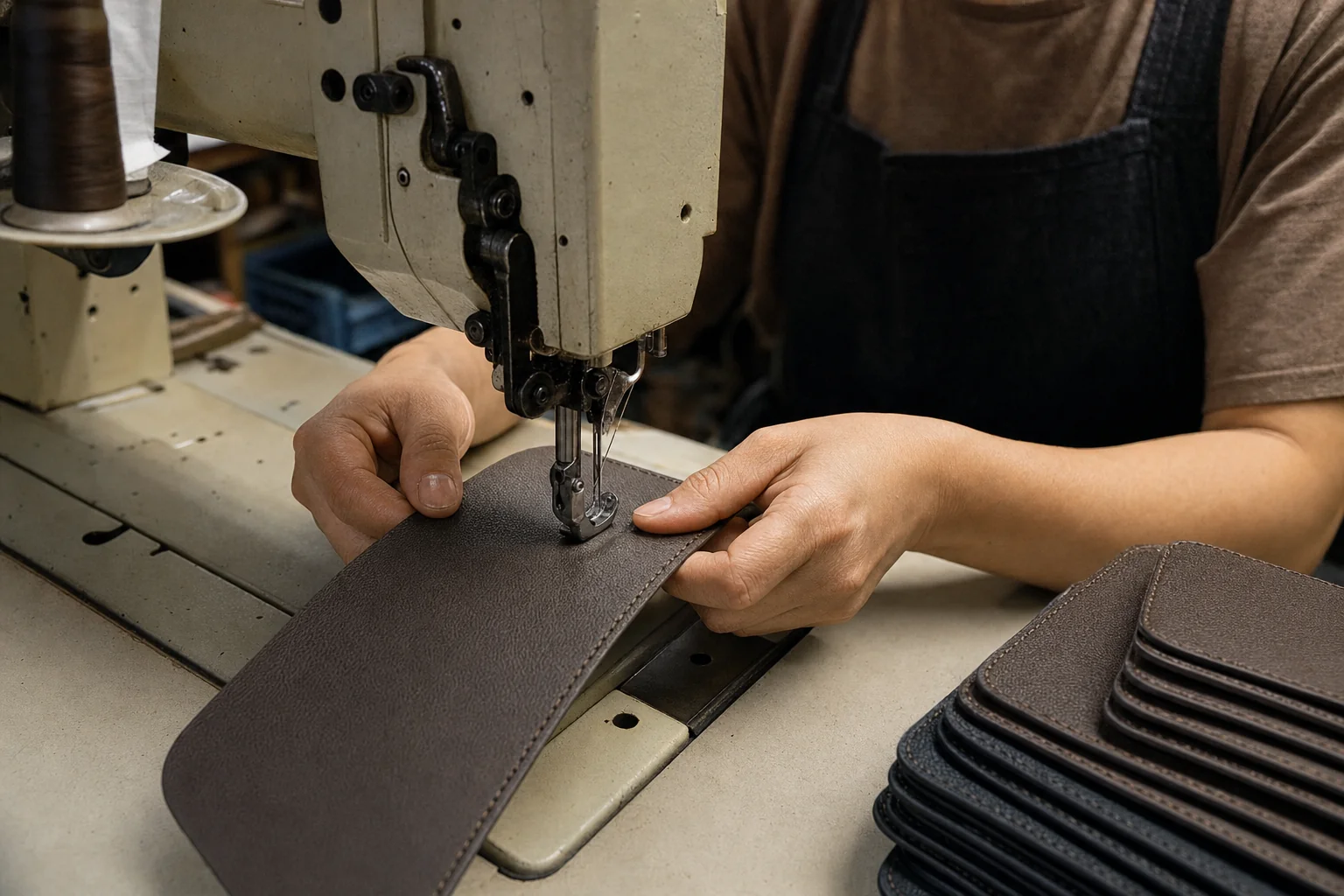
Incoming Material Inspection
Is there a receiving step at all
Ask what happens when a roll of coated fabric arrives. A factory with a receiving process weighs, measures, checks shade against a retained standard and records the lot. A factory without one signs the delivery note and moves the roll to the rack.
Shade and thickness checks
Colour under a standard light and thickness at three points along the roll are the two checks that catch most material problems. Ask for the last month of records and confirm the numbers, not just the passes.
Retained samples
A retained cutting from each received lot, labelled and stored, is the only way to settle a dispute about whether the material changed. Its absence means any future argument about shade becomes a matter of memory.
Warehouse and Stock Control
Location and identification
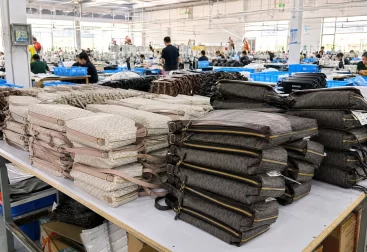
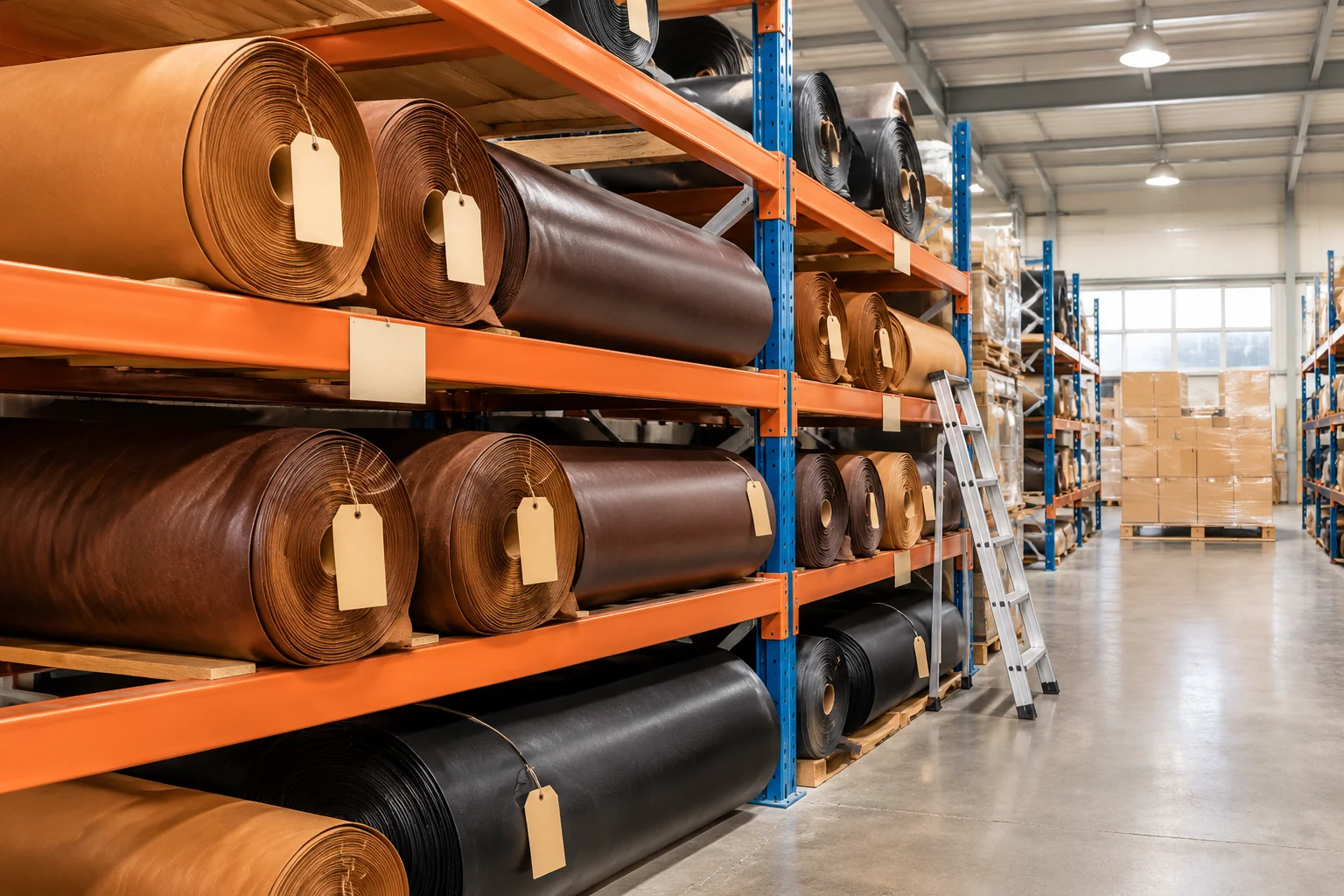
Every roll, box and tray should have a location and an identity. Where material is stored in open piles without lot labels, the factory cannot tell you which lot went into which order, and traceability ends before production begins.
FIFO in practice
First-in-first-out is claimed everywhere and visible almost nowhere. Look at the rack layout and ask which roll would be issued tomorrow; if the answer requires searching, the system is in the software rather than on the floor.
Segregation of approved and rejected
Rejected material must be physically separated and marked. Material awaiting disposition that sits beside production stock will eventually enter production, usually on a busy day, and nobody will record it.
Counting the store against the records
Pick two materials and count the physical quantity against the stock figure. A close match indicates a live system; a wide gap indicates a system updated at month end, which means nobody can trust it during the month when decisions are actually made.
Cutting Department
How the pattern reaches the table
Ask to see the marker or the die set used for the current order, and confirm it matches the approved pattern version. Cutting from a superseded marker produces consistent, repeatable, wrong parts, which is the most expensive defect class because it is repeated across the whole lot.
Tension and direction control
Coated fabric has a direction and stretches under tension. Check whether layers are laid with consistent direction, whether the material is relaxed before cutting, and whether the cutting table is marked. Panels cut across direction will behave differently after a month of use.
Bundle identification
Cut panels should be bundled, counted and tagged with style, size, lot and quantity. A bundle without an identity cannot be traced back to a roll, and a defect found in sewing cannot be linked to its material.
Sewing Line Organisation
Line balance and work-in-progress
Count the pieces between stations. A line with large buffers at two or three points is unbalanced, and the operator before each buffer is waiting while the one after is rushing. Both states generate defects, and the buffer size tells you which station is the constraint.
Machine setup per operation
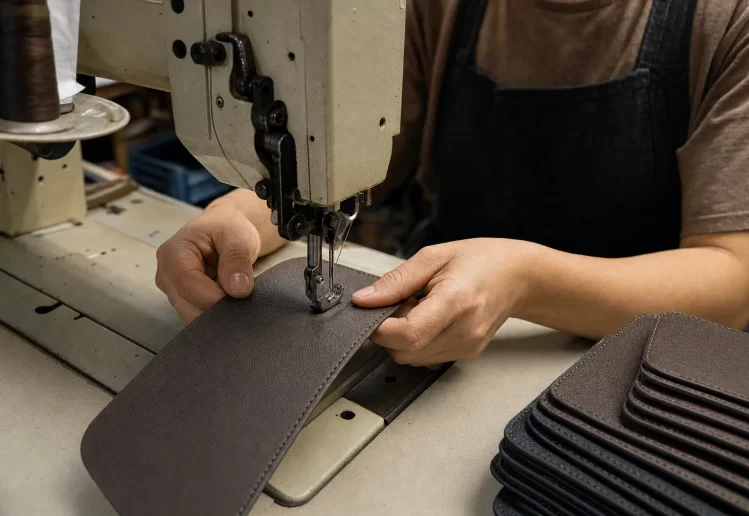
Each operation should have a defined machine, needle size, thread and stitch density. Ask an operator what stitch length they use; a specific answer with a number indicates a controlled setting, while a shrug indicates habit.
In-line inspection presence
A roving inspector or a check station mid-line catches defects before they are buried inside a finished bag. Where the only inspection is at the end, the cost of every defect includes the labour already invested in the whole bag.
Hardware Setting and Reinforcement
How stress points are reinforced
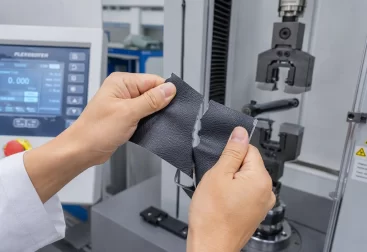
Handle anchors, D-ring tabs and strap junctions carry the load. Ask to see the reinforcement: interlining, rivets, bar tacks, stitching pattern. Then ask to see a pull test record, because reinforcement specified without a test is a design intention rather than a verified capability.
Hardware consistency
Weigh and compare a sample of buckles and rings against the approved specification, and check plating colour across pieces. Mixed plating batches are visible under daylight and are one of the most common causes of a retailer rejection.
Setting method and marking
Press-set versus hand-set hardware produces different failure modes. Look for setting marks and deformation around snaps and rivets, and ask whether a setting tool is dedicated to each hardware size.
Edge Finishing and Surface Work
Edge paint or fold, and why it matters
Painted edges and turned edges fail differently. Painted edges crack when the paint is applied too thickly or over an unprepared surface; folded edges fray when the skiving is uneven. Ask which method the specification requires and see the same method on the floor.

Number of coats and drying control
Edge quality is a function of coats, drying time and burnishing. A factory that applies three thin coats with controlled drying produces a different product from one that applies one thick coat to meet a schedule, and the difference appears in the field rather than in the warehouse.
Surface cleaning and defect screening
Coated fabric shows marks, glue residue and handling scuffs. A finishing area with a cleaning step and a light table screens these before packing, which is far cheaper than discovering them at the customer.
Adhesive control
Ask which adhesive is used, whether it is water-based, and how the open time is controlled. Adhesive choice affects both the smell of the finished bag and its compliance status in destination markets, so it belongs in the audit and not only in the specification.
Final Inspection Area
Space, lighting and layout
Final inspection needs light, a defined area and separation from packing. Where inspection happens at the packing table under mixed lighting, defects are found by luck rather than by method.
The sampling plan in use
Ask the inspector which plan applies and how the sample size was determined. A factory that inspects a fixed percentage regardless of lot size is not sampling; it is estimating.
What happens to a failed lot
Look for the rework area and the reject cage. Both should exist, be labelled and be under the control of the quality function rather than the production supervisor, because a supervisor measured on output will always prefer rework to rejection.
Re-inspecting a passed lot
Take a carton that has already passed inspection and re-check ten pieces against the specification. The gap between your result and the factory’s record is the most direct measure of inspection reliability available in a single visit.
Measurement and Test Equipment
Equipment inventory
Tape measures, calipers, thickness gauges, a colour light box, a thread tension gauge and a pull test rig for hardware. The inventory should match the characteristics the specification asks you to control.
Calibration records
Every measuring instrument needs a calibration status and a date. Equipment without calibration is a source of confident, wrong numbers, which is worse than no measurement at all.
Who performs the measurements
Measurement performed by the operator who made the part is a self-check, not an inspection. Ask who measures independently and see that person’s records, because independence is what makes the number usable in a dispute.
Machine Maintenance and Tooling
The maintenance schedule
A written schedule for lubrication, needle changes, timing checks and belt replacement, with the last completion date visible. Machines that are repaired only when they break produce a drifting stitch quality that nobody records.
Spare parts and needles
Holding needles, bobbins and presser feet in the correct sizes for the material on the floor indicates planned production. A single needle size used across all materials indicates the opposite.
Tooling control
Dies, templates and jigs should be stored, labelled and inspected for wear. A worn die produces parts that shrink gradually, which is one of the few defects that gets worse with every lot and is almost never noticed at final inspection.
Sample and Pattern Room
Version control of patterns
Patterns should carry a version and a date, and the version on the floor should match the approved one. Ask to see both, then compare the pattern file name with the marker in the cutting department.
The sealed sample
Your approved sample should exist on site, sealed, dated and signed, in a condition that can be compared. Where the sealed sample cannot be produced, every later dispute is settled by opinion.
Pattern maker presence
An in-house pattern maker shortens revisions and usually indicates a factory that understands construction rather than assembly alone. Ask who made the pattern for a comparable product and how long a revision takes.
Operator Skill and Training
Skill matrix by operation
A matrix showing which operator is qualified for which operation, with dates and signatures, reveals whether the line can absorb absence without quality loss. Where only one person can set hardware or run the post-bed machine, a holiday becomes a quality event.
How a new operator is introduced
Ask what happens when a new operator joins the line: training on scrap, supervised first pieces, a check of the first hour’s output. A factory that answers with a duration only, without a verification step, is describing attendance rather than training.
The sample piece test
A practical check that takes ten minutes: ask three operators to sew the same seam and compare the results. The variation between them is the factory’s real process capability, and it is rarely visible in any document.
Turnover and its effect
Ask how long the current line has worked together. High turnover resets competence continuously, and the effect appears as inconsistency across lots rather than as defects within a lot.
Who signs off on skill
Qualification should be signed by the quality function, not only by the supervisor who needs the line staffed. Where the same person sets the schedule and certifies competence, the certificate follows the schedule.
Environment, Lighting and Housekeeping
Light level at inspection points
Inspection under 300 lux and inspection under 750 lux find different defects. Ask what the light level is at the final inspection table and whether it is measured, then look at whether the fixtures are clean and working.
Temperature and humidity
Coated fabric and adhesives respond to humidity. A factory that records temperature and humidity in the material store and in the finishing area is managing a variable that most audits never mention.
Housekeeping as a leading indicator
Offcuts on the floor, oil under machines, unattended scissors and mixed material in one bin. Housekeeping correlates with defect rate more reliably than most formal metrics, and it is visible in a single walk down the aisle.
Waste segregation
Separate containers for coated fabric offcuts, lining, paper and general waste, with a stated destination. This matters for compliance reporting in several markets and indicates whether the factory thinks in processes or in tasks.
Safety equipment in use
Cutting presses and clicker presses need guards and two-hand controls. Gloves, guards and eye protection should be in use rather than displayed on a wall, and their absence is a signal about how seriously procedures are treated.
Traceability on the Floor
From roll to carton
Pick one finished bag and work backwards: bag, bundle, cutting lot, roll, material delivery, supplier. If the chain breaks at any link, a defect cannot be attributed and a recall cannot be scoped.
Lot marking discipline
Marking that exists on paper but not on the bundle fails the test. Traceability has to survive handling, which means marks on the material or the bundle, not only in the system.
Mixing lots in one order
Ask whether an order can be produced from more than one material lot. If the answer is yes, ask how shade continuity is controlled, because a mixed-lot order is where the visible difference between panels appears.
Records of what went into what
A simple production record linking order, style, lot and quantity is enough. Elaborate systems that nobody updates are worth less than a paper log filled in daily at the cutting table.
The reverse test under time pressure
Time how long it takes the factory to answer which lot was used for a specific order shipped two months ago. The answer, and the speed of it, is the honest measure of the traceability system.
Rework, Waste and Yield
The size of the rework area
Rework should be a small, controlled station rather than a zone. The volume of work sitting in it at a random moment is a direct indicator of how much the process is producing that should not exist.
Yield figures by style
Ask for material yield: panels cut per metre and the percentage lost to defects. A factory that does not know its yield is buying material by feel and pricing by guess.
Root cause records for rework
Rework without a recorded cause is a cost with no learning attached. Look for a short list of causes and the actions taken, updated weekly rather than annually.
Who authorises rework versus rejection
The authority to pass reworked goods should sit with quality, not with production. Where the same person both schedules output and accepts rework, the acceptance rate follows the schedule.
Cost visibility
Ask how the cost of rework is attributed. Factories that attribute rework cost to the production line change behaviour; those that absorb it into overhead do not, because nothing in the system objects.
Product Security and Brand Protection
Access control to the sample room
The room holding your patterns, sealed samples and tooling should be access-controlled and logged. Where any visitor can walk through it, the designs are as protected as the door suggests.
Waste disposal of branded material
Printed lining, branded labels and logo plates that fail must be destroyed rather than discarded. Ask how rejected branded components are disposed of and whether there is a record of destruction.
Tooling ownership and storage
Embossing plates, dies and printing screens paid for by the brand should be listed, marked as brand property and stored separately. Unlisted tooling tends to reappear on another customer’s product.
Visitor and photography policy
A factory with a written visitor policy and a rule about photography is managing confidentiality deliberately. The absence of one is not proof of a problem, but the presence of one tells you how the factory thinks about other buyers’ designs.
Subcontractor disclosure
Ask for a list of any external workshops used for capacity, and whether those workshops hold brand material. Undisclosed subcontracting is the most common route by which a design leaves a factory.
Data Systems and Reporting
What is recorded daily
Output per line, defect counts by type, rework volume and material issued. Four numbers entered daily give a factory a working picture; a monthly summary built from memory gives a presentation.
Who reads the numbers
Ask what happened the last time a defect count crossed a threshold. A record that exists but triggers no action is a reporting formality, not a control.
Consistency between systems and floor
Compare a system figure with the physical count of a bundle or a carton. Discrepancies of a few percent are normal; a system that reports completion for goods that are not finished indicates the data is aspirational.
Corrective action tracking
Ask for the open corrective actions and their due dates. A factory that can show five open actions with owners and dates has a working system; one that answers with none open is either perfect or not tracking.
Reporting to the buyer
Ask what a weekly production report contains. Photographs, output against plan, defect summary and the next week’s constraint is the useful minimum, and it is also the format that makes an audit largely unnecessary later.
Turning Observations Into a Score
Score by area, weight by consequence
Each area above receives a score for method, record and consistency. Weight the areas by their consequence for your product: for a structured tote with painted edges, the finishing and reinforcement areas carry more weight than packaging.
| Area | Method | Record | Consistency |
|---|---|---|---|
| Incoming material | Yes | Monthly | Match roll to record |
| Warehouse | FIFO on floor | Location list | Ask for tomorrow’s roll |
| Cutting | Marker version | Bundle tags | Compare to pattern |
| Sewing | Stitch settings | In-line checks | Operator answers |
| Finishing | Coats and drying | Batch log | Inspect edges |
| Final inspection | Sampling plan | Numeric sheets | Re-inspect a lot |
What a single low score means
One low score in an area your product does not depend on is negotiable. A low score in traceability or final inspection is not, because both are structural: no amount of buyer supervision replaces them once volume begins.
Score while standing in the area
Complete each row before leaving the area, with a photograph and one sentence of evidence. Scores written afterwards drift toward impressions, and the evidence disappears into memory.
The photograph rule
Photograph what is visible, not what is presented. A record sheet, a bundle tag, a rack layout and a rework bench are all more persuasive after the visit than any summary written later.
Agreeing the gaps in the room
Before leaving, read the three lowest scores back to the factory and ask whether they agree. Agreement converts an audit finding into a commitment, and disagreement surfaces the facts that matter while you are still there.
Keeping the sheet comparable
Same criteria, same weights, same wording every visit. A scoring sheet that evolves between audits produces a trend line that measures the sheet rather than the factory.
Sequencing the Audit Day
Start where material starts
Receiving, warehouse, cutting, sewing, finishing, inspection, packing. Following the material flow means each stage is examined in the state the previous stage produced, which is exactly how defects travel.
| Time | Area | Focus |
|---|---|---|
| 09:00 | Opening meeting | Order, specification, schedule |
| 09:30 | Warehouse and receiving | Lot labels, FIFO, rejects |
| 10:15 | Cutting | Marker version, bundles |
| 11:00 | Sewing lines | Balance, settings, in-line checks |
| 13:30 | Finishing and hardware | Edge method, pull tests |
| 14:30 | Final inspection | Sampling, records, rework |
| 15:30 | Closing | Score, gaps, written actions |
Leave time in the two least photogenic areas
The rework bench and the material store are where the honest information sits, and both are usually rushed. Allocating an extra twenty minutes to each produces more insight than an extra hour in the showroom.
Do not audit during a presentation
Where the visit begins with a slide deck, shorten it. A factory confident in its floor does not need forty minutes of introduction, and the time is better spent walking.
Close with a written list
Three to five actions, each with an owner and a date, agreed before leaving. An audit that ends with a discussion produces a report; one that ends with actions produces a different factory by the next visit.
Packing and Carton Control
Carton specification and testing
Ask for the carton specification and a compression or drop test result. A carton chosen by habit rather than by test arrives at the destination crushed, and the damage is attributed to the carrier rather than to the packaging decision.
Packing method consistency
Poly bags, desiccant, tissue, dividers and stuffing are part of the product. Watch one carton being packed and compare it with the written method; where no written method exists, the packing will differ between the first and last carton of the same order.
Marking and traceability on the carton
Carton marks should carry order, style, size, quantity and lot. Marks written by hand at the end of the shift are a frequent source of receiving errors and of claims that cannot be resolved.
Finished goods storage before shipment
Cartons stacked against a wall under a leaking roof is a real finding. Check the storage area, the pallet height and the distance from any water source, because the last quality event of many orders happens after production is complete.
Auditing Across Seasons and Re-Audit Triggers
Audit timing changes the answer
An audit in a quiet month describes a factory that is not under pressure. Where possible, include a peak period or ask specifically what changes during peak: additional shifts, temporary workers, subcontracted stages.
Signals that require a return visit
A change of ownership, a new building, a sudden price reduction, a shift in the quality manager, or a delivery that arrives earlier than promised. Each indicates that something in the process has changed without being announced.
The six-month re-check
Line assignment, material and hardware suppliers, and the current month of inspection records. Three checks, two hours, and the picture is refreshed without repeating the full audit.
Using the score as a trend
Compare the same weighted score across audits. A stable score with improving traceability is a factory getting better at the things that matter; a stable score with worsening traceability is a factory that has learned to present well.
Auditing Subcontracted Stages
Which stages leave the building
Ask directly which operations are performed externally: splitting, skiving, printing, embroidery, plating, sometimes assembly. A written list, with the workshop names, is the only version of this answer worth having.
Auditing the workshop, not the claim
Where a stage is subcontracted, the audit should extend to that workshop or the subcontractor should be excluded from your order. Quality control that stops at the factory gate does not cover work performed on the other side of it.
Control of material in transit
Material sent out and returned needs a transfer record with quantities, dates and signatures. Without one, shrinkage during subcontracting is invisible and is quietly absorbed into yield.
Labour and Welfare Observations
What is visible in a walk
Access to drinking water, ventilation at the finishing area, rest areas, protective equipment in use and whether identity cards are present at workstations. These are observations rather than a social audit, and they indicate how procedures are treated generally.
Working hours and shift structure
Normal hours, overtime frequency and rest days. Factories running sustained extreme overtime produce defects at a higher rate, and the delivery dates they quote depend on that overtime continuing.
Existing social audit reports
Ask for any audit already completed and its corrective action plan. A factory that has been through the process before usually has a system for it, which shortens your own verification considerably.
FAQ
What should a bag factory audit cover beyond documents?
Every physical stage material passes through: receiving, warehouse, cutting, sewing, hardware setting, edge finishing, final inspection, packing and finished goods storage. Alongside those, the measuring equipment, machine maintenance, pattern control, operator competence, housekeeping, traceability, rework control, product security and the data system that records it all.
Which single area reveals the most in the shortest time?
The material warehouse. Lot labels, rack layout, segregation of rejected stock and the answer to which roll would be issued tomorrow tell you whether traceability and stock control exist at all, and both are structural once volume begins.
How do I test traceability without a full audit?
Pick one finished bag and ask the factory to work backwards from bag to bundle to cutting lot to roll to supplier delivery. Then ask the reverse question: which lot was used for a specific order shipped two months ago, and time the answer.
What does an empty rework area mean?
Either the process is genuinely in control or rework is being hidden inside production. Check the defect records and the reject cage together; a clean bench with no numeric records usually means the second, not the first.
How much time does a floor audit need?
A full day for a medium factory is realistic: half a day for the material flow, two hours for inspection, traceability and records, and an hour for the closing discussion and written actions. Two hours in total will produce a presentation, not an audit.
Is a third-party audit enough on its own?
A third-party audit gives you a comparable score and a report you can act on, but it is generic. Your own visit should focus on the areas your product depends on most, which for structured bags means reinforcement, edge finishing and traceability rather than packaging.
What if the factory refuses to show one area?
Treat it as a finding rather than an inconvenience. There is no legitimate reason to withhold a sewing line, a material store or an inspection record from a buyer who is evaluating an order, and the refusal itself is the answer.
Should I audit before or after the sample is approved?
Overlap them. Run the document review and the floor visit while the sample is in production, so you can see the actual line making your product rather than a line described in a meeting. The sample then confirms what the audit observed.
How many areas should appear in the final score?
Between twelve and twenty weighted items is workable. Fewer becomes subjective, more becomes unreadable. Weight by consequence for your construction, and keep traceability and final inspection as near-gates rather than weighted lines.
What records should I photograph during the visit?
Bundle tags, a numeric inspection sheet, the rack layout in the material store, the rework bench, the calibration label on a measuring instrument and the sealed sample. Six photographs taken on site are worth more than a page of notes written afterwards.
How do I audit a factory I cannot visit?
Use a scripted live video walkthrough with a fixed route, asking the camera to show machine nameplates, bundle tags and current inspection records. Add a paid sample and a trial order. Video cannot verify hand feel or colour under standard light, so raise the weight of the sample and trial in the score.
What is the most commonly missed area?
Finished goods storage and packing. Most audits stop at final inspection, yet cartons crushed against a damp wall or packed to an unwritten method cause claims after production has already been counted as successful.
How do I handle findings without damaging the relationship?
Read the three lowest scores back before leaving and ask whether the factory agrees. Agreement turns a finding into a commitment; disagreement surfaces the facts while you are still in the building, which is the cheapest possible moment to resolve them.
What makes an audit repeatable?
The same weighted scoring sheet, the same route through the material flow and the same photograph set each time. Repeatability is what turns a single visit into a trend, and the trend is what tells you whether the factory is improving or performing.
When should the floor be audited again?
Every six months for line assignment, suppliers and current records, and immediately after a change of ownership, a new building, a sudden price reduction or a change of quality manager. Those events alter output long before the paperwork does.
Audit the floor, not the brochure.
Send your audit checklist, order volume and destination market to info@gionar.com. We schedule floor visits against the material flow, open our inspection records and traceability logs, and answer findings with written actions and dates rather than assurances.