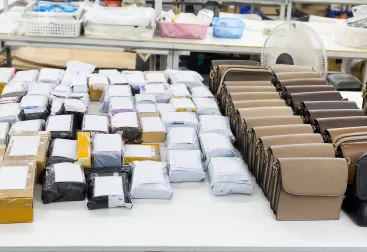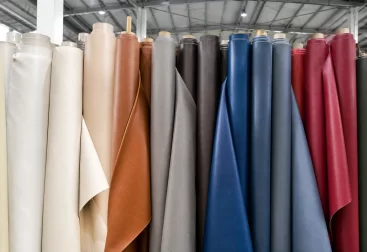
Ask ten bag buyers in 2026 what has changed since they placed their last production order and most of them will mention the same two things: the paperwork got heavier, and the questions got sharper. Sustainability used to sit in a separate conversation, usually at the end of a sourcing cycle.
It was handled by a marketing team that needed a recycled hangtag and a short paragraph for the product page. It now arrives at the beginning, inside the request for quotation, attached to the bill of materials, and often ahead of the price negotiation.
That shift is easy to describe in general terms and harder to work with in practice. A brand that wants recycled content, documented traceability and a credible end-of-life story cannot simply add those requirements to a specification sheet.
It also cannot expect the same unit price, the same lead time and the same minimum order quantity. Every added requirement moves something in the production plan, and the factories that serve these buyers have spent the past few years learning where the real friction points are.
This article is written for B2B buyers, brand owners and sourcing managers who need to answer a practical question: are sustainable material expectations genuinely reshaping the bag categories they buy, or is this a surface-level trend that can be handled with better copywriting? The answer sits somewhere in between, and the useful part is knowing which expectations carry production consequences and which are still mostly cosmetic.
We will look at what buyers are actually specifying, how regional compliance pressure filters down into purchase orders, what the trade-offs cost in money and time, and how a buyer can verify claims instead of accepting them.
We will also look at the places where sustainability language still outruns factory capability, because that gap is where most disputes, chargebacks and delayed launches begin. The final sections give a staged plan for building a range that satisfies serious buyers without rebuilding an entire product line in one season.
What Buyers Actually Ask For: The Evidence Behind the Shift
The clearest signal is not a survey response but the structure of an incoming enquiry. Five years ago a bag RFQ typically contained a reference image, a target price, a quantity and a delivery date. Today a growing share of enquiries add a materials declaration, a restricted substance statement, a request for recycled content documentation and sometimes a question about how end-of-life disassembly would work.
Those additions change what the factory has to prepare before it can quote. A reference image can be priced in a day. A material declaration with recycled content percentage, backing fabric composition and coating chemistry requires supplier documentation that may not exist for a stock material, which means the material has to be sourced differently or the claim has to be reduced.
The four requests that appear most often
Across the enquiries we see for PU leather bags, backpacks and crossbody styles, four requests repeat with enough regularity to be treated as a pattern rather than an exception.
- Recycled content with a number attached. Not “eco-friendly material” but a stated percentage of post-consumer or post-industrial content, with the basis of that percentage explained.
- Restricted substance assurance. A statement that the material meets a named standard or an internal restricted substance list, ideally supported by a test report rather than a signature.
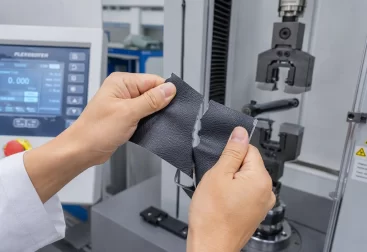
- Durability evidence. Abrasion cycles, flex resistance, peel strength or colour fastness data, because a bag that fails early is a sustainability problem as much as a quality problem.
- Traceability from material to shipment. Which mill supplied the material, which lot went into which production run, and how that maps to the cartons a retailer receives.
The fourth request is the one that separates mature buyers from beginners. Anyone can send a specification. Asking for lot-level traceability forces a factory to keep records it may never have kept, and it exposes whether the material claim is a genuine supply chain change or a purchase of a certificate.
Why the questions became sharper
Three forces are pushing in the same direction. Retail compliance teams now ask suppliers for evidence, and those questions travel up the chain to the factory. Regulations in major markets increasingly require substantiation of environmental claims rather than accepting them. And consumers, while rarely able to judge material chemistry, have become quick to notice when a claim does not match reality.
The practical result is that a bag buyer today is often acting as an information conduit. They need answers that survive a compliance review, not answers that read well on a product page. That is a different requirement from the one that shaped the category five years ago, and it explains why material conversations have moved from marketing to procurement.
The Four Expectations That Have Genuinely Changed
Not every sustainability expectation is new, and not every new expectation is operational. The four below are the ones that change a purchase order, a production schedule or a quality plan in a measurable way.
1. Material disclosure has become a document, not a claim
A buyer asking for “vegan leather” ten years ago would accept a verbal assurance. Today the same buyer is likely to ask for the base fabric composition, the coating type, the presence of any solvent-based adhesive, and the recycled content of each layer. That level of disclosure requires the material supplier to provide data they may not publish, which is why sourcing a documenting material takes longer than sourcing a visually identical one.
For a bag program, the practical consequence is a longer material approval phase. Plan for a two to four week documentation cycle before a material can be locked, and treat that cycle as part of the development timeline rather than an administrative afterthought.
2. Durability is now framed as a sustainability metric
The most useful change in buyer thinking is that durability stopped being a separate quality topic. A bag that lasts three years instead of one uses fewer resources per year of use, and buyers have started to express that in specifications: minimum abrasion cycles, flex endurance targets, hardware corrosion resistance, and seam strength minimums.
This is a good development for factories that already test, because it converts existing quality data into a sustainability argument. A laboratory report showing 25,000 abrasion cycles is worth more in a buyer conversation than a paragraph about environmental commitment, and it costs nothing extra if the test is already part of the quality plan.
3. End-of-life questions have arrived earlier than the infrastructure
Buyers increasingly ask how a bag would be disassembled, whether the lining can be separated from the shell, whether hardware is detachable, and whether the material can be recycled in the markets where the brand sells. The honest answer for most PU leather bags is that disassembly is possible but rarely economical, and collection infrastructure varies enormously by market.
Rather than dismissing the question, treat it as a design input. Mono-material construction, fewer bonded layers, removable linings and snap-in hardware all improve the theoretical end-of-life outcome. They also tend to simplify production, which is a rare case where the more sustainable choice is also the simpler one.
4. Buyers expect a range of options, not a single green hero product
Five years ago a brand might launch one recycled-material style and treat it as a statement. Today buyers expect a position that holds across a range: the entry price point, the volume seller and the premium piece should all have a defensible material story, even if the stories differ in strength.
That expectation is harder to satisfy because material availability and minimum order quantities vary by option. A recycled-content PU may be available at reasonable volumes, while a bio-based alternative may carry a much higher minimum. Building a coherent range often means mixing claim strengths deliberately rather than forcing every style onto the same material.
How Regional Pressure Filters Down Into Purchase Orders
Sustainability expectations do not arrive evenly across markets. A brand selling into the European Union faces a different documentation burden from a brand selling into the United States, and both differ from buyers serving the Middle East or Southeast Asia. Understanding that geography helps a buyer and a factory agree on what level of evidence is actually required.
European Union: documentation-first buying
EU rules on ecodesign, waste and supply chain due diligence have made documentation a purchasing requirement rather than a marketing choice. Buyers working under those frameworks typically ask for material composition, recycled content evidence, and a supplier declaration before confirming an order.
The useful reference points for buyers are the official texts published on EUR-Lex, which are more reliable than second-hand summaries circulating in sourcing forums.
In practice, EU-facing buyers tend to be the most demanding on paper and the most flexible on visual innovation. They will accept a plain material if it is well documented, and they will reject an attractive material that cannot be substantiated.
UK, US and Australia: claim-substantiation buying
These markets approach the same problem through consumer protection and advertising rules rather than material bans. The pressure is on substantiation: a claim must be capable of being proven, and greenwashing enforcement has raised the cost of vague language. Buyers in these markets tend to ask fewer regulatory questions and more evidence questions, such as “what exactly does recycled mean here, and can you show the input material?”
For a factory, this produces a specific request pattern: certification copies, test reports and a clear statement of what the claim does and does not cover. Ambiguity that reads as harmless marketing in one market can be a legal exposure in another.
Japan, Korea and Southeast Asia: quality-led buying
Buyers in these markets often arrive at sustainability through durability and material quality rather than through compliance. Their enquiries emphasise hand feel, colour consistency and long-term performance, with environmental documentation as a supporting requirement. A factory that leads with durability data and follows with material documentation tends to communicate more effectively with these buyers than one that leads with certification logos.
What the regional difference means for a single production run
A factory serving several regions cannot apply one documentation standard. The efficient approach is to build the highest reasonable documentation level into the base specification and then vary the marketing claims by destination. Documentation is cheap once it exists and expensive to create retroactively, so the base specification should carry the burden.
| Buyer region | Primary driver | Typical documentation request | Where buyers concede |
|---|---|---|---|
| European Union | Regulatory compliance | Composition, recycled content evidence, supplier declaration, test reports | Decorative novelty; unproven bio-based claims |
| United Kingdom / United States | Claim substantiation | Certification copies, test reports, precise claim wording | Documentation format if substance is provable |
| Australia / New Zealand | Claim substantiation plus durability | Abrasion and flex data, material origin | Certification breadth if testing is complete |
| Japan / Korea | Quality and consistency | Colour consistency records, performance data | Detailed chain-of-custody records |
| Southeast Asia / Middle East | Price and availability | Basic material statement | Deep traceability |
The table above is a working summary of enquiry patterns rather than a regulatory reference. Buyers should confirm the actual obligations that apply to their market before locking specifications, and the point of the table is to show that “sustainable” means different evidence in different places.
Reading the Numbers: What Sustainable Specifications Cost
Buyers often assume the premium for a documented sustainable material is a fixed percentage. In practice the premium is not a number, it is a set of decisions, and two brands buying visually identical material can end up with cost structures that differ by a wide margin depending on how they specify.
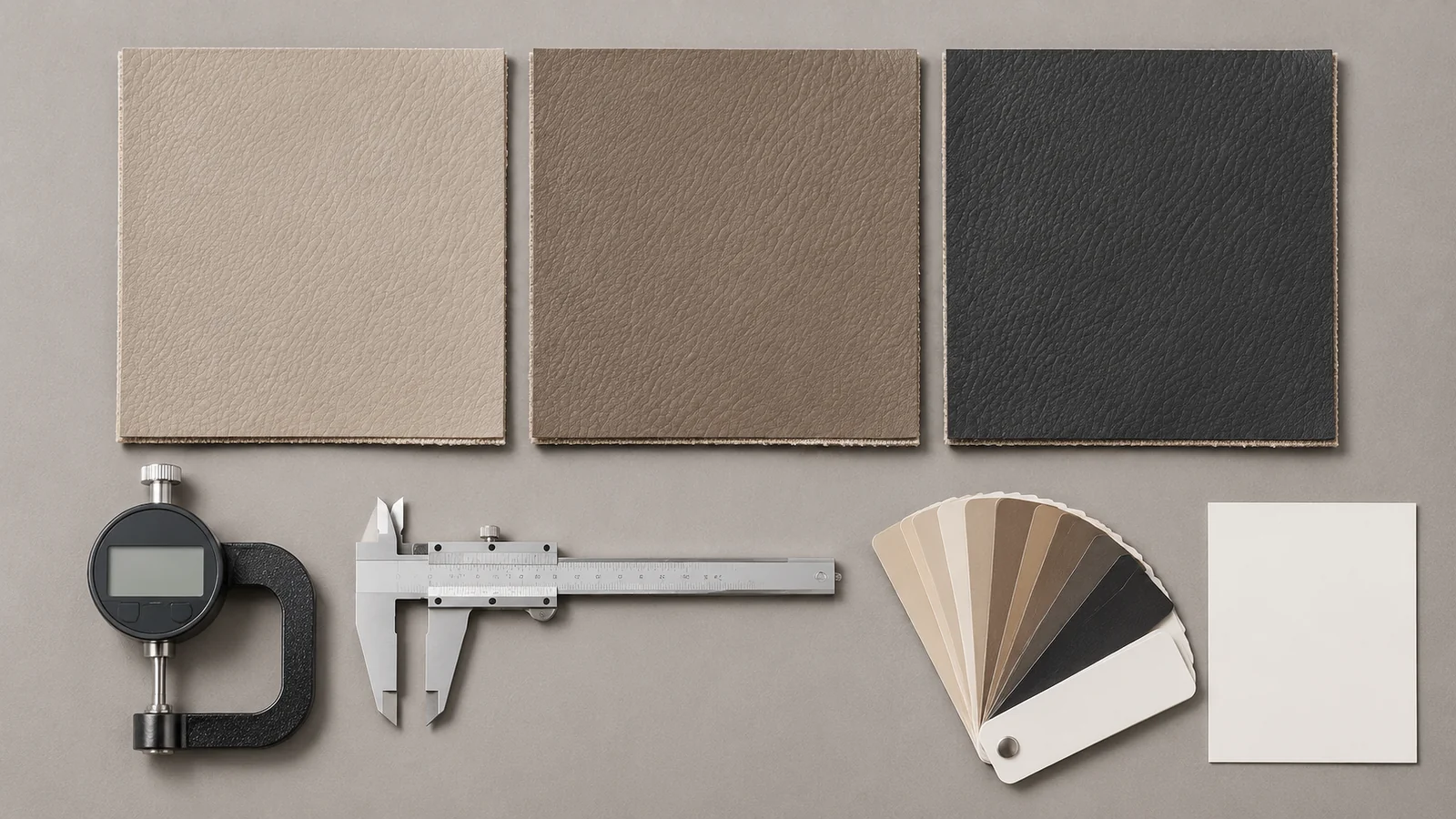
The cost of a sustainable specification has four components: the material itself, the documentation, the production adjustment, and the quality risk. Most buyers negotiate the first and ignore the other three, then discover the gap when the order is already in production.
The material component
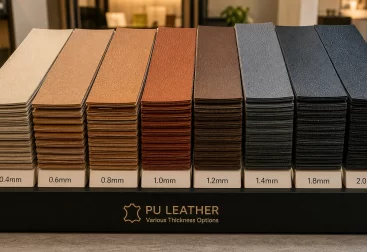
Recycled-content PU leather is usually the most accessible upgrade. Its cost position depends on the availability of recycled polyester backing and on whether the coating chemistry changes. Where the change is limited to the backing fabric, the price difference against a conventional equivalent is often modest. Where the coating or the surface treatment also changes, the difference widens and minimum order quantities usually rise.
Bio-based and other alternative feedstocks sit further up the cost curve, mainly because supply is thinner and fewer mills can offer consistent lots. A buyer who needs 3,000 metres of a specific bio-based material in a specific colour is asking for something that may not exist as a stock item, which converts a material purchase into a development project.
The documentation component
Documentation has a real cost even though it never appears as a line item. Test reports, certificates of recycled content, supplier declarations and traceability records all require someone to collect, verify and translate them. A factory that has never done this for a material will need to build the process, and that effort is normally reflected in either the quoted price or the timeline.
Buyers can reduce this component by accepting documentation that already exists rather than requesting bespoke formats. A request for a custom declaration in a buyer’s own template is a small ask that can add weeks when the mill has to route it through a quality department.
The production adjustment component
Different material behaviour means different settings. Recycled backing fabrics can vary slightly in tensile behaviour, and coating thickness tolerances may shift. Cutting, fusing and stitching parameters built around a conventional material will usually work, but not always at the same yield.
The practical cost appears as a slightly higher material allowance and, in the first run, a higher rate of trial pieces. Both are manageable if they are budgeted. They become disputes when a buyer assumes a drop-in replacement and the factory assumes the buyer knows it is not one.
The quality risk component
The least visible cost is the risk that a sustainable material performs differently in the field. Colour consistency across lots, surface durability in humid climates, and adhesion between layers are the three areas where we see the most variation between conventional and alternative materials.
Quality risk should be priced through testing, not through hope. Adding abrasion, flex and adhesion tests to the pre-production stage costs a small amount and removes most of the surprise. A buyer who skips that step is effectively self-insuring against a defect rate they cannot estimate.
| Specification choice | Effect on unit cost | Effect on MOQ | Effect on lead time |
|---|---|---|---|
| Recycled backing fabric only | Low, often within normal colour and lot variation | Usually unchanged | One to two weeks for documentation |
| Recycled content across coating and backing | Moderate, plus a testing allowance | Often raised to a full material lot | Two to four weeks |
| Bio-based or alternative feedstock | High, with limited supplier options | Material lot dependent, potentially large | Four to eight weeks including trials |
| Custom colour on a sustainable base | Moderate, driven by minimum run length | Raised by colour batch minimum | Adds colour development and approval |
| Mono-material construction design | Neutral to slightly lower | Unchanged | Adds design and sampling time, reduces assembly time |
Ranges in the table are planning estimates drawn from typical development patterns; the actual figures depend on the material, the colour and the order size. The useful takeaway is not the percentage but the direction: the bigger the material change, the more the cost hides in MOQ and lead time rather than in the unit price.
Recycled, Bio-Based and Mass Balance: What Buyers Can Actually Verify
The vocabulary of sustainable materials is imprecise, and imprecision is where procurement risk lives. Three terms appear constantly in bag enquiries and mean very different things, with very different evidence requirements.
Recycled content: verifiable if the chain is short
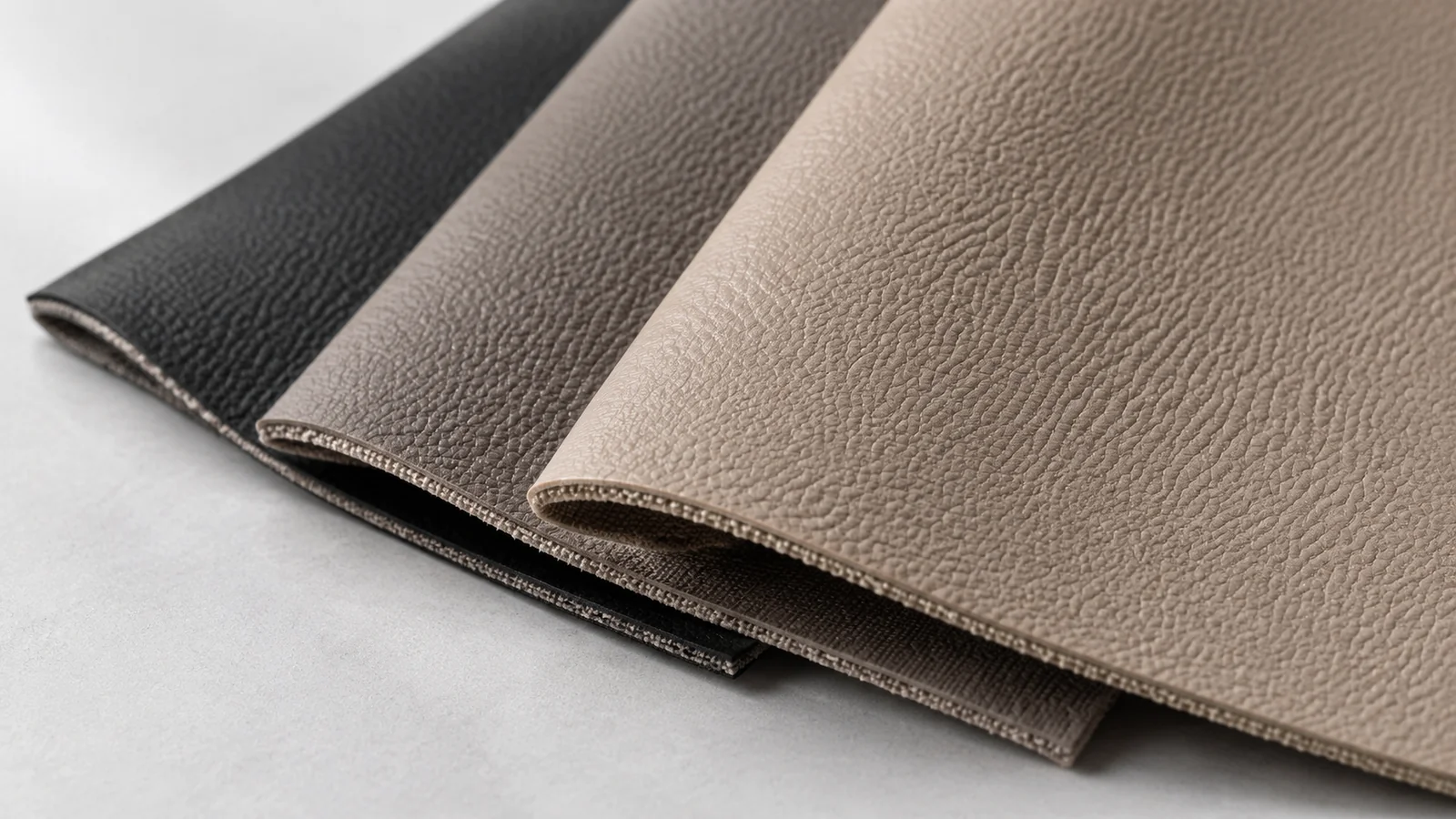
Recycled content in a PU leather bag usually refers to the backing fabric, which may contain post-consumer polyester, or to the coating, where recycled polyol inputs are possible. The claim is verifiable when the supply chain is short enough to trace: a mill that buys certified recycled chips or fibre and issues a declaration with a lot number gives a buyer something to check.
The common failure is a claim that aggregates recycled content across a product without saying which component carries it. A bag described as “made with 40% recycled materials” is not verifiable unless the buyer knows whether that 40% applies to the shell, the lining, the packaging or the total weight. Ask for the basis, and expect a component-level answer.
Bio-based content: real chemistry, thin supply
Bio-based PU uses feedstock derived from plants rather than fossil sources for part of the polyol. The chemistry is genuine and the performance can be good, but supply is limited, lot consistency varies, and the percentage of bio-based carbon is often modest. Claims should state the measured share, not the marketing category.
For a buyer, the practical test is availability. If a material is offered as bio-based but the mill cannot state the share, the feedstock source or the lot, the claim is not ready for a compliance review regardless of how good the sample feels.
Mass balance: legitimate, frequently misunderstood
Mass balance is an accounting method in which certified material is mixed into a production system and allocated to outputs by bookkeeping rather than physical separation. It is a recognised approach in many supply chains, and it allows recycled or bio-based feedstock to be used at scale without dedicated production lines.
The difficulty is communication. A mass-balance claim does not mean the specific bag in a customer’s hands contains that percentage of recycled material; it means the system as a whole did. Buyers who use mass-balance materials need claim wording that is accurate at the product level, and that often means a more careful sentence than the marketing team originally drafted.
A verification checklist buyers can send with an enquiry
- Which component carries the recycled or bio-based content, and what is its share by weight?
- Who issued the supporting declaration, and does it reference a lot or batch number?
- Is the claim physical segregation or mass balance?
- Which test reports exist for the material, and how old are they?
- What restricted substance standard does the material meet, and to which version?
- Can the factory map the material lot to the production order and the shipped cartons?
- What happens if the declared material is unavailable mid-order: substitution, delay, or cancellation?
The last question is the one buyers forget and later regret. Material substitution under pressure is the single most common way a documented specification quietly becomes undocumented in production, and the answer to that question belongs in the purchase order, not in an email.
Standards worth naming in a specification
Rather than inventing internal language, buyers can reference recognised frameworks. The ISO catalogue contains test methods for abrasion, flex and colour fastness that are widely understood by laboratories. Restricted substance schemes such as OEKO-TEX LEATHER STANDARD give a common baseline that both factory and buyer can check. Naming a specific standard and version is far more useful than requesting “environmental compliance”.
Where Supplier Capability Still Falls Short
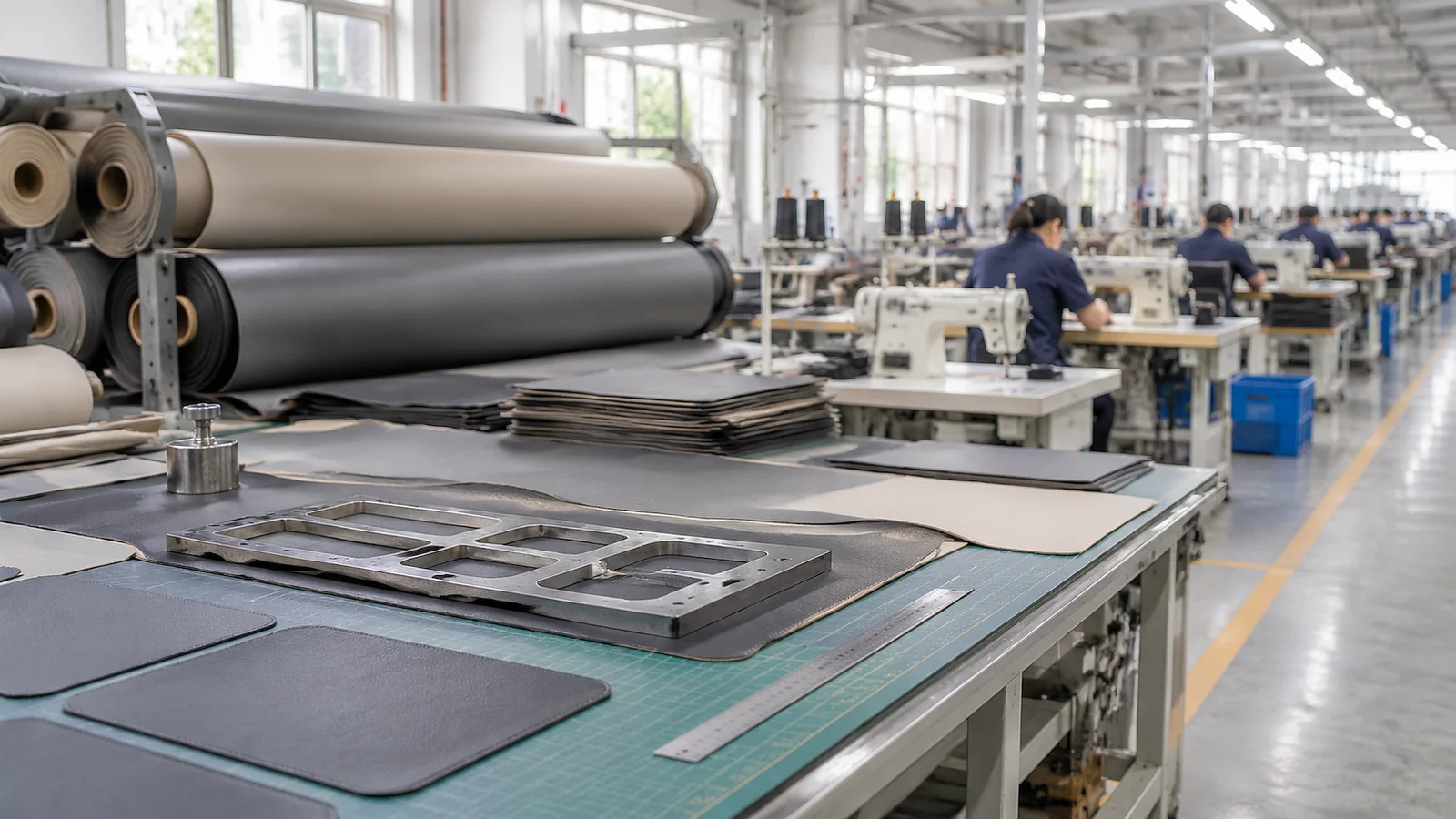
Buyer expectations have moved faster than most factories’ ability to document and control them. That gap is not evenly distributed: some factories have built genuine systems, others have purchased certificates and left production unchanged. The difference is usually visible in the questions a factory asks back.
Gap one: colour consistency on recycled bases
Recycled backing fabrics can differ slightly in shade from lot to lot, and a coating that hides this on a conventional base may show it on a recycled one. Factories that handle this well build a small colour tolerance into the approval and test against a physical standard under controlled lighting rather than against a screen image.
Buyers should ask how the factory manages shade variation between lots and what happens if two lots arrive at the same assembly line. A vague answer is a warning. A specific answer, such as shade panels approved per lot and segregated cutting, is a sign the process exists.
Gap two: documentation that stops at the office door
Many factories can produce a certificate and few can connect it to a production lot. The certificate proves the material exists somewhere; the traceability record proves it went into this order. Buyers who need the second should ask to see a real example from a previous order, with commercial details redacted if necessary.
Gap three: testing capability and data ownership
In-house laboratories vary widely. Some factories run abrasion, flex and adhesion tests internally and can iterate quickly; others send everything to a third party and wait two weeks for results. Neither approach is wrong, but the buyer needs to know which one applies, because it determines how fast a material problem can be diagnosed during production.
A related issue is data ownership. When the factory pays for a test, the report belongs to the factory, and the buyer may receive only a summary. If the buyer’s compliance team requires the full report, that should be agreed before the test is commissioned rather than after.
Gap four: minimum quantities on sustainable materials
The most common practical disappointment is not quality but quantity. A buyer who loves a bio-based material often discovers the minimum is several times their planned first order. Good factories flag this at the sampling stage; poor ones let the buyer fall in love with the sample and reveal the constraint during price negotiation.
How to test a supplier’s real capability
One efficient method is to send a short, specific request that cannot be answered with marketing language. Ask for the recycled content share by component, the lot number format used in production, and one redacted example of a traceability record. Factories with systems answer in a day; factories without systems answer with a brochure.
That single exchange tells a buyer more than a factory tour, because it reveals whether the information exists in a usable form. A factory that has to construct an answer after the fact will not be able to maintain that answer across a thousand units.
The Expectation Gap: Claims That Outrun Production
The most expensive problems in sustainable bag programs are not material failures. They are mismatches between what was promised to a retailer and what the factory can document, discovered after the purchase order is signed. That mismatch has a predictable anatomy, and it can be diagnosed early.
How the gap forms
It usually starts with a marketing brief written before any material is sourced. The brief describes a position the brand wants to occupy: recycled, traceable, low impact. The sourcing team then looks for a material that supports that position, and finds one that supports most of it. The remaining difference is small enough to be absorbed by softer wording, and the wording travels into a retailer conversation without anyone revisiting the specification.
Six months later the retailer asks for evidence of the claim as written, and the factory can only evidence the claim as produced. The brand is left choosing between a correction and an uncomfortable silence, and both cost more than the original material premium.
The three claims that most often outrun production
- “Made from recycled materials” when only the lining or the backing contains recycled content, and the share was never stated per component.
- “Biodegradable” applied to a PU leather bag, when the material is durable by design and no test supports degradation in realistic conditions.
- “Carbon neutral” based on offsets for part of the footprint, without a boundary statement explaining which emissions are included.
Each of these can be defended if it is written precisely. None can be defended if it is written broadly, because broad claims invite the widest interpretation and the strictest scrutiny.
A claim-substantiation test that takes ten minutes
Before a claim leaves the building, apply three questions. What exactly is being claimed, at which component and by what measure? What document would prove it to a sceptical compliance reviewer? Who signs that document, and does the signature come from someone with actual knowledge of the material?
If any of the three cannot be answered concretely, the claim is not ready. The alternative is to soften it to something the production records can support, which is almost always a better outcome than defending a claim the factory never had the data for.
Why factories should push back
Factories that accept every claim a buyer proposes are doing the buyer no favour. A written specification that cannot be evidenced becomes a defect in the buyer’s own compliance file, and the dispute that follows damages the relationship more than a firm conversation at the sampling stage would have.
The most useful thing a manufacturer can offer is a precise version of an ambitious claim. If a brand wants to say recycled, state the component and the share. If it wants to say durable, attach the abrasion result. Precision is not a compromise; it is the difference between a claim that survives a review and one that does not.
Building a Sustainable Range Without Rebuilding Everything
A buyer who accepts that expectations have changed still has to work within a budget, a calendar and a set of accounts that already agreed last season’s pricing. The answer is not a total relaunch. It is a staged program that puts documented material where it can be defended and keeps the rest of the range commercially viable.
Stage one: document what already exists
Most ranges contain material choices that are more defensible than the brand realises. A conventional PU leather with a known mill, a stable backing composition and a current test report is a stronger position than a vaguely described alternative with no documentation. The first stage is a documentation audit of the existing assortment, not a material change.
This stage typically produces two useful outputs: a short list of styles that can carry an evidence-backed claim today, and a list of claims currently in use that cannot be substantiated and need rewording. Both are valuable, and neither requires a supplier change.
Stage two: convert the volume styles
Apply recycled-content material to the styles with the highest unit volume. A material change on a best seller produces a larger absolute reduction than the same change on a premium piece, and the documentation cost is amortised across more units. This is also where factories can offer the most practical support, because high-volume styles are usually already on stable production lines.
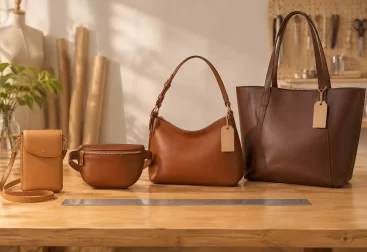
Where a buyer needs a starting point for custom development, the custom bag manufacturers portfolio shows the construction types that adapt most easily to material substitution, including structured totes, backpacks and crossbody formats.
Stage three: design for the next cycle
The cheapest sustainability improvement available to a bag brand is often a design decision: fewer bonded layers, a lining that can be separated, hardware that can be replaced rather than discarded. These changes cost little at the design stage and save money in assembly, and they make end-of-life conversations much easier to hold.
Design changes need a development cycle, so they belong in the plan for the following season rather than in the current order. A buyer who tries to compress design and material change into one production run usually gets neither properly.
Stage four: build the evidence file
Every claim eventually faces a reviewer. Build a simple evidence file per style: material composition by component, recycled or bio-based share with the issuing party, test reports with dates, restricted substance statement, and a sample of the traceability record linking lot to order. Keep it current, because a report that expires mid-season is a claim that expires with it.
This file is also the most effective negotiation tool a buyer has. Suppliers quote and behave differently when they know the buyer can verify, and the existence of the file removes most of the ambiguity that inflates prices in sustainable sourcing conversations.
What not to do
Avoid converting the entire range in one season on an untested material. Avoid launching a claim before the documentation exists. Avoid treating a certificate as a substitute for a specification, and avoid assuming that a sustainable material is automatically a lower-performing one, which leads buyers to over-specify and pay for durability they do not need.
The staged approach is less exciting than a full relaunch and considerably more likely to survive contact with a compliance review, a factory schedule and a retailer’s evidence request.
A Ninety-Day Plan for Your Next Order
For buyers who want to act on this in the current cycle rather than the next one, a ninety-day sequence is realistic for most PU leather bag programs. The plan below assumes an existing product line and a factory relationship that is already working.
Days one to thirty: define and verify
Start by writing down the claim you intend to make and the component it applies to. Then send the verification checklist from earlier in this article to your factory and ask for a component-level answer. While that response is being prepared, audit the claims already in use on the current range and flag anything that cannot be evidenced.
Use this period to decide the material direction as well. Recycled backing is the low-friction option for most buyers; a broader recycled content change or a bio-based material is a development project and should be scheduled accordingly.
Days thirty-one to sixty: sample and test
Order material samples in the target colour and run the tests that matter for the category: abrasion for shells and handles, flex for folds and edges, colour fastness for linings that may transfer, and adhesion for laminated panels. Test the finished bag, not only the material, because assembly changes performance.
This is the stage where the honest cost conversation should happen. Confirm the effect on minimum order quantity, lead time and unit price before the style is signed off, so the commercial decision is made with real numbers rather than sample-stage optimism.
Days sixty-one to ninety: document and place
Assemble the evidence file, finalise claim wording with the marketing team, and place the production order with the material specification, documentation requirements and substitution rules written into it. Include the agreed traceability format, so the records that arrive with the shipment match the ones the buyer expects.
If the program involves custom structures or a first sustainable production run, sampling and tooling decisions should be settled early in this window. A manufacturer that handles both stock and custom development can usually sequence these steps in parallel; the custom bag manufacturing portfolio outlines the stages involved, and the PUBagFactory home page summarises the material and quality capabilities behind them.
What good looks like at the end of ninety days
At the end of the sequence a buyer should hold four things: a specification that states the claim precisely, documentation that supports it, a commercial agreement that prices the material honestly, and a production order that carries the requirement into the factory rather than leaving it in an email thread. That is a modest outcome compared with a full sustainability relaunch, and it is the outcome that most programs actually need.
Frequently Asked Questions
Are sustainable materials really changing buyer orders?
Both, but the change is uneven. Documentation requests have genuinely entered purchase orders, and buyers now ask for material composition and test evidence before confirming production. What has changed less is willingness to pay a large premium: most buyers accept a modest cost increase and expect the sustainable option to match the performance of the conventional one. The expectation that has shifted most is procedural rather than material.
Do recycled-content PU bags cost more than conventional ones?
When the change is limited to the backing fabric, the cost difference is often small and can be absorbed within normal lot variation. When the coating chemistry also changes, or when a custom colour is developed on a new base, the cost rises more noticeably and minimum order quantities usually increase. The largest hidden costs are documentation effort and the testing needed to confirm the material performs in the finished bag.
How can I verify a recycled content claim from a bag factory?
Ask for the share by component and by weight, the party that issued the supporting declaration, whether the claim is physically segregated or mass balance, and one example of a traceability record linking the material lot to a production order. If a factory cannot answer at component level, the claim is not ready to be used in a retail conversation, regardless of how the material feels.
Is bio-based PU leather more sustainable than recycled PU leather?
They answer different questions. Bio-based material changes the feedstock source, while recycled content changes the input material stream. Neither is automatically better: the outcome depends on the share of bio-based or recycled content, the durability of the finished bag, the transport chain and the end-of-life pathway.
For most buyers, recycled content is easier to source in consistent lots, while bio-based options remain limited in availability and colour range.
Which documents belong on a sustainable bag purchase order?
At minimum: material composition by component, recycled or bio-based share with the issuing party, current test reports for abrasion, flex and adhesion, a restricted substance statement referencing a named standard and version, and the agreed format for lot traceability. Add a substitution clause that states what happens if the declared material is unavailable mid-order, because that is where most documented specifications fail in practice.
Will a sustainable material change my minimum order quantity?
Often yes, and the increase depends on the material rather than the bag. Colour batches and material lot sizes drive minimums more than the number of units, so a buyer ordering 2,000 bags in a stock colour may face a lower minimum than a buyer ordering 5,000 bags in a custom colour on a new base. Confirm minimums at the sampling stage, before the style is approved internally.
How do I avoid greenwashing when writing product claims for bags?
State the component and the measure, then attach the evidence. “Shell contains 40% recycled polyester by weight, verified by supplier declaration” survives a review; “eco-friendly bag” does not. Avoid absolute terms such as biodegradable or carbon neutral unless the test or the boundary statement exists, and keep claim wording aligned with the material actually specified in the purchase order.
Talk to a Manufacturer That Documents What It Produces
The practical difference between a sustainable claim that works and one that collapses is whether the factory can evidence it. PUBagFactory manufactures PU leather bags, backpacks and crossbody styles in Guangzhou, and works with buyers on material documentation, sampling, testing and lot traceability from the first enquiry through to shipment.
If you are planning a sustainable material change for an upcoming range, send your specification, target quantities and market requirements to info@gionar.com for a quotation and a documentation checklist. If you would like to see the construction types that adapt most easily to recycled and bio-based materials, review the custom bag manufacturers portfolio before you write the brief.
Looking for a reliable PU leather bag manufacturer? Email info@gionar.com for a free quote and a material documentation review of your current specification.