Nearshoring has become the most repeated phrase in sourcing meetings since 2024, and the least precisely defined. A buyer in Chicago says the brand is “moving production out of China”. A Turkish factory owner in Istanbul says the same brand just placed a 4,000-piece trial. Both statements can be true at once, and that is exactly where the confusion starts. Production that leaves one country does not automatically arrive somewhere closer to the customer.
For anyone sourcing PU leather bags, the question is not whether nearshoring is happening. It is what specifically moves, at what volume, at what cost penalty, and which parts of the supply chain stay where they are because no other location can serve them at the required quality and MOQ. Those answers differ sharply between a plain cotton tote and a multi-panel coated-leather crossbody with custom hardware.
This article works through the evidence a factory sees in real enquiries rather than the version presented in conference keynotes. We will separate the four terms that get used interchangeably, look at which destinations genuinely appear in quotations, and explain why the PU leather ecosystem resists relocation in ways that apparel and footwear do not.
The middle sections deal with money and risk: an illustrative landed-cost model across five origins, the real arithmetic of lead time once safety stock is included, and the duty and rules-of-origin mechanics that usually drive these decisions in the first place. We then cover quality gaps, MOQ barriers and the hybrid structures buyers actually use when a full relocation fails the numbers.
For manufacturers, the practical question is narrower. A Chinese PU leather bag factory does not lose an order because a brand announces a nearshoring strategy. It loses the order when the brand finds a viable parallel supply route for a specific style, and keeps the rest. Understanding which styles are exposed is more useful than arguing about the trend.
One framing note applies throughout. Relocation is a portfolio decision, not a binary one. Almost every brand that has genuinely reduced China exposure still sources a majority of components there, and the ones that left entirely usually did so for reasons unrelated to cost, such as a single large customer’s compliance requirement.
What Nearshoring Actually Means in a Bag Supply Chain
Four terms dominate the conversation, and buyers routinely use them as synonyms even though they describe different structures with different cost profiles. Getting the vocabulary straight makes the rest of the discussion measurable.
The four models buyers confuse
| Model | What moves | Typical destination from a US or EU base | Main cost penalty |
|---|---|---|---|
| Reshoring | Production returns to the brand’s home country | Domestic factories, often small and specialised | Labour cost and limited cut-and-sew capacity |
| Nearshoring | Production moves to a nearby low-cost country | Mexico for the US; Turkey, Portugal, Romania for the EU | Material import plus shorter production runs |
| Friendshoring | Production moves to a politically aligned but distant country | Vietnam, India, Cambodia, Bangladesh | Longer freight, duplicated tooling |
| China plus one | A second source is added while China remains primary | Any of the above, usually at low volume | Split quality standards and double sampling |
Only the first two shorten the physical distance to the customer. Friendshoring and China plus one are diversification strategies that reduce political risk without reducing transit time, and they carry most of the same engineering duplication cost. When a brand says it is nearshoring, it is worth asking which of the four it actually means, because the answer determines whether freight and lead time change at all.
The stage of the chain that moves first
Bag production is not one operation. It is coated fabric production, cutting, skiving, edge folding, assembly, hardware setting, decoration and packing. In practice, the stages that relocate first are the last ones: assembly, decoration and packing, because they are labour-intensive, easy to specify and easy to audit.
Coated fabric production rarely moves. A PU leather mill needs release paper, base fabric, coating lines, embossing rolls and colour lab capability, and those assets exist in a small number of clusters worldwide. A nearshore factory that cuts and sews PU leather bags almost always imports the material itself, which means the relocation shortens the final assembly leg and nothing else.
Why “moved” and “replaced” are different claims
A brand can move 100% of a style to a new country and still be more dependent on the original supply base than before, because the material, hardware and pattern now travel further before assembly begins. This is the most common finding when a sourcing team models a relocation properly: the finished-goods origin changes, the component origin does not.
That distinction matters for compliance claims, for rules-of-origin calculations and for risk. A shipment assembled in Mexico from Chinese coated fabric and Chinese hardware may qualify for preferential treatment or may not, depending entirely on the tariff shift test applied to those inputs. Assuming that assembly location equals origin is one of the most expensive mistakes in this area.
Where Bag Production Has Genuinely Shifted
Setting aside announcements, the destinations that appear repeatedly in real quotations for PU leather and textile bags fall into a small group, each with a characteristic strength and a characteristic limit.
The destinations that keep appearing
- Turkey. Strong in coated fabric and hardware sourcing domestically, which makes it the most complete nearshore option for the EU. Lead times to Western Europe are short by road, and small runs are viable. Cost sits above Asia, and capacity for very large programmes is limited.
- Portugal and Spain. Best suited to higher-value lines where craftsmanship is part of the proposition. Labour cost is closer to Southern European industrial rates than to Asian rates, so the model works at retail prices well above mid-market.
- Romania and Bulgaria. Cut-and-sew capacity built on apparel, increasingly used for simple bag constructions. Material still arrives from Asia or Turkey.
- Mexico. Proximity to the US market by truck, with a growing but thin bag-specific supply base. Hardware and coated fabric are largely imported, and English-language technical communication varies by region.
- Vietnam, India, Cambodia, Bangladesh. Not nearshore in any geographic sense, but the volume destinations for diversification. Vietnam has the deepest bag assembly capability of the four.
The pattern is consistent: destinations with a domestic material and hardware base can absorb a whole style; destinations with only assembly capacity absorb the labour content and import everything else.
Which orders actually migrate
In practice, the styles that leave first are simple, high-volume and duty-exposed. Plain PU tote bags, canvas shoppers, basic backpacks with standard hardware and promotional lines move most readily, because the construction is easy to specify and the quality risk of a new factory is low.
Orders tied to a single retail programme with a long life also migrate well, since the tooling and sampling cost can be amortised over multiple seasons. Orders that reorder in small quantities every few weeks do not, because the new source cannot hold material and hardware on the shelf the way an established cluster can.
What stays, and why
Complex multi-panel constructions, moulded or welded styles, bags with custom die-cast hardware, and any style where colour consistency across large lots is critical tend to stay in established clusters. The reason is not sentiment. It is that these styles depend on supplier depth within a few kilometres of the assembly line.
A PU leather crossbody with a custom logo plate, a colour-matched edge paint and a metal chain requires a hardware plater, an edge paint supplier, a chain assembler and a colour lab, all of which must respond within days during development. Where those suppliers do not exist locally, every iteration adds freight time, and development stretches from three weeks to three months.
Why the PU Leather Chain Is Harder to Relocate Than Cotton
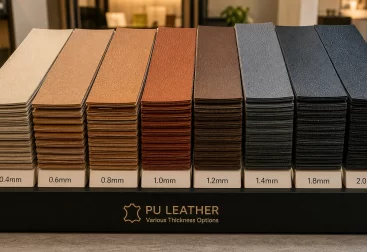
Cotton canvas bags relocate relatively easily because the material is a global commodity with published specifications and dozens of mills. Coated leather is the opposite: the material is engineered to a buyer’s hand-feel, colour and durability requirement, and it is produced by a small number of mills with long lead times. That asymmetry explains most of what the industry observes.
The five inputs that must exist locally
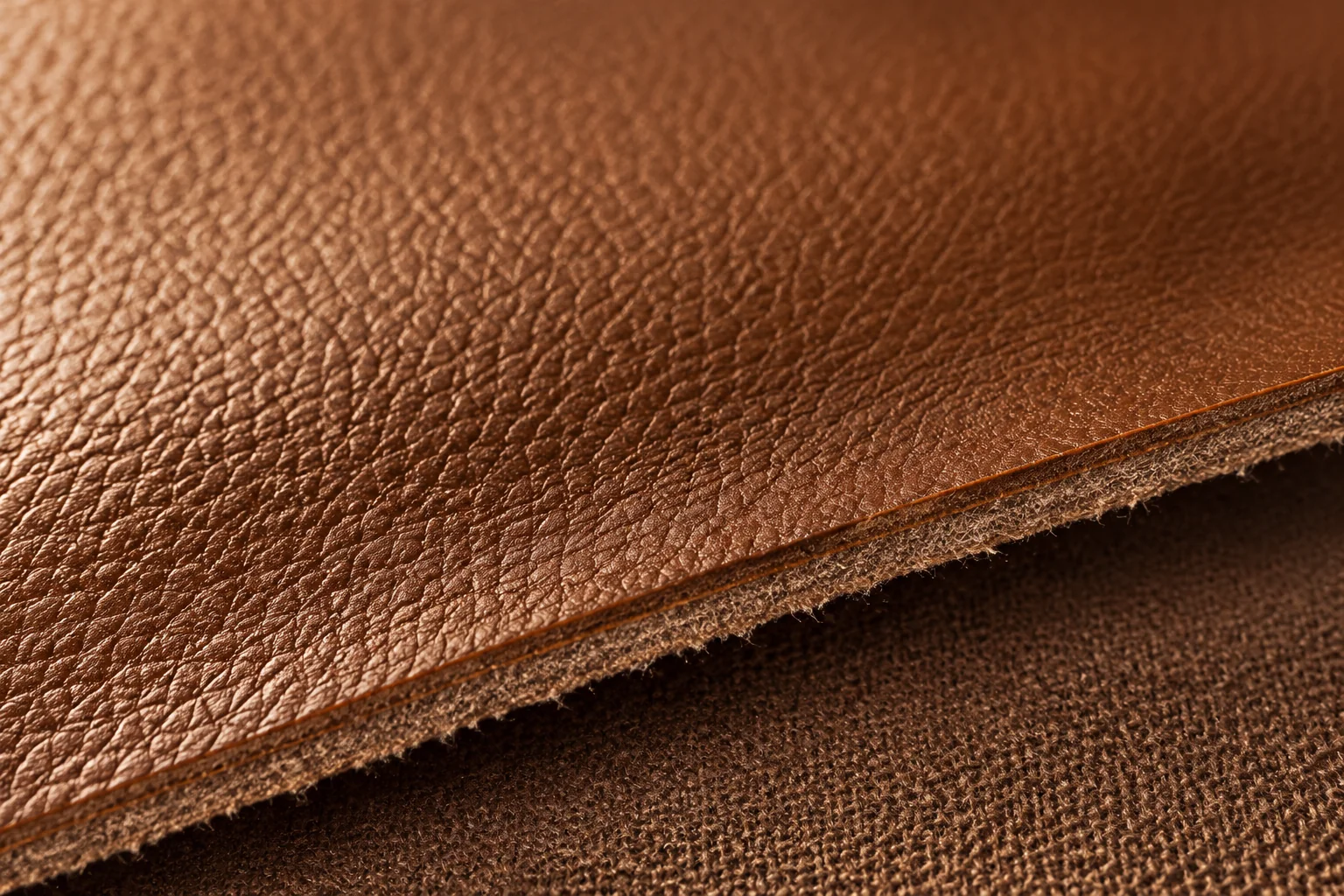
A bag factory is only as responsive as its supplier base. Five inputs determine whether a location can run a PU leather programme without importing most of the bill of materials.
| Input | Why it constrains relocation | Substitution risk when imported |
|---|---|---|
| Coated fabric (PU, microfiber) | Custom colour, hand-feel and backing; trial lots run 500-1,000 metres | High. Colour lots drift, and re-approval adds weeks |
| Lining and interlining | Weight, stretch and shrinkage must match the shell | Medium. Easier to substitute, harder to match hand-feel |
| Hardware | Plating colour and die-cast geometry usually come from existing moulds | High. New moulds cost tooling money and time |
| Thread and edge paint | Colour matching is done physically against the shell | Medium. Same colour names do not mean same colour |
| Reinforcement and foam | Determines structure and crush resistance in backpacks | Low to medium, but affects load-test results |
The critical one is the first. A PU leather mill does not simply sell from stock. Colour is developed against a physical standard, then a lab dip is approved, then a bulk run of several thousand metres is scheduled. If the mill is three weeks away by sea, every colour decision carries a three-week feedback loop.
The sample loop is the real bottleneck
Development is iterative by nature. A crossbody bag will typically go through two or three rounds of sample changes: strap drop, gusset depth, hardware placement, edge paint shade. In an established cluster, a revised sample can be back on the buyer’s desk within a week because the material, hardware and pattern room are all local.
In a location that imports its inputs, each round adds freight time in both directions. Three rounds of changes that took three weeks now take three months, and the buyer’s launch calendar does not move with it. This is the single most common reason a nearshore trial stalls even when the unit price looked acceptable.
What local content really means
Buyers often assume that producing in a country means the product is “from” that country. Customs authorities do not. Origin is determined by where the goods underwent their last substantial transformation, defined by a tariff shift, a value-added threshold or a specific process rule depending on the agreement invoked.
For bags, the practical consequence is that assembly alone may not change origin in a way that unlocks preferential duty. A sourcing team that models the duty saving before checking the rule of origin often finds the saving is smaller than the freight penalty, which is why so many announced relocations quietly return to a dual-source structure.
The Cost Arithmetic of Moving a Bag Line
Cost comparisons in this category fail most often because they compare FOB prices. A FOB comparison across origins ignores duty, freight, inventory carrying cost, duplication of tooling and the working capital tied up in longer pipelines. The model below is illustrative and uses round figures to show structure rather than to quote prices.
An illustrative landed-cost model
Assume a mid-market PU leather tote with a target FOB of USD 12.00 in China, a 2,000-piece order, and a US destination. The other columns apply indicative multipliers that reflect typical labour share, freight and duty exposure rather than a specific quotation.
| Cost element | China | Vietnam | Turkey | Mexico | Portugal |
|---|---|---|---|---|---|
| Indicative FOB index | 100 | 103-110 | 118-130 | 112-125 | 150-180 |
| Material origin | Local cluster | Mostly imported | Partly local | Mostly imported | Partly local |
| Ocean or road transit | 30-40 days | 28-35 days | 18-25 days | 3-7 days by truck | 15-22 days |
| Duty exposure | Highest | Lower | Lower | Preferential if rules met | Lower |
| Duplicated tooling | None | Yes | Yes | Yes | Yes |
| Practical minimum run | 300-500 | 500-1,000 | 300-500 | 1,000+ | 200-300 |
Read across the table and a pattern appears. The origins with the strongest cost position have the longest and most policy-exposed pipeline; the origins with the best speed and duty position carry a material-import penalty and a higher unit cost. No column wins on every line, which is why the decision usually ends as a split allocation.
The costs that get left out
Three omissions distort most relocation business cases. The first is tooling: dies, logo plates, printing screens and cutting templates must be duplicated at the new site, and that cost is rarely amortised into the unit price during year one.
The second is quality cost. A new factory’s first two production runs typically require tighter inspection, more pre-production meetings and a higher sampling rate. That is engineering time, and it is not free even when it does not appear on an invoice.
The third is the cost of running two supply relationships. Dual sourcing doubles the sampling calendar, the quality documentation and the number of people who must understand a style. Brands consistently underestimate this, and it is the reason some second sources are abandoned after a year.
When the arithmetic actually favours a move
The move pays when the duty differential is large relative to the FOB gap, when the style is simple enough that a new factory can match it quickly, and when volume is high enough to amortise duplicated tooling within one season. It rarely pays for small, complex or fast-changing ranges.
It also pays differently at different price points. At a USD 8 FOB, a 20% cost penalty is difficult to absorb. At a USD 45 FOB, the same percentage is easier to defend if the customer is paying for speed and origin. This is why nearshoring concentrates in the upper-middle and premium tiers rather than in promotional volume.
Lead Time, Freight and the Speed Advantage That Isn’t
The stated case for nearshoring is speed, and the case is real but narrower than it appears. Transit time is only one segment of a pipeline that starts at material booking and ends at the retailer’s distribution centre.
What the pipeline actually looks like
A typical PU leather bag order in an established cluster runs four to six weeks of production after material and hardware are confirmed, plus 30 to 40 days of ocean transit, plus destination clearance and inland delivery. Total elapsed time from purchase order to shelf is commonly 10 to 14 weeks.
A nearshore order may cut transit to a week, but it adds material import time at the front of the pipeline, because the coated fabric still arrives from the same mill. If the factory has not pre-positioned material, the total can be identical or worse, with less predictability.
The safety stock equation
Speed matters most through its effect on safety stock, not on the calendar. Inventory held to cover demand variability scales with lead time: halving the pipeline roughly halves the buffer needed for the same service level, releasing working capital.
That benefit is genuine, and it is the strongest argument for nearshore assembly in fashion-led ranges. It is also the argument most often overstated, because it assumes the shorter lead time is stable. A nearshore factory importing 80% of its inputs inherits the variability of the long pipeline without the inventory depth of the established cluster.
Air freight changes the comparison
For urgent replenishment, air freight from Asia compresses the transit gap to about a week at a cost that is usually uneconomic for a whole order but acceptable for a partial one. Brands increasingly use a hybrid: sea freight for the base order, air for the top-up.
Once that hybrid is available, the speed advantage of nearshore assembly shrinks to the production window rather than the whole pipeline. A nearshore factory that takes four weeks to produce plus one week to ship is not dramatically faster than an Asian factory that takes five weeks to produce plus one week by air.
Where speed genuinely wins
Speed wins decisively in three situations: reorders where material is already held, test-and-repeat models where a style proves itself in weeks rather than seasons, and markets with high markdown risk where late delivery destroys margin. In each case the advantage comes from inventory position, not from geography alone.
For a buyer evaluating a nearshore quotation, the question to ask is not “how long is your production lead time” but “how much of my material will you hold, and what is your commitment on reorder speed”. The second answer is the one that changes the economics.
Duty, Tariffs and Rules of Origin
Policy, not cost, started most of these relocations. Buyers who were comfortable with a 12-week pipeline changed their view when duty exposure on China-origin goods became volatile, and the volatility has not settled. Duty schedules for bags and other consumer goods have been revised repeatedly, and the effective rate now depends on the specific product classification, the duty programme invoked and the date of import.
The three questions that decide duty exposure
First, what is the correct classification for the finished bag, and does the shell material change it. Coated textile bags, plastic-sheet bags and leather bags sit in different headings, and a PU leather bag made on a knitted backing is classified by the coated textile rule rather than as leather.
Second, which duty programmes apply to that classification from that origin on the date of entry. Rates under trade remedy programmes are product-specific and are amended by notice, so a rate quoted in a supplier’s spreadsheet from last year cannot be relied on.
Third, does the shipment qualify for preferential treatment under an agreement. That requires meeting the rule of origin for the specific heading, supported by documentation that customs will accept on audit.
Why assembly alone often fails the origin test
Most preferential rules for bags require a change in tariff classification of the non-originating inputs, or a regional value content threshold. Cutting and sewing Chinese coated fabric into a bag in a third country may or may not produce the required shift, depending on how the fabric and the finished article are classified.
The practical implication is that a relocation plan must be tested against the rule before it is costed, not after. A duty saving of several points can evaporate when the finance team discovers the inputs fail the shift test and the goods enter at the general rate anyway.
This is also why some brands keep a Chinese supply line for the material while assembling elsewhere: they are optimising for origin qualification rather than for total independence. Ask your forwarder or broker for a written origin opinion on a sample bill of materials before committing to a site.
Where Quality Gaps Actually Appear
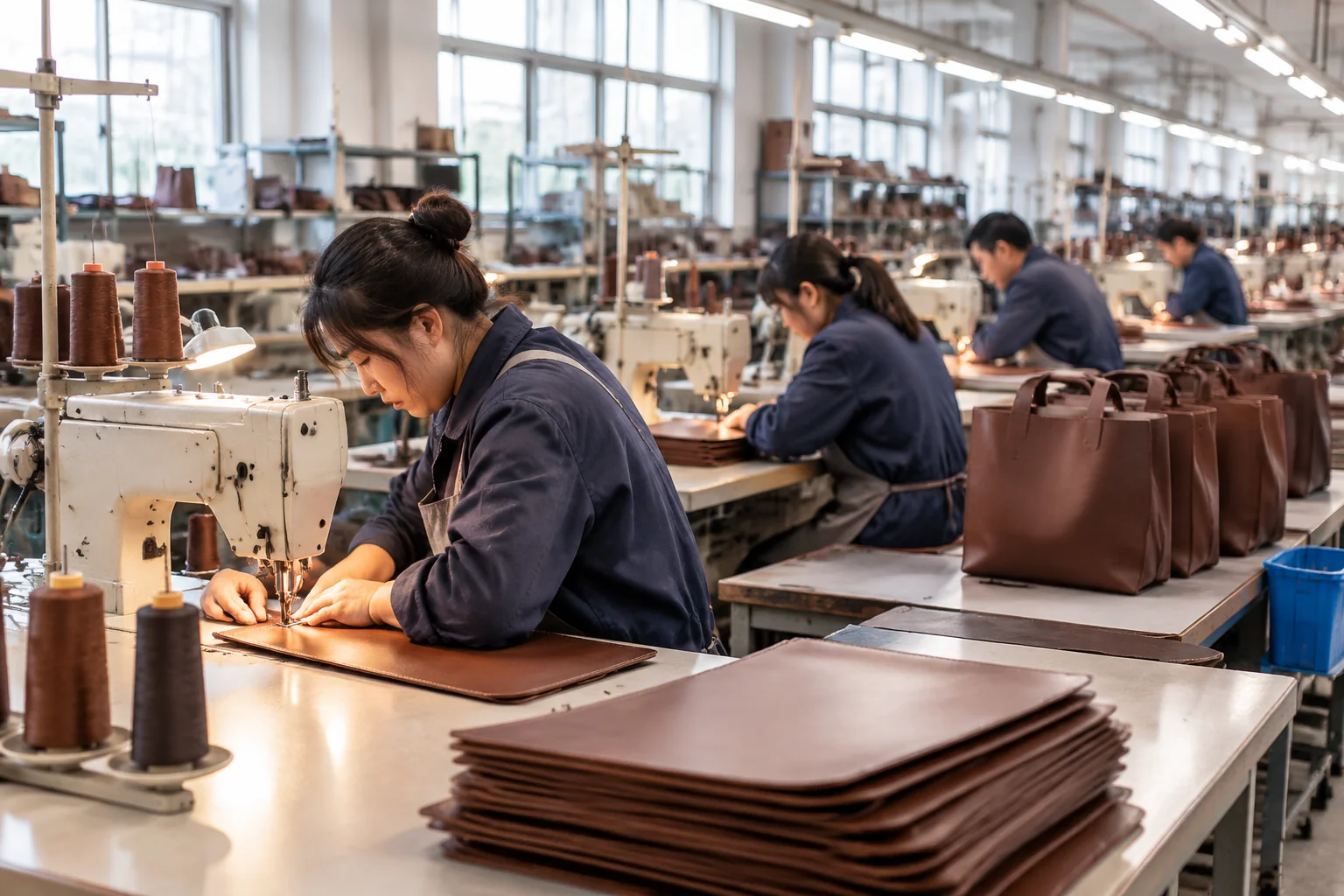
New origins rarely fail on stitching. Modern cut-and-sew equipment is similar everywhere, and a competent factory can produce a clean seam within weeks. Failures cluster in the processes that depend on supplier depth and accumulated craft.
The four processes that take longest to master
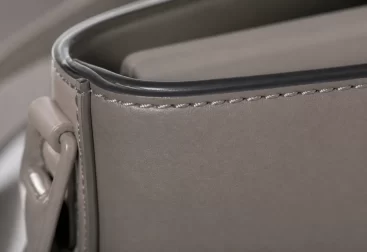
- Edge finishing. Edge paint build-up, sanding and burnishing determine how a coated-leather edge wears. Consistent results require the right paint system, temperature control and operator experience.
- Skiving and folding. Coated fabric is unforgiving. Over-skived seams split, under-skived seams bulk. Tolerances are measured in fractions of a millimetre.
- Hardware setting. Rivets and snap caps must match the shell thickness. A factory using unfamiliar hardware will crack coatings or leave loose fittings.
- Colour control across lots. Matching a shell, lining, thread and edge paint to a physical standard within a tight tolerance requires a colour lab and a supplier willing to re-run small lots.
Each of these depends on materials arriving consistently. When a nearshore factory buys coated fabric from three different import lots, the finishing parameters must be re-tuned each time, and the defect rate rises even though the operators are competent.
How the gaps show up in inspection
In first production runs at a new site, the defects that appear most often are not structural. They are cosmetic and dimensional: shade variation between panels, edge paint runs, hardware plating mismatch and inconsistent strap lengths. These are exactly the defects that a retailer rejects at final inspection.
The fix is time and documentation, not pressure. A new factory needs a written standard with physical samples, a pre-production meeting that covers the four processes above, and an inline check after the first few hundred pieces rather than only at the end.
What established clusters do differently
In a mature cluster, a factory can call a hardware plater or a colour lab in the morning and have an answer by the afternoon. That responsiveness is what keeps defect rates low during a live order, and it is the capability a new location must build before it can match quality, not just price.
MOQ and Scale: Why New Origins Struggle With Small Orders
Minimum order quantity is where relocation plans most often break, and the reason is structural rather than commercial. A factory’s MOQ is usually derived from its suppliers’ MOQs, not from its own preference.
The material arithmetic
Coated fabric is produced in runs measured in thousands of metres. Hardware is die-cast or stamped in batches, and plating is done in barrels. Thread and edge paint have their own minimums. A factory that cannot buy 500 metres of a colour cannot offer a 300-piece order in that colour, whatever it would like to do.
In established clusters, this problem dissolves because suppliers hold stock and because dozens of factories share the same material lots. A single factory in a new location has no such pool, so its practical minimum run rises, often to 1,000 pieces or more.
What that means for small brands
For a brand ordering 300 to 500 pieces per style, a nearshore source is usually not available at any sensible price, because the material minimum alone exceeds the order. The options are to consolidate colours, to accept a stock material, or to keep the style in a cluster where material is shared.
The same arithmetic explains why nearshoring serves large retailers better than emerging brands. A retailer placing 15,000 pieces across four styles can absorb material minimums; a brand testing a new silhouette cannot.
Consolidation tactics that work
Buyers who need both nearshore origin and small runs use three tactics. They reduce the colour count per order so material is consumed in fewer, larger lots. They specify a stock coated fabric from the factory’s existing range rather than a custom shade. And they combine styles onto one shell colour so the cutting room can nest efficiently.
Each tactic trades design freedom for feasibility, and that trade should be made explicitly at the range planning stage rather than discovered during sampling.
Dual Sourcing and China Plus One in Practice
Most brands that set out to relocate end up with a split allocation, and the split usually follows a predictable logic. The established source keeps the styles that depend on supplier depth; the new source takes the styles with simple construction, stable design and high duty exposure.
The three hybrid structures that work
| Structure | How it is arranged | Best suited to | Main risk |
|---|---|---|---|
| Style split | Simple styles nearshore, complex styles in the original cluster | Brands with a wide range | Two quality standards to maintain |
| Component export | Material and hardware exported to the nearshore factory | Buyers wanting origin diversification without requalifying material | Inputs fail the origin test |
| Volume split | Base volume nearshore, replenishment from the original source | Fast-moving core styles | Two sets of packaging and labelling |
The style split is the most common and the easiest to govern, because each source has a clear scope and the quality standard can be documented per style. The component export model looks elegant on paper but frequently fails the origin test, which is why it needs a written opinion before it is adopted.
Why the second source is often underused
A second source that receives 10% of volume never develops the familiarity needed to improve. Factories allocate their best line supervisors to their largest accounts, and a buyer placing small trial orders should expect proportionate attention. That is not a reason to avoid dual sourcing, but it is a reason to plan volume growth deliberately.
The brands that make dual sourcing work give the second source one complete style family, not a fraction of every style. Owning a family gives the factory a reason to hold material, train operators and invest in the tooling, which is how a new source becomes genuinely interchangeable.
Which Styles Suit Nearshore Production
Rather than asking whether to relocate, it is more useful to sort the range. Some constructions travel well and others carry disproportionate risk, and the sort can be done in an afternoon with the bill of materials in front of you.
Styles that move well
- Plain PU leather totes and shoppers with standard hardware and a simple lining.
- Cotton and canvas bags where the material is a global commodity available locally.
- Backpacks built on a standard pattern with stock foam, webbing and buckles.
- Promotional and corporate lines where the specification is fixed and repeatable.
- Any style already produced from stock material rather than a custom shade.
Styles that should stay put
- Bags with custom die-cast hardware, logo plates or plated chains requiring new moulds.
- Multi-panel constructions with tight tolerance on gusset depth and strap geometry.
- Moulded, welded or heat-sealed styles where process equipment is specialised.
- Colour-critical ranges where shade tolerance across lots is measured in small DE values.
- Small-run fashion styles that change every few weeks and cannot absorb a new learning curve.
A useful rule of thumb: if the style’s specification fits on two pages and uses stock components, it can travel. If it needs a technical pack with a hardware schedule, a colour standard per component and an approved edge paint, the dependency on a mature cluster is real and the cost of moving it is usually underestimated.
For a practical reference point, the wholesale backpack range shows how much of a style’s specification sits in stock webbing, foam and buckles, which is the share most likely to transfer cleanly to a new site.
Running a Parallel Trial Without Losing a Season
The practical way to test a nearshore source without betting a season on it is a controlled parallel trial: one style, one material lot, one documented standard, and a comparison against the current source before any volume moves.
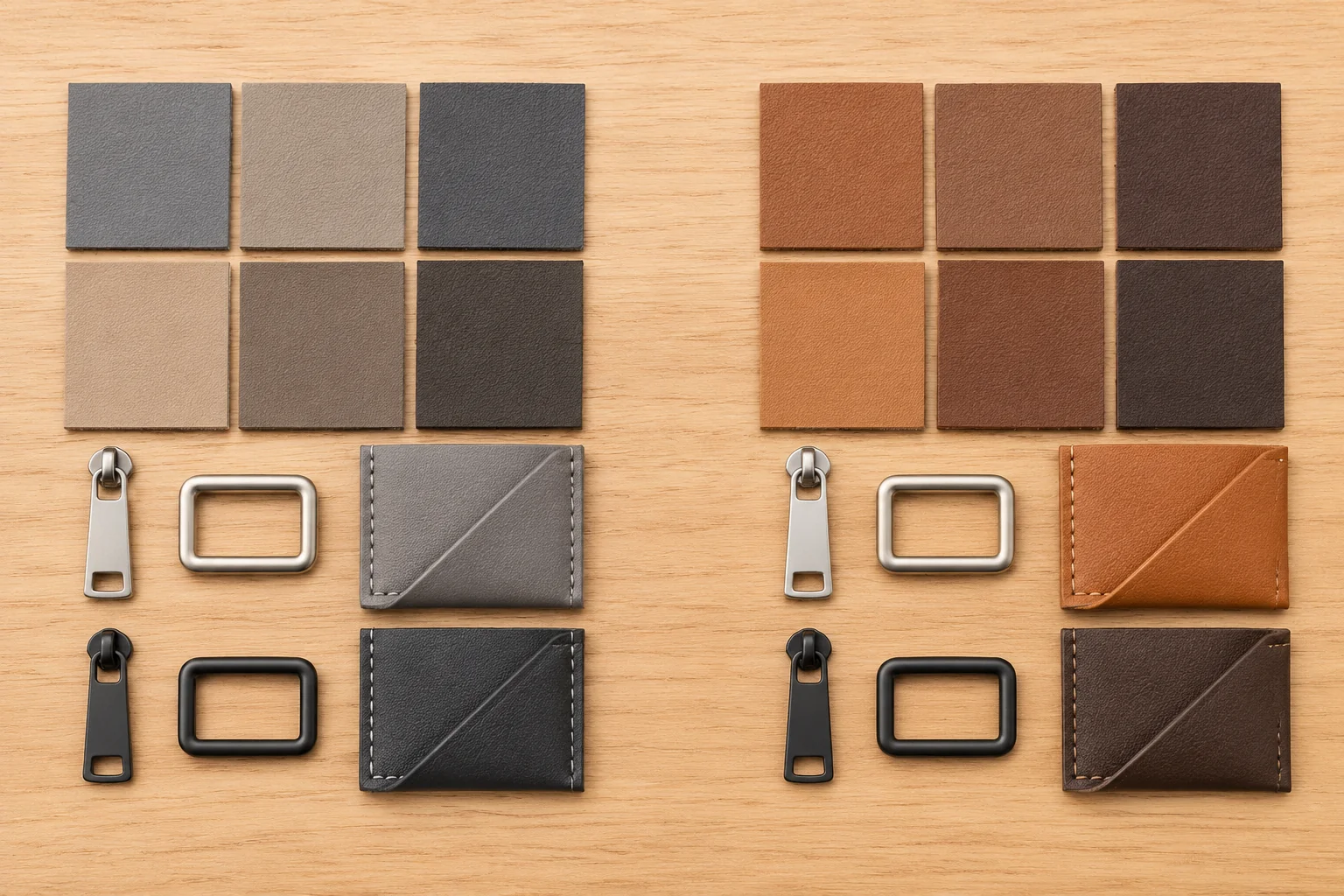
The trial sequence that produces a real answer
| Stage | What is produced | What you are testing | Elapsed time |
|---|---|---|---|
| Specification pack | Tech pack, colour standard, hardware schedule | Whether the new factory can read and quote accurately | 1 week |
| Material check | Swatch and lab dip from the proposed mill | Whether the material is genuinely equivalent | 2-4 weeks |
| First prototype | One piece, unapproved | Pattern interpretation and construction logic | 2-3 weeks |
| Approved sample | Two or three pieces, signed off | Whether revisions land correctly | 2-3 weeks |
| Pilot run | 100-300 pieces | Consistency at volume, inline control, packing | 3-5 weeks |
| Comparison | Side-by-side inspection of both sources | Real defect rates and cosmetic parity | 1 week |
The comparison step is the one buyers skip. A pilot run that passes inspection is not evidence of parity; it is evidence that the pilot run passed. Parity requires the same checklist applied to both sources, ideally by the same inspector, with results recorded per defect code rather than as a pass or fail.
What to measure, not just inspect
Three measurements separate a serious trial from a courtesy sample. First, dimensional consistency across ten pieces from the pilot, especially strap length, gusset depth and hardware placement, because this is where new factories drift.
Second, cosmetic match against the approved standard under consistent lighting, covering shell shade, thread and edge paint together. Third, a load or durability check on the seam types used, since a new factory may substitute thread or stitch density without telling you.
If the pilot clears these three, the remaining question is reliability, which only volume reveals. A sensible structure is to move one style family for one season with a defined review point, keeping the original source warm rather than closing it.
Keeping the original source available
Factories plan capacity in advance, and a buyer who disappears for two seasons should not expect priority on return. Tell the existing supplier that one family is being trialled elsewhere and keep a small rolling order open if the volume justifies it. This is a commercial conversation, not a secret, and mature suppliers respond better to it than to a silent drop.
What Should Decide the Answer for Your Brand
The nearshoring question resolves differently for different businesses, and the deciding variables are few. Score your own range against the four below before commissioning any quotation.
Four variables that decide the outcome
| Variable | Favours moving | Favours staying |
|---|---|---|
| Construction complexity | Simple, stock components, fixed specification | Multi-panel, custom hardware, colour-critical |
| Order size and frequency | High volume, seasonal blocks, long life | Small runs, frequent changes, test-and-repeat |
| Margin headroom | Premium tier that can absorb a cost penalty | Promotional tier where FOB dominates |
| Risk exposure | Concentrated duty or compliance exposure | Diversified markets with stable duty treatment |
Where three of the four point the same way, the decision is usually clear and the trial is worth running. Where they conflict, the intermediate answer is a dual structure rather than a relocation, and the honest conclusion is that the pipeline stays long while the risk is spread.
The manufacturer’s view
From the production side, the observation after several years of this cycle is that relocation announcements outnumber completed relocations, and that the styles which do move are the ones easiest to specify. That is not resistance to change. It is a description of where the capability sits.
PUBagFactory manufactures PU leather bags, backpacks and crossbody styles in Guangzhou and works with buyers on construction choices, material documentation, sampling and quality control from the first brief through shipment. For buyers testing a parallel source, the useful first step is a documented standard that both sites must meet, which is also the document that makes a comparison meaningful.
Send your target styles, quantities and destination market to info@gionar.com for a quotation that separates material, hardware and assembly cost, so the comparison against any other origin is like for like. Reviewing the custom bag manufacturers portfolio first will show which constructions are straightforward to duplicate and which depend on a mature supplier cluster.
What to ask before you sign with a nearshore factory
- Which inputs will you import, and from which mill or hardware supplier?
- How much of my material will you hold, and at what commitment?
- What is your documented process for edge finishing, skiving and hardware setting?
- What colour tolerance can you hold across lots, measured how?
- What is your reorder lead time once material is held?
- Will you support a documented pilot comparison against my current source?
Looking for a reliable PU leather bag manufacturer? Email info@gionar.com for a free quote, a like-for-like cost breakdown and a construction review of the styles you are considering moving.
Frequently Asked Questions
Is nearshoring really moving bag production away from China?
Partly, and mostly at the margin. Assembly of simple styles has moved to Turkey, Mexico, Vietnam and Eastern Europe, but the coated fabric, hardware and lining for those bags frequently still originate in China. Finished-goods origin changes far more often than component origin does.
Which bag styles are easiest to move to a nearshore factory?
Simple constructions that use stock components: plain PU totes, canvas shoppers, standard backpacks and promotional lines. If the specification fits on two pages and needs no custom moulds, a competent new factory can usually match it within two sampling rounds.
Does nearshoring always shorten total lead time?
Not necessarily. Transit shortens, but if the factory imports its coated fabric the material lead time is added at the front of the pipeline. Total elapsed time can be unchanged, and is often less predictable than an established cluster holding stock.
Why can a nearshore factory not accept a 300-piece order?
Because its material suppliers will not. Coated fabric is produced in runs of thousands of metres and hardware in batches. Without a local supplier pool holding stock, the factory’s practical minimum run is driven by material minimums rather than by its own capacity or willingness.
Does assembly abroad change the customs origin of the bags?
Only if the rule of origin for that tariff heading is met, usually through a required tariff shift or a value-added threshold. Cutting and sewing imported coated fabric does not automatically qualify, so duty savings should be verified in writing before a relocation is costed.
Where do quality problems appear first at a new factory?
In edge finishing, skiving, hardware setting and colour consistency, not in basic stitching. These processes depend on supplier depth and accumulated experience, and they surface as cosmetic and dimensional defects that fail final inspection.
What is the cheapest way to test a second source?
One style family, one material lot and a documented pilot of 100 to 300 pieces, inspected with the same checklist as your current source by the same inspector. That costs a fraction of a full move and answers the reliability question that samples cannot.
Should a small brand consider nearshoring at all?
Rarely as a primary strategy. At volumes under roughly 1,000 pieces per style, material minimums and duplicated tooling usually erase the duty advantage. A small brand is normally better served by consolidating colours with its existing supplier and reviewing origin again as volume grows.