How Is Resale Value Shaping Buyer Demand for PU Leather Bags?
A wholesale buyer used to shortlist bags on two questions: does it sell at our price, and does it survive the season. A third question has joined them, and it is arriving from the customer rather than the retailer: what is this bag worth after it has been worn for a year?
That question travels backwards through the chain quickly. Retailers who see pre-owned listings of the same style rising in price order deeper and reorder sooner. Buyers who notice that pattern start asking factories for construction details that were previously optional. And factories discover that durability, repairability and colour choice have become commercial specifications rather than craft preferences.
Why this shift appeared now
Resale platforms made secondhand prices visible, comparable and searchable. Once a customer can see what a two-year-old bag resells for before buying a new one, resale value stops being an afterthought in the marketing funnel and becomes part of the purchase decision itself.
Why PU leather is at the centre of the argument
PU leather occupies an awkward position: it is the volume material of the mid-market, and it is the material most often described as disposable. That reputation is now being tested by buyers who need their ranges to hold value, and the answer depends far more on construction than on the material label alone.
What this article covers
The mechanics of resale value for bags, the specification lines buyers are now requesting, the costs those lines add, and the risks of over-indexing on a trend that is younger than the products it is judging. It is written for wholesale buyers, product developers and factory teams working on mid-market programmes.
- How Resale Value Forms for a Bag
- Brand-Led Resale and Unbranded Resale
- Durability as a Specification Line
- Hardware and Value Retention
- PU Leather in the Resale Conversation
- Repairability and Aftercare Access
- Style Longevity Against Trend Cycles
- Colour and Resale Liquidity
- Packaging and Provenance
- Authenticity, Tags and Serialisation
- Price Positioning and the Resale Ratio
- Where Resale Happens
- Reading Resale Data as a Buyer
- Specification Changes Buyers Are Requesting
- The Cost of Building for Resale
- Risks of Over-Indexing
- What This Means for Factory Selection
- Where This Goes Next
- A Resale-Ready Specification Checklist
- Which Markets Value Retention Most
- Getting Your Own Team Aligned
- What Factories Should Take From This
- Testing Value Retention on a Pilot Order
- Keeping the Evidence
- FAQ

How Resale Value Forms for a Bag
Four inputs, one number
Resale price forms from original price, condition, desirability and supply. Condition is the only input the factory controls directly, desirability is partly a design decision, and supply is a buyer’s own decision about depth of distribution.
Condition is a construction outcome
Corners that scuff, edges that crack, handles that darken and hardware that loses plating are the four condition losses that determine a resale grade. Each is a construction and material choice made months before anyone resells the bag.
The scarcity effect
Where the same style is available everywhere at discount, resale collapses regardless of quality. Buyers who want value retention must accept narrower distribution, which sits in tension with volume targets.
Time to resale
A bag resold after eighteen months has a different value profile from one resold after five years. Programmes aimed at value retention should define which horizon they are designing for, because the construction answers differ.
Brand-Led Resale and Unbranded Resale
Where brand carries the value
In branded resale, most of the value is the name, and construction protects it at the margin. A branded bag with poor stitching still resells, just at a discount that widens with each visible fault.
Where construction carries the value
For unbranded and private-label bags, the resale price rests almost entirely on condition and utility. This is the segment where factory choices have the most direct commercial effect, and where the current shift is most visible.
The middle ground
Emerging labels sit between the two: enough identity to be searchable, not enough to survive a construction failure. This is the group now writing durability and repairability into specifications.
What buyers actually ask for
In practice, buyers in the middle group ask for three things: hardware that will not fade, edges that will not crack, and a lining that will not tear at the zip. Those three cover most resale condition losses.
Durability as a Specification Line
From adjective to test method
Durability used to be an adjective in a brief. It is becoming a test method in a specification: abrasion cycles on the coated surface, flex cycles at the fold line, pull force at the handle anchor, and salt spray hours on the hardware.
The four tests that predict resale grade
Surface abrasion at the corners, flex resistance along the top edge, static load at the strap junction, and plating adhesion on the metal. These four correlate more closely with second-year appearance than any visual inspection at shipment.
What the numbers mean in practice
A coated fabric that passes a defined abrasion count without visible wear will still look presentable at resale. One that fails will show a corner scuff within a season, which is the single most common reason a mid-market bag is graded as worn.
Where the cost sits
Better coating and better hardware add a small percentage to unit cost. Overbuilding to premium test levels adds much more, and the art is matching the test level to the price point the resale market will actually pay.
Hardware and Value Retention
Plating is the fastest visible failure
Plated hardware that fades or pits makes a bag look old before its time, and it is the defect buyers notice on a resale listing photograph. Plating specification therefore has a direct effect on perceived value.
Weight and feel as value signals
Substantial hardware reads as quality in the hand and in photographs. Hollow-stamped components save cost and weight and are increasingly recognised by experienced resale buyers, who handle the bag before pricing it.
Replaceable versus riveted
Hardware that can be unscrewed and replaced extends service life considerably. Screw-back construction costs more in assembly and is one of the clearest repairability signals a factory can offer.
Function under load
A zip that jams under a full load, or a clasp that opens when the bag is carried, is a functional failure rather than a cosmetic one. Functional failures remove a bag from resale almost entirely.
PU Leather in the Resale Conversation
The reputation problem
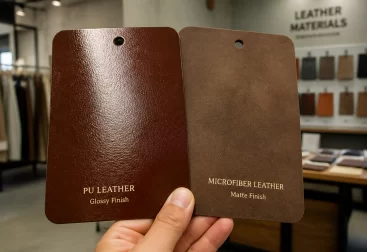
PU leather is widely described as short-lived, and the description is sometimes accurate. Coated fabric with a thin, poorly bonded coating cracks at fold lines; the failure is visible, early and permanent.
What good PU actually does
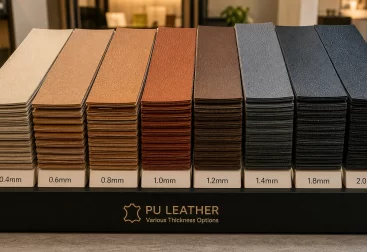
A well-bonded coating on a stable substrate, with adequate thickness and a flexible finish, will survive years of normal use. The variable is specification discipline, not the material category.
Telling the two apart before production
Ask for the substrate weight, coating type and adhesion test result, and flex a sample at the fold line a hundred times. A coating that whitens or lifts at the fold will fail in the field, and the test takes minutes.
The honest positioning
Buyers who describe PU accurately, as a coated material with defined performance rather than as leather, find resale expectations easier to manage. Overstating the material is what damages value when the bag is inspected secondhand.
Repairability and Aftercare Access
Designed-in repair
Replaceable hardware, accessible lining seams and standard zip sizes make repair economic. Where a repair costs more than the bag is worth, the resale value is effectively zero regardless of condition.
Spare parts as a service
Holding a small stock of buckles, zip pulls and strap ends for a programme costs little and supports both repair and resale. It also gives the factory a reason to keep the hardware specification on file.
Aftercare instructions
A care card with cleaning and storage guidance reduces the most common avoidable damage: ink transfer, heat exposure and compression creasing during storage. This is the cheapest value-retention measure available.
Who the customer calls
Define whether repair enquiries go to the retailer, the brand or the factory. An undefined route becomes no route, and a bag that cannot be repaired is a bag that cannot be resold.
Style Longevity Against Trend Cycles
Why resale rewards boring shapes
Resale markets price a bag on how many people still want it. Recognisable, unfashionable shapes keep buyers for years; a shape tied to one season loses its audience the moment the season ends.
The cost of a short cycle
A style designed to be replaced in six months carries a high newness cost per wear, which reduces what a customer will pay upfront. Range planners now weigh that against the margin a trend piece generates while it is current.
Balancing the range
Most programmes that care about value retention carry a stable core of three to five shapes and use trend pieces as satellites. The core carries resale, the satellites carry margin and attention.
Construction patience
Timeless shapes justify better construction, because the bag is expected to be used for years. That is the economic link between design longevity and the specification upgrades factories are now being asked for.
Colour and Resale Liquidity
Neutral colours resell fastest
Black, tan, cognac and deep brown hold their value across markets and seasons. A colour that photographs well and matches a wide wardrobe will find a second buyer quickly.
Statement colours in resale
Bright seasonal colours sell new and stall used. They are not wrong for a range, but they should not be the volume line in a programme that depends on resale.
Colour consistency across lots
Shade variation between lots is a resale problem as well as a production one: two bags from different batches that do not match look like a set with a fault. Colour tolerance belongs in the specification for this reason.
Metallics and coated finishes
Metallic coatings show wear and edge loss more readily than plain finishes. Where a metallic is chosen, the coating specification carries more weight than the colour itself.
Packaging and Provenance

What survives to resale
Dust bags, care cards and original tags are frequently kept and materially improve a resale listing. Their production cost is low relative to the price effect on a secondhand sale.
Packaging that protects in storage
Stuffing and dust bag design affect how a bag is stored between wears. Adequate stuffing prevents creasing at the fold line, which is one of the condition losses resale buyers deduct for.
Labels that carry information
Material composition, care instructions and country of origin are required for compliance and useful for resale. A legible label helps a secondhand seller describe the item accurately.
Over-packaging costs
Excessive packaging adds freight volume and disposal cost without improving value retention. The useful spend is on the dust bag and the care card, not on the box.
Authenticity, Tags and Serialisation
Why serialisation entered the conversation
Resale platforms increasingly ask sellers for provenance. A style code, a production date and a consistent label structure answer that question without adding meaningful cost.
Simple traceability beats complex systems
A style code plus a lot code on a sewn-in label delivers most of the benefit. QR codes and blockchain registries add cost and complexity that mid-market programmes rarely recover.
Counterfeit exposure
Where a style becomes resale-visible, copies appear. Consistent hardware, label construction and stitching detail are the practical defences, and the factory’s ability to hold those details is what protects the brand.
What platforms look for
Photographs that show label placement, hardware marking and interior construction. Buyers who specify those details clearly at development stage make authentication easier for everyone downstream.
Price Positioning and the Resale Ratio
Defining the ratio
The resale ratio is the secondhand price divided by the original retail price at a given age. It is the single number that converts scattered listings into a comparison a buyer can act on.
Typical bands by segment
Private-label bags often settle between twenty and forty percent after a year; recognised labels with strong construction hold higher. The bands move with distribution depth, so a figure without its supply context is misleading.
The price ceiling for value retention
Value retention works best in the middle of a price band, not at the bottom. A bag priced at the entry point of its category rarely resells well, because the new version is only marginally more expensive.
Discounting damages resale
Deep, frequent discounting resets the reference price in the customer’s mind and in the resale market. Buyers who protect resale protect pricing discipline at least as much as construction.
Where Resale Happens
Peer-to-peer platforms
Consumer-to-consumer listings set the visible price and the vocabulary of condition grading. They are the fastest signal of how a style is holding up, and they are public.
Consignment and boutique resale
Curated resale shops apply an inspection standard and price accordingly. A bag that fails their inspection reveals which construction detail is costing value.
Trade-in and buy-back programmes
Brands running buy-back schemes create a controlled resale channel and a reason for customers to return. For buyers, the existence of such a programme is evidence that the supplier can produce to a repairable standard.
Cross-border resale
Where a style is unavailable in a market, resale prices there can exceed the domestic secondhand price. This affects distribution decisions more than construction decisions, but it shows how supply shapes value.
Reading Resale Data as a Buyer
What to sample
Twenty to thirty active listings of comparable styles, with age, condition grade and asking price. Sold prices, where visible, are worth more than asking prices, which are frequently aspirational.
Photographs tell you the failure mode
The corners, edges and hardware in listing photographs show what breaks first on that construction. This is free field data, and it is more specific than any laboratory report.
Listing language
Terms such as peeling, cracking, tarnished and lining torn recur across a material or a construction. Count how often each appears per style; the counts are a defect ranking in the customer’s own words.
Turning it into a specification
Translate the top two failure terms into test requirements and material specifications for the next development cycle. That loop, from listing language to specification line, is the practical form of resale-led buying.
Specification Changes Buyers Are Requesting
Coating and substrate minimums
Named substrate weights and coating types, with an adhesion test result, are appearing in specifications that previously described only colour and hand feel.
Reinforcement at defined points
Handle anchors, strap junctions and base corners are being specified with reinforcement type and stitch pattern rather than left to factory practice.
Hardware grade and plating
Alloy, plating thickness and salt spray hours are now stated, alongside a requirement that hardware be replaceable where the design allows.
Edge treatment durability
Edge paint systems are being specified with a flex requirement, because edge cracking is the second most visible resale defect after corner wear.
The Cost of Building for Resale
Where the money goes
Better coating, better hardware, extra reinforcement and replaceable fixings add a few percent to unit cost. The largest cost is usually the one buyers resist: narrower distribution, which reduces volume per style.
What it returns
Higher reorder rates, less discounting and a customer who can justify paying closer to full price. The return is spread across a season and rarely visible in a single order’s margin calculation.
The over-specification trap
Specifying to premium test levels on a mid-market price point raises cost without raising resale, because the second buyer is paying mid-market prices too. Match the test level to the resale band, not to the best available standard.
Cost of the four failure modes
Corner wear, edge cracking, plating loss and lining failure each cost a resale grade. Addressing the two most frequent in a given style usually delivers most of the available value uplift for the least money.
Risks of Over-Indexing
A young data set
Resale visibility is recent and concentrated in a few platforms and markets. Conclusions drawn from eighteen months of listings may describe a platform’s growth rather than a durable consumer preference.
Category differences
Value retention behaves differently across totes, backpacks and small leather goods. A finding in one category does not transfer automatically, and buyers who generalise across a range often misprice it.
The volume trade-off
Value retention rewards scarcity, while wholesale economics reward volume. Programmes that chase both without deciding which one leads tend to deliver neither.
Treating resale as the only signal
Resale measures what happened to past products. It is a strong durability signal and a weak signal about newness, and ranges still need pieces that exist to attract attention rather than to hold value.
What This Means for Factory Selection

Ask for test data, not assurances
A factory able to produce abrasion, flex and salt spray results for its standard materials is a factory that measures. One that answers with adjectives is asking to be trusted on the point that matters most.
Hardware sourcing transparency
Named hardware suppliers and plating specifications matter more than ever. Where a factory cannot name its hardware source, it cannot guarantee the plating next season either.
Repairability in the sample room
Ask to see a bag disassembled or a repair performed. The answer reveals whether construction was designed for service or only for assembly speed.
The engineering conversation
The most useful supplier conversations now involve a technician rather than a salesperson: which coating, which reinforcement, which edge system, and what each choice does to the failure that resale buyers punish.
Where This Goes Next
Durability claims under scrutiny
As resale data becomes comparable, claims about longevity will be tested against visible secondhand condition. Buyers will need documentation, and factories that test will be preferred over those that assert.
Repair as a standard service
Spare hardware and repairable construction are moving from premium to mid-market expectation. Factories that hold spare parts and standardise fixings will win programmes on that basis alone.
Digital product records
Simple digital records linking a style code to material and test data will spread, driven by resale platforms rather than by regulation. The cost is low and the benefit is provenance.
The likely correction
Some of the current enthusiasm will fade as resale prices normalise. What will remain is the underlying shift: buyers now expect a bag to justify its price over years rather than over a season, and that expectation does not reverse.
A Resale-Ready Specification Checklist
Ten lines to add to a development brief when value retention matters. Each one addresses a failure that resale buyers deduct for, and each is verifiable with a sample and a test report.
| Specification line | What to state | Failure it prevents |
|---|---|---|
| Coating and substrate | Type, weight, adhesion result | Peeling and cracking at folds |
| Surface abrasion | Cycles to visible wear | Corner scuffing |
| Edge system | Paint type, flex cycles | Edge cracking |
| Hardware alloy | Base metal, plating thickness | Fading and pitting |
| Plating adhesion | Salt spray hours | Flaking on buckles |
| Fixings | Screw-back where possible | Unrepairable hardware |
| Strap junctions | Reinforcement and stitch pattern | Pull-out under load |
| Lining | Weight, zip-end reinforcement | Tearing at the zip |
| Colour tolerance | Permitted shade variation | Mismatched lots |
| Aftercare kit | Dust bag, care card, spare parts | Storage and repair losses |
Check the two that fail most
Corner wear and edge cracking account for most condition deductions in the mid-market. Verify those two first on any sample, and add the rest as budget allows.
Keep the test reports with the style
Reports filed against the style code, not the material order, are what allow a claim or a resale claim to be answered two years later.
Which Markets Value Retention Most
Mature resale infrastructure
Markets with established peer-to-peer platforms and consignment networks show resale behaviour earliest, because prices are visible and comparable. Buyers selling into those markets see the effect on reorder decisions first.
Price sensitivity by market
In markets where a bag is a considered purchase rather than a disposable one, the second-life value carries more weight in the first purchase. The same construction spec earns a higher premium there than in a fast-turnover market.
Climate and usage patterns
Humidity, sun exposure and commute patterns change which failures appear first. A specification optimised for one market may need a different edge system in another, and local resale listings show which failure dominates.
Where the signal is weakest
Markets with limited resale platforms produce little visible data, which does not mean customers there do not care about durability. It means the feedback loop is slower and must be replaced with direct returns data.
Getting Your Own Team Aligned
Design, buying and finance disagree by default
Design wants the best material, buying wants the lowest cost, finance wants the highest margin and the customer wants the bag to last. Resale data gives all four a shared number to argue around instead of adjectives.
Put the ratio in the range review
Show the resale ratio beside the margin for each style in the range review. Styles that hold value justify their price and their repetition; styles that do not should earn their place on newness alone.
Give the factory one owner
One person on the buyer’s side should own the value-retention specification, including test reports and hardware approvals. Shared ownership of a technical specification reliably produces gaps.
Start with one style
Apply the checklist to a single best-selling style, measure the outcome over two seasons, then extend it. Programmes that change every specification at once cannot tell which change produced the result.
What Factories Should Take From This
Keep the test data
Factories that can produce abrasion, flex and salt spray results for their standard materials win programmes on that basis. The cost of holding the data is small; the cost of not having it is losing the brief.
Standardise the fixings
Using a small set of standard screws, zip sizes and D-rings across programmes makes spare parts practical and repair possible. Standardisation is a service capability, not only a cost measure.
Say what the material actually is
Accurate description of coating, substrate and expected life protects both sides. Overstating a material creates an expectation that the secondhand market will test, and the resulting disappointment lands on the buyer and the factory together.
Price the durability honestly
Quote the specification that meets the failure modes named in the brief, and show what each upgrade costs. A quote built around actual failures is easier to defend than one built around a price target alone.
Testing Value Retention on a Pilot Order
One style, two specifications
Produce the same style at standard and upgraded specification, then track returns and resale listings for both. The comparison answers the cost question with evidence rather than with an assumption.
Wear testing before launch
A small wearer panel carrying the sample daily for eight to twelve weeks reveals corner and edge behaviour faster than any accelerated test. Photograph the same three points weekly and compare.
What a pilot cannot answer
Resale price, which needs a secondhand market and time. A pilot can confirm durability and construction; it cannot confirm what a customer will pay for a used version eighteen months later.
Deciding on the result
If the upgraded version shows no measurable improvement in the wear points that matter, the upgrade was pointed at the wrong failure. Change the specification, not the price point.
Keeping the Evidence
File per style, not per order
Test reports, material certificates, hardware approvals and sample photographs belong against the style code. Filing by purchase order scatters the evidence across seasons and loses the history.
Two seasons of retention
Keep the evidence for at least the resale horizon being targeted, which is typically longer than the warranty. Claims and resale questions arrive years after the order has closed.
Link it to the label
The style code on the sewn-in label is the key that connects a physical bag to its file. A code that changes between lots breaks that link and with it the traceability the file exists to provide.
FAQ
Does resale value really affect wholesale buying decisions?
It affects them indirectly and increasingly. Retailers who see a style holding value online reorder more confidently and discount less, which changes the buyer’s range decisions and therefore the specification they place with the factory.
Can PU leather bags hold resale value at all?
Yes, within their price band. A well-bonded coating on a stable substrate with adequate hardware will look presentable after a year, which is what resale grades measure. Poor coating and thin plating are what destroy value, not the material category.
What is a realistic resale ratio for a private-label bag?
Commonly twenty to forty percent of original retail after a year, depending on condition, distribution depth and category. Figures outside that band usually reflect a very narrow release or a deep discount programme rather than construction quality.
Which construction detail matters most for value retention?
Hardware plating, because fading is the fastest visible change and appears in every listing photograph. Edge cracking and corner abrasion follow closely, and all three are specified and testable before production.
Does better construction pay for itself?
Often, through reorder rate and reduced discounting rather than through unit margin. The calculation only works if the improvement targets the failure modes actually occurring in that style, which is why resale data should drive the choice.
Should I specify repairable hardware on a mid-market bag?
Wherever the design allows it. Screw-back fixings and standard zip sizes add little cost and extend service life considerably, and repairability is one of the clearest signals a factory can offer a buyer who cares about value retention.
How do I test a PU sample for resale suitability?
Flex the coated surface at the fold line repeatedly and watch for whitening or lifting, check the substrate weight, and confirm an adhesion result from the mill. Then inspect plating edges on the hardware, where flaking starts first.
Does distribution depth affect resale more than quality?
Frequently yes. A style available everywhere at discount resells poorly regardless of construction, while a scarcer style of average quality can hold value. Quality sets the ceiling; supply sets the floor.
What packaging is worth paying for?
Dust bag, care card and consistent labelling. They cost little, survive to resale and improve how the item is stored and described. Elaborate boxes add freight volume and disposal cost without affecting condition.
How many resale listings should I sample?
Twenty to thirty active listings of comparable styles, recording age, condition grade and price, and prioritising sold prices where visible. Beyond that the marginal information is small and the time cost is not.
Is serialisation necessary?
Rarely. A style code and lot code on a sewn-in label deliver most of the provenance benefit at negligible cost. QR codes and registry systems suit premium programmes where resale buyers will actually check them.
What is the biggest risk in following this trend?
Over-correcting. Specifying to premium test levels on a mid-market price point adds cost without adding resale, and narrowing distribution too far can cost more volume than the value uplift returns.
Will resale expectations change material choice?
At the margins. Buyers are becoming more precise about coating and substrate rather than switching materials wholesale, because the failures that damage resale are specification failures within a material family, not material categories themselves.
How do I brief a factory on value retention?
Give the failure modes you are trying to prevent, the tests you require and the reports you expect, attached to the style code. A brief written around failures produces a more accurate quote than one written around adjectives.
Build the bag that still looks good in year three.
Send your style, target price band and resale expectations to info@gionar.com. We will quote against defined coating, hardware and edge specifications, with the test results attached, so value retention is a construction decision rather than a hope.