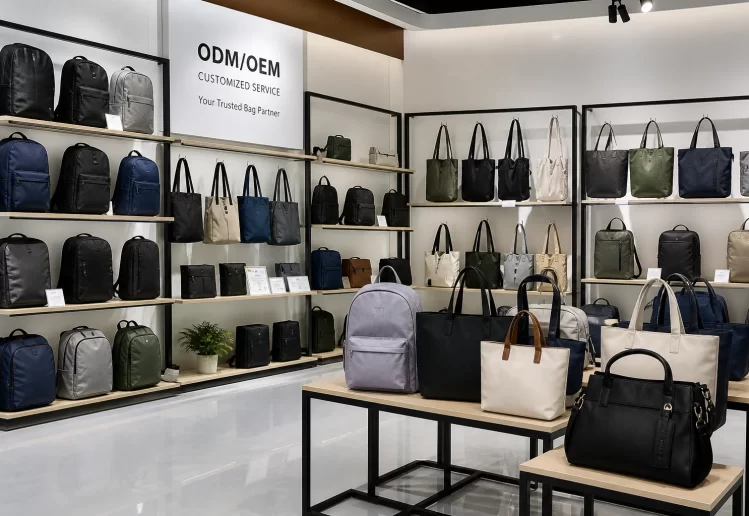
Two letters decide how a bag brand comes into existence: OEM and ODM. Both describe how a brand works with a factory, both are standard practice in the global bag industry, and both are routinely misunderstood — by founders, by retailers, even by some factories quoting them. The choice between them is not about which is “better.” It is about which model fits your stage, your budget, your timeline and — most importantly — your appetite for exclusivity and control.
This guide explains the two models in depth, from the factory floor perspective: what each one actually includes, what you own, what you risk, and how the economics play out across the order cycle. You will find a twelve-dimension comparison, a decision framework organized by brand situation, a practical look at contracts and intellectual property, and three worked scenarios that mirror the real decisions brands face in their first season. By the end, you will be able to walk into a factory conversation, state which model you want, and ask the questions that separate a genuine partner from a sales pitch.
The Two Models Defined
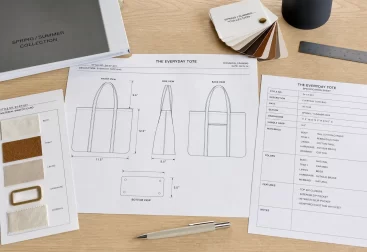
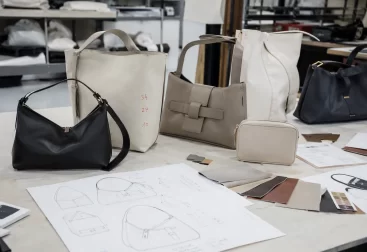
OEM — Original Equipment Manufacturing — is the model in which the factory manufactures a product to your design and specification, without attaching its own brand. You bring the design, the technical specification, the materials plan and the quality standard; the factory brings production capability. In the bag industry, “your design” can range from a complete tech pack with patterns to a concept developed together with the factory’s pattern engineers — but the decisive feature of OEM is that the design belongs to you. You control the product, you own the development, and you carry the risk and the reward of its success.
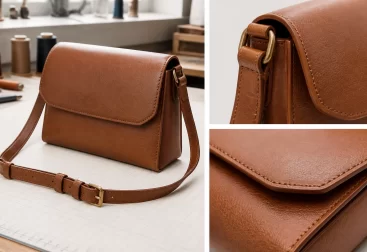
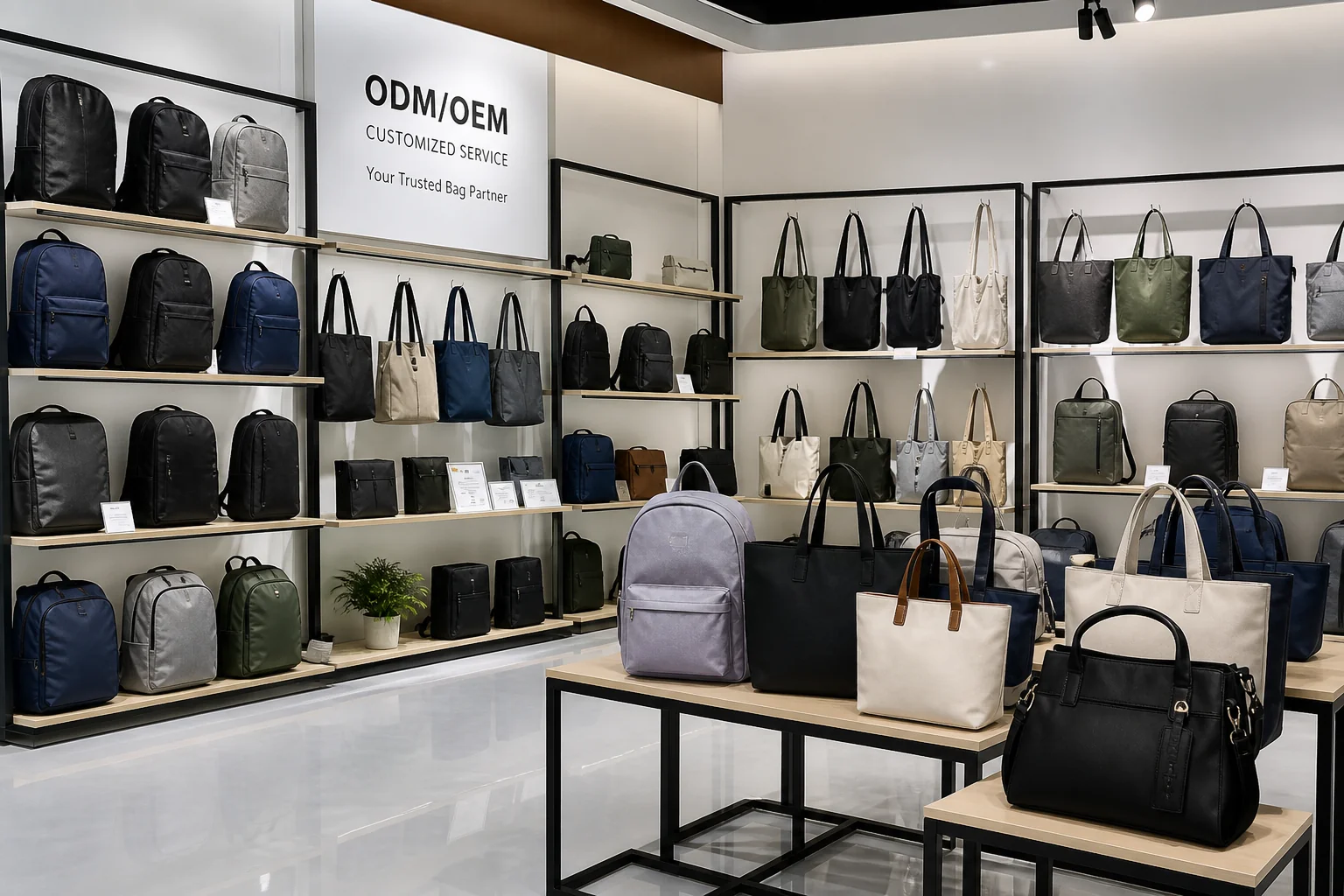
ODM — Original Design Manufacturing — is the model in which the factory offers its own designs, already developed and production-ready, which you select, brand and sell. The factory has done the design work; you bring the brand, the market access and the go-to-market execution. In the bag industry, ODM catalogs typically contain dozens of styles across handbags, backpacks, crossbody bags and totes, with defined materials, colors and production specs. You choose a style, often modify color or hardware within the factory’s options, apply your logo and packaging, and launch.
The line between the two is not always crisp in practice. Many factories offer a spectrum in between: an ODM style with your custom color, your custom lining, your custom hardware; or an OEM project where the factory contributes pattern engineering and material recommendations. The distinction that matters for your decision is ownership: who owns the design, and therefore who can produce it, copy it and sell it elsewhere. Everything else — cost, speed, minimums — follows from that single fact.
| OEM (your design) | ODM (factory design) | |
|---|---|---|
| Design ownership | You | Factory (licensed to you) |
| Development cost | You bear sampling and development | Factory already invested |
| Speed to market | Slower (sampling rounds) | Fast (select and brand) |
| Exclusivity | Yours by design | None unless agreed and paid for |
| MOQ | Higher (development overhead) | Lower (proven styles) |
| Investment | Higher | Lower |
Keep this table in mind through the rest of the guide. Every later comparison traces back to the ownership row: whoever owns the design controls the product’s future — its production, its copying, its price floor and its exit options.
OEM in Depth: Control and Ownership
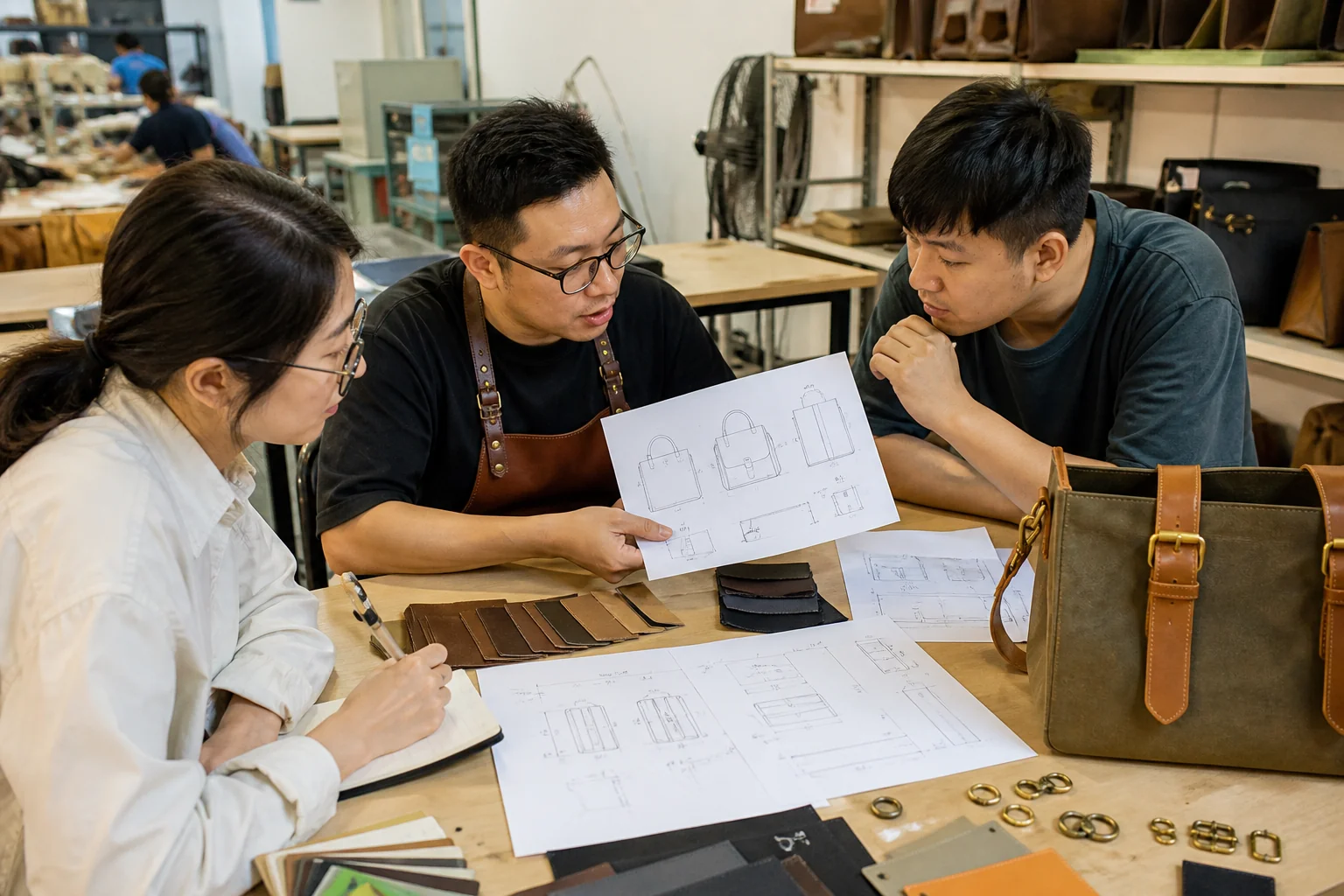
Choosing OEM means choosing control. Your design is developed, sampled and produced to your specification, and the result is a product that exists only because you created it. For brands with a clear vision, this is the only acceptable path — but it is also the path with the most moving parts, and each part has a cost.
What OEM gives you
The first asset is exclusivity. A design you own cannot legally be produced by another factory, copied by a competitor, or sold under another brand — provided your agreement with the factory protects it and the factory honors the agreement. For a brand whose identity lives in its product design, this protection is the foundation of the business. The second asset is fit: because you specify the materials, the dimensions, the hardware and the construction, the product is built exactly for your customer and your price point, not adapted from someone else’s idea of a good bag. The third asset is learning: OEM development forces you to understand materials, construction and costs deeply, and that knowledge compounds — every collection gets better because the previous one taught you what works.
What OEM costs you
The first cost is time. A typical OEM development cycle runs through several sampling rounds — development sample, corrected sample, approval sample, production sample — each taking days to weeks. From brief to shipment, eight to twelve weeks is realistic for a first order; complex designs or scarce materials extend it. The second cost is money: sampling fees, development time, pattern work and material minimums are all paid before a single piece sells, and they are not recovered if the design fails. The third cost is responsibility: when a product is yours, its problems are yours — a material that fails in the field, a construction that does not hold, a specification error — and you carry the quality risk through every order.
OEM also changes how you choose a factory. You need a factory with strong pattern engineering, sampling capability and production discipline — not merely a factory that can sew a proven style. The factory’s development team becomes an extension of your design team, and the quality of that collaboration determines the quality of your product. This is why OEM brands typically build long-term relationships with fewer factories rather than shopping each order: the development knowledge accumulates in the partnership.
ODM in Depth: Speed at the Price of Exclusivity
Choosing ODM means choosing speed and economy — and accepting that the product is not yours alone. For a brand entering the market, testing a category or launching a fast collection, ODM is often the smartest first move. Understanding exactly what it gives and what it costs makes the choice deliberate rather than accidental.
What ODM gives you
The first asset is time. The factory’s styles are developed, sampled, pattern-tested and production-ready. You select, customize within the available options, brand and launch — a process that can compress months of development into weeks. For seasonal collections, market tests and rapid expansion, this speed is decisive. The second asset is cost. Because the factory amortized development across many clients, ODM styles carry lower sampling fees, lower minimums and lower unit prices than a comparable OEM development. For a first order with a limited budget, ODM makes production financially accessible. The third asset is predictability. A proven style has production history: the factory knows its costs, its defects and its production time, which means your first order is more likely to arrive on time and to standard.
What ODM costs you
The first cost is exclusivity. An ODM style is available to any brand the factory sells it to. Your competitor can buy the same bag, in a similar color, with their own logo — a risk that becomes real the moment your style sells well. The second cost is fit: the product was designed for the factory’s sense of the market, not for your customer. Materials, dimensions and construction are fixed options; your ability to differentiate is limited to color, hardware and branding. The third cost is durability of the brand: because the product is not yours, you cannot switch factories without losing the design — your supplier lock-in is complete, and your brand equity rests on a product you do not own.
The exclusivity risk has a standard remedy: exclusive rights. Many factories will grant you exclusivity on a style — for a territory, a period or a minimum order volume — for a premium or an exclusivity fee. This converts an ODM style into a de facto proprietary product at a fraction of OEM development cost. The arrangement should be written into the agreement: which style, which territory, which period, what reorder volume maintains the exclusivity, and what happens when it lapses. Without this written agreement, “exclusive” is a marketing word.
Twelve Dimensions Compared
Most of the differences between OEM and ODM are differences of degree, and the practical way to compare them is dimension by dimension. The table below covers twelve dimensions that matter across the full order cycle — from the first conversation to the second collection.
| Dimension | OEM | ODM |
|---|---|---|
| Design ownership | You own the design | Factory owns; you license |
| Exclusivity | Automatic (with IP protection) | Only if negotiated and paid |
| Development time | Weeks to months | Days to weeks |
| Sampling rounds | 3–5 typical | 0–2 (customization only) |
| Development cost | You pay sampling and pattern work | Already amortized by factory |
| Unit cost | Higher per unit (development overhead) | Lower per unit |
| MOQ | Higher (300–1000+ per style) | Lower (often 100–500) |
| Customization scope | Unlimited within production capability | Colors, hardware, branding options |
| Market fit | Designed for your customer | Designed for the general market |
| Supplier switchability | Design travels with you | Design stays with the factory |
| Quality risk | You carry development risk | Proven styles, lower surprise risk |
| Brand equity building | Owned, compounding | Leased, thinner |
Read the table as a map of trade-offs, not a scorecard. A brand with a strong design vision and budget finds OEM’s costs acceptable because the ownership row pays them back. A brand testing a new market finds ODM’s speed and low minimums decisive, because the exclusivity row is a risk it can price in or manage with an exclusivity agreement. The dimension that dominates your decision is the one your situation punishes most — and that is the subject of the decision framework below.
The Hybrid Model: ODM Foundations, OEM Details
Between pure OEM and pure ODM sits the hybrid model, and in the real world most bag brands live there. The hybrid takes an ODM style or a factory-developed base and customizes it into something closer to your own — your materials, your hardware, your dimensions, your lining, your branding. The factory develops the foundation; you build the identity.
The hybrid is attractive because it front-loads the factory’s design competence and back-loads your differentiation. The factory’s pattern engineers have solved the hard structural problems — the base construction, the seam geometry, the hardware placement. You then specify the visible and tactile differences that define a brand: the material and its color, the hardware finish, the lining, the pocket configuration, the strap design, the logo treatment. The result is a product that looks and feels like yours, produced on a proven base at a lower development cost and shorter timeline than a full OEM project.
The critical discipline in the hybrid is documentation. Every customization must be recorded in a written specification — the base style code, every modified component, every material reference — because the value of the hybrid depends on being able to reproduce the product consistently and, ideally, to claim exclusivity on the combination. A hybrid product with thirty undocumented tweaks is neither reproducible nor protectable; the same product with a complete spec and a written exclusivity agreement is a proprietary design at ODM economics.
Most reputable bag factories — including our own — are transparent about the hybrid option and will tell you which parts of a style are standard and which can be customized. The professional conversation is not “OEM or ODM?” but “which base, which customizations, and what exclusivity?”
A Decision Framework by Situation
Model choice is a situational decision, and the situations repeat. The framework below matches common brand situations to the model that fits — and the caveats that apply.
| Your situation | Best fit | Why | Caveat |
|---|---|---|---|
| First brand, limited budget, testing the market | ODM | Low minimums, fast launch, proven quality | Negotiate exclusivity before a style sells well |
| Strong design vision, no factory experience | OEM with factory development help | Your vision, their pattern engineering | Budget 3–5 sampling rounds and 8–12 weeks |
| Existing line, expanding categories fast | ODM for new categories | Speed to test demand without development cost | Keep flagship styles OEM-owned |
| Premium brand built on distinctive design | OEM | Exclusivity is the brand’s core asset | Written IP protection is non-negotiable |
| Seasonal drops with tight calendars | Hybrid / ODM | Proven bases, your customization, fast cycles | Document customizations for reproducibility |
| Retailer asking for exclusivity of a style | OEM or exclusive ODM | Exclusivity becomes a sales argument | Put the exclusivity terms in the contract |
Three rules apply across every situation. First, match the model to the risk you can carry: if a failed design would hurt you badly, start with a model that spreads the risk — ODM or hybrid. Second, keep a mix over time: the most successful brands typically launch with ODM or hybrid, graduate flagship styles to OEM as they learn what sells, and use ODM for fast expansion into new categories. Third, revisit the choice every season: your stage changes, and the model that was right at launch may be wrong at scale.
Contracts and IP Protection
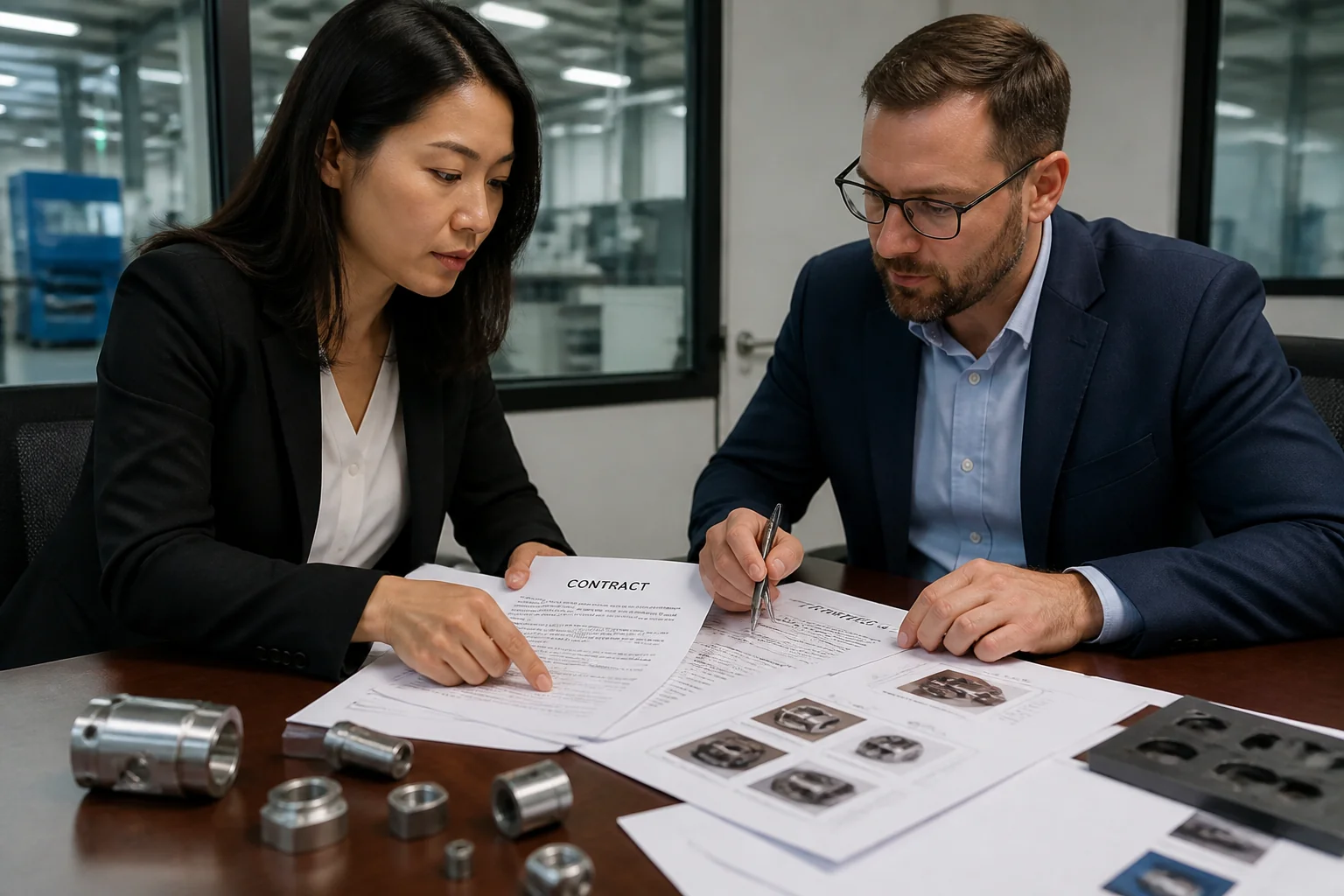
Whatever model you choose, the agreement with the factory defines what you actually own. Three clauses matter most in the bag industry, and each should be in writing before production begins.
Design ownership and IP
For OEM, the contract should state that all designs, patterns, tech packs and development materials belong to you, and that the factory may not reproduce them for any other client. For ODM, the contract should state what you are licensing — the style, the territory, the period — and what happens at the end of the period. Never rely on verbal exclusivity; the commercial reality of factories is that a written clause is honored and a verbal promise is a memory.
Confidentiality
A non-disclosure clause covering your designs, pricing, customer information and market plans protects the value of the collaboration. For brands developing distinctive OEM products, confidentiality is the mechanism that keeps the design yours even before production begins.
Quality and dispute terms
The contract should reference the approved sample and specification as the quality standard, define the inspection procedure (AQL levels, third-party inspection rights), and state remedies for non-conforming goods — repair, replacement or refund. Together with the payment schedule (deposit at order, balance after inspection), these clauses determine what happens when something goes wrong, which is exactly when the contract’s value appears.
A practical note from the factory side: reputable manufacturers welcome clear contracts because they protect both parties and prevent misunderstandings. A factory that resists written ownership and confidentiality terms is telling you something about how it will treat your design — listen carefully before production starts.
Three Brands, Three Choices
Worked scenarios make the framework concrete. These three are composites of the decisions we see every season in the bag industry.
Scenario 1 — The first-time founder
A founder with a strong concept for a vegan handbag line, a modest budget and no factory experience. The smart sequence: launch two or three ODM or hybrid styles in a vegan material, with a written exclusivity agreement on the best sellers, to validate demand with real sales data. Once two styles prove themselves, develop the signature bag as an OEM project with the same factory — now the founder has sales data, a working partnership and a realistic budget for development. The mistake to avoid is going straight to a five-style OEM collection on optimism: the development costs and timeline would consume the budget before the market validated anything.
Scenario 2 — The established retailer expanding
A retailer with a strong brand and existing customers in travel goods wants to add a backpack category quickly. ODM is the natural fit: select proven backpack styles, customize colors and hardware to the brand, launch in weeks. Because the retailer’s brand already has shelf presence, the exclusivity question matters — negotiate exclusive rights on the selected styles for the target market, priced into the order. The category launches fast, and the retailer converts the best performers to OEM development once volume justifies it.
Scenario 3 — The premium design-led brand
A premium brand whose entire identity rests on a distinctive silhouette goes straight to OEM. The development runs four sampling rounds to perfect the construction; the IP clause protects the design; the factory is a long-term partner. Unit costs are higher and minimums are substantial, but the exclusivity is the business — a copied silhouette would destroy the brand. The brand reorders the flagship continuously, and develops new styles with the same factory, building a moat one design at a time.
Notice the pattern: none of the three chose a model because it was “better.” Each chose the model that matched its stage, its budget and — above all — what it needed to own.
Common Mistakes When Choosing Between OEM and ODM
The model choice is where many bag brands make their most expensive mistakes, and the patterns repeat across the industry. Naming them makes them avoidable.
Mistake 1 — Choosing OEM without a budget for development
OEM’s costs arrive before any revenue: sampling rounds, pattern work, material minimums and development time. A founder with a budget sized only for production discovers halfway through that the development consumed the launch capital. The fix is honest math: cost the development cycle — typically 10–25 percent above the pure production cost for a first OEM order — before committing.
Mistake 2 — Choosing ODM and assuming exclusivity
Many founders launch an ODM style, watch it sell well, and then discover the factory sold the same style to a competitor. Exclusivity is never implicit — it is negotiated, written and often paid for. The fix is to settle exclusivity terms at the time of selection, not after the style proves itself, when the factory’s price for exclusivity rises with your success.
Mistake 3 — Skipping the written specification in hybrid projects
Hybrid customization without documentation is a recipe for drift: the second order arrives with different materials, different hardware and a different feel because the customizations were never written down. The fix is a complete specification — base style, every modified component, material references, color codes — approved and attached to the order, exactly as for a full OEM project.
Mistake 4 — Ignoring the supplier-switchability risk
ODM lock-in is real: if the relationship ends, the design stays with the factory. Brands that plan to change suppliers, add territories or sell the business discover the design does not travel with them. The fix is to know, before production, what you would lose by changing factories — and to convert the products that matter to OEM ownership early enough that the option exists.
Mistake 5 — Treating the model choice as permanent
Brands that locked themselves into one model at launch often keep it long after their situation changed. The founder who launched ODM never graduates flagship styles to OEM; the premium brand never uses ODM for fast category expansion. The fix is a seasonal review: at each collection planning cycle, ask which products need ownership, which need speed, and whether the model mix still fits the stage.
Each of these mistakes is a failure of planning, not of execution — and each is prevented by the same habit: decide the model against your stage and budget, write down the ownership and exclusivity terms, and review the choice every season.
FAQ
Which is cheaper, OEM or ODM?
ODM is cheaper per unit and at launch, because the factory amortized development across clients. OEM carries development costs — sampling, patterns, minimums — that are paid before sales begin. Over time, OEM’s ownership can pay back through exclusivity and lower reorder costs, but the upfront economics favor ODM.
Can I get exclusivity on an ODM style?
Yes, when negotiated. Factories commonly grant territorial, time-bound or volume-based exclusivity for a premium or an exclusivity fee. Get the terms in writing — which style, which territory, which period, and what reorder volume maintains it.
Do I own the design in OEM?
You own what the contract says you own. A proper OEM agreement assigns design, pattern and tech-pack ownership to you and prohibits the factory from reproducing the design for others. Never assume ownership from the term “OEM” alone — read the contract.
Can I switch factories after an ODM launch?
Not without losing the design — the ODM style belongs to the factory. This is the core trade-off of ODM. If supplier flexibility matters, OEM (where the design travels with you) is the model that provides it.
How long does OEM development take compared with ODM?
OEM typically runs eight to twelve weeks from brief to shipment with multiple sampling rounds. ODM can compress this to two to four weeks, since only customization and branding are needed before production.
What is the MOQ difference?
ODM styles usually carry lower minimums (often 100–500 pieces per style) because they are proven and already amortized. OEM minimums are commonly higher (300–1,000+ per style) because each development is unique and components are ordered specifically for it.
Can I start ODM and move to OEM later?
Yes — this is the most common successful path. Launch with ODM or hybrid styles to validate the market, then convert your best sellers to OEM development with the same factory once you have sales data, budget and a working partnership.
How do I protect my OEM design from being copied by the factory?
Three layers: a written ownership clause in the contract, a confidentiality agreement, and disciplined documentation (tech pack, patterns, sealed samples). For high-value designs, consider registration where applicable and work only with factories that demonstrate a track record of respecting client IP.
Does the factory charge extra for ODM exclusivity?
Often yes — exclusivity has commercial value, and factories price it through an exclusivity fee, a premium per unit, or a minimum order commitment. The negotiation is standard practice; what matters is that the terms are written and the scope (style, territory, period) is precise.
Next Steps: Choose the Model, Then Choose the Partner
The model decision is a strategy decision, and it is worth making deliberately before any factory conversation begins.
OEM and ODM are not opposing philosophies — they are two tools for different stages, and the best brands use both over time. The decision starts with what you need to own: a design that must remain yours points to OEM; speed and low minimums point to ODM; and the hybrid offers a middle path most brands take in practice. Whichever you choose, the discipline is the same — write the specification, negotiate the ownership and exclusivity clauses, and verify quality at every gate.
Not sure which model fits your brand? Contact info@gionar.com for a free consultation — we will review your stage, your designs and your goals, and recommend the right path. Explore our custom bag manufacturing services (OEM) and our custom backpack manufacturing to see both models in practice.