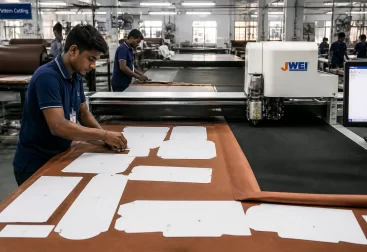
“How long does bag production take?” is the first question every new buyer asks a factory — and the hardest to answer simply, because the honest answer is “it depends” on a chain of decisions that the buyer controls as much as the factory does. A bag can move from brief to doorstep in four weeks, and the same brief can take fourteen. The difference is not luck or factory speed; it is the shape of the project: how complete the specification is, whether materials are standard or custom, how many sampling rounds are needed, and which shipping mode carries the order.
This guide answers the timeline question properly: the stage-by-stage reality of a bag order, the ranges each stage actually takes, the factors that stretch timelines, the levers that compress them and what compression costs, and — most usefully — how to plan a launch calendar backwards from a fixed date so that the timeline becomes a plan instead of a surprise. Written from the factory floor, it replaces “how long does it take?” with a better question: “how do we schedule it so it takes the time it needs?”
Why There Is No Single Answer
The timeline of a bag order is the sum of several independent durations, and each one is a variable with its own range. The specification phase takes days or weeks depending on how complete your brief is. The sampling phase takes two to six weeks depending on the number of rounds. The material phase depends on whether you use standard stock, custom colors or scarce plant-based materials. Production itself takes days or weeks depending on order size, complexity and the factory’s current load. And shipping spans three to five weeks by sea or three to seven days by air. Sum the variables and the total ranges from a compressed four weeks to a leisurely fourteen — with most first orders landing somewhere in the middle.
This is why any factory that quotes a single number without asking about your project is quoting hope, not a schedule. The professional approach is the reverse: the factory asks the questions that shape the timeline — specification completeness, materials, sampling expectations, order size, target market — and then builds a schedule from the answers. As a buyer, your job is to understand which variables you control, because most of the timeline variance sits in the buyer’s court: the completeness of the tech pack, the speed of sample feedback, the early locking of materials, the realistic order size.
Three principles govern the whole timeline. First, the stages are sequential at the critical points: materials must be approved before sampling with production materials, and the approved sample must precede production — early delays compound into later ones. Second, the timeline is compressible at a price: every acceleration has a cost in money, risk or both, and the professional move is to decide deliberately which accelerations are worth their price. Third, the schedule is a commitment once agreed in writing — and managing it is a discipline that runs through the entire order, not a number fixed at quotation. The rest of this guide turns these principles into a working plan.
The Realistic Order Cycle: Stage by Stage
The full cycle of a custom bag order runs through eight stages, each with a realistic duration. The table below is the reference version — the ranges reflect typical factory practice for a first order, and the variables column shows what moves each number.
| Stage | Typical duration | Key variable |
|---|---|---|
| 1. Design and tech pack | 3–7 days | Brief completeness |
| 2. Pattern making and prototype | 5–10 days | Design complexity, revision rounds |
| 3. Material sourcing and approval | 5–15 days | Standard vs. custom materials |
| 4. Sampling and approval | 10–20 days | Number of sample rounds |
| 5. Production planning and cutting | 3–7 days | Factory load, material arrival |
| 6. Sewing and assembly | 10–20 days | Order size, complexity, line capacity |
| 7. Quality control and inspection | 2–5 days | Inspection scheduling, rework |
| 8. Packing and shipping | 3–7 days packing + transit | Sea 2–5 weeks; air 3–7 days |
Sum the midpoints and a sea-freight first order lands at roughly ten weeks from brief to arrival; an air-freight order at roughly seven. The ranges matter more than the midpoints: planning on the low end and being surprised by the high end is the classic first-order mistake. Plan on the mid-to-high end of every range, add a buffer at the risky stages — sampling and shipping — and treat any early completion as a bonus rather than a schedule correction.
The Stages That Eat Time
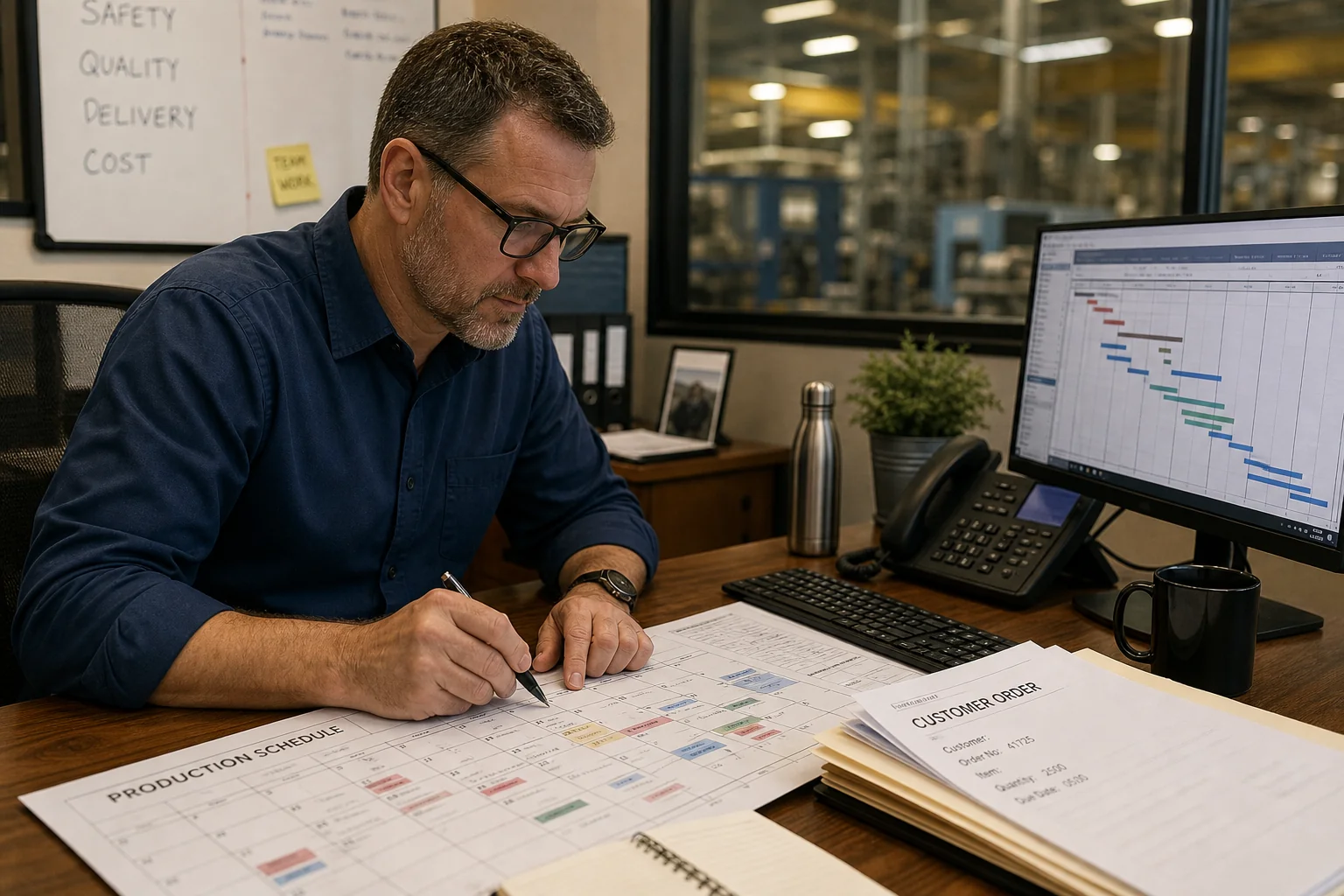
Not all stages are equal — a handful of stages consume most of the calendar, and knowing which ones they are lets you concentrate planning and attention where they matter.
| Time consumer | Why it takes so long | How buyers shorten it |
|---|---|---|
| Sampling rounds | Each round takes days to weeks and waits on review | Complete specs, batched written feedback, fast review |
| Material sourcing | Custom colors and scarce materials have mill lead times | Standard materials first, lock materials early |
| Sewing production | Fixed line capacity shared across clients | Book capacity early, realistic order sizing |
| Sea shipping | 2–5 weeks of transit is structural | Air freight, or plan the transit into the calendar |
| Buyer latency | Days waiting for review, approval, or answers | The cheapest lever: respond the same day |
The most striking row is the last: buyer latency. Factories routinely quote timelines that assume prompt responses, and the delays that actually push a delivery are often the days the buyer spent reviewing a sample, approving a color or confirming a decision. The factory’s sample room and line capacity do not wait politely. Every day of buyer latency is a day of schedule slippage, and it is the cheapest time to recover — because it costs nothing but responsiveness to eliminate.
Sampling deserves the second look: a typical two-to-four-round sampling phase consumes two to six weeks, and the round count is driven by specification quality and feedback clarity more than by the factory. And materials are the structural time-eater behind the scenes — custom colors and special materials impose mill lead times that no factory speed can remove. The practical summary: control the three levers you own — spec completeness, feedback speed, material choice — and the timeline largely takes care of itself.
Factors That Extend the Timeline
Beyond the normal ranges, a set of factors reliably stretches any schedule. Naming them lets you price the risk before committing to a date.
- Custom materials and colors: mill production and color matching add weeks at the material stage. Standard stock keeps you in the fast lane; every custom element moves you out of it.
- Custom hardware with tooling: tooling manufacture, sampling and approval add two to four weeks before production can start. Design with existing hardware where the schedule is tight.
- Multiple sampling rounds: every round beyond the second adds one to two weeks of calendar. The round count follows spec quality and feedback discipline.
- Large order sizes: production time scales with quantity, and very large orders may require multiple production batches or extended line allocation.
- Factory load: a factory near capacity quotes longer timelines, and its schedule is shared across clients — your order waits its turn, not its effort.
- Seasonal peaks: the months before major shopping seasons fill factories months ahead; orders placed late in the peak cycle face the longest lead times of the year.
- Documentation and compliance: destination-market certificates, material declarations and customs paperwork can stall a shipment for days to weeks if they are wrong or missing.
Each factor has a price tag in calendar days, and the professional habit is to estimate that price before quoting a launch date — not after. When a buyer asks “can we launch by November?” the factory’s answer is a function of these factors, and the buyer who knows which factors apply to their project can negotiate the schedule realistically instead of accepting a guess.
Factors That Compress It: Speed at a Cost
Every timeline can be compressed, and every compression has a price. The lever list below is what factories actually offer — and what each one costs.
- Air freight: the biggest compression available — weeks of sea transit become days. The cost is higher freight per unit, usually offset only for high-value or time-critical orders.
- Priority sample slots: a fee moves your sampling ahead of the sample room’s queue, saving days per round. Valuable when rounds are the critical path.
- Expedited materials: paying for rush mill production or air-freighting material shortens the sourcing stage. Cost depends on the material’s origin.
- Single sampling round: a complete spec and decisive feedback can collapse sampling to one round, saving one to three weeks. The risk is approving before everything is proven.
- Split shipments: producing the full order but shipping a first batch by air while the rest travels by sea puts sellable stock in your hands early. Combines speed with cost control.
- Booking capacity early: reserving line time at order confirmation (not at production start) protects your slot in a busy factory.
The discipline of compression is to spend money where time matters most and not where it doesn’t. For a launch with a hard date, the classic combination is: standard materials, one or two decisive sampling rounds, priority sample slots if needed, and a split shipment (air for the launch batch, sea for the balance). The professional buyer chooses compressors deliberately — and asks the factory to quote each option so the decision is made on numbers, not impulses.
Lead Times by Order Type
Timeline expectations also vary systematically by order type, and matching your expectation to the type prevents the most common disappointments.
| Order type | Typical lead time (to shipment) | Why |
|---|---|---|
| ODM catalog style (standard materials) | 2–4 weeks | Proven style, no development, standard components |
| ODM with customization (colors/hardware) | 3–6 weeks | Color matching and component changes |
| OEM with standard materials | 6–9 weeks | Sampling rounds, pattern, production planning |
| OEM with custom materials | 9–12 weeks | Material sourcing and mill lead times added |
| OEM with custom hardware tooling | 12–16 weeks | Tooling manufacture and approval added |
| Reorders of an established style | 3–5 weeks | No development; components reorder faster |
Read the table as a planning tool: the lead time is largely determined by how much of the project is new. A reorder of an approved style is the fastest path to stock — which is why the professional strategy is to invest development time in a core of proven styles and reorder them aggressively, rather than re-developing the line every season. The timeline is not a fixed cost of doing business; it is a cost of newness, and it can be managed by choosing what to make new.
Planning Backwards: Building Your Launch Calendar
The most reliable way to manage a production timeline is to plan backwards from a fixed launch date — every stage gets a slot on the calendar, and the schedule becomes visible instead of implicit. The method takes an hour and saves the weeks that unplanned schedules routinely lose.
Start with the launch date and subtract each stage’s duration in reverse order: launch date minus delivery buffer equals required arrival; minus transit equals departure from the factory; minus packing and inspection equals production completion; minus sewing and assembly equals production start; minus production planning and cutting equals materials confirmed; minus sampling equals materials locked; minus specification and pattern equals the brief completed. The result is the complete calendar — and the moment a stage cannot fit, the calendar tells you exactly what must change: the launch date, the compression levers, or the order’s shape.
Two buffers deserve explicit slots. The sampling buffer: add one sample round to your expectation, so the calendar absorbs a round without panic. The shipping buffer: sea transit is vulnerable to port congestion and schedule changes, so the arrival date should carry a week or two of margin rather than the nominal transit time. The professional calendar is not the optimistic one — it is the one that survives contact with reality and still hits the launch date.
The calendar is also the communication tool with your factory. An agreed schedule in writing — with the key dates for sample approval, material confirmation, production start, inspection and shipping — turns the timeline from a shared hope into a shared commitment. When a stage slips, the calendar shows the consequence and the options immediately, and both sides can act on facts rather than feelings.
When Delays Happen: Managing the Timeline
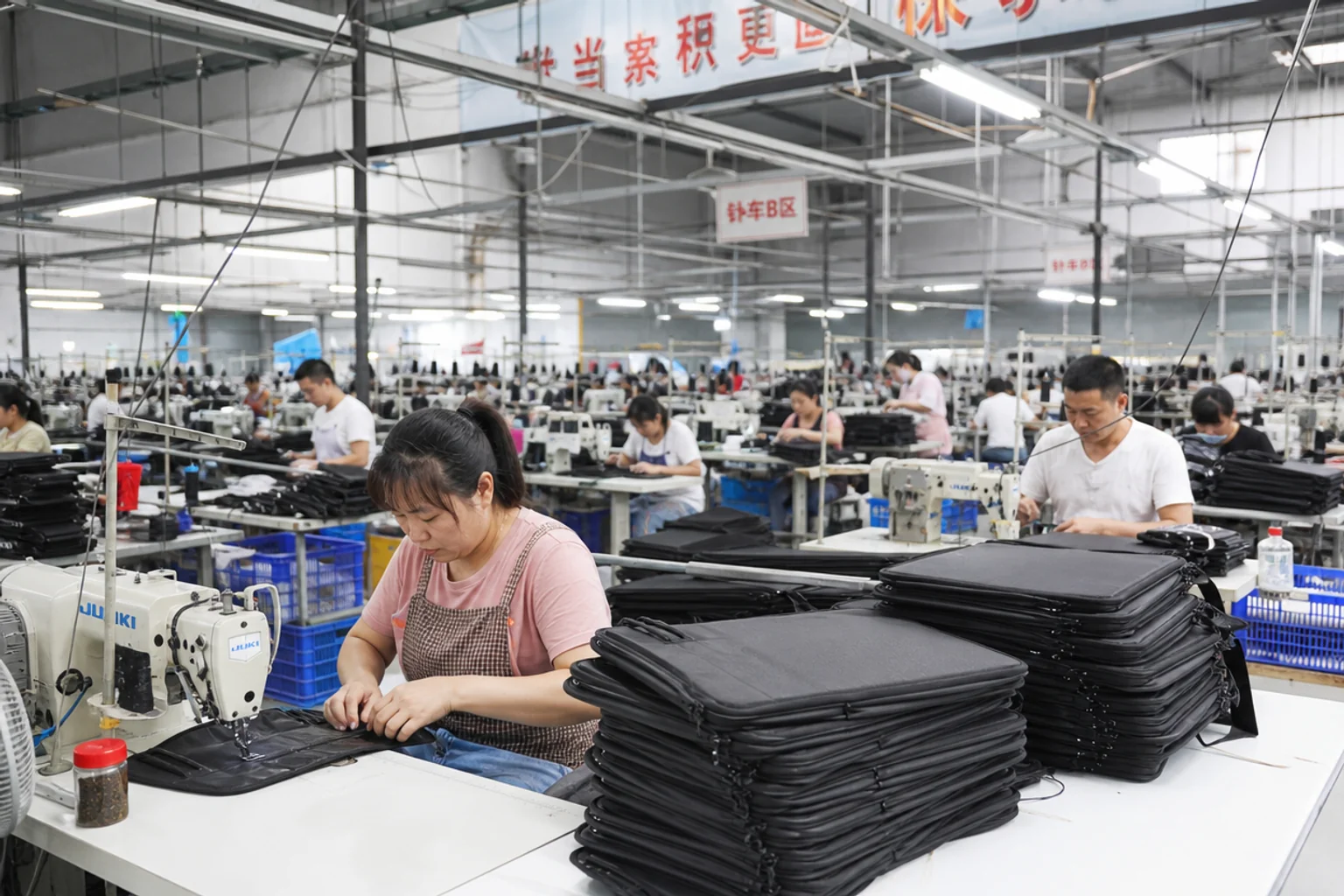
Delays are a normal event in manufacturing, not a failure — the professional difference is how they are detected and managed. A delay discovered early is a schedule adjustment; a delay discovered late is a launch disaster.
Detection comes from milestones. The agreed calendar should carry checkpoints — sample approval, material confirmation, production start, inspection date — and each one should be verified as it passes. The buyer who tracks milestones knows within days when a stage is slipping; the buyer who asks “where is my order?” at the promised delivery date has lost a month of response options. The single best practice: confirm each milestone in writing when it completes, so the schedule is always current.
When a delay appears, the response is a triage: how long is the slip, which downstream stages it affects, and which levers remain. If sampling slips a week, the options are a compressed review cycle, a priority slot, or accepting the slip and adjusting the arrival expectation. If production slips, the options are split shipment (air the first batch), partial expediting, or a revised date. If shipping slips at the port, the options are mostly acceptance — which is why the shipping buffer exists. The discipline is to decide each triage with the calendar in hand, not in the abstract: every delay has a date consequence, and every date consequence has a price or an acceptance.
Finally, record the lesson. Every delayed order is a data point: which stage slipped, why, and what would have prevented it. The buyer who keeps this log builds a personal timeline model that beats any factory estimate — because it is built from their own projects, their own suppliers and their own feedback speeds.
Common Timeline Myths
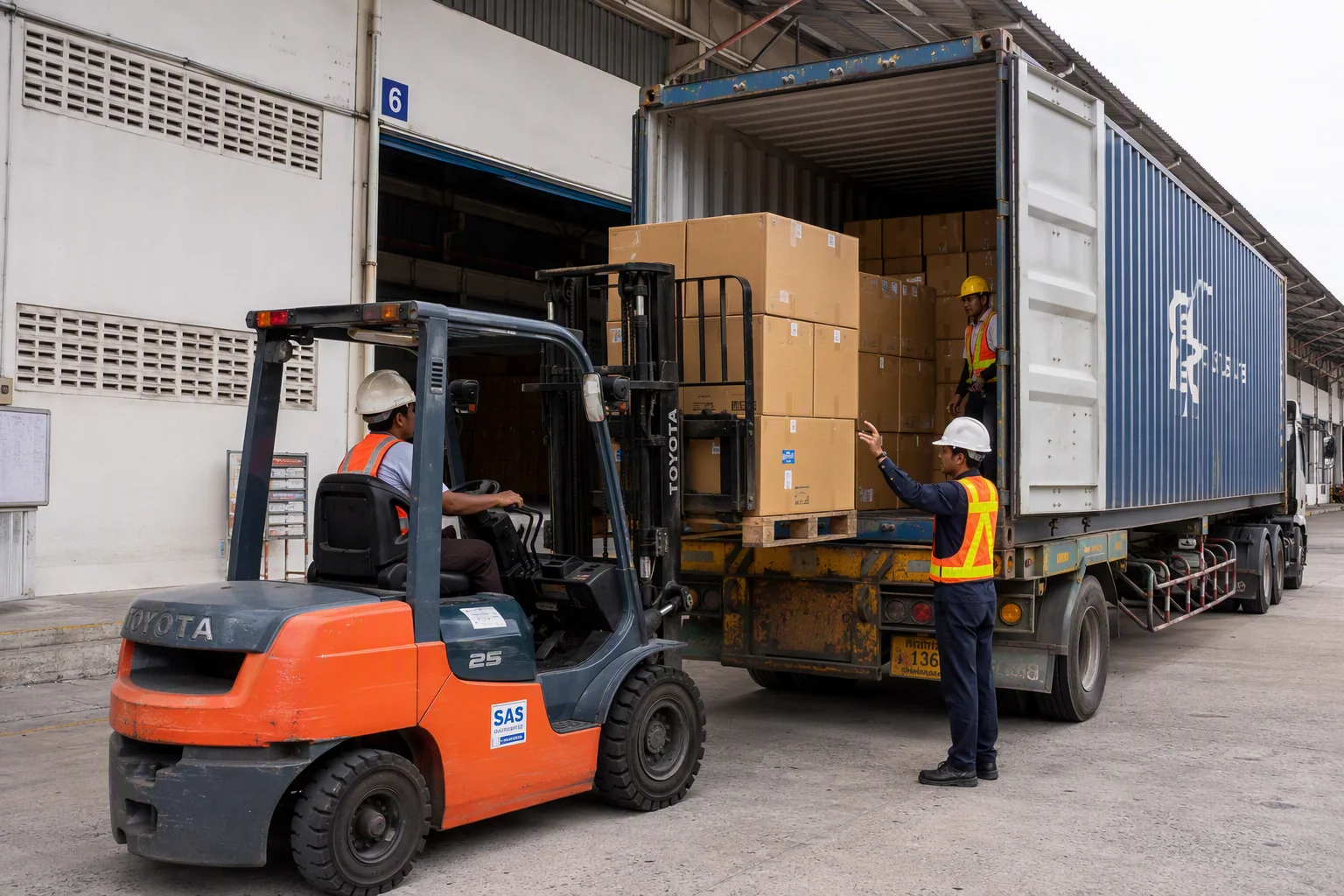
Timeline misunderstandings follow recognizable patterns, and each myth costs real calendar days before it is corrected.
Myth 1 — “The factory can just work faster.” Factories work at the speed their process allows: materials arrive on mill schedules, samples follow the sample room’s queue, and the line sews at its rated capacity. “Working faster” is a reallocation of limited resources, not a multiplier — which is why the honest question is not “can you go faster?” but “what would it take to go faster, and what would it cost?”
Myth 2 — “A shorter quote means a faster factory.” Quotes differ because processes differ: one factory’s eight-week quote may include three sampling rounds, a production sample and full inspection, while another’s five-week quote includes a single round and no PP sample. Compare the process, not the number — the cheaper timeline may be a thinner process, and the thinner process is where quality problems live.
Myth 3 — “The production date is when the order starts.” The order starts at the brief: specification, patterns, materials and samples all precede production, and together they consume more calendar than the sewing itself. Buyers who count from production start are always surprised; buyers who count from the brief are rarely late.
Myth 4 — “Tracking means asking for updates.” Asking the factory “any updates?” produces reassurance, not information. Tracking means milestone verification — sample approval confirmed in writing, materials confirmed, production start confirmed — against an agreed calendar. The difference is the difference between a feeling and a fact.
Myth 5 — “One big order is faster than several small ones.” Not necessarily: a large order may exceed one production batch or stretch line allocation, while a reorder of an approved style can ship in weeks. The fastest path to stock is usually an approved, proven style reordered at a sensible size — not a larger first development.
Each myth dissolves under the same antidote: an agreed schedule with named milestones, built from the actual stage durations, tracked by verification rather than by asking. Timelines are not magic — they are arithmetic, and the arithmetic is available to anyone who plans it.
Seasonality: When to Order for Each Selling Season
Bag demand is seasonal, and so is factory capacity — the two forces interact to determine when you should place each season’s order. Ordering at the right time is the cheapest schedule insurance available.
The retail calendar defines the demand: the fall/winter and spring/summer seasons, with holiday peaks (the end-of-year shopping season in particular) and regional moments such as back-to-school for backpacks. The production calendar runs ahead of it: for a sea-freight OEM order taking ten weeks, the fall order must be placed by mid-summer, and the holiday-season order must be in production by early autumn. Buyers who order by the shopping calendar instead of the production calendar discover the same lesson: the factory that was available in July is booked by September, and the lead time that was ten weeks in July is fourteen in September.
Factory capacity follows its own rhythm. In the months before major seasons, sample rooms and production lines fill with orders from across the industry, and quotes stretch accordingly. The two practical consequences: book capacity early (order confirmation reserves your production slot), and place the riskiest developments — new materials, new hardware, first sampling — in the quiet months, when sample rooms have capacity and delays are shortest.
Build the seasonality into your planning calendar: define each selling season’s order deadline (production calendar backwards), add the buffer, and place the order accordingly — then treat any late-season order as a premium-priced exception, not a normal event. The brands that consistently hit their selling seasons are not the ones with the fastest factories; they are the ones who ordered early enough that speed was never the question.
Tracking Tools: From Spreadsheet to Milestone Log
The best planning tool is the one you actually maintain, and for most bag brands that starts as a simple spreadsheet. The order tracker needs five columns to be useful: stage, planned date, actual date, status and notes. Each row is a milestone — brief complete, materials confirmed, development sample, approval sample, production sample, production start, inspection, shipment, arrival — and the actual date is entered the day the milestone completes, not when it is remembered. The delta between planned and actual is the early-warning system: a stage that slips a few days today is manageable; a stage that slips and is not recorded is a launch-date surprise in three weeks.
Two habits keep the tracker honest. First, update it at the milestone, in writing: confirm each completion with the factory in the channel you both use, and record the date the confirmation arrives. Second, review it weekly: a ten-minute review against the calendar shows which stages are on track, which are slipping, and which levers remain available. For multi-style orders, the tracker gains a style column and becomes the line-level view that shows where capacity is shared and where risks concentrate.
The milestone log serves a second purpose beyond the current order: it builds your personal timeline model. After two or three orders, the log shows your real durations — your feedback speeds, your factory’s actual response times, your materials’ real lead times — and those numbers are more reliable than any generic estimate. The spreadsheet that starts as a scheduling aid becomes a planning asset, and the brands that keep it are the ones whose timelines stop being surprises.
FAQ
How long does a custom bag order take from start to delivery?
Realistically eight to twelve weeks for a first OEM order with standard materials and sea freight: specification and sampling consume several weeks, production two to four, and sea transit two to five. ODM orders run two to six weeks; reorders of approved styles three to five.
What is the fastest way to get bags produced?
ODM catalog styles with standard materials, shipped by air — two to four weeks to shipment plus days of transit. The trade-off is design ownership: ODM styles are the factory’s designs, not exclusive to you.
Why do custom materials add so much time?
Custom colors and materials carry mill production and color-matching lead times measured in weeks — the factory cannot accelerate its own suppliers’ schedules. Standard stock avoids this entirely, which is why material choice is the fastest schedule lever.
Can production be expedited for a launch deadline?
Yes, through compressors: priority sample slots, expedited materials, single decisive sampling rounds, air freight or split shipments. Each has a cost, and the professional approach is to quote the options and decide on numbers.
How much buffer should I plan for shipping?
A week or two beyond the nominal transit time for sea freight, which is vulnerable to port congestion and schedule changes. Air freight needs far less buffer but costs more per unit.
Why is my factory’s quote longer than another factory’s?
Factories quote from their own capacity, load and process depth. A shorter quote may reflect a less complete process (fewer sampling rounds, no production sample) rather than real speed — compare the process, not just the number.
When should I start planning my next season’s order?
Work backwards from the season’s launch: for a sea-freight OEM order, begin the brief roughly three months before the target date; place ODM orders six to eight weeks ahead; and book line capacity as early as the factory allows. Seasonal peaks fill months ahead.
How do I get a reliable timeline quote from a factory?
Give the factory the full picture — your specification, materials plan, sampling expectations and target date — and ask for a stage-by-stage schedule with named milestones, not a single number. Compare the process behind the dates, and confirm the schedule in writing before production begins.
Next Steps: Turn the Timeline into a Plan
The timeline of a bag order is not a mystery to be endured — it is a schedule to be built. Plan backwards from the launch date, budget the stages honestly, protect the risky ones with buffers, and manage the calendar through milestones instead of hoping at the end. The brands that ship on time are not the ones with faster factories; they are the ones with clearer plans, faster decisions and earlier detection — all of which are entirely in the buyer’s control.
Planning a bag order and want a realistic timeline built around your launch date? Contact info@gionar.com for a free schedule consultation and quotation. Explore our custom bag manufacturing services and custom backpack manufacturing to see how we plan timelines that hit launch dates.