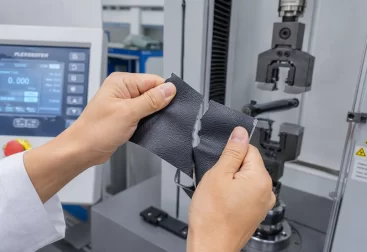
When a bag order fails — late, defective, or worse, non-compliant — the buyer’s first question is always the same: “how could we have known?” The answer, in nearly every case, is that a proper factory audit would have shown it. An audit is the difference between choosing a factory on its promises and choosing it on its evidence: it puts an inspector on the floor, at the machines, in the files and among the workers, and produces a written verdict that no sales presentation can match. For buyers of custom and wholesale bags, knowing what the inspector looks for is not just useful — it is the skill that separates sourcing from gambling.
This guide walks through the bag factory audit from the inspector’s checklist outward: what an audit actually covers, how to review documents before anyone sets foot on the floor, what the production walkthrough reveals, how to judge whether the quality system really works, what social compliance checks look for, how the product-level inspection is structured, and — critically — how to read the audit report you receive so its findings turn into decisions instead of noise. Whether you commission the audit yourself, receive one from a factory, or simply want to audit a factory with your own eyes, the checklist inside is the professional standard.
- What a Factory Audit Is — and Why It Matters
- The Audit Framework at a Glance
- Before the Floor: Document Review
- On the Floor: Production and Equipment
- The Quality System in Action
- Social Compliance and Working Conditions
- Product-Level Checks: The Final Inspection
- Reading the Audit Report
- Turning Audit Results into Action
- FAQ
What a Factory Audit Is — and Why It Matters
A factory audit is an independent, structured examination of a factory’s capability, quality systems and compliance, conducted against a defined checklist and producing a written report. It is the verification layer that the factory’s own claims cannot provide: the factory will always describe its best self, and the audit describes its actual self — the machines that are actually running, the records that are actually kept, the conditions that workers actually work in. The gap between those two descriptions is where sourcing risk lives, and the audit is the instrument that measures it.
Why does this matter more for bags than for many categories? Because bag manufacturing is a process business: quality is created in thousands of stitches, seams and settings across hundreds of workstations, and it cannot be inspected into a product after the fact — it must be produced by a system. The audit verifies that the system exists and works: that materials are checked on arrival, that operators follow work instructions, that in-process inspections catch defects while they are cheap to fix, that final inspection samples honestly, and that records prove all of it. A factory without a working system can ship a good sample and a mediocre batch; the audit is how you know which factory you are dealing with before the batch exists.
The economics are the same as every verification investment: an audit costs a fraction of the order value, and it retires risks that a failed order would price at multiples of the order itself. There are three audit types a buyer meets: the self-audit or supplier questionnaire (cheap, useful as a first filter), the third-party audit (BSCI, SEDEX/SMETA, WCA, or a commissioning agency like SGS or Bureau Veritas — the professional standard for verification), and the buyer’s own audit or pre-production inspection (targeted at the buyer’s specific requirements). The checklist in this guide serves all three, because the inspector’s eyes are the same regardless of who signs the report.
“A factory audit does not tell you what the factory says it is. It tells you what the factory can prove it is — in its records, on its floor, and in its workers’ conditions. Everything else is a sales presentation.”
The Audit Framework at a Glance
The professional audit checks the factory in layers, from the legal shell to the product on the table. The framework below is the structure inspectors work through, and each layer has its own checklist items and evidence.
| Audit layer | What it verifies | Typical checks |
|---|---|---|
| Legal and business | The company is real and authorized | License, export rights, registration match |
| Management and records | Processes are documented and followed | QMS, work instructions, training records |
| Facilities and safety | The plant is fit and safe | Layout, fire safety, machine guards, exits |
| Production capability | Equipment and skills match the work | Machine inventory, maintenance, operator skill |
| Quality system | Defects are caught systematically | IQC, in-process QC, final inspection, AQL, records |
| Materials and traceability | Inputs are controlled and documented | Supplier base, certifications, batch traceability |
| Social compliance | Workers are treated legally | Working hours, wages, age, contracts, facilities |
| Product conformity | The goods meet the specification | Sample vs. spec, testing, labeling, packaging |
Each layer is a gate: a failure in legal standing or social compliance can end the audit regardless of how well the machinery runs, and a failure in the quality system tells you the product risk even when the sample looks perfect. The layers also tell you where to look when you are auditing with your own eyes — most buyers cannot run a full BSCI audit, but every buyer can walk the floor with this framework and see most of what an inspector would see.
Before the Floor: Document Review
The audit begins in the office, because documents reveal what the floor tour cannot: whether processes are designed, recorded and followed over time — not just on the day of the visit. The document review is also the fastest layer to check, and it is where a surprising amount of audit findings originate.
The core documents an inspector reviews: the business license and export registration (the legal shell), the quality manual and procedures (the quality system on paper), work instructions and standard operating procedures for key processes, training records for operators and QC staff, equipment maintenance logs, material supplier lists and certificates, incoming inspection records, in-process and final inspection records, defect and rework logs, and any certifications the factory claims (ISO 9001, BSCI, SEDEX, REACH material compliance). The inspector checks three things about each document: does it exist, is it current, and is it real — a record of daily inspections that shows every day of the year as “no defects” is not a record, it is an ornament, and inspectors have seen both.
The document review also reveals the factory’s honesty culture, which is the most valuable finding of any audit. A factory that volunteers its records, explains its gaps and shows its real defect data is a factory you can plan with; one that hesitates, filters or “cannot find” documents is telling you how it will behave when a production problem needs the same honesty. The documents are the factory’s memory, and the audit reads the memory before it walks the floor.
On the Floor: Production and Equipment
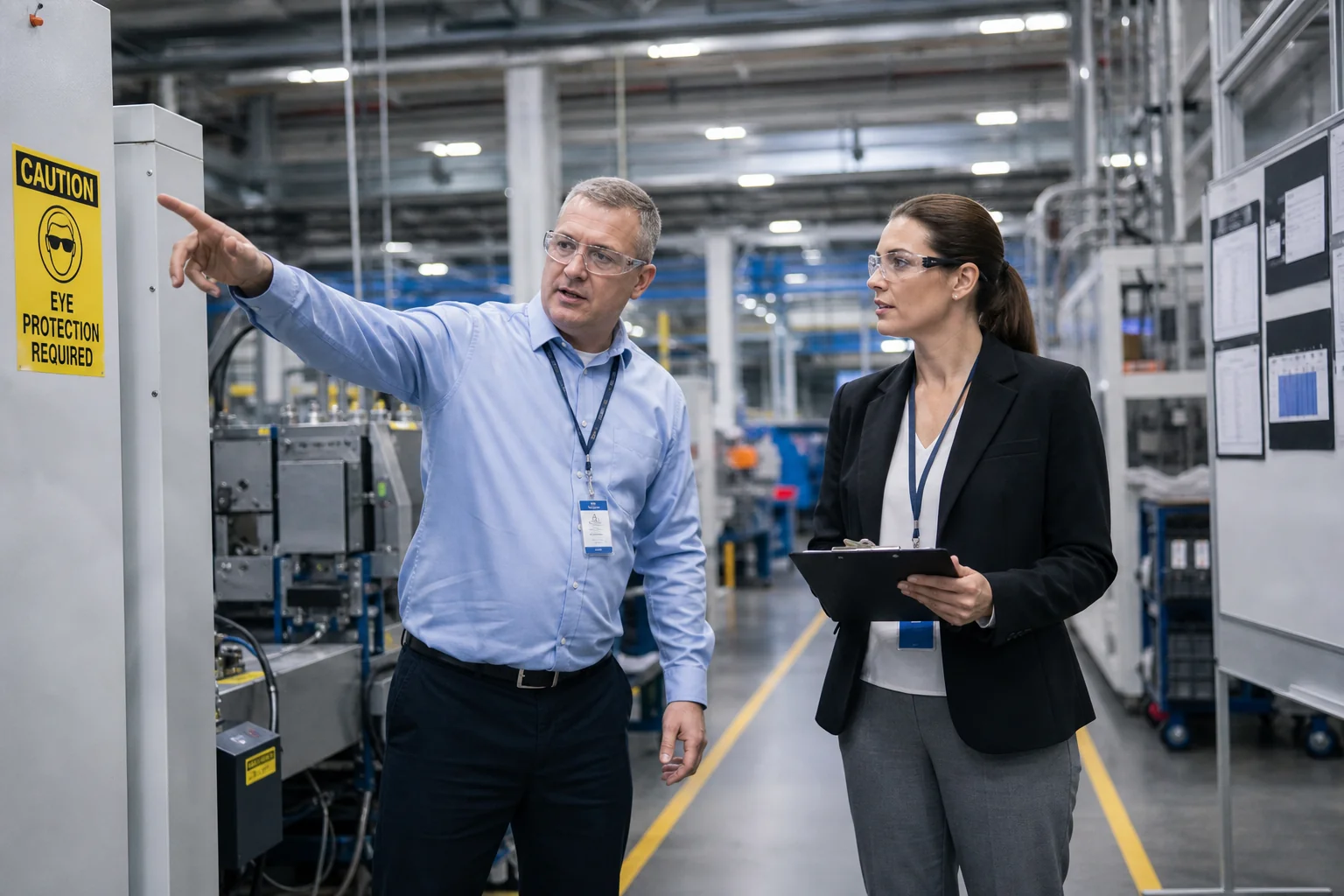
The floor tour is where the audit comes alive: the inspector walks the production flow — cutting, preparation, sewing, hardware setting, assembly, finishing, packing — and reads the reality of each station. The tour is not a casual walk; it is a structured observation with a checklist and an eye for what is out of place.
Equipment comes first: does the factory actually own the machines it claimed? The inspector verifies the sewing machine fleet (flatbed, post-bed, cylinder-bed), the cutting equipment, the hardware presses, and any specialized capability the factory advertises, and checks maintenance logs against the machines’ condition. A machine that is claimed and not present, or present and not running, is a capability gap that will surface in your order’s construction options. Second, the flow: does the production layout move material logically from cutting to packing, or does work-in-progress pile up and wander? Piles of work-in-progress signal uneven line balancing and predict late orders. Third, housekeeping and safety: clean floors, clear aisles, guarded machines, working fire exits and extinguishers — the housekeeping standard is a reliable proxy for the quality standard, because the same discipline that keeps a floor clean is the discipline that keeps defects out of cartons.
The inspector also reads the people: operator skill at the machines (are they steady, focused, competent?), the presence of work instructions at each station (do operators know the standard?), and the ratio of experienced to new operators (a line that just replaced half its crew is a line whose quality is about to move). The floor tour answers the question the documents cannot: not “is there a process?” but “is the process actually running, every day, at this factory?”
The Quality System in Action
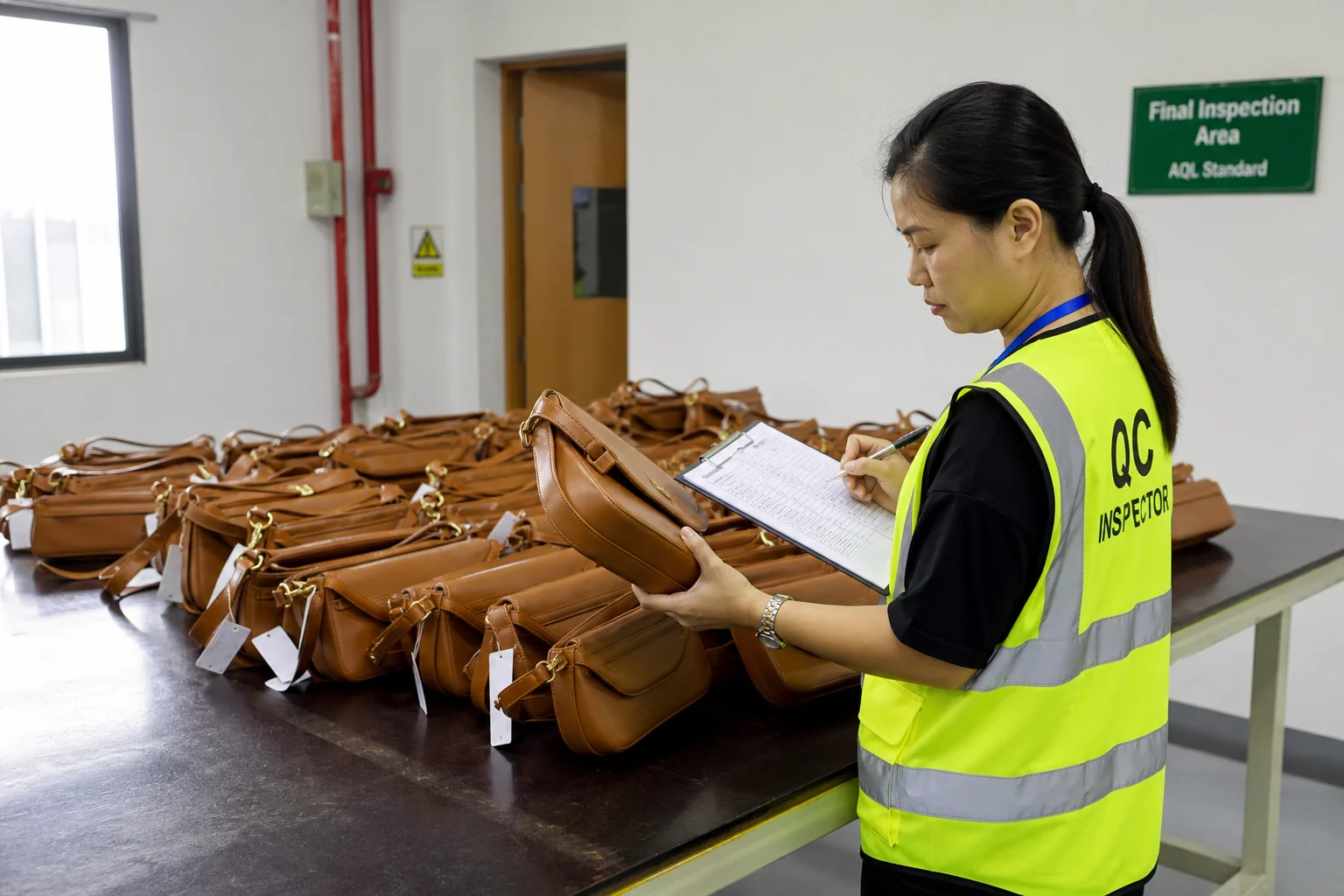
The quality system is the factory’s answer to the question “how do you stop defects from shipping?” and the audit verifies it at each of its four checkpoints — incoming, in-process, final and the feedback loop.
Incoming quality control (IQC) checks materials on arrival: the inspector verifies that materials are actually inspected against specifications, that non-conforming lots are rejected or segregated, and that the records show it. In-process QC checks production at defined points — cutting accuracy, seam quality, hardware seating — with the frequency the risk demands; the inspector verifies that in-process inspectors exist, that they check the points that matter for bags (stitch quality, alignment, hardware), and that operators self-check their work. Final inspection samples the finished pieces to an AQL plan — the standard statistical sampling (commonly AQL 2.5 for major defects) that decides accept or reject from a sample rather than from hope; the inspector verifies the AQL level, the sample size, and that rejects are actually rejected, not quietly re-bagged.
“The difference between a factory with a quality system and one without one is never visible in the sample. It is visible only in the batch — and the audit is the only way to see it before the batch is yours.”
The feedback loop is the fourth checkpoint and the most telling: what happens to defect data? A factory that records defects, analyzes their causes and changes its process is improving; one that records and forgets is doing paperwork. The inspector asks: where is last month’s defect log, what were the top defect types, and what changed as a result? The factory with a live feedback loop is compounding its quality every month; the one without it is re-inspecting the same problems forever. For the buyer, the quality system’s verdict is the audit’s core product: a factory with a working system is a predictable supplier, and predictability is what your brand actually buys.
Social Compliance and Working Conditions
Social compliance is the audit layer that checks how the factory treats the people who make your products — and it is a legal and reputational gate, not a courtesy. For markets like the EU and the US, buyers are increasingly accountable for their supply chains, and a compliance failure at the factory can become a compliance failure at the brand.
The inspector checks: working hours against legal limits and overtime records; wages against the legal minimum and payment records; age verification (no child labor) with proper identity documentation; employment contracts for all workers; freedom of association; health and safety conditions (guards, ventilation, fire safety, emergency exits, first aid); and the facilities — dormitories, canteens and toilets where provided. The checks combine document review (payroll, attendance, contracts) with worker interviews conducted privately, because workers speak freely only away from management’s hearing. Discrepancies between the records and the interviews — hours recorded differently from hours worked, wages in the files different from wages in the pocket — are the classic findings of a compliance audit.
For the buyer, the social compliance layer has three uses: it protects against legal and reputational exposure, it signals the factory’s overall management quality (a factory that cheats its workers will cut other corners), and it is a negotiation gate — many retailers will not buy from a factory that fails basic compliance audits. The absence of a compliance audit is not a pass: it is an unknown, and the buyer who orders from an unaudited factory is carrying the unknown themselves.
Product-Level Checks: The Final Inspection
The audit’s product layer verifies that what the factory makes matches what you ordered — and it is the layer closest to the buyer’s daily experience, because it is the same method used for the final pre-shipment inspection. Understanding it lets you read both the audit report and your own inspection results with the same eye.
The inspection draws a random sample from the finished batch according to the AQL plan, then checks every piece against the specification and the approved sample on a structured defect list. The checks divide into three classes of defects: critical (safety or function — a broken closure, sharp hardware, a strap that detaches), major (visible or functional deviations that affect saleability — a crooked seam, a color mismatch, hardware misalignment), and minor (small cosmetic deviations — loose threads, slight shading). The AQL table maps the sample size and the maximum allowed defects per class, and the batch is accepted or rejected on that arithmetic — a rejection means the defect count exceeded the allowed number, and the batch must be reworked or re-inspected, never quietly shipped.
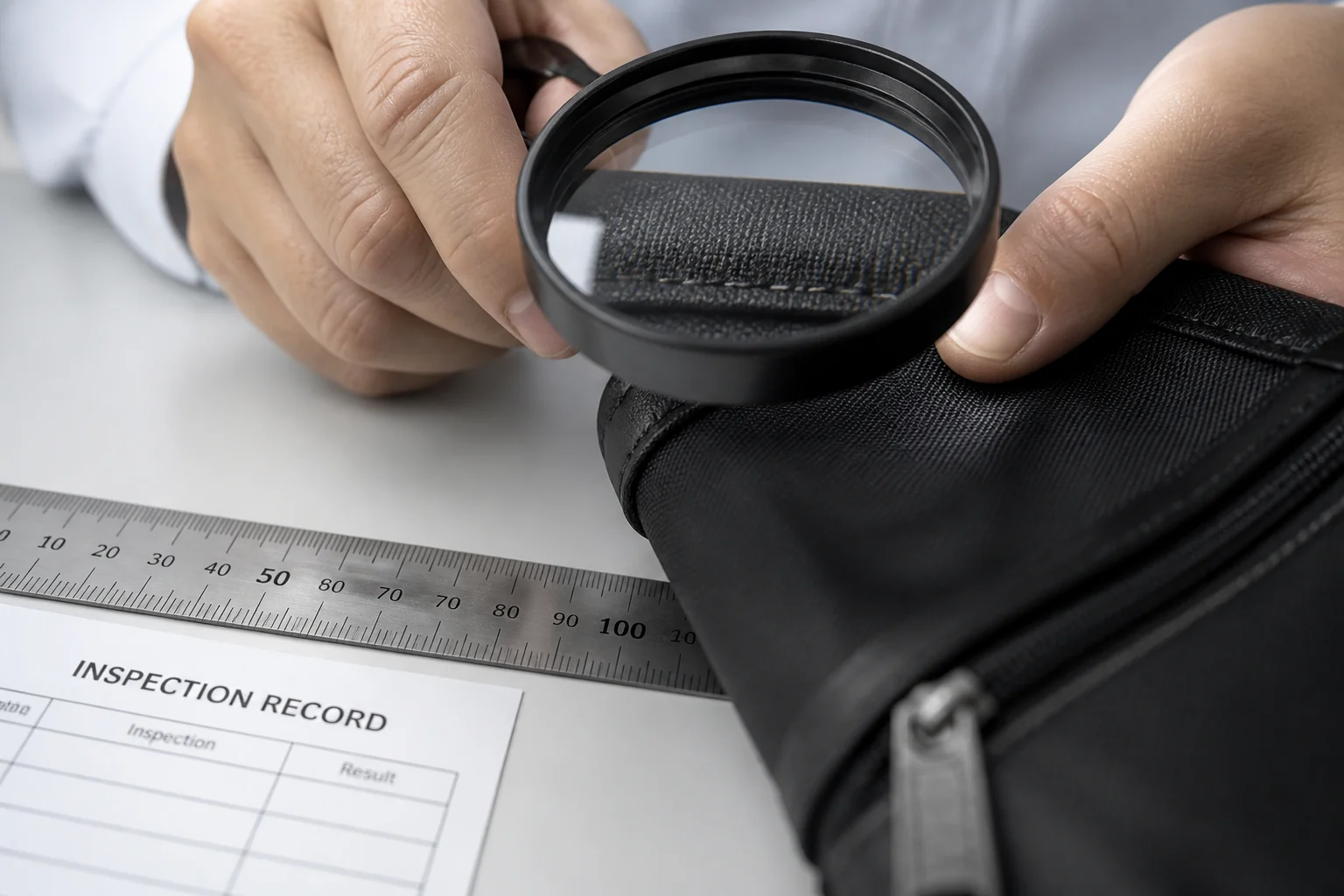
The product checks that matter most for bags, and that inspectors always perform: dimensions against the spec (measured, not eyeballed), construction quality (stitch density and alignment, seam strength at stress points, edge treatment), hardware function (zippers, buckles, snaps, magnetic closures), material conformity (color, texture, thickness against references), and function testing (loading the bag, opening and closing closures repeatedly, checking straps under weight). The inspector also verifies labeling, packaging and carton contents — the pieces of the order your customer actually receives. The final inspection is the last gate before shipping, and its rigor determines whether the defects that slipped through the factory’s system reach your warehouse or stop at the dock.
Reading the Audit Report
The audit report is the deliverable, and reading it correctly is a skill in itself — the report’s value lies in what it reveals about risk, not in the overall score. Every report follows a structure, and each section deserves its own reading.
The executive summary and overall rating give the headline — but the professional buyer reads past it, because the rating aggregates very different risks into one number. Read the findings section item by item and classify each finding by severity (critical, major, minor) and by type (capability gap, system gap, compliance issue, documentation issue). A report with minor findings but a clean quality system is a healthy factory; a report with a good overall score but one critical finding in the social compliance layer is a factory that fails your gate regardless of the score. The corrective action plan — the factory’s written response to the findings, with deadlines — is the most forward-looking section: it tells you whether the factory understands the findings and is fixing them, or is arguing with the auditor.
Three reading disciplines complete the skill. First, compare the report to the factory’s claims: the audit that confirms the factory’s self-description is reassuring; the audit that contradicts it is the one that saved you. Second, date the report: an audit from eighteen months ago describes a factory that may no longer exist, and the report’s currency is part of its value. Third, look for the recurring themes across audits if you have more than one: the factory whose every audit finds the same fire-safety or record-keeping issue is a factory that fixes for the audit day, not for the year — and that pattern is the most durable finding of all.
Turning Audit Results into Action
An audit is only as valuable as the decision it drives, and the decision framework has three branches: proceed, proceed with conditions, or walk away. The audit results feed directly into how you structure the order that follows.
Proceed: the audit is clean or has only minor findings. The order proceeds normally, with one addition — keep the audit report on file and schedule the next audit at a sensible interval (annually for established relationships, more often for new ones). The clean audit is not a one-time pass; it is a baseline that future audits compare against.
Proceed with conditions: the audit has major findings or a corrective action plan in progress. The conditions are the tools: a pre-production inspection before the line starts, a stricter final AQL for the first orders, a corrective action deadline tied to the order’s milestones, and a follow-up audit or verification visit to confirm the fixes. The conditions convert the audit’s warnings into contractual commitments — the factory that fixed its findings before your order is a factory whose fix is real.
Walk away: critical findings — legal problems, social compliance failures, a quality system that does not exist — end the evaluation regardless of price or samples. The market has enough factories that the audit is a filter, not a gamble, and the report that catches the critical finding has paid for itself a thousand times over. The discipline in all three branches is the same: the audit is not the end of verification, it is the beginning — the audit informs the inspection plan, the inspection informs the order, and the order’s records inform the next audit. That loop is the professional sourcing system, and the factory audit is its foundation.
Red Flags That Auditors (and Buyers) Should Never Miss
Some findings are warnings to weigh; others are signals that the audit’s value has already been earned. The red flags below are the ones inspectors treat as decisive — and the ones a buyer can spot even in a quick walkthrough.
- Two sets of records. Separate attendance or payroll books for “inspection days” versus normal days — the classic sign of compliance theater. The auditor checks by comparing records against worker interviews and against the factory’s own production data.
- Records that are too perfect. Daily inspection logs with zero defects for months, or maintenance logs that show no maintenance history, are ornaments, not records. Real processes produce real variation; the absence of variation is the presence of fiction.
- Guided tours with fixed routes. A factory that routes visitors past the same polished stations, and steers them away from the sewing floor or the warehouse, is controlling what you see. The inspector’s job is to see the parts the factory does not want shown.
- Workers who cannot speak to the inspector. Private worker interviews are a core audit method, and a factory that prevents them — or stages the interviews — is hiding the conditions. This is the compliance layer’s most important test.
- Machines that are claimed but absent. The equipment list says post-bed machines; the floor shows none. Capability gaps found at audit are exactly the gaps that would have appeared as impossible constructions or subcontracting surprises later.
- Fire-safety noncompliance. Blocked exits, missing extinguishers, unguarded machinery. Safety is the cheapest compliance layer to fix, so a factory that fails it is signaling its attitude to every other layer.
- Defensive reactions to findings. The factory that argues with every finding, or promises fixes without dates, will respond the same way when your order has a problem. The corrective-action response is a character reference.
The discipline: a single red flag is a reason to look deeper; a pattern of them is a reason to stop. The audit is structured precisely so that these patterns become visible — and the buyer who reads the report for the flags, not just the score, has already gotten the audit’s money’s worth.
FAQ
What is the difference between a factory audit and a product inspection?
An audit examines the factory itself — its legality, systems, equipment, compliance and conditions — while an inspection examines the product (usually a batch, sampled to an AQL plan). The audit asks “can this factory make my product well?”; the inspection asks “did this batch come out well?” You need both: the audit chooses the factory, the inspection gates each shipment.
How much does a bag factory audit cost?
A third-party audit typically ranges from a few hundred to a couple of thousand dollars depending on the scope, the agency and the location — a small fraction of a typical order value. For buyers with tighter budgets, a structured self-audit or supplier questionnaire is a low-cost first filter, with the full audit reserved for shortlisted factories.
What certifications should a bag factory hold?
Common ones: ISO 9001 (quality management), BSCI or SEDEX (social compliance), ISO 14001 (environment), and material compliance certificates for your market (REACH for the EU, CPSIA for the US). Check the audit date and scope — certifications are point-in-time documents, and a dated report from years ago describes a different factory.
Can I audit a factory myself without hiring an agency?
Yes — a structured walkthrough using the framework in this guide (documents, floor, quality system, conditions, product) captures most of what an inspector sees. The limits are independence (the factory knows you are coming) and depth (worker interviews and full record review are hard for a buyer to do credibly). Use the self-audit to shortlist, and the agency audit to confirm.
What AQL level should I use for bag inspection?
AQL 2.5 for major defects and 4.0 for minor defects is the common standard for bag categories; critical defects are allowed at zero. The AQL level should be written into your contract with the factory and the inspection company, and the approved sample should be the reference the inspector checks against.
What happens if the factory fails the audit?
That depends on the findings: minor issues go into a corrective action plan with deadlines; major issues may mean proceeding with conditions (stricter inspections, tied to fixes); critical findings — legal or social compliance failures — should end the evaluation. The factory’s corrective action response is itself a test of its honesty and capability.
How often should I audit my factory?
Annually is the common rhythm for established relationships, with more frequent audits (or inspections) for new factories, fast-changing suppliers or higher-risk categories. Also audit after major changes — new management, a new facility, or a significant incident — and always keep the audit current before large or seasonal orders.
Does a good audit guarantee good products?
No — the audit verifies capability, systems and conditions at a point in time; it does not inspect every batch. The guarantee comes from the full loop: a clean audit, then pre-production and final inspections on every order, with the approved sample as the reference. The audit is the foundation of that loop, not a substitute for it.
Next Steps: Audit Before You Commit
The bag factory audit is the most reliable instrument a buyer has for choosing a partner on evidence instead of promises. Review the documents before the floor, read the quality system in action, check the conditions the workers work in, and read the report for what it reveals about risk — not just the score. Then turn the findings into the order structure: inspections, conditions and deadlines that make the audit’s warnings contractual. The factory that welcomes the audit is the factory you can build a brand on; the audit is how you know which one that is.
Ready to source from a factory that welcomes the audit? Contact info@gionar.com and ask for our audit documents, our quality system and our inspection records — we will show you the evidence, not just the promises. Explore our custom bag manufacturing services and custom backpack manufacturing to see how a transparent, auditable factory works.