Every year, bag buyers place their bets about ten months before the season opens. Colours must be chosen, materials committed, tooling paid for and production slots booked long before a single unit reaches a shelf. The problem is that trend information usually arrives as mood boards and runway imagery, which tells a buyer what looks interesting but not what a factory can actually build at a workable cost.
This guide takes the opposite approach. It is written from the production floor, where trends are filtered through material availability, tooling cost, minimum order quantities and lead times. What follows is a working forecast for 2027 covering materials, colour, silhouette, hardware, function, sustainability, channel and cost — with the practical implications for anyone building a bag range.
The forecasts here are direction-based rather than absolute. Nobody can predict a season with certainty, and any supplier who claims otherwise is selling confidence rather than information. What a manufacturer can do reliably is describe which directions are already visible in buyer enquiries, material sampling and tooling requests — because those are the signals that precede volume production by several months.
- How to Read a Trend Forecast as a Buyer
- Material Trends: PU Leather in 2027
- Silhouette and Category Shifts
- Colour and Finish Direction
- Hardware and Detail Trends
- Functionality and Utility Features
- Sustainability and Compliance Pressure
- Channel Shifts: E-commerce, DTC and Wholesale
- Cost and Supply Chain Outlook
- Planning Your 2027 Range
- FAQ
How to Read a Trend Forecast as a Buyer
A forecast is only useful if it changes a decision. Before adopting any trend, it helps to understand where the signal came from and how much commitment it justifies.
Where manufacturer forecasts come from
Factories sit in an unusual position: they see buyer intent before it becomes public. When five customers in one quarter ask about the same surface finish, that is a stronger signal than any published colour report, because it represents money about to be spent.
Our own forecast inputs combine four sources. First, incoming sampling requests and material enquiries, which reveal what buyers are actively testing. Second, tooling and mould requests, which show what is moving from concept to investment. Third, material supplier development pipelines, which indicate what will actually be available at scale. Fourth, retail and wholesale sell-through patterns, which confirm whether a direction has consumer support.
The most reliable trend signal is a purchase order. Everything before that is a hypothesis.
Separating durable shifts from seasonal noise
Some trends are seasonal and reverse within a year. Others are structural and compound. A colour can be seasonal; a change in how bags are bought is structural. Confusing the two is expensive, because seasonal trends demand fast, shallow commitments while structural shifts justify tooling and range redesign.
A practical test: ask whether the trend changes what the product does, or only how it looks. If it changes function — lighter construction, more interior organisation, easier repair — it is likely structural and worth investing in. If it only changes appearance, test it with small quantities first.
| Signal type | What it indicates | Commitment justified |
|---|---|---|
| Buyer sampling requests | Active interest, early stage | Sample materials only |
| Repeated enquiries across buyers | Real emerging demand | Sample styles, quote tooling |
| Tooling or mould investment | Direction confirmed by money | Reserve production capacity |
| Material supplier pipeline | Will be available at scale | Standardise into range |
| Retail sell-through | Consumer demand proven | Repeat and expand |
Why timing, not taste, decides success
A trend adopted too early carries the same risk as one adopted too late. Arriving first means paying for unproven materials, absorbing tooling costs and educating the market. Arriving late means competing on price in a crowded category.
For a bag programme, the sweet spot is usually the second wave: the direction is visible in buyer activity but not yet saturated. This is when material supply has stabilised, tooling costs can be shared across several styles, and the retail conversation is already familiar.
Material Trends: PU Leather in 2027
Material is where trends become permanent or disappear, because a material decision locks the product into a supply chain, a cost structure and a set of performance limits.
The continued rise of engineered surfaces
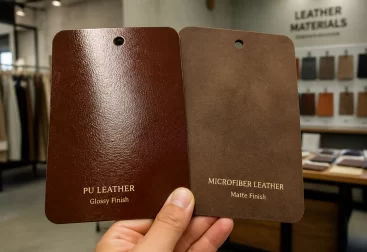
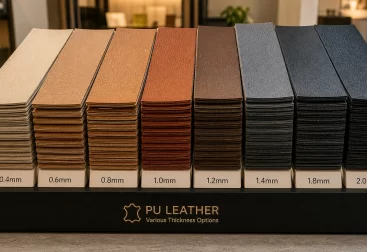
PU leather has moved well past its role as a simple leather substitute. The 2027 direction is toward engineered surfaces: materials designed for a specific look and a specific performance target rather than a generic finish.
This shows up in enquiries for defined grain depth, controlled sheen, and backing specifications that are chosen for a bag’s load rather than inherited from whatever the mill had available. Buyers are increasingly specifying the base fabric separately from the surface, which gives more control over strength and feel.
For manufacturers, this is a welcome shift. It rewards suppliers who can document a material’s specification rather than only its appearance.
Recycled and bio-based content becomes a specification
Recycled content was once a marketing claim. In 2027 it is increasingly an entry requirement, particularly for buyers selling into Europe. The practical change is that recycled content must now be verifiable, which means documentation, traceability and consistent batch quality.
The constraint is availability. Recycled and bio-based feedstocks do not match conventional material volume, colour consistency or price stability in every grade. Buyers who plan to use them should confirm availability in the exact colour and thickness they need before designing around them.
| Material direction | Driver | Manufacturing implication |
|---|---|---|
| Engineered grain and sheen | Brand differentiation | Supplier must hold tight tolerances |
| Recycled content | Compliance and retail requirements | Documentation and batch traceability |
| Bio-based coatings | Sustainability positioning | Performance testing per application |
| Lighter backing fabrics | Weight reduction | Re-test seam strength |
| Anti-scratch finishes | Durability expectation | Abrasion test before approval |
Weight reduction as a stated goal
Buyers are asking for lighter bags without accepting lower strength, driven by consumer preference and by shipping cost. The engineering response is not to use thinner material everywhere, but to place material where the load path requires it and reduce it elsewhere.
This is a structural change, not a cosmetic one, and it requires a manufacturer that can evaluate stress points rather than simply substituting a lighter roll for a heavier one.
Building a 2027 range?
We produce PU leather bags on OEM and ODM programmes — from material specification and tooling to bulk production and inspection. Send your requirements to info@gionar.com for a quotation, or review our custom bag manufacturing capabilities.
Silhouette and Category Shifts
Silhouette moves more slowly than colour, because changing a shape usually means new patterns, new tooling and fresh sampling. That slower cycle makes shape changes a stronger signal of durable demand.
Shapes that are gaining ground
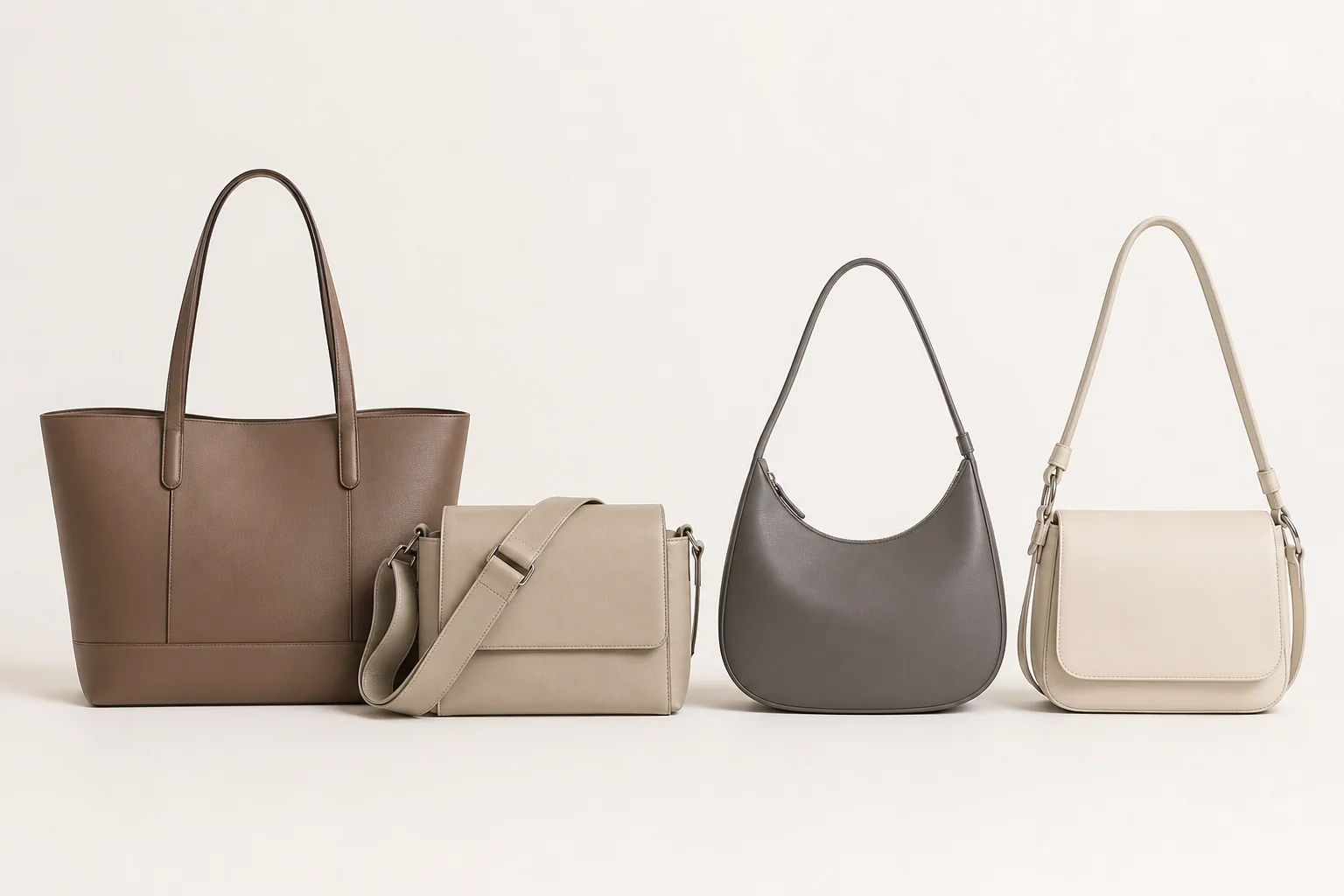
The clearest direction for 2027 is the structured, compact bag with an organised interior. Buyers are moving away from large unstructured shapes and toward defined forms that hold their silhouette when partially empty.
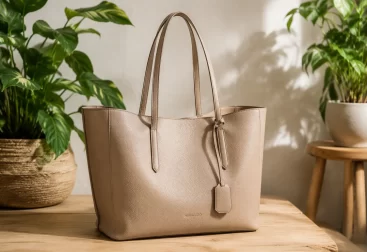
Three specific patterns appear repeatedly in enquiries. First, the medium crossbody with a clean flap and a deliberately simple strap, positioned as an everyday bag rather than a fashion item. Second, the compact tote with a rigid base and a shorter drop, sized for commuting rather than shopping. Third, the soft-structured shoulder bag with a wide, low-profile body that sits close to the body.
What is losing momentum
Oversized slouchy shapes are settling into a smaller share of the range. They remain important in travel and casual segments but are no longer the default for everyday positioning.
Heavily branded, high-contrast hardware treatments are also consolidating rather than growing. The direction is toward restrained branding: a metal logo plate, a debossed patch or a discreet woven label rather than a large-format logo treatment.
| Silhouette | 2027 direction | Manufacturing impact |
|---|---|---|
| Medium crossbody, structured flap | Growing | Precision flap alignment, magnet or turn-lock tooling |
| Compact tote, rigid base | Growing | Base board and corner reinforcement |
| Soft-structured shoulder bag | Growing | Interlining and edge piping |
| Oversized slouchy tote | Consolidating | Lower tooling, higher material yield |
| Multi-pocket utility shoulder | Growing | Complex panel assembly, more labour |
| Mini and micro formats | Stable | Small-scale hardware, tight tolerances |
Why organisation is now a shape decision
Interior organisation used to be a feature added to a finished shape. In 2027 it increasingly defines the shape itself, because compartment layouts determine panel dimensions, gusset depth and closure placement.
Buyers who specify their interior layout early — before pattern making — avoid a common and expensive problem: discovering that the intended compartments do not fit the intended silhouette. On a compact bag there is very little margin for that error.
Colour and Finish Direction
Colour is the fastest-moving trend and the cheapest to change on an existing style, which makes it the natural place to test a season without rebuilding the range.
Neutral expansion rather than neutral retreat
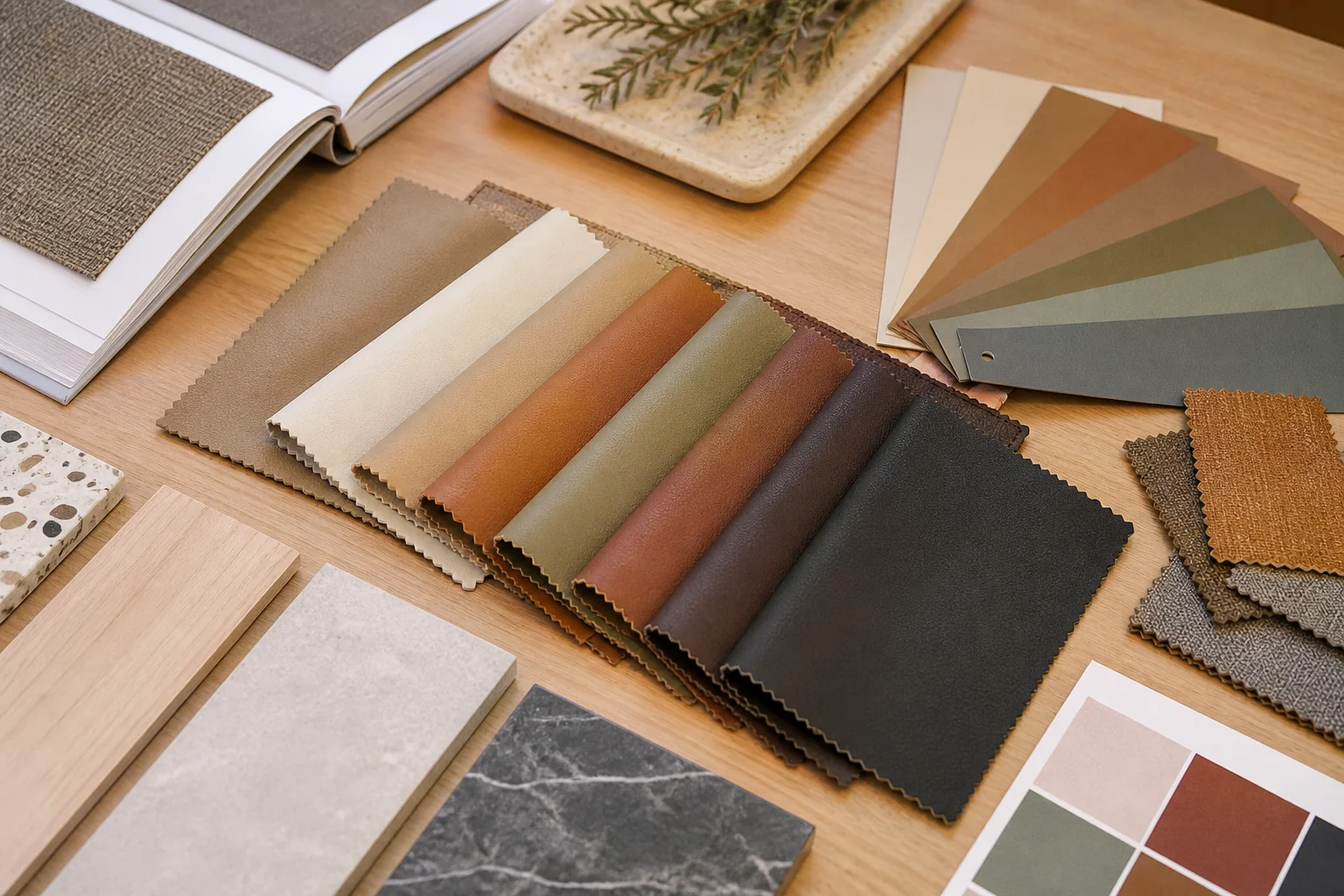
Neutrals continue to dominate, but the neutral palette is broadening. Rather than black, brown and tan, the 2027 direction is a wider set of warm and cool neutrals: soft stone, muted taupe, warm sand, cool grey-green and deep espresso.
The practical consequence is that buyers now need more colourways per style to cover the same shelf space. That raises both the sampling cost and the minimum quantity risk, because each colourway has its own minimum run at the material mill.
Finish matters as much as hue
Two bags in the same colour can read as different products depending on finish. Matte and low-sheen surfaces continue to gain share, particularly in structured shapes where light reflection would reveal surface irregularity.
Coarse grain supports a more casual or utility read, while fine grain suits a formal, premium positioning. Buyers should treat grain and sheen as separate specifications, because a mill can deliver the right colour with the wrong surface and the difference only becomes visible in production lighting.
Managing colour risk across a range
Colour is also the most common source of cross-batch complaints. The risk multiplies when a range uses several materials — main body, lining, piping and strap — because each is dyed or coated in a different process.
The control that works is a signed colour standard per material plus a light-box check at inspection. Approving a colour on a screen or in daylight alone is not sufficient, because the same swatch reads differently under different light sources.
| Colour family | 2027 read | Where it performs best |
|---|---|---|
| Warm stone and sand | Expanding | Everyday crossbody and tote |
| Muted taupe | Expanding | Soft-structured shoulder bags |
| Deep espresso | Stable, high volume | Formal and commuter ranges |
| Cool grey-green | Emerging | Utility and functional shapes |
| Off-white and bone | Seasonal test | Statement pieces, limited runs |
| Classic black | Stable baseline | All categories, all channels |
How to test colour without over-committing
A workable approach is to run the core colourways at full quantity and place one or two emerging colours on a short, limited run in a proven shape. This limits material commitment while producing real sell-through evidence.
Because a new colourway carries its own material minimum, the practical unit is usually a single delivery rather than a whole season. Test, measure, then commit the following season — a cycle that costs far less than a full speculative roll-out.
Hardware and Detail Trends
Hardware is the smallest cost line in most bag quotations but the most visible indicator of quality. Buyers judge a bag by its zip pull before they read a specification sheet, and consumers do the same.
Restraint over statement
The dominant 2027 direction is hardware that disappears into the design. The preference is for finish-matched, low-contrast hardware rather than high-polish pieces that draw attention to themselves.
This shifts the emphasis from design to execution. When hardware is subtle, any inconsistency in plating colour, edge sharpness or attachment cleanliness becomes immediately visible. Buyers requesting restrained hardware should therefore expect tighter inspection criteria, not looser ones.
Function-led hardware specifications
Alongside the visual shift, buyers are specifying hardware by performance rather than appearance. The most common requests are for smooth, quiet zips on bags used in quiet environments, magnetic closures that hold under load, and strap adjusters that maintain position without slipping.
These are testable requirements. A zip can be cycle-tested, a magnet closure can be load-tested, and an adjuster can be tested for slip under tension. Specifying them numerically rather than descriptively removes most of the ambiguity between buyer and factory.
| Detail | 2027 direction | What to specify |
|---|---|---|
| Zip pull | Low-profile, matched finish | Pull drop length, cycle count, noise |
| Logo plate | Small, debossed or matte | Attachment method, edge finish |
| Strap adjuster | Slip-resistant | Hold force under rated load |
| Closure | Quiet magnetic action | Opening force, closing force |
| Feet and base studs | Functional, minimal | Hardness, abrasion resistance |
Why hardware lead time drives the calendar
Custom hardware is usually the longest-lead item in a bag programme. A new mould can take several weeks before the first acceptable samples appear, and plating adds further time.
This is why tooling decisions must be made early, often before the bag design is finalised. A buyer who waits until the style is confirmed before starting hardware tooling will lose weeks, and those weeks come directly out of the production window.
Functionality and Utility Features
Utility features have become a mainstream expectation rather than a niche positioning. The 2027 shift is not toward more features, but toward features that are justified by how the bag is actually used.
From feature lists to use cases
Buyers are increasingly specifying features by scenario: what must a commuter bag hold, what must be reachable without opening the bag, what must stay separate from everything else. This produces a shorter but more defensible feature list.
The manufacturing implication is favourable. A well-chosen set of features usually reduces assembly complexity compared with a long list of pockets and attachments, and it removes components that would rarely be used.
Weight and comfort as design constraints
Lighter construction continues to gain priority, driven by consumer preference and shipping economics. On PU leather bags, weight is concentrated in the structure, the hardware and the lining rather than the main material.
Comfort follows weight. Wide, soft-edged straps and well-placed attachment points reduce pressure, and these are cheap to design in but expensive to correct after production. Any 2027 range should treat strap comfort as a specification, not a detail.
Repairability emerges as a buying criterion
A newer direction, still early but growing, is repairability. Buyers want replaceable straps, serviceable closures and components that can be swapped without rebuilding the bag.
From a manufacturing perspective this is achievable with detachable straps, replaceable hardware and standardised attachment points. It costs slightly more in labour and marginally more in components, but it extends product life and supports a service story that premium brands increasingly want.
| Feature direction | Drivers | Cost direction |
|---|---|---|
| Padded device compartments | Commuter and travel demand | Moderate increase |
| Water-resistant base | Durability expectation | Small increase |
| Detachable straps | Flexibility and repair | Small increase |
| Reduced lining parts | Weight and cost | Decrease |
| Standardised hardware | Simplified inventory | Decrease |
| Replaceable closures | Repairability positioning | Moderate increase |
Where utility stops adding value
There is a limit. Features that cannot be reached easily, that add weight without solving a problem, or that create a failure point usually reduce satisfaction rather than improve it.
The useful test is simple: a feature should either protect something, hold something, or make something easier to reach. If it does none of those, it is usually costing margin without adding value.
Sustainability and Compliance Pressure
Sustainability moved from a marketing theme to a purchasing requirement faster than most of the industry expected. For 2027 it is less a trend than a baseline condition that shapes material and documentation choices.
What buyers are actually asking for
The requests arriving at factories are specific and operational rather than aspirational. They concern recycled content percentages, restricted substance compliance, documentation that can be passed to a retailer, and consistency of supply in the specified grade.
This is a meaningful shift. A general commitment to sustainability can be addressed with a statement; a recycled content percentage requires a material specification, supplier documentation and batch traceability that survives an audit.
Chemical compliance as an entry barrier
Restricted substance requirements continue to tighten, particularly for products sold into the European Union and for items marketed to children. Compliance is now assessed at the component level — material, coating, adhesive, thread, hardware plating and printing ink each carry their own risk.
Manufacturers who maintain current test reports and can map each component to its documentation have a structural advantage. For buyers, the practical instruction is to request component-level compliance evidence at sampling stage rather than at shipment, because replacing a failing component late is far more expensive than choosing a compliant one initially.
| Requirement | Evidence needed | Best confirmed at |
|---|---|---|
| Recycled content claim | Material certificate, traceability | Material selection |
| Restricted substances | Component test reports | Sampling stage |
| Children’s product safety | Standards testing per market | Design stage |
| Packaging requirements | Material and recycling labelling | Packing specification |
| Country of origin | Production records | Before shipment |
The cost reality of green materials
Sustainable materials generally cost more per metre than conventional equivalents, and the premium is not uniform. Some grades carry a modest uplift; others are significantly more expensive and harder to source in a wide colour range.
The practical approach is to be selective. Using a certified material on the component a customer touches most, while keeping standard materials on internal parts, delivers a verifiable claim without carrying the premium across the whole product. Buyers should decide which claims they intend to make, then engineer backwards to the minimum material set that supports them.
Channel Shifts: E-commerce, DTC and Wholesale
How bags are sold changes what factories are asked to build, often more than fashion trends do. Channel shifts alter order sizes, packaging, lead times and the level of customisation required.
Smaller, faster, more frequent orders
The clearest operational shift is order fragmentation. Where a wholesale buyer once placed one large seasonal order, e-commerce and direct-to-consumer brands increasingly place smaller orders more frequently, often with tighter deadlines.
This changes the factory relationship. Small orders carry a higher unit cost because setup, sampling and tooling are spread over fewer units. Buyers who understand this structure can manage it by consolidating colours and styles, or by committing to a rolling forecast in exchange for better scheduling.
Private label demand keeps growing
Private label continues to expand, driven by retailers and online sellers who want a differentiated product without building a development team. The typical requirement is a proven shape with brand-specific material, hardware and labelling.
Working successfully on private label depends on three things: a clear specification up front, a realistic view of minimum quantities, and a defined approval process so that sample rounds do not extend indefinitely.
| Channel | Order pattern | What the factory must support |
|---|---|---|
| Traditional wholesale | Large seasonal orders | Production capacity planning |
| E-commerce brands | Frequent, smaller orders | Fast setup, flexible quantities |
| Direct-to-consumer | Rolling, forecast-driven | Consistent quality across batches |
| Private label | Medium volume, high spec | Branding tooling, packaging |
| Marketplace sellers | Test orders, then scale | Low entry quantity, fast sampling |
Packaging becomes part of the product
Because more bags now ship directly to the end customer, packaging is increasingly part of the product rather than protection for it. Retail-ready packing, protective wrapping and branded inserts are now routine requirements.
This needs to be specified early, because packaging changes carton dimensions, which in turn changes container loading and freight cost. A packaging decision made late can erase a carefully negotiated unit price advantage.
Cost and Supply Chain Outlook
Cost is the least fashionable part of a forecast and usually the most consequential. For 2027, the main pressure points are material pricing, labour, freight and the cost of compliance.
Where costs are moving
Material prices remain sensitive to feedstock and energy costs. Labour costs in manufacturing regions continue to rise steadily. Freight has become more variable, with rate spikes concentrated around peak periods rather than spread across the year.
Compliance adds a fourth, less visible cost: testing, documentation and the administrative burden of traceability. It rarely appears as a line item, but it is present in every quotation that supports regulated markets.
How to protect margin in a rising cost environment
Margin protection comes from design decisions rather than negotiation alone. Simplifying construction, standardising hardware across styles, reducing the number of colourways per material and improving material yield all lower cost without touching quality.
The temptation is to reduce the material specification, which lowers cost immediately and raises return rates later. On a visible product like a bag, that trade is almost always a net loss.
| Cost lever | Effect | Risk |
|---|---|---|
| Standardise hardware across styles | Lower tooling and inventory cost | Low |
| Reduce colourways per material | Better material pricing | Low |
| Simplify panel construction | Lower labour content | Low, if structure retained |
| Consolidate order timing | Better scheduling, lower freight | Low |
| Downgrade material grade | Immediate saving | High, affects perceived quality |
| Reduce inspection level | Saving on QC cost | High, defect escape risk |
Planning around lead times rather than prices
Because most cost inputs are outside a buyer’s control, the more reliable lever is timing. Booking capacity early, consolidating shipments and confirming packaging before production all reduce exposure to peak-season premiums.
Lead times also matter more than prices when a range is launched. A bag that arrives after its season loses value regardless of what it cost to produce, which is why experienced buyers protect the calendar first and negotiate cost second.
Planning Your 2027 Range
A forecast only becomes useful when it is converted into a sequence of decisions with dates attached. The following structure reflects how successful programmes are actually built.
Step one: define the range architecture
Decide how many styles you will carry and what role each plays. A workable structure is usually one hero shape, two or three supporting shapes that share materials and hardware, and one test shape that carries the emerging direction.
Sharing materials and hardware across the core styles is the single most effective cost decision in the whole plan. It reduces material minimums, simplifies tooling and shortens the sampling cycle.
Step two: lock materials and colours early
Material and colour decisions should be made before pattern making, not after. Colourways determine material minimums, and material choice determines achievable grain, sheen and thickness, which in turn constrain the design.
Approving a colour standard at this stage — on physical swatches, under controlled light — prevents the most common late-stage dispute in production.
Step three: start tooling before the design freezes
Custom hardware and logo plates have the longest lead time in most programmes. Starting tooling while the bag design is still being refined usually saves two to four weeks overall, and the tooling rarely depends on the final panel dimensions.
Step four: build the calendar backwards
Work backwards from the delivery date: subtract freight, inspection, production, sampling and tooling to find the date by which materials must be confirmed. Most missed seasons are caused by a late material decision, not a slow factory.
| Stage | Typical duration | Decision locked |
|---|---|---|
| Range architecture | 1-2 weeks | Style count and roles |
| Material and colour selection | 2-3 weeks | Material spec, colour standards |
| Tooling and hardware | 3-6 weeks | Logo, plates, closures |
| Sampling and revisions | 3-5 weeks | Approved sample |
| Bulk production | 4-8 weeks | Delivery schedule |
| Inspection and freight | 2-4 weeks | Arrival at destination |
Step five: protect the calendar, not the price
Once the schedule is set, treat it as the primary constraint. A small cost concession that protects the delivery date is usually a better outcome than a saving that pushes arrival past the season.
In a seasonal business, the cheapest bag is the one that arrives on time.
FAQ
What are the biggest bag trends for 2027?
Three directions stand out: structured compact shapes with organised interiors, a broader neutral colour palette built on warm and cool tones rather than only black and brown, and restrained hardware with a low-contrast finish. Underneath all three is a wider shift toward functionality, lighter construction and repairable design.
Which PU leather materials will be in demand in 2027?
Demand is moving toward engineered surfaces with defined grain and sheen, verified recycled content, and lighter backing fabrics that reduce weight without weakening the load path. Buyers are also specifying the base fabric separately from the surface finish, which gives more control over strength and feel.
Should I switch to recycled PU leather for my 2027 range?
Not necessarily across the whole product. Recycled and bio-based materials carry a price premium and narrower availability in some colours and thicknesses. A practical approach is to apply certified material where it is visible and customer-facing, and keep standard grades on internal components.
What colours should I order for 2027?
The direction is a wider neutral range: warm stone and sand, muted taupe, deep espresso, plus emerging cool grey-green. Black remains a stable baseline. Rather than replacing black, plan an expanded neutral set and test one or two emerging colours on a limited run in a proven shape.
When should I start producing a 2027 bag range?
Work backwards from your delivery window. Tooling and sampling alone typically consume six to ten weeks, and bulk production adds four to eight. For a spring delivery, material decisions should generally be locked roughly five to six months ahead of arrival at your destination.
How do I test a trend without committing to a full order?
Place the emerging direction on a short run in a style you already sell, rather than building a new shape around it. This limits material commitment and tooling exposure, and it produces real sell-through evidence that justifies a larger commitment the following season.
Are oversized bags still selling in 2027?
Yes, but they are consolidating rather than growing. They remain relevant in travel and casual segments, while everyday positioning is shifting toward structured, compact and medium formats that hold their shape when only partially full.
What is the minimum order quantity for a private label bag range?
Minimums are driven by material minimums and setup costs rather than by the factory’s preference. Sharing materials and hardware across several styles is the most effective way to reduce the effective minimum, because it lets a single material order cover more than one product.
How much will bag manufacturing costs rise in 2027?
Cost pressure is concentrated in material pricing, labour, freight and compliance. Rather than predicting a single figure, plan for pressure in each of those areas and protect margin through design decisions: standardised hardware, fewer colourways and simplified construction, rather than downgrading material quality.
What compliance requirements affect bag imports in 2027?
Restricted substance testing, recycled content documentation, packaging and labelling rules, and children’s product safety standards for relevant items are the main areas. Requirements vary by destination market, so compliance evidence should be requested at sampling stage rather than before shipment.
How long does a 2027 range take from design to delivery?
For a new range with custom tooling, a realistic total is four to six months from range definition to delivery, including sampling revisions. Programmes that reuse existing shapes and hardware can compress this considerably, which is one reason range architecture matters so much.
Can a manufacturer produce both wholesale and private label programmes?
Yes, and many do. The two require different scheduling and different approval disciplines, so they are usually run as separate streams. Wholesale relies on proven specifications and predictable scheduling, while private label requires a defined approval process to keep sample rounds from extending indefinitely.
Planning a 2027 bag programme?
We manufacture PU leather bags in Guangzhou on OEM and ODM programmes, covering material specification, tooling, sampling, bulk production and inspection. Send your range requirements to info@gionar.com, or review our custom bag manufacturing capabilities to see current programmes.