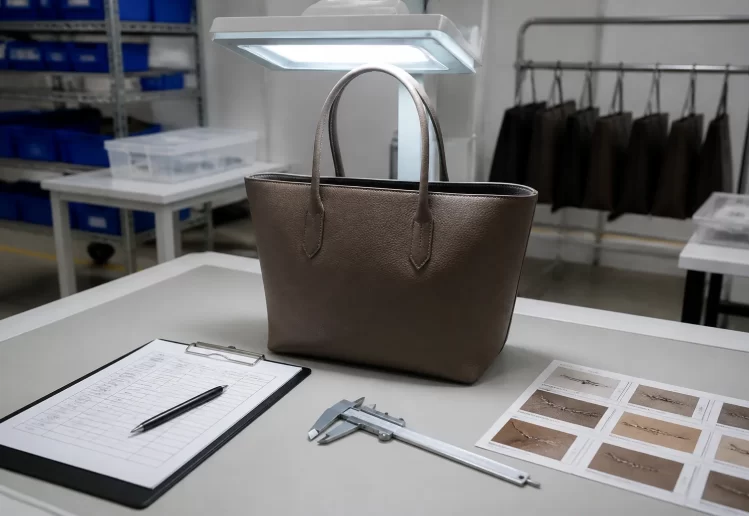
How Should You Set AQL Levels for PU Leather Bag Inspections?
Most bag buyers inherit their AQL numbers from somewhere and never revisit them. A common pattern is 2.5 major and 4.0 minor, applied to every product, every supplier and every order regardless of what the bag costs or what happens when it fails.
That inheritance is understandable. AQL is a statistical convention, the tables look intimidating, and the numbers in common use have the appearance of a standard. But AQL is not a quality target, and applying one number everywhere produces inspections that either reject acceptable goods or accept goods that will generate returns.
The underlying idea is simple. AQL defines the defect rate you are willing to accept from a lot, expressed as a percentage of defective units, and it comes with a sample size and an accept-reject rule. Choose a tighter level and you sample more, reject more and pay more. Choose a looser level and you accept more risk into your stock.
For PU leather bags the decision is complicated by defect types. A misaligned logo is visible and permanent; a slightly uneven stitch inside a pocket is neither. Treating both under one number either over-punishes cosmetics or under-protects function.
This article explains what AQL actually measures, why it is not a target, how the three inspection stages differ, how to classify defects for bags, how sample size follows lot size, how to write the standard into an order, and how to read a report that says pass when the shipment still disappoints.
- What AQL Actually Measures
- Why AQL Is Not a Quality Target
- The Three Inspection Stages
- Choosing Levels for Bags
- Critical, Major and Minor Defined
- Sample Size and Lot Size
- Writing the Defect Classification
- AQL and the Factory’s Own Checks
- Common Misapplications
- AQL by Bag Type
- Putting AQL in the Agreement
- Reading an Inspection Report
- When It Passes but Fails
- Tightening After Problems
- AQL and Sampling Cost
- Beyond Final Inspection
- Training Inspectors on the Standard
- A Practical Setup Sequence
- FAQ
What AQL Actually Measures
AQL is a sampling convention, not a description of quality. Understanding what it does and does not promise prevents most disputes.
The definition in plain terms
Acceptable Quality Level is the defect rate that a sampling plan is designed to accept most of the time. It is defined against a lot, not against a factory’s overall capability.
A 2.5 AQL does not mean 2.5 percent of your shipment will be defective. It means the plan will accept a lot of that quality with high probability.
What the number refers to
The number is a percentage of defective units, not a percentage of defects. One unit with three major defects still counts as one defective unit for the major class.
This distinction matters when a factory argues that defects were few while the number of affected bags was high.
Producer and consumer risk
Every sampling plan carries two risks: rejecting a good lot and accepting a bad one. AQL settings shift the balance between them.
Tighter AQL reduces the chance of accepting bad lots and increases the chance of rejecting good ones. There is no setting that eliminates both.
Why it is a sample, not a census
Inspecting every unit is a different activity with a different cost. AQL exists because full inspection is expensive and, for most consumer goods, unnecessary if the process is stable.
| Term | Meaning | Common confusion |
|---|---|---|
| AQL | Acceptable defect rate for a sampling plan | Treated as a quality target |
| Defective unit | Any unit with one or more defects | Confused with defect count |
| Sample size | Units inspected, set by lot size and level | Assumed fixed |
| Accept number | Maximum defects allowed to pass | Assumed to be zero |
| Reject number | Defects that force rejection | Ignored in reports |
| Lot | The batch being judged | Confused with shipment |
What AQL cannot tell you
AQL says nothing about the causes of defects, the stability of the process, or whether the next lot will be similar. It judges one lot at a time.
Why AQL Is Not a Quality Target
The most expensive misunderstanding in inspection is treating AQL as permission to ship defects.
The “acceptable” trap
If a supplier reads 4.0 minor as an allowance, behaviour follows the number. Four percent becomes the operating standard rather than a ceiling that should rarely be approached.
Good suppliers run well inside the limit. The AQL then functions as a safety net rather than a quota.
Defects and customer experience
A customer does not experience a defect rate. They experience one bag. A lot that passes at 2.5 major still puts defective units into the market, and those units generate returns at a much higher cost than the inspection saved.
What to use as a real target
Set internal targets far below the AQL: zero critical defects, and a major defect rate well under the acceptance threshold. Track that rate over time rather than tracking pass or fail.
AQL answers one question: should this lot be accepted? It does not answer whether the process producing that lot is any good.
Why the distinction is practical
Buyers who track defect rates across lots spot deterioration before it reaches a reject. Buyers who only record pass or fail see nothing until a shipment is refused.
The Three Inspection Stages
AQL applies differently at each stage, and using one setting for all three wastes effort in one place and leaves gaps in another.
During production
Early inspection catches systematic problems while they can still be corrected. The purpose is process feedback rather than lot judgement, so AQL is less useful here than a defined checklist.
Final random inspection
This is where AQL is properly applied. A finished lot is sampled and judged against accept and reject numbers, and the result decides shipment.
Container loading
Loading checks confirm that the inspected goods are the goods shipped, and that cartons and quantities match. It is a verification step, not a quality sampling step.
| Stage | Purpose | AQL fit |
|---|---|---|
| During production | Correct the process early | Low; use a checklist |
| Final random inspection | Judge the lot | High; the core use |
| Container loading | Confirm identity and count | Low; verification only |
| Incoming at warehouse | Confirm condition on arrival | Medium; damage focus |
| Pre-production sample | Approve the standard | None; judgement, not sampling |
Where buyers commonly over-apply AQL
Applying a strict AQL to an in-line check produces rejections of work that is still in progress. The result is noise rather than improvement.
Choosing Levels for Bags
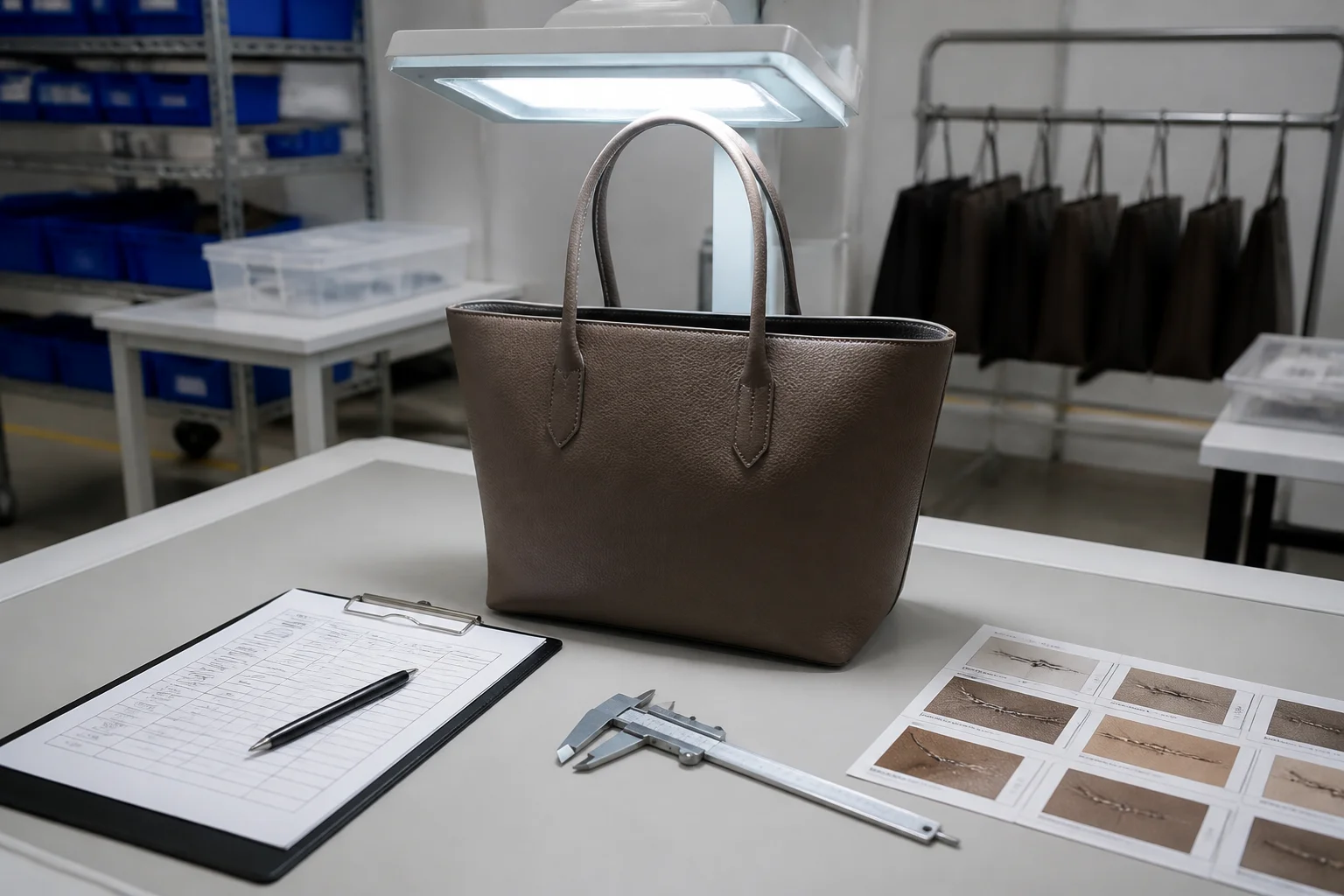
Level choice should follow the cost of a defect reaching the customer, not habit.
The usual starting point
Critical 0, major 2.5, minor 4.0 is a common baseline for consumer goods. It is a reasonable default for bags where the brand can absorb occasional cosmetic issues.
It is not a reasonable default for premium ranges, promotional orders with fixed dates, or products where a failure creates a safety concern.
Tightening for visible products
Where the bag is the product and the brand is on the label, cosmetic defects matter more. Major 1.5 with minor 2.5 is common for premium ranges.
Tightening for functional risk
Where a defect could cause injury, property damage or a regulatory problem, the critical class carries the weight. Critical is normally zero regardless of the other levels.
Loosening where appropriate
For promotional items with short life and low price, tighter inspection often costs more than the defect. A looser major level can be rational where returns are cheap.
| Product situation | Critical | Major | Minor |
|---|---|---|---|
| Standard consumer bags | 0 | 2.5 | 4.0 |
| Premium or branded range | 0 | 1.5 | 2.5 |
| Promotional, short life | 0 | 4.0 | 6.5 |
| Child or safety related | 0 | 1.0 | 2.5 |
| Replacement parts or accessories | 0 | 2.5 | 4.0 |
| First order with a new factory | 0 | 1.5 | 2.5 |
First orders deserve tighter levels
A new relationship has no history. Tighter levels on the first two orders generate the data needed to judge whether the standard can be relaxed later.
Critical, Major and Minor Defined
Defect classification carries more practical weight than the AQL number itself, because the number is meaningless without agreed definitions.
Critical
A defect that creates a safety risk, breaches a regulation, or makes the product unusable. Sharp edges, prohibited substances, structural failure under normal load.
Critical is normally zero with no acceptance number. One occurrence stops the lot.
Major
A defect that a customer would notice and that affects function, durability or saleability. Broken stitching at a stress point, a non-functioning zip, a visible misalignment.
Minor
A defect that is noticeable on close inspection but does not affect use or the customer’s decision. Slight variation in stitch density, a faint mark on a lining.
The borderline problem
Most disputes occur at the boundary between major and minor, or between minor and acceptable. The only defence is a written list with examples.
| Defect | Typical class | Why |
|---|---|---|
| Sharp hardware edge | Critical | Injury risk |
| Zip fails to close | Major | Function lost |
| Stitch break at handle anchor | Major | Structural risk |
| Logo misaligned 3 mm | Major or minor | Depends on visibility |
| Uneven stitch density inside | Minor | Hidden, no function loss |
| Faint mark on lining | Minor | Cosmetic, hidden |
| Wrong colour against standard | Major | Affects saleability |
| Missing care label | Major | Compliance and information |
Define visibility conditions
A defect visible at 60 cm under a specified light is a different finding from one visible under a microscope. State distance and lighting, or the classification will be argued.
Sample Size and Lot Size
Sample size is not a choice; it follows from lot size and inspection level in the standard tables.
How lot size drives sample size
Smaller lots need proportionally larger samples. A lot of 500 might require 50 units; a lot of 5,000 might require 200.
This is why splitting an order into many small lots raises inspection cost per unit.
General inspection levels
Level I samples less, Level II is standard, Level III samples more. Most bag orders use Level II, with Level III for high-value or high-risk lots.
Special levels
Special levels S1 to S4 exist for destructive or very expensive testing. They are rarely relevant to bag inspection except for specific material tests.
What happens when the sample finds defects
The accept and reject numbers come from the same tables. Finding defects does not automatically mean rejection; exceeding the number does.
Two inspectors can examine the same lot and reach different conclusions if they use different inspection levels. Write the level down, not just the AQL.
Practical sample sizes
For a 1,000-piece bag order at Level II, a sample of 80 is typical. That number surprises buyers who expect inspection to cover the whole shipment.
Writing the Defect Classification
The classification document is the most valuable artefact in the whole inspection system, and it is usually the thinnest.
What it must contain
Each defect type, its class, how it is measured or observed, and a photograph of an acceptable and an unacceptable example.
Why photographs matter
Words like “slight” and “excessive” carry no shared meaning between a buyer in one country and an inspector in another. A photograph resolves in seconds what a paragraph cannot.
Who signs it
The classification should be agreed and signed by the buyer and the factory before production. An inspector applying a document the factory has not seen creates disputes that the buyer loses on process grounds.
Keeping it current
Classifications drift as products change. A version number and date prevent an inspector from applying last season’s standard to this season’s bag.
| Element | Purpose | If missing |
|---|---|---|
| Defect list | Defines what counts | Inspector invents categories |
| Class per defect | Drives accept or reject | Everything argued case by case |
| Measurement method | Makes findings repeatable | Results not comparable |
| Photographs | Removes ambiguity | Language disputes |
| Visibility conditions | Sets the observation standard | Disagreement on severity |
| Version and date | Confirms which standard applied | Wrong standard used |
The limit list
Some categories need explicit limits rather than classes: colour deviation measured against a standard, dimensional tolerance in millimetres, stitch density per inch.
AQL and the Factory’s Own Checks
A factory that relies on the buyer’s inspection to find defects has outsourced its quality function to its customer.
What the factory should run
In-line checks at defined points, a final check before packing, and a record of what was found and corrected. The buyer’s inspection then verifies rather than discovers.
The 100 percent check for critical items
Where a critical defect is possible, sampling is the wrong tool. Zip function, handle attachment and sharp edges can be checked on every unit at low cost.
Comparing the two results
Where the factory’s own final check reports near-zero defects and the buyer’s inspection finds several, either the factory’s check is not real or the standards differ. Both are worth investigating.
Using the gap as a signal
A widening gap between factory-reported and buyer-found defects predicts a shipment problem better than either number alone.
| Check | Owner | Purpose |
|---|---|---|
| Incoming material | Factory | Stop bad material early |
| In-line at defined points | Factory | Correct the process |
| 100 percent critical check | Factory | Remove critical risk |
| Factory final check | Factory | Ship only conforming goods |
| Buyer final inspection | Buyer or third party | Independent verification |
| Loading check | Buyer or forwarder | Confirm identity and count |
Auditing the factory’s records
Asking to see the factory’s own inspection records for the previous three orders reveals whether the checks are real. Records created the day before the audit are usually obvious.
Common Misapplications
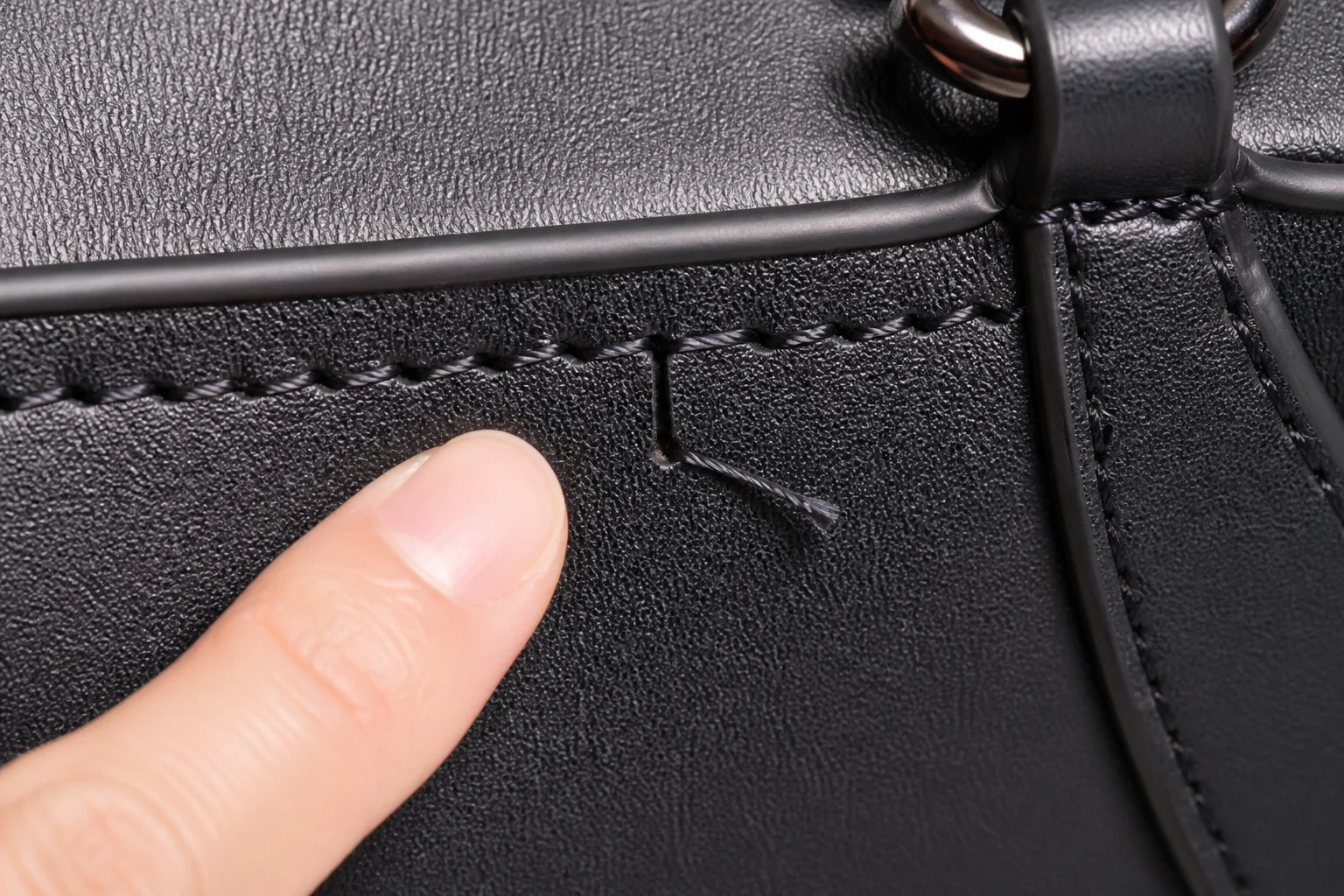
Several mistakes recur across buyers and factories, and each has a predictable cost.
Using one AQL for everything
A single number applied to a promotional tote and a premium range cannot be right for both. The cost appears as either over-inspection or returns.
Quoting AQL without the level
“2.5 AQL” alone does not define a plan. Without the inspection level, the sample size is open to interpretation, and so is the conclusion.
Treating a pass as a quality certification
A passed lot means that sample met the rule. It says nothing about the process, the next lot, or the units that were not sampled.
Accepting a report without the defect list
A report showing pass with no defect breakdown hides what was found. The breakdown is where the useful information sits.
Letting the factory choose the inspector
Inspection commissioned by the party being inspected has an obvious conflict. Where a third party is used, the buyer should appoint and pay them.
| Misuse | Consequence | Fix |
|---|---|---|
| One level for all products | Over- or under-inspection | Level by product risk |
| No inspection level stated | Plan is undefined | State level and AQL together |
| Pass treated as certification | False confidence | Track defect rates over time |
| Report without breakdown | Information lost | Require defect detail |
| Factory-appointed inspector | Conflict of interest | Buyer-appointed third party |
| Sampling critical defects | Risk passes through | 100 percent check at source |
The sampling of critical defects
Applying a sampling plan to a defect that must never ship is a category error. Critical items need a check on every unit, regardless of AQL.
AQL by Bag Type
Different bag constructions concentrate risk in different places, which suggests different emphasis rather than a single number.
Soft totes and shoppers
Risk sits in edge finishing, seam alignment and handle attachment. Cosmetic tolerance is usually wider because the construction is simple.
Structured bags
Risk sits in shape retention and reinforcement. A bag that loses form fails visibly, so dimensional checks matter as much as stitch quality.
Backpacks
Risk sits in load-bearing seams, strap anchors and zip performance. These are functional failures, which argues for tighter major levels.
Small leather goods
Risk sits in alignment and edge work, where small deviations are proportionally large. Cosmetic standards need to be tight because the product is small and closely examined.
Insulated and technical
Risk sits in barrier integrity. A single leak path defeats the product, so functional testing is more valuable than appearance sampling.
| Bag type | Main risk | Emphasis |
|---|---|---|
| Soft tote | Edge finish, handles | Major cosmetic |
| Structured | Shape, reinforcement | Dimensional checks |
| Backpack | Load seams, straps | Functional, 100 percent anchors |
| Small leather goods | Alignment, edges | Tight cosmetics |
| Insulated | Barrier leaks | Functional testing |
| Hardware-heavy | Fitting pull-out | Pull tests on sample |
Where one level can still work
A range built from one construction family with similar materials can share a level. Diversity in construction is what breaks a single setting.
Putting AQL in the Agreement
An AQL that exists only in email is not a standard. It becomes one when it is written into the order.
The minimum clause
State the standard referenced, the inspection level, the AQL for each defect class, who inspects, where, and what happens on rejection.
Naming the standard
Referencing a published standard avoids inventing tables. The specific edition matters, because tables are revised.
Consequences of rejection
The clause should say what rejection triggers: rework, re-inspection at whose cost, or replacement. Without this, rejection starts a negotiation rather than a process.
Cost allocation
Re-inspection after a failed lot is normally at the factory’s cost, because the failure is theirs. Stating this in advance removes a common dispute.
| Clause element | Example content |
|---|---|
| Standard | Named published sampling standard and edition |
| Inspection level | Level II, or Level III for first orders |
| AQL values | Critical 0, major 2.5, minor 4.0 |
| Defect list | Annexed, versioned, with photographs |
| Inspector | Buyer-appointed third party |
| Location and timing | At factory, before loading |
| Rejection consequence | Rework, re-inspection at factory cost |
| Records | Report and photographs provided within a set time |
What to do with a marginal result
Results close to the accept number should be treated as a warning rather than a pass. Writing a review trigger into the clause makes that automatic.

Reading an Inspection Report
Most reports are read for the verdict. The information that prevents the next problem is elsewhere.
Start with the sample and the rule
Confirm the lot size, sample size, inspection level and accept numbers. A report with an unusually small sample is not comparable with the previous one.
Then the defect breakdown
Which defect types appeared, in what quantity, and in which class. Two lots can both pass while one shows a rising trend in a specific defect.
Then the photographs
Photographs show whether a defect was classified consistently with the standard. They also reveal defects the inspector did not count.
Then the measurements
Dimensional and weight results show drift that appearance checks miss. A bag within tolerance but consistently at the edge of it is trending toward failure.
| Report section | What it tells you | What to compare |
|---|---|---|
| Lot and sample | Whether the plan was applied | Against the agreed level |
| Defect counts by class | Distance from the limit | Against previous lots |
| Defect types | Where the process is weak | Repeat offenders |
| Photographs | Classification consistency | Against the defect list |
| Measurements | Drift within tolerance | Against the trend |
| Remarks | Context the numbers miss | Against factory claims |
The remark field
Inspectors often record important context there: material differences, late changes, rushed packing. It is usually the most informative part of the report and the least read.
When It Passes but Fails
Every experienced buyer has a shipment that passed inspection and still generated complaints. The causes are consistent.
The defect was not on the list
If a defect type is not defined, an inspector may not count it. Gaps in the list become gaps in the result.
The class was wrong
A defect classified as minor when it should be major can pass a lot that should have failed. Classification errors are more common than counting errors.
Visibility conditions differed
Defects visible in daylight may be invisible under the inspection lamp, and vice versa. Inconsistent conditions produce inconsistent findings.
Damage after inspection
Packing, loading and transport can create defects that did not exist at inspection. A loading check and carton condition record reduce this gap.
| Cause | Signal | Prevention |
|---|---|---|
| Missing defect definition | Complaints about an uncounted type | Extend the list each season |
| Wrong classification | Dispute over severity | Photographic examples |
| Visibility mismatch | Defects found only in daylight | Specify light and distance |
| Post-inspection damage | Carton damage on arrival | Loading check, condition record |
| Sampling luck | Isolated bad units | Tighter level on next lot |
| Non-representative sample | Sample pulled from one carton | Require random selection across cartons |
The sampling luck problem
Sampling accepts some risk by design. Occasional escapes are expected; a pattern of escapes means the plan or the process is wrong.
Tightening After Problems
When a lot fails or a shipment generates complaints, the response should be a planned change rather than an emotional one.
Tighten one class at a time
Moving every class at once makes it impossible to tell which change had an effect. Tighten the class responsible for the failure first.
Pair tightening with process action
A tighter AQL without a process change simply rejects more lots. The factory needs to know what to fix, which requires the defect breakdown, not just the verdict.
Set a review date
Tightened levels should have an expiry. Two or three clean lots justify returning to the previous level; indefinite tightening erodes trust and raises cost.
Record what the failure taught you
Failures that produce a written cause and a permanent fix are worth their cost. Failures that produce only a rework order repeat.
| Situation | Action | Duration |
|---|---|---|
| Single failed lot | Rework, re-inspect, note cause | One lot |
| Repeat defect type | Tighten that class, require corrective action | Two to three lots |
| Complaints after a pass | Extend defect list, reclassify | Permanent |
| New factory | Level III and tighter major from the start | First two orders |
| Critical defect found | 100 percent check, root cause review | Until proven |
| Consistently clean record | Consider relaxing one class | Review annually |
Relaxing is also a decision
Buyers rarely reduce inspection even when the data supports it. That is a cost carried for no benefit, and it deserves the same deliberation as tightening.
AQL and Sampling Cost
Inspection cost rises with sample size, and sample size rises with tighter levels and smaller lots. Both need to be priced into the order.
What drives inspection cost
Sample size, number of defect items checked, whether measurement is required, and travel to the factory. Labour time dominates.
The small-lot penalty
Splitting one 5,000-piece order into five 1,000-piece lots increases sampling proportionally. The inspection cost per unit can double for the same total quantity.
When tighter is cheaper
Where returns are expensive and the customer is demanding, tighter inspection usually pays. The comparison is inspection cost against the cost of defective units reaching the market.
When looser is defensible
For low-value promotional goods with cheap returns, extensive inspection can exceed the value it protects.
The right AQL is the one where the cost of inspection is roughly balanced against the cost of the defects that inspection prevents.
Budgeting the decision
Buyers who know their return rate and their cost per return can make this trade explicitly. Buyers who do not are guessing.
Beyond Final Inspection
Inspection is a filter at the end of a process. It cannot fix a process that produces defects systematically.
Pre-production approval
Most systemic defects are set before production starts: wrong material, wrong reinforcement, wrong construction. Approving a sealed sample prevents more defects than any inspection level.
First-article checks
Checking the first units off the line confirms that the approved sample is being reproduced. Catching a deviation at unit ten is far cheaper than at unit nine hundred.
Process parameters
Stitch density, needle size, press temperature and cut dimensions are the levers that produce quality. Monitoring them prevents defects rather than detecting them.
Supplier development
Where a factory’s process is weak, the durable fix is capability building. Repeated inspection of a weak process is a permanent cost with no permanent gain.
| Control | Prevents | Cost |
|---|---|---|
| Sealed sample approval | Systemic construction error | Low |
| First-article check | Reproduction drift | Low |
| Process parameter monitoring | Gradual drift | Medium |
| In-line checks | Accumulated defects | Medium |
| Final inspection | Bad lots shipping | High per unit |
| Supplier development | Recurring weakness | High, durable |
The order of investment
Money spent on sample approval and first-article checks returns more than the same money spent on a stricter final AQL, because it prevents defects rather than counting them.
Training Inspectors on the Standard
Two inspectors applying the same document can reach different conclusions. Calibration closes that gap.
Calibration sessions
Give several inspectors the same twenty units and compare their classifications. Disagreement identifies where the standard is ambiguous.
Reference units
Keep physical examples of acceptable, minor, major and critical. Physical references resolve disputes faster than any written description.
Rotating audits
Have a second inspector re-examine a sample of an already-inspected lot. A significant disagreement signals a calibration problem rather than a quality problem.
Recording rationale
Requiring inspectors to note why a defect was classified as major creates a record that can be reviewed and corrected.
| Practice | Purpose | Frequency |
|---|---|---|
| Calibration session | Align classifications | Quarterly |
| Reference units | Anchor judgement | Always available |
| Rotating audit | Detect drift | Monthly |
| Rationale recording | Enable review | Every inspection |
| Standard update briefing | Apply new versions | On revision |
| Photograph archive | Build shared examples | Continuous |
The cost of uncalibrated inspectors
Uncalibrated inspectors make the AQL number meaningless, because the same lot passes or fails depending on who arrives. Calibration is what makes the standard a standard.
A Practical Setup Sequence
The sequence below produces a workable standard in a short time and improves with each order.
Step one: classify by risk
Decide which defects could injure, which would be noticed and returned, and which are cosmetic. This determines the three classes before any number is chosen.
Step two: choose levels by consequence
Set critical at zero, then choose major and minor according to the cost of a defect reaching the customer and the price position of the bag.
Step three: fix the inspection level
State Level II as standard, with Level III for first orders, high-value lots or products with a history of problems.
Step four: build the defect list
Write the list with classes, measurement methods, visibility conditions and photographs. Circulate it to the factory for signature.
Step five: write it into the order
Include standard, level, AQL values, inspector, timing, rejection consequences and record requirements in the purchase order or supply agreement.
Step six: review the data
After each inspection, record defect counts by type. Review the trend every quarter and adjust levels where the evidence supports it.
| Step | Output | Owner |
|---|---|---|
| Classify defects by risk | Three-class list | Buyer with technical input |
| Choose AQL levels | Values per class | Buyer |
| Fix inspection level | Level II or III rule | Buyer |
| Build defect list | Versioned annex with photos | Buyer and factory |
| Write into order | Signed clause | Buyer |
| Review trends | Quarterly adjustment | Buyer |
What good looks like after a year
A working system produces comparable reports, a visible defect trend, and levels that have been adjusted at least once on evidence. A system that has never changed is probably not being read.
FAQ
What AQL should I use for PU leather bags?
A common baseline is critical 0, major 2.5 and minor 4.0 at inspection Level II. Premium or branded ranges usually tighten to major 1.5 and minor 2.5, and first orders with a new factory deserve the tighter set regardless of price position.
Does a 2.5 AQL mean 2.5 percent of bags will be defective?
No. It means the sampling plan will accept a lot at that defect rate with high probability. The actual defect rate in an accepted lot can be higher or lower, and the plan does not measure it precisely.
Why is critical usually set to zero?
Because a critical defect creates a safety, legal or total-function failure, and sampling is the wrong tool for a risk that must never ship. Critical items are checked on every unit rather than sampled.
How many bags get inspected in a 1,000-piece order?
At Level II, typically 80 units. The number comes from the standard’s tables, based on lot size and inspection level, not from a percentage the buyer chooses.
Can I use a different AQL for different styles in one order?
Yes, provided each style is treated as its own lot with its own sample. Mixing styles into one lot makes the sample unrepresentative and the result hard to interpret.
Who should pay for inspection?
The buyer normally pays for the initial inspection, since it is their verification. Re-inspection after a failed lot is normally at the factory’s cost, because the failure was theirs. Both should be stated in the order.
What if the factory disagrees with the inspection result?
Refer to the signed defect list and the photographs. Where the classification is ambiguous, that ambiguity is the real problem and should be fixed in the document before the next order.
Is a tighter AQL always better?
No. Tighter levels raise inspection cost and the risk of rejecting acceptable goods. The right level balances inspection cost against the cost of defects reaching the customer.
How do I handle defects that only appear after use?
Those are durability issues, not inspection findings. Address them with material and construction testing, and with field data on returns, rather than by tightening a final inspection level.
Should inspection happen before or after packing?
Before packing, so defects can still be corrected. A loading check afterwards confirms that the inspected goods are the goods shipped, which is a separate verification step.
How often should AQL levels be reviewed?
At least annually, and after any failed lot or complaint pattern. Levels that have never been revisited are usually inherited rather than chosen.
What is the most common AQL mistake buyers make?
Quoting an AQL number without an inspection level and without a written defect list. Either omission makes the standard undefined, and the resulting disputes are about interpretation rather than quality.
Setting up inspection standards for a PU leather bag order?
Send your style list and target markets to info@gionar.com and we will share the defect classification we apply in production, along with the inspection levels we recommend for each construction family.