A take-back clause used to be the kind of requirement that appeared in a brand’s annual sustainability report and almost never in a purchase order. It was a promise made to a customer, handled publicly, and quietly absorbed by the marketing budget. That separation has broken down. In the enquiries that reach bag factories today, end-of-life handling increasingly arrives as a commercial term, sometimes before the price discussion has even started.
The reason is not sentimental. Retail buyers in several major markets are now assessed on how their supply chains behave after the sale, and the assessment is moving from voluntary reporting into procurement rules. A brand that cannot describe what happens to a returned bag at the end of its useful life is a brand that struggles to answer a retail compliance questionnaire, and increasingly a brand that loses shelf space to one that can.
For a PU leather bag manufacturer, this changes the shape of the job. Repairing a bag is not the same skill as producing one. Accepting returns is not the same process as shipping cartons. When a buyer asks whether you can support a repair programme, they are asking about a second operating system running alongside production: intake, triage, parts, labour, grading, and a decision about what happens to the bags that cannot be saved.
This article examines whether take-back and repair programmes genuinely influence B2B buying decisions today, or whether they remain a nice-to-have that gets negotiated down at the first cost review. The short answer is that they influence decisions most where retail compliance is strictest, and least where the buyer is a pure trading company with no consumer-facing obligations.
Between those two extremes sits most of the industry, and that middle ground is where the practical questions live. We will work through the commercial evidence: what buyers write into contracts, how repair economics behave at different volumes, which design decisions determine whether a bag is repairable, and what reverse logistics really costs.
The final sections provide a staged implementation plan and the questions to ask before you sign anything.
One framing note applies throughout. A take-back programme is a logistics and service commitment, not a material claim. Buyers who understand the difference negotiate it as they would negotiate a lead time. Buyers who do not confuse a recycled hangtag with an operational system, and that confusion is expensive on both sides of the table.
Why Take-Back and Repair Moved From Marketing to Procurement
The shift is easiest to see in the composition of an incoming enquiry. Three years ago, a request for quotation from a European retailer typically contained a style reference, a material preference, a target FOB price, a quantity ladder and a delivery window. Today the same enquiry often adds a paragraph describing what the brand must do with unsold or returned stock, and a question about whether the factory can support it.
That paragraph is not the buyer’s personal enthusiasm. It is usually a downstream requirement from a retail customer, a marketplace policy, or a national extended producer responsibility framework that assigns the brand responsibility for the product after purchase. When a legal obligation lands on the brand, it travels up the supply chain as a specification, exactly like a colour standard or a hardware finish.
The three programme models buyers ask about
Most enquiries collapse into one of three models, and the factory’s role differs sharply between them. Confusing the three is the most common source of misquoted programmes.
| Model | What the brand promises | Factory role | Main cost driver |
|---|---|---|---|
| Repair service | Repair of specified faults within a warranty window, usually 1-3 years | Supply of spare parts, repair instructions, or the repair labour itself | Labour minutes per repair and parts availability |
| Take-back and refurbish | Acceptance of used bags for grading and resale or donation | Grading criteria, refurbishment capacity, outbound packaging | Reverse freight plus the share of bags that cannot be refurbished |
| Material recovery | Collection and recycling or downcycling of collected bags | Disassembly guidelines, mono-material alternatives, recycling partner contact | Disassembly labour and the low residual value of mixed material |
The three models are often sold to consumers as one promise, which is where programmes break. A brand that advertises “repair and recycle” and then discovers that only a fifth of returned bags are economically repairable has made a commitment it cannot service at the price it quoted.
What changed in the buying conversation
Two commercial forces moved the topic inward. The first is retail compliance: large retail groups now ask suppliers for product-level information that includes expected lifetime, repairability and disposal route, and a buyer who cannot supply that information is scored lower in the range review regardless of product quality.
The second is margin. In categories where unit prices are compressed by platform competition, a repair and resale channel creates a second revenue event on a product that has already been paid for once. Brands with a functioning refurbishment route report that the resale layer helps defend the full-price tier, because the existence of a controlled second-hand channel reduces discounting pressure on new stock.
Why factories, not brands, end up holding the process
A brand with no factory of its own cannot repair what it did not build. It can collect bags, but repair requires the pattern, the material lot and the construction knowledge that sit with the manufacturer. That is why the operational burden lands on the factory even when the customer-facing promise is owned by the brand.
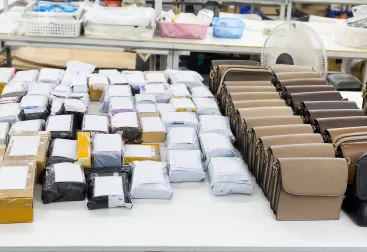
The practical consequence for a sourcing manager is that take-back capability should be evaluated at the same time as production capability, not afterwards. A factory that can cut, sew and pack 30,000 bags a month may still have no way to receive 400 individual parcels, log them, and return them to a customer within two weeks. Those are different systems, and only one of them is visible in a production audit.
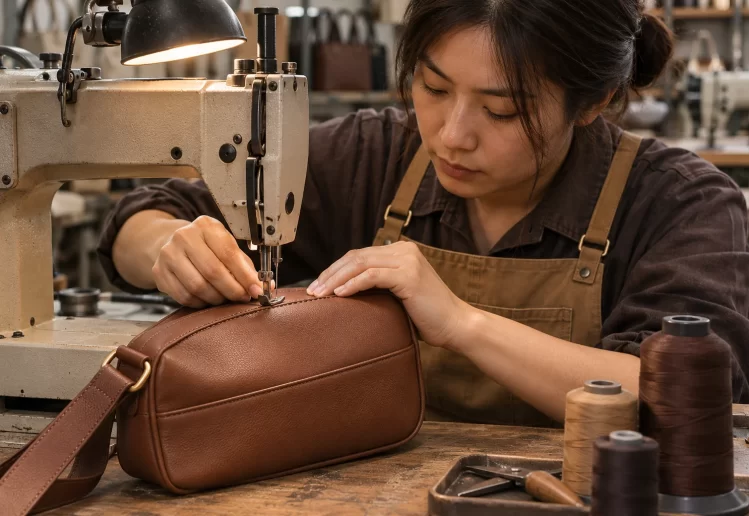
For factories, the opportunity is real but narrow. Repair work is low-volume, high-variance and labour-intensive, and it does not scale the way cutting and sewing scale. The factories that serve it well tend to treat it as a small, disciplined service line with its own staff and its own workflow, rather than as an occasional favour to a good customer.
What Buyers Are Actually Writing Into Contracts
Contract language is where trend talk becomes obligation. When a take-back or repair requirement is inserted into a supply agreement, it usually takes one of four forms, and each carries a different cost and risk profile for the manufacturer who signs it.
The clauses that appear most often
- Spare parts availability. The factory commits to holding or reproducing specified components, typically straps, sliders, buckles and lining panels, for a defined period after the last production run.
- Repair turnaround service level. A stated maximum number of working days from receipt of a returned bag to dispatch of the repaired unit, with a defined remedy if the target is missed.
- Defect liability split. A written boundary between manufacturing faults covered by the factory and wear-and-tear or customer damage covered by the brand, usually expressed as a list of fault categories with photographs.
- Take-back volume commitment. An agreed annual quantity of returned units the factory will accept, with a price per unit for grading, refurbishment or disposal.
The fourth clause is the one that most often fails in negotiation, because it forces both parties to estimate a volume nobody can forecast accurately in the first year of a programme. A defensible approach is to set a floor that both sides can service and a review point at six months, rather than committing to a number that looks impressive in a pitch deck.
A scoring model buyers use
Where take-back sits inside a formal supplier scorecard, the weighting tends to look like the table below. The exact numbers vary by retailer and market, but the proportions are consistent enough to be useful when preparing a quotation response.
| Scorecard dimension | Typical weight | What earns the points |
|---|---|---|
| Product quality and consistency | 30-40% | Test reports, AQL performance history, defect rate trend |
| Price and commercial terms | 20-25% | Landed cost, payment terms, quantity break structure |
| Delivery reliability | 15-20% | On-time performance against confirmed ship dates |
| Compliance and documentation | 10-15% | Material declarations, test evidence, audit results |
| After-sales and end-of-life service | 5-15% | Repair capability, parts holding, take-back acceptance |
A weight of five to fifteen percent does not decide a contract on its own. It decides close calls, and in a competitive range review most decisions are close calls. That is the honest answer to whether take-back wins contracts: it rarely wins one alone, but it regularly breaks a tie, and it can disqualify a supplier in the markets where the requirement is mandatory rather than scored.
Where contracts and capability usually diverge
The recurring failure pattern is a brand that signs a repair obligation and only afterwards maps it against factory capacity. Three specific gaps appear again and again in the first year of a programme.
The first is intake capacity. Repairing forty bags a month is manageable with existing staff. Receiving, photographing, logging and communicating on two hundred individual parcels a month requires an administration function that most production floors do not have and cannot improvise.
The second is colour and material continuity. A bag produced in 2025 may need a strap replaced in 2027, by which time the material lot, the finish and even the coating supplier may have changed. Without retained swatches and a documented colour reference, the repaired bag returns looking mismatched, and the brand absorbs the complaint.
The third is the parts economy. Spare parts only work if they exist in the right ratio. Holding 2% of production volume in straps and sliders is usually sufficient for normal wear, but a single component with a design weakness can consume that stock in one season. Factories that run repair programmes successfully track failure categories and adjust spare parts inventory the following season rather than repeating the same allocation.
For a buyer, the useful test is simple. Ask the factory to describe a repair it completed last month: which bag, which component, how long it took, what it cost, and what it did with the component that failed. A supplier with a real programme answers in operational detail. A supplier without one answers in generalities about quality commitment.
The Unit Economics of a Bag Repair Programme
Repair economics are counter-intuitive for anyone trained on production costing. In production, unit cost falls as volume rises. In repair, unit cost is dominated by fixed labour minutes per job, and volume does not reduce the minutes. A programme that repairs five hundred bags costs roughly five hundred times a single repair, minus a modest learning-curve improvement.
That makes the cost model transparent in a way that production costing rarely is. The two variables that matter are labour minutes per repair and the proportion of returned bags that can be repaired at all. Everything else is secondary.
What a single repair actually costs
The table below sets out a working model for a mid-market PU leather bag programme. The figures are typical ranges seen in quotations for this type of work rather than universal prices; labour rates and freight change substantially by country and by route.
| Cost element | Typical range per unit | Notes |
|---|---|---|
| Inbound freight or customer drop-off | USD 4-15 | Depends on whether the brand subsidises return postage |
| Intake, photographing and logging | 3-8 minutes labour | Administrative, not technical, and often underestimated |
| Assessment and grading decision | 3-6 minutes labour | Requires a trained assessor, not a general operator |
| Repair labour | 10-45 minutes | Strap replacement at the low end, zip replacement at the high end |
| Spare parts | USD 0.40-6.00 | Slider and puller cheap, full zip or strap assembly higher |
| Outbound packing and dispatch | USD 1.50-5.00 | Repair return packaging is more protective than production packing |
| Disposal or recycling of unrepairable units | USD 0.50-3.00 | Varies with local waste handling rules |
Add the ranges and a repair lands somewhere between modest and uncomfortable depending on the market. The number that decides whether the programme works is not the cost of a repair but its cost relative to the replacement value the brand avoids.
When a repair costs a fifth of replacement value, the economics are comfortable. When it costs two thirds, the programme becomes a service commitment funded by marketing rather than a self-sustaining operation.
The repairability ratio is the whole game
Returned bags split into three groups: repairable with a simple component swap, repairable with skilled labour, and not economically repairable. The split depends far more on design than on brand positioning. Two bags at identical retail prices can produce repairability ratios of 75% and 30% purely because of how they were constructed.
- Stitch-and-screw construction usually lands above 60% repairable, because hardware and straps can be replaced without opening the main body.
- Bonded and sealed construction often lands below 35%, because opening the bag to reach an internal component destroys the seam seal.
- Moulded handles and encapsulated hardware are close to zero for field repair, since the component cannot be removed without damaging the shell.
A buyer planning a take-back commitment should ask for the repairability ratio before agreeing to a service level. A factory that cannot estimate the ratio for a specific style has not thought about the programme at the construction level, and the commitment is likely to be repriced within a year.
Where the model breaks at low volume
Below a few hundred repairs a year, a dedicated repair line rarely pays for itself as a standalone operation, and factories handle the work by borrowing staff from sampling or final inspection. That is workable but fragile: repair jobs get pushed behind production deadlines, turnaround targets slip, and the brand’s service promise fails during exactly the season when it matters most.
The realistic options at low volume are to consolidate repairs into scheduled batches, to route them through a specialist third-party repair partner, or to accept a longer published turnaround. What does not work is promising a five-day turnaround on a volume that does not justify a dedicated station.
Design Decisions That Decide Whether a Bag Can Be Repaired
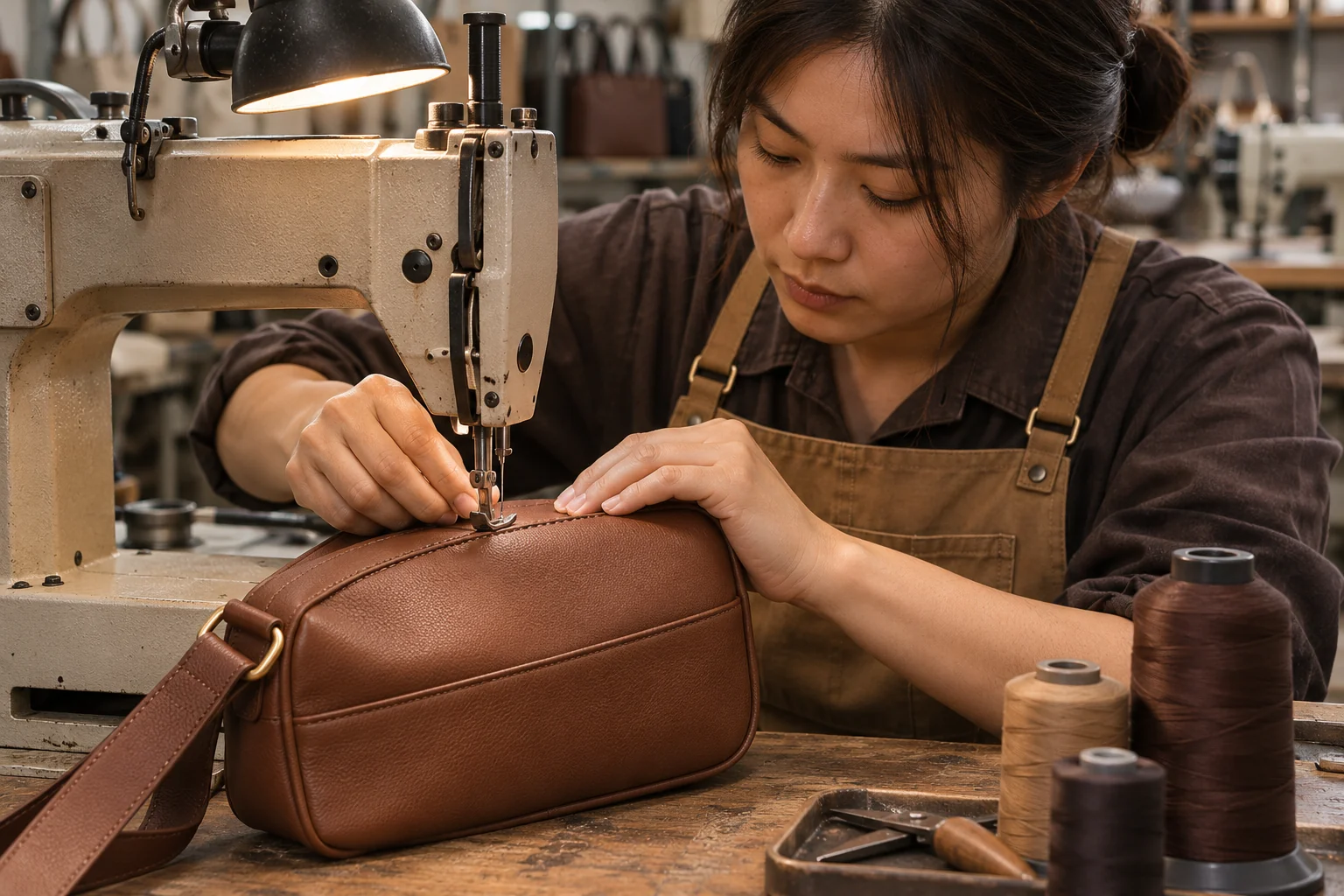
Repairability is decided at the drawing stage, months before anyone thinks about a service programme. By the time a bag is in production, the choices that determine whether it can be fixed have already been made, and changing them means changing the pattern.
The six design choices that matter most
These are the decisions that most often determine whether a repair is a twenty-minute job or an uneconomical rebuild. Each one has a production cost implication, which is why they are rarely adopted across an entire range at once.
| Design choice | Repairable version | Difficult version | Production cost effect |
|---|---|---|---|
| Strap attachment | Screw-post or trigger-clip hardware | Strap stitched directly into the shell seam | Slight hardware cost increase |
| Lining access | Separate lining with a service opening | Lining bonded to the shell | Extra operation, small cost increase |
| Zip replacement path | Zip set into a bound opening with accessible ends | Zip sewn into a closed curve with hidden ends | Neutral to slightly higher labour |
| Adhesive use | Mechanical fixing plus local adhesive | Full-surface lamination of layers | Lower adhesive cost, slower assembly |
| Hardware finish | Standard plating with available replacements | Bespoke casting with single-source tooling | Tooling cost, replacement risk |
| Colour system | Retained colour standard and swatch library | Colour matched per season by eye | Negligible, purely procedural |
The last row deserves emphasis because it costs nothing. A factory that retains a physical colour standard and a dated swatch for every approved material can repair a two-year-old bag and return it looking correct. A factory that matches colour by eye each season cannot, and the resulting mismatch is the complaint that damages a repair programme’s reputation fastest.
Why “designed for disassembly” is often misread
Buyers frequently ask for disassembly-ready construction without understanding what it implies for the bag’s appearance and durability. Fully separable construction means visible fasteners, removable linings and fewer bonded layers, all of which can read as utilitarian on a bag positioned as premium.
The workable compromise is a hierarchy of repairability rather than a single design language. Keep the exterior clean and bonded where appearance demands it, and make the high-failure components serviceable: straps, sliders, pullers, feet and internal pockets. Those components account for most real-world failures, and they can usually be made replaceable without changing the bag’s visual identity.
How to test repairability before committing to a programme
The cheapest validation happens at sampling, not after production. Ask for one sample to be deliberately damaged in the three most likely failure modes, then have the factory repair it and document the time and parts used.
The cost of this exercise is negligible. The information it produces decides whether the service level in a contract is achievable, and it gives the brand’s customer service team a realistic script for what can and cannot be fixed.
Reverse Logistics: Getting Bags Back Without Losing Money
Every take-back programme eventually collides with the same constraint: sending a single bag backwards costs more per unit than sending a hundred forward. A parcel from a consumer to a factory crosses the same distance, requires the same handling and pays the same per-parcel rate as any other small shipment, and there is no container to absorb the cost.
Four intake models and what they cost
The intake model determines the economics far more than the repair labour does. The four options below cover most programmes in operation today.
| Intake model | How it works | Cost profile | Best suited to |
|---|---|---|---|
| Direct-to-factory parcel | Consumer ships to the factory or a nominated address | Highest per-unit freight, simplest administration | Low volumes, premium products |
| Consolidation hub | Returns collect at a regional hub and ship in batches | Moderate freight, hub handling fee added | Programmes above a few hundred units a year |
| Retail drop-off | Stores accept returns and consolidate with stock shipments | Lowest freight, highest in-store handling burden | Brands with owned retail or strong wholesale partners |
| Local repair partner | Approved repairers handle work in-market, factory supplies parts | No international freight, parts logistics only | Large markets where volume justifies partners |
The local partner model is the one most brands migrate to as volume grows, because it removes the international leg that dominates the cost. It requires the factory to behave differently: instead of repairing, it becomes a parts supplier and a technical standards owner. That is a smaller operational ask with a different commercial value, and it is worth quoting separately rather than bundling into a unit price.
The batch consolidation rule
Where parcels are consolidated, batch size decides cost per unit. Consolidating twenty repairs into one shipment reduces per-unit freight substantially compared with shipping individually, but it adds waiting time that may breach a published turnaround promise.
A workable compromise is to publish a turnaround that reflects batching honestly, for example fifteen working days rather than five, and to batch on a fixed weekly cycle so the promise is predictable. Predictability matters more than speed in repair services; a customer who is told fifteen days and receives the bag in twelve is satisfied, while a customer promised five days and served in ten is not.
Refurbishment, Grading and the Secondary Market
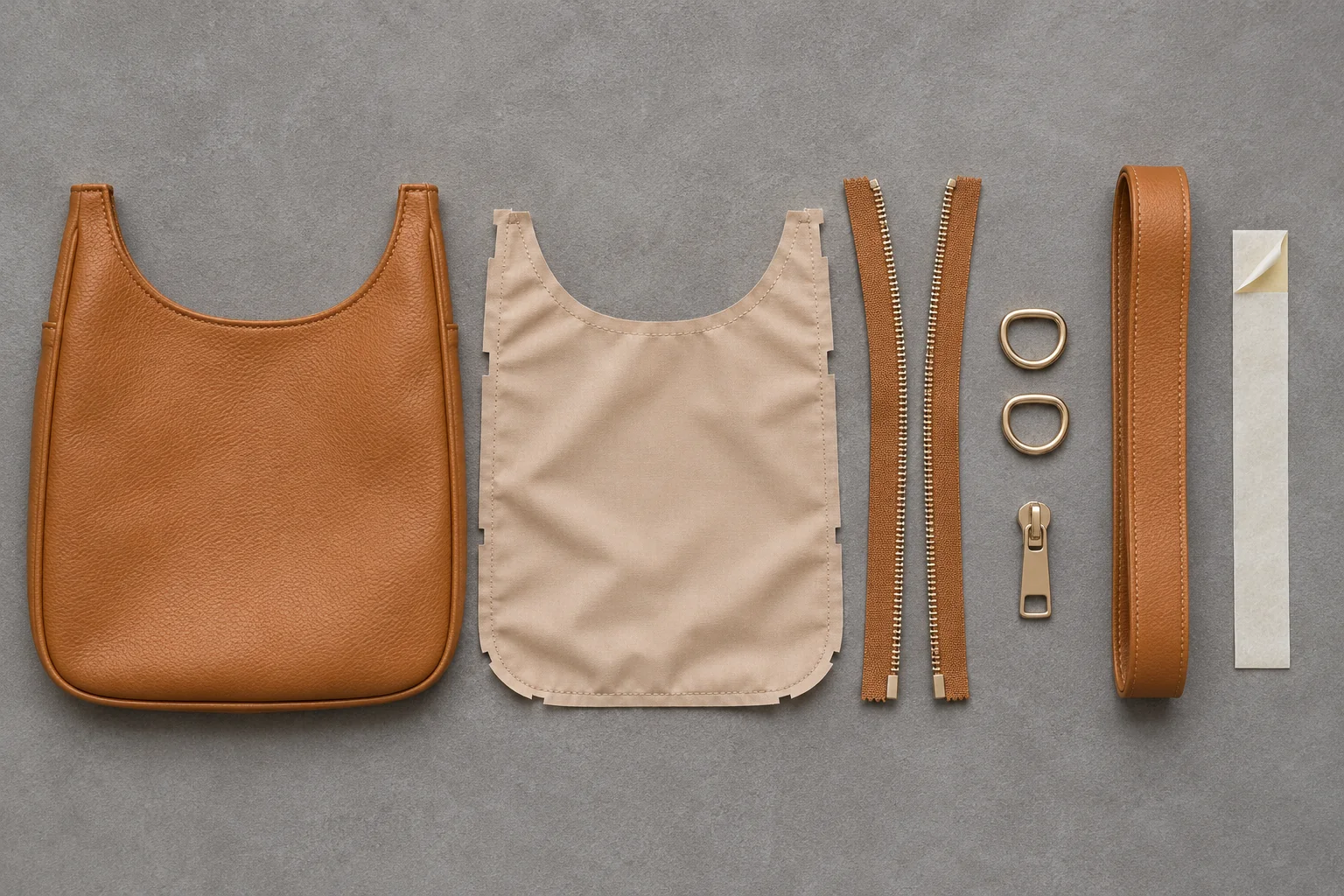
Not every returned bag should be repaired. Some are beyond economic recovery, some are better sold as graded seconds, and some should never re-enter the market at all. A programme without a grading system produces two predictable failures: good bags get scrapped, and poor bags get sold to customers who then complain.
A four-grade system that works in practice
The grading below is a working standard rather than a formal industry specification. What matters is that the grades are defined by observable conditions, written down, and applied consistently by whoever opens the parcel.
| Grade | Condition | Route | Typical recovery |
|---|---|---|---|
| A | Unused or near-unused, fault limited to a single component | Repair and return, or resell as new with disclosure | Highest value, small labour input |
| B | Visible wear but structurally sound, repairable | Refurbish and resell as certified pre-owned | Moderate value, moderate labour |
| C | Cosmetic damage beyond economic repair, functional | Staff sale, donation, sample stock | Low value, no labour input |
| D | Structural failure, contamination or safety concern | Component harvest then material recovery | Negligible value, handling cost only |
Grade boundaries cause more internal argument than any other part of a programme, because sales teams want B-grade stock moved and quality teams want it disclosed. Writing photographic reference examples into the grading standard solves most of it. A written description of “visible wear” is interpreted generously; a photograph of an unacceptable scuff is not.
What refurbishment actually involves
Refurbishment of a PU leather bag is mostly cleaning, component replacement and cosmetic touch-up. The work that returns the highest value per minute is usually strap and hardware replacement, followed by surface cleaning with a suitable agent and edge repainting on cut edges that have worn through.
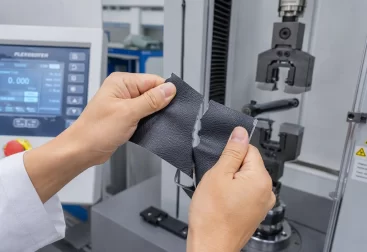
Two limits are worth stating plainly to any brand planning this route. PU leather cannot be repaired the way full-grain leather can: there is no grain to sand and refinish, and a deep gouge through the coating cannot be restored to an invisible finish.
Colour matching on a used bag is also harder than on a new one, because the material has aged unevenly. A refurbished bag will often read as slightly different from new stock in the same colourway, which is one reason certified pre-owned programmes use their own labelling.
The spare parts harvest
Grade D bags still contain value. Sliders, pullers, D-rings, feet, magnetic snaps and zip tape can be recovered and reused if they are undamaged and clean, and doing so reduces the parts cost of the whole programme.
The discipline required is modest but real: components must be inspected before harvesting, sorted by size and finish, and stored in labelled bins. Factories that skip the labelling step end up with a bin of mixed sliders and a repair technician spending five minutes finding the right one, which erases the saving entirely.
Compliance and Claim Language: What You Can and Cannot Say
Repair and take-back claims are regulated claims in most major markets, and the regulation is tightening rather than loosening. The specific rules differ by jurisdiction, so the following is a framework for asking the right questions rather than a substitute for legal review in the markets where you sell.
The four claim types that carry risk
- Repairability claims. Stating that a bag is repairable implies that repair is available in practice. If no repair route exists in the customer’s market, the claim is difficult to defend.
- Recyclability claims. A bag containing a bonded multi-layer shell, a coated lining and metal hardware is rarely recyclable in a municipal stream. Claiming recyclability without a named collection route invites a challenge.
- Lifetime or durability claims. Specifying a number of years implies a warranty of that duration in some jurisdictions. Use a defined test result or a warranty period instead of an undefined lifetime statement.
- Material composition claims. Percentages must state the basis: by weight, by component, and whether the recycled content is physically segregated or accounted by mass balance.
The safest construction for any of these is the one that names the component, the measure and the evidence. “Shell strap replaceable at any of our partner repairers; slider and puller available as spare parts for five years from production” is a claim a brand can service. “Fully repairable, designed for circularity” is not.
The documentation a factory should be able to supply
When a brand is challenged on a repair or take-back claim, the response usually requires factory-side documents. Buyers should confirm at quotation stage that these can be produced, because assembling them after a complaint is both slower and more expensive.
| Document | What it should contain | Who issues it |
|---|---|---|
| Bill of materials by component | Material, weight share, supplier for each layer | Factory or material supplier |
| Repair procedure sheet | Component-level instructions and required tools | Factory technical team |
| Spare parts list | Part numbers, finishes, availability period | Factory |
| Test reports | Abrasion, flex, adhesion and colour fastness results with dates | Third-party laboratory |
| Disposal route statement | Where unrepairable units go and under what arrangement | Factory plus waste partner |
None of these documents is exotic. Each is a normal by-product of a factory that already runs a quality system. Their absence is not a paperwork gap; it usually indicates that no programme exists beyond the sales conversation.
What a Take-Back Programme Costs a Brand
Brands routinely underestimate the total cost because they price the repair and forget the surrounding system. The table below is a staged model for a mid-market programme handling roughly 600 returned bags a year across three styles, with a repairability ratio of about 55%.
| Cost line | Annual estimate | Comment |
|---|---|---|
| Reverse freight | USD 4,000-9,000 | Consolidated batching reduces the top of this range |
| Intake and grading labour | USD 2,000-4,000 | Assumes a trained assessor at part-time capacity |
| Repair labour and parts | USD 6,000-15,000 | Driven by mix of strap versus zip failures |
| Outbound return packing and dispatch | USD 2,000-5,000 | Higher than production packing per unit |
| Disposal and recycling of grade D | USD 500-2,000 | Depends on local waste handling |
| Administration and customer communication | USD 3,000-6,000 | Frequently the largest hidden line |
| Systems and record keeping | USD 1,000-3,000 | Serial numbers, repair history, warranty linkage |
Set the total against what the programme prevents. Every repair that succeeds avoids a replacement unit at full cost, and every grade B bag sold as certified pre-owned recovers part of the original margin. In most realistic models the programme does not pay for itself on avoided replacements alone; it pays when the resale layer is included and when the compliance value is counted.
Where brands overspend
The most common overspend is a promise of free returns for any reason. Unrestricted return postage attracts low-value repairs that cost more to process than the bag is worth, and it removes the incentive for the customer to describe the fault accurately.
A tiered structure works better. Free return shipping for faults within the warranty window, a fixed contribution from the customer for wear-related repairs, and a paid service for out-of-warranty work. Each tier is simple to explain and each one filters the volume towards repairs that make economic sense.
Where brands underspend
The opposite error is a programme designed so that nobody uses it. A repair route that requires the customer to ship internationally at their own cost, complete a form in a second language and wait eight weeks is functionally equivalent to no programme, and it will not satisfy a retail compliance questionnaire that asks whether a repair service is genuinely available.
Usage rate is the metric that reveals which of the two errors a brand has made. A programme with almost no uptake is either invisible or inconvenient, and both are fixable without changing the factory arrangement.
How to Verify a Factory’s Take-Back Capability
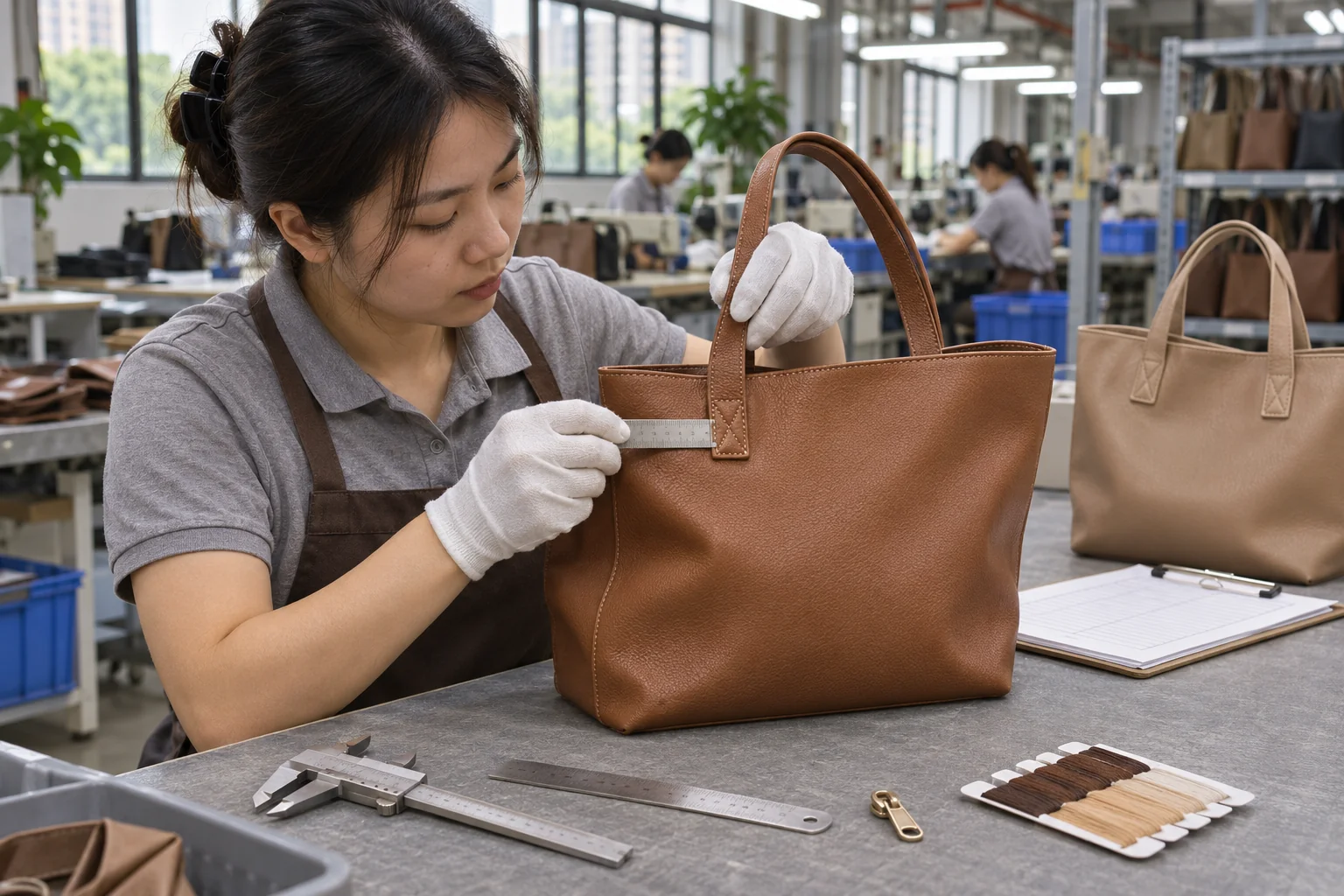
The verification conversation takes about an hour if you ask the right questions. The purpose is not to test enthusiasm but to establish whether an operational process exists behind the offer.
The eight questions that separate systems from offers
- Where do returned bags physically arrive? A named area with staff, not “at the factory”.
- Who assesses them and what training do they have? A named role, not whoever is free.
- What is the repairability ratio for this style? An estimate with reasoning, not a promise.
- Which parts do you hold, in what quantity, for how long? Specific part numbers and a holding period.
- What is the realistic turnaround, including batch waiting time? A number that accounts for consolidation.
- What happens to grade D units? A disposal route with a partner named.
- How is each repair recorded? A serial or order link so the brand can audit history.
- What did you repair last month? A concrete example with bag type, part and labour time.
A factory that manufactures PU leather bags at volume but has never run a service line will answer several of these with improvisation. That is not disqualifying, provided both sides agree to build the process before the service level is signed. What is disqualifying is an answer that stays general after a second question.
A Staged Plan for the First 90 Days
Programmes fail when they launch at full scope. The staged sequence below moves from a controlled pilot to a published service, which keeps the promise aligned with proven capability.
| Phase | Focus | Output |
|---|---|---|
| Days 1-30 | Design review and failure mapping | Repairability assessment for the top three styles, parts list, colour standards retained |
| Days 31-60 | Pilot with a single market | Fifty repairs processed, real labour minutes recorded, grading photographs agreed |
| Days 61-90 | Publish and measure | Published turnaround, warranty wording aligned, usage rate and cost per repair tracked |
Two measurements should carry forward from the pilot: cost per repair by failure category, and the share of returns that fall into each grade. Both improve the next season’s design brief more than any sustainability narrative does, because they show which component fails and how often.
For buyers building a range from scratch, the useful moment to raise this is the tech pack stage rather than the purchase order. Repairability decisions made there cost almost nothing; made after production, they cost a pattern revision. If you are still assembling the brief, the construction examples on the custom bag manufacturers portfolio show which builds accept serviceable straps and accessible linings without changing the exterior design.
Frequently Asked Questions
Do take-back and repair programmes really win B2B buyer contracts?
They rarely win a contract alone and they frequently decide a close call. Where a retail customer or a national framework makes end-of-life handling mandatory, the requirement becomes a pass or fail condition rather than a scored preference. In markets without that pressure, a repair capability typically counts for five to fifteen percent of a supplier scorecard, which is enough to break ties between otherwise comparable factories.
Does a repair programme increase the unit price of new bags?
Only indirectly. Making a strap replaceable, keeping a lining accessible and retaining colour standards add little to the bill of materials, and some of them reduce assembly time. The real cost sits in the service operation, not the product, which is why programmes are usually funded as a separate budget line rather than loaded onto the FOB price.
What share of returned bags can realistically be repaired?
It depends almost entirely on construction. Bags with screw-post or clip hardware and separately sewn linings commonly reach sixty percent or more. Bonded and sealed construction, or moulded handles, can fall below thirty-five percent. A factory that cannot give a style-specific estimate has not assessed the question at component level.
How long should a repair take?
For a programme using consolidated shipping, ten to fifteen working days from receipt is a defensible published target. Promising five days only works when repairs are done in-market by a local partner with parts on hand. The published number matters more than its size, because a predictable fifteen days is easier to manage than an unreliable five.
Should the factory or the brand own the take-back programme?
The brand owns the customer promise and the compliance obligation. The factory owns the operational capability: parts, labour, grading standards and records. Problems start when one side assumes the other is running the process. Writing the split into the supply agreement, including who pays for grade D disposal, prevents most of the disputes that appear in year one.
Is recycled content required for a take-back programme?
No, and confusing the two is common. Take-back is a service and logistics commitment; recycled content is a material claim. A programme can be operationally strong on conventional PU leather. What matters for the claim is that the material declaration and the repair route are each evidenced separately.
What records should a brand keep from a repair programme?
At minimum: the serial or order reference of each returned unit, the fault category, the grade assigned, the parts used, the labour time and the outcome. That data supports warranty defence, design improvement and any future compliance question about product lifetime. Without it, the programme produces anecdote instead of evidence.
Can take-back work with wholesale stock rather than private label?
It is harder, because the brand may not know which factory produced the unit. Where the wholesaler can supply production records by order, a repair route is still feasible through the original manufacturer. Where records do not exist, the practical option is component-level repair by a local partner using generic parts, which limits quality but keeps a usable service in place.
Build the Programme Before You Promise It
The commercial case for take-back and repair is strongest where compliance pressure is real and weakest where it is symbolic, and most brands sit somewhere between. The decision that matters is not whether to offer a programme but whether the operation behind it exists: parts on a shelf, an assessor at a bench, grading rules that hold up under argument, and a turnaround the factory can actually meet in its busiest month.
PUBagFactory manufactures PU leather bags, backpacks and crossbody styles in Guangzhou and works with buyers on construction choices, material documentation, sampling and quality control from the first brief through to shipment. Where a buyer is planning a repair or take-back element for a retail contract, the practical starting point is a design review of the styles involved and an honest repairability estimate for each.
Send your target styles, quantities and the service terms you have been asked to meet to info@gionar.com for a quotation and a repairability assessment. If you would like to see how serviceable construction looks in finished products, review the custom bag manufacturers portfolio or the wholesale backpack range before finalising the brief.
Looking for a reliable PU leather bag manufacturer? Email info@gionar.com for a free quote and a construction review that accounts for repair, not just production.