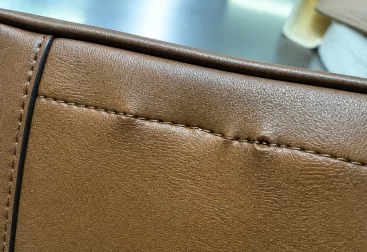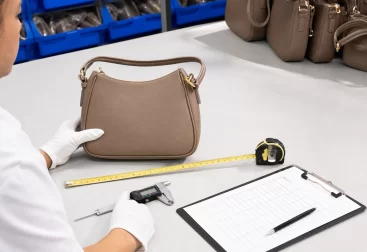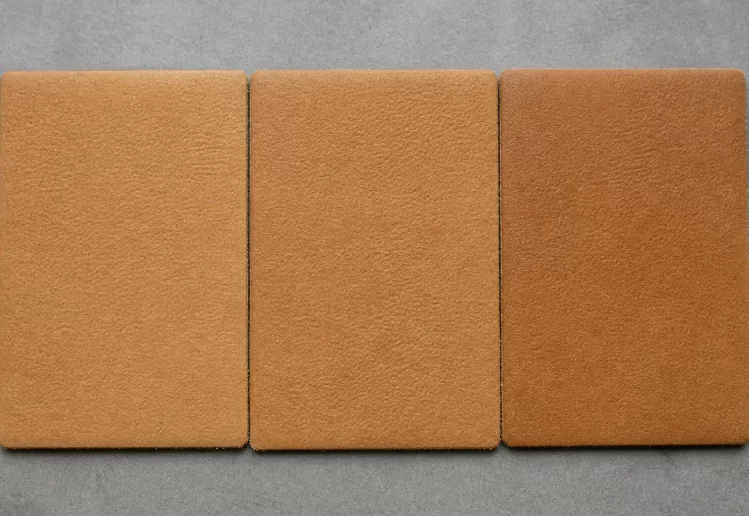
Which Factors Drive Shade Variation in PU Leather Bag Production?
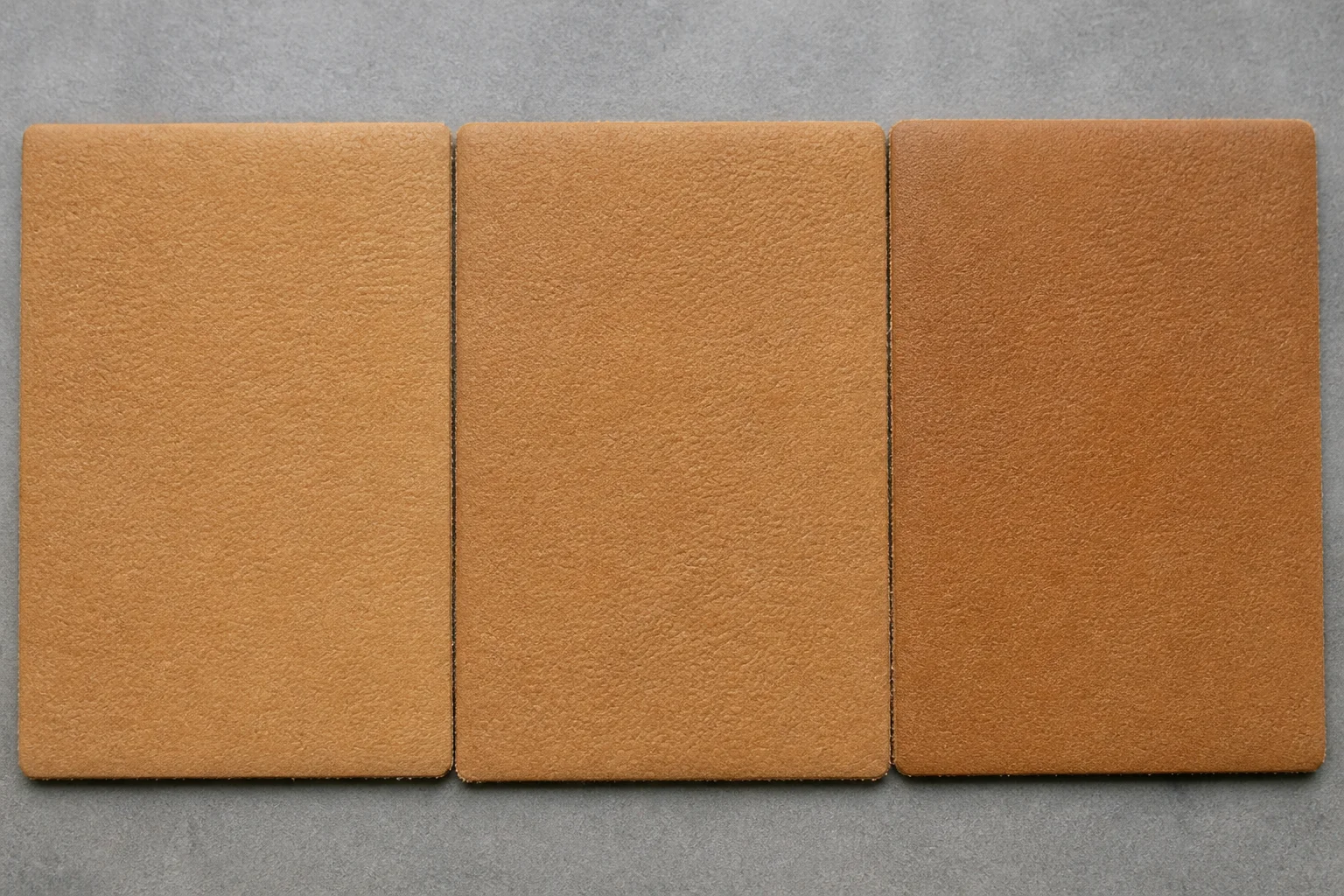
A buyer approves a tan swatch, receives the shipment, and finds panels that do not match each other. Nothing is obviously defective. The colour is close. Yet the bag reads as mismatched in daylight, and the argument that follows is about whether the difference is acceptable.
Shade variation is one of the most common quality disputes in bags, and one of the least technical on the surface. It is also largely predictable. Variation comes from a short list of causes: where the material came from, how the coating was mixed, how the rolls were stored, how the panels were cut, and what light the material is viewed under.
The difficulty is that each cause produces a slightly different kind of difference. A batch difference is uniform across a whole roll. A coating difference can shift within a single roll. A cutting issue produces mismatched panels on one bag. A lighting issue changes with the time of day. Treating all four as one problem leads to the wrong fix.
PU leather adds a specific complication. The colour is not only pigment in a coating; it is also the way that coating reflects light off a surface texture. Two panels can hold identical pigment content and still look different because their surface finish differs. Matching colour therefore means matching both the recipe and the surface.
This article sets out where variation originates, how to measure it rather than argue about it, what tolerances are workable, how to structure approval so the standard is agreed before production, and how to decide when a visible difference is worth rejecting.
- Why Shade Variation Appears
- What “Same Colour” Means
- The Base Material Behind Shade
- Pigment, Dye and Coating Chemistry
- Why Batch Variation Is Normal
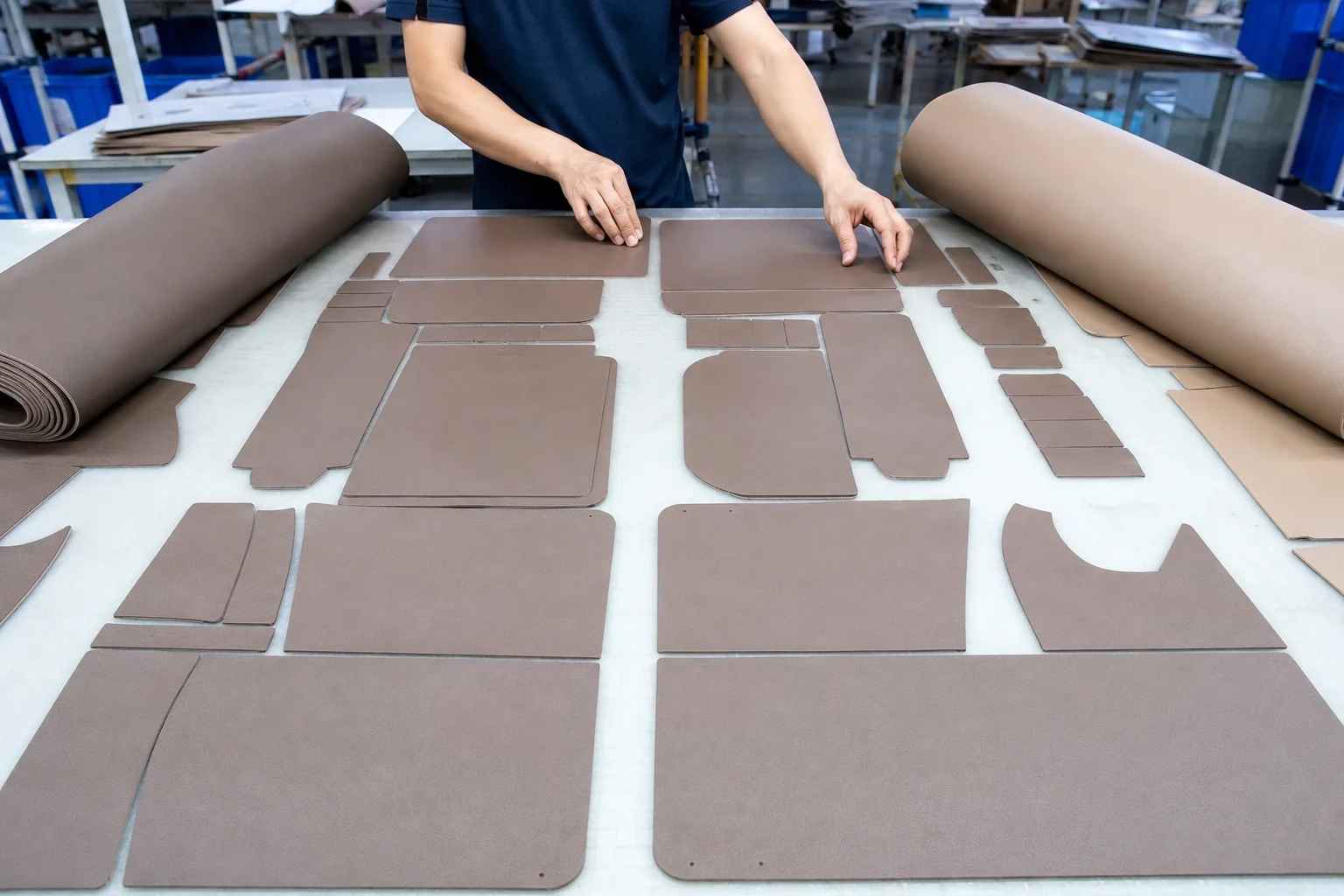
- Cutting Layout and Panel Matching
- Light Sources and Metamerism
- Colour Standards and Measurement
- How Much Difference Is Acceptable
- Setting a Colour Approval Workflow
- Variation Across One Bag
- Variation Between Styles
- Storage and Shade Shift
- Rework, Sorting and Downgrading
- Lab Dips and Supplier Talk
- Writing Colour Into the Order
- When to Accept Variation
- Building a Colour Control Routine
- FAQ
Why Shade Variation Appears
Variation is not a single defect but a family of causes that look similar on a finished bag.
Four sources, four signatures
Material batch differences, coating mix differences, storage effects and cutting decisions each leave a different pattern. Identifying the pattern points to the fix.
Why PU leather is more sensitive than fabric
A coated surface reflects light directly. Small changes in surface texture or film thickness read as colour changes more readily than they would on a woven textile.
Why it surfaces late
Shade differences are often invisible under factory lighting and obvious in daylight or under retail spotlights. The defect exists at production but is discovered at retail.
The cost of late discovery
By the time a mismatch is noticed, the panels are cut, sewn and packed. Sorting and rework at that stage costs far more than a colour check at material intake.
| Source | Signature | Where it shows |
|---|---|---|
| Material batch | Uniform shift roll to roll | Between bags, not within one |
| Coating mix | Gradual drift within a roll | Between panels from one roll |
| Storage | Edge or surface shift | Outer wraps, exposed surfaces |
| Cutting | Mismatched panels on one bag | Front to gusset, body to flap |
| Lighting | Difference appears and disappears | Changes with viewpoint or time |
| Finish | Same pigment, different sheen | Under raking light |
Reading the pattern first
Before any corrective action, establish whether the difference is between bags, within a bag, or only under certain light. That single observation eliminates most of the possible causes.
What “Same Colour” Means
Colour is not a property of an object; it is a perception produced by a surface, a light source and an observer. Agreement requires all three to be defined.
Three variables, one perception
Change the light and the colour changes. Change the observer and the judgement changes. A specification that names only a colour code leaves two variables open.
Why verbal descriptions fail
Terms like “warmer” and “greener” mean different things to different people and different industries. They are useful for conversation and useless as a standard.
What a usable standard contains
A physical standard, a measurement method, a light source, an observer angle and a tolerance. Anything less leaves room for a legitimate disagreement.
Three attributes worth naming
Lightness, hue and saturation move independently. A panel can be the right hue and the wrong lightness, which reads as “close but not right” and is hard to describe without the three terms.
| Attribute | Plain meaning | Typical complaint |
|---|---|---|
| Lightness | How light or dark | “Too dark” or “washed out” |
| Hue | Position between red and green, yellow and blue | “Too red”, “too green” |
| Saturation | How strong or muted | “Too vivid”, “flat” |
| Sheen | How light reflects off the surface | “Looks different in sun” |
| Texture | Grain and surface pattern | “Reads as a different material” |
Why sheen belongs in the conversation
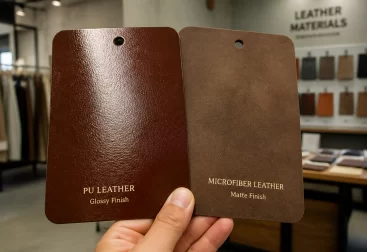
Two panels with identical pigment can differ in appearance because one has a matte topcoat and the other a gloss. Colour approval that ignores finish approves half the problem.
The Base Material Behind Shade
The substrate is not neutral. It contributes to the final colour even when a coating covers it.
Substrate colour shows through
Where the coating is thin, the base tint influences the result. A change of base supplier with the same nominal specification can shift the finished shade.
Surface roughness
A rougher substrate produces a rougher coating surface, which scatters light differently. The same recipe on two substrates can read as two colours.
Absorption and bleed
Some substrates absorb coating components unevenly, producing mottling rather than a uniform shift. This is a different defect with a different fix.
Substrate change without notice
Suppliers sometimes change base material for availability reasons without flagging it. The coating recipe stays the same and the colour moves.
| Substrate factor | Effect on shade | Control |
|---|---|---|
| Base tint | Shifts lightness and hue | Specify base, approve changes |
| Surface roughness | Changes sheen and depth | Specify grain and finish |
| Absorption | Causes mottling | Check coating pick-up |
| Thickness | Affects opacity | Set a minimum |
| Supplier change | Unannounced shift | Require written notice |
| Roll-to-roll variation | Subtle lot drift | Sample each lot |
The notice clause
A requirement that any change of base material or coating supplier be notified and re-approved is cheap to write and prevents the most disruptive kind of variation.
Pigment, Dye and Coating Chemistry
Within one production run, mixing and application introduce variation that is normal but manageable.
Batch mixing tolerance
Pigment is weighed and dispersed per batch. Small weighing errors and dispersion differences produce small colour differences, which is why a batch is the natural unit of colour.
Viscosity and film thickness
Thicker coating hides the substrate more and reads deeper. Viscosity drift during a long run changes film thickness, and the shade drifts with it.
Curing and temperature
Curing conditions affect the final surface. Under-cured coating can appear lighter and can shift further during storage.
Pigment grade
Cheaper pigment grades can be less stable to light and heat, so a batch matches at production and drifts afterwards. That failure appears months later in the market.
| Process variable | Colour effect | Practical control |
|---|---|---|
| Pigment weighing | Batch-to-batch shift | Calibrated scales, batch records |
| Dispersion | Mottling, streaks | Defined mixing time |
| Viscosity | Depth and opacity | In-process checks |
| Film thickness | Lightness | Coating weight target |
| Curing temperature | Surface sheen | Recorded curing profile |
| Pigment grade | Long-term fade | Specify lightfastness |
The batch record as a tool
A factory that keeps a batch record can trace a shade complaint to a specific run and adjust. A factory without one can only apologise.
Why Batch Variation Is Normal
Expecting perfect consistency between batches is unrealistic. Managing it is the practical objective.
Different runs are genuinely different
Each production run has its own pigment weighing, its own substrate lot and its own curing conditions. Small differences accumulate into a visible shift.
Order size versus batch size
A large order may span several batches, so a single order can contain visible variation even when every batch is within tolerance.
The reorder problem
The most common shade complaint is not within an order but between orders placed months apart. The second order matches the second batch, not the first order.
Managing the reorder explicitly
Retaining a physical sample of the original order and requiring the reorder to match it, rather than the current batch standard, prevents the seasonal drift complaint.
A bag range acts as its own colour reference. Customers compare the new bag to last season’s, not to a swatch they never saw.
Planning for a visible seam between seasons
Where exact continuity cannot be guaranteed, design can absorb it: a trim change, a new lining, a deliberate shift presented as a range update.
Cutting Layout and Panel Matching
Many shade complaints are not material problems at all. They are cutting decisions.
Panels cut from different parts of a roll
Shade can vary across a roll from edge to centre. Panels for one bag cut from opposite edges may differ enough to be visible.
Cutting across rolls
When a cutting order spans two rolls, panels from both ends up on the same bag. Without a matching rule, the result is a two-tone bag.
The matching rule
Require that all visible panels of one bag be cut from the same roll and from adjacent positions. This is a procedural control that costs nothing.
Panel pairing by position
Where a bag has symmetric panels, cutting them as a pair from adjacent material keeps the visual balance even if the shade is slightly off standard.
| Cutting practice | Effect | Fix |
|---|---|---|
| Panels from opposite roll edges | Visible two-tone | Cut within a defined band |
| Mixing rolls in one bag | Panel mismatch | One bag, one roll |
| Symmetric panels cut apart | Uneven balance | Cut as pairs |
| Remnant material used late | Odd panel colour | Reserve remnants for hidden parts |
| No shade check before cutting | Problems discovered after sewing | Check rolls at issue |
| Batch not tracked to bag | Cannot trace complaints | Record roll to order |
Why this is the cheapest fix available
Matching rules change nothing about the material and add almost no labour. They convert an acceptable material into an acceptable bag.
Light Sources and Metamerism
A shade dispute is often a lighting dispute wearing technical clothing.
Why the same bag looks different
Daylight, cool white fluorescent, warm LED and retail spotlights contain different wavelength mixes. A surface reflects them differently, so the perceived colour shifts.
Metamerism
Two samples can match under one light and mismatch under another when their pigment compositions differ. This is metamerism, and it is the reason a factory match can fail in a shop.
Where metamerism bites
It appears when a cheaper pigment combination is substituted for the approved one. The match is real under the inspection lamp and false in daylight.
Checking under multiple sources
Comparing the sample under at least two light sources, typically daylight and a warm interior light, exposes metameric pairs that a single-source check misses.
| Light source | Typical setting | Effect on judgement |
|---|---|---|
| North daylight | Outdoor, indirect | Reveals true hue differences |
| Cool white fluorescent | Factory inspection area | Can mask warm shifts |
| Warm LED | Retail, home | Exaggerates warm tones |
| Retail spotlight | Display | Increases contrast and sheen |
| Mixed sources | Shop floor | Unpredictable, worst case |
| Phone camera flash | Informal checks | Unreliable, avoid for approval |
The practical rule
Approve colour in the light where the customer will see it. For retail bags, that usually means daylight plus a warm interior source, not the factory’s inspection lamp.
Colour Standards and Measurement
Measurement ends arguments that description prolongs. It also makes trends visible, which matters more than any single reading.
Physical standards
A retained physical swatch is the most practical standard for most bag buyers. It is cheap, universally understood and directly comparable.
Physical standards age. They should be stored dark, dry and flat, and replaced on a defined cycle.
Instrumental measurement
A spectrophotometer reports numeric values that can be compared and trended. It removes observer disagreement and produces a record.
Reporting the difference
Instruments express the gap as a colour difference value and often break it into lightness, hue and saturation components. The breakdown tells you which direction the batch moved.
Where instruments stop
An instrument measures a small area under defined geometry. It does not judge whether a bag looks right on a shelf. Numbers support judgement; they do not replace it.
| Method | Strength | Limit |
|---|---|---|
| Physical swatch | Cheap, direct, universal | Ages, subjective |
| Visual comparison in defined light | Matches customer experience | Observer dependent |
| Spectrophotometer | Numeric, repeatable, trendable | Small area, no judgement |
| Photograph under fixed light | Record for remote approval | Camera and screen distortion |
| Colour chips from supplier | Fast pre-selection | Not a batch guarantee |
| Retained production sample | Best reorder reference | Requires discipline to keep |
What to record each time
Batch, roll, measurement date, instrument, light source and the numeric result. Without the batch and roll, a number cannot be used to trace a problem.

How Much Difference Is Acceptable
Tolerance is a commercial decision as much as a technical one, and it should be set before production rather than negotiated after.
Why zero tolerance fails
A zero-tolerance requirement cannot be met by any coating process. It guarantees rejection and encourages concealment rather than control.
Setting tolerance by visibility
The practical question is whether a customer comparing two bags side by side would notice. If yes, the tolerance is too wide for that panel.
Different tolerance for different panels
Panels seen together need tighter matching than panels seen separately. A body and its gusset must match; a body and an interior pocket need not.
Tolerance and price position
Premium ranges can justify tighter tolerance and the higher material cost it implies. Volume ranges often accept wider tolerance in exchange for price.
| Panel relationship | Matching need | Practical approach |
|---|---|---|
| Body to gusset | High | Same roll, adjacent cut |
| Body to flap | High | Same roll, paired cut |
| Front to back | Medium | Same roll preferred |
| Body to trim | Low | Contrast acceptable |
| Exterior to lining | None | Deliberate contrast common |
| Bag to bag in one carton | Medium | Sort within carton |
Tolerance stated as a number
Where instruments are used, tolerance is expressed as a colour difference limit. Where visual assessment is used, it is expressed as a defined comparison under defined light. Either works if it is written down.
Tolerance written after delivery is not tolerance; it is a negotiation with the goods already made.
Setting a Colour Approval Workflow
Most shade disputes trace back to an approval step that was skipped or informal.
Step one: target definition
Define the target as a physical standard plus a numeric reference where available. Record the light source used for visual assessment.
Step two: lab dip
The supplier submits a small sample produced with the intended recipe. Approving a lab dip approves a recipe, not a production batch.
Step three: production sample
A sample from the actual first batch confirms that production reproduces the lab dip. This is the step most often skipped and most often responsible for failure.
Step four: bulk approval
Each production batch is checked against the approved standard before cutting. Approval here prevents the expensive discovery after sewing.
| Step | Approves | If skipped |
|---|---|---|
| Target definition | The standard itself | Nothing to compare against |
| Lab dip | The recipe | Wrong recipe proceeds |
| Production sample | Reproducibility | Lab-to-bulk gap appears late |
| Bulk batch check | Each batch | Variation found after cutting |
| Retained sample | Future reorders | Drift between seasons |
| Written sign-off | Accountability | Dispute over what was agreed |
Why sign-off must be in writing
Verbal approval of a swatch is the single most common gap. A dated written record with the approved sample reference converts an opinion into a standard.
Timing the workflow
Colour approval adds days to the front of an order and saves weeks at the end. It should sit before material purchase, not after cutting.
Variation Across One Bag
Within a single bag, the eye is unforgiving. Two panels joined by a seam are compared directly.
Adjacent panels are compared automatically
The human visual system detects edges and compares across them. A two percent shade difference between body and gusset is far more visible than the same difference between two separate bags.
Which seams matter most
Long seams joining large panels of the same material are the most critical. Seams joining different materials are expected to differ and attract no attention.
Design can either help or hurt
Piping, contrast stitching and trim break up large surfaces and reduce the visibility of a slight mismatch. A design with a single uninterrupted panel offers nowhere to hide.
| Seam type | Visibility of mismatch | Mitigation |
|---|---|---|
| Body to gusset, same material | High | Same roll, adjacent cut |
| Body to flap, same material | High | Paired cut |
| Panel to panel with piping | Medium | Piping breaks the comparison |
| Same material to trim | Low | Contrast is expected |
| Exterior to lining | Very low | Different material intended |
| Strap to body | Medium | Cut straps with body |
Straps and handles
Straps are long, narrow and highly visible against the body. They should be cut from the same roll as the body wherever possible.
Variation Between Styles
A range introduces comparisons the factory never sees and the buyer must anticipate.
The range sits together on a shelf
Customers view several styles at once. Two styles in the same colour that differ visibly undermine both.
Shared material across styles
Where styles share a colour, they should share a material batch where volume allows. Splitting the volume across batches creates the difference.
Deliberate variation is different
A designed tonal family, with intentional light and dark variants, is not a defect. The distinction must be clear in the specification or it will be read as error.
Launch timing
Styles launched months apart will drift. Accepting that and planning the range narrative around it is more practical than demanding impossible continuity.
| Range situation | Risk | Approach |
|---|---|---|
| Shared colour, same launch | Visible difference on shelf | Single batch where possible |
| Shared colour, split launch | Seasonal drift | Retain sample, plan narrative |
| Designed tonal family | Read as error | Document intent clearly |
| Multiple factories | Two standards | One approved standard for all |
| Repeat of a bestseller | Comparison to old stock | Match the retained sample |
| New colour alongside old | Competing references | Retire the old colour cleanly |
One standard across factories
Where a range is split between factories, a single approved standard must travel to both. Two independently approved standards will not match.
Storage and Shade Shift
Colour is not fixed at production. Storage and time move it, sometimes enough to create a complaint months later.
Light exposure
Ultraviolet light fades pigment. Rolls stored near windows or under skylights shift at the exposed surface, producing a gradient rather than a uniform change.
Heat and humidity
Heat accelerates chemical change in coatings. Humid storage adds moisture that can alter surface appearance and encourage migration of components.
Contact and migration
Rolls stored against certain materials can pick up plasticiser or colour. Stacking pressure marks surfaces and creates apparent shade differences.
Finished goods are not immune
Packed bags in a warm warehouse shift as well. A bag that matched at inspection can differ from its neighbour after three months in storage.
| Storage factor | Effect | Control |
|---|---|---|
| UV exposure | Surface fade | Store dark, wrap rolls |
| High heat | Accelerated change | Controlled temperature |
| Humidity | Surface alteration | Dry storage |
| Contact migration | Staining | Barrier between materials |
| Stacking pressure | Surface marks | Limit stack height |
| Long storage | Cumulative drift | First in, first out |
First in, first out
Ageing is managed by consuming material in order. A roll left at the back of a store for a year becomes a shade problem regardless of how good it was on arrival.
Rework, Sorting and Downgrading
When variation is found, there are four practical responses. Choosing deliberately is cheaper than reacting.
Rework
Replacing an offending panel is possible before assembly and expensive after. Rework cost rises sharply with how far the bag has progressed.
Sorting
Grouping bags by shade so each carton or shipment is internally consistent reduces complaints without changing the goods. It works where variation is gradual rather than random.
Downgrading
Directing affected units to a channel with lower colour expectations is a legitimate commercial choice, provided it is deliberate and disclosed internally.
Rejection
Rejection is appropriate where the variation crosses the agreed tolerance and the goods cannot be sold as specified. It should follow the contract, not the mood of the moment.
| Response | When appropriate | Relative cost |
|---|---|---|
| Rework before assembly | Panels still separate | Low |
| Rework after assembly | Small quantity affected | High |
| Sorting by shade | Gradual variation across a lot | Medium |
| Downgrading | Channel can accept difference | Low, revenue impact |
| Rejection of a lot | Outside agreed tolerance | High, but contractual |
| Acceptance with credit | Minor, sellable difference | Medium |
Sorting is not a fix
Sorting improves the shipment without improving the process. If sorting is required every order, the process needs attention.
Lab Dips and Supplier Talk
Most colour problems are solved in conversation before production, provided the conversation is specific.
Ask for recipe information
Knowing which pigment system is used allows a buyer to ask whether a substitution has occurred. A supplier who cannot answer is a supplier who cannot control colour.
Ask what changed since the last order
This single question catches base material changes, pigment substitutions and process adjustments before they become visible.
Send physical samples, not photographs
Photographs are useful for discussion and unreliable for approval. Screens and cameras alter colour enough to make a remote match meaningless.
Agree how disputes will be settled
Agreeing in advance that disputes go to a defined comparison method prevents escalation into relationship damage.
| Question to ask | What it reveals |
|---|---|
| Which pigment system is used? | Substitution risk |
| What changed since the last order? | Base, pigment or process change |
| Is the base from the same supplier? | Unannounced substrate change |
| Can you retain a batch sample? | Future traceability |
| What tolerance can you hold? | Realistic expectation |
| How will disputes be measured? | Dispute process |
Retaining samples both ways
Both parties should keep a sealed sample of each approved batch. A single retained sample held by one party is a weak record.
Writing Colour Into the Order
A colour requirement that lives only in a conversation is not a requirement. It becomes one when it is attached to the purchase order.
What the clause should state
The approved standard reference, the light source for visual assessment, the tolerance, the inspection point and the consequence of exceeding it.
Referencing the retained sample
Naming a sealed sample with a date and a batch number makes the standard specific. Referencing a colour name alone does not.
Defining the inspection point
Colour should be checked at material intake and again before cutting. Checking only at final inspection leaves all the cost in the wrong place.
Stating the consequence
What happens if a batch fails: replacement, sorting at whose cost, or credit. Agreeing this in advance converts a dispute into a procedure.
| Clause element | Example content |
|---|---|
| Standard | Sealed sample reference, date and batch |
| Assessment light | Daylight plus warm interior light |
| Tolerance | Numeric limit or defined visual match |
| Inspection points | Material intake and pre-cutting |
| Matching rule | One bag from one roll, adjacent cuts |
| Notice of change | Written notice before any substitution |
| Consequence | Replace, sort or credit, with cost owner |
| Records | Batch and roll traceability retained |
Why the matching rule belongs in the order
It is the cheapest control available and it is procedural. Putting it in writing costs a sentence and prevents the most visible failure mode.
When to Accept Variation
Not every visible difference is worth rejecting. A deliberate decision protects margin and the relationship.
Ask where the bag will be seen
A bag sold individually online will rarely be compared with its neighbour. A bag displayed in a row on a shop shelf will be.
Ask what the difference costs
If the variation is likely to generate returns, the cost of those returns usually exceeds the cost of sorting or rework. If it is unlikely to be noticed, rejection is expensive posturing.
Ask whether it will recur
A one-off variation from a stable process can be accepted. A variation that will repeat every order is a process problem disguised as a shipment decision.
Ask what the customer compares it to
If the customer has last season’s bag, that is the reference. If they have nothing, the absolute colour matters less than internal consistency.
| Question | Accept if | Reject if |
|---|---|---|
| Where will it be seen? | Sold individually | Displayed side by side |
| What does a return cost? | Low relative to sorting | High and likely |
| Will it recur? | One-off from a stable process | Repeats each order |
| What is the reference? | No prior season | Customer holds last season |
| Within tolerance? | Yes, marginally | No, clearly outside |
| Can it be sorted? | Yes, cleanly | No, randomly distributed |
The consistency test
Internal consistency within a shipment matters more than absolute accuracy to a swatch. A shipment that is uniformly slightly warm generates fewer complaints than one that is half accurate and half not.
Building a Colour Control Routine
Colour control becomes reliable when it is a routine rather than a reaction.
At material intake
Check each batch against the approved standard, record the batch and roll, and hold material that is out until a decision is made. This is the highest-leverage check in the whole process.
At cutting issue
Confirm that rolls issued to one order are consistent, and apply the matching rule. Most within-bag complaints are prevented here.
At final inspection
Check assembled bags under the agreed light, comparing adjacent panels rather than only comparing to the swatch.
After shipment
Record complaints by type. A rising shade complaint rate is a signal about the supplier’s process, not about individual shipments.
Annually
Review the retained standards, replace aged samples, and reconsider tolerances in light of the complaint record. Standards that are never refreshed drift into irrelevance.
| Stage | Action | Prevents |
|---|---|---|
| Material intake | Check each batch, record roll | Bad material entering production |
| Cutting issue | Apply matching rule | Two-tone bags |
| Pre-assembly | Check panels together | Mismatch found after sewing |
| Final inspection | Compare adjacent panels in agreed light | Shipment-level mismatch |
| Post-shipment | Log complaints by type | Repeat failures |
| Annual review | Refresh standards and tolerances | Standards drifting out of use |
What good looks like
A working routine produces batch records, retained samples and a complaint log that trends. It also produces fewer arguments, because the standard was agreed before the goods existed.
FAQ
Why do two bags in the same order look different in colour?
Either the order spanned more than one material batch, or panels for one bag were cut from different rolls or distant parts of a roll. Both are normal process outcomes and both are controllable through batch checks and a matching rule.
Is a colour difference between batches a defect?
Not automatically. Batch variation is inherent to coating production. It becomes a defect when it exceeds the agreed tolerance, or when it makes panels within one bag visibly mismatched.
What is metamerism and why does it matter?
Two samples that match under one light can mismatch under another when their pigment compositions differ. It matters because a factory match made under one lamp can fail in daylight or under retail lighting, which is where the customer sees it.
Should I approve colour from a photograph?
No. Cameras and screens alter colour, and the light at the time of photographing is usually unspecified. Use photographs for discussion and physical samples for approval.
How tight should the colour tolerance be for a premium range?
Tight enough that two bags placed side by side in daylight read as the same colour. For most premium ranges that is a visibly tighter standard than a volume range, and it implies higher material cost.
Why does the same bag look different in the shop than in the factory?
The light sources differ. Factory inspection lighting and retail spotlights contain different wavelength mixes, and a coated surface reflects them differently. Approve colour under the lighting where the customer will see it.
Can shade variation be fixed after the bag is sewn?
Only by replacing panels, which is expensive and often visible in the finished seam. Prevention at material intake and cutting is far cheaper than correction after assembly.
What is the most effective single control for shade problems?
A matching rule at cutting: all visible panels of one bag cut from the same roll and from adjacent positions. It costs almost nothing and prevents the most visible failure mode.
How should I handle a reorder months after the original?
Require the reorder to match a retained physical sample of the original order rather than the current batch standard. Otherwise the new order will match the new batch and differ from what customers already own.
Do lighter colours show shade variation more than dark ones?
Lighter and mid-tone colours generally show lightness differences more readily, while very dark colours can hide hue shifts but reveal sheen and surface differences. Both need checks; the failure mode differs.
How long should a retained colour standard be kept?
For as long as the colour is in the range, plus one season. Samples age, so they should be stored dark, dry and flat, and replaced on a defined cycle rather than kept indefinitely.
Is sorting by shade an acceptable solution?
It is acceptable as a shipment-level response when variation is gradual and can be grouped cleanly. It is not a fix, because it adds cost every order and leaves the underlying process unchanged.
Dealing with shade complaints on a PU leather bag order?
Send your colour references and order structure to info@gionar.com and we will share the batch controls and cutting matching rules we apply in production, along with the tolerance we recommend for your price position.