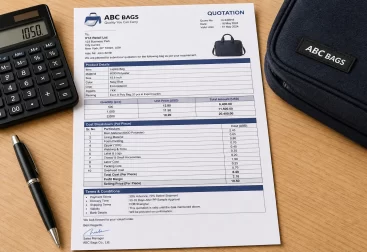
Two bag factories quote the same PU leather crossbody bag. One comes back at $4.85 per piece, the other at $5.60. Most buyers read that as a 15 percent gap and either take the cheaper number or spend a week haggling. In practice the two documents are almost never describing the same product, the same service level, or the same commercial basis.
The cheaper quote usually carries thinner material, a lower MOQ with a fixed-price trap, EXW terms, or a hidden tooling line that appears only after the deposit is paid. None of that is necessarily dishonest; it is simply what an unconstrained quote looks like when the buyer’s requirements were never pinned down in writing.
Comparing bag factory quotes on equal terms means rebuilding both documents onto one shared baseline before you judge either number. That baseline has to cover the specification, the material grade, the construction content, the commercial terms, the freight basis, the quality commitment, the payment schedule, and the risk wrapped inside lead time.
Once all eight sit in a single matrix, the price difference stops being an opinion and becomes a number you can defend in a negotiation. In most projects we handle, normalisation does not shrink the gap evenly — it reverses the ranking, because the cheaper headline price is usually paying for something the buyer has not yet been asked about.
This guide is written for sourcing managers, brand owners and wholesale buyers who already hold two or more quotations for the same PU leather bag and need to turn them into a decision. It walks through a ten-step normalisation process, gives you the tables to fill in, and works through a full example with two quotes for the same bag.
Everything below assumes a B2B manufacturing context: OEM or private-label production, MOQ-driven pricing, and a factory-side quotation rather than a trading-company catalogue price. The same discipline applies to backpacks and totes, but the figures used here are PU leather crossbody and tote numbers from our own quoting work in Guangzhou.
Why Two Bag Factory Quotes Are Almost Never Comparable
A bag quotation is not a price. It is a conditional statement: this price applies if the specification is X, the quantity is Y, the material grade is Z, delivery is on this basis, payment arrives on that schedule, and the buyer accepts this tolerance for defects and colour. Change any one condition and the number moves.
Two factories rarely state their conditions in the same language, which is why the first job in a comparison is not arithmetic but translation.
Quotes are written for the seller’s convenience, not the buyer’s
Most Chinese bag factories quote in the format they have used for years: a single unit price, sometimes with a material line, rarely with a breakdown of labour, hardware or packing. That format is efficient for the factory and almost useless for comparison, because it hides where the cost actually sits.
A higher unit price may reflect a better PU backing fabric, a heavier hardware set, individual polybagging with a printed insert, or simply a different exchange rate assumption baked in months earlier.
The four silent variables that move price most
Before any line-by-line work, check these four variables, because they explain the majority of gaps and they are the ones buyers most often overlook:
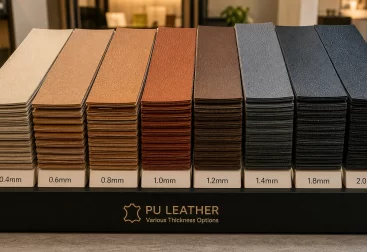
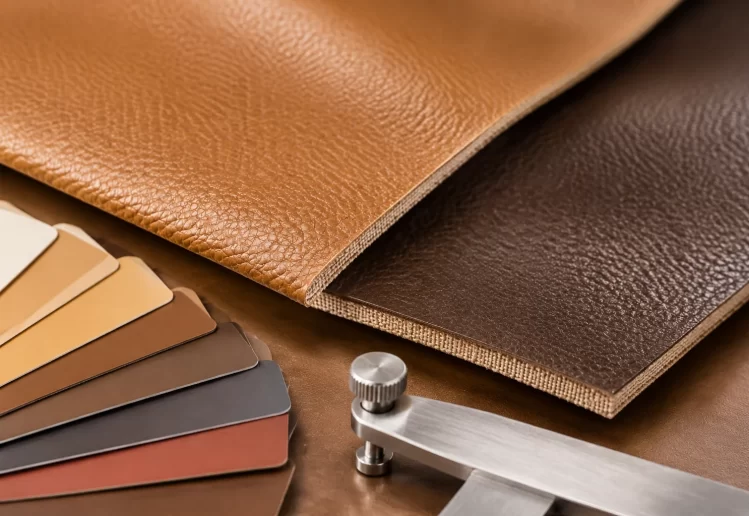
- Material grade and thickness tolerance. A 0.2 mm difference in PU thickness changes material consumption and cost by roughly 10 to 18 percent on a soft-body bag.
- Quantity band. A quote at 500 pieces and a quote at 2,000 pieces cannot be compared at all; volume breaks in bag manufacturing are steep between sampling, small-lot and container-lot production.
- Incoterm. EXW, FOB, CIF and DDP prices include wildly different amounts of cost and risk. An EXW quote is normally 6 to 14 percent below an FOB quote for the same goods.
- Included service content. Sampling, logo tooling, pre-production meetings, third-party inspection support and carton marking are billed differently by nearly every factory.
What an “equal terms” comparison actually requires
An equal-terms comparison is a document in which every cost element is expressed on the same basis, for the same specification, at the same quantity, with the same delivery obligation. It does not require the factories to quote in your format, though asking them to do so helps. It requires you to restate their numbers yourself, in writing, and then send the restated version back for confirmation before the negotiation starts.
If a factory will not confirm your restated version of its own quote in writing, treat that silence as a data point. It is the first reliable signal about how the relationship will run after the deposit clears.
Step 1: Fix One Specification Baseline Before You Compare Anything
You cannot compare prices for two different products. The specification baseline is the reference document that both quotes must be measured against, and it should exist before the second quote is even requested. If you already hold two quotes built on different assumptions, the baseline becomes the reconciliation tool: you reprice each quote’s specification against it, line by line.
What belongs in the baseline document
A working baseline for a PU leather bag is compact but unforgiving. It should state dimensions with tolerance, material type and thickness, backing construction, lining specification, hardware grade and finish, stitching density, edge treatment, logo method, packing method, carton configuration, and the inspection standard applied at final inspection.
Anything absent from the baseline becomes a free variable that the factory will fill in its own favour.
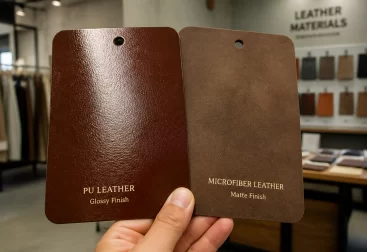
- Body material: PU leather, thickness in mm, backing type and weight, surface finish (matte, gloss, grain), colour reference.
- Dimensions: length × height × depth in cm, plus tolerance, measured on a filled bag.
- Lining: fabric type, weight in gsm, colour, number of internal pockets.
- Hardware: zipper brand and size, puller type, buckle and ring material, plating colour, plating thickness if specified.
- Stitching: thread type, stitch density per inch, reinforcement points.
- Logo: method (emboss, foil, embroidery, metal plate), position, size.
- Packing: individual polybag or dust bag, insert card, carton quantity, carton strength.
Turn the baseline into a one-page comparison sheet
Convert the baseline into a table with one column per vendor, so that every specification difference is visible on the same row. This is the single highest-leverage artefact in the whole process, because it forces both factories to answer the same questions in the same order, and it exposes convenience assumptions before they become disputes.
| Specification item | Your baseline | Factory A states | Factory B states | Deviation |
|---|---|---|---|---|
| PU thickness / backing | 1.2 mm / 75 g non-woven | 1.2 mm / 75 g | 1.0 mm / 60 g | B below baseline |
| Lining | 210D polyester, 2 pockets | 210D, 2 pockets | 190T, 1 pocket | B below baseline |
| Zipper | No. 5 nylon, metal puller | No. 5 nylon, metal puller | No. 3 nylon, plastic puller | B below baseline |
| Stitch density | 8–9 stitches per inch | 8 | 7 | B below baseline |
| Carton | 5-ply, 40 pcs | 5-ply, 40 pcs | 3-ply, 50 pcs | B below baseline |
Price the deviations, not the headline
Once the deviation column is filled, most “cheap” quotes stop being cheap. Ask each factory what the price becomes when its specification is raised to your baseline. That single question converts an apples-to-oranges comparison into two prices for one product, and it is the fairest way to compare bag factory quotes without accusing anyone of underquoting.
In the table above, Factory B would typically need to add 4 to 9 percent to reach baseline specification on material, lining, zipper grade and carton strength. A buyer who skipped this step would negotiate against a phantom price and later discover that the approved sample cannot be reproduced at the approved cost.
Step 2: Normalise the Commercial Basis: Incoterms, Currency and MOQ
Two quotes can describe identical products and still be incomparable because the commercial envelope differs. The envelope is made of four elements: the delivery term, the currency and exchange-rate assumption, the quantity band, and the validity period. Each of these moves the number, and none of them appears in the unit price line.
Convert every quote to one delivery basis
Choose a single basis for comparison — FOB is the usual choice for bag sourcing, DDP if you are comparing landed cost for a retail programme. Then convert each quote onto it. If a factory quotes EXW, add inland transport to the port, export documentation and the export clearance fee.
If a factory quotes CIF, subtract the freight and insurance it has included, or better, compare the FOB equivalent and evaluate freight separately with your own forwarder.
| Delivery basis | What the price includes | Risk transfer | Typical adjustment vs FOB |
|---|---|---|---|
| EXW | Goods at factory door only | At factory | −6% to −14% |
| FOB | Goods loaded on vessel at origin port | On board | Reference basis |
| CIF | FOB plus freight and insurance to destination port | On board | +8% to +25% depending on route |
| DDP | Delivered, duty and import clearance paid | At destination | +15% to +40% depending on duty and freight |
Fix one currency and one exchange rate
Quotes in different currencies hide exchange-rate assumptions, and factories sometimes build a 2 to 4 percent buffer into USD pricing to cover a three-month production cycle. Compare in one currency, record the rate and date you used, and state whether the factory is willing to re-fix the rate at order confirmation.
A quote that is 3 percent cheaper in USD but fixed at an unfavourable rate can be the more expensive option by the time you pay the balance.
Compare at the same quantity, and check how the bands break
A 500-piece quote and a 2,000-piece quote are not comparable, and neither are two quotes at the same quantity if one factory applies its volume break at 1,000 pieces and the other at 1,500. Ask each vendor for the price at three quantities: your planned order, the band below, and the band above. The slope tells you how the factory’s cost structure behaves, and it tells you where the real negotiation room sits.
Step 3: Unbundle the Material Cost Line by Line
Material is the largest controllable cost in most PU leather bags, typically 40 to 55 percent of the ex-works price for a mid-market crossbody or tote. Two quotes that differ by 12 percent are usually differing here, not in sewing efficiency. Unbundling the material line means asking for consumption, material grade and unit material price separately, then checking that the arithmetic is internally consistent.

Ask for consumption, not just cost
Material consumption for a bag is expressed in square metres or square feet per piece, including cutting waste. A soft crossbody of roughly 24 × 18 × 8 cm typically consumes 0.28 to 0.36 square metres of PU per piece once waste is included; a structured tote with gussets and a reinforced base can exceed 0.60 square metres.
If a factory quotes material cost without consumption, you cannot tell whether it is using a cheaper material or cutting more efficiently, and those two situations call for completely different responses.
| Bag type | Typical PU consumption | Cutting waste | Material share of ex-works cost |
|---|---|---|---|
| Small crossbody | 0.28–0.36 m² | 12–18% | 38–46% |
| Medium shoulder bag | 0.38–0.50 m² | 14–20% | 42–50% |
| Structured tote | 0.52–0.68 m² | 15–22% | 45–55% |
| Laptop backpack | 0.70–0.95 m² | 16–24% | 44–54% |
Separate the three material sub-lines
Once consumption is on the table, split the material cost into body PU, lining, and reinforcement or interlining. Each has its own market dynamic, and lumping them together lets a factory trade down on one while appearing competitive on the total. A quote with a competitive PU price often hides an under-specified lining at 190T instead of 210D, which shows up as premature seam failure eight months into retail life.
- Body PU: thickness, backing weight, surface finish, colour batch. This is the line where grade drift is most common.
- Lining: fabric type and weight in gsm or denier, plus pocket count and zip quality. Cheap lining is invisible in a quote and obvious in a return rate.
- Reinforcement: board, foam, interlining and base support. Structural bags live or die here, and it is rarely itemised.
Step 4: Compare Construction Content, Not Just the Sewing Line
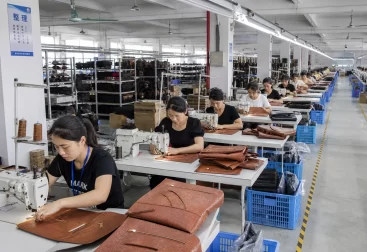
Labour is the second-largest cost block, and it is the one buyers understand least, because two factories can both quote “stitching” while performing very different amounts of work. Equal-terms comparison means counting the construction operations the price is meant to cover, not accepting a single labour figure.
Count the operations, not the minutes
Build a simple operation list from your tech pack: cutting, edge skiving, lining assembly, zip insertion, pocket construction, body assembly, edge folding, topstitching, hardware fitting, logo application, final pressing, and packing. Then ask each factory which of those operations are included and whether any are charged as extras.
In practice, logo application and hardware fitting are the two most common “extra” items that appear only at order confirmation.
| Construction element | What to confirm | Common hidden charge |
|---|---|---|
| Edge treatment | Painted, folded or bound | Edge paint as a separate line |
| Hardware fitting | Rivets, rings, buckles, D-rings | Per-piece fitting fee |
| Logo application | Method, position, tooling | Tooling plus per-piece application |
| Lining pockets | Count, zip or slip | Each pocket beyond one |
| Pressing / finishing | Steam, edge touch-up | Not included at some factories |
Stitch density and reinforcement as cost signals
A quote specifying 7 stitches per inch where your baseline says 8 to 9 is not a small detail. It reduces thread and machine time by roughly 10 percent on that operation, and it also reduces seam strength on load-bearing joints. Ask for stitch density and reinforcement points in writing, then compare the labour total only after those two parameters match.
Ask how the factory handles rework
Rework is a hidden cost that never appears in a quote but always appears in a shipment. Ask each vendor what proportion of production currently goes to rework and who pays for it. A factory that quotes 6 to 8 percent cheaper while running 10 percent rework with buyer-funded corrections is not cheaper; it is transferring its quality cost to your inspection budget and your launch date.
Step 5: Place Tooling, Sampling and Setup on the Same Footing
Setup costs are where comparisons most often go wrong, because one quote folds them into the unit price and the other lists them separately. On a 500-piece order, a $600 tooling charge is $1.20 per bag — nearly 25 percent of a $4.90 unit price. Comparing a quote that amortises tooling with one that does not is a guaranteed misjudgement.
Build a full setup cost inventory
- Sampling: development sample, sales sample, pre-production sample — how many rounds, who pays, is the fee credited against the bulk order.
- Logo tooling: emboss plate, foil die, screen frame, embroidery programme. One-time cost, but ownership matters.
- Pattern and grading: new pattern making, size grading, marker making.
- Material minimums: the smallest purchase a mill will accept for a custom PU colour, often 300 to 1,000 metres.
- Hardware tooling: custom buckles, logo zip pullers, engraved plates — usually the most expensive single tooling item.
Normalise to a per-piece setup cost
Convert every one-time charge into a per-piece figure at your actual order quantity, and add it to the unit price. Then run the same calculation at the reorder quantity, because setup amortisation is the reason small first orders look expensive and second orders look cheap. This single calculation resolves most arguments about “who is really cheaper”.
| Cost item | Factory A | Factory B | Per piece at 600 pcs (A / B) |
|---|---|---|---|
| Unit price, ex-works | $4.85 | $5.60 | $4.85 / $5.60 |
| Sampling fee | $150 (2 rounds) | Included | $0.25 / $0.00 |
| Logo tooling | $0 (existing plate) | $320 | $0.00 / $0.53 |
| Custom PU colour minimum | None (stock colour) | $180 surcharge | $0.00 / $0.30 |
| Setup-adjusted unit cost | — | — | $5.10 / $6.43 |
Check tooling ownership and reuse
Ask in writing who owns the plates, dies and patterns after the order, whether they can be transferred to another factory, and whether the tooling cost repeats on the reorder. A factory that recharges tooling on every order has a structurally higher total cost than its unit price suggests, and a buyer who does not own the tooling has effectively locked the design to one vendor.
Step 6: Bring Freight, Duty and Landed Cost Onto One Footing
Unit price decides the purchase. Landed cost decides the margin. Comparing quotes on price alone is a common and expensive shortcut, particularly when the two factories sit in different provinces with different port access, or when one offers consolidation and the other does not.
The landed cost stack
Landed cost for imported PU leather bags is built from six elements: goods cost, inland transport to port, export clearance and documentation, international freight and insurance, import duty and taxes, and destination charges including terminal handling and delivery. Each factory quote touches a different subset of those, which is exactly why two quotes that look 10 percent apart can land within 2 percent of each other.
| Cost element | Who usually controls it | How it distorts a quote comparison |
|---|---|---|
| Inland transport and port fees | Factory / forwarder | Absent from EXW quotes |
| Export documentation | Factory | Sometimes billed separately |
| Ocean or air freight | Forwarder or factory under CIF | Embedded and invisible in CIF |
| Import duty and VAT | Importer | Absent from FOB and CIF |
| Destination handling | Importer or consignee | Absent from every factory quote |
| Carton efficiency | Factory packing choice | Changes freight per bag by 8–20% |
Carton efficiency is a price difference in disguise
Packing configuration changes freight cost per bag more than most buyers expect. A carton holding 40 bags at 0.062 cubic metres per carton yields 0.00155 cubic metres per bag; a carton holding 50 bags at the same volume yields 0.00124, a 20 percent reduction in shipped volume. On a full container this can be worth several thousand dollars, and it never appears in the unit price comparison.
Ask both factories for carton dimensions, carton quantity, gross weight and whether the bags are packed flat or filled. Then compute freight per bag for each option using your forwarder’s rate. Where the difference exceeds 2 percent of unit cost, packing configuration belongs in the comparison matrix as a scored line, not as an afterthought.
Step 7: Score Quality Systems and Service Alongside Price
Price comparisons fail when quality is treated as a separate topic. It is not separate: quality is a cost, expressed as inspection hours, rework, markdowns and returns. The practical solution is to score quality and service on the same sheet as price, with defined weights, so the decision becomes transparent instead of political.
A workable scoring model
Use six criteria with explicit weights. Adjust the weights to your category, but fix them before you open the quotations, otherwise the weighting will drift toward whichever vendor you already prefer.
| Criterion | Weight | Evidence to score against |
|---|---|---|
| Normalised landed cost | 40% | Completed cost matrix at your quantity |
| Specification compliance | 20% | Baseline table with deviation column |
| Quality system maturity | 15% | Inline checks, AQL record, defect data, corrective action log |
| Lead time reliability | 10% | Historical on-time rate, capacity buffer, peak-season policy |
| Communication and responsiveness | 10% | Sample-round speed, English quality, technical pushback |
| Commercial flexibility | 5% | Payment terms, tooling ownership, reorder conditions |
Score quality with evidence, not impressions
Ask for three specific pieces of evidence: the final inspection record from the last comparable order, the corrective action log for the past six months, and the name of the third-party inspection company they work with most often. A factory that produces all three within a day is organised. A factory that produces none is telling you what the first bulk order will feel like.
Where possible, run the same audit checklist against both vendors rather than relying on documentation. Unannounced or short-notice visits to the cutting, stitching and packing areas reveal whether the paperwork describes reality. Our own factory audits and buyer-side audit support consistently show the same pattern: the gap between documented and actual process control is the best predictor of defect escape rate.
Step 8: Convert Lead Time and Capacity into a Cost Number
Lead time differences are usually treated as a scheduling inconvenience. They are not: they are cash. A vendor quoting 45 days against a competitor’s 30 days forces you to order earlier, hold more safety stock, or accept a later retail launch. Each of those outcomes has a measurable cost, and the comparison matrix should carry it.
Ask for the lead-time breakdown, not the total
“45 days” is not information. Ask each factory to break the number into material purchasing, cutting, stitching, hardware fitting, finishing, packing and inspection. The breakdown shows where the real difference sits, and it usually reveals that one factory has material on hand while the other is ordering from a mill with a two-week lead time.
- Material lead time: stock PU in standard colour versus custom-run material. Custom colour runs commonly add 12 to 20 days.
- Hardware lead time: stock zippers and buckles versus custom die-cast or engraved parts, which can add 15 to 25 days.
- Production window: cutting and stitching capacity allocated to your order, including queue position behind existing orders.
- Inspection and packing: final inspection booking plus carton preparation, often 3 to 6 days.
Price the schedule risk
Convert schedule risk into a simple cost estimate: if the vendor is 15 days slower, how much extra safety stock is required, and what does holding that stock cost per month? For a 2,000-piece order at $5 landed cost, 15 days of extra pipeline may mean $4,000 to $6,000 of additional working capital plus warehouse cost. That figure belongs next to the unit price, because it is the same money.
| Lead-time scenario | Production days | Extra pipeline needed | Approx. working-capital cost |
|---|---|---|---|
| Fast, material in stock | 30 | None | Reference |
| Standard, stock colour | 45 | 15 days of sales | +$4,000–6,000 per 2,000 pcs |
| Custom colour and custom hardware | 65 | 35 days of sales | +$9,000–14,000 per 2,000 pcs |
Step 9: Weight Payment Terms and Cash Flow Correctly
Payment terms are a financing arrangement embedded in the price. A factory asking for 50 percent deposit and the balance before shipment is asking you to fund its working capital and carry the goods during transit. A factory accepting 30 percent deposit and balance against a copy of the bill of lading is offering something materially different — and the difference has a calculable value.
Convert terms into an interest-equivalent value
For most buyers, the simplest approach is to calculate the cost of financing the payment schedule over the production and transit cycle, then subtract it from the quoted price to reach a cash-adjusted comparison. A 40-day payment-terms difference on a $20,000 order is not enormous in absolute terms, but it compounds across a programme and it affects which vendor can absorb a late-season reorder.
| Term structure | Typical arrangement | Cash-flow effect on buyer |
|---|---|---|
| Standard | 30% deposit, 70% before shipment | Buyer funds production and transit |
| Balanced | 30% deposit, 70% against B/L copy | Buyer funds production only |
| Buyer-friendly | 20% deposit, 80% after inspection | Risk shifts toward vendor |
| Trade-financed | Letter of credit or platform escrow | Cost moves to fees, risk shared |
Never trade inspection rights for terms
The one non-negotiable in any payment structure is your right to inspect before the balance is released. A vendor offering attractive terms while requiring full payment before final inspection is asking you to fund an unverified shipment. Equal-terms comparison means writing the inspection trigger into the terms you compare, not treating it as a later courtesy.
Step 10: Build the Comparison Matrix and One Normalised Number
All the previous steps produce inputs. The matrix turns them into a decision. Keep it to one page: rows are cost and risk elements, columns are vendors, and the final row is a normalised per-unit cost that includes every adjustment you have justified.
The matrix structure
| Matrix row | Factory A | Factory B | Adjustment note |
|---|---|---|---|
| Quoted unit price | $4.85 | $5.60 | As received, EXW |
| + Specification uplift to baseline | $0.00 | +$0.34 | Material, lining, zipper, carton |
| + Setup and tooling per piece | +$0.25 | +$0.83 | At 600 pcs |
| + Inland and export costs | +$0.18 | +$0.14 | Distance to port |
| + Freight per bag at packed volume | +$0.41 | +$0.36 | Carton efficiency |
| + Duty and destination charges | +$0.52 | +$0.54 | Same classification |
| − Payment-terms financing value | −$0.04 | −$0.07 | B/L copy terms |
| Normalised landed cost | $6.17 | $7.74 | Apples to apples |
Keep the assumptions visible
Every adjustment in the matrix must carry a one-line reason and a source. If someone later challenges the decision, the matrix should explain itself without you. This matters more than it sounds: quote comparisons are frequently reopened when a cheaper alternative surfaces, and a documented normalisation survives that challenge in a way that a verbal recollection does not.
Read the matrix before the ranking
Before you look at the final column, scan the largest individual adjustments. If one vendor’s advantage comes almost entirely from a single line — carton efficiency, or an unusually generous tooling waiver — that is a negotiation opportunity with the other vendor, not necessarily a structural cost advantage. If the difference is spread across material, labour and setup, it is structural and unlikely to close by more than a few percent.
A normalised matrix rarely produces a tie. When it does, the decision is about risk appetite and relationship, and you should say so explicitly rather than inventing a cost difference that is not there.
Worked Example: Two Quotes for the Same Crossbody Bag
Both factories quoted a 24 × 18 × 8 cm PU leather crossbody with an adjustable strap, one internal zip pocket, magnetic flap closure, and a debossed logo on the front panel. Order quantity: 600 pieces. Target market: mid-market retail in Europe.

What each factory actually quoted
| Item | Factory A | Factory B |
|---|---|---|
| Unit price | $4.85 EXW | $5.60 FOB |
| PU specification | 1.2 mm, 75 g backing | 1.0 mm, 60 g backing |
| Lining | 210D polyester, 2 pockets | 190T polyester, 1 pocket |
| Zipper | No. 5 nylon, metal puller | No. 3 nylon, plastic puller |
| Stitch density | 8–9 per inch | 7 per inch |
| Carton | 5-ply, 40 pcs | 3-ply, 50 pcs |
| Sampling | $150 for 2 rounds | Included |
| Logo tooling | Existing plate, no charge | $320 new plate |
| Lead time | 45 days | 30 days |
| Payment | 30/70 before shipment | 30/70 against B/L copy |
What happened after normalisation
Factory B’s headline was 15 percent higher, but its specification sat below baseline on four rows and it carried $320 of new tooling. Factory A’s price was closer to baseline but its payment terms required full funding before shipment and its lead time was 15 days longer.
After uplift, setup amortisation, freight and duty adjustments, Factory A landed at $6.17 per bag and Factory B at $7.74 — a 25 percent gap in the opposite direction from what the raw quotes implied.
How a Manufacturer Structures Quotes for Fair Comparison
From the factory side, a quote built for comparison looks different from a quote built to win on headline price. It separates material, labour, hardware, packing and tooling; it names the material mill and grade; it states the Incoterm and the validity period; and it lists what is excluded. That structure is not generosity — it is how disputes get avoided during production.

What an itemised PU leather bag quote contains
At PUBagFactory, quotations for custom PU leather bags are normally issued with the material line separated by body, lining and reinforcement; hardware listed by component with brand or grade; labour expressed against the operation list from the tech pack; packing stated with carton dimensions and quantity; and tooling shown as a one-time line that the buyer owns after payment.
Sampling rounds are quoted separately so the buyer can see what is credited against bulk.
That level of detail also makes a quote easier to challenge, which is the point. When a buyer can see that a 1.2 mm PU with a 75 g backing is driving the material line, the conversation moves to grade and volume rather than to an unexplained unit price.
You can see the range of custom bag programmes we quote against on our custom bag manufacturing portfolio, and the material and construction choices behind those quotations are the same ones this guide recommends you normalise.
Who should itemise, and when
Buyers with a stable design and repeat volumes gain the most from itemised quotes, because the comparison repeats every season and small differences compound. Buyers exploring a new category may prefer a simple indicative price first, then request an itemised quote only for the two or three vendors that survive the shortlist. Both approaches work; what fails is comparing an indicative price against an itemised one.
Frequently Asked Questions
How many quotes do I need before I can compare properly?
Three is the practical minimum for a real comparison: two to establish the market range and a third to show whether the range is genuine or an artefact of specification drift. Two quotes are enough only when both vendors quote against the same written baseline, at the same quantity, on the same delivery basis — which is rare in a first round.
What is the fastest way to normalise two quotes?
Send both vendors a one-page baseline sheet with your specification, quantity, Incoterm and payment expectations, and ask each to restate its quote against it in writing. That single document removes most of the ambiguity, and the responses themselves become part of the evidence you score.
How much price difference should make me switch vendors?
As a working rule, a normalised landed-cost difference below 3 percent is not worth switching for on its own; between 3 and 8 percent, weigh quality evidence and lead time; above 8 percent, the cheaper option deserves serious consideration unless a specific risk is documented. These thresholds are guidance, not rules — the risk assessment decides.
Why do two factories quote such different prices for the same drawing?
Mostly material grade, backing weight, lining specification, hardware grade and stitching density — the specification items a drawing does not fully define. The rest comes from quantity positioning, factory scale, and how much of the setup cost each vendor has chosen to fold into the unit price.
Is a lower MOQ always more expensive per piece?
Usually yes, because setup and material purchasing are spread across fewer pieces. What matters is the slope: a factory quoting a modest premium at low MOQ but a competitive price at volume is signalling that it wants to grow with you, while a flat high price across all bands suggests a fixed-cost structure that will not improve.
How do I score a factory’s quality claim?
Ask for the final inspection record from a comparable order, the corrective action log for the past six months, and the third-party inspection company they normally work with. Then audit the same checklist at both vendors. Documentation that cannot be produced on request is the signal, not the absence of documentation itself.
How much weight should lead time carry in the decision?
Enough to price it. Convert the schedule difference into extra pipeline stock and its carrying cost, then put that figure into the matrix. On a 2,000-piece order, a 15-day difference is commonly worth $4,000 to $6,000 of working capital — easily more than a two percent unit price gap.
When should I walk away from both quotes?
When both vendors sit far above your target cost with no credible path to close the gap, when neither can produce quality evidence for a comparable product, or when the specification itself is unresolved. In those cases the problem is upstream in the brief, and another round of quotes will not fix it.
Next Step: Get a Quote You Can Actually Compare
Comparing two bag factory quotes on equal terms is a discipline, not a negotiation trick. Fix one baseline, normalise the commercial envelope, unbundle material and construction, put setup and freight on the same footing, score quality with evidence, and price the schedule risk. The result is a matrix you can defend, a negotiation that targets the lines with real room, and a supplier decision that does not need revisiting in month three.
If you are currently holding two quotations for the same PU leather bag and want them restated on a single baseline, send both documents and your tech pack to info@gionar.com. We will return a comparison sheet that separates material, labour, hardware, packing and tooling, states the Incoterm and payment basis clearly, and shows where each deviation sits against your specification — whether or not you order from us.
For buyers starting from a design instead of a quote, our team in Guangzhou can work from a sketch, a reference bag or a tech pack through sampling, pre-production approval and bulk production. Review recent programmes on the custom bag manufacturers portfolio page, or email info@gionar.com with your specification and target quantity for a quotation built to be compared.