A buyer who has spent months developing a bag design faces an uncomfortable asymmetry. The design, the patterns and the tooling sit inside a factory that works with dozens of other customers, and the protection is usually a document that nobody has read carefully since the day it was signed.
The concern is legitimate but often misdirected. Many buyers worry most about a factory copying their bag, which is the least frequent problem in practice. The more common losses are subtler: a mould reused for another customer, a sample shown as a reference to a competitor, a design detail that appears in someone else’s range six months later, or a supplier who takes the development work to a competing brand after the relationship ends.
This guide sets out what actually needs protecting in a bag programme, what each protection mechanism covers, and where each one fails. It is written from the manufacturing side, where these arrangements are negotiated and executed, and it focuses on what a buyer can enforce rather than what sounds reassuring on paper.
One theme runs throughout: protection comes from the combination of a clear agreement, controlled access and a working relationship with commercial consequences. A well-drafted contract with a supplier who has no stake in your success protects very little, while a modest agreement with a factory that values the account can hold for years.
- What Actually Needs Protecting
- Non-Disclosure Agreements: What They Cover
- Design Ownership and Who Owns the Tooling
- Exclusive Agreements: Structure and Limits
- Registered Designs and Other Formal IP
- Enforcement in Practice
- Working Without a Full Legal Team
- Building a Practical Protection Plan
- Where Protection Most Often Fails
- FAQ
What Actually Needs Protecting
Before choosing an agreement, it helps to inventory what is genuinely at risk. Bag programmes contain several distinct assets, and they are protected in different ways.
The five assets in a bag development
The first asset is the design itself: the silhouette, proportions and distinctive details that make the product recognisable. The second is the technical package: patterns, specifications and construction details that describe how the bag is built.
The third is the brand element: logos, labels and any registered trademarks applied to the product. The fourth is tooling and moulds, which are physical assets that often cost more than the design work that produced them. The fifth, and most often overlooked, is commercial information: pricing, volumes, customer lists and production schedules.
These assets have different legal characters. A trademark is registrable and enforceable. A functional bag shape may be difficult to protect at all. Commercial information is usually protected by agreement rather than by registration.
What is realistically at risk
Different assets degrade differently. A distinctive logo is unlikely to be copied by a factory because it has no value to them. A bag silhouette may appear elsewhere, but proving that it originated with a particular buyer is often impractical.
The realistic risks concentrate in three places: tooling reused for another customer without permission, technical specifications passed to a competing brand, and commercial terms revealed to a competitor during negotiation. These are all governed by agreement and access control rather than by design registration.
| Asset | Main risk | Primary protection |
|---|---|---|
| Bag design and silhouette | Appears in another range | Registered design where available |
| Technical package and patterns | Passed to another buyer | NDA plus access control |
| Brand logos and labels | Unauthorised use | Trademark registration |
| Tooling and moulds | Reused for other customers | Ownership clause and storage control |
| Commercial information | Disclosed to competitors | NDA plus practical separation |
Why the ordinary course of business matters
A factory that produces similar bags for other customers is not necessarily copying anyone. Bag manufacturing is a convergent discipline: gussets, zip placement and strap attachment follow functional logic, and similar solutions emerge independently.
This matters when assessing whether a design was copied. Two bags can look related without any information having passed between them, and a buyer who assumes otherwise may damage a good supplier relationship over a coincidence.
Non-Disclosure Agreements: What They Cover
The NDA is the standard first document in a bag development, and it is also the most frequently misunderstood. It governs information, not products.
What an NDA can and cannot do
An NDA can require a factory to keep specifications, pricing and customer information confidential, restrict who inside the factory sees the information, and define how long the obligation lasts. It can also require the return or destruction of materials at the end of the relationship.
An NDA cannot prevent a factory from making a similar bag for another customer, and it cannot stop a competitor from producing a comparable design independently. It constrains the flow of information, not the state of the market.
This is why an NDA alone rarely satisfies a buyer’s concern about copying. The document is necessary, but the practical protection comes from limiting what is disclosed and to whom.

The clauses that matter most
Four clauses carry most of the practical weight. The definition of confidential information determines what is actually covered. The permitted recipients clause controls who inside the factory can see it. The term sets how long the obligation survives. The return and destruction clause determines what happens to physical materials.
The definition clause is where most weak agreements fail. A narrow definition covering only documents labelled confidential excludes the informal transfers — photographs, measurements and verbal discussions — through which most information actually moves.
| Clause | What it controls | Practical requirement |
|---|---|---|
| Definition of confidential information | Scope of protection | Cover sketches, samples and verbal detail |
| Permitted recipients | Who may see it | Name roles, not departments |
| Term | Duration of obligation | Longer than the development cycle |
| Return and destruction | Physical materials | Include samples, patterns and tooling |
| Exclusions | Information not covered | Keep narrow, avoid blanket carve-outs |
When to sign, and with whom
An NDA should be in place before the first detailed brief is shared, not after quotations are exchanged. In practice most factories will sign one as a matter of routine; a supplier who resists a standard mutual NDA before seeing any technical detail is a warning sign worth heeding.
Mutual NDAs are usually easier to agree than one-sided versions and are sufficient for early-stage conversations. As development deepens, a project-specific agreement covering tooling, exclusivity and ownership can replace the initial document.
Ask for the NDA before the brief, not before the order. By the time an order is discussed, the information has already moved.
Design Ownership and Who Owns the Tooling
Ownership questions cause more disputes in bag programmes than copying does. They arise when the relationship ends, or when a buyer wants to move production to a second supplier and discovers they do not hold what they assumed they owned.
Who owns the design
Ownership depends on where the design originated and what the agreement says. A buyer who supplies a complete technical package is generally the owner of that package. A factory that develops a bag in response to a brief may own the development work unless the agreement transfers it.
Under the ODM model, the factory often starts with an existing design from its own catalogue and modifies it for the buyer. In that case, the underlying design usually remains the factory’s, and the buyer has the right to buy the product rather than to own the design.
The practical instruction is to be explicit. If ownership of the design matters — because the range is central to the brand, or because a second supplier may be needed later — the agreement should state that the buyer owns the design documentation on payment, and list exactly which files are included.
The tooling question
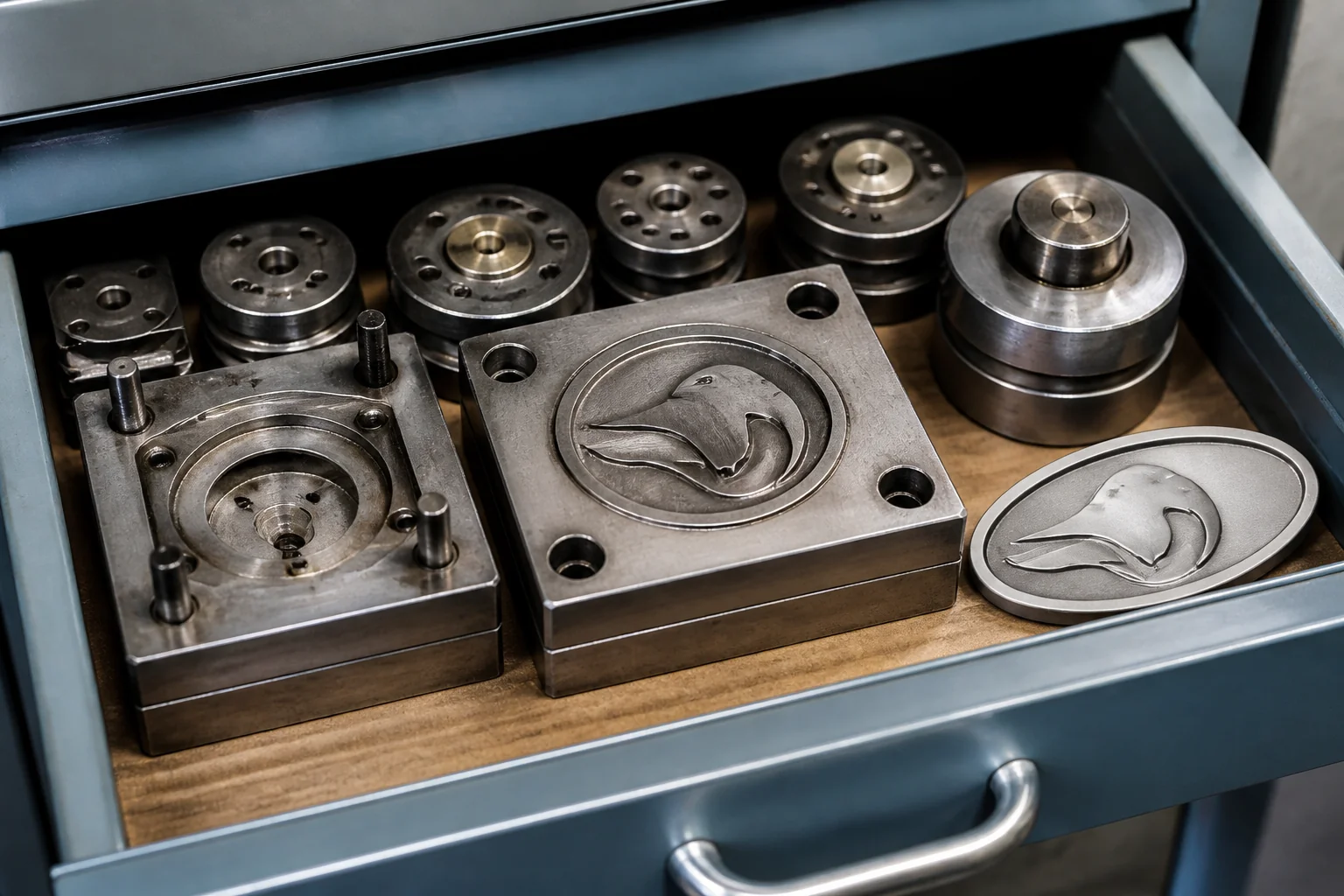
Tooling is where ownership disputes become concrete, because a mould is a physical object with a replacement cost. Three arrangements are common: the buyer pays for tooling and owns it, the buyer pays and the factory retains it, or the factory amortises the cost into the unit price and retains ownership.
Each is defensible, but only if it is written down. The ambiguity that causes genuine losses is the middle case: the buyer pays a tooling charge that is never explicitly described as a purchase, and later discovers the mould cannot be retrieved.

| Arrangement | Who owns tooling | Buyer consideration |
|---|---|---|
| Buyer pays, buyer owns | Buyer | Confirm retrieval and storage rights |
| Buyer pays, factory retains | Factory | Requires exclusive-use clause |
| Amortised into unit price | Factory | Lower upfront cost, less control |
| Shared across buyers | Factory | Acceptable only for standard components |
What to specify alongside ownership
Ownership alone is not enough. Three further points should be settled at the same time: whether the factory may use the tooling for any other customer, where the tooling is stored and who may access it, and what happens to it when the relationship ends.
Storage is the detail most often omitted. A mould held at a factory that no longer receives orders can sit unrecorded for years, and retrieving it later may require searching a warehouse or paying a handling fee that was never agreed.
Exclusive Agreements: Structure and Limits
Exclusivity is the protection buyers ask for most often and the one most likely to be misunderstood in both directions.
What exclusivity can cover
Exclusivity can be defined along several different axes, and a clause that does not specify which one is being granted is close to unenforceable in practice. The most common versions cover a specific design, a specific market or territory, a product category, or a channel.
Design exclusivity is the narrowest and easiest to agree: the factory will not produce that specific bag for another customer. Territory exclusivity is broader, restricting sales of a product line in a defined region. Category exclusivity is broadest, preventing the factory from producing any comparable product for anyone else in a market.
| Exclusivity type | Scope | Typical difficulty |
|---|---|---|
| Design exclusivity | One specific design | Easiest to agree |
| Territory exclusivity | A defined sales region | Moderate |
| Channel exclusivity | A defined sales channel | Moderate |
| Category exclusivity | Comparable products in a market | Hardest, usually conditional |
| Tooling exclusivity | Specific moulds and dies | Straightforward if owned |
Why factories resist broad exclusivity
A factory’s economics depend on spreading development and setup costs across multiple customers. Broad exclusivity prevents it from selling a proven design to other buyers, which removes the return on the work it invested in developing that design.
This is why a factory will typically accept design exclusivity readily and resist category exclusivity. The resistance is not adversarial; it reflects a real cost. Buyers who understand this can often trade a commercial commitment for the exclusivity they need.
The commitments that make exclusivity workable
Exclusivity is usually granted in exchange for something. The most common considerations are a minimum annual volume, a minimum purchase commitment, a development fee or a longer contract term.
For the buyer, the practical risk is committing to volumes that are not achievable. An exclusivity agreement with an unmeetable minimum is worse than no agreement, because it creates a breach that can be used to terminate the exclusivity when it is most needed.
A workable structure pairs a realistic minimum with a graduated commitment: exclusivity for a defined initial period, continuing if the minimum is met, with a review point before renewal. This gives the factory a commercial reason to hold the commitment and gives the buyer a clear test of whether the arrangement is working.
Defining what exclusivity does not cover
A well-drafted exclusivity clause states what remains outside its scope. Factories often hold a standard range in their own catalogue and sell it widely, and an exclusivity clause should not inadvertently restrict that.
Similarly, a factory may produce for a buyer’s direct competitor in a different market without any conflict of interest. Specifying the boundaries prevents disputes that arise from reasonable behaviour being read as a breach.
Registered Designs and Other Formal IP
Formal intellectual property rights sit above contractual protection. Where they exist, they can be enforced against anyone, including parties who never signed an agreement.
What can realistically be registered
Trademarks are the most straightforward and the most valuable registration for a bag brand. A logo, a wordmark or a distinctive label is registrable in most markets and provides durable protection for the brand element of the product.
Registered designs, sometimes called design patents, protect the appearance of a product. They can cover a distinctive bag shape or an ornamental feature, and they are the closest formal analogue to protecting a bag design. Registration requires the design to be new, which is why filing before public launch matters.
Patents apply to functional inventions. Most bag features — a strap attachment, a compartment layout, a closure — are not patentable because they are functional and often already known. Patent protection is rarely a practical route for bag design.
| Protection | What it covers | Practical value for bags |
|---|---|---|
| Trademark | Brand names, logos, labels | High |
| Registered design | Product appearance | Moderate to high for distinctive shapes |
| Copyright | Sketches, artwork, photographs | Moderate, automatic in many markets |
| Patent | Functional inventions | Low for most bag features |
| Trade secret | Non-public processes and data | Moderate, requires genuine secrecy |
The novelty trap
Most registered design systems require the design to be new at the time of filing. Public disclosure before filing — a trade show, a social media post, a shipped order — can destroy the ability to register in some jurisdictions.
This creates a sequencing problem for brands that want to launch quickly. The practical solution is to file before public exposure, even if that means filing from drawings rather than from a finished product. The drawings provide sufficient basis in most systems.
Cost and geography
Registered protection is territorial: a registration in one country does not protect the design elsewhere. A brand selling in three regions needs coverage in three regions, unless a regional system such as the European Union design registration applies.
Because registration costs are per design and per territory, most brands prioritise. The usual order is trademark in the main markets first, then registered designs for the two or three most distinctive products, with wider coverage added once the range is proven.
Register the brands you will keep. Register the designs you will defend.
Enforcement in Practice
An agreement or registration that cannot be enforced provides little protection. This is where most buyer protection plans are weakest, because the plan stops at signing.
Why enforcement is difficult
Four factors make enforcement hard in the bag industry. Manufacturing is geographically dispersed, so a claim may need to be pursued in a jurisdiction where the buyer has no presence. The value of a single design is modest relative to legal costs. Proof of copying is difficult when similar designs emerge independently. And the commercial relationship with an existing supplier may be worth more than the dispute.
Given those factors, buyers should treat enforcement as a last resort rather than a primary control. The primary controls are the ones applied before any dispute arises.
The controls that actually prevent losses
The most effective protection in practice is controlling access to information. Releasing only what a specific stage requires, keeping full specifications until a supplier is contracted, and separating commercial terms from technical documents all reduce exposure substantially.
A second control is documentation. Keeping dated records of what was shared with whom, when, and under what agreement determines whether a claim is even arguable. A buyer who cannot show when a design was disclosed has no basis for a dispute.
A third is commercial dependency. A factory with a substantial, growing account has a strong reason not to jeopardise it. This is not a legal instrument, but over time it protects more value than most contracts do.
| Control | What it prevents | Cost |
|---|---|---|
| Staged information release | Premature exposure | Low, process only |
| Access restriction inside the factory | Wider internal circulation | Low, requires agreement |
| Dated disclosure records | Inability to prove disclosure | Low, administrative |
| Tooling ownership clause | Mould reuse and retention | Possible tooling payment |
| Commercial dependency | Opportunistic diversion | Growth commitment |
| Legal action | Specific breaches | High, slow |
Escalation before litigation
Because formal enforcement is expensive, most disputes are resolved through escalation: a written notice referencing the specific clause, a request for the return of materials, and a commercial consequence such as withheld orders or a withheld tooling payment.
These steps work because they are immediate and inexpensive. They also depend on the agreement having recorded the right to do them, which is the practical reason to negotiate clause detail rather than accept a template uncritically.
Working Without a Full Legal Team
Most bag buyers are not large brands with in-house counsel. They are small teams placing their first or second production order, and the protection advice they receive is usually written for companies with legal departments.
Prioritising when resources are limited
With limited budget, the sensible order of spending is clear. Trademark the brand name in the market where most sales will occur. Put a mutual NDA in place before sharing technical detail. Settle tooling ownership in writing before paying any tooling charge.
Those three steps cost relatively little and cover the losses that small brands actually suffer. Registered design coverage and multi-territory filings can follow once the range proves itself commercially.
Using standard documents well
Standard NDAs and supplier agreements are widely available and adequate for most programmes, provided the key variables are filled in deliberately. The failures come from accepting a template without adjusting the definition of confidential information, the permitted recipients or the term.
A practical approach is to use a template as the starting point, then amend only three or four clauses. This keeps the document familiar to the supplier — which speeds agreement — while addressing the specific gaps that matter for the project.
What to ask a factory directly
Several questions reveal more about a factory’s practice than any clause. Ask who inside the factory will see the technical package. Ask where tooling is stored and whether it can be inspected. Ask what happens to patterns and samples when a programme ends.
The answers matter more than the wording. A factory that can describe its internal access practice clearly is more likely to follow it than one that has only ever signed documents about it.
Ask how the factory controls access today, not what it will promise to do later.
Building a Practical Protection Plan
A protection plan works when it is staged, so that commitments grow alongside the value at risk. The following sequence maps the documents to the stages of a bag programme.
Stage one: before sharing anything
Put a mutual NDA in place before the detailed brief is sent. At this stage the disclosure is limited to a concept and a rough specification, and a mutual agreement is normally sufficient.
Stage two: during development
Once sampling begins, the exposure grows to include patterns, specifications and materials. This is the point to confirm tooling ownership, permitted recipients and the return of materials, either in a project agreement or an amendment to the initial NDA.
Stage three: before the first bulk order
Before committing volume, settle exclusivity if it is needed, confirm the tooling arrangement in writing, and record which files constitute the technical package that the buyer owns.
| Stage | Documents | Value at risk |
|---|---|---|
| Initial enquiry | Mutual NDA | Concept and outline brief |
| Sampling | Project agreement, tooling clause | Patterns, specifications, tooling |
| Before bulk order | Exclusivity, ownership schedule | Range, brand, commercial terms |
| Ongoing production | Disclosure records, renewals | Relationship and continuity |
Stage four: keeping it current
Agreements have terms and registrations have renewal dates. A protection plan that is never reviewed decays quietly: the NDA expires, the trademark renewal is missed, and the tooling clause refers to a supplier no longer used.
A short annual review is sufficient. Confirm that each agreement is still in force, that registrations are current in the markets being sold, and that the supplier list matches the agreements held. This takes an hour and prevents the most avoidable losses of all.
Where Protection Most Often Fails
Protection plans rarely fail because the wrong document was chosen. They fail because of a small number of recurring gaps, most of which are visible well before a dispute begins.
The gaps that appear repeatedly
The most frequent gap is timing. Buyers sign an NDA when a supplier asks for one, which is usually after the technical package has already been shared. At that point the most valuable information has already moved.
The second is scope. An agreement that covers documents but not samples, photographs and verbal detail leaves the practical channels open. Most information in a bag programme travels by image, not by document.
The third is the tooling description. A quotation that lists a tooling charge without stating ownership, storage and retrieval creates a dispute that surfaces only when the relationship ends.
Why informal practices undermine formal documents
A signed agreement can be quietly undone by everyday practice. Specifications sent to a general factory email address, samples left with a pattern maker, photographs shared in a group chat, and technical details discussed at a trade show booth all bypass the access controls the agreement anticipated.
None of these are breaches of good faith, and they are common in an industry that moves quickly. They simply mean the document describes an ideal process rather than the real one, and the gap is where losses occur.
| Failure pattern | How it happens | Prevention |
|---|---|---|
| Late NDA | Signed after the brief is shared | Sign before detailed disclosure |
| Narrow definition | Samples and images excluded | Cover all information formats |
| Vague tooling terms | Charge paid without ownership stated | Written ownership and storage terms |
| Informal channels | Specs sent by chat or to a general inbox | Named contacts and controlled transfer |
| No disclosure record | Cannot show what was shared or when | Dated log of every transfer |
| Unexamined exclusivity | Unrealistic minimums create breach | Graduated, reviewable commitment |
Correcting course early
Most of these gaps can be closed retrospectively, provided the relationship is still active. A short amendment can extend an NDA’s definition, confirm tooling ownership and name the permitted recipients.
The practical test is whether the buyer can answer three questions from memory: who inside the factory has seen the technical package, where the tooling is held, and which documents constitute the package they own. If any answer is uncertain, that is the gap to close first.
FAQ
Do I need an NDA before talking to a bag factory?
Yes, before sharing a detailed brief. Early general enquiries can be handled without one, but any conversation that includes sketches, specifications or intended market should be covered. Ask for a mutual NDA, which is usually straightforward for a factory to sign and sufficient at that stage.
Can an NDA stop a factory from making a similar bag?
No. An NDA restricts the flow of information, not what the factory produces for other customers. Preventing a similar product requires design exclusivity, registered design protection, or a commercial arrangement where copying would cost the factory more than it gains.
Who owns the mould if I pay a tooling charge?
It depends entirely on what the agreement says. Paying a tooling charge does not automatically transfer ownership, and many quotes describe a charge that is really an amortised setup cost. If ownership matters, state it explicitly in writing before paying, along with storage and retrieval rights.
What does design exclusivity usually cost?
It is normally exchanged for a commitment rather than a fee: a minimum annual volume, a minimum purchase quantity, a development payment or a longer contract term. Factories accept design exclusivity readily and resist category-wide exclusivity, because the latter removes their return on development work.
Can I protect a bag shape with a registered design?
Often yes, if the shape is distinctive and new at the time of filing. Registration requires novelty, so file before public disclosure such as a trade show or an online launch. Functional features are generally not protectable, so the shape must have ornamental character rather than being purely functional.
Is a patent useful for a bag feature?
Rarely. Most bag features — strap attachments, compartment layouts, closures — are functional and often already known in the industry, which makes them difficult to patent. Trademarks and registered designs are far more practical protections for bag brands.
How do I prove a factory copied my design?
It is genuinely difficult. Similar designs emerge independently because bag construction follows functional logic. What you can prove is the flow of information, so dated disclosure records, agreements and correspondence matter more than the design comparison itself.
What happens to my patterns and samples when a programme ends?
Only what the agreement specifies. A return and destruction clause should cover samples, patterns, specifications and tooling, and it should state a deadline. Without that clause, materials commonly remain at the factory with no obligation to return or destroy them.
Should exclusivity be global or limited to my market?
Limited exclusivity is usually easier to obtain and cheaper in commitment terms. Many brands grant exclusivity for the markets they actually sell in rather than globally, which leaves the factory free to sell elsewhere without competing directly against the brand.
How long should an NDA last?
Long enough to cover the development cycle plus a margin, typically three to five years. A term shorter than the development and early production period offers little practical protection, and very long terms are often rejected or narrowed during negotiation.
Do I need a lawyer to review a supplier agreement?
For a standard NDA with modest exposure, a template is usually sufficient if the key clauses are adjusted deliberately. For exclusivity arrangements, tooling ownership or high-value development, professional review is worth the cost because those clauses create the obligations you may later need to enforce.
What is the most effective protection for a small brand?
A trademark in the main sales market, a mutual NDA before sharing technical detail, written tooling ownership, and a supplier relationship with real commercial value. Together these cover the losses small brands actually experience, at a fraction of the cost of broad legal action.
Developing a bag range with a manufacturing partner?
We manufacture PU leather bags in Guangzhou on OEM and ODM programmes, and we work under mutual NDAs with defined tooling ownership and clear design documentation handover. Send your requirements to info@gionar.com, or review our custom bag manufacturing capabilities.